Home Blog Page 49

Juju in the Courtroom? Nigerian lawyers clash over claims of spiritual attacks in legal battles

A quiet but unsettling debate is beginning to ripple through Nigeria’s legal community, raising questions that sit at the uneasy intersection of belief, culture, and the rule of law.

At the centre of the controversy is a claim as old as it is contentious: that spiritual forces may be creeping into the courtroom.

According to a report by Punch newspaper, discussions intensified after a viral video surfaced online showing a visibly distressed lawyer appealing to litigants to stop allegedly targeting opposing counsel through spiritual means. His message was simple but striking—lawyers, he insisted, are merely performing their professional duties and should not be subjected to unseen attacks.

The video struck a nerve.

Behind closed doors and, increasingly, in cautious public conversations, some legal practitioners have begun to share unusual experiences. They speak of sudden disorientation during proceedings, unexplained illness on critical days, and moments in court that defy easy explanation.

For some, these incidents are dismissed as stress, fatigue, or coincidence. For others, they suggest something more unsettling.

A retired judge, reflecting on her years on the bench, recounted what she described as strange occurrences while presiding over a high-stakes murder trial. According to her, the incidents felt like deliberate attempts to distract and destabilise her at crucial moments in the case.

Such accounts, while anecdotal, have added fuel to a debate that many within the legal profession would rather avoid altogether.

Law Meets Belief

Nigeria’s Constitution is clear in its silence. It does not recognise witchcraft, charms, or supernatural influence as part of its legal framework. The justice system, at least in principle, rests squarely on evidence, procedure, and reason.

For many senior lawyers, that line must remain firm.

Prominent human rights lawyer Deji Adeyanju dismissed the claims outright, stressing that the foundation of the legal system cannot accommodate beliefs that cannot be tested or proven.

“The law is evidence-based,” he has repeatedly argued in similar contexts. “It cannot operate on speculation or superstition.”

That position is echoed at the highest levels of the profession. The President of the Nigerian Bar Association, Afam Osigwe, was even more direct.

“Juju has no place in law,” he said, drawing a clear boundary between cultural belief systems and the administration of justice.

Fear, Pressure—and Perception

Yet the persistence of these claims points to something deeper than superstition alone.

Legal practice in Nigeria, particularly in high-profile or politically sensitive cases, is often fraught with pressure. Lawyers routinely face threats, intimidation, and, in some instances, physical danger. Within that context, perceptions of “spiritual attacks” may reflect the psychological weight of the profession as much as any belief in the supernatural.

There is also a broader cultural dimension.

In many parts of Nigeria, belief in spiritual influence remains deeply rooted, shaping how individuals interpret misfortune, illness, and unexplained events. When those beliefs intersect with high-stakes legal battles, the result can be a narrative that blurs the line between personal conviction and professional reality.

The Line the Law Cannot Cross

For legal scholars and practitioners committed to the integrity of the system, however, the concern is not just about belief—it is about precedent.

If claims of supernatural interference were ever to gain legitimacy within legal discourse, it could undermine the very foundation of the justice system, opening the door to arguments that cannot be tested, challenged, or verified.

That, experts warn, is a line the law cannot afford to cross.

While acknowledging that lawyers may face real-world threats that require stronger protection, the consensus among the majority of legal authorities remains firm: justice must be anchored in facts, evidence, and the rule of law.

A Debate That Won’t Easily Fade

Still, the conversation is unlikely to disappear.

As the viral video continues to circulate and more practitioners quietly share their experiences, the legal community finds itself confronting an uncomfortable question—not about whether “juju” exists, but about how belief, fear, and professional pressure intersect in a system that demands objectivity.

For now, the courtroom remains a place where only evidence speaks. But outside it, the debate is growing louder.

Gunmen kill mother, daughter, three others in Ondo poultry

Tragedy again struck in Igunshin community in Akure North Local Government Area of Ondo State on Thursday as gunmen stormed a poultry farm, killing a woman and her daughter.

Three people were reportedly abducted during the attack.

Information gathered from the locals, about five armed men stormed the farm at about 1:00 PM, scaled the perimeter fence and launched the attack while the victims were working alongside other members of staff.

The situation was escalated by the lifeless bodies of the poultry owner and her daughter, which were later discovered within the premises.

The Spokesperson of the Ondo State Police Command, DSP Abayomi Jimoh, confirmed the incident in a statement he issued on Friday.

DSP Jimoh noted:  “The Command strongly condemns the violent incident at Igushin via Ala, Akure, which led to the tragic loss of two innocent lives. While two victims were rescued through a swift and coordinated operation, we regret the unfortunate deaths recorded.”

He assured that security has been reinforced in the area, adding that efforts are ongoing to apprehend those responsible for the attack.

The police image maker appeals to members of the public to remain vigilant and provide credible information that could assist ongoing investigations into the unfortunate incident.

Condolences Without End: Tinubu’s repeated promises meet relentless terror as General, 17 soldiers killed in Borno

Terror Group Sacks Communities In Northwest Nigeria, After Giving Eviction Notice - HumAngle Media

The statement came swiftly, as it often does.

President Bola Ahmed Tinubu expressed sorrow. He praised courage. He promised resolve. He assured Nigerians the sacrifices “will not be in vain.”

But by the time the words reached the public, Brigadier General Oseni Omoh Braimah and at least 17 soldiers were already dead.

In the early hours of Thursday, suspected fighters of the Islamic State West Africa Province (ISWAP) launched coordinated assaults on multiple military formations across Borno State, striking Benisheikh, Ngamdu and Pulka in a deadly sequence that has once again exposed the widening gap between official assurances and the reality on the ground.

The attack on the 29 Task Force Brigade Headquarters in Benisheikh proved the most devastating. Insurgents stormed the base with heavy gunfire and explosives, engaging troops in a prolonged firefight that lasted hours.

By dawn, the brigade commander, his officers and several soldiers had fallen.

Residents described a night of terror that extended beyond the military installation. Vehicles were set ablaze, travellers caught along the Maiduguri-Damaturu road were killed, and panic spread through surrounding communities.

“It was overwhelming,” one local source said. “They came in large numbers. The soldiers fought, but the casualties were heavy.”

A Familiar Script

The presidency’s response followed a pattern Nigerians have come to recognise.

In a statement issued by his spokesperson, Tinubu described the fallen troops as heroes and insisted the insurgents’ attack was a sign of desperation in the face of sustained military pressure.

“The government will never forget their sacrifices,” he said.

It is a message Nigerians have heard before.

From Borno to Plateau, from ambushed patrols to overrun bases, each major attack has been followed by similar language: praise for bravery, vows of victory, assurances of support.

Yet the attacks persist. And, increasingly, they appear to be escalating.

Braimah’s death marks the second killing of a brigadier general in less than five months, following the death of Brigadier General Musa Uba in November 2025—an alarming pattern that analysts say signals a dangerous shift in the conflict.

Unlike previous phases of the insurgency, where attacks were largely asymmetric, recent operations suggest insurgents are increasingly capable of targeting hardened military formations and senior commanders.

“This is no longer just a rural insurgency—it is evolving into a direct confrontation with state forces,” one security analyst noted.

In just weeks, several commanding officers across the northeast have died in coordinated assaults or ambushes, raising concerns about intelligence failures and insurgent momentum.

The Pattern Beneath the Promises

Security analysts say the repetition is no coincidence.

“There is a dangerous pattern emerging,” said Dr Musa Usman Konduga of the University of Maiduguri. “When you begin to lose commanders at this frequency, it tells you something is fundamentally wrong in the operational environment.”

He warned that the killings go beyond battlefield losses.

“It affects morale. It affects confidence. And for civilians, it raises a deeper fear: if generals are not safe, who is?”

That fear is no longer abstract.

Across affected communities, civilians continue to bear the brunt of the violence. Villages are attacked, families displaced, and entire populations forced into survival mode as insurgents move with increasing mobility.

Anger Boils Over

For many Nigerians, the frustration is no longer just about insecurity. It is about what they see as a cycle of tragedy followed by ritualised response.

The Trade Union Congress (TUC) put it starkly.

“People are killed, statements are issued, visits are made, and then it continues,” said TUC President Festus Osifo. “It is becoming a norm.”

He described the killings as “one too many,” urging the government to move beyond rhetoric and urgently equip troops with modern technology and intelligence capabilities.

“It is appalling,” he said. “Lives must matter more than statements.”

A War That Refuses to End

Despite years of military operations across the northeast, insurgent groups continue to demonstrate resilience, coordination and the ability to strike strategic targets.

Recent offensives in areas like Ngoshe and repeated attacks on military formations suggest a shift from survival to sustained offensive capability.

For the troops on the frontline, the stakes are immediate.

For communities caught in the crossfire, the consequences are devastating.

And for the government, each new attack sharpens an uncomfortable reality.

The words are no longer enough.

The Question That Won’t Go Away

As Nigeria mourns yet another round of fallen soldiers, one question continues to echo beyond the statements, beyond the condolences, beyond the promises:

Insisting that President Bola Tinubu’s assurances are beginning to ring hollow, public affairs analysts are asking a harder question: how many more lives must be lost, how many more communities destroyed, before decisive action replaces repeated promises?

Women, Children, and Fear: 416 Borno captives plead for rescue in new Boko Haram video

  • Fresh Plateau Attack: Gunmen slaughter eight, including family members, many injured

A chilling new video released by fighters linked to Boko Haram has laid bare the scale of Nigeria’s deepening security crisis—showing hundreds of abducted civilians, mostly women and children, pleading for rescue from captivity in the country’s embattled northeast.

The footage, reportedly filmed in Ngoshe, a community in Borno State’s Gwoza axis, features at least 416 hostages seated in the open, surrounded by armed militants affiliated with Jama’atu Ahlis-Sunna Lidda’Awati Wal-Jihad. Some fighters mask their identities. Others stand openly, gripping rifles, projecting control.

Read Also: Shock, Shock! Boko Haram victim jailed for 9 years after spending 10 years in detention

Read Also: “This Is Our Last Chance”: 176 women and children abducted in Kaiama plead for help in disturbing video

The message is unmistakable: the captives are alive—but their fate now hangs on negotiations, political will, and a fragile security architecture that critics say is failing Nigeria’s most vulnerable.

Proof of Life—or Propaganda?

The video, obtained by SaharaReporters, was reportedly produced after pressure from a regional group demanding evidence that abducted residents were still alive. In it, insurgents choreograph a grim spectacle—inviting victims to speak, answer questions, and appeal directly to authorities.

“We are alive and in good condition,” one woman says, her voice steady but strained. Around her, children sit silently. Others clutch one another.

But beneath the surface of that message lies a more unsettling reality.

The captives describe psychological distress, separation from families, and fear of the unknown, even as they cautiously acknowledge access to food and shelter. Their repeated pleas are not about comfort—they are about freedom.

“Our children are distressed. We are distressed. Our families do not know if we are alive,” one spokesperson says. “We want to go home.”

A Community Overrun

The mass abduction traces back to a coordinated assault on Ngoshe earlier this year—one of the most brazen attacks in recent months in Nigeria’s long-running insurgency.

Security sources say militants launched a pre-dawn offensive, overrunning a military base and torching an internally displaced persons (IDP) camp. Armoured vehicles were destroyed. Ammunition was seized. Civilians and soldiers were killed.

The attackers moved with precision—and, according to multiple accounts, little resistance.

“It was a complete overrun,” one source said. “They came in large numbers, burned everything, and took people away.”

For residents, the attack marked not just another tragedy—but a turning point.

A Pattern of Escalation

The Ngoshe footage surfaces amid a wider surge in coordinated violence across Nigeria’s north-central and northeastern regions, underscoring fears that armed groups are expanding both reach and confidence.

In Plateau State, gunmen recently killed at least eight members of a single family in a late-night assault in Bokkos. Survivors say the attackers operated for hours without intervention.

“The shooting went on, and no security came,” said a local community leader. “People are losing faith.”

Days earlier, a separate Palm Sunday attack in Jos triggered curfews and renewed military deployments—but also fresh criticism of the government’s reactive posture.

The Politics of Response

The video’s release has intensified scrutiny of President Bola Ahmed Tinubu and security authorities, with critics arguing that Nigeria’s counterinsurgency strategy is increasingly outpaced by evolving threats.

For the captives, the appeal is direct and urgent.

They name political leaders—from the presidency to local officials—calling for intervention, negotiation, and immediate action.

But analysts warn that such videos often serve a dual purpose: proof of life and psychological leverage.

“This is about pressure,” one security analyst said. “It’s a message to the government and to the public—look at the scale, look at the human cost, and decide what you will do.”

A Nation on Edge

More than a decade into the insurgency, Nigeria’s conflict zones are no longer defined solely by battlefield dynamics. They are shaped by displacement, trauma, and a growing sense of abandonment among civilians.

For the women and children in Ngoshe, the crisis is deeply personal.

Their words, repeated again and again in the video, cut through the noise of politics and strategy:

“War is not good. It only brings suffering.”

Caught by a Pizza Crust: Long Island serial killer admits killing 8 women over 17 years

Rex Heuermann has admitted to killing eight women, bringing an end to a decades-long investigation that had left victims’ families without answers for over 30 years.

The 62-year-old architect appeared at Suffolk County Court in New York, where he pleaded guilty to multiple counts of murder, including first-degree and intentional murder. He also confessed to the killing of Karen Vergata in 1996, despite not previously being charged in that case.

Prosecutors said Heuermann strangled his victims, dismembered some of them, and disposed of their remains in remote locations, including Gilgo Beach on Long Island. Many of the victims were s3x workers, and several bodies were discovered across different locations over the years.

Long Island serial k!ller confesses to strangling eight women in 17 year spree ended by pizza crust

His crimes began in 1993 with the murder of Sandra Costilla, and continued over nearly two decades, with victims including Maureen Brainard-Barnes, Melissa Barthelemy, Megan Waterman, Amber Costello, Valerie Mack, Jessica Taylor, and Karen Vergata.

The case remained unsolved for years despite widespread attention, including renewed public interest following the release of the film Lost Girls. A breakthrough finally came in 2022 after investigators reopened the case and formed a dedicated task force.

Detectives linked Heuermann to the crimes through vehicle records, phone data, and internet search history. However, the key piece of evidence came from DNA recovered from a discarded pizza crust, which matched evidence found on one of the victims.

Following his arrest in 2023, investigators uncovered a cache of weapons and what they described as a “blueprint” detailing methods to avoid detection.

Heuermann’s ex-wife, Asa Ellerup, said she had no knowledge of his actions, describing the situation as difficult and expressing sympathy for the victims’ families. He is due to be sentenced next month and faces life imprisonment without the possibility of parole.

Shock, Shock! Boko Haram victim jailed for 9 years after spending 10 years in detention

Justice Peter Odo Lifu of the Federa High Court, Abuja has sentenced a Boko Haram terrorist victim, Ali Kolo, to nine years imprisonment after spending more than ten years in the detention.

Kolo, who was shot in the right leg by Boko Haram terrorist in Borno State while going to report the activities of the terrorists to the military, was on Thursday, found guilty of failure to report activities of the dreaded terrorists to security agents.

The Boko Haram victim was put on trial by the Federal Governmet on 4 count charges, but, pleaded guilty to only one count charge which boarders on concealment of information on the activities of the terrorists group in Borno state.

A Federal Government lawyer, Mr. David Kaswe, who led the prosecution told Justice Lifu that the defendant in 2017, failed to convey information on the activities of the terrorists to the military or any other security agency as required by the provision of Terrorism Prevention and Prohibition Act, 2013.

The lawyer, a Deputy Director in the Federal Ministry of Justice tendered the extra-judicial statement where the convict admitted failure to relay information on the terror group to the appropriate quarters as well as investigation report which indicted him for refusal to help the Federsl Government in curbing activities of terrorists.

Justice Lifu admitted the two exhibits following no objection from the defence counsel, Mrs A.O Usman.

The Federal Government lawyer, consequently, pleaded with the judge to impose a jail term of ten years on the defendant based on his guilty plea and his confession in his statement to the military and the investigation report that indicted him.

However, the defendant who was 37 years when the terrorists shattered his right leg with bullets informed the court that he was shot with an AK-47 gun while on his way to report the terrorists to the military.

The defendant, through his lawyer Mrs Usman explained that his journey to report the terror group was cut short because he landed in the hospital as a result of the gun injury and pleaded with the judge to be lenient with him.

In his judgement, Justice Lifu agreed that the defendant didn’t report the activities of the terror group to the military but held that it was due to circumstances beyond the control of the convict.

Justice Lifu consequently, sentenced him to nine years imprisonment and ordered that the sentence should start from 2017 when the defendant was arrested and clamped into detention.

Justice Lifu held that by prison law, the convict had already spent more than 10yrs in detention and must therefore, be immediately released from custody to enable him attend to his injury occasioned by Boko Haram gun shots.

Although the government lawyer expressed reservation on the verdict of the court, Justice Lifu stood his ground that the convict was not found guilty for Boko Haram membership or training in weapons but, was found guilty only on concealment of information.

The judge held that the convict had suffered enough and must be released immediately upon his signing of warrant for his release adding that keeping him further in prison would amount to double jeopardy.

In another development, Ibrahim Buba, a Borno state based bricklayer was jailed 10 years for failure to relay information on the activities of Boko haram in Borno state to the military.

Bubba, also known as Baba Gana, has in his defence claimed that he ran from Borno to Mubi in Adamawa state and later to Onitsha in Anambra State when the terrorists were after his life having recognizing some of them.

in the two count charge, the convict admitted knowing two of the terrorists and that he did not pass information to the military and instead ran to Onitsha where he was apprehended in 2023 while engaging in bricklaying job.

the convict pleaded for leniency prompting Justice Lifu to impose a 10 years on him as against 20 years demanded by the prosecution.

Justice Lifu ordered that the 10 years jail term should start from March 24, 2023 when the convict was arrested and detained.

INEC as strait of Homuz, By Mahmud Jega

Imagine the political space in Nigeria to be the Persian Gulf, 989 kilometres long and 336 kms at its widest point. Imagine the 19 registered political parties in Nigeria to be akin to the 2,000 ships, with 20,000 sailors on board, that have loaded up crude oil and liquefied natural gas from Iraqi, Qatari, Bahraini, Saudi Arabian and Emirati ports, as well as Iran’s Kharg island, but are currently stranded in the Persian Gulf.

Much like the super tankers intend to sail into the Gulf of Oman, onto the Arabian Sea and on to various destinations around the world, our political parties intend to sail through elections into State Assemblies, House of Representatives, Senate, Government Houses and onwards to the Presidency, but most of them are currently held up in our political Persian Gulf.

The “cargo” our political parties are carrying, which is equivalent to crude oil, liquefied natural gas, diesel and aviation fuel, is made up of ambitious political aspirants, each one of them backed by an army of men and women who want to ride on their backs to become legislative aides, special assistants, special advisers, commissioners and ministers. Like the cargo of super oil tankers, this Nigerian political cargo is highly combustible.

For most of the Nigerian political parties trying to sail out to the political Promised Land, they face a problem very similar to the one faced by oil tankers waiting in the Persian Gulf: they have to pass through the Strait of Hormuz. Right now, this narrow strait, 167 kms long, 97km at its widest point and only 39 kms wide at its narrowest point, is the most prized piece of waterfront estate in the whole world. All of it is within the range of Iranian missiles, drones, attack boats and mines. US President Donald Trump loves waterfront real estate; last year, he proposed to build a beautiful waterfront estate in the Gaza Strip after Israel would have expelled all its three million Palestinian inhabitants. Here now is a piece of waterfront estate much more valuable than Gaza, and Mr Trump is desperate to open it.

To get to their destination of contesting elections, our political parties must pass through INEC. While the Strait of Hormuz is described as the world’s most critical maritime chokepoint, some wags are describing INEC as Nigerian politics’ most critical chokepoint through which all political parties must pass on their way to the 2027 elections. Why because, some people are saying that the ruling All Progressives Congress [APC] has copied from a secret manual of Iran’s Islamic Revolutionary Guards Corp [IRGC] and has lined up military assets all along the long coastline leading up to the 2027 elections.

IRGC is said to have planted artillery pieces deep inside caves and mountains overlooking the Strait of Hormuz and the entire Persian Gulf. It has also deployed fast attack boats, which will pursue and attack any ship that sails through the Strait without permission. In addition, IRGC has planted mines, some of them floating and some of them on the ocean floor, to blow up any ship that tries to sail through. Finally, from a distance all over Iran’s rugged mountainous terrain, missiles and drones are primed to sprout out from caves and attack oil tankers in the Strait. No wonder that right now, 2,000 oil tankers and other ships are stranded in Saudi, Iraqi, Qatari, Bahraini and Emirati ports, just as Nigeria’s most potent opposition parties are stranded just off INEC’s website.

The allegation by some mischievous Nigerians is that the courts are APC’s drones. Since last year, High, Appeal and Supreme Courts have handed down rulings that have created havoc in all the major opposition parties, ranging from who are the authentic local government chairmen in Osun, to who are the legitimate members of Rivers State Assembly, to whether Labour Party chairman Julius Abure’s tenure has expired, to whether PDP’s Ibadan convention was authentic, or whether Nyesom Wike’s scanty Abuja show was the real thing. And lately, whether Nafi’u Bala Gombe should single handedly replace the David Mark exco at the head of the increasingly potent ADC, despite papers flying around showing that he resigned last year along with all other ADC exco members in order to allow the politically more potent new comers to take over the leadership.

According to these mischievous Nigerians, the anti-corruption agencies EFCC, ICPC and Court of Conduct Bureau are APC’s equivalent of Iran’s Shahed missiles that have rained havoc on Tel Aviv, Haifa and even Dimona, the center of Israel’s open-secret nuclear industry. With the alleged Russian-aided precision of the Shahed drone, the anti-corruption agencies have rained charges on top opposition figures Nasiru el-Rufa’i and Abubakar Malami, and have frightened the chairman of PDP Governors’ Forum by apprehending his Finance Commissioner and his Accountant General.

I personally do not subscribe to the view of cynics, who are asking why the anti-corruption agencies appear to be asleep with the alleged trillion-naira case of former PDP vice presidential candidate Ifeanyi Okowa once he dragged his successor Sheriff Oborevwori and Delta’s entire PDP caucus into APC. Nor do I believe cynics’ allegation that EFCC’s once relentless, hide and seek pursuit of former Kogi State governor Yahaya Bello to answer a 100 billion naira alleged money laundering case has gone cold, even though he is fully visible as a member of APC’s Presidential Reconciliation Committee. I do not support these insinuations; I am sure that EFCC and the courts have good reasons to keep the files under wraps.

Even the people who are alleging that DSS is APC’s equivalent of Iranian fast attack boats, I do not agree. The secret state police said it found weapons in former Attorney General Malami’s house and also said it found evidence that he is a terrorist sponsor. Malami’s claim that only one licensed gun was found in his associate’s house should not be believed. I am sure when the matter finally reaches the courts, DSS would be able to show transfers of money from Malami’s personal accounts directly into Boko Haram, ISWAP and bandits’ treasury, which will silence the cynics.

Of all the false allegations that cynics are making, the one I find most unbelievable is the allegation that INEC is the electoral Strait of Hormuz in the run up to 2027. The fact that it hurriedly ignored the PDP Turaki faction’s appeal to the Supreme Court, urgently observed the Wike faction’s Abuja “convention” and with great speed pasted the people elected at that convention on its website, does not support the allegation that INEC is an APC Strait of Hormuz. I know that these cynics are making other allegations, including that before PDP, Labour Party was also held up at INEC’s electoral chokepoint. Sometime last year, Elu Pi held a major meeting in Awka and installed former Finance Minister Nenadi Usman as its caretaker chairperson, and a court ruled that Julius Abure’s tenure as chairman had expired, but Elu Pi still got held up like an oil tanker at a Qatari port.

Late last week, there was what critics thought was a bombshell when INEC announced that it was removing the David Mark-led ADC leadership from its website, which it said was because a court ordered preservation of the status quo ante bellum. I do not agree with cynics that the timing of INEC’s action was suspicious because big political figures such as Rabi’u Musa Kwankwaso, Nasiru Gawuna and possibly Bala Mohammed are flocking to the party. I agree with APC’s spokesmen that the ruling party has nothing to fear from the opposition, since it controls the Presidency, National Assembly, the liquid Federal Treasury, all the security agencies, thirty state governments and, allegedly, all anti-corruption agencies and all the courts. I do not agree with this baseless allegation.

Even the skeptics’ allegation that INEC acted as an Iranian-style floating mine and refused to register ADA despite its fulfilling all conditions for registration, but that it has several werewolf parties such as Boot and Youth on its register, I do not believe it. I think General Obasanjo wrote somewhere that 1970s military rulers were worried that if FEDECO did not register PRP, a million voters in Kano could be disenfranchised, just as soldiers led by General Abdulsalami prodded INEC in 1999 to register AD. One top cynic even alleged last week that a top INEC official wrote a post-dated resignation letter before he was appointed.

I am sure that Nigerians heard the last of post-dated resignation letters in 2003, when Dr. Chris Ngige was said to have handed one over to godfather Chris Ubah at the Okija Shrine. No one in Nigeria will ever write such a letter again. Some people allege that INEC’s plan to revalidate all voter’s cards is like erecting a Nigeria Police checkpoint within the Strait of Hormuz. I don’t agree. Only 26.72% of Nigerian voters voted in 2023. Even if you refuse to revalidate your voter’s card and you join the sit at homes, results will still
be declared.

The views expressed by contributors are strictly personal and not of Law & Society Magazine.

Tragedy at FGC Ikot Ekpene: 11-Year-old student dies amid alleged bullying

The sudden death of 11-year-old Ufok Obong Godwin, a student of Federal Government College, Ikot Ekpene, has ignited concerns.

His painful passing has fuelled speculations and claims of bullying on social media.

Ufok Obong Godwin, reportedly passed in the early hours of April 5, prompting ongoing investigations by both his family and school authorities into the circumstances surrounding his death.

Read Also: Bullied Abuja British school girl sues school, seeks N500m damages, public apology

Read Also: When social media compels accountability, By Onikepo Braithwaite

Social media posts have alleged that a senior student assaulted Godwin after he refused to surrender his provisions, resulting in an injury to his neck.

He was reportedly treated at the school clinic without notifying his parents and was allowed to return home.

Some reports suggested that he experienced neck pain from April 1 and later died from complications related to blood clots.

School authorities, however, presented a different narrative.

The Vice Principal (Administration), Hassan Adamu, declined comment, while Principal Ezeogu Jude confirmed the matter was under investigation.

“He went to the college clinic, was checked, and returned to the hostel. He continued his examination and went about his normal activities,” Jude said. “The information I got was that he was hit by a senior student, but he recovered and went back home.” The principal added that an official statement would follow a School-Based Management Committee meeting on April 9.

Some teachers, speaking on condition of anonymity, said the student had been involved in a minor incident on March 14, when he was reportedly hit in the stomach by another student.

Read Also: Dowen College, cults and the beast in our children’s hearts By Festus Adedayo

Read Also: Keren and Sylvester: So similar, yet so different, By Zainab Suleiman Okino

Read Also Parallels in two tragedies

They noted that he was examined, found stable, and completed his school exams before the school closed for vacation on March 17.

The educators expressed uncertainty over how he later developed serious health complications.

The boy’s family has cautioned against circulating unverified reports.

Didi Francis, a family spokesperson, stressed that much of the information online was “distorted” and urged patience as investigations continue. “Be assured of a detailed story behind the untimely demise of Ufok Obong Godwin… This will help to avert a recurrence in future,” the statement read.

The incident has reignited calls for stronger anti-bullying measures in schools.

It comes weeks after a similar case in Edo State, where a student was expelled for bullying a junior, leading the state government to order the arrest and prosecution of those involved.

Authorities and the family have appealed to the public to allow due process and await verified findings before drawing conclusions.

“This Is Our Last Chance”: 176 women and children abducted in Kaiama plead for help in disturbing video

Not less than 176 kidnapped victims from Woro and Kososo communities in Kaiama Local Government Area of Kwara State have cried out for urgent rescue, declaring that a new video released by their abductors represents the last opportunity given to them to appeal to authorities and the public.

The victims, mostly women and children, were abducted on February 3 by terrorists suspected to be a faction of Boko Haram operating in the region.

In a disturbing video obtained by SaharaReporters, the captives appeared in visibly deplorable conditions, clad in dirty clothes, restless, weak, and fatigued, as they delivered emotional pleas for help.

In the background of the footage, one of the armed terrorists spoke in Hausa, confirming responsibility for the abduction and attempting to justify their actions.

Read Also: After collecting ₦12million ransom, bandits kill Abuja-based businessman and daughter

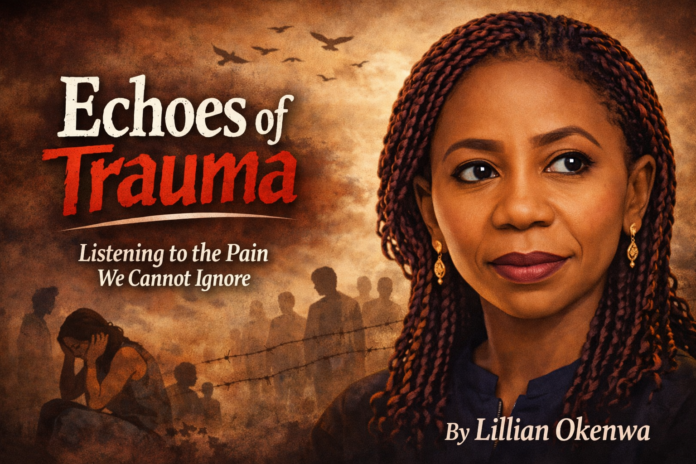
Read Also: Echoes of Trauma: The cost of looking away, By Lillian Okenwa

“We are the ones who kidnapped the people of Woro and Kososo,” the terrorist said. “We have indoctrinated them and changed their way of life from what they knew before their abduction.

“However, the victims have been begging us and we have given them the opportunity so that their government can hear from them.”

The terrorist further stated that the captives were being given a final chance to communicate with authorities.

“We are giving them a final opportunity to appeal to the government. We believe this is clearly understood,” he added.

In the video, the captives were seen responding to questions posed by the terrorists about what they were allegedly taught in captivity, answering under visible distress.

One young woman, who appeared weak and emotionally drained, stepped forward to speak in English, addressing both religious leaders and government authorities.

“Dear Muslim sisters and brothers, we are here today. We are the people who were kidnapped from Woro, Kaiama Local Government Area on February 3. Today is April 8. Please, we are begging you, this is the last opportunity they gave us,” she said.

“We have small children with us and we have some people with pregnancies. Please, assist us. Those who are here, some people with anaemia, please, help us.

“We are begging you. This is the last opportunity that we have, and they teach us the things that we do not know at all, like Tawheedi. We lacked Tawheedi at home even though those people at home know that we lacked Tawheedi. But we are here, they teach us everything, and we understand everything.

“In the name of Allah, we understand everything. And they are not beating us, they give us food and water, everything is available. But we are still begging you, please, we beg you.

“Please, this is our last opportunity, please. Peace be upon you.”

Another woman, who also appeared distressed and exhausted, spoke in Yoruba, appealing directly to both the Kwara and Oyo state governments to intervene urgently.

“They are feeding us and teaching us religion, what we didn’t know at home, we are able to know it here,” she said.

“But we need your help because this is the last chance they gave us. Please help us.”

Several other victims were also allowed to speak in different local languages, all echoing the same desperate appeal for rescue and intervention.

As of the time of filing this report, the Kwara State Government and security agencies have yet to officially respond to the latest development or confirm efforts being made to secure the release of the victims.

On February 4, 2026, SaharaReporters reported that dozens of residents were killed in a coordinated attack by suspected Sahel-backed terrorists on Woro community in Kaiama Local Government Area of Kwara State.

Those slain in the attack included two wives of the Emir of Woro, several of his children, the community’s Chief Imam, a school principal, a headmistress, and students who had just returned home from school.

More children die before age 5 in Nigeria than in poorer countries — Report

More children are stunted or die under the age of five in Nigeria than in countries with similar income levels, FIJ has gathered. A new report by the World Bank explains why.

According to the Nigeria Development Update published on Tuesday, Nigeria stands out for the wrong reasons in early child development. The report shows that the country records more than 100 deaths per 1,000 live births among children under five. 

FIJ reported how the United Nations Inter-Agency Group for Child Mortality Estimation (UN IGME), in its report in March, estimated that Nigeria loses 115 children under the age of five in every 1,000 live births.

The National Health Demographic Survey, which the World Bank relied on, puts that figure at 110 children per thousand births. However, regardless of the source, Nigeria’s under-five mortality rate is still the highest in the World. 

HOW NIGERIA COMPARES

Only about four other countries in the world have rates that high, and all of them are in the low-income category, with income per person around $403. Nigeria, however, is in the lower-middle-income group, with income per person between about $1,097 and $2,981.

Countries in that same income group are doing far better. Bangladesh, for example, records between 28 and 31 deaths per 1,000 live births. Even within West Africa, the difference is significant.

READ ALSO: DATA: 4 in 10 Nigerian Children Under 5 Have Stunted Growth

The only comparable country on the World Bank’s chart records between 60 and 80 deaths per 1,000 live births, still far below Nigeria’s level.

The report pointed out the same trend in nutrition. Around seven countries globally have child stunting rates close to 40 per cent. Six of them are low-income countries. Nigeria is the only lower-middle-income country in that group.

WHY DO NIGERIAN CHILDREN SUFFER?

The report links these outcomes first to poverty. The share of Nigerians living in extreme poverty has seen a steady rise since 2021 and reached close to 30 per cent in 2025, per the report.

For many households, this means children do not get enough food, healthcare or clean water. These are basic needs that directly affect whether a child survives and grows properly.

There are also wide differences within the country. Poorer states, especially in northern Nigeria, record much higher levels of child deaths and stunting than states such as Lagos, Ekiti and Enugu. A child’s chances of survival are still strongly tied to where they are born.

What the government spends on also contributes to the problem. Between 2022 and 2025, only five out of Nigeria’s 36 states spent more on social sectors than on infrastructure.

Social spending includes health, education and social protection, which directly affect children. This is happening even as states receive more money from federal allocations.

At the household level, poverty leads to missed care. Families delay or skip antenatal visits, routine immunisation and proper feeding. These gaps increase the risk of death before age five and raise the likelihood of stunting.

The report also fingered weak coordination across services. Key areas like health, nutrition, water and sanitation, education and social protection are managed separately.

Systems such as District Health Information Software 2 (DHIS2) and Education Management Information System (EMIS) have improved data collection within sectors, but they do not work well together. This makes it hard for health workers to track whether a child has received the full set of services needed in the first 2,000 days of life.

The implication is that many children miss out on essential interventions at critical stages. Without better coordination, stronger social spending and reduced poverty, Nigeria is likely to continue recording child mortality and stunting rates that are far higher than those of countries with similar income levels.

FIJ

TIPS