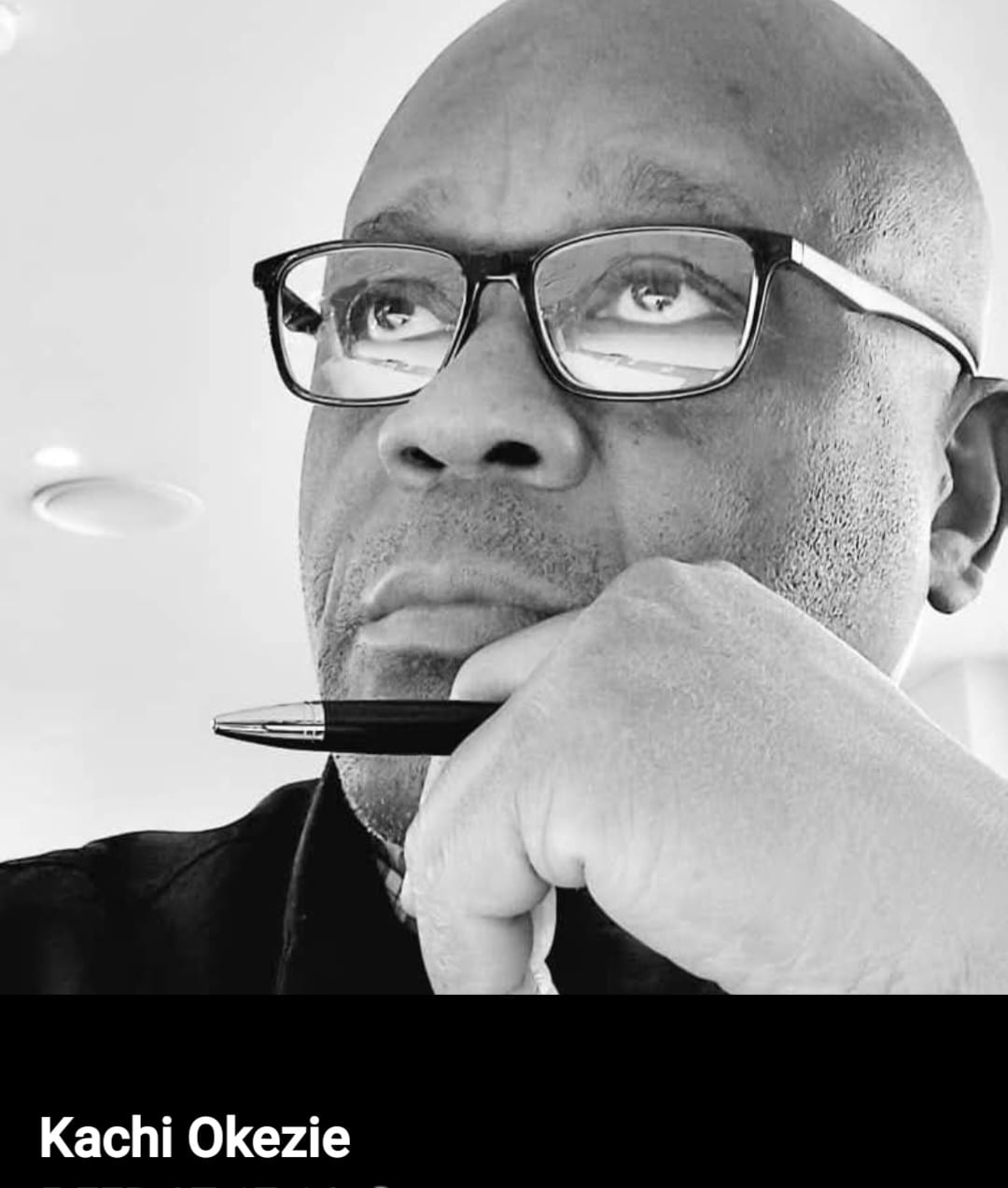
By Kachi Okezie, Esq.
The comment hit me like a slap: “You hear and see everything with your own eyes and you still want to hear and see again the trial before you gree?” It was made by one Eddie Onyejiaka, in response to my own comment in a thread where I urged the use of the cautionary adjective “allegedly” on reporting an unproven crime that was merely an allegation at the time.
Onyejiaka’s poke at me captures the frustration many Nigerians feel when told to wait for a court before branding an accused person guilty. In that moment, the presumption of innocence sounds like a technical excuse, a shield for criminals, even an insult to victims. But that frustration, understandable as it is, points to a deeper problem. We are angry at a broken system, and in that anger we are tempted to abandon the very principle that protects us all from becoming victims of that system.
The doctrine is simple on paper and revolutionary in practice. Section 36(5) of the 1999 Constitution of the Federal Republic of Nigeria provides that “every person who is charged with a criminal offence shall be presumed to be innocent until he is proved guilty.” It is not some lofty legal theory imported for decoration. It is a constitutional right, rooted in the same common law tradition that shaped our criminal procedure and echoed in international instruments Nigeria has ratified, including Article 14(2) of the International Covenant on Civil and Political Rights and Article 7(1)(b) of the African Charter on Human and Peoples’ Rights. The Supreme Court has repeatedly described it as sacrosanct and settled.
In practical terms, it means this: when the state accuses you of a crime, the burden lies entirely on the prosecution to prove guilt beyond reasonable doubt. You do not have to prove your innocence. You may remain silent from beginning to end, and no court can convict unless the state produces credible evidence making guilt the only reasonable conclusion. Lord Sankey’s words in Woolmington v DPP ([1935] AC 462), still ring true in Nigeria today: the presumption of innocence is the golden thread running through criminal law, and no attempt to whittle it down can be entertained.
Why does this matter? Because criminal justice is not about satisfying public outrage. It is about discovering truth through a process designed to minimize the risk of convicting the innocent. Once we discard the presumption, we invert the burden and create a system where accusation becomes condemnation. That is not justice. It is punishment without trial. In a country where allegations travel faster than facts on WhatsApp and Facebook, the consequences are immediate and often irreversible. Reputations are destroyed, families shattered, livelihoods lost, and no acquittal months later can fully repair the damage.
In C.O.P v. AMUTA (2017) LLJR-SC, the Supreme Court emphasised that unless the prosecution establishes a prima facie case, an accused person cannot even be called upon to enter a defence, because to do otherwise would undermine the constitutional presumption of innocence.
The real difficulty in Nigeria is not that the law is silent. It is that institutional practices routinely undermine the very right the Constitution guarantees. People are detained for months on “holding charges” before any proper charge is filed. Courts have repeatedly condemned the practice as unconstitutional and contrary to Section 36, yet it persists. Suspects are paraded before cameras by security agencies and tried in the court of public opinion long before any judge hears the case. Remand becomes a form of pre-conviction punishment, with accused persons languishing in deplorable conditions for years awaiting trial.
Sanusi JCA captured the principle plainly in Musa v. Commissioner of Police: it is better for one hundred accused persons to go free than for one innocent person to be punished. When detention routinely precedes proof, innocence may remain formally proclaimed but becomes practically meaningless.
This is where public misunderstanding becomes dangerous. Many Nigerians see the presumption of innocence as coddling criminals, especially where the alleged offence is heinous or the accused politically connected. There is genuine frustration with the failures of the legal system in combating crime, and some lawyers, judges, and prosecuting agencies have indeed been accused of exploiting procedural protections to frustrate trials of powerful suspects.
Read Also: The Woman Who Gave Thirty Years — And was sent away with nothing
That abuse is real and must be confronted. But the answer is not to weaken the right for everyone. The answer is to make the process faster, more transparent, and more credible, so citizens can trust it enough to wait for it. Reforming bail conditions, reducing prosecutorial delays, and improving facilities for speedy trials would make pre-trial detention less oppressive and more consistent with the presumption of innocence.
The doctrine itself also contains limits. The Constitution provides that nothing in Section 36(5) invalidates laws placing on an accused person the burden of proving particular facts. Statutes may therefore create reverse burdens for specific aspects of certain offences. But these are exceptions, not the rule, and they must be narrowly justified. The general principle remains unchanged: the prosecution proves, the accused defends. That balance reflects a moral choice about the kind of society we want to build. A society willing to risk letting the guilty go free rather than punish the innocent is one that values human dignity and liberty above the convenience of swift condemnation.
Beyond the courtroom, the doctrine serves an important civic function. It teaches restraint. It reminds us that anger, however justified, is not evidence. It reminds us that a viral video is not the same as tested testimony in court. It reminds us that justice capable of enduring must rest on procedure, not on the mood of the mob. When citizens understand this, they stop demanding trial by Facebook and start demanding functional courts, independent prosecutors, and competent investigations. The presumption of innocence becomes a bridge between public outrage and public trust.
Educating the public on this principle is therefore not optional. Rights people do not understand are rights they will not defend. The Administration of Criminal Justice Act 2015 and the Evidence Act 2011 contain safeguards intended to give real effect to Section 36(5), but citizens who do not know these protections cannot insist on them. Civic education must go beyond merely reciting rights. It must explain why they exist, how they operate, and what happens when we abandon them. It must show that protecting the accused today is ultimately what protects the accuser tomorrow.
Nigeria’s criminal justice system remains trapped between the ideal of constitutional fidelity and the reality of institutional failure. Bridging that gap requires more than passing new laws. It requires a shift in public consciousness. We must learn to hold two truths at once: victims deserve justice, and accused persons deserve a fair trial. These ideas are not in conflict. They are two sides of the same coin.
So when someone asks why we cannot simply convict based on what we saw online, the answer is not legal jargon. It is this: once we begin punishing people before trial, there is no principled place to stop. The line between the accused and the guilty collapses, and in that collapse, everyone becomes less safe. The presumption of innocence is not a gift to criminals. It is a shield for the innocent, and in a country of over 220 million people, any one of us could someday need that shield. If we truly want a justice system that works, we must be willing to defend due process even when the person on trial is unpopular. That is the price of living under the rule of law, and it is a price worth paying.
Kachi Okezie, Esq. is a Legal Practitioner and member of the Abuja branch of the Nigerian Bar Association.
The views expressed by contributors are strictly personal and not of Law & Society Magazine.