The Lagos State Special Offences Court sitting in Ikeja has sentenced a 63-year-old cleric, Chris Douglas, to life imprisonment for sexualy attacking a church member’s daughter.
Delivering judgment on Thursday, April 16, 2026, Justice Rahman Oshodi held that Douglas, the General Overseer of Peculiar Generation Assembly Church, Oshodi, abused his position of authority and trust to exploit the victim.
Describing the conduct as a gross breach of trust, the judge said, “The convict occupied a position of spiritual authority and was regarded as a father figure by the victim and her family.”
He added that instead of protecting that trust, the convict “betrayed it in the most reprehensible manner.”
The court held that the abuse occurred in a hotel on several occasions, noting that the victim and her family relied on the cleric for spiritual guidance.
Justice Oshodi further stated that the prosecution proved that the victim suffered severe psychological trauma as a result of the abuse.
“The court accepts the evidence that the victim suffered depression and recurring suicidal thoughts as a direct consequence of the cpnvict’s actions,” he said.
During the trial, the prosecution, led by the Director of Public Prosecution, Dr Babajide Martins, called five witnesses, including the victim, her mother, and a medical doctor.
Medical and documentary exhibits were also tendered in evidence.
The victim told the court that the cleric initially drugged and raped her in September 2017.
“I trusted him like a spiritual father. I never imagined he could do this to me,” she testified.
Her mother also told the court that she confronted the convict after discovering the incident
“I went to his church, he cried and said it was the work of the devil. He begged us in front of the elders,” she said.
The complainant said the matter was later reported to a human rights organisation, the police at Makinde Division, and the Mirabel Centre for a medical examination
The convict, however, denied the allegations and told the court that the relationship was consensual.
But Justice Oshodi rejected the claim, holding that the evidence before the court established rape beyond a reasonable doubt.
“The defence of consent is not supported by the totality of the evidence before the court,” the judge ruled.
The court reviewed both oral and documentary evidence and considered objections raised by the defence under the Evidence Act, 2011.
While some documents were discounted for non-compliance, the court held that the oral testimony of the medical expert, Dr Maria Fadaka, remained admissible.
In his judgment, the court noted that although some alleged incidents were not sufficiently proved to have occurred before January 2018, the prosecution successfully established rape in relation to incidents when the victim was already 18 years old.
The court consequently discharged the convict on six counts of defilement and sexual assault but found him guilty on three counts of rape
Oshodi sentenced Douglas to life imprisonment on each count, holding that the sentences shall run concurrently.
“The law must protect the vulnerable, and this court will not hesitate to punish abuse of trust in the strongest terms,” the judge said.
The court also ordered that the convict’s name be entered into the Lagos State Sexual Offenders Register.
The Niger State Police Command has arrested a serving Mobile Police officer in connection with an armed robbery incident that left a fuel attendant dead in Kontagora Local Government Area.
The incident occurred on April 15, 2026, at about 2:40 p.m., when a distress call was received reporting an armed robbery at Garun Mallam Filling Station, behind BCG Garage, Kontagora.
According to the security analyst Zagazola Makama, two armed suspects, one of whom was reportedly dressed in a mobile police uniform and operating on a motorcycle, stormed the filling station and demanded money from the fuel attendant after purchasing fuel.
When the attendant, identified as 20-year-old Jibrin Inuwa of Garun Mallam, resisted, one of the suspects shot him in the chest and fled with an undisclosed sum of money.
The victim was rushed to the General Hospital, Kontagora, where he was confirmed dead, and his body was later released to his family for burial according to Islamic rites.
Following the attack, police patrol teams from ‘A’ Division Kontagora, led by the Divisional Police Officer, trailed the suspects to the Dadinkowa area behind a vigilante office, where they were engaged in a gun duel.
One of the suspects was eventually overpowered, shot in the leg, disarmed, and arrested.
The suspect was later identified as a serving Mobile Police officer, Insp. Jido Ahmed, attached to 61 PMF Kontagora but currently on special duty in Agwara.
He was taken to the General Hospital, Kontagora, and later referred to the Police Clinic in Minna for treatment.
An AK-47 rifle with number 38262 and 12 rounds of 7.62mm ammunition were recovered from him.
Sources from the command said efforts are ongoing to apprehend the second fleeing suspect, while investigation into the case continues.
Nigeria is facing a stark security paradox: as calls for state policing grow louder, the country’s existing security architecture is already buckling under severe underfunding.
Across regions and political divides, pressure is mounting on the federal government to decentralize policing. But beneath the heated debate lies a more immediate and less resolved crisis, how to fund any system, centralized or otherwise, in a country where frontline security agencies are struggling to function.
At the centre of the controversy is Olatunji Disu of the Nigeria Police Force, whose proposed 60-month rollout plan for state police has triggered nationwide backlash. Critics say the timeline reflects a dangerous lack of urgency as insecurity deepens.
Yet even among supporters of decentralization, a troubling question persists: can Nigeria afford to expand a system it has failed to adequately fund?
A System Running on Empty
From urban centres to rural outposts, the reality of policing in Nigeria tells a grim story.
Police divisions operate with skeletal budgets, often unable to fuel patrol vehicles or maintain basic infrastructure. Officers are forced to improvise—sometimes relying on informal contributions to carry out investigations.
Despite interventions such as the Nigeria Police Trust Fund, the gap between allocation and operational reality remains wide. Experts say the problem is not just funding levels, but how resources are managed and deployed.
“The architecture is weak because the foundation is weak,” a security analyst said. “Without fixing funding, structural reform becomes cosmetic.”
Frontline Collapse, Rising Threats
The consequences are playing out in real time.
In Kwara State, forest guards battling bandits report unpaid salaries, crude weapons, and rising fatalities. Across the country, overstretched police units are unable to respond effectively to kidnappings, insurgency, and violent crime.
The vacuum has forced greater reliance on the military for internal security, an arrangement widely seen as unsustainable.
Meanwhile, other agencies like the Nigeria Immigration Service face similar funding constraints, leaving borders porous and enforcement weak.
State Police: Solution or Distraction?
Advocacy for state police has intensified amid frustration with centralized policing. Groups across the Middle Belt, the South-West, and the South-East argue that local control could improve intelligence gathering and response times.
But critics warn that decentralization without funding clarity risks multiplying dysfunction.
“How will states fund police forces when the federal structure itself is underfunded?” one policy expert asked. “We risk creating 36 weak systems instead of fixing one broken one.”
The debate has been further inflamed by opposition to the IGP’s timeline, with many describing a five-year wait as unacceptable in the face of daily violence.
A Crisis of Priorities
Nigeria has committed significant sums to security in recent years, yet the impact remains uneven at best. For many officers, the reality is unchanged: low pay, poor welfare, and inadequate equipment.
Analysts say this disconnect points to deeper governance challenges, where funding exists on paper but fails to translate into operational strength.
As the 2027 elections approach and insecurity continues to dominate national discourse, the stakes are rising.
Whither the Way Forward?
The question now confronting policymakers is not simply whether to adopt state policing, but how to build a system that works.
Without addressing chronic underfunding, experts warn, any reform risks becoming another layer of bureaucracy rather than a solution.
With Nigerians living under constant threat, the debate is no longer theoretical. It is urgent, existential, and unresolved.
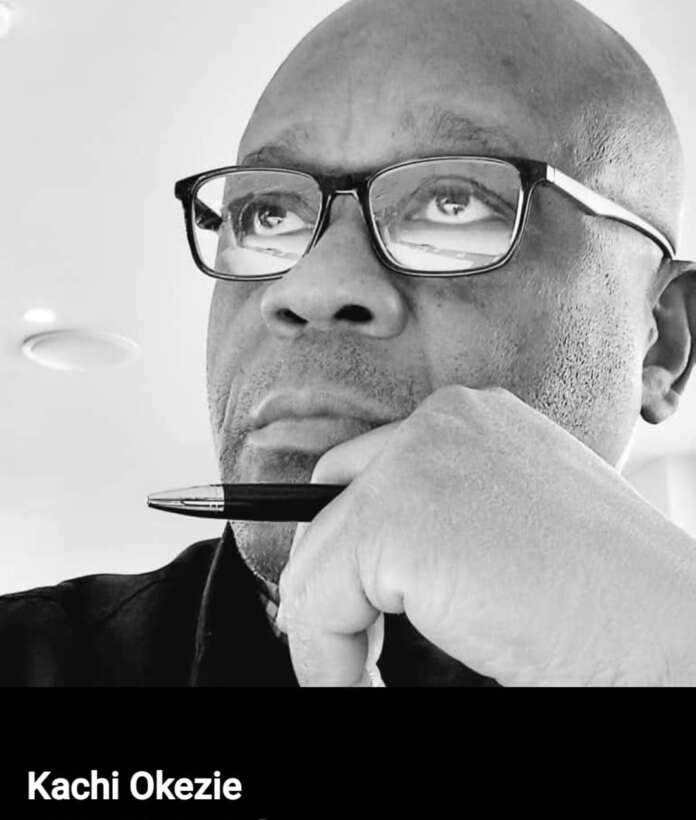
“I pray that your will be done concerning the rising tension between Iran and America, which could trigger a war capable of engulfing the world. You are the God of peace and concord—let there be peace in your waters and on this earth you created.“
Even above the waters, you are God—the God of the oceans, the rivers, the great lakes, and the “water gate” that is currently tossing the world into turmoil and fanning the embers of war—a potential Third World War.
My God and my Father, the Alpha and Omega, the Creator of the universe, I acknowledge before you this morning that all waters belong to you: the roaring Atlantic, the quiet Mediterranean, the restless Pacific, the rivers that cross continents, and the lakes that lie peacefully between mountains.
Among these creations, O Lord, are the straits—those narrow passages of water through which mighty ships pass carefully, almost as if squeezing through tight village paths.
Yet, among all the straits in the world, one stands out for its importance and tension: the Strait of Hormuz. It is a narrow, strategic and politically sensitive waterway that has become one of the most critical locations in the global economy.
Naturally, it raises a question that blends reverence with curiosity: why, O God, did you place so much global importance in such a small stretch of water?
At first glance, the Strait of Hormuz looks insignificant on the map—easy to miss. But in reality, it serves as a critical link between the Persian Gulf and the Gulf of Oman, opening into the Arabian Sea.
It is the main route through which oil produced in the Middle East reaches the rest of the world. Countries like Saudi Arabia, the United Arab Emirates, Qatar, Kuwait and Iraq depend on it to export their energy resources.
Geographically, Iran sits on one side of the strait, while Oman lies on the other. Between them flows a corridor that carries a significant portion of the world’s oil supply. Every day, massive oil tankers move through this narrow channel, transporting millions of barrels of crude oil to Asia, Europe, America and beyond. Nearly one-fifth of global oil consumption passes through this single route.
This reality gives the strait enormous strategic importance. Despite its narrow width—about 33 kilometres—it functions as a major artery of the global economy. The entire world, in a sense, depends on the smooth flow of traffic through this passage.
Whenever there is tension in the Middle East, attention quickly shifts to the Strait of Hormuz. Oil prices react immediately, stock markets become unstable, and governments begin to issue cautious statements.
The concern is simple: if the strait were ever blocked, the consequences for the global economy would be severe. That is why there is a constant military presence in the area. The United States Navy and its allies patrol the waters, monitor activities and ensure that the route remains open. Warships, surveillance systems and advanced technology are deployed to protect this narrow but vital corridor.
IRONY
There is a striking irony in this situation. The most advanced nations in the world, equipped with cutting-edge technology, still depend heavily on a natural passage formed thousands of years ago. It is a reminder that, despite human progress, nature continues to hold significant control over global affairs. A storm can disrupt air travel, an earthquake can halt cities, and a narrow waterway can influence the world economy.
History offers similar examples. The Suez Canal reshaped global trade routes, and the Panama Canal transformed maritime movement. In the same way, the Strait of Hormuz remains a key geographical feature that quietly influences global stability and economic activity.
NIGERIA’S GEOGRAPHICAL ADVANTAGE
Interestingly, Nigeria enjoys a different geographical advantage. Its oil exports move directly into the Atlantic Ocean without passing through a narrow or contested route. This means there is no comparable bottleneck affecting its shipments. It is a form of natural freedom that often goes unnoticed, especially when compared to the challenges faced by countries in the Gulf region.
For those Gulf nations, the Strait of Hormuz is both an asset and a risk. It provides access to global markets, yet it also exposes them to potential disruptions. As a result, the area remains under constant watch. Military forces stay alert, surveillance systems operate continuously, and diplomatic efforts are handled with care. Even tanker operators understand that they are navigating one of the most sensitive waterways in the world.
DEEPER LESSON
The deeper lesson is clear: power is not always found in size. Sometimes, it is concentrated in small, strategic points. Just as a tiny component can control a large machine, a narrow channel of water can influence the fortunes of nations.
This brings us back to the original question. Why would such immense global importance be placed in such a fragile and limited space? One possible answer lies in humility. It serves as a reminder that, despite all human advancement, the world still depends on delicate natural structures. Civilization itself often relies on narrow channels—both literal and metaphorical.
The Strait of Hormuz stands as a powerful example of this truth. Positioned between Iran and Oman, it continues to shape global economic and political realities. It reminds us that geography still plays a decisive role in world affairs.
And so, with respect and reflection, the question remains: why did you, O God, create the Strait of Hormuz? Perhaps the answer lies in the lesson it teaches—that even the smallest places can carry the greatest significance, and that within the structure of the natural world are enduring forces that continue to guide human destiny.
PRAYER FOR PEACE
I pray that your will be done concerning the rising tension between Iran and America, which could trigger a war capable of engulfing the world. You are the God of peace and concord—let there be peace in your waters and on this earth you created.
We do not want war—neither mechanical war nor economic war nor any war that tears us apart as children of one God, one Father.
So, O God, let this narrow gate not become a gateway to war. Let wisdom prevail over pride, restraint over provocation, and peace over profit. For if such a small stretch of water can sustain the world, it can also, if misused, unsettle it beyond repair.
And lastly, O God, we ask that you mend quarrels among world leaders—seen and unseen, spoken and unspoken. Touch the hearts of presidents and spiritual fathers alike. Where there is ego, bring humility. Where there is division, bring understanding.
We want peace. Let there be peace, O God of peace. Let peace flow across your waters and settle upon the earth. Amen and amen.
The views expressed by contributors are strictly personal and not of Law & Society Magazine.

The latest Nigerian Bar Final examination results have sparked fresh conversations about performance trends in legal education, with figures revealing a wide gap between top-performing candidates and those who fell short.
At its recent meeting, the Council of Legal Education, chaired by Emeka Ngige, formally approved the December 2025 Bar Final results presented by the Director-General of the Nigerian Law School, Olugbemisola Titilayo Odusote.
The figures tell a story of both achievement and concern.
Out of a total of 7,602 candidates who sat for the examination, only 212 candidates, just 2.8 percent, earned a First Class, underscoring the rarity of top-tier performance in Nigeria’s final gateway to legal practice.
A further 1,216 candidates (16 percent) secured a Second Class Upper division, while the largest share, 2,961 candidates (nearly 39 percent), fell into the Second Class Lower category, highlighting a heavy concentration of mid-tier results.
At the lower end of the spectrum, 1,622 candidates (21 percent) obtained a simple Pass, while 314 candidates (4.1 percent) were placed on Conditional Pass, requiring remediation before full qualification.
More troubling, however, is the number of candidates who failed outright. A total of 1,067 candidates, approximately 14 percent, did not meet the required standard, effectively halting their immediate path to legal practice. An additional 210 candidates (2.8 percent) were absent from the examination entirely.
In aggregate, this means that over 18 percent of candidates either failed or could not complete the process, raising fresh questions about preparedness, training quality, and the increasing pressure within Nigeria’s legal education pipeline.
While the Council of Legal Education retains the authority to approve results, the final step into the profession lies with the Body of Benchers, which is responsible for formally admitting successful candidates to the Bar.
The latest results arrive at a time of growing debate over standards at the Nigerian Law School, with critics pointing to persistent gaps between university legal education and the practical rigours of Bar examinations.
For many candidates, the outcome represents the culmination of years of study. For others, it signals a setback in an already highly competitive and demanding profession.
Beyond individual results, the broader implication is harder to ignore: Nigeria’s legal system continues to produce thousands of graduates, but only a select few emerge at the top, while a significant number struggle to cross the final threshold.
As conversations around legal education reform intensify, the numbers from the December 2025 Bar Finals may serve as both a benchmark, and a warning.
Nigeria is confronting a sweeping public health emergency, one that experts say is quietly spiralling into a national catastrophe.
From overstretched hospitals to a mass exodus of doctors, the country’s healthcare system is buckling under the weight of multiple crises, leaving an estimated 65 to 70 percent of Nigerians without access to quality care.
At the centre of the alarm is a growing call for urgent reform. Speaking at a major international conference, Sunday Obeka, Vice Chancellor of Wesley University, warned that community health—particularly in rural areas—has been dangerously neglected.
“If you visit rural communities today, the gaps are glaring,” Obeka said. “Community health must become a national priority, not an afterthought in budget allocations.”
A System Under Strain
The warning came during the institution’s maiden International Conference on Community Health, which drew local and global experts to examine the theme: “Community health in a globalised society: prospects, challenges and way forward.”
Participants painted a stark picture: a country battling infectious disease outbreaks, rising non-communicable illnesses, and a healthcare workforce in decline.
Nigeria currently carries the world’s heaviest malaria burden—accounting for roughly 27 percent of global cases—while also grappling with recurring outbreaks of cholera, Lassa fever, measles, and tuberculosis.
At the same time, a “silent epidemic” of hypertension and diabetes is accelerating, signalling a dangerous double burden of disease.
The ‘Brain Drain’ Crisis
Perhaps the most immediate threat is the mass migration of medical professionals.
In the past five years alone, approximately 16,000 doctors have left Nigeria, leaving a severely depleted workforce to serve a population exceeding 230 million. In many hospitals, departments once staffed by hundreds now operate with a fraction of their personnel.
The impact is particularly severe in rural communities, where access to skilled healthcare workers is limited or non-existent.
“Healthcare delivery is collapsing in underserved areas,” one conference participant noted, pointing to widening inequality between urban and rural populations.
Broken Infrastructure, Rising Costs
Even where healthcare facilities exist, many are barely functional.
Across the country, primary healthcare centres are plagued by unreliable electricity, inadequate equipment, and critical shortages of essential medicines. A recent report found that barely a third of required drugs are available at the primary care level.
For most Nigerians, the cost of care is another barrier. With roughly 97 percent of the population lacking health insurance, millions are forced to pay out-of-pocket, pushing an estimated five million people into poverty each year.
A Generation at Risk
The crisis extends beyond infrastructure.
Nigeria continues to record some of the world’s highest maternal mortality rates, while more than two million children suffer from severe acute malnutrition, most without access to treatment.
Mental health services are also critically under-resourced. With only a few hundred psychiatrists nationwide, millions of Nigerians with mental health conditions remain untreated, particularly in conflict-affected regions in the northeast.
In states like Borno, years of insurgency have left large portions of healthcare infrastructure in ruins, compounding an already dire situation.
Calls for Accountability and Reform
Despite government efforts, including a ₦260 billion allocation in 2024 to revitalize primary healthcare centres, experts say progress has been slow and uneven.
Critics point to systemic inefficiencies, corruption, and weak policy implementation as major obstacles.
At the conference, Bashir Idris of the Community Health Practitioners Registration Board of Nigeria emphasized the need for stronger collaboration, training, and accountability across the sector.
But speakers agreed on one point: without urgent and sustained intervention, Nigeria’s healthcare crisis could deepen into a full-scale humanitarian emergency.
“The warning signs are no longer subtle,” Obeka said. “The question is whether we act now, or pay a far greater price later.”
A Special Offences and Domestic Violence Court in Ikeja, Lagos, has convicted and sentenced twin brothers, Ojomo Taiwo and Ojomo Kehinde, alongside two others, Emmanuel Bamidele (also known as DPO) and Peter Samuel (also known as Mogaji), to 14 years’ imprisonment each for armed robbery.
The trial judge, Justice Olubunmi Abike-Fadipe, delivered the sentence following a plea bargain agreement entered into by the defendants on an amended two-count charge of conspiracy to commit armed robbery and armed robbery, contrary to Section 298(1) of the Criminal Law of Lagos State, 2015.
The convicts—Taiwo, a driver; Kehinde, a security guard; Bamidele, a technician; and Samuel, a cobbler—were initially arraigned in 2020 and pleaded not guilty. They later changed their plea to guilty after entering into a plea bargain agreement filed on April 14, 2026, which reduced their potential sentence from 21 years to 14 years’ imprisonment.
Justice Abike-Fadipe confirmed that the defendants consented to the plea bargain voluntarily but noted that the court was not bound by its terms.
According to the prosecution, the incident occurred on June 5, 2020, at about 11:30 p.m. at Oshodi Bridge, Lagos. The defendants, under the pretence of being stranded, boarded a blue 2005 Toyota Sienna with registration number LSR 771 GG, driven by Sadiq Abiodun Ezekiel.
Once inside the vehicle, they allegedly produced firearms, forced the driver into the back seat, assaulted him, and dispossessed him of his belongings, including an Android phone, an iPhone, an ATM card, and N15,000 in cash. The group then drove off with the vehicle.
They later abandoned the victim at Charley Boy bus stop in the Gbagada area before fleeing towards Oshodi.
The stolen vehicle was recovered the same day at Ikeja Shopping Mall and returned to the victim.
While inspecting the recovered vehicle, the victim discovered a locally made double-barrel pistol loaded with four cartridges, which he handed over to the police.
One of the charges stated that the defendants, while armed with guns, robbed the victim of his personal items and the vehicle at Oshodi Bridge within the Ikeja Judicial Division.
During proceedings, the Director of Public Prosecutions, J A Ogunode, urged the court to sentence the defendants in line with the plea bargain.
In her ruling, Justice Abike-Fadipe sentenced each of the convicts to 14 years’ imprisonment, with the term to commence from the date of their remand in custody.
Nigeria’s electoral umpire is facing mounting scrutiny, and a coordinated defence.
A coalition of civil society organizations has thrown its weight behind Joash Ojo Amupitan, chairman of the Independent National Electoral Commission (INEC), warning that sustained attacks against him risk undermining public confidence ahead of the 2027 general elections.
At a press conference held this week, advocacy groups and governance stakeholders dismissed allegations circulating online about the INEC chairman as misinformation, describing them as part of a broader campaign capable of destabilizing Nigeria’s fragile democratic process.
A Battle Over Credibility
The intervention comes at a politically sensitive moment, as INEC ramps up preparations for a series of key elections—including governorship polls in Ekiti and Osun states—and the high-stakes 2027 general elections.
Speaking on behalf of the coalition, Prince Peter Bassey defended Amupitan’s record, citing what he described as “measurable achievements” within months of assuming office in October 2025.
Among them: the early release of the 2027 election timetable, the conduct of the Anambra governorship election, and the organization of the Federal Capital Territory Area Council polls—all presented as evidence of a shift toward transparency and institutional discipline.
Civil society leaders say these steps are critical in restoring trust in Nigeria’s electoral system, long plagued by allegations of irregularities, logistical failures, and political interference.
Misinformation and Political Tensions
At the centre of the controversy is a wave of online claims linking Amupitan to a controversial social media account—allegations the coalition insists are false.
According to the groups, forensic checks revealed that the account in question does not belong to the INEC chairman, describing the claims as a “deliberate distortion” fuelled by bad actors seeking to discredit the commission.
They warned that unchecked misinformation—particularly in the digital space—could erode institutional credibility and inflame political tensions.
“We condemn this development in totality as it threatens the existence of our democracy,” the coalition said in a joint statement signed by multiple civic leaders, including Felix Attah and representatives from youth and regional advocacy groups.
A Test of Nigeria’s Electoral System
The defence of Amupitan underscores a broader struggle over the credibility of Nigeria’s electoral institutions.
Since taking office, the INEC chairman has positioned himself as a reform-minded leader, emphasizing adherence to constitutional provisions, electoral laws, and international best practices. His administration has also pledged expanded voter registration efforts and increased stakeholder engagement.
Supporters argue that these moves signal a break from past controversies that have dogged the commission.
Critics, however, remain sceptical—pointing to Nigeria’s long history of disputed elections and unresolved legal battles as reasons for continued vigilance.
High Stakes Ahead of 2027
With political tensions rising and party disputes—such as those involving the African Democratic Congress—testing INEC’s regulatory authority, analysts say the commission’s credibility will be pivotal in shaping the legitimacy of the next electoral cycle.
Civil society groups are now urging Nigerians to resist what they describe as politically motivated attacks and to support institutional reforms aimed at strengthening democratic governance.
“At this critical moment,” the coalition said, “national interest must take precedence over misinformation and distraction.”
For Amupitan and INEC, the message is clear: the road to 2027 will not only be about organizing elections—but defending the integrity of the system itself.
Global Afrobeats star Rema is pulling back the curtain on the darker realities of early fame, revealing allegations of exploitation, emotional strain, and loss of control during his rapid rise in the music industry.
Born Divine Ikubor, Rema emerged from Benin City as one of Afrobeats’ brightest new voices, rising to stardom at just 19 after signing with Mavin Records. His breakout success, driven by viral hits and global appeal, quickly positioned him as a leading figure in the new wave of African music, earning international recognition and collaborations across continents.
But behind the meteoric rise, the 25-year-old now suggests a far more complicated journey.
In his latest track, Moviestar, featuring French pianist Sofiane Pamart, Rema delivers a haunting reflection on the cost of fame. Through raw and introspective lyrics, he describes a period of vulnerability, alleging that he was exposed to harmful influences and manipulative environments at a young age.
“Girls always give me drugs. My happiness is zipped in their little purse. Friends always make me feel robbed,” he sings—lines that have sparked concern among fans and reignited conversations about artist welfare in the entertainment industry.
A Young Star Under Pressure
Rema’s reflections underscore the intense pressures that often accompany early success. After signing his record deal, he suggests the focus shifted almost entirely to performance, output, and commercial success—leaving little room for personal stability or emotional well-being.
In Moviestar, he portrays himself as caught in an industry “machine,” compelled to keep producing and performing even while struggling internally.
The revelations are particularly striking given Rema’s public image as a confident, genre-bending innovator who helped push Afrobeats into new global territory. His success story—once seen as a blueprint for young African artists—now appears to carry a more cautionary undertone.
Between Stardom and Survival
While the singer has not expanded publicly beyond the song’s lyrics, the themes suggest a shift toward a more introspective phase in his career—one that confronts the emotional toll of fame and the hidden risks faced by young artists.
Industry observers say his comments could amplify ongoing debates about exploitation, mental health, and accountability within the global music business.
For many fans, the message is sobering: behind the global hits and sold-out shows lies a young artist grappling with the cost of becoming a star too quickly.
New details have emerged on the harrowing circumstances surrounding the killing of the Nigerian Army Commander, Brigadier-General Oseni Braimah, who died during a terrorist attack on a military base in Borno State.
It has been revealed that Braimah was killed by the terrorists while speaking on the phone with his twin brother in the United Kingdom.
SaharaReporters had reported that Braimah and other soldiers were killed when terrorists stormed the 29 Task Force Brigade Headquarters in Benisheikh, Borno State, in a midnight assault on April 9, 2026.
The killing of the senior military officer and several other soldiers in a military base further exposed the persistent security vulnerabilities in Nigeria’s North-East.
According to Vanguard, it was gathered that late Braimah had been engaged in one of his routine late-night conversations with his twin brother, who is based in the UK, when the attack began, abruptly cutting short what would become their final conversation.
A family member, who spoke on condition of anonymity, disclosed that the identical twins shared a close bond and spoke almost daily, often after midnight.
“Braimah was a set of twins (sic). His twin brother is not here in Nigeria. They are identical twins and are very close. They spoke almost every day,” the family member told Vanguard.
“They started speaking after midnight, as usual, when, suddenly, the General paused, apparently because of some unusual movement at his end. After that, the line went dead.”
The family source explained that the sudden silence triggered panic, as repeated efforts by the twin brother to reconnect failed.
“His twin brother’s repeated efforts to reach him failed. He kept calling and sending text messages, but there was no response. The General did not answer again,” he said.
According to the relative, the brother remained awake for hours, desperately trying to reach the officer.
“He remained awake until about 4 am, still dialing his brother’s number, but there was no answer,” the family member said.
“By about 6:30 am, I received a call from a senior Army officer. The moment I saw the call, I knew something was wrong. He told me the situation at the base was serious, before breaking the news.”
Struggling with emotion, the relative added, “The officer said the base was under attack and communication had broken down. That was how I heard that some soldiers had been killed and that the Brigade Commander, my brother, was among them. It is heartbreaking.”
Earlier reports alleged that the armoured vehicle he attempted to use for escape failed to start due to mechanical issues, leaving him exposed to the attackers.
But Army spokesperson stated that claims regarding an unserviceable or faulty vehicle are false.
The Army stated that the officer was actively leading troops from the vehicle and that it was only “temporarily immobilised” during an intense firefight, rather than being broken down.
The Edo State-born late Brigadier General was buried alongside other fallen soldiers in Maiduguri, Borno State, as grief and anger trailed the incident.
Meanwhile, Edo State Governor, Monday Okpebholo, has announced full educational scholarships for the three children of the slain officer, pledging to sponsor their education up to university level.
In a statement by his Chief Press Secretary, Dr. Patrick Ebojele, the beneficiaries were identified as 18-year-old Farida Hussain-Braimah, a 100-level Software Engineering student at Nile University, Abuja; 16-year-old Amir Hussain-Braimah, an SS3 student at Olumawu Senior School, Abuja; and 12-year-old Yasmeen Hussain-Braimah, a JSS2 pupil at Olumawu Junior Secondary School, Abuja.
Governor Okpebholo described the gesture as a moral obligation and a demonstration of responsible governance.
“Brigadier General Braimah paid the ultimate price in service to this country. It is only right that we stand by the family he left behind and ensure his children have uninterrupted access to education,” the governor said.
He further praised the late officer’s service record, describing him as a symbol of discipline, courage, and patriotism.
“No child of an Edo hero should be denied the opportunity to succeed. This is about responsibility, honour, and a deliberate investment in the future,” he added.
The governor also called on other states and private organisations to support families of military personnel who die in active service, particularly in the area of education.
Before his death, Braimah had a distinguished military career marked by key command, instructional, and international assignments.
He held a degree in History from the Nigerian Defence Academy and advanced degrees from institutions including King’s College London and the National Defence University in Islamabad.
He served as Chief of Staff at 6 Division Headquarters in Port Harcourt, Chief Instructor at the Armed Forces Command and Staff College, Jaji, and commander of the Infantry Presidential Guards Battalion in Abuja.
He also contributed to global peacekeeping efforts as a United Nations Observer.
Sources indicated that the late General was on the verge of redeployment to the Ministry of Defence before the attack Sources indicated that the late General was on the verge of redeployment to the Ministry of Defence before the attack that ultimately claimed his life.
Our site uses cookies. By clicking “Accept All Cookies”, you direct Law and Society Magazine to store cookies on your device and disclose information in accordance with our Cookie Statement: cookie policyACCEPTREJECT
Privacy & Cookies Policy
Privacy Overview
This website uses cookies to improve your experience while you navigate through the website. Out of these cookies, the cookies that are categorized as necessary are stored on your browser as they are essential for the working of basic functionalities of the website. We also use third-party cookies that help us analyze and understand how you use this website. These cookies will be stored in your browser only with your consent. You also have the option to opt-out of these cookies. But opting out of some of these cookies may have an effect on your browsing experience.
Necessary cookies are absolutely essential for the website to function properly. This category only includes cookies that ensures basic functionalities and security features of the website. These cookies do not store any personal information.
Any cookies that may not be particularly necessary for the website to function and is used specifically to collect user personal data via analytics, ads, other embedded contents are termed as non-necessary cookies. It is mandatory to procure user consent prior to running these cookies on your website.