Shot down over a Japanese-held jungle in 1943, American pilot Fred Hargesheimer survived because a remote village refused to abandon him. He spent the next seven decades making sure he never abandoned them either.
In 1943, an American pilot fell out of the sky into one of the most dangerous jungles on earth.
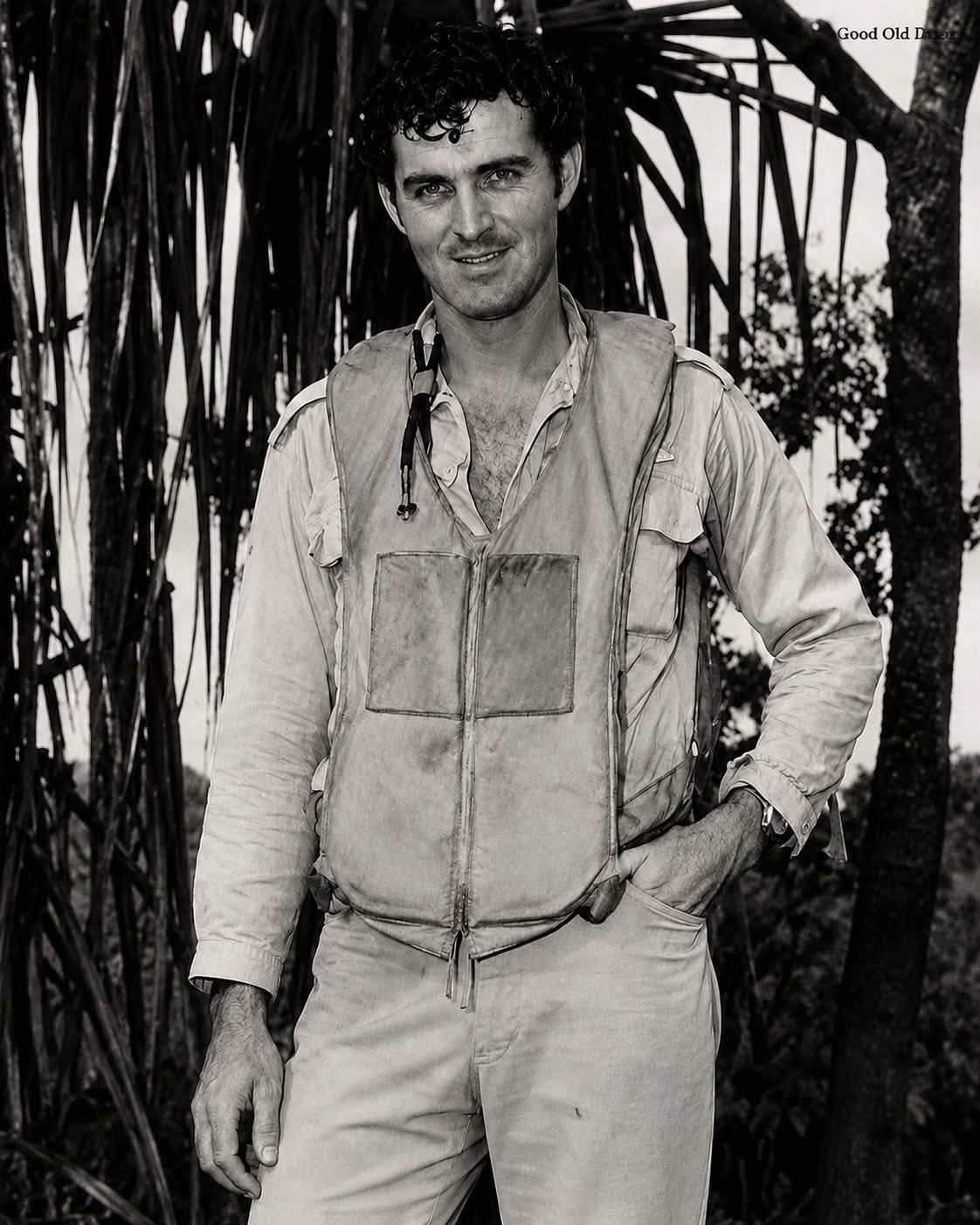
For thirty-one days, Fred Hargesheimer wandered alone through the rainforest of New Britain after his burning reconnaissance plane was shot down over Japanese-controlled territory during World War II.
He was twenty-seven years old.
Starving.
Delirious.
Barely alive.
He survived on roots and stream water while moving through the jungle at night trying to avoid Japanese patrols searching the island.
By the time voices finally emerged from the trees on the thirty-second day, Fred believed he was about to die.
He thought the Japanese had found him.
Instead, it was a group of Nakanai tribesmen.
The villagers carried the weak American pilot back to their coastal village and hid him from Japanese forces despite knowing the consequences if they were caught.
The Japanese were offering rewards for captured Allied airmen.
They were also executing anyone who helped them.
The villagers hid Fred anyway.
He was so sick he could barely swallow solid food.
Then a nursing mother named Ida walked into the hut where he was lying.
She returned carrying a cup filled with her own breast milk and fed him herself for ten days to keep him alive while also nursing her own baby.
Fred never forgot her name.
Whenever Japanese patrols approached the village, someone would quietly blow into a conch shell hidden nearby.
That sound meant Fred had seconds to disappear.
And if he ran across the sand wearing boots, village children followed behind him carrying tiny palm-frond brooms — sweeping away his footprints before Japanese soldiers arrived.
If they had been discovered, the entire village likely would have been massacred.
Nobody betrayed him.
The children could not pronounce “Freddie,” so they called him “Mastah Preddi.”
Master Freddie.
He lived among them for seven months.
Then, in February 1944, Australian commandos finally reached the village and radioed for an American submarine to extract him from the island.
On a moonless night, Fred paddled out toward the submarine in a canoe while the villagers watched from shore.
Some mothers reportedly tried giving him their children to take back to America with him.
Fred survived the war and returned home to Minnesota where he married, raised children, and built a normal life.
But he could never forget the people who had saved him.
Especially Ida.
Especially the children with the little brooms.
For years, one thought haunted him constantly:
“How could I ever repay them?”
So in 1960, Fred returned to New Britain alone.
As his boat approached the beach, the villagers lined the shoreline waiting for him in the moonlight.
Then they began singing the only English song they knew:
“God Save the Queen.”
Fred stepped into the sand and cried.
He found Ida again.
He met the son she had been nursing while feeding him from her own body during the war.
And after returning home, he decided thank you was not enough.
A missionary later told him the village desperately needed a school.
So a middle-aged Minnesota salesman began going door to door across his hometown raising money through church groups and small donations.
By 1963, Fred returned to New Britain and helped build the village’s first permanent school.
Years later, he and his wife Dorothy moved there themselves for four years — leaving America entirely to teach children at the foot of a volcano twelve thousand miles from home.
Over the next several decades, Fred continued returning to the island again and again.
He helped build schools.
Libraries.
A medical clinic.
In 2000, the Nakanai people officially made him a tribal chief and gave him the title “Suara Auru.”
Chief Warrior.
Then, in 2006, at ninety years old, Fred made one final journey into the jungle.
The wreckage of the plane that crashed in 1943 had finally been found.
Villagers carried the elderly pilot through the rainforest on their shoulders so he could see it one last time.
The broken wing that had once dropped a starving young American into their lives still rested there beneath the trees.
Fred Hargesheimer died in 2010 at age ninety-four.
The schools and clinic he built are still operating today.
And when people asked why he spent nearly seventy years repaying a village he could have forgotten after the war, Fred always gave the same answer:
“These people were responsible for saving my life. How could I ever repay it?”
He spent the rest of his life trying.
Credits:https://www.facebook.com/share/p/1DfrrGq34u/?mibextid=wwXIfr