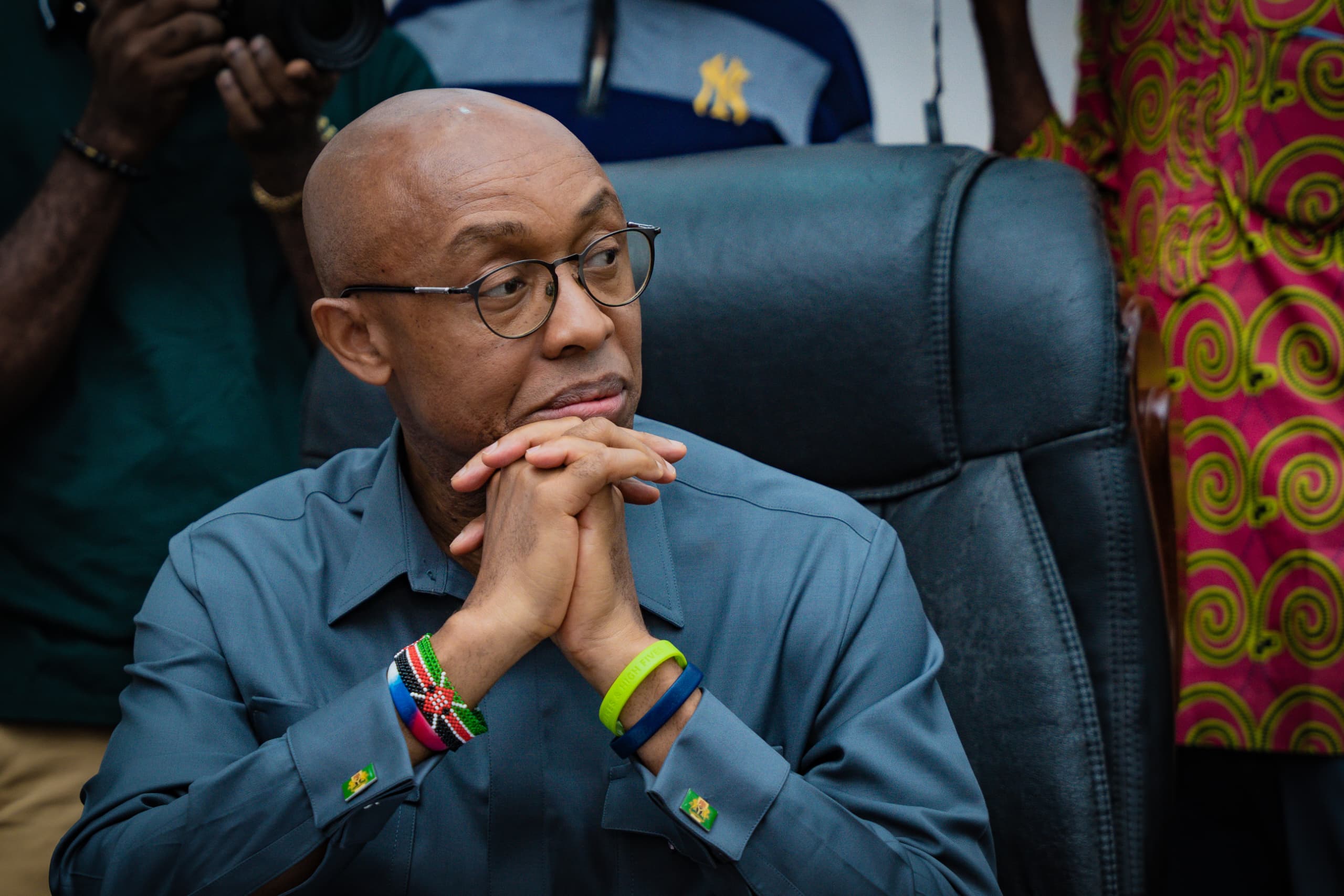
UMUAHIA, Nigeria — Renowned human rights scholar and lawyer, Prof. Chidi Odinkalu, has declared that Abia State stands at a historic crossroads, warning that the state must never return to what he described as nearly 25 years of “un-government” that robbed citizens of dignity, hope and accountable leadership.
Speaking at the third anniversary lecture of Governor Alex Otti’s administration in Umuahia on Thursday, Odinkalu argued that the most significant achievement of the current government is not roads, infrastructure or urban renewal projects, but the restoration of human dignity and public trust in governance.
In a lecture titled “Governance as Dignity: Three Years of Impact and of Shaping the Future of Abia State and Beyond,” the former Chairman of Nigeria’s National Human Rights Commission said Abia’s experience before 2023 went beyond mere bad governance.
Borrowing from the Spanish term desgobierno, which he translated as “un-government,” Odinkalu described the period as one marked by the criminalization of state institutions, impunity and the systematic erosion of public confidence.
“For nearly a quarter century, this State was Nigeria’s poster-child for the impossibility of credible government founded on incredible illegitimacy,” he said.
According to him, governance during that era became detached from the will of the people, creating conditions in which public resources were pillaged while accountability mechanisms were weakened or captured.
The professor said the consequences were visible in the collapse of infrastructure, declining public services, growing insecurity and widespread hopelessness among residents.
However, he argued that the state’s recent transformation demonstrates the power of legitimate leadership backed by public trust.
“Governor Alex Otti’s biggest achievements lie in restoring dignity and hope to a people who had given up on both, elevating the state’s ambitions and investing intentionally in the idea of government as a virtuous enterprise,” he said.
Odinkalu acknowledged the administration’s visible accomplishments, including extensive road construction, urban regeneration, improved fiscal management, investments in education, healthcare and energy infrastructure, but insisted that the deeper significance lies in rebuilding citizens’ confidence in government.
He cited improvements in mobility, power supply, healthcare delivery and education as evidence of a coherent strategy aimed at transforming Abia into a competitive enterprise economy and regional commercial hub.
The scholar disclosed that the administration had asphalted hundreds of roads across the state and was pursuing long-term projects designed to position Abia as a major trade and logistics centre in the South-East.
He also commended investments in public education, healthcare and social inclusion, describing them as essential foundations for sustainable development.
Drawing from Nigeria’s Constitution, Odinkalu argued that government exists primarily to protect and enhance the dignity of citizens.
He referenced constitutional provisions requiring government to safeguard welfare, maintain human dignity and ensure that governmental actions remain humane.
“Human dignity is more than an aspiration; it is a constitutional metric for measuring the performance of government,” he said.
Beyond celebrating the administration’s achievements, Odinkalu challenged Abians to protect the gains recorded so far, particularly as political activities ahead of the 2027 general elections gather momentum.
He warned against returning to a culture of transactional politics and urged citizens to evaluate political leadership based on performance rather than sentiment.
“The outcomes announced in elections have profound implications for the lives and fates of real people,” he said. “We confront a season that will test the will of the state in defending what it now has.”
Looking ahead, the professor identified several strategic opportunities for Abia, including developing a professional services economy, establishing a regional commercial dispute resolution hub, strengthening the knowledge economy through higher education and research, attracting diaspora investment, creating a Women’s Legacy Fund for women-led enterprises and deepening regional security cooperation.
He particularly urged the government to leverage the state’s growing network of universities and educational institutions to build a knowledge-driven economy capable of competing globally.
Odinkalu also called for stronger engagement with the diaspora community, noting that Abia and neighbouring Imo State account for a substantial share of Nigeria’s annual diaspora remittances.
As the state charts its future, he said the ultimate challenge is whether the current reforms will become a permanent foundation for development or merely a temporary interruption in a longer history of poor governance.
“For Abia State, there are two options,” he said. “To make this experience sustainable and indefinite into the future, or to record it as a minor interregnum in a continuum of habitual un-government.”
“The choice is clear.”