Home Blog Page 34

FG targets ‘toxic’ learning materials, bans unapproved textbooks nationwide from 2026

Abuja, Nigeria — Nigeria’s Federal Government has unveiled a sweeping overhaul of classroom materials, introducing a National Textbook Ranking System that will determine which books are permitted in schools nationwide.

Under the new policy, any textbook that fails to secure an official ranking will be barred from use in primary, junior, and senior secondary schools starting September 2026.

Announcing the move, Minister of Education Tunji Alausa said the initiative is designed to curb the proliferation of substandard materials and enforce stricter quality control across the education sector.

In a statement issued by ministry spokesperson Boriowo Folasade, the government confirmed that the Nigerian Educational Research and Development Council will retain its statutory role of approving textbooks, but with an added layer of national ranking to assess quality and suitability.

How the System Will Work

According to the ministry, approved textbooks will undergo a rigorous evaluation process conducted by subject-specific expert panels. Only a limited number of top-performing books in each subject will receive final clearance for classroom use.

“Only a limited number of top-ranked textbooks will be approved, ensuring improved quality control and consistency nationwide,” Alausa said.

The policy marks a significant shift from previous practice, where multiple approved textbooks could coexist without a standardized hierarchy of quality. Now, even previously licensed books risk exclusion if they fail to meet the new ranking criteria.

Backlash and Triggering Controversies

The announcement comes amid growing public concern over the content of educational materials used in Nigerian schools.

A recent flashpoint involved a Nigerian mother and content creator, Mary Queen, who went viral after criticizing a nursery school textbook that depicted an old man punishing a dog by burning it with a hot iron.

Her video, which drew millions of views, sparked widespread outrage—but also, she alleged, intimidation.

Mary Queen claimed she received threatening calls from individuals purportedly linked to the publisher’s legal team and was later invited for police questioning. Fearing for her safety, she deleted the original video, though the controversy has continued to generate debate online.

The case drew support from Senator Natasha Akpoti-Uduaghan, who condemned both the alleged threats and the textbook content, calling for a formal investigation.

Human rights lawyer Inibehe Effiong, who is representing the content creator, described the reported use of law enforcement to pursue a critic as “embarrassing” and indicative of deeper institutional issues.

Pattern of Content Disputes

The controversy is not isolated. In recent years, Nigerian textbooks have repeatedly sparked public backlash over claims of inappropriate or culturally sensitive content.

In 2023, lawmakers called for a nationwide ban on a widely used English textbook over alleged inclusion of age-inappropriate terms. Other incidents have involved mathematics examples criticized as suggestive, as well as debates over sex education materials and depictions of non-traditional family structures.

Such controversies have fuelled calls for tighter oversight, with parents and advocacy groups demanding stricter vetting processes to ensure that learning materials align with educational standards and societal expectations.

Balancing Quality and Control

While the government says the ranking system will improve learning outcomes and standardize educational resources, critics warn that implementation must strike a careful balance between quality control and overreach.

The Ministry of Education has pledged stakeholder engagement ahead of the September 2026 rollout, as well as the development of clear evaluation criteria.

For now, the policy signals a decisive shift: in Nigeria’s classrooms, not all textbooks will make the cut—and those that do will face unprecedented scrutiny.

Coup Plot or Rights Abuse? Army colonel challenges ‘unlawful’ detention at Federal High Court

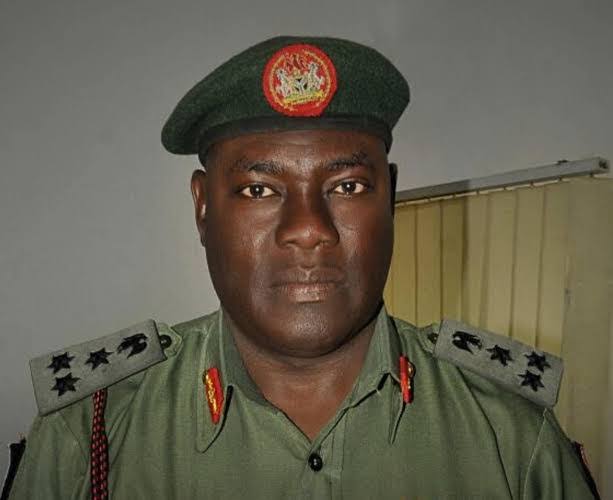
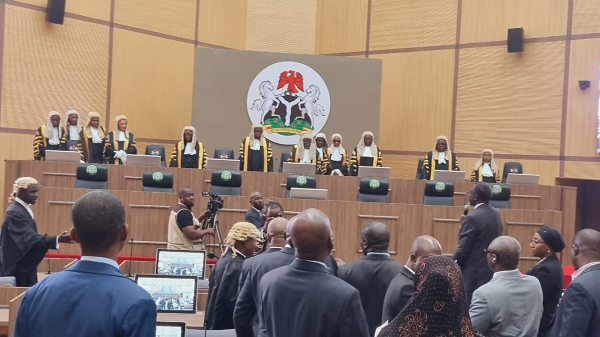
Abuja, Nigeria — A serving officer of the Nigerian Army, Colonel Mohammed Alhassan Ma’aji, has filed a lawsuit against the Federal Government, alleging prolonged and unlawful detention without trial since September 2025.

In an application brought before the Federal High Court of Nigeria, the officer is seeking his immediate release and ₦500 million (about $300,000) in damages for what he describes as a violation of his fundamental rights.

The suit, filed under the Fundamental Rights (Enforcement Procedure) Rules 2009, names the Attorney General of the Federation, the Chief of Army Staff, the Nigerian Army, and the Chief of Defence Intelligence as respondents.

Through his legal team led by senior advocate Olalekan Ojo, Ma’aji argues that his continued detention for more than six months without formal charges breaches constitutional guarantees of personal liberty and human dignity.

Arrest and Allegations

According to court filings, the officer was arrested around September 30, 2025, alongside others over allegations of involvement in a conspiracy to overthrow the government.

Despite claims that investigations have been concluded, Ma’aji maintains that he has neither been formally charged nor brought before a competent court.

He further alleges that he has been held at a military facility in Abuja without access to his family, legal representatives, or adequate medical care—conditions his legal team says amount to incommunicado detention.

Legal Challenge

The application cites violations of Sections 34 and 35 of the 1999 Constitution, which guarantee the rights to dignity and personal liberty, as well as provisions of the African Charter on Human and Peoples’ Rights.

Among the reliefs sought, the applicant is asking the court to declare his detention unconstitutional and order his immediate release.

In the alternative, he is requesting a court directive compelling the authorities to arraign him within seven days.

An affidavit filed by a litigation officer in his counsel’s chambers asserts that the continued detention, despite the absence of formal charges, undermines both constitutional safeguards and due process.

Awaiting Court Action

As of the time of filing, no hearing date has been scheduled.

The case is likely to test the balance between national security concerns and constitutional protections in Nigeria, particularly in cases involving military personnel accused of serious offenses.

Call to Bar 2026 dates, screening schedule, and full benchers calendar

Nigeria’s legal calendar for 2026 has taken a clearer shape as the Body of Benchers unveiled a comprehensive timetable covering meetings, law dinners, and multiple Call to Bar ceremonies, offering the clearest signal yet of the pipeline for new legal practitioners.

The schedule, which spans March 2026 through March 2027, outlines a tightly coordinated sequence of academic, ceremonial, and regulatory events tied to the Nigerian Law School and the broader legal profession.

At the heart of the calendar are two major Call to Bar ceremonies slated for July 7–9, 2026, and November 25–26, 2026, marking the formal induction of successful law graduates into Nigeria’s legal profession. These ceremonies will follow rigorous screening exercises in June and November, underscoring the layered vetting process candidates must pass before being admitted to the Bar.

Beyond the ceremonies, the timetable reflects the institutional rhythm of Nigeria’s legal system. A series of Body of Benchers meetings, including a key election meeting on March 31, 2026, signals leadership transitions and policy direction within the profession. Another election meeting is scheduled for March 25, 2027, reinforcing the cyclical governance structure of the body.

The calendar also features three traditional law dinners—April, May, and October—long regarded as rites of passage within the Nigerian Law School system, blending professional discipline with ceremonial tradition.

Notably, the programme includes annual lectures and disciplinary report presentations, highlighting ongoing efforts to maintain ethical standards within the legal profession. The Legal Practitioners Disciplinary Committee’s report presentation, scheduled for March 5, 2026, is expected to draw attention to issues of professional conduct and accountability.

A screening and reporting cycle built into the schedule—June, July, November—points to increasing institutional emphasis on due diligence before admission to the Bar, amid broader conversations about standards in legal education and practice.

The year will culminate in a Body of Benchers Dinner/Gala Night on December 4, 2026, a symbolic close to the legal year, before the cycle resets with annual lectures and governance meetings in March 2027.

Taken together, the timetable offers more than dates—it provides a snapshot of a profession balancing tradition, regulation, and the steady influx of new lawyers into an already competitive legal landscape.

ISIS claims deadly Adamawa attacks that left 29 dead

A deadly attack on two communities in Adamawa State has taken a new dimension after the extremist group ISIL, also known as ISIS, claimed responsibility for the assault that left at least 29 people dead.

ISIL — short for the Islamic State of Iraq and the Levant—and widely referred to as ISIS, meaning the Islamic State of Iraq and Syria, is a militant jihadist group known for carrying out attacks in parts of Africa, the Middle East and beyond.

The group has used online platforms, including Telegram, to claim responsibility for violent incidents.

According to Aljazeera, in a statement circulated on Telegram, ISIL (ISIS) said it was behind the attack in Guyaku and Telabala communities in Gombi Local Government Area, where what began as a routine football match at a primary school turned into a scene of chaos and mass casualties.

Earlier reports indicated that the attack occurred during a community football match attended by youths and families.

Residents said the assailants deliberately chose the moment when large numbers of people had gathered, striking in the early evening and catching the community off guard.

Eyewitnesses recounted that the attackers arrived at about 5pm on Sunday, shooting sporadically and triggering panic as spectators and players fled for safety.

A resident of Guyaku, Musa Guyaku, described the incident: “Yesterday evening, youths organised a football match between two communities, Zangula and another village. Suddenly, gunmen invaded our community and were shooting sporadically, killing two persons sitting in a hut and burning down the hut.”

Read Also: Boko Haram threatens to kill 176 Kwara kidnap victims in 7 days as 30 monarchs flee

Beyond the immediate loss of life, the attackers reportedly razed property, including religious buildings, leaving parts of the communities in ruins. Survivors were seen fleeing with their belongings, while families mourned those killed.

Governor Umaru Fintiri visited the affected communities after cutting short other official engagements, describing the incident as deeply distressing and acknowledging its toll on residents.

According to the governor, he visited to assess the impact of the attack by what he described as criminal elements of Boko Haram and to calm victims.

He confirmed that about 29 persons lost their lives and reassured residents of the government’s resolve to strengthen security.

“We will continue to do our best because they are our people, and we will stand by them and ensure that government collaborates with the military and other security agencies to ensure that they are well protected,” he said.

The traditional ruler of Gombi Chiefdom, His Royal Majesty Aggrey Bechour-Ali, raised concerns about possible insider involvement, noting that prior security warnings had been issued.

“There are informants in our midst who may even be sons of the soil,” he said, adding that the attackers appeared to have exploited the football gathering.

A tour of the affected areas showed burnt motorcycles, a destroyed church building and multiple casualties, as residents continued to evacuate amid fears of further attacks.

Hidden Clauses, Open Door to Fraud?  Senator alleges Nigeria’s 2026 Electoral Act was altered to weaken ballot security

Abuja, Nigeria — New alarm is rippling through Nigeria’s political landscape as Senator Ireti Kingibe claims that key sections of the Electoral Act 2026 were tampered with, inserting what she describes as “fraudulent” provisions into the final law.

Speaking during a televised interview on Arise News Monday night, the lawmaker claimed that controversial sections allowing the use of ballot papers without official security features were not part of the original reform document agreed upon by stakeholders.

“The fraudulent provisions that permit ballot papers without INEC security features in the new Electoral Act were not in the original version. It’s different,” Kingibe said, questioning both the credibility of the law and the process that produced it.

Her remarks echo earlier warnings from former electoral official Mike Igini, who described elements of the legislation as “poison pills” capable of undermining safeguards ahead of Nigeria’s 2027 general elections.

Disputed Safeguards and “Missing” Provisions

Under Nigerian electoral practice, ballot papers typically carry identifiable security markings—such as serial numbers, stamps, or holograms—to prevent counterfeiting. However, Section 63(2) of the revised law allows presiding officers to count ballots lacking such features if they are “satisfied” the papers originated from official booklets.

Critics argue that this discretionary power introduces subjectivity into a process that has historically relied on strict verification standards.

Kingibe, who served on the National Assembly committee that worked on electoral reforms, insisted the clause was absent from the draft produced after two years of consultations involving lawmakers, the Independent National Electoral Commission, and civil society groups.

“We worked on a document that we believed would guarantee free and fair elections,” she said. “Every aspect of it was turned upside down.”

She further alleged bias within the electoral body’s leadership, stating that its chairman, Joash Amupitan, “has shown he is not unbiased”—a claim likely to intensify scrutiny of the commission as preparations for the next election cycle gather pace.

Technology vs. Discretion

The controversy also highlights a broader contradiction within Nigeria’s electoral framework: the simultaneous investment in advanced voting technologies alongside provisions that make their use optional.

“Why go to the expense of electronic and digital devices if you say you don’t have to use them?” Kingibe asked, referencing the decision by lawmakers to reject mandatory real-time electronic transmission of results.

The Independent National Electoral Commission has in recent years deployed systems like the Bimodal Voter Accreditation System (BVAS) to verify voters and curb fraud. Yet analysts warn that weakening complementary safeguards—such as secure ballot design—could erode those gains.

Loopholes or Layered Safeguards?

Supporters of the law argue that multiple verification layers still exist, even in the absence of visible ballot security features. These include serial tracking of ballot booklets, cross-checking the number of votes against accredited voters, and real-time monitoring by party agents and observers.

But opponents remain unconvinced.

Beyond Section 63, critics have flagged other contentious provisions, including limits on challenging election results based on procedural non-compliance and reduced requirements to hold specific electoral officials accountable in petitions.

Together, they argue, these measures could narrow legal pathways for contesting disputed outcomes.

Pressure for Reform

Despite the controversy, Kingibe expressed cautious optimism that the law could still be amended—if public pressure mounts.

“When there’s a need for it, things will be amended,” she said, invoking Nigeria’s past use of emergency legislative interventions.

For now, the debate underscores growing unease about the credibility of Nigeria’s electoral framework at a time when trust in democratic institutions remains fragile.

With the 2027 elections on the horizon, the stakes are rising—and so are the questions: whether the Electoral Act 2026 strengthens democracy, or quietly weakens the safeguards meant to protect it.

Man to die by hanging for killing dad in Anambra

A High court in the capital city of Awka , Anambra State High Court has sentenced Ifeanyi Anizoba Jnr to death by hanging for the killing of his father, Ifeanyi Anizoba.

Delivering judgment on Monday, the trial judge, Justice Chukwudi Okaa, ruled that the prosecution successfully proved its case beyond reasonable doubt.

According to the charge sheet, the prosecution, led by Chief State Counsel Chiamaka Chukwuka, told the court that the incident occurred on December 24, 2019, at Nodu Village in Awka, the Anambra State capital, following a dispute between the defendant and his father.

Part of the charge sheet read, “The defendant pushed his father during an altercation, causing him to hit his head on a wall and lose consciousness.

“After his father fell and lost consciousness, the defendant left him unattended for two days without seeking medical assistance. He locked his father in a room, where he remained until neighbours raised the alarm after perceiving a foul odour. The body was subsequently discovered by family members.”

During the trial, the prosecution presented three witnesses, including a relative of the deceased, the investigating police officer, and the medical doctor who conducted the autopsy.

The defendant, who initially had no legal representation, was later provided counsel by the Office of the Public Defender.

The defence called two witnesses and denied responsibility for the death.

In his ruling, Justice Okaa held that the totality of the evidence showed that the defendant’s actions directly led to his father’s death.

“The totality of the evidence before the court established that the defendant’s actions led to the death of the deceased and he is hereby sentenced to death by hanging,” the judge declared.

Boko Haram threatens to kill 176 Kwara kidnap victims in 7 days as 30 monarchs flee

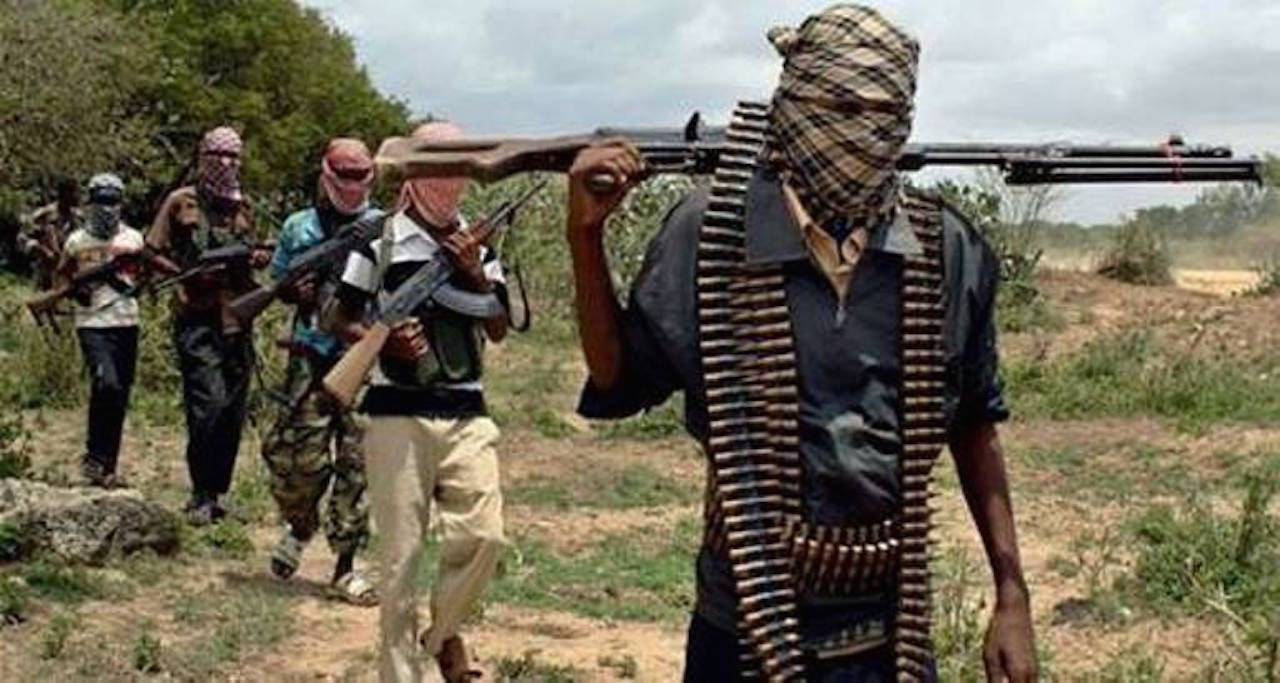
The terrorists who abducted 176 women and children from the Woro community in Kaiama Local Government Area of Kwara State have threatened to carry out a mass execution if the Nigerian government fails to meet their demands within one week.

In the meantime, Saturday PUNCH reported that not less than 30 traditional rulers across the southern area of Kwara State have fled their palaces following a sustained wave of kidnappings, killings and violent attacks.

The attackers —who took 176 women and children from the Woro community — suspected to be members of Boko Haram, reportedly issued the ultimatum through the abducted victims after a Jumu’ah prayer session on Friday, according to community members and families who spoke to The PUNCH.

The traditional ruler of the community, Salihu Bio, whose wife is among those held captive, confirmed the threat to journalists on Monday.

He explained that one of the abductees was allowed to contact her family and relay the message from the terrorists.

“The abductees told us that after the Jumu’ah prayer on Friday, the terrorists said the government was not taking the matter seriously and that if nothing is done within one week, they will begin to take drastic actions,” he said.

Bio added that the terrorists expressed frustration over what they described as the government’s lack of commitment to negotiations, despite the resources being used to keep the victims alive.

“The terrorists allowed one of the abductees to call her family on Saturday, and she confirmed that they were all fine. She also said the captors have been teaching them Arabic and Islamic knowledge,” he stated.

A community source who did not want to be named painted a grimmer picture of the terrorists’ intentions, saying the captors had threatened to marry off some of the girls and kill those they considered liabilities if no agreement is reached within the deadline.

“The Boko Haram fighters complained that they are spending money and resources to feed the abductees and that nothing is coming out of it. They said if nothing is agreed upon within one week, they will start marrying off some of the girls and kill those they consider liabilities.

“We are helpless. These are our wives and children. Now they are threatening to kill them or force them into marriage,” the source added.

In a video released by the terrorists, an armed militant claimed responsibility for the abduction and described the victims as having been indoctrinated.

“We are the ones who kidnapped the people of Woro and Kososo. We have indoctrinated them and changed their way of life. However, the victims have been begging us, and we have given them the opportunity so that their government can hear from them. We are giving them a final opportunity to appeal to the government,” the militant said.

Efforts to obtain an official reaction from the police were unsuccessful, as calls and text messages sent to the Command’s Public Relations Officer, Adetoun Ejire-Adeyemi, had not received a response as of press time.

30 Kwara kings flee palaces

Saturday PUNCH gathered from two credible community leaders that the affected monarchs were seeking refuge in urban centres, including Ilorin, Osogbo, Offa, and Lagos.

Findings show that some of the affected traditional rulers are from Omugo, Afin, Oreke, Oreke Oke-Igbo, Olohuntele, Alabe, Ganmu Ailehri, Ologanmo, and Igbo Agbon communities.

While some have been away from their domains for months, others have been out for nearly a year.

Their displacement, triggered by repeated attacks by armed groups, has created a leadership vacuum in their communities.

A resident of Omugo community, Wale Olasunkanmi, said his traditional ruler, known locally as Eesa, fled due to fear of abduction.

He said, “In the past, our traditional rulers were always around. They lived among us and provided leadership during crises. But now, they don’t stay here anymore. They only come occasionally for meetings or special occasions and leave immediately.

“When attacks became frequent, it was no longer safe for them to remain in the palace. Even ordinary residents are afraid, so you can imagine what it means for a king who is always a target.”

Olasunkanmi recalled that a major attack on the community in March 2026 marked a turning point.

“After the bandits attacked the church on March 22 and abducted about eight people, many families started leaving. The fear was too much. People abandoned their homes overnight,” he said.

He added that while there had been a slight improvement in security in recent weeks, the absence of traditional rulers continued to affect coordination and decision-making.

“Even as some people are trying to return, there is no strong leadership on the ground. That makes it difficult to rebuild confidence,” he stated.

According to him, Omugo is part of the larger Oro-Ago community, which comprises about 15 towns, including Ajegunle, Iragbon, Ago, Oke Ayin, Oyate, and Oke Daba, all of which have experienced varying degrees of attacks.

Further findings by Saturday PUNCH showed that Oreke and Oreke Oke-Igbo communities have been largely deserted since June 2025 following repeated bandit incursions.

The situation escalated after an attack on a marble mining site near Oreke-Okeigbo on June 4, 2025, where two police officers, Assistant Superintendent Haruna Watsai and Inspector Tukur Ogah, were killed.

A palace worker, Samuel Afolayan, said the attacks marked the beginning of mass displacement.

“Initially, they were just stealing food and livestock. But later, they started kidnapping and killing people. That was when everyone began to leave.

“As I speak to you, I have not been to Oreke since June last year. The king is not there, the palace is empty, and the entire community is deserted. Even neighbouring villages along that axis have been abandoned,” he stated.

Afolayan described the area as “completely isolated,” adding that basic social and economic activities had collapsed.

Similarly, the Oniwo of Afin, Oba Simeon Olaonipekun, has not returned to his domain since he was abducted alongside his son on New Year’s Eve.

Gunmen invaded his residence in December 2025 and kidnapped the monarch and his son, who is a corps member.

While the son was released after about 21 days, the monarch regained his freedom after a ransom reportedly exceeding N30m was paid.

A palace source said the monarch was still undergoing treatment.

“Kabiyesi went through a very traumatic experience. He spent almost a month in captivity under harsh conditions. Given his age, it affected him seriously,” the source said.

“Since his release, he has been receiving medical attention. Doctors advised that he should rest and avoid stressful situations. That is why he has not returned to the community.”

Across the affected communities, the impact of the attacks has been devastating.

Saturday PUNCH gathered that farms had been abandoned, schools shut down, and markets rendered inactive as residents fled to safer locations.

The latest gunmen attack occurred in Olayinka community in Ifelodun LGA, where armed men stormed the palace of the monarch, Oba Salman Olátúnjí Aweda, in the early hours of Saturday and abducted him alongside his wife and another resident.

Police authorities later confirmed the arrest of 42 suspected illegal miners in connection with the abduction, while sources disclosed that the kidnappers demanded about N400m ransom.

A resident, who identified himself simply as Tunde, recounted the attack.

“It was like a war scene,” he said.

“They came with guns and started shooting. People were running in different directions. Before we knew what was happening, Kabiyesi had been taken.”

Tunde added that the attackers appeared to have prior knowledge of activities in the palace.

“Earlier that day, some miners came to pay royalties to the king. So, when the attackers came at night, they demanded the money. Kabiyesi gave it to them, but they still took him away. After that incident, everyone fled. Nobody wants to stay there again,” he said.

Traditional rulers killed by gunmen

Beyond Olayinka community, a disturbing pattern has emerged across Kwara South, with traditional rulers increasingly becoming targets.

In September 2025, the Baale of Ogbayo in Oke-Ode was killed in his palace after gunmen invaded the community at dawn.

Earlier, in February 2024, the Olukoro of Koro-Ekiti, Oba Olusegun Aremu-Cole, was killed in his palace, while his wife and another person were abducted.

Sources said the kidnappers initially demanded N100m, which was later reduced to N40m.

In November 2025, the Ojibara of Bayagan-Ile, Oba Kamilu Salami, was abducted on his farm and released after about 25 days in captivity following the payment of ransom.

According to findings, ransom demands in recent cases have ranged between N40m and N400m.

A source involved in one of the negotiations said, “They usually start with outrageous figures, sometimes over N100m. After negotiations, it may come down, but it is still a huge burden.

“In many cases, families have to sell properties or borrow money to secure the release of their loved ones.”

‘Development disturbing’

The Coordinator of the Joint Security Watch in Kwara South, Olaitan Oyin-Zubair, said the signs of mass displacement were long ignored.

“There was a time we raised the alarm that communities were being deserted, but people did not take it seriously. The development is really troubling and disturbing” he said.

“Today, more than 28 communities with traditional rulers in Ifelodun have been abandoned. Places like Olayinka, Oro-Ago, Omugo, Ahun, Oke-Oyan, Owa-Kajola, Owa-Onire, and Oba have become ghost towns. Farms are abandoned, schools shut, markets dead. The reality we warned about has become undeniable,” he stated.

Residents said the crisis had severely disrupted agriculture and worsened food insecurity.

A trader from Oro-Ago, Bose Adeyemi, said she had relocated to Ilorin.

“I am a yam seller, but I cannot go back home. Nobody wants to farm anymore because it is too dangerous,” she said.

A retired civil servant, Janet Adebisi, said she had abandoned her investments.

“I used my gratuity to start farming, but I cannot even visit the farm now. My life is more important than any investment,” she said.

Traditional council under scrutiny

The wave of attacks has put the Kwara State Traditional Council under scrutiny, with many questioning its response to the crisis.

While sources within the council confirmed that meetings had been held with government officials and security agencies, critics say the response has not been visible enough.

A community leader in Ekiti LGA, Adebayo Ojo, said, “Our royal fathers must speak with one voice. People expect leadership at a time like this.”

However, a palace source who did not want to be named said engagements were ongoing behind the scenes.

“These issues are being discussed. The traditional rulers are engaging government and security agencies, but not everything can be made public,” the source said.

The crisis has also sparked debate over the role of traditional and spiritual methods in safeguarding communities.

A socio-political advocate in Kwara State, Abdul-Rahoof Bello-Labelabe, raised concerns over what he described as the worsening security situation in Kwara South.

He warned that residents were increasingly vulnerable to attacks and abductions across several communities.

Bello-Labelabe, who identified himself as the Advocate of Igbomina Liberty and Northern Yoruba Nationality, said there had been no meaningful improvement in security, particularly in Ifelodun LGA.

He disclosed that a wave of kidnappings recorded between Wednesday and Thursday affected multiple communities, leaving scores of residents abducted.

He also referenced the abduction of a traditional ruler in Olayinka community alongside his wife, noting that the kidnappers had demanded a ransom running into millions of naira.

The advocate claimed that many traditional rulers no longer resided in their domains due to safety concerns.

“Although not all traditional rulers have abandoned their communities, a significant number of them no longer live there. They only visit when necessary and leave immediately. Very few have the courage to remain. If any of them is still residing in their domain, let them come forward and state it openly,” he said.

Bello blamed abandonment of traditional practices.

“In the olden days, no one dared to touch a king. Today, our monarchs have abandoned traditional ways of protection.

“Our kings have their share of the blame. They harbour these bandits and criminals; they give them land; they know them, they cannot pretend they do not know them.

“They allow aliens to intermarry with the natives; they create markets for them; they install Seriki for them on Yoruba land. If security is made their responsibility, they will take it seriously,” he added.

The community leader linked the worsening insecurity to illegal mining activities and weak local structures.

Traditional rulers abandoned indigenous protection — Monarch

The monarch of Osi community in Akure North LGA, Oba David Olajide, also advised his colleagues to adopt measures to protect themselves and their subjects against criminal attacks.

Olajide, who once survived a bandit attack in his community, also lamented that some rulers had abandoned the traditions of their communities.

He said, “The issue of insecurity in the country is getting worse to the extent that bandits are attacking obas, but we traditional rulers are not resting on our oars. For instance, in my local government here, we are taking proactive measures both traditional and modern, but these are matters we can only discuss in the media cautiously because they are security issues.

“Another issue is that some obas are wrongly chosen in their communities. It is very absurd to hear that bandits are killing monarchs. Bandits cannot kill a real monarch; they cannot even go near where they are, let alone attack them. In the olden days, warriors used to be made obas, so how can you attack a warrior? It is not possible.

“But the problem we are having is that some obas were not chosen the way they should be chosen. They were selected based on connections in government or because they have money. Such persons would not take the tradition of the community seriously. Nowadays, we are having politicians as obas, and people who don’t understand tradition as obas. These are the problems.

“So, obas too need to reduce their flamboyant lifestyle. They should not be seen everywhere, at every ceremony, spraying money or moving in convoy. We obas should understand the issue of insecurity nowadays and reduce all these lifestyles.”

However, the monarch urged the government and security agencies to support efforts aimed at fighting crime and criminality in their domains.

Meanwhile, local vigilante groups say they are struggling to contain the situation due to poor equipment and limited support.

A vigilante member in Ifelodun, who identified himself as Musa, said armed groups had taken over forests in the area.

“We know these forests, but they have better weapons. Sometimes, before help comes, they are gone.

“Even with our local guns, we are always facing them without fear, but you know their superior firepower always gives them the upper hand,” he said.

He, however, called for stronger collaboration between vigilantes and formal security agencies, including better funding and equipment.

The Chairman of the Igbomina Professional Association, Bode Iranloye, described the situation as alarming.

“This menace has destroyed the peaceful nature of our communities. It has affected agriculture, commerce, and communal life,” he said.

Iranloye recommended improved intelligence gathering, deployment of surveillance technology, and stricter regulation of illegal mining activities.

A security analyst, Sadiq Lawal, said the trend was concerning.

He said, “When criminals begin to target traditional rulers, it is a clear indication that authority structures have collapsed. In many African societies, kings are seen as sacred and untouchable. Once they become targets, it means the criminals are no longer afraid of consequence.”

Abanobi V the state and the evil of kidnapping (1)

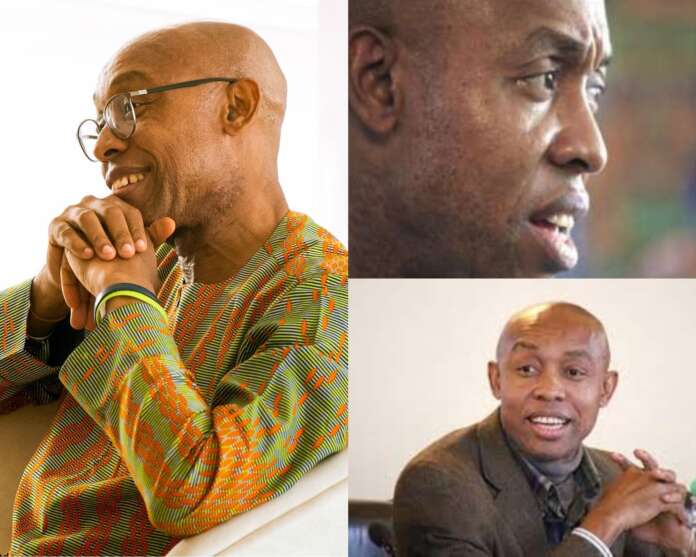
By Ebun-Olu Adegboruwa, SAN

INTRODUCTION

According to the learned authors of Black’s Law Dictionary, kidnapping is “the crime of seizing and taking away a person by force or fraud, often with a demand for ransom (also manstealing).” For Collins English Dictionary, to kidnap is “to carry off and hold (a person), usually for ransom”. This is corroborated by the learned authors of Jowitt’s Dictionary of English Law as “the forcible abduction or stealing away of a person, whether a man, woman, or child. It is an offence punishable at common law by fine and imprisonment.” Morally speaking, it is wrong to steal anything, how much less a human being. In the ordinary course of events, the law frowns at the intent to take away something with the hope of depriving the owner thereof its permanent use.

To kidnap a person therefore connotes that the kidnapper intends to deprive the victim of the use of his or her life, which is why the law places the offence of kidnapping in the same status as murder, with some statutes prescribing the maximum penalty of death. When a 98-year-old great-grandmother is kidnapped, then there should be no remedy for the felon, because such a gruesome act borders on irredeemable depravity. There can be no justification for this heinous display of wickedness by the appellant and his gang, although I am well aware of the challenges faced by citizens in our present dispensation, especially the youth.

No matter the difficulties that people face or contend with, it cannot ground the seizure or theft of an old woman, subjecting her to such a traumatic experience of keeping her in the trunk of a car, with all the inconveniences and dangers to her life and safety. But for the police and the act of divine intervention, the poor woman would most probably have died from exhaustion and suffocation even before the criminals got to their evil destination. I join the call upon the government to do more in job creation and youth empowerment, but the youth too must embrace contentment, diligence and believe in honest endeavours as the surest means of lasting prosperity and human survival, and stop chasing miracle money and exploring shortcut options to attain sudden wealth.

THE FACTS OF THE CASE

The facts of this case are as reported in Abanobi v The State (2026) 5 NWLR (Pt.2037) 587. The appellant, acting in concert with his co-accused on 26th October 2014, kidnapped and took hostage one Madam Lydia Acho, a woman of 98 years old. She was purportedly abducted from her residence in Isuikwuato Local Government Area in Abia State. However, she was subsequently rescued on the same day within Ikuwano Local Government Area in Abia State following a car chase by the police. The appellant and the 2nd accused person were later apprehended at the locus criminis with the appellant having sustained gunshot wounds. PW2, during her testimony, left the witness box to identify the appellant and the co-accused person in the dock.

Under cross-examination, she stated that she was able to identify the appellant and his co-accused by the illumination from a flashlight. The police officer who led the patrol team that accosted the appellant and his co-marauders and rescued the victim testified as PW4. He gave evidence of how the appellant and the co-marauders were accosted by the patrol team while inside a Peugeot 406 wagon vehicle with which the victim was kidnapped.

The driver of the vehicle lost control and rammed it into a tree and the occupants, including the appellant ran into the surrounding bushes. The police shot at the occupants of the vehicle while they were trying to escape and noticed blood at the scene. Upon approaching the vehicle, the police rescued the victim from the boot of the vehicle and took her to the hospital. With the help of the community vigilantes, the appellant, with a bullet wound, and the 2nd accused person were arrested from the bush. The appellant’s two phone handsets were recovered from the vehicle.

READ ALSO: Of kidnapping and humongous ransom payments

Following his apprehension, the appellant made a statement to the police, exhibit “B”, and was the sole witness in his defence. His story was that he too was kidnapped by the two passengers he carried in the Peugeot wagon on his way from his village in Anambra State to Aba. He admitted that he was in the vehicle with which the victim was kidnapped and taken away. He was there when the police led by PW4 accosted them, the vehicle rammed into a tree, the police shot at them and he bolted and ran inside the bush and slept there till the following morning for his safety. He further testified that on the following morning he came out from his purported concealment within the bush with the aim of reporting the incident of kidnapping at the police station.

However, contrary to his alleged intention, he was instead apprehended by the police and subsequently charged with the very act of kidnapping he intended to report. He stated that he was released by the fleeing kidnappers amidst a barrage of gunfire, one of which hit him. However, in his extra-judicial statement, he claimed that he remained in the trunk of the car while one of the two alleged hijackers stood guard over him. At the conclusion of trial, the trial court in its judgment convicted the appellant and sentenced him to death for the offence of kidnapping contrary to section 3(a) of the Prohibition of Terrorism, Kidnapping, Hostage-Taking, Use of Offensive Weapons or Explosives and Other

Threatening Behaviour Law No. 10 of Abia State, 2009. Dissatisfied, the appellant appealed to the Court of Appeal which affirmed the judgment of the trial court and dismissed his appeal. Still dissatisfied, the appellant appealed to the Supreme Court where he contended that the respondent failed to prove the offence charged as there was no evidence that he kidnapped the victim for the purpose of payment of ransom. In determining the appeal with final dismissal, the Supreme Court considered the provision of section 3(a) of the Prohibition of Terrorism, Kidnapping, Hostage-Taking, Use of Offensive Weapons or Explosives and Other Threatening Behaviour Law, No. 10 of Abia State, 2009, which states as follows:

“3(a) Any person who, for the purpose of payment of ransom, kidnaps and takes another hostage is guilty of an offence.”

What Constitutes Offence of Kidnapping:

Section 3(a) of the Prohibition of Terrorism, Kidnapping, Hostage-Taking, Use of Offensive Weapons or Explosives and Other Threatening Behaviour Law No. 10 of Abia State, 2009, prescribes that the kidnapping and taking another hostage must have been actuated by the intention to ask for or for the purposes of payment of ransom. It does not provide that for the offence of kidnapping to be complete, the ransom must have been paid. It only prescribes manifestation of an intention by the abductor to demand or obtain payment of ransom. What this postulates is that where the definition of kidnapping includes abduction for some specific purpose, the mens rea that the prosecution must prove in order to obtain a conviction must include the specific purpose.

Therefore, it is not enough to prove that the defendant intended to abduct the victim. In order to secure a conviction of the defendant, the prosecution must prove that the defendant abducted the victim with the specific intention of obtaining payment of ransom. There must be an indication on the part of the defendant of trying to obtain an advantage or holding the victim for ransom. The prosecution has to prove beyond reasonable doubt that the accused intended to detain the alleged victim in order to demand and obtain a sum of money for the alleged victim’s release. It does not matter whether the defendant in fact demanded money or whether the defendant succeeded in obtaining any money. There must be some overt act manifesting that intention.

In the instant case, it was clear that the intention of the appellant and his co-accused was to kidnap and take the victim for the purpose of payment of ransom. Contrary to the appellant’s submission, both the trial court and the Court of Appeal did not speculate on whether the victim was kidnapped for the purpose of ransom. The intention of the appellant and his co-accused person to demand ransom could be inferred from their conduct, given the overall circumstances of the case. The ingredients of the offence were established against the appellant.

The Probable Motivations for Kidnapping:

The jurisprudence of the offence of kidnapping extends beyond instances solely motivated by demand for payment of ransom. Criminals take hostages as a shield to help them escape from the scene of a crime. In addition, kidnapping could also be motivated by personal grudges.

Wetie, Òsá Eleye and 2027 warnings, By Suyi Ayodele

What Nigerians saw in Ibadan on Saturday and the reaction from Abuja were settled by Ifá, very long ago.

An Odù Ifá— Ogbè Ìresà, which, through ellipsis, can also take the morphological realisation of Ogbè’Sá.—speaks to it. You won’t have here every line of the Odù Ifá (Ifá Corpus), but I will make its essence clear through the Ese Ifá (Ifá Verse), Òsá Eleye.

Leaders of opposition political parties gathered in Ibadan last Saturday under the hosting of Governor Seyi Makinde. At the end of the meeting, they took a far-reaching decision: for the 2027 general elections, they would field a single presidential candidate against President Bola Ahmed Tinubu of the All Progressives Congress (APC).

I called an elderly friend of the government to discuss the development, drawing his attention to the communiqué—particularly the resolve “to work towards fielding one presidential candidate…to rescue our nation and her long-suffering masses.”

He responded with an esoteric dismissal: ““Fi wón sílè. Ìmò tú, ìmò jo; ìmò enini kìí bá enini dal.é” Let them be, he meant; plans made in the morning by dews disappear before nightfall. I told him he was being fatalistic. “That,” he replied, “is what the moment demands.”

I suggested the opposition might actually mean business. He disagreed. To him, the ruling party and President Bola Tinubu already have the field secured; no coalition, however grand, can upset the President’s political permutations.

I kept silent. When he pressed me, I told him he was ignoring history—particularly the lessons encoded in the Yoruba religion, Ifá. He sounded amused. “Then be specific,” he said. Heaven knows I dislike explaining our own culture to those who should guard it. Here is the story.

A people, oppressed by a powerful and unseen force, went to consult Orunmila. The victims were the Irúnmolè mókànlénírínwó—the 401 deities—tormented by the Eleye, the witches. One by one, they resisted. One by one, they were broken. Their children were taken, their strength drained, their labour turned into servitude. Disunity was their undoing.

When the burden became unbearable, they sought counsel. The leader of the deities spoke to the Òpèlè (divination chain), inaudibly, as all Ifá clients are wont to do. The old diviner cast the divination, studied it and uttered the following words: “Òsá Eleye kángun kàngun.” The uttered words are praise names of the Odù, which deals with the activities of witches and other wicked elements. Whenever our mothers show up in any divination, we were told in those days, they must be praised.

Ifá’s message was simple: what you cannot defeat alone, you confront together. They were told to return after ìtàdógún (seventeen days) to agree on a common front. Unity, Ifá, insisted, would make them like the elephant no sword dares confront.

They returned, resolved. Sacrifice was prescribed. Strategy was given. And one instruction stood out: when the enemy comes, speak with one voice.

Then came the turning point. Èsù, who was given a generous portion of the sacrificial items, carried his share of the sacrifice into the camp of the witches and planted distrust among them. How? With a single wrap of èko presented, he said it was 200; he thus provoked suspicion, envy, and rebellion. The once-cohesive force began to fracture from within.

The witches lost trust in each other. Betrayal and rebellion became the order of the day. Those who lost out in the sharing of the one wrap of èko mistaken for a basketful became suddenly bold and confronted the Àgbà Eleye (the lead witch). Members of Àgbà Eleye’s kitchen cabinet left her and joined the 401 deities. There, they leaked all the secrets of the Eleye to the deities.

By the time Àgbà Eleye knew what was happening, it was too late. Whenever the witches tried to attack the 401 deities, there was always a renegade Eleye to tell the deities the secrets behind the moves, and the deities would be ready with the antidote. The biggest of Àgbà Eleye’s lieutenants who joined the deities was the one called Emèrè (the spirit child, intimate with both worlds). Our elders knew, from time immemorial, that Emèrè ni oko àjé (Emèrè is the husband of the witch).

Emèrè did incalculable damage to the Eleyes. This is why, to date, among the real Babalawos, whenever the Odù on witches surfaces on the divination board, Emèrè is the messenger that will be sent to go and confront the witches. This is so because it is axiomatic that: omo iná làá rán sí iná (it is the child familiar with a furnace that is sent to combat combustion).

The defections from the camp of the witches were devastating. Secrets were leaked. Emèrè’s defection became the decisive advantage. What force could not achieve, fracture did. The hunters became the hunted.

By the time the witches understood what was happening, it was too late. Against a united front, weakened by internal betrayal, they had lost.

My interlocutor asked me who among the opposition leaders the Emèrè is. I politely asked him to figure it out. He never liked it. But I reminded him that a diviner’s job ends after reciting the panegyrics of the Odù on the divination board. I could not have contravened the practice of our fathers of old!

Nigerians are groaning under the yoke of the present administration. The opposition is daily deliberately depleted. The common man looks up to the heavens for succour. Only a collective will of the people can change the current political (dis)order!

So, the coming together of the opposition parties in Ibadan is too significant to be ignored. That move alone points at something: Nigerians would not fold their arms while the ruling party and the President make Nigeria of 2027 like the Nigeria of 1964-1965, when the then Western Nigeria Regional Government and the Central Government introduced a strange fire of ‘unopposed candidates’ on the sacred altar of democracy.

That was what the Ibadan Opposition Political Parties National Summit foregrounded, to wit: “That we shall resist all machinations by the APC to foist a one-party state on Nigeria and fight for the survival of multi-party democracy in our country.” There was no prevarication there. That, to me, is a strong message for the ruling party and President Tinubu to take a second look at their political strategies for 2027. The only option that Nigerians will embrace is participatory democracy!

Again, that thinking, I presume, informed why Governor Makinde, in his remarks at the summit, warned that: “For those that are carrying on as if there’s no tomorrow, they should remember that ‘Operation Wetie’ started from here. This is the same Wild Wild West.”

Read Also: The Chinese sports brand taking on Nike and Adidas

Read Also: Paid but Not Registered: Lawyer drags CAC to court over missing payment, defective portal

Makinde’s remarks have since generated heated debates. The ruling party and its supporters and sympathisers labelled it an incitement. I don’t think they are right. Governor Makinde’s statement does not come across as an incitement. It is more of a warning, warning against the calamity that may follow should anyone attempt to alter the political structure of a multi-party system to a sole candidacy of the incumbent President. The summit said that it would not work. Makinde merely re-echoed it with the warning of the dire consequences of such an anomaly!

We need to get a deeper understanding of ‘Operation Wetie’. The 1964-1965 political conflagration known as ‘Operation Wetie’ was the reaction of the Western Region people to the involvement of the then Central Government of Sir Tafawa Balewa and the ruling party at the centre, the Northern People’s Congress (NPC), in the crisis of the Action Group (AG), led by the Avatar, Chief Obafemi Awolowo.

What triggered the political inferno was the unholy collision between the then electoral commission and the ruling party at the central and regional levels, imposing candidates on the people of the Western Region by declaring the candidates unopposed.

This is exactly what the APC is building its present electoral permutations on. It is useless denying the fact that the APC, in active collusion with the Independent National Electoral Commission (INEC), and the supple National Assembly under the pathetic leadership of Godswill Akpabio, wants President Tinubu as the sole candidate for the 2027 presidential election! Tinubu and APC want a coronation and not an election.

The telltales are all over the place. The inherent dangers in such a political heist stare us all in the face. That is what Makinde’s warning is all about. A sole presidential candidacy will set the nation on fire. It happened over 60 years ago. Ibadan rose to the occasion and defended multi-party democracy. It is instructive that the opposition parties also chose Ibadan to issue the warning. All Tinubu, the APC, INEC and the Alájobí political philosophers have to do is to allow the dog and the red monkey to go a-hunting! The sky should be wide enough for birds of all plumage to fly without hindrances.

Operation Wetie was a dark period in the political history of the Western Region, in particular, and Nigeria in general. It was Wetie that set the stage for everything that is wrong with Nigeria – from the coups, to the civil war, to the failure of Nigeria to get its leadership right for over 60 years!

It is because we don’t want Operation Wetie that is why we are shouting that the ruling party should not ask its supporters to go and scatter opposition like Femi Gbajabiamila, the Chief of Staff to President Tinubu, asked Leke Abejide, the House of Representatives member representing Yagba Federal Constituency, to do. Gbajabiamila, at Abejide’s wife’s 50th birthday ceremony, told him to remain in the African Democratic Congress (ADC) and “fight and scatter” it.

That was why we frowned on the un-presidential and un-statesmanlike charge of President Tinubu to the Senate President, Akpabio, to go and scatter the other side! We are loud enough: President Tinubu, the APC and INEC should not use the template of 1964-1965 of returning their candidates unopposed for the 2027 elections. If Tinubu has done creditably well, let his works speak for him. If the President believes that he has given his best, let his hawk strike in the open!

No candidate or party should be prevented from submitting either nomination forms or a list of candidates, as the case may be. The umpire, INEC, should not only be unbiased, it must be seen to be unbiased. This is why the clamour for the removal of Professor Joash Ojo Àmúpìtàn, the INEC Chairman, would not go away easily. It is fatal to license a compulsive murderer to perform surgeries.

The Western Regional Government and the ruling Central Government of 1964-1965 did exactly the same thing APC, INEC and Tinubu are planning or doing now, before all the genies of Operation Wetie were released from their bottle!

The appeal to Alájobí sentiment would not hold water. The proponents of Alájobí philosophy of ethnic loyalty should not forget that the economic crises created by the perfidious Tinubu administration spare no tribe and respect no clan. It is like the rain; it has neither foes nor friends!

The views expressed by contributors are strictly personal and not of Law & Society Magazine.

Jailed for Trash: Lagos convicts 8 as Nigeria’s prisons overflow

Lagos, Nigeria — Eight residents of Lagos have been sentenced to one month in prison for indiscriminate waste disposal, a move that has reignited debate over Nigeria’s strained correctional system and its reliance on incarceration for minor offenses.

The convicts — Suraju Mukiari, Tukur Muhammed, Seidu Umar, Ishola Jimoh, Goodluck Osigbo, Yusuf Abubakar, Mustapha Musa, and Immam Muhammed — were arraigned on Sunday at a magistrate court in Bolade, Oshodi. According to Lagos State Commissioner for Environment and Water Resources Tokunbo Wahab, all eight defendants pleaded guilty and were immediately convicted and sentenced.

The swift sentencing has drawn renewed scrutiny to Lagos State’s aggressive sanitation enforcement policies, which authorities say are necessary to combat widespread environmental violations in Africa’s most populous city.

But the case has also exposed deeper tensions within Nigeria’s criminal justice system — particularly the heavy reliance on custodial sentences for low-level offenses at a time when the country’s prisons are already buckling under severe overcrowding.

A Prison System Under Extreme Pressure

Nigeria’s correctional facilities currently hold more than 80,000 inmates nationwide, according to 2026 figures, with an estimated 64 to 67 percent awaiting trial — some for years without conviction.

Reports from the Nigeria Correctional Service (NCoS) paint a stark picture of systemic collapse: facilities designed for far fewer occupants are routinely stretched far beyond capacity, forcing inmates into extreme living conditions, including sleeping in shifts or standing due to lack of space.

In some facilities, overcrowding has reached such levels that basic hygiene and healthcare are severely compromised, contributing to disease outbreaks and elevated mortality risks. Funding shortages have also left daily feeding allowances for inmates critically low, further intensifying concerns about humane treatment standards.

Critics Question Justice Priorities

The Lagos convictions have intensified criticism from legal observers and rights advocates, who argue that Nigeria’s justice system is increasingly punitive toward petty offenders while failing to adequately prosecute more serious economic and corruption-related crimes.

Some critics say this imbalance reflects a deeper systemic failure — one in which non-custodial sentencing options such as community service, fines, or restorative justice programs are underutilized, despite being designed specifically to ease prison congestion.

They warn that sending low-level offenders into already overcrowded prisons risks hardening minor offenders while worsening institutional strain.

At the same time, broader public frustration persists over perceptions that major financial crimes and alleged corruption cases often move slowly through the courts, or result in delayed accountability.

A System at a Breaking Point

With more than half of Nigeria’s prison population awaiting trial and infrastructure operating far beyond intended capacity, the country’s correctional system is widely viewed as overstretched and under-resourced.

Officials have acknowledged the pressure, with the Nigeria Correctional Service seeking increased funding to upgrade facilities and manage rising inmate numbers. But reform advocates argue that without faster judicial processes and wider adoption of non-custodial sentencing, overcrowding will continue to worsen.

For now, cases like the Lagos convictions underscore a growing national dilemma: how to enforce urban order without further burdening a prison system already nearing breaking point.

Eight sentenced to one month imprison for indiscriminate dumping of refuse

TIPS