- “Only God can bring a complete end to insecurity” — Matawalle
- as 720 Ex-Insurgents Rejoin Society
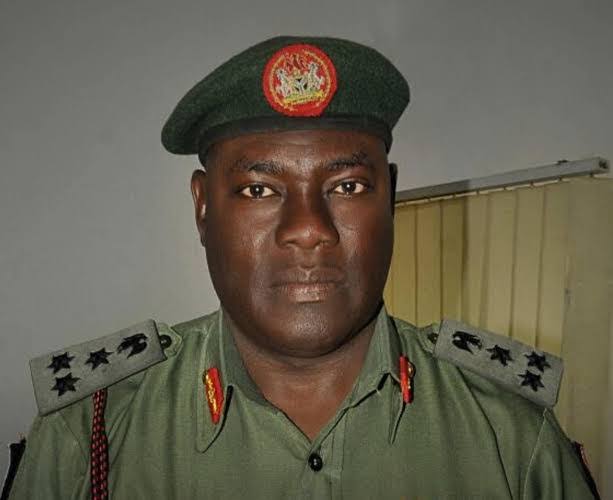
The death of retired Major General Rabe Abubakar in the custody of bandits has reignited uncomfortable questions about Nigeria’s battle against insecurity, with critics warning that the nation risks becoming consumed by 2027 political calculations while violent criminal groups continue to terrorise communities across the country.
Abubakar, a former Director of Defence Information at Defence Headquarters, died after weeks in the hands of kidnappers who abducted him and his wife, Hajiya Amina Abubakar, while they travelled to a wedding in Katsina State. His wife remains in captivity.
The Katsina State Government confirmed his death on Saturday, saying the retired general succumbed to complications arising from diabetes and hypertension while being held by his abductors despite sustained efforts by security agencies to secure his release.
Only days earlier, Nigerians watched a heartbreaking video in which the former defence spokesman and his wife pleaded for intervention. The kidnappers reportedly demanded the release of detained bandits in exchange for the couple’s freedom.
Governor Dikko Umaru Radda described the incident as a national tragedy and renewed calls for intensified action against criminal groups ravaging communities across the North.
The killing, however, has amplified wider concerns about the country’s security strategy at a time when political discourse is increasingly dominated by preparations for the 2027 elections.
It also comes amid controversy over comments by the Minister of State for Defence, Bello Matawalle, who recently said that “only God can bring a complete end to insecurity,” while urging Nigerians to combine prayers with determination and support for the armed forces. The remarks sparked criticism from some citizens and commentators who argued that Nigerians expect security officials to focus primarily on concrete operational measures and institutional reforms.
Responding to the backlash, Matawalle maintained that the military remains committed to defeating armed groups and cautioned politicians against exploiting the security crisis for partisan purposes, noting that the unconventional nature of the conflict means it cannot be resolved overnight.
For many Nigerians, however, the death of a retired senior military officer in captivity has become a painful symbol of a crisis that appears increasingly intractable.
The debate has grown sharper with the Borno State Government’s announcement that another 720 former insurgents have completed its deradicalisation and rehabilitation programme and have been reintegrated into society, bringing the number of beneficiaries under successive batches to nearly 10,000.
Officials describe the initiative as a successful non-kinetic component of counter-insurgency, saying participants undergo counselling, religious instruction and vocational training before returning to their communities.
Yet the programme remains contentious. Security experts, victims’ advocates and some affected communities have questioned whether rehabilitation efforts are sufficiently matched by accountability for atrocities committed during years of insurgency. Others argue that survivors of terrorism often receive far less support than former fighters seeking reintegration.
The concerns are heightened by reports that some armed groups continue to pursue ideological objectives in addition to financial demands. In several kidnapping cases, abductors have reportedly sought prisoner exchanges or advanced broader religious or political conditions alongside negotiations.
Against that backdrop, the image of a former Defence spokesman dying in the custody of bandits while his wife remains in the forest has resonated far beyond Katsina.
His death leaves behind not only a grieving family but also difficult questions about the effectiveness of current strategies against banditry and terrorism. As security agencies continue efforts to rescue Hajiya Amina Abubakar, many Nigerians are asking whether the country’s response to violent crime is keeping pace with the scale of the threat—or whether the urgency of security is being eclipsed by the politics of the next election cycle.