Home Blog Page 33

After 12 Years, 12 Chibok survivors rewrite their story with university degrees

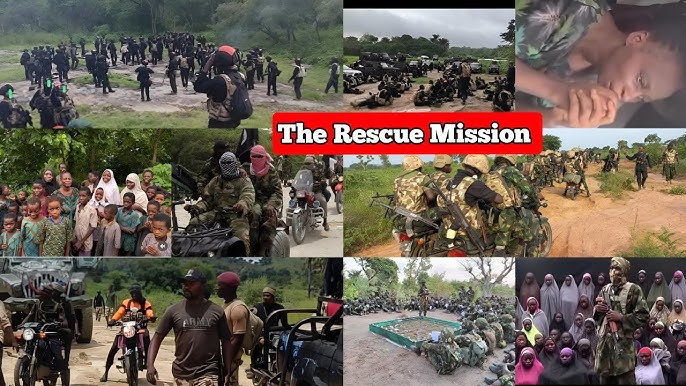
In a milestone that underscores resilience in the face of terror, 12 survivors of the 2014 Chibok abduction are set to graduate from the American University of Nigeria (AUN) in Yola, 12 years after Boko Haram militants seized 276 schoolgirls from Government Girls Secondary School in Borno State.

Speaking to journalists on campus Wednesday, AUN President Prof. Dewayne Frazier described the moment as a global symbol of resilience and hope, calling the graduates’ achievement a remarkable success story against the odds.

“The graduation of several students who were formerly held captive in the Sambisa Forest symbolises more than academic achievement; it is a global testament to resilience, hope, and the indomitable human spirit.

Read Also: Chibok Girls’ Nine-Year Captivity: Was there any failure by Nigerian authorities to carry out credible investigations into security failures that left children vulnerable to…

“Their journey from captivity to a university degree has captured worldwide attention as a victory over adversity,” he said.

Frazier said the milestone validated AUN’s mission as a development-focused institution and demonstrated that it is possible to bridge the gap between trauma and higher education success.

Read Also: Chibok Girls: Mary Katambi, others and the value of quality education

“These graduates now stand as beacons of light for the North-East and the world. Their success sends a powerful message: education is the most proven tool for healing and transformation, capable of reclaiming lives and building a brighter, more secure future for Nigeria,” he added.

He also commended the Federal Ministry of Women Affairs for sponsoring the girls’ education at the university.

A total of 276 girls were abducted on April 14, 2014.

While 57 escaped on the night of the attack, and many others have been released or escaped over the years, more than 80 remain unaccounted for as of recent reports.

The incident also triggered the global #BringBackOurGirls campaign.

Can Appeals Truly Deliver Justice? Justice Kanyip questions Nigeria’s appellate system at Ukala, SAN’s book launch/70th birthday celebration

At a high-profile legal gathering in Abuja, on Wednesday, Nigeria’s appellate system, long regarded as the backbone of judicial correction and fairness, came under rare, penetrating scrutiny, as Benedict Bakwaph Kanyip delivered a keynote address that questioned whether appeals in Nigeria truly deliver justice, or merely prolong litigation.

Speaking at the public presentation of Ukala’s Manual on Appellate Practice at the Bola Ahmed Tinubu International Conference Centre, the President of the National Industrial Court of Nigeria dissected the mechanics, contradictions, and unintended consequences of appellate practice in the country’s legal system.

At the event which was also the celebration of Emmanuel Ukala, SAN’s 70th birthday ceremony, Kanyip, equally also serves on the International Labour Organization Committee of Experts on the Application of Conventions and Recommendations, warned that while appeals are designed to correct judicial errors, there is no guarantee they produce just outcomes.

“The appellate process is meant to cure errors,” he noted, “but can it cure all errors? That remains the real question.”

At the heart of his argument was a stark reality: justice delayed can become justice denied. He pointed to cases that have dragged on for decades, including disputes that outlived the litigants themselves. In one striking example, a jurisdictional battle involving employment termination took 23 years to resolve—only for the claimant to die before the case concluded. The lesson, he suggested, is uncomfortable but clear: speed sometimes matters more than perfection.

Kanyip also exposed structural paradoxes within appellate decision-making. In one scenario, he illustrated how a majority ruling at the Supreme Court can override a broader consensus across lower courts—raising philosophical questions about fairness. “When six judges agree on a position but three determine the law, can that outcome truly be called just?” he asked.

The address further spotlighted controversial rulings and procedural inconsistencies, including disputes over massive financial awards and the interpretation of declaratory reliefs. Without naming motives, Kanyip questioned whether appellate courts sometimes overreach—particularly when granting reliefs not originally claimed or proven.

Beyond the courtroom, he hinted at systemic pressures within the legal profession itself. The pursuit of the prestigious Senior Advocate of Nigeria (SAN) rank, he suggested, may be fuelling a surge in unnecessary or weak appeals, clogging already overburdened courts and diluting the quality of justice.

Quoting legal authorities and case law, Kanyip emphasized that not every judicial error warrants reversal and that appellate courts are not designed to retry cases emotionally or sentimentally. Instead, their role is to address only those errors that result in a miscarriage of justice, a threshold often misunderstood or misapplied.

Yet perhaps his most provocative argument was philosophical. The assumption that appellate courts inherently produce just outcomes, he said, is deeply flawed. The doctrine of precedent—central to common law systems—rests on the belief that higher court decisions are correct. But what if they are not?

He also challenged the culture of excessive appeals embedded in Nigeria’s constitutional framework, warning that it creates the impression that lower courts are incapable of delivering justice without supervision. This perception, he argued, undermines confidence in the judiciary and fuels a cycle of endless litigation.

Drawing comparisons with global judicial systems, Kanyip stressed that the role of a supreme court should not be to correct every error, but to clarify, develop, and stabilize the law on matters of public importance. Anything beyond that risks overwhelming the system and delaying justice for those who need it most.

His remarks come at a time when public confidence in Nigeria’s justice system is increasingly strained, with litigants and observers frequently lamenting outcomes as “judgment without justice”—a phrase that has gained traction in political and legal discourse.

In closing, Kanyip acknowledged the imperfection of both law and those who interpret it. Judges, he said, are human—and so are the systems they operate within. But he urged the legal community to confront uncomfortable truths about appellate practice and strive for reforms that prioritize fairness, efficiency, and genuine justice.

“Courts are not for truth,” he concluded pointedly. “They are for proof. And without proof, even the truth is powerless.”

Click here to download the paper.

Keynote-Address-at-Presentation-of-Ukalas-Manual-on-Appellate-Practice-29-April-2026

Whitemoney slams ₦206,000 parking bill as MMA2 fee hike sparks public fury

Lagos, Nigeria — Air travellers and motorists are raising alarm over a sharp increase in parking fees at Murtala Muhammed Airport Terminal 2 (MMA2), with reports of charges surging by as much as 150 percent.

Under the revised tariff, sedan owners now pay ₦3,500 for the first hour—up from ₦2,500—while SUVs are charged ₦4,000. Additional hours attract ₦2,500, and overnight parking has climbed to a steep ₦50,000. Lost tickets now cost ₦25,000.

The spike has triggered widespread backlash, with passengers describing the fees as “exploitative” and “unreasonable,” particularly against the backdrop of Nigeria’s rising cost of living.

Viral Backlash and Celebrity Reaction

Public outrage intensified after reality TV star Whitemoney revealed he was billed ₦206,000 for parking his car at the airport for four days.

In a video posted online, Whitemoney, whose real name is Hazel Oyeze Onou, said he was stunned to learn that overnight parking now costs ₦50,000.

“This is very outrageous,” he said, questioning whether the Minister of Aviation, Festus Keyamo, and relevant authorities are aware of the new pricing structure.

Passengers Hit With Steep Bills

Beyond celebrity complaints, everyday commuters say the impact has been immediate and severe. One traveller reported being charged ₦11,500 for just two hours of parking, fuelling accusations of arbitrary pricing.

The operator is said to have justified the increase as a measure to discourage long-term parking, arguing that the facility is designed primarily for short stays.

However, critics argue that the sharp hike effectively penalizes travellers who have limited transport alternatives, especially those catching early flights or arriving late at night.

Growing Calls for Intervention

The controversy has prompted calls for regulatory scrutiny, with some commuters urging government agencies to investigate the pricing model and ensure fair consumer practices.

Many travellers say the rising cost of parking is compounding an already expensive travel experience, as airfares and other logistics continue to climb.

As frustration grows, some passengers are abandoning airport parking altogether—opting instead for ride-hailing services or drop-offs to avoid the escalating fees.

For now, the MMA2 fee hike has become a flashpoint in a broader conversation about affordability, regulation, and the cost of mobility in Nigeria’s commercial capital.

All in a Day’s Job: Doctor, what is the side-effect of that shot?

By Emmanuel Fashakin M.D, Esq.

This true tale is from my “All in a Day’s Job” and “Tales my patients told me” series. I hope you like it.

A couple of weeks ago, Harry (NRN), 63, came into the office for his follow up care and renewal of medications. The visit was routine enough, Hypertension, Diabetes, High Cholesterol. As he rose to leave, Harry asked me, “Doc, what about this Zoster shot?” My jaw dropped. “What about it?”, I calmly asked him. “Oh, I heard that it is good for you, that catching the disease, Shingles is very painful, and worse than death, and I want to prevent that.”

My surprise stemmed from the fact that Harry did not strike me like someone who would ACCEPT a zoster vaccine, not to talk of him asking for one. It had taken months of persuasion to get him to accept taking the pneumococcal vaccine, Pneumovax, many years ago, which is strongly recommended for Diabetics to prevent pneumonia. He seldom agreed to take the annual flu shot since he enrolled in the practice nine years ago. Therefore Harry asking for zoster vaccine was a big surprise.

In my professional practice, I have come to recognize three categories of patients: Category 1: those who want everything done, even if it would lengthen life by only one or two hours; Category 2: those who would accept most approved standard of care, but would not ask for and seldom agrees to any novel treatment, and Category 3: those who want the absolute minimum done to sustain life, refusing virtually any optional care.

Harry is a permanent member of category 3. Category 1 patients come in to ask for zoster vaccine, after seeing the ad on TV or the web or hearing from a friend; category 2 patients will sometimes accept the vaccine if offered and strongly recommended by the Doctor, while category 3 patients will not accept a zoster vaccine under any circumstances.

After a few visits to the office, I would note what category a patient belongs to, and once I identify a category 3, I will ask them right away whether they want colonoscopy, pap, mammogram, pneumovax, flu, zoster etc and on getting the expected “Nay”, I will program my computer reminder system to “Never Remind” regarding that patient, to say precious time in future. Harry is on “Never Remind” for most things.

As soon as our friend Harry got his shot, he promptly reverted back to his old self. “Hey Doc, what is the side-effect of that shot I just received?”, he asked. “Isn’t that rather too late?”, I calmly replied. In my surprise about his asking for the zoster vaccine, I had forgotten to go through my routine of explaining indications, side effects etc.

“If I tell you the side effects now, and you change your mind, do you think that I can pull the shot out of your arm?”. At this, we both had a good laugh, and Harry went home.
 
Emmanuel O. Fashakin, M.D.,FRCS(Ed), FAAFP, Esq.Attorney at Law and Medical Director, Abbydek Family Medical Practice, P.C.79-35 153rd St., Flushing, NY 11367web address: www.abbydek.comalternative email: [email protected]

A president is not an ethnic project but a national responsibility

By Richard Odusanya

A president is not an ethnic project, is a national responsibility —a president is expected to be a unifying figure, promoting cohesion and inclusivity across all demographic lines.

It is a foundational principle of democratic governance, emphasizing that the presidency is a position designed to serve an entire nation rather than a specific ethnic group, tribe, or subset of the population.

In essence, framing a presidency as a “national responsibility” asserts that the leader’s duty is to the collective well-being of the state, whereas viewing it as an “ethnic project” threatens national unity and undermines democratic fairness.

Above all, as a profoundly concerned citizen — a patriot — who has arrived at a clear and final conclusion:

1).       Leadership must be rooted in honesty and responsibility’ and not fraud and forgery.

2).       Nigeria must not become a one party state or one man’s enterprise.

3).       It’s unfortunate and pathetic to say the least, that many people share the view that when systems—whether political, educational, or media-driven—prioritize, ignore, or actively promote the interests of one group over another, it deeply harms social cohesion. Such environments can normalize prejudices, create “us vs. them” narratives, and make it difficult for harmony to exist.

I crave the indulgence of my esteem readers to share one the feedbacks that i received:

On Presidency, Nationhood, and the Burden of History

Oga Richard, thank you, Sir, for sharing this interesting socio-poli intervention that,  to me,  raises a question that sits at the very heart of statecraft: What is the true meaning of political leadership in a plural society?

The answer, both in theory and in practice, is clear—a president is not elected to embody sectional triumph, but to discharge a solemn national trust.

In every serious democracy, the presidency is larger than tribe, region, religion, or party. It is the institutional expression of the collective will of the people. Once sworn into office, a president ceases to belong exclusively to supporters, ethnic kin, or political machinery; he becomes the custodian of the hopes, anxieties, and future of all citizens.

That is why great leaders are remembered not for whom they favoured but for how fairly they governed.

Your first proposition— that leadership must rest on honesty and responsibility rather than fraud and forgery —touches the moral foundation of public authority. Power may be acquired through strategy, influence, or political calculation, but legitimacy is sustained only through integrity. ■ Where truth is weakened, institutions become fragile; ■ where accountability is absent, public trust evaporates.

Your second concern—that Nigeria must not degenerate into a one-party state or a personal enterprise—is equally significant. ■ Democracy thrives not merely through elections but through competition, dissent, checks and balances, and the peaceful circulation of ideas.

■ A nation where opposition is silenced, institutions are captured, or loyalty to one individual supersedes loyalty to the constitution risks democratic decay.

Your third observation on the dangers of systems that elevate one group while alienating others is deeply sociological and historically valid. ■ Multi-ethnic states survive when citizens experience fairness, inclusion, and equal opportunity.

■ They fracture when exclusion becomes normalized and identity replaces citizenship as the basis of belonging.

■ No propaganda can permanently substitute for justice.

To our dear President, H.E Bola Ahmed Tinubu, and indeed to every holder of high office,

■ history offers a permanent reminder: posterity does not remember campaign rhetoric as much as it remembers conduct in office. ■ The verdict of history is often delayed, but it is rarely denied. ■ Nations forgive mistakes more readily than they forgive division, arrogance, or betrayal of trust.

Therefore, the highest calling of leadership in Nigeria today is

  • not ethnic vindication,
  • partisan conquest, or
  • personal glorification.

It is nation-building: to ■ heal fractures, ■ strengthen institutions, ■ protect freedoms,

■ expand opportunity, and ■ give every Nigerian a stake in the republic.

If that path is chosen, history may be kind.

If it is abandoned, history will still speak.

May God continue to help and uphold Nigeria

 Again, Tx4sharing

    (adeABANIDA)

I therefore, in conclusion, pray and say to President Bola Tinubu GCFR (PBAT) be a national leader and not an ethnic champion and the Verdict of Posterity, Verdict of History and the Judgement of God Almighty will be kind to you.

@richardODUSANYA

[email protected]

The views expressed by contributors are strictly personal and not of Law & Society Magazine.

Instalmental Disintegration, By Wole Olaoye

To deaden the pain of insecurity gripping the citizenry, Nigerians have resorted to their old pastime of gallows humour. They’ve even invaded the innocent territory of nursery rhymes. So, instead of “A for Apple; B for Ball; C for Cat”, you have “A for Axe; B for Bomb; C for Cutlass”. You’ve got to cry to laugh!

It is so sad to see how evil elements are destroying Nigeria one village at a time. Internally Displaced Persons (IDP) camps are everywhere. Most of the camps have virtually become makeshift villages too because there is little chance of their occupants returning to their original homes. But we pretend that things are not as bad as they really are. We use euphemisms for the civil war that is raging from state to state. We call them skirmishes, farmer/herder clashes, banditry, inter-tribal raids, etc.

Road Scare

To experience these variants of insecurity at the same time that Boko Haram and ISWAP are claiming territory and harvesting the lives of senior military personnel in the northeastern part of the country is like living in a roofless house at the height of the rainy season. Road travel has become a nightmare. Tourism is virtually dead. Educational excursions have been suspended indefinitely. If you must travel, make sure there’s a good ransom negotiator in your family before you set out.

See what Plateau State has become! Between Plateau and Benue, we had a food basket and a tourist destination. Now the basket is empty because the farmers have been chased off their land by terrorists. No tourist will dare go near Plateau now unless he has a death wish. We scream “Never again” after each tragic bloodletting, but underneath our breath, we know we shall soon gather again to commiserate with the bereaved.

I’m sorry to have to repeat the obvious: If we continue to do things the same old way, we shall continue getting the same results. Over the years, I’ve suggested that military contractors be employed in the interim to clear the gutters while we rebuild the policing system.

If past governments had introduced state policing, perhaps by now, we would have been in a better position to tackle the merchants of terror who have become so emboldened that they are challenging the armed forces. It is curious that despite the acquisition of tracking devices, we are unable to track and apprehend terrorists who negotiate ransom payments through open GSM lines. The outlaws now operate sophisticated drones in competition with the security forces. We are in trouble.

State Police

Mr Tunji Disu, the new Inspector-General of Police (IGP), started on a good note when he publicly supported the plan to introduce state police. His predecessors seemed to have operated under some ill-defined imperial philosophy that blinded them to whatever merits there were in the concept.

Now that we have an IGP who is not scared of re-engineering, we have no time to waste. The 60-month timeline that the new IG has given is rather long. The gradualist approach gives the impression that the government and its security agencies are not treating the issue with the urgency it deserves. Between the National Assembly and the government agencies, everything about state/regional policing can be tidied up in 18 months so that the law can take effect and foundational structures can be established.

Disu’s 75-page framework for restructuring Nigeria’s security system introduces a two-tier policing architecture. This system comprises a Federal Police Service (FPS) and 37 State Police Services, including the Federal Capital Territory (FCT). The FPS will primarily focus on national security issues such as terrorism, interstate crime, and the protection of federal assets. In contrast, the state police will be responsible for addressing localised crimes, including armed robbery, homicide, domestic violence, and gathering intelligence at the community level.

Central to this framework is the concept of community policing, which will serve as the operational backbone of the entire policing system. To alleviate concerns about potential misuse of police forces by state governors for political purposes, the framework includes robust constitutional and institutional safeguards. Notably, it proposes the establishment of independent State Police Service Commissions that are insulated from gubernatorial influence, granting them authority over recruitment, promotions, and disciplinary actions.

Additionally, the framework stipulates criminal penalties for unlawful directives, particularly those aimed at partisan deployment of police officers. It also empowers the Federal High Court to fast-track cases involving politically motivated abuses.

To further enhance accountability, the framework calls for the creation of State Police Ombudsmen, the mandatory use of body-worn cameras, and the implementation of public performance dashboards to monitor incidents of use-of-force and community satisfaction levels.

At the federal level, the framework advocates for the establishment of a National Police Standards Board (NPSB), an independent body consisting of 13 members tasked with setting and enforcing uniform standards across both federal and state police formations. This board would publish annual compliance ratings for each state, imposing penalties such as funding restrictions on those jurisdictions that fail to meet standards. This mechanism is designed to prevent fragmentation of standards and ensure professionalism throughout the federation.

On the matter of personnel management, the document proposes a Voluntary Transfer Programme (VTP), allowing officers from the current Nigeria Police Force to transfer to state commands without losing their benefits.

Like with everything in Nigeria, there are as many ‘experts’ as there are interlocutors. Some pessimists believe that state governors are irredeemable and that they will reduce the state police under their command to political thugs. I am not one of those pessimists. We can’t just throw up our hands and say that a law that is yet to be promulgated will not work. Let’s all put our ideas together and plug the holes now that the law is under construction. All effective policing is local.

Central to the entire proposal are targeted amendments to the 1999 Constitution, particularly Section 214, to allow the coexistence of federal and state police and to transfer policing from the Exclusive Legislative List to the Concurrent List. A new constitutional provision, Section 214A, is also being proposed to establish the National Police Standards Board as a legally recognised body.

Death Lurks

However, before the arrival of corn, won’t the chickens feed on something? Anyone who has watched the series of video clips purportedly shot in the northern part of Kwara State will agree that the same forces of terror that sacked villages in Benue, Plateau, and Niger are coming through that belt and knocking on the door of the Southwest and South-South. Already, some deaths have been recorded in the Oke-Ogun area of Oyo State and Edo North. Many of the forests are said to harbour bandits. Whichever direction of the compass a Nigerian faces, death lurks.

Expectedly, there is still plenty of work to do before state policing comes into effect. However, in terms of preparation, we are in a better place today than we were yesterday. The security situation in the country has recently been taking a nosedive because we are overusing the military for police duties for which they are ill-suited. Soldiers are trained to kill, not to negotiate ransoms. The earlier we get state policing going and return our soldiers to the barracks so that they can concentrate on their core mandate, the better for the country.

Whatever we choose to do, let’s do it quickly.

The views expressed by contributors are strictly personal and not of Law & Society Magazine.

A generation under siege as Nigeria’s drug crisis deepens

By Blaise Udunze

This piece speaks directly to the current consciousness of many Nigerians as some crises erupt with noise, explosions of violence, economic shocks, political upheavals and then some unfold quietly, steadily, almost invisibly, until their consequences become impossible to ignore. Nigeria today is living through the latter. Today, this hardly or rarely dominates the front pages of newspapers with the same sustained urgency. Still, the truth is that it depends on whether it is reshaping communities, distorting futures, and hollowing out the very foundation of the nation’s promise.

With the rate at which drug abuse has festered among young Nigerians, it is no longer a social concern. It is a national emergency, silent, systemic, and dangerously underestimated.

The big picture of a bright future led by the youth of today and leaders of tomorrow is gradually fading away, thanks to the menace of drugs. Unfortunately, it is a national problem linked to all other criminal activities, but the system does not consider it critical. A generation of people is gradually being wiped out. The implications of these are too dire even to contemplate.

It is now alarming, as the numbers alone are staggering. Looking closely at the report by the United Nations Office on Drugs and Crime reveals that 14.4 percent of Nigerians between the ages of 15 and 64, roughly 14.3 million people, use psychoactive substances, nearly three times the global average. Even more troubling, which calls for public concern, is that one in five of these users suffers from drug-related disorders requiring urgent treatment. The implication is clear since this is not casual use; it is a deepening public health crisis.

To many Nigerians, these statistics, as revealed, appear alarming, but the underlying fact is that they are only a scratch on the surface of a much darker reality, which the eyes cannot see.

Across Lagos, Kano, Onitsha, and countless towns in between, drug abuse is no longer hidden. It is visible in motor parks where tramadol is sold as casually as bottled water, in university hostels where “home mixes” circulate as social currency, and in street corners where teenagers inhale toxic concoctions in search of escape. Substances that were once tightly regulated, codeine, opioids, and benzodiazepines, are now frighteningly accessible. Others, far more dangerous, are improvised through mixtures of gutter water, chemicals, and pharmaceuticals designed not for healing, but for oblivion.

What is emerging is not just a culture of drug use, but an ecosystem of addiction.

Let us consider the disturbing normalisation of concoctions like “Omi Gutter” (gutter water) or “Jiko”, lethal blends of tramadol, codeine, cannabis, and other substances, just to mention a few. The fear in all of this is that these are not isolated experiments; they are part of a growing subculture among young people seeking relief from pressures they can neither articulate nor escape. Let us see the irony from the point that the deaths incurred from overdoses, seizures, and organ failure are increasingly reported, yet rarely provoke sustained national outrage.

This silence is part of the problem and what society has failed to recognize is that they are yet to understand the scale of the crisis; one must go beyond the streets and into the systems that have failed to contain it.

What must be known today is that Nigeria’s drug epidemic is deeply intertwined with a mental health crisis that remains largely unaddressed, which appears difficult to deal with because the system’s attention is divided by other trivialities. According to the World Health Organization, one in four Nigerians, an estimated 50 million people, suffer from some form of mental illness. This is such a fearful trend, whilst among adolescents, the situation is even more fragile. Today to the trend in Nigeria, globally, is also on record that 14 percent of young people experience mental health challenges, with suicide ranking among the leading causes of death for those aged 15 to 29.

In Nigeria, however, these issues are compounded by stigma, neglect, and systemic absence.

A study conducted in a Borstal Institution in North-Central Nigeria found that 82.5 per cent of adolescent boys had psychiatric disorders. The breakdown actually revealed that disruptive behaviour disorders accounted for 40.8 per cent, substance use disorders 15.8 per cent, anxiety disorders 14.2 per cent, psychosis 6.7 per cent, and mood disorders five per cent. These are not marginal figures; they point to a generation grappling with profound psychological distress.

Many of these boys, according to the timely warning from Professor Olurotimi Coker of the Lagos State University Teaching Hospital, which he revealed, is that they suffer in silence. This, he discloses, is constrained by societal expectations that equate vulnerability with weakness. In a culture where young men are expected to “be strong,” emotional struggles are buried, not addressed. Drugs, in this context, become both refuge and rebellion, a way to cope, to escape, and sometimes, to belong.

The tragedy is that what begins as coping often ends in captivity. The clear fact, which the system must not ignore, is that the crisis does not exist in isolation, yes! because it feeds into and is fed by Nigeria’s broader challenges of insecurity and alongside economic instability. Research by scholars from Chukwuemeka Odumegwu Ojukwu University highlights a dangerous nexus between substance abuse and national security. Drug trafficking networks do not merely distribute substances; they sustain criminal economies, fund violent groups, and perpetuate cycles of instability.

A review of some of the developments will drive us to the activities in the Lake Chad Basin, for instance, an open secret is that insurgent groups such as Boko Haram and Islamic State West Africa Province have been linked to drug trafficking operations. According to regional security analyses, these groups rely on narcotics, from tramadol to cocaine, to finance operations, recruit fighters, and embolden combatants. The use of drugs to suppress fear and heighten aggression among fighters underscores a chilling reality, which obviously shows that Nigeria’s drug crisis is not just a health issue; it is a security threat.

To confirm this, only recently, during an interview with Arise TV, General Christopher Musa, the Minister of Defence, concurred that when many of these terrorists are arrested, they are often found to be under the influence of drugs.” He stated that they use different substances, including injectables, which affect their thinking and reduce their fear or sense of pain. In General Musa’s words: “You are dealing with somebody whose mind is made up that if he dies, he doesn’t care. Most times when we arrest them, they are on drugs, so they don’t care, they don’t even feel it, they have Injectables, you get them with all those drugs. So that is how they operate.”

This convergence of addiction and violence creates a vicious cycle. History has shown that drugs fuel crime; crime sustains drug networks and for this reason, young people, caught in the middle, are both victims and instruments, recruited as couriers, enforcers, and, in some cases, political thugs. One recent example that occurred earlier this month is that of a teenager aged 15 named Tijjani. He was arrested by the Nigerian Army in connection with the Boko Haram deadly attack on military positions in Borno that claimed the life of Brigadier-General Oseni Braimah and other soldiers.

In the political space, history offers a warning because it brings to mind the scenario that played out during the 2011 post-election violence in Nigeria, which claimed over 800 lives in just three days, with the same pattern occurring in the 2023 elections. What Nigerians must know is that these trends expose how easily unemployed, disillusioned youths can be mobilized for violence. In most cases, this happens under the influence of substances and of concern is that similar patterns are re-emerging currently, raising urgent questions about the future of Nigeria’s democracy.

Blaise, a journalist and PR professional, writes from Lagos and can be reached via: [email protected]

Women’s coalition pressures NASS to reject anti-special seats bill

A coalition of Nigerian women on Wednesday called on the National Assembly to decisively reject any motion seeking to oppose the Special Seats Bill for Women when it comes up for plenary debate.

The group, which said it has representation across the 360 federal constituencies in the country, made the call during the submission of petitions at the National Assembly in Abuja.

Speaking on behalf of the coalition, the President of the League of Women Voters of Nigeria, Irene Awunah Ikyegh, appealed to lawmakers to vote in favour of the bill and mobilise support across both chambers.

She said members of the House of Representatives and the Senate should ensure the bill secures majority support when subjected to a vote.

“We ask that you use your good offices to influence the passage of this bill. We also advocate an emergency sitting to vote on it.

“We urge you to support it when it is put to a vote on the floor of the House,” she said.
Ikyegh added that the coalition remains hopeful that lawmakers will become champions of the bill in the interest of strengthening democracy and ensuring fair representation for both men and women.

She explained that three weeks earlier, members of the coalition visited constituency offices and residences of lawmakers to submit petitions demanding the immediate passage of the bill.

According to her, while some lawmakers personally received the petitions, others were submitted in their absence, while a few could not be reached.

She said the latest visit to the National Assembly was aimed at submitting the remaining copies, as well as acknowledging copies of those already received.

Reading from the petition, Ikyegh said the demand was anchored on constitutional guarantees of freedom from discrimination and the right of every citizen to participate in governance.

She noted that women make up nearly half of Nigeria’s population and contribute significantly to the nation’s social, economic, and political development.

Despite this, she lamented that women remain severely underrepresented at all levels of government, often occupying less than five per cent of elected positions.

She described the situation as a democratic deficit that denies the country inclusive governance, diverse perspectives, and equitable resource distribution.

According to her, the Special Seats Bill seeks to address the imbalance through the creation of additional seats for women in the National Assembly and state Houses of Assembly.

She said the proposal would align Nigeria with countries such as Rwanda, South Africa, Kenya, and Uganda in advancing women’s political inclusion.

Ikyegh recalled that similar constitutional amendment bills were considered by the 9th and 10th Assemblies but failed to secure the required support.

She, however, urged lawmakers to demonstrate stronger political will and ensure the bill’s passage.

Day Mike Adenuga made thatched shack food vendor multimillionaire

By Funke Egbemode

This is a true life story.

Poor Ashabi. She had gone to her place of business that day, like any and every day. It was not a penthouse corner office. Indeed, it was not the kind of office you are thinking of. It was an office built with palm fronds, the kind that rainstorm and April scorching sun like to smirk at and deal with. Makeshift stall by the roadside. You can see it now, right?

You see, life has not been kind to Ashabi but that fateful day tested her faith, her sanity and her belief that God is a God of mercy. She had hardly finished arranging her scanty wares for display when some Federal law enforcement people showed up and announced that Ashabi was guilty of many offences.

‘Woman, you are a front for smugglers.

‘Your stall is not a food canteen. We are sure you have contraband goods under those piles of dirt.’

‘You don’t have a permit to sell here.’

‘You are defacing the street, indeed the whole state.’

‘It is also an offence to cut palm fronds that are supposed to protect palm trees that are producing palm wine.’

‘Because you are guilty of all these offences, we are arresting you and everything you are selling. ‘

Ashabi didn’t know whether she should beg or scream. She chose the latter. Perhaps it was because sales were poor the previous day and she and her children went to bed on empty stomach. Maybe it was because she had begged or bribed these hard-faced officers before. That day, she flipped. Ashabi had had enough. She was just tired.

‘Kin lo de gan?’

‘What exactly is my offence?’

‘Is it a sin to want to make a living, honest living?’

‘Do you want me to steal or become a prostitute?’

Before the uniformed men could rally their thoughts (because they were not expecting that reaction from a roadside sinner), Ashabi ripped off her scarf, removed her wrapper and stood in her birthday suit daring all to see her nakedness. She let out a shrill, long scream that must have shocked angels in heaven. Yeah, the white-winged ones must have stopped singing for a brief moment. Ashabi’s traducers were rooted to the spot. They thought she had gone mad, stark raving mad. While they were trying to decide whether to run or haul her into their van, a sharp Nigerian got it all on record. Everything was captured and posted on someone’s social media page.

Somehow, that colourful event got to Dr Mike Adenuga. He watched it over and over again. His heart melted watching helpless Ashabi ‘s meltdown. He sent his lieutenants, male and female, into the field.

‘Go and find this woman. Don’t come back until you have her.’

His lieutenants, whom he selected carefully over the years, knew what every line of that instruction meant. They had never failed the Bull before and this time around, they didn’t. It took a while, pulling strings, calling in favours until they found her in a hinterland close to Badagry, Lagos State. They did not tell her who wanted to see her. When she saw him, her legs must have collapsed under her. I am sure she must have asked God for forgiveness a million times for ever doubting the long arms of the Almighty. If na you nko?

The bank draft Ashabi was handed that day was proof that the Angels heard her loud desperate scream in heaven. Or why else do you think the story ended up being watched by Adenuga, a channel of blessings when your back is against the wall?

For Ashabi, that traumatic day was a turning point because Adenuga came with divinely ordained help.

Mike Adeniyi Adenuga is the kind of man you don’t hear coming. No sirens. No drums. No desperate need to announce himself. He walks in quietly, sits in the corner, studies the room-and before you know it, he owns the building, the street, and half the city. Where other billionaires want trumpets and outriders, Adenuga wants to do his bit and go quietly back into his lux corner.

Let me retouch a well-known picture.

Years ago, in a country where making a phone call felt like applying for a visa, complete with long queues, high tariffs, voices breaking like tired promises, many Nigerians had accepted that communication was a luxury. Then, like rain after a stubborn drought, something shifted. Lines became cheaper. Access widened. Suddenly, the market woman in Mushin and her son in Nsukka could both afford to say, “Hello.” That quiet revolution carried the imprint of one man-Chairman of Globacom-who decided that Nigerians deserved more than crumbs.

That is the thing about Adenuga: he doesn’t just enter industries; he disrupts their arrogance. There are men who make money, and there are men who make meaning. Mike Adenuga belongs firmly in the second category-a quiet storm whose footprints are not loud, but lasts.

To speak of him is to speak of a Nigeria that refuses to be small.

On his birthday, one is tempted to list achievements: oil magnate, telecoms giant, banking investor, philanthropist. Chairman of Globacom, the man who dared to challenge entrenched monopolies and made the simple act of making a phone call affordable for millions of Nigerians. But to reduce him to titles is to miss the poetry of his journey because Adenuga’s story is not just about wealth. It is about will.

He built in seasons when others fled. He invested when uncertainty hung thick in the air. In an environment where excuses grow like weeds, he chose discipline. Where many sought quick applause, he embraced tranquil excellence. That is perhaps his most defining trait, silence that is not emptiness.

There is something almost mythical about his rise. From the classrooms of his alma mater, Ibadan Grammar School, to the oil fields, and boardrooms, he walked a path that demanded more than intelligence – it demanded audacity. The kind of audacity that looks at a system and says, “Why not me?” The kind that births empires.

And yet, for all his accomplishments, Adenuga remains an enigma. He does not chase the spotlight; the spotlight finds him. In a world obsessed with noise, he has mastered the power of restraint. You will not find him everywhere, but you will feel him everywhere – through businesses that employ thousands, through innovations that connect millions, through a legacy that continues to unfold, and timely gestures like the one that turned Ashabi to a multimillionaire.

Unlike other blessed men, there is a certain patriotism in his choices. He did not build from afar; he built from within. At a time when many of Nigeria’s brightest sought greener pastures, he chose to plant deeper roots in Nigerian soil. His investments speak a language of belief – a stubborn, defiant belief in the possibilities of this country. Perhaps that is why his story resonates so deeply. It mirrors what Nigeria could be: resilient, resourceful, and unyielding.

Beyond the boardrooms and balance sheets lies a man whose life’s work inspires both the young and the old, even the already successful.

To the young Nigerian watching from the sidelines, Adenuga’s life whispers a powerful truth: you do not have to follow the crowd to succeed. You can carve your own lane. You can build your own table. You can redefine the rules.

It’s another April 29, we celebrate not just a businessman, but a builder of possibilities. A man who turned vision into infrastructure, and ambition into access. A reminder that greatness does not always shout; sometimes, it simply works.

His fingers are in every fast-selling, successful pie. He went into oil and gas, went in and struck deep, building Conoil. Producing a formidable force, proving that indigenous companies could play and win on big tables once reserved for foreign giants. In telecommunications, he rewrote the meaning of resilience, broke barriers, slashed costs, and democratised access. Banking, real estate, philanthropy – his fingerprints are everywhere, though his voice is rarely heard.

In a generation that often mistakes visibility for value, Adenuga chose a different path. He built in silence, grew in silence, and let his results do the talking. No daily interviews. No social media theatrics. Just work-steady, deliberate, and undeniable.

And maybe that is why his story feels deeply personal, even to those who have never met him.

In his journey, many Nigerians see a reflection of their own quiet battles. The refusal to give up when the system is stacked. The courage to dream beyond limitation. The stubborn insistence that “it is possible”, even when evidence suggests otherwise.

There is also something profoundly patriotic about him. He did not outsource his faith in Nigeria. He invested it here. In soil that can be harsh, in systems that can frustrate, in moments when others packed their bags and left, he stayed and built. Not perfectly, not without challenges, but persistently.

That kind of commitment is not just business; it is belief, deep belief. On his birthday, it is tempting to count his billions, to list his awards, to call him “The Spirit of Africa”, a title well earned. But beyond the wealth lies something far more enduring: impact. The millions connected, the jobs created, the industries reshaped. The silent confidence he has given to a generation – that you can start here, stay here, and still matter globally – are all the essence of the Bull.

If you listen closely, his life is saying something simple but profound: you don’t have to be loud to be legendary.

Today, we celebrate a man who turned vision into access, silence into strength, and ambition into legacy. A man whose footsteps may be quiet, but whose journey echoes across a nation.

Happy birthday, Dr. Mike Adenuga, the gentle giant still walking softly, still building greatly, still reminding Nigeria what is possible when purpose meets patience.

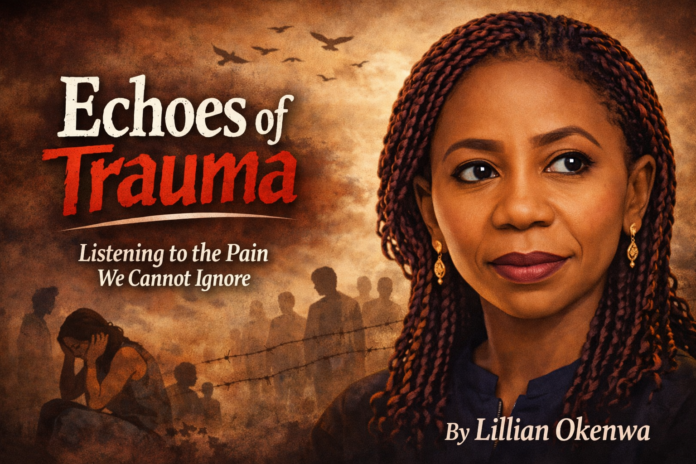
Echoes of Trauma: When justice becomes a wound

By Lillian Okenwa

Behind every wrongful detention is a life interrupted, a family shaken, and a quiet trauma that lingers long after release.

There is a different kind of trauma that rarely makes headlines. It does not come from gunfire or the chaos of an attack. It comes from the very systems meant to protect. Some of its deepest wounds are inflicted quietly, through delays, neglect, and processes that end up harming the very people they were designed to serve.

Mrs. Ngozi Ishola Umunna’s story is one of many. Arrested late on December 10, 2025, in Abuja under circumstances described as degrading and unlawful, she was unwell at the time and on her menstrual cycle. Yet, she was taken away and held without care, leaving behind two very young children, both with special needs, with no arrangement for them.

For days, she had no access to food, medication, family or legal counsel. What began as an allegation reportedly linked to rejected advances spiralled into detention, humiliation, and a long stretch in custody that should never have happened.

Read Also Echoes of Trauma: When those who defend us are forgotten

Read Also: Echoes of Trauma: The children we are raising in fear, By Lillian Okenwa

By the time a court struck out the case in April 2026 on the directive of the Attorney General, ordering her release and the return of her belongings, something deeper had already taken place. The law had spoken, but the experience remained. Even when freedom comes, it does not always restore what was taken. This is where the real story begins.

Across Nigeria, there are countless others whose names are not known, whose cases do not reach public attention. People picked up from the streets, from their homes, from moments that should have remained ordinary, and drawn into a system that often grinds too slowly or not at all. Charges appear uncertain. Files go missing. Court dates stretch into months, then years. For many, the wait becomes their sentence.

A bus driver, Olanrewaju Oladejo, lost eight years of his life awaiting trial for a crime that never existed. A young man, Emmanuel Amakude, spent over five years behind bars without conviction. Gospel Kinanee was taken as a teenager and spent eighteen years in detention without a charge, without a file, without a record that he even existed within the system. By the time he walked out, the world he knew had moved on without him.

There are others. David Eddiong, arrested without a complainant, remained in custody for years because he could not afford bail. Kazeem Adesina spent sixteen years in prison, long after bail had been granted without his knowledge. Abubakar Saidi lost nearly a decade of his youth without trial. Each story carries its own weight, yet together they form a pattern that is difficult to ignore.

Behind every one of these stories is a family. Mothers waiting. Children growing up without explanation. Homes suspended between hope and despair.

Nigeria’s correctional facilities tell part of this story. Thousands of inmates are awaiting trial; many without proper legal representation. Overcrowded, under-resourced, stretched beyond capacity, these centres hold not just those convicted of crimes, but those still waiting to be heard. The law provides timelines. The Constitution is clear on the rights of detainees. Yet between what is written and what is lived, there is a wide and painful gap. And in that gap, trauma grows.

A prison is not only a physical space. It is an experience. For some, it becomes a place of hardening rather than reform. For others, it is a place where identity begins to fracture. Time loses meaning. Dignity erodes. Hope becomes fragile.

When such individuals return to society, they do not return unchanged. They carry with them memories that do not easily settle. Anger that has no clear outlet. Distrust that lingers. Some struggle quietly. Others never quite find their way back. And when a system repeatedly produces this outcome, the impact does not remain personal. It becomes societal.

There is also a quieter injustice that plays out daily on the streets. Hawkers trying to eke out a living are arrested and detained. Petty offenders are quickly processed into a system already under strain. Meanwhile, those accused of far greater offences often navigate a very different path, one shaped by access, influence, and time.

This contrast is not lost on the public. It raises difficult questions about what justice truly means and who it serves.

The law is not without structure. The Administration of Criminal Justice Act (ACJA) was designed to address many of these concerns; to reduce delays, to ensure accountability, to prevent exactly the kind of prolonged detention that has become all too common. Yet laws, no matter how well written, rely on implementation. And implementation remains uneven.

What then happens to those who fall through the cracks? Who accounts for the years lost? The relationships broken. The mental strain that lingers long after release. Who helps them rebuild? Who listens when the silence becomes too heavy?

These are not abstract questions. They are human ones.

There is a tendency to see justice only in terms of verdicts. Guilty or not guilty. Convicted or discharged. But justice is also about process. About dignity. About the experience of being seen, heard, and treated fairly within that process. When that experience is absent, even the correct outcome can feel incomplete.

A society is often measured not by how it treats the powerful, but by how it treats the most vulnerable within its systems. Those without resources. Without connections. Without a voice strong enough to be heard above the noise.

If the system meant to protect becomes a source of harm, what then becomes of trust? This is because long after the doors of a cell open, something remains in the minds of those who lived through it. In the families who waited. In the society that must absorb the consequences.

Until we learn to hear these quieter stories, to address not only the legality but the humanity of justice, the echoes will continue. And they will not fade easily.

A  lawyer and equity advocate, Lillian can be reached at [email protected]

TIPS