Home Blog Page 167

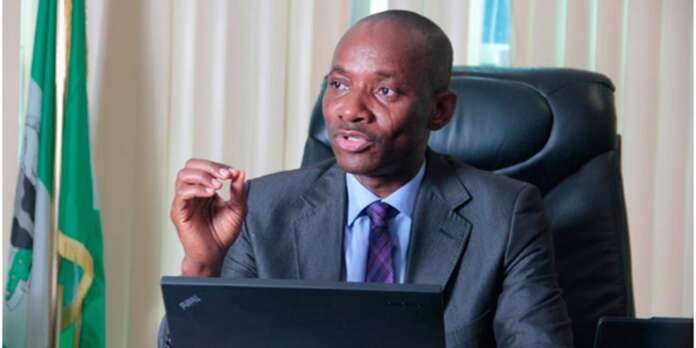
WDU holds 15th convocation Saturday, to honour Dambazau, Adebayo

Western Delta University (WDU), Oghara, Delta State, will on Saturday, November 15, 2025, hold its 15th convocation ceremony for the 2024/2025 academic session.

A statement signed by the Acting Registrar, E.O. Ofotokun, said the event would feature the conferment of degrees, diplomas and prizes on deserving students.

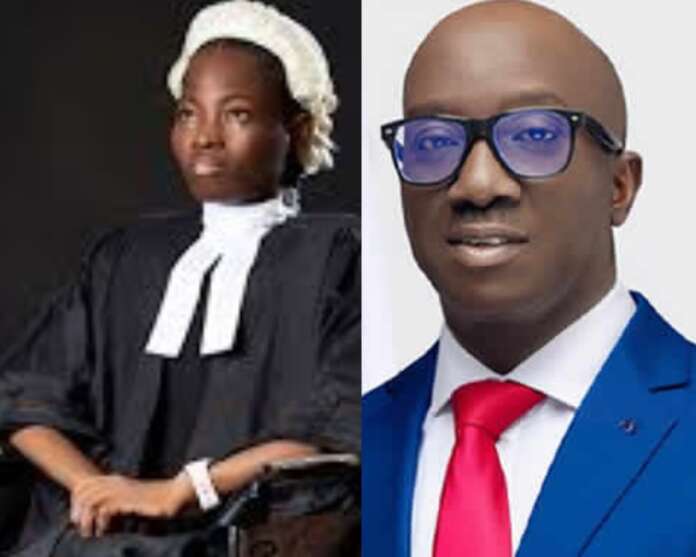
The university will also confer honourary doctorate degrees on two eminent Nigerians — Prince Adewale Adebayo, a lawyer, philanthropist and former presidential candidate of the Social Democratic Party (SDP) in the 2023 general elections, and General Abdulrahman Bello Dambazau (retd), a former Chief of Army Staff and Minister of Interior.

While Adebayo will receive a Doctor of Political Science (Honoris Causa), Dambazau will be conferred with a Doctor of Strategic Studies (Honoris Causa).

Ofotokun said graduands have been directed to collect their academic gowns and invitation cards ahead of the event, adding that they are to be seated by 9:30 a.m., while guests are expected to be seated by 10:00 a.m.

According to the statement, the ceremony will commence with the commissioning of projects at 10:30 a.m., followed by a convocation lecture at 11:00 a.m. to be delivered by Professor Kyari Mohammed, former Vice-Chancellor of Modibbo Adama University of Technology and Nigerian Army University, Biu.

The highlight of the occasion, slated between 12:00 noon and 2:00 p.m., will be the conferment of honorary degrees and presentation of academic awards.

“Her Mother Gave Her to Me” — Ned Nwoko Defends Marriage to 19-Year-Old Regina Daniels

Senator Ned Nwoko, who represents the Delta North Senatorial District, has reacted to the ongoing controversies surrounding his six-year marriage to Nollywood star Regina Daniels.

Mr Nwoko said he decided to speak up to address the ongoing age controversy surrounding his marriage and what he described as a coordinated campaign of political blackmail against him. He alleged that a “syndicate of pull-down” individuals was exploiting his wife’s vulnerability to smear his name and damage his political reputation.

“For clarity, Regina Daniels was born on October 10, 2000. If she has been married for six years, that means she got married at 19 years old, not 17. The public witnessed her family giving her away in marriage, and there were witnesses to the fact that her mother personally brought her to me. I never went after her,” Mr Nwoko said in a statement released by his Communication and Technical Action Team and made available to the News Agency of Nigeria (NAN) on Monday in Abuja.

Drug abuse admittance

The senator said it was on record that Regina had admitted to substance use and bipolar medication, noting that her medical records were verifiable.

“Enemies of progress are now manipulating her to achieve their aims. If she had any secrets to reveal, she would have done so. All the current stories being circulated are fabricated and amount to criminal defamation,” he said.

Re-emphasising that his marriage followed the traditional process, Mr Nwoko said: “Our customs and traditions do not frown upon polygamy. What I did was to marry her honourably, give her a name, and treat her with dignity.”

The senator maintained that his affection for Regina was genuine and well known.

“My world revolved around Regina. I pampered her and cared for her deeply, something everyone who has worked with me across Delta, Abuja, and beyond can testify to,” he said.

Mr Nwoko described the controversy as politically motivated, aimed at tarnishing his image and halting his developmental work.

“My decision to marry her properly according to tradition is now being twisted into a tool for political blackmail. This witch-hunt has been ongoing for years, an attempt to stop my developmental strides and discredit me now that I am a Senator of the Federal Republic of Nigeria,” he said.

Alleged land grabbing

He also stated that he had legally acquired land to establish the University of Sports, noting that the project now serves the community.

“Beyond this, the talk about me grabbing land in my hometown is false and unfortunate. The truth is that I was allocated a piece of land for which I made a genuine offer of payment to establish the University of Sports, a project that exists today and serves the community.

‘‘The manner with which people like Omoyele Sowore and Jebose, who have hunted me for years, are now using the situation to criminalise me in the international community shows a coordinated gang-up against me,” he added.

He described the attacks as a regrouping of individuals taking advantage of “a young woman who is unwell and has admitted to using drugs.”

“Those exploiting her present condition to settle old scores, knowing they have no case against me, will eventually face justice. If by now she has not brought up any credible allegation against me, it means there is nothing illegal about me except that I want her to seek help for rehabilitation,” he added.

Can an underage girl be married in Nigeria?

By M.O.Idam, Esq.

A female child below the age of 18 is an underage girl. See section 277 of the Child’s Rights Act 2003(CRA).

No marriage may validly be contracted between a girl child below the age of 18 and any person. Her consent or that of her parent(s) is immaterial. Such a marriage is not only invalid, it is criminal too.

Section 21 of the CRA states:
“No person under the age of eighteen years is capable of contracting a valid marriage, and accordingly, a marriage so contracted is null and void and of no effect whatsoever.”

The law further provides that any person who marries such an underage girl or has sexual relations with her is liable to seven (7) years imprisonment on conviction or to a fine or both.

What is rather intriguing is that the CRA is a federal law (an Act), which is only applicable in the Federal Capital Territory and may be applied to states only when adopted or domesticated as the state’s law.

Whereas all the states in Southern Nigeria have domesticated the Child’s Rights Act, about eleven (11) states in the Northern region are yet to enact the legislation within their jurisdictions. These states are :

  1. Adamawa
  2. Bauchi
  3. Gombe
  4. Katsina
  5. Kano
  6. Sokoto
  7. Kebbi
  8. Zamfara
  9. Yobe
  10. Jigawa
  11. Brono

Therefore, child marriage in those states is not regulated by the CRA; it is a function of their respective states’ laws regarding marriage.

Where the age of a child is in issue, the parents stand a better chance to confirm the exact age the child was born. However, where the parents’ account is inconsistent, the Supreme Court in Eze v. State (1985) 3 NWLR (Pt. 13) 429 held that the birth certificate, medical record(dental or bone examination), school record, or even physical examination of the child will be resorted to in deciding the age of the child. See also Okon v. The State (1988) 1 NWLR (Pt. 69) 172.

Lesson: the court will not only rely on the evidence of the girl child or that of her parents, especially when they are conflicting, to form an opinion about her age. It will consider extraneous circumstances like physical appearance to form an opinion. See Akinbuwa v. State (1998) 7 NWLR (Pt. 559) 537.

M.O.Idam

Yerima vs. Wike: Does the military have the authority to stop a Minister’s demolition?

By M.O.Idam

While many, including me, continue to cheer the young Lieutenant A.M. Yerima for unmasking the mini Idi Amin in Minister Wike, we must pause to ask—was that confrontation legally justified?

To refresh the memory of my readers, the summary of the facts leading to the face-off between Wike and Yerima is set out below:

On November 11, 2025, Minister Nyesom Wike visited a construction site located at Plot 1946, Gaduwa, Abuja—an area reportedly designated as a buffer or restricted zone under the Abuja Master Plan. Upon arrival, his team was denied access to the property by armed military personnel led by Lieutenant A.M. Yerima, who was said to be acting on the orders of his superior. The encounter quickly escalated into a heated face-off between the minister and the officer.

Read Also: Wike was on the wrong side of everything: law, common sense, decorum, & ministerial propriety —Odinkalu

Since the incident, Lieutenant Yerima has been celebrated, and rightly so across the media as a folk hero of sorts, for daring to confront the self-styled Hitler of Obio/Akpor.

A people who have endured one man’s grip on state resources and his delusion of supremacy over others will naturally celebrate every stumble that reminds him he is not El Shaddai. History offers many examples—Gaddafi, Hitler, Idi Amin, and others—are leaders undone by their own overreach.

Amid the chorus celebrating our new lieutenant-hero, a crucial question lingers—was the military right, in law, to assign its officers to guard or defend private property?

I will not answer the question without perusing the relevant statutory positions in this area:
Section 217(2) of the Constitution spells out the primary functions of the Nigerian Armed Forces. It states that the Armed Forces shall be charged with:
i. Defending Nigeria from external aggression;
ii. Maintaining its territorial integrity and securing its borders from violation on land, sea, or air;
iii. Suppressing insurrection and acting in aid of civil authorities to restore order when called upon to do so by the President (and subject to such conditions as may be prescribed by an Act of the National Assembly);
iv. Performing such other functions as may be prescribed by an Act of the National Assembly.

Interestingly, the provision of Section 1(2) of the Armed Forces Act, Cap A20, Laws of the Federation of Nigeria, 2004, is in pari materia with the already cited section of the Constitution, except that it adds “the protection of its citizens and their property” as one of the duties of the Armed Forces. However, reading the Act in isolation from the constitution, it will be doubtful whether this clause can be construed to authorize the military to engage in the protection of private property, as such an interpretation would extend beyond the intended constitutional framework of internal security support.

Nevertheless, a careful interpretation of this clause, together with the express provisions of the Constitution already cited, leaves no doubt that the Nigerian military has no business in internal security—except when expressly invited by the President—including activities such as the protection or defense of private land, a practice unfortunately observed too frequently in Nigeria.

However, even if it is assumed—without concession—that the Nigerian military has the the authority to protect private property, that authority cannot extend to preventing a statutory agency like the Federal Capital Territory Administration (FCTA ) from performing its regulatory duties, irrespective of the perceived illegality or otherwise of such duties.

By section 1(1) and (2) of the Land Use Act 1978, all land in the state and FCTA are vested in the Governor (or Minister, in the case of the FCT) who shall have the power to administer and hold same in trust for the people. Under this provision, the governor or minister is made the landlord over all the lands within his territory.

The Governor (in a state) or the Minister (in the FCT) has the authority to issue Certificates of Occupancy over any land, revoke them in the overriding public interest following due legal procedure, collect ground rent, and demolish illegal developments that do not conform with the master plan of the state or the FCT following land use regulations. See also Sections 18 and 1(3) of the FCT Act.

The foregoing in view, the use of military personnel to guard or defend a landed property from lawful or illegal demolition in Abuja—or anywhere else in Nigeria—is tantamount to employing the military to enforce a civil transaction. Such actions are utopian, uncivilized, unlawful, and unconstitutional, and should never be encouraged, regardless of any public excitement against the individual whose authority was resisted.

The court, and not the military or any other armed personnel, is the only lawful authority vested with constitutional powers to review, restrain, or overturn an official act. Therefore the military must remain in the barracks or at the boarders for external security.

CONCLUSION:

While Lieutenant A.M. Yerima is rightly celebrated for bravely standing his ground to oppose the apparent executive overreach and discourtesy exhibited by the Minister, the military hierarchy must be reminded to limit its operations strictly to external defense and constitutionally authorized duties.

M.O.Idam
[email protected]

The views expressed by contributors are strictly personal and not of Law & Society Magazine

Another Female Soldier Cries Out: ‘Senior officers assaulted me and threatened my life after I rejected them’

A female soldier, Corporal Marian Agumba, has accused senior Nigerian Army officers of harassment and assault.
She also alleged persistent threats to her life after years of frustration in the military.

In a viral video sighted by SaharaReporters on Thursday, Agumba made a desperate plea for help.
She appealed to President Bola Tinubu, the Chief of Army Staff, and the Chief of Defence Staff to intervene.

Read Also: Former Army Sergeant Major admits sexually assaulting a teenage female soldier who committed suicide after bosses ‘covered up’ the attack

Agumba said she had served in the Nigerian Army for 13 years with dedication and loyalty.
But according to her, she has faced nothing but intimidation and mental torture.

“I joined the army with my whole heart to serve my country,” she said in the video.
“But since I joined, I have not had peace of mind.”

Agumba claimed that her ordeal began when she refused sexual advances from senior officers.
She said their rejection led to years of persecution and humiliation.

“Had I been sleeping around like they wanted, they wouldn’t be treating me this way,” she alleged.

Read Also: Son of female soldier allegedly physically abused by superiors cries out, says mum was sent to psychiatric hospital

The corporal said she voluntarily resigned in July, but the harassment continued.
According to her, she was unlawfully detained and beaten alongside her two-year-old child.

“They locked me up with my child,” she said tearfully.
“They even ordered a private soldier to assault me.”

Agumba claimed she was later charged with assault and other false offences.
She said she was punished, detained again, and demoted from Corporal to Lance Corporal.

She specifically named two officers, Lieutenant Colonel Osarema and Lieutenant Colonel Nkanan.
According to her, both men ordered and supervised her assault.

Read Also: Activist calls for probe, denounces arrest of Nigerian female soldier who railed at sexual harassment by top military officers in viral video

“I was crying, telling them that the private soldier was acting on their orders,” she recounted.
“Yet they still punished and deranked me.”

Despite being discharged, Agumba said the threats have not stopped.
She alleged that officers have vowed to revoke her certificates and benefits.

“I’m done being strong,” she said in her appeal.
“All I’m asking for is justice and protection.”

Agumba said she gave her best years to the Nigerian Army but got cruelty in return.
She insisted she was targeted because she refused to sleep with her superiors.

“I am not a criminal,” she said.
“I have never been found wanting since I joined the army.”

Agumba alleged that Lieutenant Colonel Osarema personally ordered her detention after she turned him down.
“He told them to assault me and my baby, then locked me up again,” she said.

She said she spent seven days without food or access to her child.
“They denied me everything and later deranked me,” she said bitterly.

Even after leaving the army, Agumba said she still receives threatening calls.
“They said I would disappear and nobody would save me,” she claimed.

When she reported to a superior officer, she said she got no help.
“He told me to call anyone I know because he couldn’t help,” she said.

Agumba described the Nigerian Army as a place where female soldiers suffer harassment and discrimination.
“As an Igbo woman, if you refuse to sleep around, they frustrate you,” she alleged.

She lamented that her entitlements after 13 years of service are now being withheld.
“They want to stop my benefits and revoke my certificate,” she said.

Agumba also decried poor welfare and unpaid allowances in the military.
“The salary can’t even feed us, and yet they keep threatening our lives,” she said.

She ended her video with a renewed plea to President Tinubu and human rights groups.
“All I want is justice, peace, and protection,” she said.

Just In!! Passengers stranded after Abuja-bound train grinds to a halt minutes into journey

Passengers on the Abuja-Kaduna train service were left stranded after the train developed a problem some minutes into the trip from Kaduna.

The train, which left Kaduna on Thursday at some minutes past 2 pm, encountered problems at about an hour into the trip and had to reverse back to Kaduna.

A passenger who spoke to LEADERSHIP from the train (names withheld) said the train crew could not explain what happened initially, but the train suddenly started reversing back to Kaduna midway into the trip.

Also, a staff member of the Nigeria Railway Corporation (NRC) in Kaduna, who spoke on the condition of anonymity, told Leadership that the train left for the 2 pm schedule but encountered problems on the road and returned to Kaduna for repairs.

The staff said most of the Abuja-bound passengers were stranded at the Kaduna Train Station, hoping that the train would be fixed on time, while some others had returned home.

Two prison inmates killed in transformer explosion in A’Ibom, many injured

An explosion from a faulty transformer located near the Akwa Ibom State Custodial Centre has reportedly killed two inmates awaiting trial and injured two others.

The incident, which reportedly occurred a fortnight ago, caused a blackout throughout the period and damaged electrical appliances in the centre.

The high-voltage wire was said to have snapped and dropped directly on a portion of the custodial facility, causing an electrocution that led to the death of the inmates.

Meanwhile, the Akwa Ibom State Controller of Corrections, Frank Okonkwo, who confirmed the tragic passing of the two awaiting-trial inmates of the Uyo Custodial Centre on Thursday, described the incident as unfortunate.

Expressing regret over the explosion, Okonkwo said the explosion also damaged all electrical appliances at the centre, disclosed that the victims were thrown up from where they were sitting and were later rushed to the University of Uyo Teaching Hospital by the facility’s doctor, where they were pronounced dead.

He disclosed that the victims were awaiting trial for conspiracy, kidnapping, and armed robbery, noting, however, that they were presumed innocent until proven otherwise by the court.

He said the families had been contacted and that one of them had concluded the process for the retrieval of the corpse, adding that the command would only release the corpses upon completion of investigations.

According to him, “It was very unfortunate, because the thing caused a lot of damage, both to our facility and the families of the deceased.

“When that explosion occurred at the transformer, officials of PHEDC came and said the explosion was a result of too much voltage. The thing affected us in that it actually destroyed or damaged all electrical appliances, computers, etc., in our facility.

“It affected our barracks as well, and even the official residence of the officer in charge. But the most painful aspect of it was that it affected two of our inmates, who finally lost their lives as they were rushed to the hospital.

“They were thrown off from where they were staying, and immediately our medical personnel administered first aid, and rushed them to the University of Uyo Teaching Hospital, where they were later confirmed dead.

“It was a big loss, both to themselves and to the inmates, especially when they were just awaiting trial. One of them was standing trial for conspiracy and kidnapping, the other one for armed robbery.”

The controller, who recalled that the same transformer was faulty a few years back, called on the relevant authorities to address the issue to forestall a recurrence.

He added that the legal department was investigating the matter and would present a comprehensive report accordingly.

He also disclosed plans by the command to organise a rehabilitation and empowerment programme for inmates who had gone through rehabilitation, saying such inmates had acquired some skills and would be given start-up packs to enable them to be fully integrated when they were eventually discharged into the larger society.

According to him, the programme would enable them to be useful to themselves as well as to the community, so that they would not have any cause to reoffend and return to the custodial centre again.

“We are looking at 30 for now because the financing is going to be huge, because we relying mainly on the goodwill of our donors and organisations, those who have acquired various skills while in our custody, different skills like tailoring, carpentry, barbing and welding, and we intend to draw the beneficiaries from various custodial centres — Uyo, Ikot Abasi, Ikot Ekpene and Eket.

“Those who are serving terms but are on the verge of being discharged between now and December are convicts who have successfully accepted our treatment regime by getting themselves usefully engaged when they were in our custody. Those are the ones we want to show appreciation to by organising this programme.”

The Akwa Ibom State Custodial Centre, located in Uyo, is one of Nigeria’s medium-security correctional facilities under the Nigerian Correctional Service (NCoS), which has in recent years battled issues of infrastructure decay, poor power supply, and overcrowding.

Global women in leadership webinar on work-life balance and gender inclusion in the Judiciary begins today

The much-anticipated Women in Leadership in Law (WILIL) Project webinar begins at 10 am today.

Organised by the National Association of Women Judges of Nigeria (NAWJN) in collaboration with the International Association of Women Judges (IAWJ), the virtual event will focus on strengthening women’s leadership and inclusion in the justice system.

Themed “Enhancing Work-Life Balance and Accessibility in Court Settings,” the webinar aims to address challenges faced by women in law as they strive to balance family responsibilities and professional advancement.

According to the organisers, the event will raise awareness about the need for family-friendly court facilities and spotlight the Abia State Judiciary’s pioneering effort in establishing a creche and nursing room for working mothers.

Discussions will also explore how accessibility features can improve women’s participation in the legal system while encouraging policy innovation and inclusive workplace practices.

The WILIL Project, a multi-year initiative by IAWJ and Co-Impact, is designed to enhance women’s entry, retention, and leadership growth within the judiciary, particularly across developing nations.

Nigeria joins Kenya, South Africa, Mexico, and the Philippines as one of the five pilot countries implementing the groundbreaking initiative.

Members of the Nigerian Bar Association Women Forum, FIDA, the African Women Lawyers Association, the Magistrates Association of Nigeria (Women Wing), law teachers, legal professionals, judicial officers, and advocates for gender equity are encouraged to attend this transformative event aimed at building a more inclusive justice system for all.

📅 Date: Thursday, 13th November, 2025.
🕙 Time: 10:00 AM (WAT).
💻 Platform: Zoom / YouTube Live.
Join Zoom Meeting
https://us06web.zoom.us/j/82458329448?pwd=VPuCDEzKjbXav76Yh0PVo8pLaxYPQq.1

Meeting ID: 824 5832 9448
Passcode: WILILTEAM

Join via YouTube:
https://youtube.com/live/TBwt0vGHAF0?feature=share

Wike was on the wrong side of everything: law, common sense, decorum, & ministerial propriety —Odinkalu

By Chidi Odinkalu

For the record, let me be clear: Nyesom Wike is a Minister of the Federal Republic & an appointee of the president. He is neither a police officer nor a bailiff.

A lot of people who claim to be lawyers go about this thing with no regard for the law.

Wike was plainly on the wrong side of everything: law, common sense, decorum, & ministerial propriety.

The only thing he had on his side was alcohol.

Wike had no right to be where he was. There is no ministerial right or power to enter land in adverse possession without a court order.

Ideological purists like me may quarrel with it, but a lot of people forget that Section 33(2)(a) of the Nigerian constitution grants a right to kill lawfully in defence of property rights & effective possession is an intangible property right.

Wike was a trespasser using force to enter land in adverse possession & without a lawful Court order or warrant. He was on a mission of Ministerial Vigilantism.

He was lucky to come out without injury or worse.

An officer of less discipline or one who takes Johnnie Walker for breakfast – like Wike – may have been less parsimonious with a projectile. The Shiites in Zaria did a lot less & see what happened to them.

I am not sure people realize what amount of trouble this puts Wike in. This affects the authority of the president as C-in-C. The officer corps will be looking out for how the C-in-C handles this.

In case anyone wonders who wrote this, my name is Chidi Anselm Odinkalu.

This nonsense has to stop!

Let me add:

There are 2 things here. 1st possession, no matter how tenuous, is a protected intangible property interest. You can only defeat it by a court order.

Even as Minister, Wike cannot lawfully clear our squatters without a court order. Squatting as a matter of law strictly speaking, is a protected interest in land.

The Minister has a right under the Land Use Act to inspect land the subject of a right of occupancy at a reasonable hour & reasonable notice. But if he is not granted access, he needs a court order to enforce, not self-help.

When I was chair of the NHRC, we found the SSS & the Guards Brigade liable for the unlawful killing of squatters in an Abuja building. The Attorney-General required them to pay up the damages we ordered & they did.

There is a 2nd issue: Strictly speaking, the constitution valorizes property more than human life. So, it grants wider latitude to kill in defence of property than it does in defence of human life.

There is an inherent requirement of proportionality in respect of the latter, which is not there in respect of the former.

Colonialism is the context to s.33(2)(a) of the Constitution. White people were few. The lands were ours. But the white people could kill our ppl as they liked because black life mattered little. But their property mattered a lot. They ruled by expropriating our lands.

We failed to change that mindset after independence. Thus far, it has not mattered much because the lives involved were the “expendable” lives of citizens for the most part.

Now we are dealing with the egos of big people. But the underlying legislative & constitutional structure of hierarchies of life & of property has not changed.

Let me put it this way: if something had happened to Wike in the fracas he manufactured & those guys had been court-martialled, I’d wager that they would have gone free.

There is another aspect that should be addressed – whether military men should ordinarily protect the property of their boss.

The answer to that question actually is fact-specific & has to be based on evidence. Wike did not have enough facts in that altercation to determine the facts, nor do you or I. Let me explain a little more why this matters.

As a matter of law, there is a difference between void & voidable. Was it manifestly unlawful for the soldier to be where he was? The answer is no. Why, you would ask?

Because it is the seat of power, Abuja is actually military territory. That is why its ultimate protection is in the hands of the Guards Brigade.

So, its administration is under a mix of civil and military law, all designed to protect the civil authority of the president as head of state & his military command as C-in-C.

A soldier in Abuja enjoys a presumption of regular & lawful command & deployment until the contrary is proved.

But the fact that a deployment is not void as a threshold issue does not mean that it is not voidable. To determine whether or not that is the case, however, you need more facts & more evidence.

That is why there can be no room for ministerial self-help.

If Wike had a warrant or court order, then, of course, I can tell you right away the officer was out of line & what he did was unlawful. But he didn’t.

Whether the officer was there on private business is not what you or I can determine without a process of adjudication or inquiry.

Women judges poised to lead powerful global webinar on work-life balance and gender inclusion in the Judiciary

All is set for the highly anticipated Women in Leadership in Law (WILIL) Project webinar taking place tomorrow.

Organised by the National Association of Women Judges of Nigeria (NAWJN) in collaboration with the International Association of Women Judges (IAWJ), the virtual event will focus on strengthening women’s leadership and inclusion in the justice system.

Themed “Enhancing Work-Life Balance and Accessibility in Court Settings,” the webinar aims to address challenges faced by women in law as they strive to balance family responsibilities and professional advancement.

According to the organisers, the event will raise awareness about the need for family-friendly court facilities and spotlight the Abia State Judiciary’s pioneering effort in establishing a creche and nursing room for working mothers.

Discussions will also explore how accessibility features can improve women’s participation in the legal system while encouraging policy innovation and inclusive workplace practices.

The WILIL Project, a multi-year initiative by IAWJ and Co-Impact, is designed to enhance women’s entry, retention, and leadership growth within the judiciary, particularly across developing nations.

Nigeria joins Kenya, South Africa, Mexico, and the Philippines as one of the five pilot countries implementing the groundbreaking initiative.

Members of the Nigerian Bar Association Women Forum, FIDA, the African Women Lawyers Association, the Magistrates Association of Nigeria (Women Wing), law teachers, legal professionals, judicial officers, and advocates for gender equity are encouraged to attend this transformative event aimed at building a more inclusive justice system for all.

📅 Date: Thursday, 13th November, 2025.
🕙 Time: 10:00 AM (WAT).
💻 Platform: Zoom / YouTube Live.
Join Zoom Meeting
https://us06web.zoom.us/j/82458329448?pwd=VPuCDEzKjbXav76Yh0PVo8pLaxYPQq.1

Meeting ID: 824 5832 9448
Passcode: WILILTEAM

Join via YouTube:
https://youtube.com/live/TBwt0vGHAF0?feature=share

TIPS