While 176 women and children from Kwara finally returned after six months in terrorist captivity, another community was already counting its own missing. In Nigeria’s kidnapping crisis, rescue has become an event; recovery remains the neglected story.
For six months, they existed in the minds of their families as unanswered prayers.
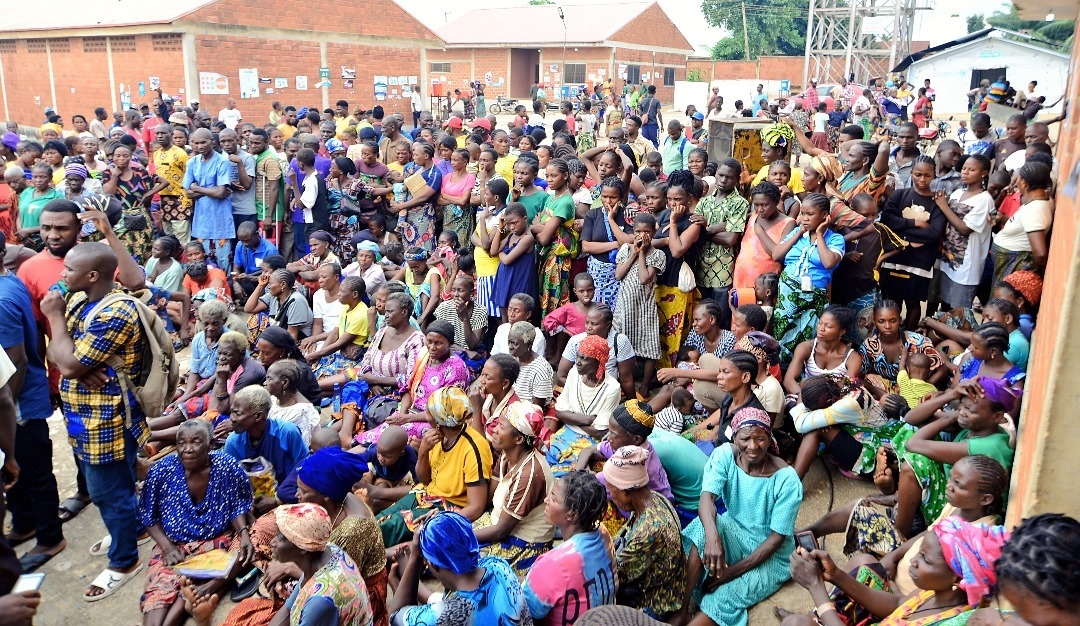
This week, 176 women and children abducted from Woro community in Kaiama Local Government Area of Kwara State finally regained their freedom after months in the custody of armed terrorists. Across Kwara, the announcement brought relief to families who had lived with uncertainty since the February attack that emptied their community of loved ones.
The operation deserves recognition. Every hostage brought home alive represents a significant achievement for the security personnel who risked their lives to secure that outcome.
Yet the return of the Woro captives also exposes a question that receives remarkably little attention in Nigeria’s public conversation.
What happens after the rescue?
For many of those released, the journey out of captivity is unlikely to be the end of their ordeal. International humanitarian experience shows that people emerging from prolonged confinement frequently require far more than transportation back to their communities. Medical examinations, nutritional support, psychological care, family reintegration, educational assistance for children and economic support for households are all recognised elements of post-captivity recovery.
Those needs rarely disappear because a rescue operation has succeeded.
The attack on Woro in February left an entire community devastated. Scores of residents were reportedly killed. Farms were abandoned. Livelihoods collapsed. Families exhausted savings while searching for missing relatives. The return of the captives restores hope, but it cannot by itself restore the lives interrupted by six months of violence and uncertainty.
So far, there has been no comprehensive public account of the condition in which the former hostages were recovered or the support that will follow their return. That is not a criticism of the rescue operation itself. It is recognition that humanitarian recovery requires a different set of institutions, resources and expertise than military operations.
Around the world, governments responding to terrorism increasingly recognise that former hostages require structured reintegration programmes involving healthcare professionals, psychologists, educators, social workers and community leaders. The objective extends beyond survival. It is to help victims rebuild lives fractured by violence.
Children require particular attention.
Six months away from school can alter educational development. Prolonged exposure to fear and uncertainty may affect emotional wellbeing long after physical freedom has been restored. Child protection specialists have consistently emphasised that early psychosocial intervention significantly improves long-term outcomes for children emerging from conflict and prolonged captivity.
Communities also carry invisible wounds.
When hundreds of residents disappear, farming stops, local commerce contracts, schools struggle to function and confidence in public institutions weakens. Families who have sold livestock, farmland or other assets to survive the months of uncertainty often return to a different form of hardship even after loved ones come home.
These are not simply humanitarian concerns.
They are questions of governance.
The Constitution places a duty on the Nigerian state to protect life and preserve the dignity of every citizen. Those obligations do not end when hostages leave the forest. They extend to helping survivors rebuild lives disrupted by organised violence and ensuring that communities can recover with dignity and security.
The timing of the Woro release illustrates another reality.
As former hostages prepared to return to Kwara, another community was confronting its own nightmare. In neighbouring Zamfara State, armed men attacked a military Forward Operating Base and the adjoining community at Kasuwar Daji in Kaura Namoda Local Government Area. During the assault, an army officer and a police officer were killed, while dozens of civilians were abducted before troops rescued some of those taken.
The contrast is striking.
One community celebrated reunion.
Another began the long wait for news of missing relatives.
For communities living across Nigeria’s expanding kidnapping corridors, this cycle has become painfully familiar. One hostage crisis ends while another begins. Security forces launch rescue operations even as armed groups continue to identify new targets. The humanitarian burden shifts from one locality to another without ever truly disappearing.
The rescue of the Woro captives’ forms part of a wider operation in which security agencies recovered more than 300 abducted persons from the Kainji Lake axis spanning parts of Kwara and Niger States. It was one of the largest hostage recoveries recorded in recent years and reflects the growing operational pressure being mounted against armed groups operating in the region.
That achievement deserves acknowledgement.
It should also encourage a broader national conversation about what follows successful rescue operations.
Nigeria has devoted increasing attention to counting kidnappings, announcing rescues and measuring operational successes. Far less attention has gone into building a comprehensive framework for helping former hostages reclaim ordinary lives. As mass abductions continue to affect communities across several regions, that imbalance is becoming more difficult to ignore.
The story of Woro did not begin with the abduction, and it does not end with the release.
For the women and children who have returned, recovery will be measured in quieter ways: the child who goes back to school without fear; the mother who receives medical care before hidden injuries become permanent; the farmer able to cultivate abandoned land again; the family that no longer has to choose between rebuilding a livelihood and paying debts accumulated during months of searching for loved ones.
Military operations can bring people home.
The work of restoring lives belongs to the institutions that remain long after the soldiers have left.