There was no master plan, just curiosity.
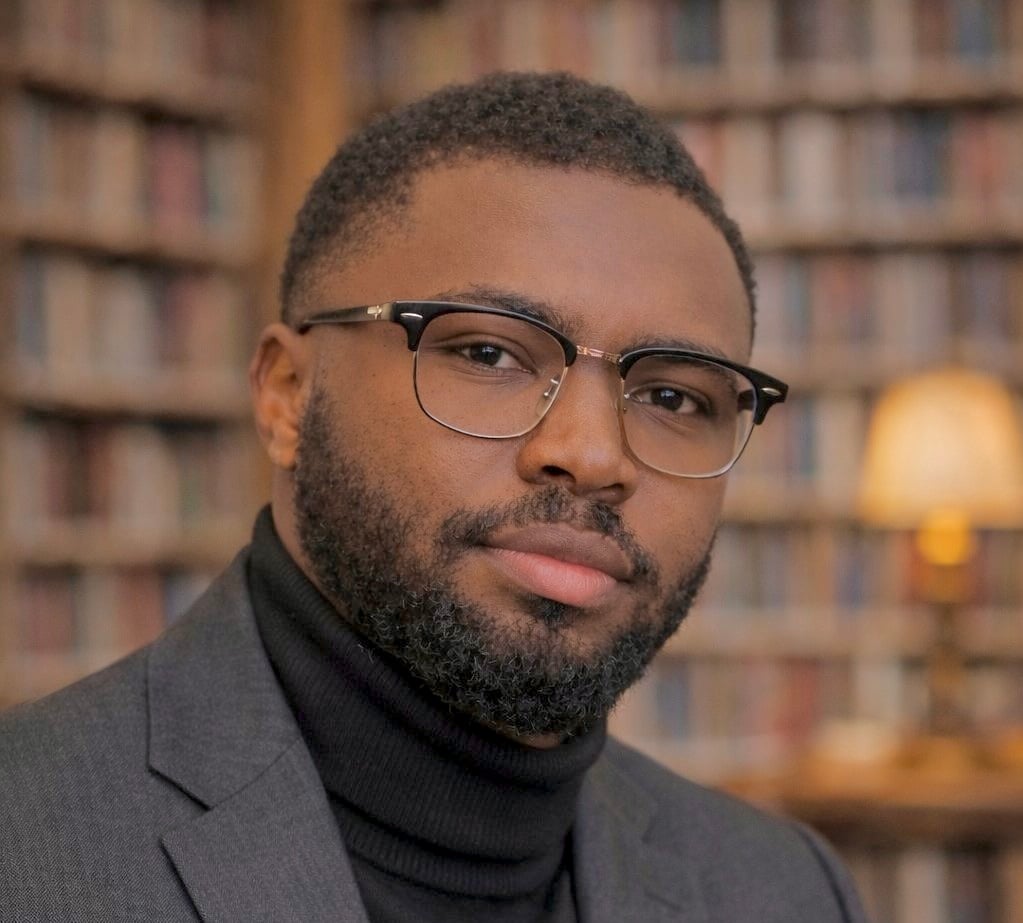
Years ago, as a microbiology student at Usmanu Danfodiyo University Sokoto, Muneer Yaqub found himself asking a deceptively simple question: Why do some infections refuse to respond to treatment?
That question would carry him thousands of miles—from northern Nigeria to a top-tier research lab in the United States—and into one of the most urgent scientific battles of the 21st century: antimicrobial resistance.
Today, Yaqub is a PhD graduate of University of Texas at Dallas, where he was named Outstanding Graduate Student (PhD), an elite distinction selected from nominees across six schools. He completed the demanding program at just 27.
But his journey, he says, was anything but straightforward.
“You’re Figuring It Out Alone”
Yaqub didn’t begin with a roadmap to international academia. Like many Nigerian students, he navigated a system where information about global opportunities is often fragmented or inaccessible.
“There were no clear instructions,” he recalls. “You’re figuring things out as you go—applications, funding, expectations—often without guidance.”
Securing a fully funded PhD required persistence, trial and error, and strategic positioning. Even after gaining admission, the transition to life in the U.S. proved equally demanding.
At UT Dallas, independence wasn’t optional—it was expected.
“You’re designing experiments, defending your ideas, thinking critically. No one is holding your hand,” he says. “And beyond academics, you’re also learning a new culture, building a support system from scratch.”
Perhaps the most difficult part? The unwritten rules—how to communicate with professors, navigate opportunities, and advocate for oneself.
The Silent Grind Behind a PhD
A PhD, Yaqub explains, is often misunderstood.
“It’s a quiet journey. Progress is slow, uncertain. Experiments fail. Results don’t always make sense.”
Finishing at 27 came with intense pressure—to perform, publish, and stay on track in an environment where setbacks are routine.
That’s why, when recognition came, it carried deeper meaning.
“As a Nigerian, you’re aware of where you’re coming from,” he says. “You know there are many others with the same potential but fewer opportunities. So it feels like representation.”
Fighting a Global Health Threat
At the Dillon Lab, Yaqub’s research focuses on antimicrobial resistance—specifically Acinetobacter baumannii, a dangerous hospital-acquired pathogen known for its resistance to multiple drugs.
The stakes are high.
These infections are becoming increasingly difficult—and in some cases, impossible—to treat with existing antibiotics.
Yaqub’s work zeroes in on a troubling gap: bacteria that appear treatable in lab tests but survive in real-world clinical settings.
“That disconnect is what we’re trying to understand,” he explains. “Because that’s where treatment fails.”
Beyond the Lab: Leadership and Access
While navigating the pressures of doctoral research, Yaqub also stepped into leadership.
He served as the first Graduate Student Representative in his department and became the pioneer president of the UTD Global Ambassadors program—supporting international students adjusting to life in the U.S.
It was a role shaped by personal experience.
“As an international student, I saw how confusing the system can be,” he says. “I wanted to make that process easier for others.”
That mission extended beyond campus.
He founded ScholarshipHQ (formerly Temple of Scholars), a platform designed to help students, particularly from Africa, secure fully funded graduate opportunities abroad.
The initiative has already helped numerous students access scholarships that once seemed out of reach.
Breaking the “Grades Myth”
One of the biggest misconceptions, Yaqub says, is that academic excellence alone guarantees success.
“Grades matter, but they’re not enough,” he explains. “What really counts is how you present your story, your experiences, your goals, your fit.”
It’s a gap he’s working to close through mentorship and his book, Greener Pasture, which guides students through the scholarship process.
Science Meets Storytelling
In a rare crossover, Yaqub has also written for major outlets including The New York Times and Science Magazine—bridging the gap between research and public understanding.
“Research answers questions,” he says. “Writing helps bring those answers to people.”
“Start Where You Are”
Despite his growing profile, Yaqub’s advice to young Nigerians is grounded in realism.
“You don’t need to have everything figured out,” he says. “But you need to be intentional. Start where you are, build experience, and stay consistent.”
Because, as his own story shows, global impact often begins with a single question—and the refusal to stop asking it.