By Kirsten Okenwa
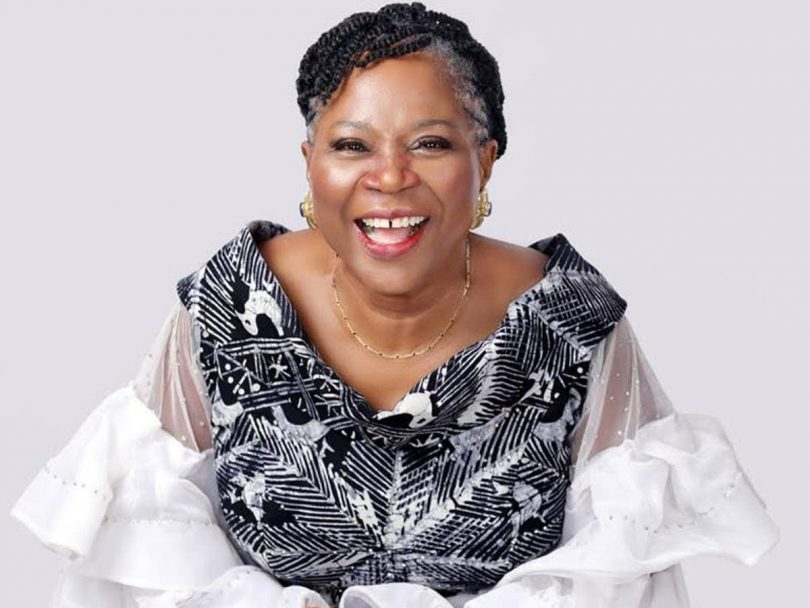
There is a particular kind of greatness that does not need a national stage to prove itself. Onyeka Onwenu had that kind. She could fill any hall in Lagos, Abuja or overseas with her sonorous voice alone, and she did, for four decades. Yet on the day I sat down to think about what made her different from the long parade of influential Nigerians who dabble in “giving back,” I kept returning not to her music but to a local government election in Imo State that she lost twice. That, to me, is the whole story of who she was.
Onyeka Onwenu passed on in Lagos on 30th July, 2024 at the age of 72. The tributes poured in then, as they should have. Burna Boy had already immortalised her in song. Presidents and governors called her a legend, Nollywood mourned a woman who had shared the screen with Chiwetel Ejiofor and Thandie Newton in Half of a Yellow Sun. All of that was true and all of it was earned. But two years on, once the eulogies have settled into history, I find myself drawn to a quieter part of her life, the part that speaks directly to the work I do every day with rural communities across Nigeria.
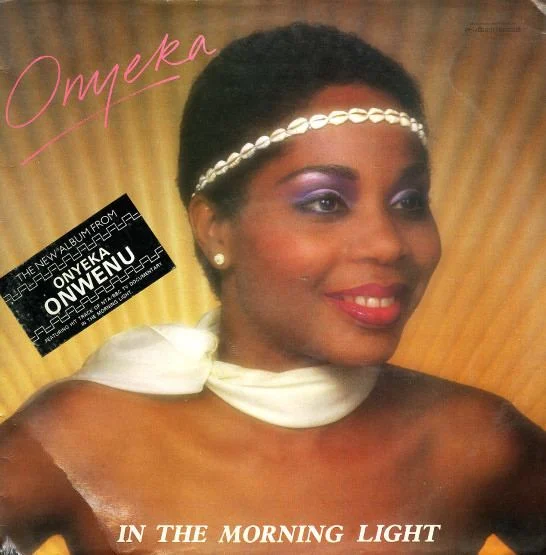
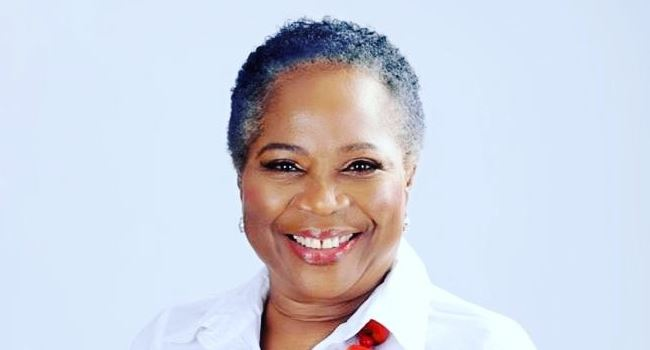
Onyeka Onwenu was born in 1952 in Obosi, Anambra State, though her people trace their roots to Arondizuogu in Ideato North, Imo State, and she grew up in Port Harcourt. Her father, D.K. Onwenu, was an educationist and a politician who died in a car crash when she was only four years old, a week, by cruel coincidence, before he was due to be appointed Minister for Education. It fell to her mother, Hope, to raise five children alone, after her husband’s family shut her out of his property. There is a lesson in that alone about the women who quietly hold Nigerian families together while the world looks elsewhere. I believe Onyeka absorbed this reality early.
She was educated first in Nigeria, then went on to the United States, where she earned a Bachelor’s degree with the class of 1976 in International Relations and Communication from Wellesley College in Massachusetts, and later a Master’s in Media Studies from The New School for Social Research in New York. She worked for a time at the United Nations before coming home to Nigeria in 1980 to do her mandatory one year National Youth Service Corps. She was posted to the Nigerian Television Authority in Lagos. This work was meant to be a formality but Providence made it a calling.
What strikes me most about Onwenu’s journalism is where she pointed her camera. In 1983, still in her early thirties and newly minted at NTA, she began travelling widely across Nigeria, rural and urban alike, at a time when most broadcasters of her stature were content to stay near the corridors of power. A year later, she fronted Nigeria: A Squandering of Riches, a joint NTA and BBC documentary that has since become something of a reference point in Nigerian broadcast history. She could have filled that documentary with technocrats and permanent secretaries explaining the nation’s oil wealth in careful language. Instead, she went looking for the farmer standing in his field, the trader haggling in the market, the ordinary worker who felt the country’s mismanagement in his pocket every single day. That decision, to let the people who actually bore the weight of bad governance speak for themselves, still feels radical when you consider how rarely it happens even now.
Onwenu never treated advocacy as something separate from her fame. She lent her name and her time, often without pay, to public health campaigns that took her deep into communities most public figures never visit. She was a visible voice in the mobilisation against onchocerciasis, river blindness, a disease that has devastated rural populations along Nigeria’s river systems for generations and that receives nowhere near the attention it deserves in the wider national conversation. This was not glamorous work, there were no red carpets in those communities. But it was the kind of work that actually moves the needle on human suffering, and she kept showing up for it until close to the end of her life.
In 2013, President Goodluck Jonathan appointed her Executive Director and Chief Executive Officer of the National Centre for Women Development in Abuja. It would have been easy to treat the role as ceremonial, another line on an already distinguished résumé. Onwenu did not treat it that way. Under her leadership, the Centre pushed empowerment programmes toward the women who are so often at the very bottom of every list, including female internally displaced persons uprooted by insurgency in the north. Her feminism, if we can call it that, was never abstract or theoretical. It was rooted in a very specific, practical belief that economic self-reliance is what actually restores dignity to a woman who has lost everything else. Give her a skill, give her capital, a market, and she will rebuild her own life. That was the philosophy, and it ran through everything she touched at the Centre.
Then there is Ideato North were she lost twice in the elections. Onwenu put her name forward to become chairman of her home local government area in Imo State, running on the platform of the Peoples Democratic Party. Twice, she lost, first around the turn of the millennium and again in the early 2000s, in contests she always maintained were shaped as much by entrenched political machinery as by the ballot itself. Here was a woman who could have had almost any national platform she wanted simply by asking for it. Governors courted her, Presidents appointed her to federal roles without her having to campaign for a single vote. Yet what she actually wanted, what she kept going back for even after losing, was the chairmanship of a local council most Nigerians outside Imo State could not find on a map.
She said something once that has stayed with me: that if you get governance right at the local government level, you have solved the majority of the country’s problems, because that is the level of government closest to where ordinary people actually live their lives. It is not a glamorous theory of change. It will win you no international awards. But it is, I believe, exactly correct.
I think about this often in my own work with the Rohan Rural Support Initiative, moving between communities that rarely see a camera crew or a state governor, let alone both. There is no shortage of Nigerians who will speak eloquently about rural poverty from a podium in Lagos or Abuja. There is a real shortage of prominent people willing to trade the podium for the pot-holed road, the health centre with no drugs, the primary school with no roof. Onyeka Onwenu did that trade, over and over, long before it was fashionable and long after the cameras had mostly stopped following her.
A nation does not develop from its capital cities outward. It develops from its villages inward, or it does not develop at all. Onwenu understood that in a way that went beyond slogans. She understood it enough to stake her own political ambition on a local council seat, lose it, and go right back to the work anyway, through journalism, health campaigns, through an institution built for women that history usually forgets.
Two years after her passing, that is the Onyeka Onwenu I choose to remember. Not only the Elegant Stallion who could bring a stadium to its feet, but the woman who believed that the truest measure of a country is not how it treats the people in its capital, but how it treats the people in its villages.
I shared the stage with her several times as one of her backup singers and dancers. I was privileged to bask in her limelight, but I choose to remember her today as the rural community advocate.
Rest well, Ma’am. The work you pointed us toward is still very much unfinished.
Kirsten Okenwa is a food systems practitioner, scientist, food heritage archivist and environmental storyteller. She is the founder of Rohan Rural Support Initiative, Nigeria, where her work is grounded in the belief that no nation develops without its rural communities.