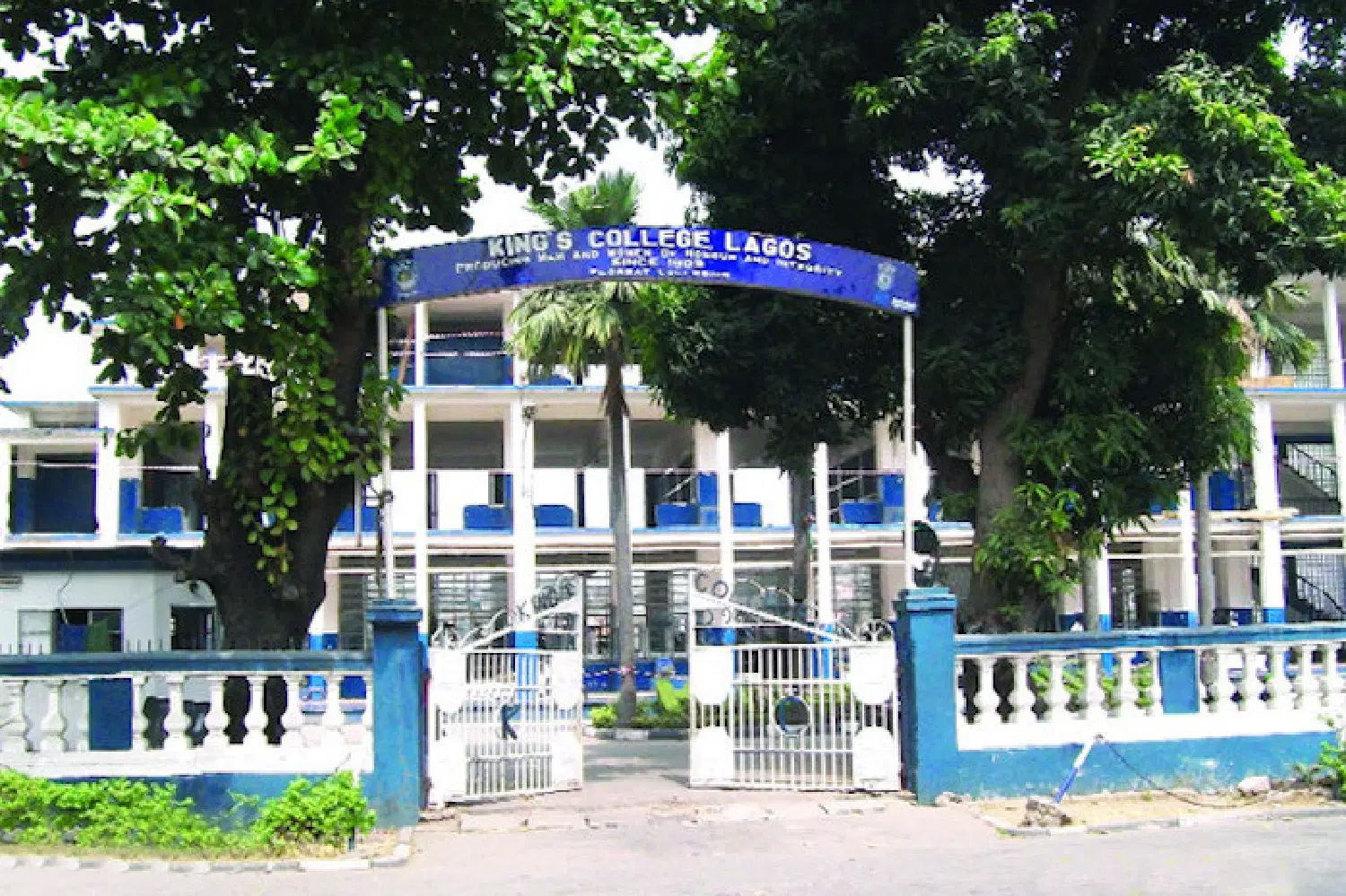
A reader and old boy of King’s College, Lagos, responds to our report on the controversial concession, arguing that the debate should move beyond suspicion of privatisation to the harder question of how to rescue a declining public institution without losing what made it exceptional
The debate over the proposed concession of King’s College, Lagos, has raised legitimate questions about ownership, access and the future of public education. But there is another question that deserves equal attention: What happens to the school if Nigeria simply preserves a model that has allowed its standards to decline over the years?
That is the question raised by a reader and old boy of King’s College, Lagos, in a response to Law & Society Magazine’s recent report on the proposed concession of the school.
Writing as a KCOB — a King’s College Old Boy — the reader who does not want his name in print commended the report for what he described as a balanced treatment of the issues, particularly at a time when much of the media coverage had, in his view, presented a skewed picture of the proposed arrangement.
He pointed to the July 7 press conference organised by the King’s College Old Boys Association, where, he said, the purpose and focus of the proposed concession were discussed.
According to him, the conversation should not be reduced to the question of infrastructure alone.
Founded in 1909, King’s College it has produced generations of Nigerians who have gone into public service, law, medicine, business, academia, the military and other professions. Its alumni include some of the country’s most prominent figures.
For decades, schools of its kind served a particularly important purpose: they brought children from different parts of Nigeria and different social backgrounds into the same educational environment.
Below is the response.
“Many thanks for a very balanced and informed analysis of the issues surrounding the KCL concession.
“As a KCOB, I have been concerned to see a lot of skewed reporting on the subject in the media, in spite of the fact that KCOBA held a well reported press conference on July 7, at which the purpose and focus of the concession were discussed.
“Beyond the issues of infrastructural decay and inadequate funding, issues around sustenance of access, federal character, affordability, security of employment (for staff), were all addressed.
“Your report is one of the few I have seen that adequately reflects these points.
“Thank you for that.
“On the issues you raised concerning ownership and when a concession becomes privatization – I acknowledge that this is a legitimate concern. In my view, these are issues on which appropriate assurances and controls can be discussed and agreed on. That is what needs to happen.
“We all must be realistic and admit that the current model is not working and, like your report rightly states, standards have continued to fall over the years. Continuing to do the same thing and expect different results after decades of decline is the definition of madness and we really can’t afford that. We owe our children better.
“The KCL concession is a groundbreaking intervention that can succeed in raising the standard of public education, while preserving its strengths in terms of supporting national unity and social mobility. But that requires all stakeholders to be on board, fully engaged and committed to a shared vision of what the future of education should look like for future generations
“Thank you”
A concession should be judged by what it delivers
The proposed King’s College concession should therefore be subjected to neither automatic applause nor automatic rejection.
It should be tested.
Does it improve the quality of education?
Does it preserve access for children who cannot afford elite private-school fees?
Does it protect the school’s national character?
Does it safeguard the jobs and rights of existing staff?
Does it improve infrastructure?
Does it create a transparent and accountable management structure?
Does government retain sufficient powers to protect the public interest?
Does the arrangement contain enforceable performance benchmarks?
And what happens if the concessionaire fails?
These questions are more important than whether supporters or opponents win the argument on social media.
A concession that answers them convincingly deserves a chance.
One that cannot should not proceed simply because the existing system is failing.
There is a larger Nigerian problem here
The King’s College controversy also exposes something larger than the fate of one famous school.
Nigeria has allowed too many public institutions to decline to the point where reform becomes extraordinarily difficult.
Funding is inadequate.
Infrastructure deteriorates.
Management becomes politicised or ineffective.
Teachers and other professionals struggle with poor conditions.
Government responds intermittently.
Then, after years of decline, the country discovers that rescuing the institution will require far more money and structural change than would have been necessary had it been properly maintained from the beginning.
That cycle is not sustainable.
Nor can government continue to use public ownership as a substitute for public responsibility.
Owning a school is not the same thing as providing quality education.
The state can own an institution and still fail the children inside it.
Likewise, private participation does not automatically make an institution better.
The real test is whether the arrangement produces a better school while preserving its public purpose.
That is where the King’s College debate should ultimately lead.
Not to a fight over whether concession is inherently good or bad, but to a serious examination of the terms under which public institutions can be rescued without losing their identity.
If standards have been declining for years, continuing with the same arrangement simply because every alternative carries risks is not necessarily caution.
Sometimes it is postponement.
And postponement has a cost.
For King’s College, that cost will ultimately be paid not by the people arguing about the concession today, but by the children who inherit whatever institution emerges from it.
They deserve better than a choice between a failing public model and an unaccountable private one.
They deserve a King’s College that remains accessible, nationally representative and socially transformative — while possessing the resources, management and standards required of a great school in the twenty-first century.
The concession may or may not be the way to get there.
That is precisely why its terms, safeguards and obligations deserve the closest public examination.
The status quo should not be sacred. Neither should the concession be. The children are what should be.