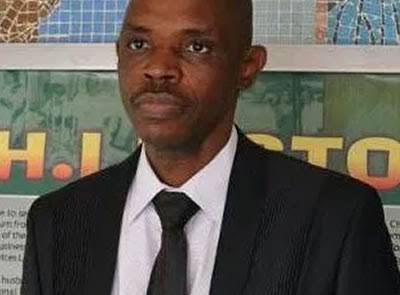
Is Nasir El-Rufai’s problem because he is a Muslim? Even he would say it is not so. There was this statement from the Nigerian Supreme Council for Islamic Affairs (NSCIA) issued in the middle of last week. The NSCIA said it had initially regarded the El Rufai matter as a “standard judicial process” but now suspects an “underlying religious bias.”
The NSCIA statement came on the heels of a withering anti-El-Rufai interview granted a television station by the Minister of Defence, General Christopher Musa. Musa is from Southern Kaduna and is a Christian. Unfortunately for the optics of the moment, the judge handling El-Rufai’s corruption case is also from Southern Kaduna and is also a Christian. That coincidence may be politically combustible, but should it be evidence of “religious bias”? I think the coincidence should not, by itself, turn El-Rufai’s legal and political troubles into a Christian-versus-Muslim affair.
The truth is El-Rufai fought too many battles, ignoring both the laws of war and the virtue of knowing who to fight, how and when not to fight. So, I say his problem is politics implicated in a complex web of other factors.
In 2023, while in power and fighting Muhammadu Buhari for Bola Tinubu, El-Rufai reportedly declared that there were “no elders in the North” and that he and other governors would “decide the direction of Northerners.” And they did, electing Tinubu. But by 2024, ditched by the new power, the man who ‘sabi talk’ had gained enough insight to admit the existence of elders whom he now said would help him send Tinubu “back to Lagos.” Did the North acquire elders within a year?
The ancient Indian political thinker, Kautilya, might have served El-Rufai well had he made the sage his oracle. In the Arthashastra, Kautilya sets out cold-blooded principles of power and power relations. I paraphrase him: If you are weaker, make peace; if stronger, wage war; if neither side can defeat the other, remain neutral; and if too weak to defend yourself, seek protection.
How many days has Nasir El-Rufai spent in custody? Exactly 212 calendar days. In the early moments of his detention, he enjoyed two days of compassionate release to mourn and bury his 96-year-old mother. A subtraction of those two days brings his active total time spent in custody to 210 days.
He is still there facing a rash of charges: corruption, wiretapping, et cetera, et cetera. If his jailors keep him until September 22, 2026, the next adjourned date of one of the cases, his net total time behind bars will be 216 days.
Yet, the ex-governor’s alleged offences are all bailable, and he has indeed been granted bail. But the conditions attached to that bail are as long and winding as the Pan-American Highway, the world’s longest motorable road.
The most lethal of the conditions is that El-Rufai must present a surety who must be a Grade Level 17 federal civil servant, who must own a house in Maitama or Asokoro, Abuja, and must effectively put that property behind the bail. Buildings in Maitama and Asokoro are the preserve of billionaires and the seriously wealthy. Where will a civil servant earning less than ₦10 million a year say he found the money to build or buy a house in either of those locations? A civil servant who would do that risked landing themselves in greater trouble over unexplained, perhaps unexplainable, wealth. The prospective surety will get cooked in a paradox: the very property that qualifies him to stand surety could invite questions about how a civil servant acquired it.
Lawyers are familiar with the maxim: “To impose excessive bail is to refuse it in disguise.” Was this what the NSCIA had in mind? It certainly explains how a man who has technically been granted bail may remain in custody until God Himself bails him.
El-Rufai’s problem is àfọwọ́fà, trouble brought home by one’s own hands. Around this time last year, El-Rufai went on Channels Television and served notice on the country and on our government that he and his allies were out to rout President Bola Tinubu in the 2027 election. He was definite about it. But has El-Rufai ever seen a swordsman threaten an executioner with a sword and live to tell the tale?
A key principle of war is: never tip off the enemy. Sun Tzu teaches that “all warfare is based on deception”; the successful commander conceals his intentions while forcing the enemy to reveal his. There is also Niccolo Machiavelli who makes concealment, calculation and the management of appearances essential instruments of political survival. In war and in politics, you do not announce your battle plan to the man you intend to defeat. You leave him guessing. El-Rufai did the opposite: he made a boast of victory and gave the enemy two clear years to prepare for him.
Machiavelli would say the former governor fell into the trap of careless openness. The Kaduna man said too much in August last year. Hear him: “If you want to engage in self-delusion, you are free to do so. I will not tell you how we are going to win, but I tell you very clearly, the worst-case scenario in the 2027 elections is that no winner will emerge in the first round.
“We may have to go for a runoff, and Bola Tinubu will not be on the ballot for the runoff, because he will, at best, be third in the election. He has no pathway to win. I have done the maths, I have done the analysis; he cannot, he will, at best, be third.
“But he can deceive himself; he may think, oh, you know, I have money, because they have taken all the money in the country, I have INEC, I have the police, I have the army. It’s like those who say Tinubu has never lost an election. That can be contested, but it’s okay. He’s a political strategist, he’s this, he’s that. Wait!”
Napoleon Bonaparte is famously credited with the counsel that you should never interrupt an enemy while he is making a mistake. El-Rufai did not merely become Tinubu’s political enemy; he served notice of battle. Napoleon’s enemies sometimes did that — to their sorrow and ruin. Prussia sent him an ultimatum in 1806 and soon discovered the cost at Jena and Auerstedt. The truly savvy delivers an ultimatum when the army is ready and the guns are loaded. El-Rufai announced his 2027 war almost two years before the battlefield opened.
El-Rufai would not have said those things if he had read Niccolò Machiavelli’s prescriptions on prudence and pre-emption. “No proceeding is better than that which you have concealed from the enemy until the time you have executed it.”
If the stormy petrel of Northern Nigerian politics remains in custody until the first anniversary of his capture, his game will have escaped the hunter. The election will have come and gone without him. The man who announced that he would hunt Tinubu out of power in 2027 would have spent the entire hunting season behind bars, his gun unfired, his quarry beyond reach.
There is always a problem with boasts and audacious notices of attack: they warn the game, stiffen its defences and surrender the advantage of surprise. In war, as in politics, a hunter who announces his coming may discover that his prey has spent the notice period setting traps for the hunter himself.
Some fifty-something years ago, my mother told me of an old man who, decades earlier, used to boast that he could burgle any house and nothing would happen. The boaster was a fearsome man of medicine with a talk-and-do reputation. So, the standard response the burglar always got was an affirmation of his prowess in banditry: “Bẹ́ẹ̀ ni, o lè kó o” (Yes, you can rob the house). The community was helpless and its tormentor knew it and enjoyed it.
Every person born Yoruba remembers the contracted proverb: Ogun àwítẹlẹ (a war foretold)? The chief robber’s constant boast was classic Ogun Àwítélè, only the master warrior waged it. The helpless people of the district eventually found a solution to the terror of the invincible.
How?
The man lost because the whole town cooked for his big belly and ruptured his small and big intestines. He thought prowess in gutting one household was a licence to invade another.
El-Rufai was a key commander in the war that defeated Goodluck Jonathan in 2015. The man boasts that, even before Jonathan, he had seen the back of Umaru Yar’Adua. After Jonathan, it was his bugle that rallied the North for Bola Tinubu and helped defeat Muhammadu Buhari’s insular succession plan. If you have all these medals, as El-Rufai does, you are likely to see yourself wearing the armour of invincibility.
But there is always a day of loss. That is why the wise counsel the powerful to be prudent. One Yoruba proverb illustrates this rather well: Ak’ọ̀pẹ Ìbàdàn kó má kọ́ ti Ògbómọ̀ṣọ́ (let the Ibadan palm-tapper keep away from the Ogbomoso palm). And what if he does not? A lot could happen, because not every palm is available to every accomplished tapper: Gbogbo ọ̀pẹ kó ni onígbà ń gùn (it is not every palm tree that a palm-tapper climbs).
Twenty-one years ago, I interviewed the late celebrated writer and dramatist, Chief Adebayo Faleti, in the course of a biography I was working on. He told me where he wrote one of his works:
“I wrote my book, ‘Wón Rò Pé Wèrè Ni’, in Okuku, present Osun State.” The book’s title means ‘They Thought She was Mad’. Wọ́n Rò Pé Wèrè Ni is the story of a man of means whose vain quest for victory over a rival at all costs ultimately ruins him. One day, determined to win a cash-spraying competition at a social party, the big man asked the lead drummer of his town how much his drum cost. “Two pounds,” the drummer replied. The big man promptly handed him fifty pounds and ordered him to beat the drum until it burst.
That day, in his desperation to win, the man of wealth parted with three hundred pounds. When he exhausted his cash, he turned to his adornments. He spent his agbádá, he spent his wristwatch, and he spent even his shoes. At the end, the entertainers went home rejoicing with their windfall, while the triumphant big man walked home barefoot, stripped of his ẹ̀wù ẹtù, his agbádá or, if you like, call it Babariga. The big man won the contest, but victory had stripped him bare. He never recovered.
Now, I remember that I should have asked Baba Faleti where he wrote his other works, particularly his popular novel, Ogun Àwítélè (Foretold War). I would have found it particularly apt today if his answer had been somewhere in Northern Nigeria, especially Abuja.
In Fálétí’s ‘Ogun Àwítẹlẹ’ the peace of a town is shattered when Àjàní, leader of a notoriously daring gang of armed robbers, sends the Baálè a letter announcing that he and his men are coming to attack and plunder the community. He gives the date and asks the Baale to inform his hunters. In vain all the hunters’ efforts will be, the letter boasts. Àjàní’s other name is Ajíbóògùnṣọ̀rọ̀ (he who wakes up to converse with charms and amulets). The robber’s letter is worth reading a million times by all who are threatened by men of power.
Àjàní thought his advertised prowess was sufficient guarantee of victory. Rather than surrender to fear, however, the Baálè summons the chief hunter, the Olúóde, who rallies Ìkólàbà, his second-in-command, and the town’s hunters and warriors. The community pools its resources, gathers weapons and charms, makes sacrifices to Ògún and consults Ifá, which reveals the actual day and time the attack will come.
Thus forewarned, the town prepares for battle. When Àjàní and his gang eventually descend on the community in force, expecting their reputation and firepower to overwhelm it, they meet a people ready to defend their lives, families and property. The marauders’ presumption of universal prowess fails the test of reality. A fierce battle follows. The robbers are decisively defeated, and the powerful Àjàní is exiled from life by a very junior hunter. The town’s victory is total.
Faleti’s story dramatises the wisdom of the proverb: Ogun àwítélè kì í pa arọ tó bá gbọ́n (a foretold war does not kill a wise cripple).
But Faleti’s story says something extra. Àjàní’s error was not that he had no prowess; it was that he mistook the potency of what he had for omnipotence. He had won before, frightened people before, subdued communities before; plundered without consequences before. He therefore assumed that the next community was merely another address awaiting his arrival.
That is where my other two proverbs sit at dinner with El-Rufai’s 2027 election boast. The Kaduna palm-tapper should have known where his territory ended and where the Bourdillon palm plantation began. Akọ̀pẹ òkè kó mó kọ t’ìsàlẹ̀: the upland palm-tapper should not tap the palms of the lowlands. And even within his own plantation, experience should teach the accomplished tapper some discretion: Gbogbo ọ̀pẹ kó ni onígbà ń gùn. Not every palm tree is for tapping. Sometimes, some battles strip a General bare.
Now, let me ask again: Is El-Rufai’s problem that he is a Muslim? I do not think so. Is it because he is a northerner? Again, no. Is it politics, or is it purely a legal issue? I insist it is politics; it is a political problem that has chosen to run on legal fuel. I want to tell the NSCIA that religion cannot give the man the warmth he needs in this harmattan. What he needs now is a very thick cloth woven from the threads of real politics.
An old warning pops up here for all of us: Never dig the pit of politics too deep. This is a warning with a long pedigree in the literature of power. Read Robert Greene; read Niccolò Machiavelli; read Sun Tzu; read Kautilya; read Thomas Hobbes; read Friedrich Nietzsche. Across more than two millennia, these writers interrogate power from different directions: its acquisition, exercise, preservation, psychology and loss.
The views expressed by contributors are strictly personal and not of Law & Society Magazine.