As America considers expanding tax relief for working families, Nigeria’s parents face the rising cost of food, childcare, transport and education with little meaningful support from the state
By Ladidi Sabo
There is a deceptively simple idea behind the latest American proposal to expand the Child Tax Credit: if parents are working and raising children, government can do something to make the cost of raising those children less punishing.
It is not charity. It is social policy.
The proposal, the bipartisan Stronger Start for Working Families Act, would lower the earned-income threshold for the refundable US Child Tax Credit from $2,500 to just $1. The change is designed to allow families with very low earnings to begin accessing the credit from their first dollar of income. The maximum refundable credit would remain $1,700 per child, but the proposed change could open access to millions of families currently excluded by the earnings threshold. An estimated 19 million American children under 17 are expected to be unable to receive the full credit in 2026 because their families do not earn enough to qualify fully under the existing rules.
The American debate is about tax policy. But its larger question travels well beyond Washington.
What does a government owe families who are working, raising children and trying to remain economically productive?
Nigeria has barely begun that conversation.
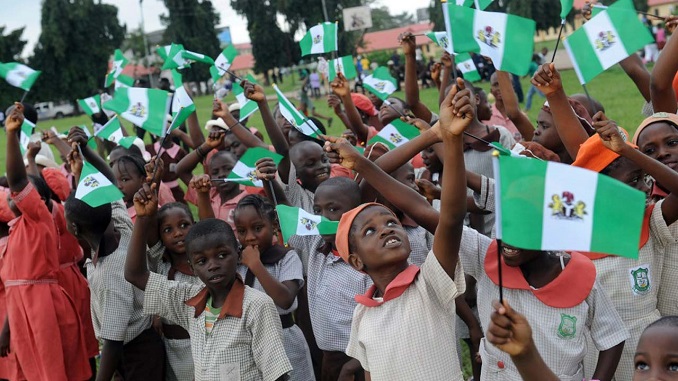
For millions of Nigerian parents, going to work is only half the job. The other half begins before they leave home and continues long after they return.
There are school fees to find, transport costs to absorb, food to put on the table, electricity to pay for, uniforms and books to buy, medical bills to anticipate and, for parents of younger children, the increasingly difficult question of who will look after the child while both parents are working.
For many families, childcare is not a convenience. It is an economic necessity.
A mother who cannot find affordable childcare may have to leave a job. A father may have to turn down work that requires travel or longer hours. A couple may rely on grandparents, relatives, neighbours or domestic help. Others simply take their children to work when there is nowhere else to leave them.
The cost is not always visible in government statistics.
Sometimes it appears as a woman withdrawing from the labour market. Sometimes as a young professional refusing a promotion because the hours are incompatible with school runs. Sometimes as a parent spending a substantial portion of monthly income on a private nursery because public provision is inadequate. Sometimes it is simply exhaustion.
The economy loses something each time that happens.
The Nigerian family is carrying a larger bill
The pressure has intensified as the cost of living has risen.
The World Bank has warned that high food prices continue to weigh heavily on Nigerian households, with poorer families particularly exposed. Its assessment has also pointed to the need for stronger social protection, greater fiscal transparency and public spending that is better aligned with development priorities.
The numbers surrounding Nigerian children are even more sobering. UNICEF reported in 2025 that two out of every three children in Nigeria live in multidimensional poverty — a measure that goes beyond income to include deprivation in areas such as education, health, living conditions and other basic needs.
That means the debate cannot simply be about whether government should give parents money.
The real question is whether Nigeria has designed an economy and a public-service system in which having children does not become an economic penalty.
At present, too much of the burden is pushed back into the household.
Parents are expected to finance childcare privately. They are expected to absorb transport costs. They are expected to pay for schools when public education fails them. They are expected to provide healthcare when public facilities cannot. They are expected to continue working despite unreliable electricity, long commuting times and an economy in which food prices have placed extraordinary pressure on household budgets.
Then comes the familiar political argument: government does not have enough money.
Perhaps the more uncomfortable question is what government is choosing to spend money on.
A country that can spend differently
Nigeria’s problem is not simply that it lacks resources. It is also a problem of priorities, waste, weak accountability and the enormous distance between the lifestyle of political officeholders and the daily economic reality of ordinary citizens.
Budgets have grown dramatically in nominal terms. Nigeria’s 2025 budget, for example, was eventually put at about N54.99 trillion, while the 2026 budget passed by the National Assembly reached approximately N68.3 trillion.
Yet larger budgets do not automatically translate into better lives.
A government can announce billions for social programmes and still leave parents struggling to find affordable childcare. It can announce ambitious human-capital programmes while families continue paying privately for services that ought to form part of a functioning social contract.
Nigeria’s 2026 budget speech itself recognises the importance of education, healthcare and social protection, describing human-capital development as a major priority.
The challenge is to move the idea from the budget speech to the household.
That would require a different way of thinking about public expenditure.
What could Nigeria do?
Nigeria does not have to copy the American Child Tax Credit. In fact, it should resist the temptation to copy any foreign programme wholesale.
But it could borrow the principle: Families raising children are contributing to the country’s future, and public policy should recognise some of the cost.
One possibility is a targeted child benefit or child grant, particularly for low- and middle-income working families. Interestingly, UNICEF Nigeria and the Social Policy Research Institute are already examining the feasibility of a Universal Child Grant for Nigeria.
Such a programme would need safeguards against fraud, political manipulation and ghost beneficiaries. Payments could be made digitally, tied to verifiable civil-registration information and subjected to independent audits.
But cash is only one part of the answer.
Affordable childcare
Nigeria needs a serious national childcare policy.
Government does not necessarily have to build thousands of nurseries itself. It could subsidise accredited childcare providers, support community childcare centres, establish childcare facilities around public institutions and markets, and encourage employers to provide workplace childcare.
The objective should be simple: A parent should not have to choose between earning an income and keeping a child safe.
Tax relief for parents
Nigeria’s tax reforms could also explore a family-based allowance or refundable child-related tax credit for qualifying working parents.
The important word is refundable.
A tax deduction that only benefits people with substantial taxable income will do little for a low-income worker. A refundable credit, properly designed, could provide support even where the parent’s tax liability is small.
That is one of the lessons from the American debate.
Paid parental leave
Nigeria’s maternity-leave framework also needs serious reconsideration.
UNICEF has repeatedly advocated six months of paid maternity leave, particularly to support exclusive breastfeeding and maternal and child health. Yet maternity benefits remain uneven across Nigeria, with significant differences between public and private employment and across states.
A serious family policy should not make childbirth a career penalty.
It should also recognise fathers. Childcare cannot remain treated as exclusively a woman’s responsibility.
Public schools that actually reduce household costs
There is another obvious form of child benefit that requires no cash transfer at all: make public education good enough that parents do not have to flee it.
Every naira a government spends making a public school functional is potentially a naira a struggling family does not have to spend on private alternatives.
The same principle applies to primary healthcare, school feeding, safe transport and early-childhood education.
Social protection is not always a cheque.
Sometimes it is a functioning public institution.
And then there is government waste
This is where the conversation becomes uncomfortable.
Nigeria’s political class has become accustomed to a level of official privilege that bears little resemblance to the economic circumstances of the citizens whose taxes and public resources sustain government.
The argument is not that every official expense should be eliminated or that government should operate without the facilities necessary to perform its functions.
It is that a country struggling to support children should be capable of asking whether every luxury attached to public office is more important than keeping a child in school, helping a mother remain in employment or ensuring that a working father does not spend half his income on childcare and transport.
A government that says there is no money for family support should be prepared to show citizens where the money is going.
That means publishing detailed expenditure on official travel, vehicles, residences, hospitality, conferences, consultants and other discretionary items. It means subjecting politically controlled spending to the same scrutiny applied to social programmes. It means measuring not simply how much government allocates, but what Nigerians receive for the money.
There is a moral dimension to public budgeting that is often lost in the language of appropriations.
Every budget is ultimately a statement about whose problems government considers urgent.
The child should not be the casualty of household economics
Nigeria’s children are not merely dependants consuming scarce resources.
They are future workers, taxpayers, professionals, entrepreneurs, caregivers, voters and citizens.
Investment in them is therefore not sentimental spending. It is economic policy.
International evidence has long pointed to the role of social protection in reducing poverty and improving household income security, with positive effects on children’s wellbeing.
The same logic applies to childcare.
When childcare is affordable and reliable, parents — particularly mothers — are better able to remain in the labour market. When it is unavailable or prohibitively expensive, the household absorbs the cost through lost income, lost opportunities and unpaid care work.
Nigeria cannot seriously talk about increasing women’s participation in the economy while ignoring the infrastructure required to make employment compatible with raising children.
Nor can it talk about reducing poverty while leaving working families to shoulder virtually the entire cost of producing and raising the next generation.
Nigeria can choose a different model
There is a temptation to regard child benefits, childcare subsidies or family tax credits as luxuries for wealthy countries.
They are not.
The real luxury is spending public money without asking whether it is producing a better life for citizens.
Nigeria could begin modestly.
It could pilot a child benefit in selected states. It could create childcare subsidies for low-income working parents. It could provide tax relief for employers that establish accredited childcare facilities. It could expand school feeding. It could improve public early-childhood education. It could strengthen maternity and paternity protections. It could make social-protection payments transparent and independently audited.
And it could redirect a fraction of the money lost to waste, duplication and unnecessary official privileges towards programmes that reach families directly.
The point is not to create another government scheme with a grand acronym and a launch ceremony.
The point is to make having and raising children less economically punishing for people who are already doing what governments routinely ask citizens to do: Work, pay taxes, obey the law and build the country.
America’s proposed Child Tax Credit expansion is therefore worth watching from Nigeria not because Nigeria should copy America.
It is worth watching because it forces a question Nigeria has avoided for too long.
What does the Nigerian state actually do for the family that gets up every morning, goes to work, pays its taxes and still struggles to give its children a decent life?
For now, the answer is painfully close to: very little.
And that is not because Nigerian parents are not working hard enough.
They are.
The harder question is whether government is working hard enough for them.