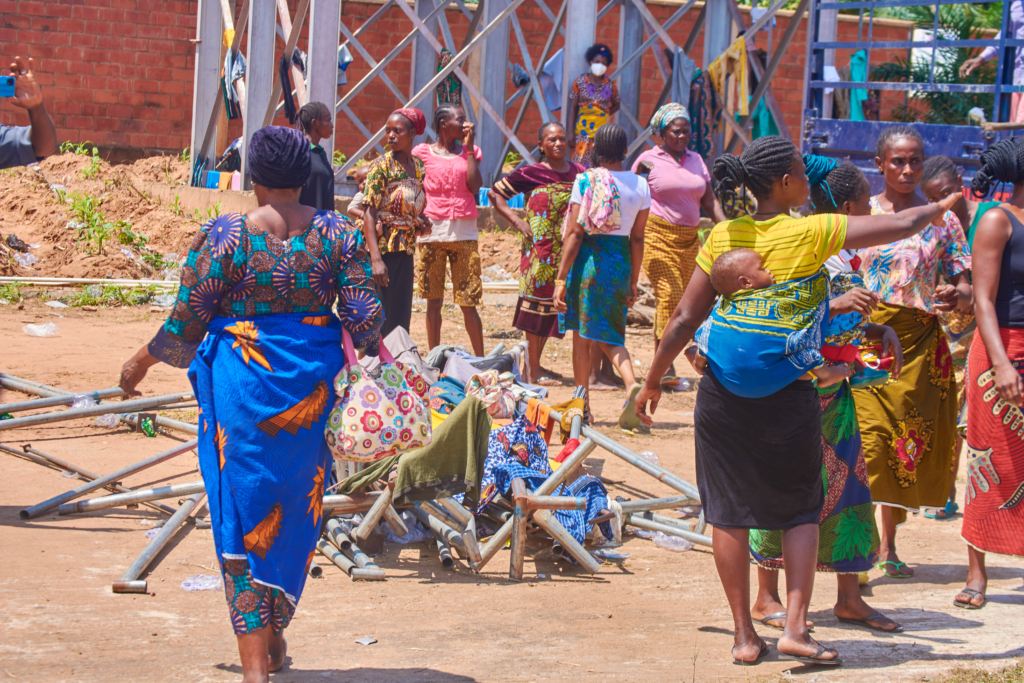
In the heart of Makurdi’s abandoned Ultra Modern International Market, over 5,000 displaced people now call the empty stalls home.
They fled Yelewata community in Benue State after armed herdsmen attacked on June 13, leaving their homes in ruins.
The once-bustling marketplace has turned into a crowded camp, offering shelter but little hope.
Behind the noise of daily survival lies a darker reality—unwanted pregnancies and unsafe abortions are on the rise.
Health workers describe the situation as “a ticking time bomb,” warning that desperation has turned into dangerous behavior.
In the camp, privacy is scarce and emotions run high. Many seek comfort in each other to escape fear and loneliness.
“We just want to feel alive again,” one young man said quietly. “Despite everything, we are still human.”
But unprotected sex has led to a wave of unwanted pregnancies and secret abortions.
Recently, volunteers cleaning the camp’s refuse dump made a horrifying discovery—foetuses hidden among the trash.
A health worker said a man outside the camp allegedly performs crude abortions for desperate girls.
“Some nearly die from complications,” he said. “Others just keep taking the risk.”
With HIV-positive residents in the camp, medical experts fear a rise in infections if the trend continues.
The camp’s manager, Robert Nyom, confirmed the grim discoveries, calling them “deeply disturbing.”
Benue’s Commissioner for Women Affairs, Theresa Ikwue, also expressed concern, promising stronger awareness campaigns for women and girls.
Humanitarian groups like the Red Cross say they’ve handled several abortion-related emergencies, most caused by untrained quacks.
“We’ve seen at least ten cases this month,” a Red Cross worker revealed. “These girls need real care, not silence.”
The Commissioner pledged to work with aid partners to improve education and distribute reproductive health supplies.
“Governor Alia remains committed to the safety and dignity of our displaced citizens,” she said.
As night falls over the camp, life appears normal—children play, women cook, men talk in small circles.
But beneath this fragile calm lies a silent cry for help—one echoing across Plateau and beyond.
In Plateau State, thousands of displaced families live scattered in schools, churches, and small rented rooms.
No official camps exist, no accurate records, and almost no consistent government aid.
Many women give birth on bare floors. Others face hunger, illness, and fear with no medical help.
Fifteen-year-old Ngunret dreams of returning to school, but war has stolen her future. “I wish my family was together again,” she whispers.
Aid agencies say government promises rarely turn to action. A ₦10 billion resettlement fund announced years ago never arrived.
Despite laws protecting displaced persons, most women still live without safety, privacy, or healthcare.
In the absence of the state, churches, teachers, and local volunteers have become the true heroes.
They share food, offer lessons, and comfort mothers through childbirth in impossible conditions.
But compassion alone cannot rebuild lives. These women need security, structure, and sustained support.
Until real action replaces broken promises, the displaced women of Benue and Plateau will keep fighting—alone, unseen, but unbroken.
Their resilience tells a story of pain and power—a reminder that behind every statistic lies a heartbeat still refusing to give up.