Petition urges new NBA leadership to pursue missing case records, review stalled prosecution and account for trust fund set up for Igwes’ orphaned children
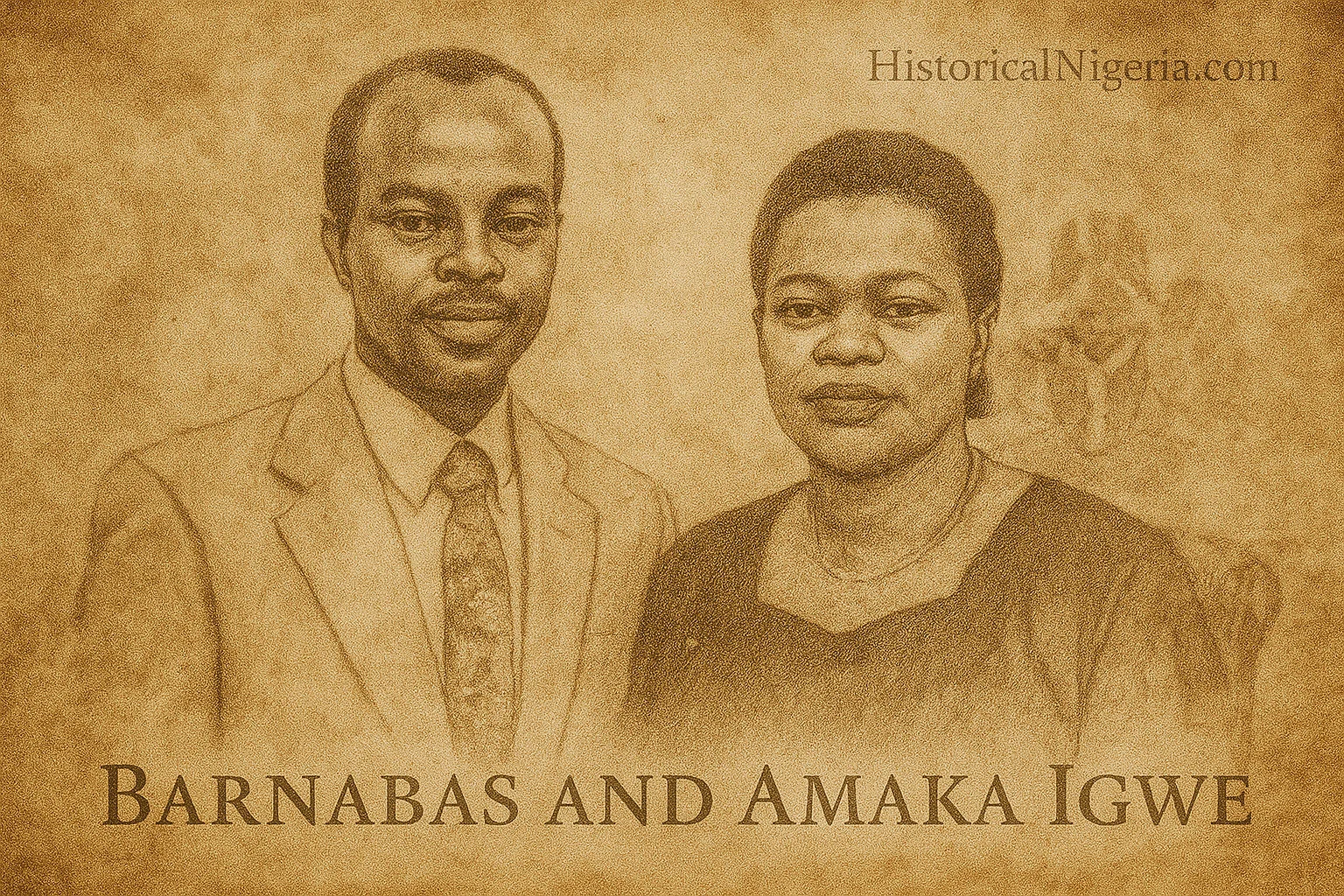
ABUJA, Nigeria — Twenty-four years after the murder of former Nigerian Bar Association, Onitsha Branch chairman, Barnabas Chidi Igwe, and his pregnant wife, Amaka Abigail Igwe, a group of senior lawyers and civil society leaders has asked the new NBA leadership to revive the Association’s pursuit of justice in a case that has survived police investigations, criminal proceedings, judicial setbacks and a state truth commission.
In a petition received by the Office of the President of the NBA on September 11, 2026, the group asked NBA President Oyinkansola Badejo-Okunsanya to press for the reopening of the investigation, seek the publication of the relevant findings of the Anambra State Truth, Justice and Peace Commission (TJPC), demand an account of the trust fund established for the couple’s three surviving children and bring the unresolved case to the attention of the United Nations Special Rapporteur on the Independence of Lawyers and Judges.
The petition, titled “Renewing the NBA’s Commitment to Accountability for the Double Murder of Barnabas Chidi Igwe Esq, Chairman of NBA Onitsha Branch, and Amaka Abigail Igwe Esq, Member of NBA Onitsha Branch (and Pregnant Wife of Barnabas Igwe)”, was signed by Olukunle Edun, SAN, a former National Publicity Secretary of the NBA; Prof. Chidi Anselm Odinkalu, former chairman of the National Human Rights Commission; John Aikpokpo Martins, a former first national vice-president of the NBA; Malachy Ugwummadu, former national president of the Committee for the Defence of Human Rights; and several other lawyers and civil society figures.
The petition arrives as the Igwe case has returned to public attention following the publication of findings attributed to the TJPC, which revisited the killings as part of its wider examination of historical violence and unresolved grievances in Anambra State.
The Commission, chaired by Odinkalu, reportedly recommended a review of the unfinished prosecution and effective accountability in relation to Kenneth Okwuchukwu Emeakayi, whose name had featured in the earlier investigation and prosecution. Emeakayi, who was Commissioner for Works under the administration of the late Governor Chinwoke Mbadinuju at the time of the killings, is now a security adviser to Governor Chukwuma Soludo.
A murder that shook the Bar
Barnabas and Amaka Igwe were killed on September 1, 2002, shortly after returning from the NBA Annual General Conference in Ibadan.
Barnabas was then chairman of the NBA Onitsha Branch and had emerged as a vocal critic of the administration of Governor Chinwoke Mbadinuju, particularly over unpaid salaries and the activities of the state-backed vigilante structure known as the Anambra Vigilante Service, or AVS.
The killings were followed by an unusually forceful response from the legal profession.
According to the petition, then NBA President Chief Wole Olanipekun, SAN, summoned an emergency meeting of the Association’s national officers on September 2, 2002 and subsequently held a press briefing.
On September 11, he led an NBA delegation to the then Inspector-General of Police, Tafa Balogun, at Force Headquarters in Abuja to demand an investigation and prosecution of those responsible. A formal letter followed on September 20.
The Association also declared September 18 a National Day of Mourning for the murdered lawyers.
Two months later, on November 11, 2002, the NBA leadership went to the Presidential Villa to renew its demand for justice and asked President Olusegun Obasanjo to establish a Commission of Inquiry into the killings of the Igwes and former Attorney-General of the Federation, Bola Ige.
The Association subsequently established a trust fund for the couple’s three orphaned children.
The new petition says, however, that the signatories have been unable to establish what became of the fund. It notes that little has been heard publicly about the endowment for about 15 years and asks the NBA’s current leadership to provide an update.
The children, according to the petition, are now adults and at least one is a member of the NBA.
The petitioners argue that the NBA’s responsibility did not end when the children grew up.
The case that never reached a conclusion
The original criminal case was filed as The State v. Francis Nzekwe (alias Francis Nzewe Ibekwe) and 10 others, Charge No. O/60C/2003, before the High Court of Anambra State in Onitsha.
It did not reach a conclusion.
The petition says a succession of judges withdrew from the case, citing political interference and intimidation. It also says records relating to the case became unavailable from both the High Court of Anambra State and the State Ministry of Justice.
The history is consistent with the problems documented in the TJPC material previously reported by Law & Society Magazine. Earlier reporting on the Commission’s findings said the prosecution was disrupted over the years by alleged interference, judicial changes and the disappearance of case files, while several suspects escaped custody following a 2006 prison break.
The result was a prosecution that remained unfinished for more than two decades.
For a case involving the killing of the chairman of one of the NBA’s most prominent branches and his pregnant wife, the failure is particularly striking.
The petitioners say they would have expected the NBA Onitsha Branch, or the branches across Anambra State acting collectively, to lead renewed efforts. Instead, they say the prevailing climate of fear in the state has affected the capacity of the branches to act.
That concern gives the petition a significance beyond the Igwe family.
The case is also about what happens to lawyers who challenge powerful interests and whether professional bodies can protect their members when the state fails to do so.
The TJPC report brings the case back into the room
The most consequential part of the petition concerns the Anambra State Truth, Justice and Peace Commission.
The Commission was constituted by the Anambra State Government in June 2022 with a mandate extending back to 1999. Its membership included several lawyers, among them Odinkalu as chairman, Bianca Odumegwu-Ojukwu as secretary, then state Attorney-General Prof. Sylvia Ifemeje and Prof. Uju Agomoh, now chairman of the NBA Section on Public Interest and Development Law.
Its mandate brought the Igwe killings within its scope.
When the Commission submitted its report in March 2024, it reportedly described the murders as requiring further accountability and recommended an independent review of the handling of the case. It also recommended an official apology and symbolic compensation for the couple’s children.
The Commission’s findings also brought Emeakayi back into the story.
The petition says the Commission called for effective accountability against Emeakayi, whom it identified as a suspect in the case, and for a review of the prosecution.
Emeakayi’s subsequent appointment by Soludo has since become one of the most contentious aspects of the unresolved case. Odinkalu, who chaired the TJPC, has publicly questioned the appointment, arguing that it sits uneasily with the Commission’s recommendations.
But the legal position requires care.
A person being named in an investigation or identified as a suspect is not a finding of guilt. The TJPC was not a criminal court, and Emeakayi has not been convicted of the Igwe murders. The proper question, therefore, is not whether a commission can substitute its findings for a criminal trial. It cannot.
The harder question is what the authorities have done with allegations serious enough to warrant a criminal investigation and a recommendation for renewed accountability.
That question remains unanswered.
What the petition wants from the NBA
The petition sets out six specific requests.
First, it wants the NBA President to ask the Anambra State Government to publish the TJPC report, or the portion dealing with the Igwe murders.
Second, it asks the NBA to request the Inspector-General of Police to reopen the investigation with a view to bringing the perpetrators to trial.
Third, it asks the NBA President to request that Governor Soludo withdraw the cabinet appointment of what the petition describes as a principal suspect in the murders.
Fourth, it wants the NBA to provide an update on the trust fund established for the surviving children of Barnabas and Amaka Igwe.
Fifth, it asks the Association to renew its commitment to the relevant authorities for an independent review of the records in the case and a pathway towards resolving it.
Finally, it wants the matter brought before the United Nations Special Rapporteur on the Independence of Lawyers and Judges.
The petitioners have also offered to support whatever steps may be necessary to secure accountability and a final resolution.
Twenty-four years later
The Igwe murders have already been examined in several stages: by the police, through criminal proceedings, by the NBA, and, more than two decades later, by the TJPC. Yet none has produced the one outcome that matters most in a criminal case of this nature—a final judicial determination.
The case therefore sits in a troubling place in Nigeria’s legal history.
The original outrage has faded. The officials who occupied key positions in 2002 have largely moved on. The three children whose lives were altered by the murders have grown into adulthood. Some of the lawyers who first demanded justice are now retired. Others are no longer alive.
But the file remains unfinished.
The NBA petition is asking the Association to pick it up again.
That places a test before the new leadership: whether the killing of two members of the profession, one of them the sitting chairman of a major NBA branch, will remain an unresolved chapter in the Association’s history or become a case in which the Bar once again insists that the institutions of the state must account for what happened.
The petitioners are not asking the NBA to determine criminal guilt. They are asking it to insist that the unanswered questions be put back before the institutions legally empowered to answer them.
After 24 years, that may be the most defensible place from which to begin.
Editor’s Note
Law & Society Magazine has previously reported extensively on the Igwe case, including the circumstances of the killings, the failed prosecution and the findings attributed to the TJPC.
Read Also: THE IGWE FILE (Part II): The State, the Bakassi boys and the politics of fear
Read Also: THE IGWE FILE (Part III): Twenty-four years later, the bar comes home again
Read Also: THE IGWE FILE (Part IV): The investigation that never reached the end