Most people think anger is what destroys relationships. It isn’t. What destroys us first is the story we begin to believe once anger takes hold.
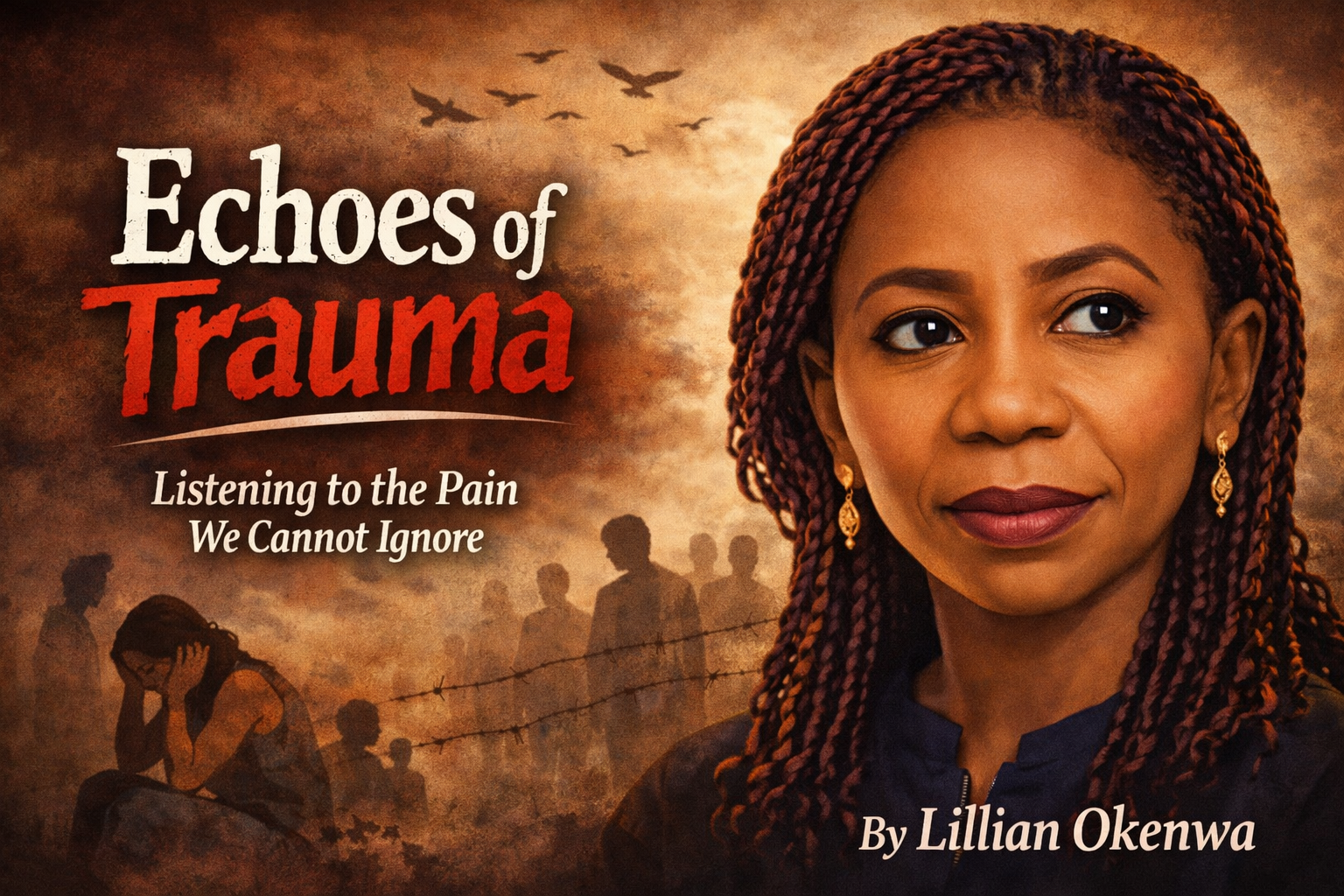
By Lillian Okenwa
Have you ever noticed that two people can experience exactly the same event and come away with completely different conclusions?
A friend walks past without saying hello. One person assumes they were distracted. Another spends the rest of the day wondering what they did wrong. A spouse comes home unusually quiet. One assumes they have had a difficult day at work. The other becomes convinced the marriage is in trouble.
A manager sends a brief message asking an employee to stop by the office. One thinks, “Perhaps there’s something we need to discuss.” Another immediately imagines losing their job. Nothing has changed except the meaning each person attaches to the moment.
We rarely respond to life exactly as it unfolds. More often, we respond to what we believe it means. Those meanings are not always formed by the present. Many are shaped by experiences we have carried for years.
Perhaps one of trauma’s greatest consequences is not what it makes us remember. It is what it teaches us to assume.
Pain has a narrator.
Left unattended, it slowly begins explaining the world for us. Before long, we are no longer seeing people simply as they are. We are seeing them through old disappointments, old betrayals, old rejections and old fears. The stories our wounds whisper become so familiar that we stop recognising them as stories. They begin to feel like facts.
Psychologists have observed an interesting pattern. People carrying unresolved anger or emotional pain are far more likely to interpret other people’s actions as intentionally hostile, even when those actions are ambiguous. Pain alters perception before it alters behaviour. It teaches us to assign motives where there may only have been misunderstanding or circumstance.
Read Also: Echoes of Trauma: Life on Hold — The waiting that changes us (I)
Read Also: Echoes of Trauma: Life on Hold — The waiting that changes us (Part 2)
That helps explain why someone who has lived through betrayal struggles to trust genuine kindness. Someone raised under constant criticism hears condemnation in ordinary correction. A person who has repeatedly been abandoned experiences every delayed reply as another rejection. Someone whose confidence has been eroded interprets honest feedback as proof that they will never be enough.
The event may be ordinary. The meaning attached to it is anything but.
This explains why two siblings raised in the same home often remember their childhood differently. It explains why two colleagues leave the same meeting with completely different impressions. It explains why one person walks away encouraged while another leaves deeply offended, even though they heard the very same words.
Many of life’s fiercest battles are fought long before voices are raised. They begin in the stories we tell ourselves. Think about how many relationships have been damaged, not by what someone intended, but by what another person believed they intended.
“She didn’t greet me.”
“He ignored my message.”
“They left me out.”
“They’re talking about me.”
Perhaps they are.
Perhaps they are not.
The tragedy is that wounded hearts often stop asking which is true. They reach a verdict before the evidence arrives.
Perhaps one reason this subject resonates so deeply with me is that I am a lawyer. We live in a world of case files. Every case begins with questions. Who is responsible? What happened? When did it begin? What evidence is available? What is the history? No responsible judge delivers judgment before examining the facts.
Yet outside the courtroom, many of us do exactly that. We sentence people in the court of our hearts without hearing their side of the story. We assume motives. We fill in missing details. We convict on the strength of memories that belong to someone else, somewhere else, years earlier.
How many friendships have ended over an assumption? How many marriages have grown cold after two wounded people kept responding to stories neither of them intended to tell?
How many families no longer speak because each side became convinced, they already knew what the other meant? Trauma has a remarkable way of recruiting the present to replay the past.
The person standing before you today may not be the one who hurt you years ago. Yet if the wound remains unhealed, your heart may struggle to recognise the difference. This reaches beyond individual lives. Communities carry wounds. Nations do too.
Years of violence, insecurity, corruption, broken promises and disappointment leave more than economic or political scars. They shape expectations. People begin anticipating betrayal before trust, disappointment before hope and exploitation before sincerity. Every rumour sounds believable because it fits a story they have heard too many times before.
Nigeria has endured enough hardship to make suspicion understandable. Understandable, however, is not the same as healthy.
No family flourishes where suspicion becomes the default response. No workplace thrives when every decision is viewed through distrust. No nation can build lasting confidence if fear becomes the lens through which every action is interpreted.
Unhealed pain rarely remains private. It spills into conversations, relationships, institutions and communities until suspicion begins to feel normal. Healing invites us to see people as they are rather than through the wounds we carry.
That is not easy. Our minds naturally search for patterns. They try to protect us from being hurt again. Yet protection can slowly become distortion. We begin expecting from new people what old experiences taught us to fear.
A delayed response becomes rejection.
Constructive criticism sounds like condemnation.
A disagreement feels like betrayal.
An honest mistake is interpreted as deliberate disrespect.
Without noticing it, we stop responding to the present. We respond to echoes from the past. This may be one of trauma’s least recognised consequences. It does not simply preserve painful memories. It reshapes ordinary moments until they begin to resemble old wounds.
Healing, then, is not only about feeling better. It is about seeing more clearly.
Perhaps the hardest question any of us will ever ask is not, “Why did they do that?”
A more difficult question is this: “Is this what actually happened, or is this the story my pain is telling me?” That question demands humility.
Sometimes we discover that our greatest prison is not the wound itself. It is the story the wound has continued to tell.
Healing begins the day we become willing to question the narrator.
A lawyer and equity advocate, Lillian can be reached at [email protected]