The dramatic rescue of dozens of abducted pupils and teachers from three schools in Oyo State has been celebrated as a major security breakthrough. But behind the jubilation lies another story—one of sacrifice, unanswered questions and a family searching for the truth.
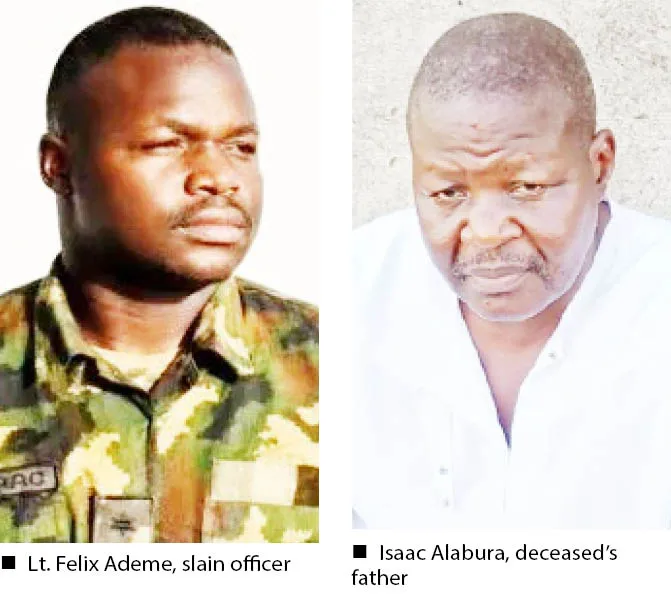
Nearly a week after the successful operation that ended 56 days of captivity for the victims, the family of Lieutenant Felix Ademe Isaac, the 28-year-old Nigerian Army officer who died during the mission, says it is yet to receive an official explanation of how their son lost his life while leading troops into one of Nigeria’s most dangerous rescue operations.
The young officer was buried with full military honours at the 23 Armoured Brigade Cemetery in Yola, Adamawa State, but the circumstances surrounding his death remain clouded by conflicting accounts.
While some reports suggest the convoy conveying security personnel struck explosives planted within the National Park axis, others indicate the officer stepped on a landmine allegedly planted by terrorists operating in the area. Military authorities have acknowledged that security personnel suffered casualties during the operation but have not publicly clarified the exact circumstances that claimed the officer’s life.
For his family, the silence has compounded the grief.
“He was the hope of the family and the community,” his father, retired Master Warrant Officer Isaac Alabura, said, recalling how his son had only recently completed military training in Kaduna and was preparing for another assignment in Sokoto before being redeployed at short notice to join the rescue mission in Oyo State.
According to him, neither the Nigerian Army nor the Oyo State Government has formally briefed the family on what happened during the operation.
Instead, the family says it learnt of the tragedy without any official explanation from authorities directly involved in the mission.
The elder Alabura described his son as a promising officer whose military career had only just begun, expressing hope that he would have risen through the ranks to make lasting contributions to Nigeria’s security architecture.
The operation in which Lt. Isaac died secured the freedom of pupils and teachers abducted from Baptist Nursery and Primary School, Yawota, Community Grammar School, Esiele, and LA Primary School in Oriire Local Government Area.
The victims were kidnapped on May 15, 2026, and regained their freedom on July 10 after spending 56 days in captivity.
The Senate has since paid tribute to Lt. Isaac, Private Silas Musa of the 81 Battalion and Sergeant Abena John Jerome of the Nigeria Police Force, all of whom died during the rescue mission. Lawmakers also recognised Lance Corporal Adamu Hussain, who sustained injuries during the operation, while mourning one of the abducted teachers who died in captivity.
Governor Seyi Makinde equally commended the security agencies for their role in the rescue and expressed condolences to the families of personnel who paid the ultimate price.
But beyond the official tributes, Lt. Isaac’s death has reopened broader conversations about the welfare of security personnel and the obligation of government to provide transparent accounts whenever officers die in the line of duty.
His cousin, Tidwawa Nelson Eweh, described him as calm, intelligent and deeply committed to national service, urging authorities to immortalise the fallen officer and extend meaningful support to the family he left behind.
Lt. Isaac is survived by his parents, a brother and a sister.
Beyond the Celebration
For many Nigerians, the rescue of the schoolchildren represented the successful conclusion of a terrifying ordeal.
For the families of the security personnel who never returned, however, the operation marked the beginning of another painful journey.
Their sacrifice underscores a difficult reality often overshadowed by rescue headlines—that every successful operation may carry a hidden human cost borne by soldiers, police officers and other first responders who confront heavily armed criminal groups so that others may live.
As Nigerians continue to celebrate the return of the rescued pupils and teachers, Lt. Isaac’s family says one thing remains missing: a clear account of how a young officer who answered his country’s call made the ultimate sacrifice.
Legal Context
The deaths of military and police personnel in active operations also raise issues of institutional accountability. While operational details may legitimately remain classified where national security is involved, transparency with the next of kin, prompt notification, statutory death benefits and other service entitlements form part of the state’s duty of care to officers who die in the line of duty. Public acknowledgement of their sacrifice is important, but so too are accountability, adequate support for bereaved families and clear communication regarding the circumstances of their deaths.