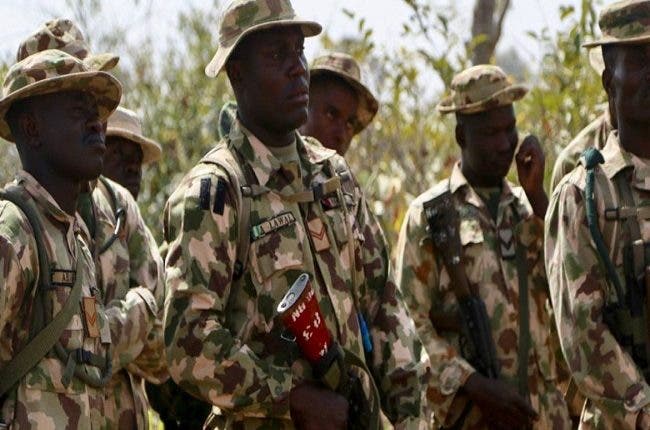
The alleged killing of a poor farmer by a Nigerian military convoy in Benue State is fuelling fresh accusations of unchecked violence, class injustice and institutional impunity within Nigeria’s security forces—raising broader questions about how easily the lives of rural and impoverished citizens can be erased without consequence.
According to the victim’s family, Mr. Aondover Tseshom David, a struggling farmer and father of six from Katsina-Ala Local Government Area, was run down on January 22, 2026, along the Katsina-Ala Road by a military convoy while going about his daily work. His relatives say the soldiers did not stop to render aid. Instead, his lifeless body was allegedly dumped at a police station, where it remained until family members—already impoverished and traumatised—were notified and forced to retrieve it themselves.
For the family, the killing was not an accident but what they describe as a reckless act emblematic of a deeper culture of impunity. “He survived criminals and kidnappers, only to be killed by those sworn to protect Nigerians,” said his eldest daughter, Miss Aondover Msendoo, a 300-level nursing student at Bayero University, Kano.
The treatment of her father’s body, she said, compounded the violence. “His lifeless body was handled without dignity, as though his life had no value,” she told SaharaReporters, adding that the family was left scrambling for money as mortuary costs mounted and pressure grew to bury him quickly.
David had been the family’s sole breadwinner, supporting his wife and six children through subsistence farming under harsh economic conditions. Just months earlier, he had been kidnapped from his farm, forcing the family to sell possessions and borrow heavily to raise a ransom for his release. After regaining his freedom, he returned to the fields to rebuild his shattered livelihood—only to die on a public road, allegedly at the hands of state security forces.
Rights advocates say the case reflects a recurring national pattern in which military deployments in civilian spaces operate with minimal accountability, particularly in rural and economically marginalised communities. While the Nigerian Army frequently frames such incidents as accidents or operational errors, families of victims argue that investigations are rare, justice is elusive and punishment is almost non-existent.
Miss Msendoo insists her father’s death must not become another statistic. “We fear that without public attention and strong legal intervention, this will be swept under the carpet,” she said, appealing to human rights lawyer Femi Falana (SAN) to intervene.
As of the time of filing this report, neither the Nigerian Army nor the Benue State Police Command had issued an official statement on the incident.
The case comes amid renewed scrutiny of Nigeria’s military following a string of deadly encounters with civilians, including the December 2025 killing of at least nine unarmed women protesters in Adamawa State—an incident Amnesty International says was carried out by soldiers, despite official denials. Human rights groups argue that the pattern points to systemic failures in civilian protection, transparency and the rule of law.
For families like the Davids, those failures carry a devastating cost. “We are poor,” Miss Msendoo said, “but we still believe in justice. And we are asking—how many more people like my father must die before accountability begins?”