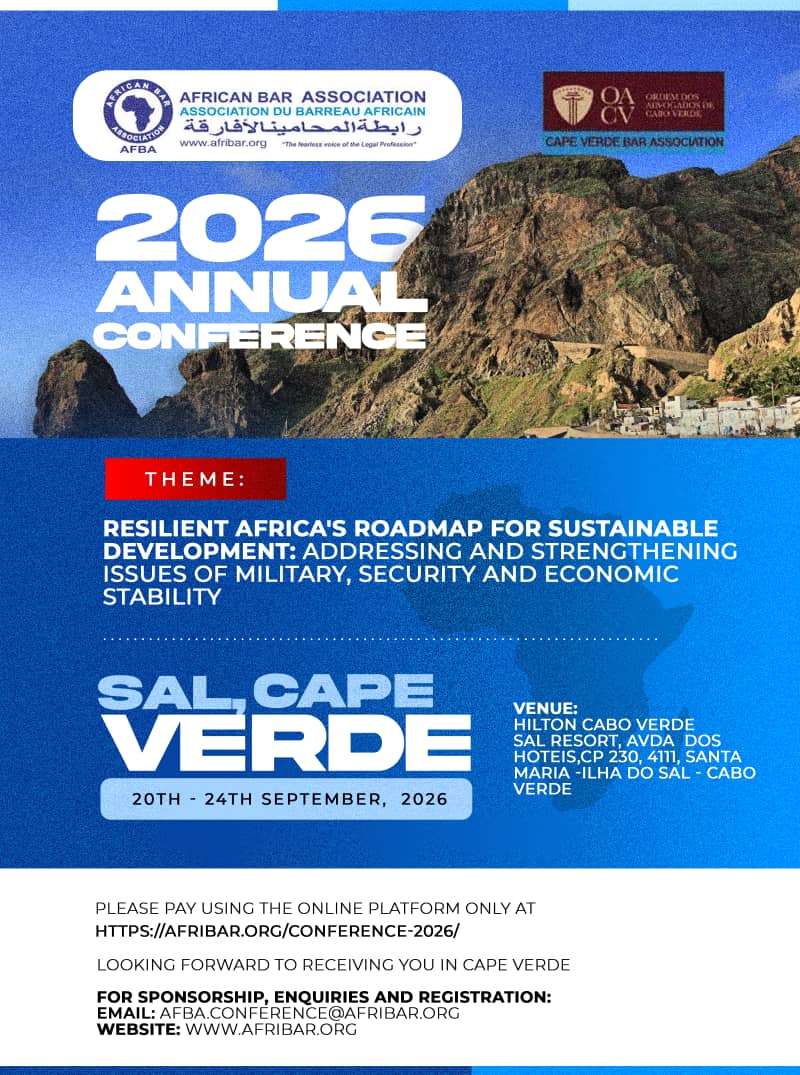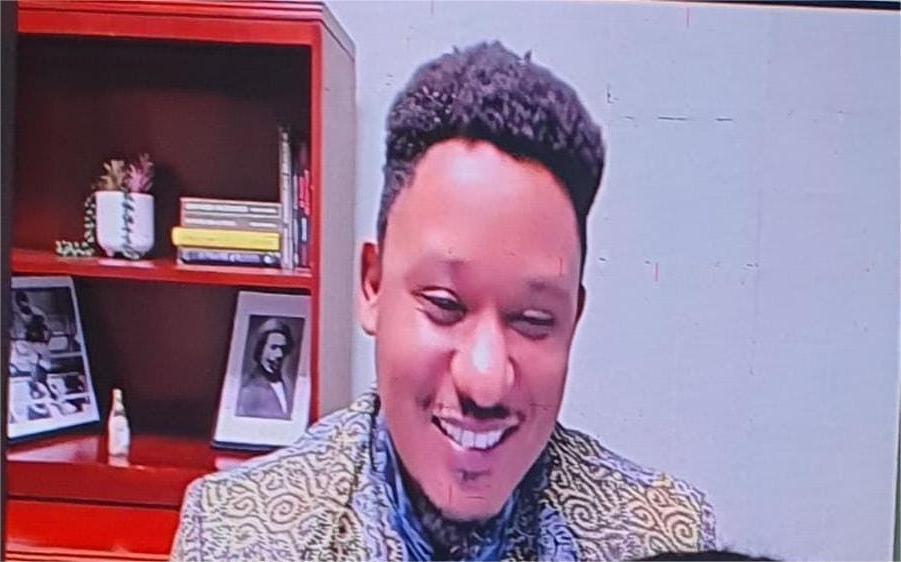
At the ongoing AFBA 2025 Conference in Ghana, Claude Gatebuke, Executive Director of the African Great Lakes Action Network (AGLAN), delivered a powerful call for justice and accountability in the Democratic Republic of Congo.
Gatebuke, a survivor of the Rwandan genocide and civil war, said the Congo’s exploitation is state-driven, not rebel-led, adding that since the mid-1990s, the sovereign territory of Congo has faced repeated invasions and occupations.
He also stated that proxy militias and rebel groups were created to disguise foreign military invasions.
According to him, the M23 rebel group is largely composed of Rwandan and Ugandan troops, with only a few Congolese members.
Citing the United Nations Charter, Gatebuke said these invasions violate Article 2(4), which prohibits the use of force against sovereign states; while describing the situation as a grave breach of international law, not a complex issue.
Emphasizing that these are not peacekeeping missions, but deliberate campaigns to plunder Congo’s minerals, Gatebuke questioned how two of the world’s poorest nations, Rwanda and Uganda, could wage a 30-year war on Congo.
Gatebuke attributed this to persistent political, financial, and diplomatic support from Western powers, including the United States, the United Kingdom, and the European Union.
He noted that in 2022, the EU condemned Rwanda’s role in Congo, yet sent €17.21 billion in military funding to Kigali.
“These atrocities are well-documented,” he said, referencing reports from UN experts and Human Rights Watch.
He accused the Rwandan and Ugandan regimes of continuing to fuel chaos for mineral control.
Gatebuke revealed that earlier this year, M23 forces seized vast areas of eastern Congo, including the Robaya coltan mine, the largest in the region.
He warned that these operations are not isolated African conflicts, but global enterprises involving multinational corporations.
He explained that multinational companies use local militias as proxies to manage and exploit mines.
“These minerals,” he said, “are smuggled into Rwanda and Uganda, then rebranded as local exports.”
Gatebuke argued that Rwanda and Uganda export far more minerals than they naturally possess.
He said this proves conflict minerals are laundered and then sold to global markets.
He pointed out that gold from Congo travels through the UAE, while coltan feeds the global electronics industry.
He warned that consumer companies in the Global North become indirect beneficiaries of blood minerals.
Gatebuke said, “The phones and electric vehicles we use are powered by these stolen resources.”
He described the trade as a worldwide network implicating Western nations celebrated for human rights, including Canada, Switzerland, and Australia.
He explained that Canadian firms legitimize illicit mining, while Swiss traders launder minerals through opaque systems. Meanwhile, Australian companies and Qatari investors profit through financial and logistical support.
According to Gatebuke, three forces sustain this neo-colonial enterprise: military aggression, Western geopolitical interests, and corporate greed.
He called on Africans to demand Congo’s sovereignty and the withdrawal of foreign forces.
Gatebuke insisted that a stable Congo benefits the entire continent, citing its vast hydropower and food resources.
He said, “A peaceful Congo could feed Africa and power the continent’s industries.”
He also emphasized the need for justice, warning that peace without accountability cannot last.
Gatebuke criticized the US-brokered peace deals and other negotiations in Qatar, Nairobi, and Rwanda for granting amnesty to perpetrators, arguing that such amnesty encourages future violence by rewarding impunity.
He urged African leaders to implement the UN Mapping Exercise Report of 2010, which documents major war crimes in Congo.
“That report,” he said, “should be the foundation for justice and lasting peace in the Great Lakes region.”
He concluded by urging participants to push for the report’s full implementation, emphasizing that without justice, peace will remain impossible.