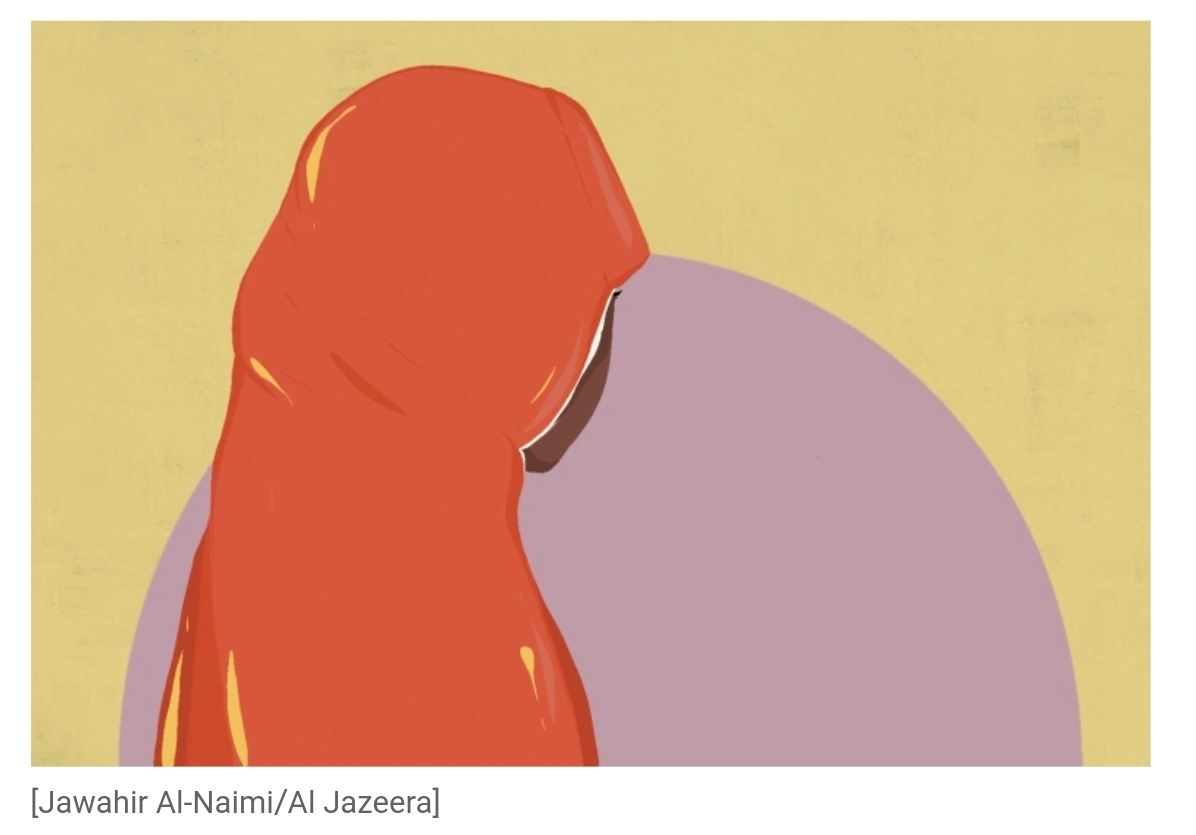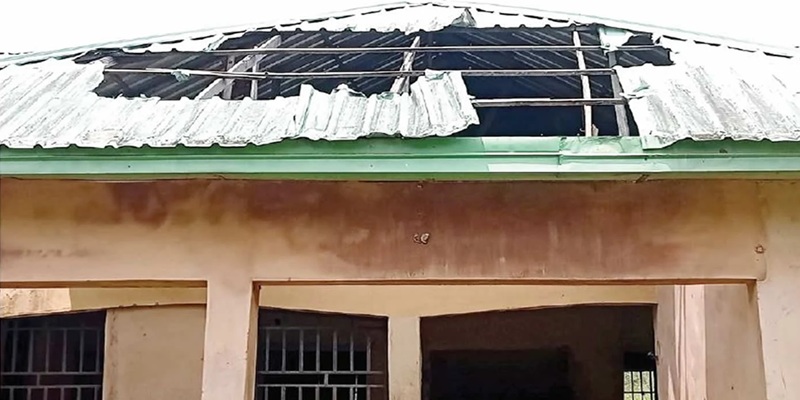
Dilapidated hostels, poor sanitation and a lack of basic amenities at a government-owned special school in Imo have renewed concerns over the treatment of children living with disabilities
The photographs and videos emerging from the School for the Deaf and dumb in Orodo, Mbaitoli Local Government Area of Imo State, tell a story that should trouble any government committed to the welfare of its most vulnerable citizens.
The school, a government-owned institution for children who are deaf and with severe speech challenges, is reported to have dilapidated hostels, poor sanitation, inadequate toilets and limited access to clean water. Residents and activists who visited or spoke about the institution say some of the children are living in overcrowded dormitories where bedbugs have become a persistent problem.
The condition of the school became a subject of public outrage after a video showing parts of the facility circulated widely, with concerned citizens appealing to the Imo State Government and the Federal Government to intervene.
One of the activists featured in the video posed a question that has since become central to the controversy: these children may not hear or speak, but are they not human beings?
They are.
They are also Nigerian children with the same entitlement to safety, education, healthcare and human dignity as children in any other public school.
The campaigners want the authorities to provide decent accommodation, clean water, functional toilets and better welfare for the students. They have also appealed to President Bola Tinubu to visit the school if his expected trip to Imo State goes ahead, arguing that the institution should no longer remain outside the attention of government.
The Orodo case has also brought back an old and uncomfortable issue in Nigeria: the condition of public institutions established for people living with disabilities.
Across the country, special schools and other facilities serving persons with disabilities have faced years of inadequate funding, poor maintenance, insufficient equipment and a shortage of trained personnel. Many of the problems are not new, yet they rarely attract sustained national attention unless photographs or videos force them into the public eye.
Nigeria has legislation intended to protect the rights of persons with disabilities. The Discrimination Against Persons with Disabilities (Prohibition) Act, 2018, established a legal framework for protecting people with disabilities against discrimination and promoting their participation in society. The National Commission for Persons with Disabilities was subsequently established to drive implementation of the law.
The Federal Government has also acknowledged the shortcomings in special and inclusive education. In July 2026, the Universal Basic Education Commission unveiled national standards and implementation guidelines intended to improve special and inclusive basic education, citing continuing barriers to enrolment, participation and learning among children with disabilities.
Yet the images from Orodo raise a straightforward question: what happens to those standards once the officials who made them leave the conference room?
A policy document cannot repair a leaking roof. A law cannot clean a blocked toilet. A national framework cannot provide water to a dormitory unless governments at the appropriate levels budget for the work and ensure that the money is properly used.
The problem also extends beyond construction.
Children in special schools require teachers trained to work with their particular needs, appropriate learning materials, medical support, safe transportation and facilities that allow them to move around without unnecessary barriers. Their education cannot be reduced to putting them inside a classroom and counting them among the beneficiaries of a government programme.
For many families, a special school is not an optional service. It may be the only realistic route through which a child with a disability can receive an education suited to his or her circumstances.
The neglect of such institutions therefore carries consequences far beyond the state of a building.
A child who is deaf still needs clean water. A child who communicates through sign language still needs a safe place to sleep. A child with a disability still has ambitions, talents and a future that can be shaped by the quality of education received.
None of these needs should depend on public sympathy generated by a viral video.
The wider problem is Nigeria’s poor culture of maintaining public infrastructure. Schools, hospitals, roads and government buildings are often allowed to deteriorate after construction, leaving successive administrations to announce fresh rehabilitation projects while existing facilities continue to decay.
The consequences are more severe in institutions serving people with disabilities.
A broken toilet, an inaccessible building or the absence of water is an inconvenience in some public institutions. In a special school, it can become a daily barrier to education, health and personal dignity.
Orodo also raises questions about accountability.
Who is responsible for inspecting the school regularly? Who determines its maintenance needs? How much has been allocated to the institution over the years? How much has actually been released? Who monitors the spending? And when facilities deteriorate to the point shown in the circulating footage, which public official is expected to answer for it?
Those questions should not disappear when the current outrage subsides.
The same scrutiny should extend to other special schools across Nigeria. The country needs a proper audit of their buildings, water supply, sanitation, teaching facilities, staffing and funding, followed by a public report on what needs to be done and who is responsible for doing it.
There is also a larger issue of attitude.
People living with disabilities have spent decades being treated largely as objects of charity. Modern disability policy takes a different approach: they are citizens with rights, and public institutions must be designed and maintained in ways that allow them to participate fully in society.
The children at Orodo did not choose the circumstances into which they were born. They should not have to campaign for the basic conditions required to live and learn with dignity.
Nigeria has made commitments to inclusive education and disability rights. The real test lies in what happens inside places such as Orodo, far from government offices and official ceremonies.
If the state cannot provide decent accommodation, water, sanitation and education for children in its care, then the issue is no longer merely the condition of one school.
It is a question of what the Nigerian state believes its most vulnerable children are worth.