Home Blog Page 881

Stakeholders seek solutions for child survivors of sexual violence in the FCT

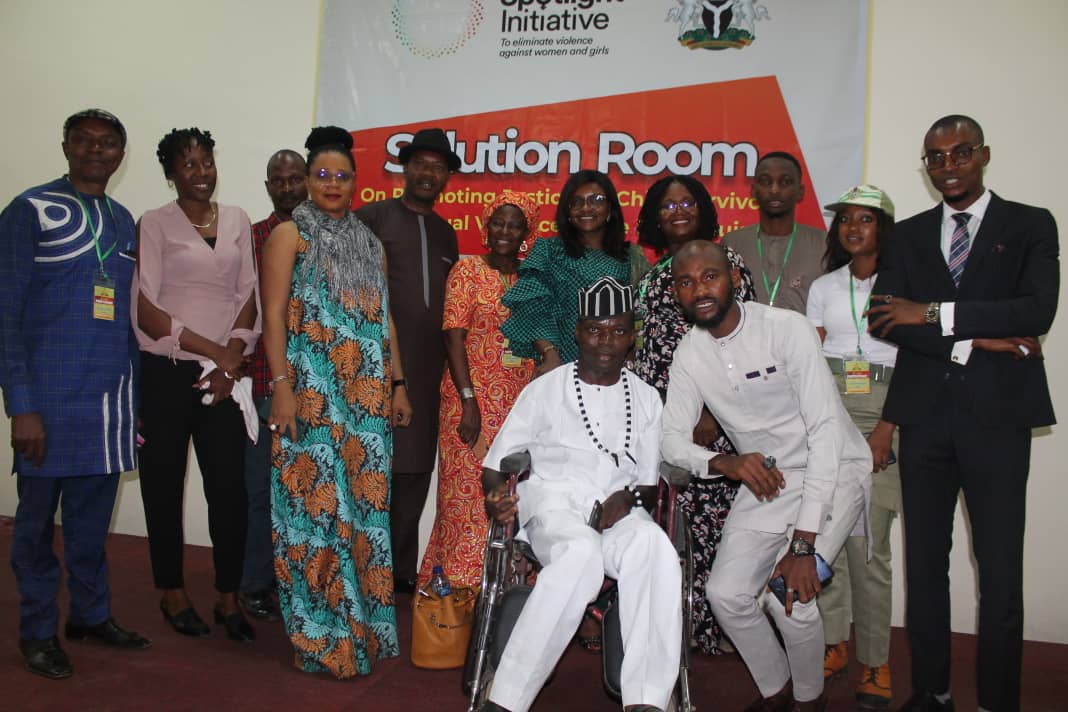
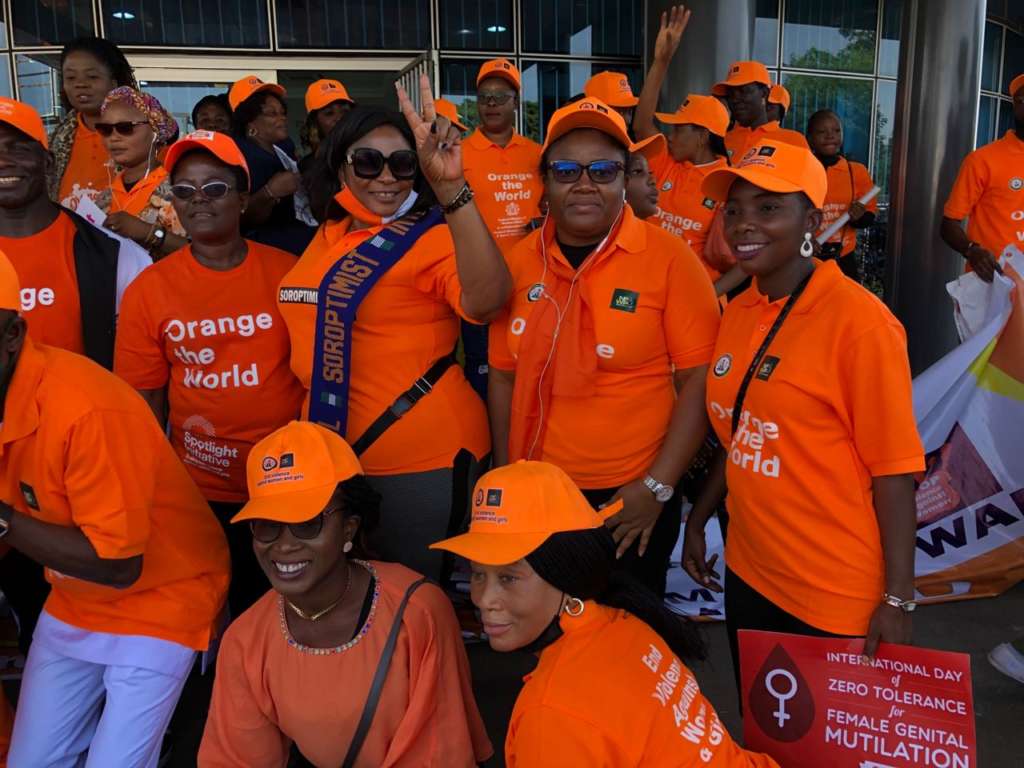
Some of the participants

By Nneamaka Onyema

To conclude the years’16 days of activism against sexual/gender-based violence against children and vulnerable persons, Spotlight Initiative in conjunction with UNICEF held an inter-agency review of cases of sexual violence reported to Social welfare, Police, Ministry of Justice, NAPTIP, and NGOs.

The aim is to have a shared understanding of the bottlenecks constraining the adjudication of cases and to facilitate pro-bono legal aid/support team to provide tailored legal aid, advice, support, and effective referrals for the child victim.

Another objective of creating this solution room is to work with relevant heads of agencies in the police, Ministry of Justice, NAPTIP, and Judiciary with a view of removing the systemic barriers, accelerating legal aid, and access to justice, and enhancing synergy as well as information amongst agencies.

Relevant stakeholders including the Nigerian Bar Association (NBA), European Union (EU), FCT Judiciary, Nigeria Police Force, Legal Aid Council, NAPTIP, United Nations (UN), FCT Social Development Secretariat, Network University Legal Aid Institution (NULAI), Child Protection Network (CPN) and the National Judicial Institute (NJI) were in attendance.

Some of the participants at the event

The Solution Room workshop was held from Wednesday 8th to Friday 10th December 2021 at Reiz Continental Hotel, Central Business District Abuja.

A total of eighty (80) cases were reviewed by volunteer members of various agencies and NGOs.

Problems highlighted and discussed consist of:

  • Underage marriage
  • Child rape
  • Child defilement
  • Sexual abuse and exploitation of children in physical space
  • Online sexual exploitation
  • Child trafficking and
  • Child prostitution
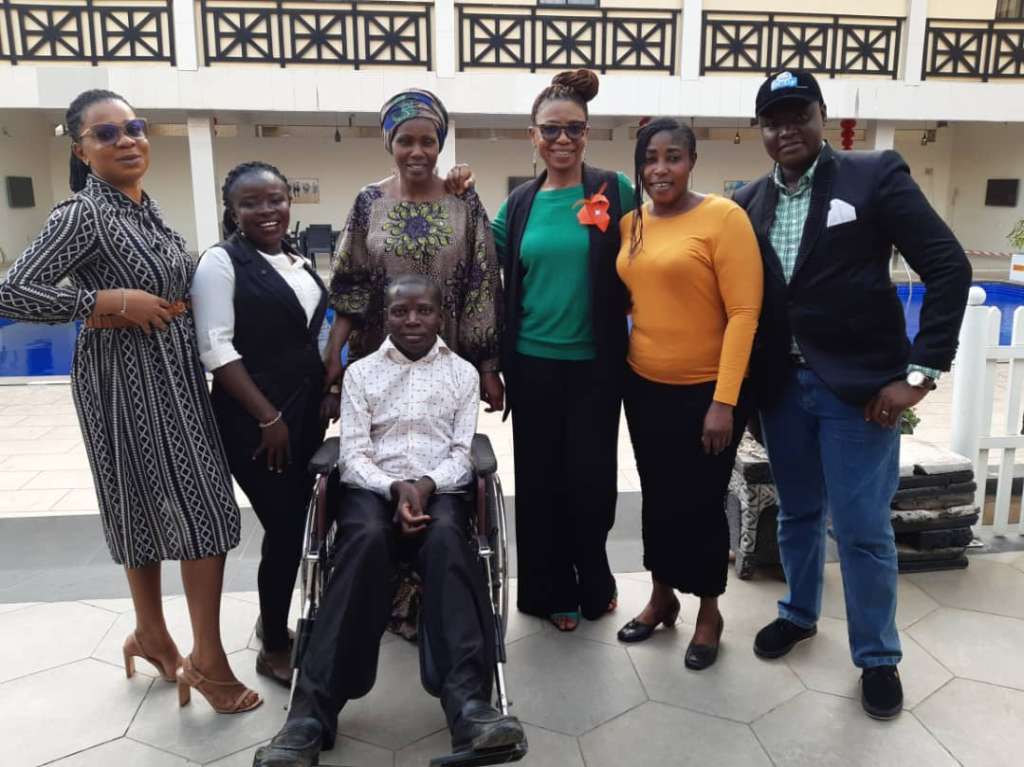
Group 7 Members of the eventL-R: Nneamaka Onyema, Esq.., June Idang, Esq., Justice, Esq., Mr.s Imabong Sanusi, Barr. Lillian Okenwa, Ms. Yetunde and Michael Ejeh, Esq.

Part of the conversation also includes that sexual exploitation leads to:

  • Death
  • Injuries
  • Impaired brain
  • Lifelong consequences
  • Teenage pregnancies – induced abortions – gynaecological problems.
  • Sexually transmitted deceases
  • Impact future opportunities
  • Generational problems
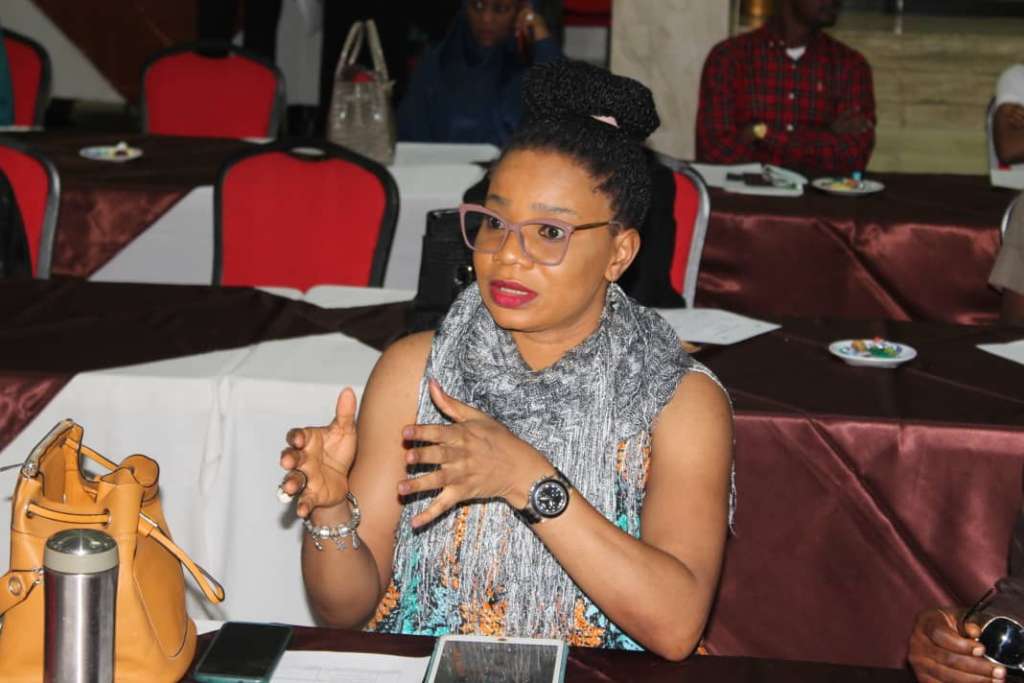
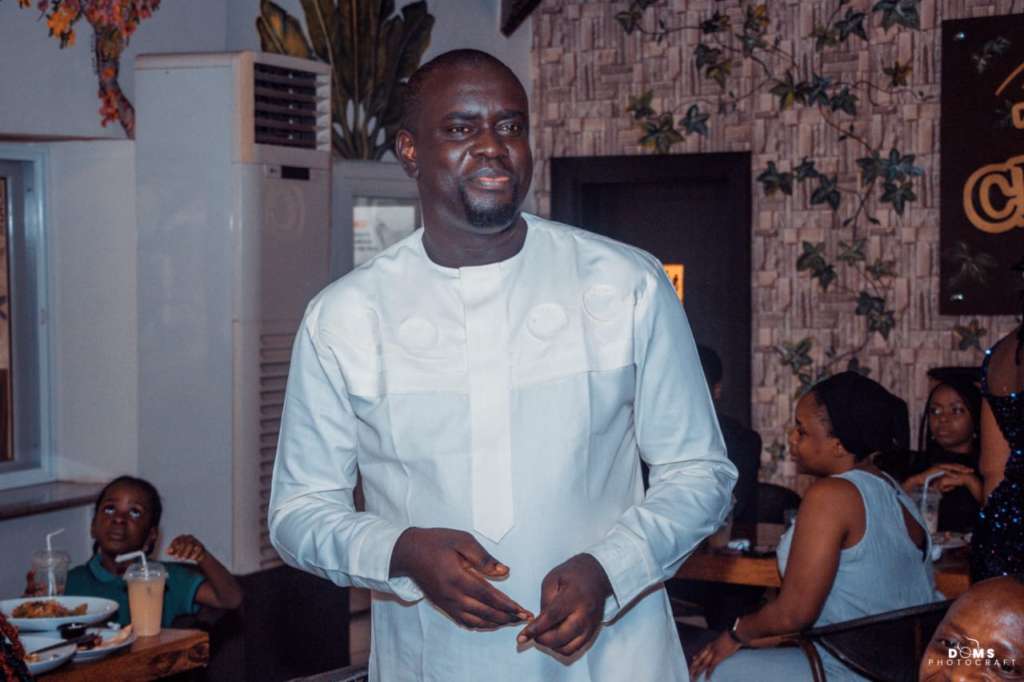
Nneamaka Onyema, Esq.

Some of the challenges faced in prosecuting suspects/perpetrators of this violence raised by the solution room include:

  • Difference in age of child in different states
  • Stigmatization
  • Watering down of the provisions of the Child’s Rights Act in different states
  • Some states have not adopted the Child’s Rights Act
  • Prosecution issues
  • Delayed justice

Solutions to a few of these problems raised were also discussed and highlighted thus—

  • Strategic investigation and prosecution
  • Implementation and enforcement of the provisions of the CRA
  • Increased community driven advocacy/ sensitisations
  • Inter-agencies collaborations
  • Strengthen social welfare network in the FCT and beyond
  • Legal backing to social welfare
  • Provision of safe houses

At the end of the 3day workshop, volunteers indicated interest to follow up on fifty (50) priority cases for further prosecution and follow-up.

Nneamaka ONYEMA, Esq is an Abuja-based Legal practitioner.

GBV: Under the guise of religion humanity has committed atrocities too much to mention – Abuja Rights Activist

Photo Credit: World Pulse

“Sexual abuse and gender-based violence is a lonely street for the victim and if there’s going to be any solution; it must come from an intervention that gives strength to the victim to be able to speak and face their abuser.” – Jude Ifesemen

The story is told of how American video-game developer, Zoe Quinn suffered abuse as a result of stepping into a male-dominated world. She became the target of harassment after details of her private life were released online by an ex-boyfriend. His revelations led to accusations that she had had a relationship with a gaming journalist in an attempt to get positive reviews for her game. Similarly, writer and entrepreneur, Mercy Makinde once wrote that trolls, clap back, shades are a few of the words she picked up from episodes of social media harassment and bullying she has seen.

In truth mobile telephones and social media have assisted hugely in telling victims stories, enlightening and engaging the public on SGBV issues. But they have also been used as weapons damaging as physical abuse. Jude Ifesemen an award-winning poet, lawyer, and principal partner of Ifesemen & Associates in a paper titled “Leveraging Technology for Efficiency in Handling Sexual and Gender-Based Violence (SGBV)” noted that “the question of technological interventions on gender-based violence and sexual abuse is long overdue.”

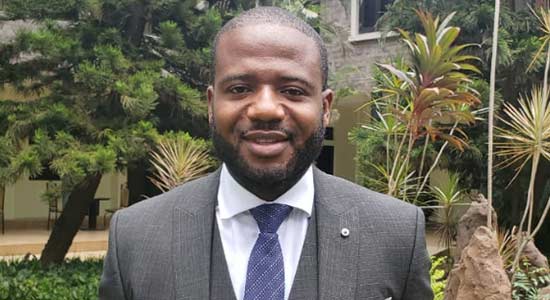
Barr. Jude Ifesemen

While calling for the creation of an app with an easy to use interface for domestic abuse and gender-based violence, Ifesemen in his paper delivered at the recent Annual General Conference of International Federation of Women Lawyers (FIDA) in Abuja also stressed that “the first step when a case of abuse is reported is not necessarily reconciliation but protection of the victim then investigation, possibly restitution before reconciliation.”

Below is an excerpt from the paper.

When we talk about gender-based violence, the problem in our clime is more on our farce morality and traditional norms than what is written. This is so bad that our institutions neglect enacted laws and turn traditional counselors. Thus it is difficult for victims of sexual abuse and gender-based violence to actually file reports against their abuser, especially where the said abuser is the spouse or other family member. The slogan that “no marriage is perfect” is common through the walls of even enlightened homes where gender-based violence is prevalent. The most unfair part of this traditional morality is how quickly it switches against the woman if ever she’s found to be the aggressor. The same culture of endurance is hardly remembered as even other women lead the chant for prosecution and justice!

Sexual abuse and gender-based violence is a lonely street for the victim and if there’s going to be any solution; it must come from an intervention that gives strength to the victim to be able to speak and face their abuser. However, we must first understand that gender-based violence is not limited to physical or psychological abuse but systemic abuse which starts with the legal regime of our male-based laws.

Until recently only by the intervention of a woman actually going to court, a woman required the consent of her husband to get a Nigerian passport at the Immigration office. This in itself is one of many examples of gender-based violence in the country. Society has not been fair to the woman. Even under the hashtags on violence against women, we hear my gender-raising issues like men should be included and I have always responded that please do your own hashtag yourself. It is equally an abuse trying to hijack a movement because of a few isolated cases of men being on the other side. It must here be noted that cases of abuse against men are rare and hardly go unpunished as men are known to be creative in ways to find redress.

The laws currently in force are not in their totality useless but the enforcement by the supposed enforcers remains the biggest challenge. Thus, the question of technological interventions on gender-based violence and sexual abuse is long overdue but though already active on many fronts, must go beyond mere presentation to actual implementation. Thus I would like to make three recommendations to the body of this presentation by addressing the topic on three fronts:

  • Marriage and Religion
  • Society and Traditional morality
  • The Law

Marriage and Religion

We are a very religious society even before the advent of western religion. Our leaders have always ruled by divine claims and ascribing their tyranny to divinity. It is why virtually all religions warn us to not question the deity. In most religions, the man is declared the head of the union and must be given a godlike reverence no matter the circumstance, thus it is easier to ask the woman to forgive the man for his atrocities while any misdeed of the woman subjects her to public ridicule and possibly execution in some cases. A woman caught in adultery is branded, but when a man is caught it is the wife of the said man that is branded. Some religions even accept corporal punishment from the husband against the wife as a means of leadership. Some women are so psychologically conditioned to see abuse from her husband as a sign of love and leadership.

It might shock you to know that there are women who believe that if a man doesn’t hit you then he doesn’t love you. While this may be referenced under mental health issues, it must be noted that some mental health issues are originated from religious conditioning. The doctrine of submission is a lie! It is chauvinistic and narcissistic! It is an aberration of even the religious acclamation of free will! How do you say humanity is given free will but a wife has no free will when it comes to her husband?

How did an adult female mortgage her right to her body, her resources, and her mind to another! If that is the tenet of matrimony then marriage is licensed slavery in the 21st century. Even the legal principle of volunti non fit injuria does not apply to self-harm. That is to say, I cannot volunteer to be killed.

Under the guise of religion over the ages, humanity has committed atrocities that are too much to mention but the continuous subjugation of women in marriage must end even if it means ending religion for a religion that thrives on slavery and abuse is false!

Marriage is the coming together of two souls willing to honor each other not the coronation of one over the other.

Society and Traditional Morality

The Nigerian society no matter evolved we try to claim in the cities is still very traditional. The victim of domestic abuse has already been abused long before they entered the situation by the society which created an impression that marriage is too precious and must be sustained no matter the cost as a “do and die”. Women carry the impression that every relationship has its challenges and that you must make your own work at all costs. Thus the idea of marriage is not exactly the honey on the moon but more of the grinding in the mines.

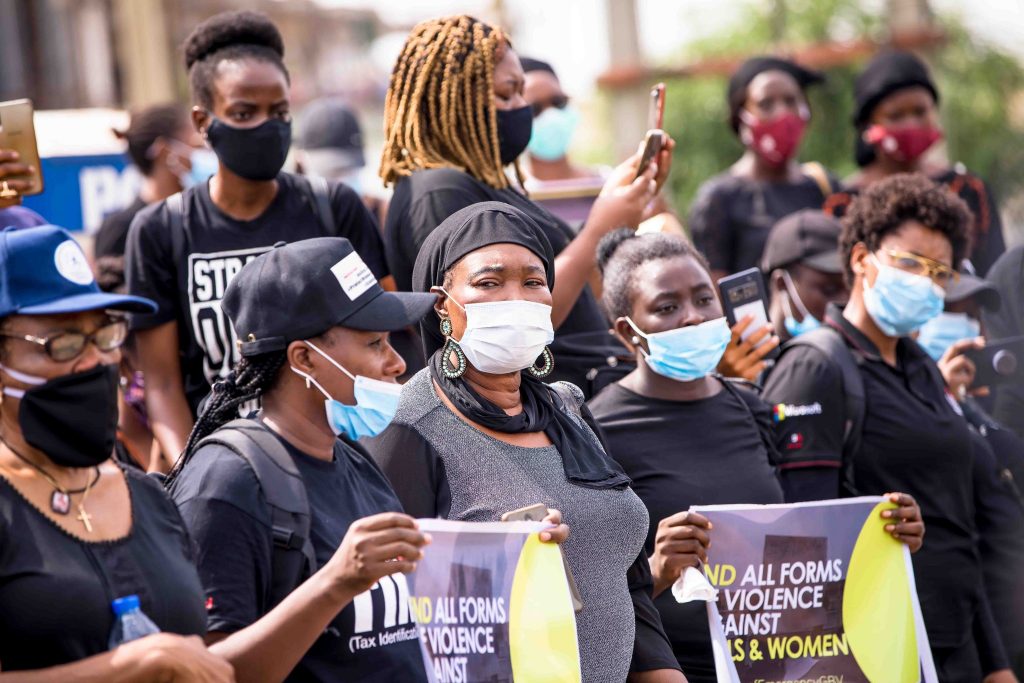
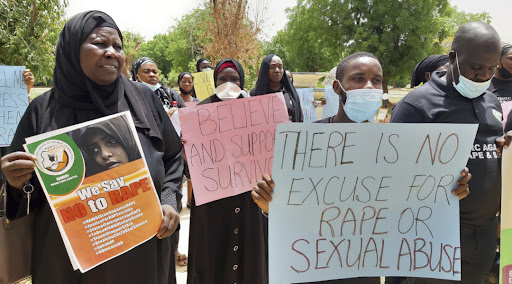
People protest against rape, sexual and gender-based violence during a demonstration organised by the National Human Right Commission in Maiduguri, Nigeria. (AP Photo/Jossy Ola)

It does not help that from a young age, the goal set for the girl child is marriage. Words like “keep your virginity for your husband” are common in many homes. Even public health Practitioners that know that virginity is not a token to be kept still preach this farce morality to their wards. This has created a dependency mindset in most females as they see sex as a tool for exchange rather than the mutual pleasure it is designed for. Thus many women probably here today have been having sex for decades yet never really found any real pleasure in it to desire it beyond the blankets of what they can get in return. The concept of orgasm and climax for most ladies seem more like a myth. I imagine a young 21st-century lady telling her mother that she has never had the pleasure of orgasm with her husband and the mother wondering and shutting her up that what is relevant is bearing children and not the vanity of sexual pleasure. Thus, while the man seeks sexual satisfaction from as many women as possible, the woman must be modest to be properly rewarded with good children. This is an abuse of the mind

The Law

The law makes it so difficult to be free, that when you consider the cost of divorce and the time and all its traumas, you just remain on Mount endurance. Did the Matrimonial Causes Act actually say you must wait two years before filing for divorce? And why do you need leave of court to actually file for divorce under two years? Are these in themselves not violence against an already traumatized victim? Why do our family courts not focus strictly on family cases and grant instant dissolution?

There’s a police department called Gender where Gender-Based violence issues are supposed to be handled but most police divisions are either not equipped with the right personnel for it or they pretend not to know what to do and return the victims that come seeking redress to the lion’s den of their abusers. Most times, the fatal cases of violence against women have been previously reported but the police officers turned spiritual and traditional counselors rather than address the situation properly.

The law further does not help as the burden of proof becomes a traumatic experience on its own. The victims of abuse are subjected to continuous trauma rather first taking into consideration their mental state and wellness.

Recommendations

The following are a few recommendations to handle sexual and gender based-violence issues in Nigeria.

It is pertinent to note that in a situation of sexual and gender-based violence and domestic abuse cases the victims are greatly traumatized and any system that puts the victim in front of their abuser before they are ready is abusive in itself. So the healing process must be put into consideration and protecting the victim’s mental health must be considered. Thus rather than face the abuser, a pre-recorded deposition could work as it provides the victim with a nonthreatening environment to narrate and recount their experiences. In divorce proceedings, the time for divorce should be swift and the Judge’s intervention of trying to counsel for reconciliation should be removed.

This is because it is expected that the petitioner is an adult and must have thought it through before asking for liberation. The re-counseling and almost mandatory attempt at reconciliation which some judges celebrate as success stories for stopping divorces are actual silent death sentences as the petition who already is traumatized and scared is bullied into a reconciliation that hardly works as the situation most often gets worse but she loses the will to attempt to re-file for the divorce as she sees that even the judges which is the law, may side with the respondent and return her again. Thus, she is trapped in a marriage enabled by a society that seeks “matrimonial peace” against joy and freedom. Thus the process of litigation and trials for divorce proceedings should be modified; family courts should be set up strictly for family cases just like revenue courts.

We should allow for dissolutions within 48 hours of marriage. If the people decide that they want to remarry again subsequently let them woo themselves and marry again. Why are we keeping people trapped in a relationship they don’t want to be in. The animosity that divorce breeds would be avoided if the process is swift because most times, the parties grow angrier at each as they are subjected through the traumas of unnecessary revelations during the proceedings.

Our law enforcement agents must be equipped with the right tools and mindset to understand that the first step when a case of abuse is reported is not necessarily reconciliation but protection of the victim then investigation, possibly restitution before reconciliation. A woman should not feel pressured or harassed and intimidated by the authorities she’s running to for protection back into the hellish situation. Women across generations are not known to be alarmists so when a woman takes a move, she must be given the necessary support because it takes a lot for a woman to make such moves for exeat.

Thus, I recommend an app be created for domestic abuse and gender-based violence with an easy-to-use interface. Although would mainly be available for only those with smartphones. It would be easy to register any sexual abuse and gender-based violence issue on the app which uses the victim’s location and pairs her with a caseworker that becomes the first responder.

 We must encourage third-party reports and give it more weight than hearsay evidence. Our laws must anticipate the reluctance of victims to express themselves and make reports. Thus with the intervention of an app as stated above, even third parties can report for friends, family, and even neighbors.

I recommend that halfway shelters should be set up across states and cities for counseling as well as an escape where you can go and find solace even if they would go back to the Union find temporary relief to clear your head and re-evaluate your options for a while to have peace

I met a young lady recently working with a project called Theragist. It’s a mental health counseling platform online mostly anonymous where you can login there and discuss with counselors anonymously.

We know that in our society the culture of silence is the major fuel feeding the monster of gender-based violence so we should have a system where people can express themselves even if it’s anonymously. I believe that from having a platform for expression they would build the confidence to finally come out and walk out of such a situation or to eventually speak out to an audience or to make their cases.

So if we do have even if it’s an anonymous platform, anybody facing these gender-based violence issues can just go online, register and share your encounters or challenges and find strength from a community of people going through similar experiences, and from there we will build strength they will build profiles and build the capacity to be able to come out.

COVID-19 Omicron and Nigeria’s frenemies

Columnist CHIDO NWAKANMA asks when we will stand up to Nigeria’s frenemies using Covid-19 Omicron to throw us under the bus.

The United Arab Emirates graduated from one finger to inserting its hands full in the eyes of Nigeria on Monday 13 December 2021. It asked airlines all over the world not to bring Nigerians into their country. It is a declaration of war.

Formal declarations of war have become obsolete since WW2, but nations do so through hostile actions or rhetoric that create a state of war between two or more states. The UAE action is what we call in Nigeria “see finish” a provocation that asks the recipient, what can you do?

The Nigerian passport is now haram at any of the airports of the UAE. The ramifications and implications are enormous.Omicron variant of COVID19 was the excuse for many nations to show their disdain for Nigeria. The United Kingdom, Australia, Canada, Saudi Arabia and UAE announced restrictions of entry of Nigerians. The UK claimed that it was because 21 out of 23 passengers from Nigeria had the Omicron COVID19.

Contrastingly, citizens of Netherlands and other Euro nations with higher cases of the COVID-19 wearing akwete (Delta variant) and the one in Ankara (omicron) did not receive the same treatment.

Since 2020 the West sought in vain to dump COVID-19 on Africa. They wanted to position it as an African ailment. They also did with it with HIV-AIDS and Ebola.
They crowed about how the pandemic will reduce the African population.

When it did not happen, they started manufacturing rationalisations. One of those is the one that claims either that African test numbers are understated or that there is corruption in the process. Unfortunately for them, Africans have access to their media reports showing corruption also in pandemic management.
Africans are not dropping like flies from the pandemic. It is an European disease as we watched the sad cases in their cities and the high incidents. With no evidence of pandemic levels, Africans have gone about their businesses with scant regard for COVID-19, apparently infuriating the West.

At the same time, the West sends to Nigeria and the rest of Africa vaccines that are near expiry. That scenario builds the case for vaccine resistance.
The same West that speaks about “evidence-based decisions” can no longer stand the evidence. They have left evidence for outright prejudice and hostility.
The facts are that more Western nations have both ordinary COVID19 and the one wearing either akwete or gele. They did not ban them.

Africa should wake up. Nelson Mandela said then that it becomes Nigeria to stand up for the black man. It is ironic that it would take one of our worst to do so but it is what it is. Nigeria should ban flights from those countries defaming us. I support with my full chest.
Nigeria brought the UAE finger-poke on itself. We have an irresponsible and sybaritic leadership and elite class. They are ravenous wolves who feed on their own citizens.

Take the management of COVID19. Both internally and from external sources, huge sums of money were available for tackling the pandemic. Rationally, citizens expected that Nigeria would build at least one new world-class hospital. Zilch.

The Presidential Task Force on COVID-19 painted fine word pictures of its mission claiming a commitment to use the COVID19 as a spur for developing a new framework for scientific enquiry but did nothing. There was neither framework nor scientific enquiry. Instead, we have progressed only in empowering fashion designers to do face masks but nothing in science and technology, medicine, pharmacy, fabrication, or medical laboratory science. We are middling through.

Vaccine production is one source of this insult Yet way back as far as the 1970s Nigeria developed and manufactured vaccines. We even established a dedicated vaccine production institute in Vom, Plateau State. Now, we cannot join the global race to produce one.

What happened to you, Nigeria? Cry the beloved country.

UAE has dropped its human waste in front of Nigeria’s entrance door. They know that the Nigerian elite will pile pressure on its member the dissolute Nigerian government to swallow the mess. The Nigerian elite is so invested in the UAE that it would pretend that this waning shot is a mere Christmas fireworks.

E-Naira: Beaming The Searchlight On The Prospects

By Adeniyi Israel Adekunle

As a result of the rising patronage of cryptocurrencies, governments around the world have begun to give a rethink of the idea of digital currencies. Countries like China, Switzerland, India and Turkey amongst others have digitalized their currencies. With a teeming, young and tech-savvy population and adding to the fact that it was ranked in 2020 as the third largest user of cryptocurrencies in the world after the United States and Russia, Nigeria, as the Giant of Africa, has evolved its own digital currency.  Having been originally scheduled to be launched on October 1, 2021, the Nigerian digital currency – E-Naira, which is the first of its kind in Africa, was officially launched by the Central Bank of Nigeria on October 25, 2021. Although other African countries such as South Africa, Egypt, Ghana (which is currently testing its e-Cedi) and a few others are preparing to launch their digital currencies, the pioneer step taken by Nigeria, as a frontrunner, is undoubtedly a historic trail in Africa. Despite an array of questions, mixed reactions and befuddlement from the citizens, this financial development has come to stay, and is forever ingrained in Nigeria’s financial ecosystem. In this fourth industrial revolution, what possibilities and prospects does eNaira hold for Nigerians and the country at large? This article concisely examines the benefits of eNaira to the Nigerian citizenry and economy.

Basically, eNaira is the digital form of the physical Naira. This digital currency is a legal tender, which is issued by the Central Bank of Nigeria (CBN). E-Naira complements the traditional Naira digitally. It serves as both a medium of exchange and a store of value. This scheme was piloted by the CBN to effectuate a less costly and more efficient means of payment, which will also engender financial inclusion of the unbanked population.

One of the major prospects anticipated from this monetary innovation is the solution of the extant inefficacies in the foreign remittance flow. Foreign remittance remains one of the viable sources of revenue for the Nigerian economy. Digital currency will avail Nigeria a leverage in terms of technological development, which is a solution for cross-border funds transfer. The advent of e-Naira will seamlessly facilitate a multi-currency cross-border payment process. This will in turn stimulate a galvanized flow of foreign remittance.

More importantly, not only will a digital currency like eNaira improve the flow of foreign remittance, this digital currency also has the potential to boost intra-African trade. Through a digitized trade finance, a unified payment system for cross-border trade can be actualized, especially within the African Continental Free Trade Area (AfCFTA). Pragmatically, a digital currency like eNaira will enhance smooth processes in cross-border trade in terms of payment verification, resilient payment landscape, cash tokenization, decentralization and data integrity. This will apparently provide tremendous trade benefits for SMEs and entrepreneurs who are actors of these processes. Thus, economic progress is consequential.

Also, one of the objectives of the eNaira which are stated in the CBN’s White paper titled ‘Design Paper For The eNaira’ is financial inclusion. Put in another way, the eNaira proffers an avalanche of means to ensure that everyone is financially included in the financial system of the country. The digital currency is for everyone: individuals, households, businesses, institutions, organisations and governments at all levels. The eNaira will enhance the integration of the millions of Nigerians into banking. By this means, availability of economic resources will be strengthened. This will foster inclusive growth and help in the overall economic development of the underprivileged population. In other words, the emergence of eNaira will avail the Nigerian populace an enormous access to myriads of optimal financial services such as unified payment system, bank account management, peer-to-peer management and contactless payment.

Moreover, the emergence of the eNaira will considerably reduce the roles played by intermediary financial institutions and give the CBN more control over the citizens’ financial lives. The eNaira will bridge the gap between the CBN and the Nigerian citizens. This will also reduce the excesses of financial institutions on the citizens’ finances. Jadel Chidi, a blockchain analyst, opines thus:

There’s a direct link between the Central Bank and the individual who uses the eNaira but that will not put the other banks out of business. What I see is that the CBN will eventually create a portal where each eNaira user will be able to access their e-wallet through the database they already have with their bank.”

Additionally, the CBN has stated that the introduction of eNaira will help to enhance the government’s capacity to deploy targeted social interventions. Social and empowerment programme and scheme funds can be easily and seamlessly disbursed to the beneficiaries through the digital currency – eNaira. For instance, federal government schemes such as the National Social Investment Program (NSIP), N-power, Government Enterprise and Empowerment Programme (GEEP), Federal Government Housing Scheme and several others can be facilitated and their payments disbursed to the benefiting citizens through this digital currency. Thus, there will be smooth and easy access to these social funds by the citizenry without the hectic requirement of various destination bank accounts.

Among other benefits, the eNaira will help to improve the long-term value of the Nigerian currency since it is an alternative to the paper money. By this, the Nigeria will escape the constant and accelerating depreciation of its currency.  More likely, through a digitized currency, there will be elimination of third party in transactions, thereby, reducing time and cost of transactions. Likewise, the eNaira will improve the country’s tax base given the predicted nationwide patronage of the currency. Conjointly, the eNaira will significantly curtail the occurrence of money laundering due to its security features that requires user verification and currency monitoring.

In conclusion, as central banks around the world are looking to create digital versions of their currencies, their Nigerian counterpart, the CBN, has blazed the trail and made landmark for others to follow. Beyond reasonable doubt, the eNaira has enormous potentials and prospects for unlocking the exponential economic growth of Nigeria. Although there is a cloud of doubts regarding the eNaira and the consistency of the CBN rules, a tough but successful path lies ahead the future of this digital currency.

[Adeniyi Israel Adekunle is an undergraduate student of the Faculty of Law, University of Ilorin. He is also the Director of Litigation of the Equity Chambers, Faculty of Law, University of Ilorin. He can be reached via [email protected]  for commentaries and feedbacks on the article.]

The Advocate: Of Magistrates, Corruption And Incompetence

By Onikepo Braithwaite

About six weeks ago, we were all shocked when we heard of the invasion of the residence of Honourable Justice Mary Peter-Odili, JSC by some ‘unlawful’ law enforcement agents’, including Police and Military personnel, using a spurious search warrant as the authority for their illegal act.

Recently, the Chief Justice of Nigeria, Hon. Justice Ibrahim Tanko Muhammad, had cause to call out Judges on the issue of courts of concurrent/coordinate jurisdiction giving conflicting orders on the same cases, with the same parties and same subject-matter. The next set of judicial officers that the searchlight should be shone upon, are the Magistrates who seem to be forming the bad habit of issuing unlawful search warrants, which are not issued in accordance with the provisions of the law.

Sections 143-157 of the Administration of Criminal Justice Act 2015 (ACJA) (which is applicable in Abuja and domesticated in Lagos and other States), provides for Search Warrants generally. I will use two scenarios, that of Hon. Justice Mary Peter-Odili, JSC (the JSC) and that of an incident that occurred recently at a Hotel (X Hotel) to illustrate my points, vis-à-vis the issuance of unlawful search warrants. In both scenarios, the search warrants should not have been issued.

X Hotel
Last week, someone called me in a panic, to say that a team of people from the Audio Visual Rights Society of Nigeria (AVRS)(a collective management organisation for audio-visual works), including armed Police, had come to execute a search warrant on their business premises, which happens to be a hotel. The first thought that crossed my mind when I heard AVRS, was the WIPO Beijing Treaty of Audio Visual Performances of 2012, ratified by Nigeria in 2017, but which I believe is yet to be domesticated, and therefore, inapplicable in Nigeria.

There is a copyright levy that the AVRS seeks to collect on copyright materials, which has not yet been implemented by the Federal Government. However, I wondered what the connection of copyright levy would be with a hotel that simply has cable tv purchased from a company, for the private use of its guests in its hotel rooms. X Hotel did not reproduce the creative works of anyone. I asked what the offence was, and they sent me a copy of a demand notice for a copyright fee from the AVRS; Section 15 (1)(f) &(g) of the Copyright Act (CA), was cited therein. They said the hotel has decoders, and that without a licence from AVRS for any performance, communications to the public, or broadcast of cinematograph films or audio-visual works, it was an infringement of copyright.

This country has become so lawless, more so because any agency or organisation can just walk into your house or place of business, and disturb or arrest you for nothing. When did having decoders in hotel rooms for the private viewing of guests, become a public broadcast or copyright infringement? Surely, if it was even a genuine infringement, this would be a matter between the cable tv company and the AVRS, and not the purchasers of decoders who do not even make the choices of the programmes which are featured on the various cable tv channels.

Anyway, Section 16 of the CA provides for action for infringement of copyright, and nowhere does it mention criminal proceedings to recover unpaid copyright fees, even if the demand is legitimate. It is a civil matter; the reliefs available are damages and injunctions, to be obtained from the Federal High Court. So, where does the need for a warrant of search, used in criminal investigations, arise? Section 28 of the CA provides for the infringement of a performer’s right, while Section 30 thereof provides for criminal liability in that regard. The said Section 28 is however, inapplicable to X Hotel, as they did not record or broadcast anything to the public, nor did they perform anything for public viewing; furthermore, Section 28 of the CA was not mentioned in AVRS’s demand notice.

The JSC
In the case of the JSC, the deponent of the General Form of Affidavit reporting ‘Illegal Activities’ in some houses in Abuja and its environs to the Economic and Financial Crimes Commission (EFCC) – one of the documents that formed the basis of the complaint that resulted in the issuance of the search warrant levied on the JSC, firstly, had two different names listed on it – Aliyu Umar Ibrahim and Danjuma Ibrahim! So, who was the Deponent? Aliyu or Danjuma? Possibly the person whose photo appeared on the face of the document? Though the Deponent, Aliyu Umar Ibrahim resides in Niger State, in Paragraph 2 of the Affidavit, Danjuma Ibrahim (who may be Aliyu Umar Ibrahim) claimed to be convinced that Illegal Activities were going on in some houses in Abuja.

There is no offence known to law called ‘Illegal Activities’. Section 36(8) of the 1999 Constitution of the Federal Republic of Nigeria (as amended in 2018)(the Constitution) clearly provides that a person shall not be charged for an offence unknown to law. It therefore follows, that a person cannot be investigated or arrested for an offence unknown to law. And, though an affidavit and a search warrant are not criminal charges, they should have been more specific about the illegal activities being carried on, where and by whom.

Secondly, the first port of call for criminal suspects is the Police, and not the EFCC. The EFCC is for financial crimes. If the Deponent could use a vague meaningless term like ‘illegal activities’, how then did he conclude that it was financial crimes that he was convinced were being committed, and should be channeled to the EFCC/Joint Panel Recovery of the Ministry of Justice?! Thirdly, even if the name of the specific suspects were unknown, the occupants of a particular residence(s) should have been used. I therefore, submit that that affidavit was too vague to hold up in any court of law. It fell short of the standards and information that should be included in such an affidavit, to support an application for a search warrant.

Again, one CSP Lawrence Ajodo attached to the Joint Panel Recovery (see Section 143 of ACJA), then used this vague affidavit as the basis for his application to the Magistrate Court to obtain a search warrant for his investigation. The General Form of Affidavit he subsequently deposed to, included as the perpetrator of illegal activities, an address, not a person(s).
The Form 9 Warrant to Search clearly states thus:
“WHEREAS as complaint has been made before me of the commission (or suspected commission) of the offence of ………..(State the offence concisely with the place)……”.

This makes it quite plain, that the offence for which the search warrant is being issued, must be stated concisely; and “Illegal Activities suspected to be prone to crime at No. 9 Imo Street, Maitama, Abuja”, is an offence unknown to law, and therefore, does not constitute an offence under our laws, and to make matters worse, the address was not that of the JSC who resides at No. 7, Imo Rivers Street, Maitama, Abuja.

Section 144 of ACJA permits a court or Justice of the Peace, if satisfied that there are reasonable grounds based on the conditions set out in Section 144(a)-(c), to issue a search warrant. I submit that, no such grounds existed; and that though Section 146(2) of the CA permits the court that issued a search warrant to cancel it, the Chief Magistrate’s subsequent order revoking the search warrant, was simply an afterthought, possibly backdated to the day the JSC’s house was invaded, to try to escape blame after the incident blew up. Claiming that there was misrepresentation to the court leading to the issuance of the search warrant, is a very weak excuse that cannot avail the Magistrate of a defence.

The demand by the aforementioned Form 9, that the offence must be named and facts stated concisely on the search warrant was not fulfilled, because the affidavits of Aliyu/Danjuma Ibrahim and CSP Ajodo offered no such information; and therefore, on that basis alone, on the fact that there was actually no offence alleged to have been committed, since there is no offence known as ‘illegal activities’, the Chief Magistrate had no business issuing a warrant of search ab initio.

Ditto for the Magistrate who issued a warrant of search on X Hotel, in what if it was even a legitimate case, was nothing more than a civil matter. When I asked that the search warrant be photographed and forwarded to me, I was informed that the Executors of the warrant had only allowed them to look at it fleetingly, instead of availing them with the document. This again sounded extremely fishy to me, and made it obvious that the Executors were aware that their mission was unlawful. Again, the Magistrate who issued the warrant of search on X Hotel, even if the letter of demand written by AVRS was provided, should have seen that demand for copyright fee for infringement is a civil matter, and should not have issued the search warrant. Are these Magistrates even familiar with the law?

Conclusion
The 30th Anniversary celebration of my Law School Class of 1991, which took place in Abuja on Friday, started off with a lecture delivered by the Vice President of Nigeria, Professor Yemi Osinbajo, SAN, who said: “Corruption within the judicial system is becoming a major embarrassment….. A few dishonest Lawyers and Judges, are enough to discredit the system. We need to call out members of our profession”. I concur; these two incidents with the Magistrates and the unlawful search warrants they issued, is yet another embarrassment within our judicial system.

Is it that some of our judicial officers are compromised, and simply do the bidding of their benefactors, no matter how wrong? Or is that some of our judicial officers, who are supposed to be Ministers in the Temple of Justice, charged with the mandate of meting out justice, are not even well acquainted with the law? Either scenario is unacceptable.

Wanted Urgently: A Biting Judiciary

By Ebun-Olu Adegboruwa, SAN

He waited for the right moment to strike, being the commencement of the new legal year of the Supreme Court and the conferment of the Rank of Senior Advocate of Nigeria on deserving applicants. The Honouable The Chief Justice of Nigeria, The Honourable Justice Ibrahim Tanko Muhammad, threatened to unleash the judicial fang upon all those involved in undermining the authority and integrity of the judiciary. My Lord did not mince words at all, but as we do normally say, he spoke truth to power. What else could the judges have done or how else would they have complained, of the excesses of our security agencies and by extension, the executive branch of government? The matter reached the height of its ugliness, when on 29th October, 2021, security personnel stormed the residence of The Honourable Justice Mary Ukaegbu Peter-Odili, Justice of the Supreme Court. It would have ended like another Onnoghen saga, when the executive plotted the removal of a sitting Chief Justice of Nigeria through an ex-parte application, but for the vigilance of My Lord and her security men.

As has happened with other scandalous stories over the years, the dust is gradually settling over that inglorious invasion. But we cannot allow this monstrous confrontation between the forces of darkness and light to go away unraveled. The Nigerian Bar Association, NBA, had set up an investigative process and the Honourable Attorney-General of the Federation also promised to get to the root of the matter. To my mind, this was a deliberate affront against the third arm of the realm, as part of a political strategy to whip the judiciary in line as 2023 approaches. This was (and still remains) a reprehensible conduct, but the clear message has been sent by those bent on capturing the judiciary: ‘stay away from us’, ‘leave us alone’! This is not the gist of this piece however, but rather the courageous response from the judiciary to the desecration of the privacy of one of its precious jewels. I have followed My Lord, The Honourable The Chief Justice of Nigeria since he assumed office, and he rarely makes comments on burning national issues, in line with the ethics of his highly-revered office. But on this matter, My Lord has been speaking. He first spoke through his media aide.

“The Supreme Court last night broke its silence on the alleged unlawful invasion of Justice Mary Odili’s residence in Abuja by unknown security operatives, describing it as an “impunity taking too far.” The apex court warned that the judiciary should not be misconstrued by any individual or institution of government as the weeping child among the three arms of government. In a statement issued by its director of press and information, Dr Akande Festus, the apex court said the attack was uncivilized and a shameful show of primitive force on an innocent judicial officer.

The statement read in part, “We are alarmed with the news of the unwarranted and despicable raid on the official residence of one of our senior justices in the Supreme Court, Hon. Justice Mary Peter Odili, on Friday, 29” October, 2021 in a Gestapo manner.

“The attack unfortunately depicted a gory picture of war by some armed persons suspected to be security operatives representing different agencies of government who seemed to have come to kill and maim their target under the guise of undertaking a search whose warrant was questionable and baseless. “We are deeply saddened and taken aback by this uncivilized and shameful show of primitive force on an innocent judicial officer that has so far spent several years of her productive life serving the country she calls her own.

“This incident brought back, rather painfully, the ugly memory of the October 2016 midnight invasion of the homes of our respected justices with no satisfactory explanations as to the true motive behind such brazen assault on our collective sensibility.

“We wish to make it abundantly clear that the Nigerian Judiciary is the third arm of the government of the Federal Republic of Nigeria and should be respected and treated as such. “We have had a full dosage of this fusillade of unwarranted and unprovoked attacks on our judicial officers and even facilities across the country and we say it loudly now that enough is enough.”

“The judiciary should never be misconstrued by any individual or institution of government as the weeping child among the three arms of government that must always be chastised and ridiculed to silence because of our conservative disposition. “The Nigerian judiciary cannot only bark, but can also bite. We can no longer be treated with disdain and levity. The rule of law and constitutionality must govern our conduct so that we can tag along with the comity of nations and be taken seriously too,” he said.

I read the above statement over and over again, praying that I would not wake up the next day to learn that it was some ‘fake news’ or that it was an unauthorized statement, but it has come to stay. Let us review some of the words used in the above statement, such as ‘uncivilized’, ‘brazen’, ‘despicable’ and ‘shameful show of primitive force’. The executive has crawled behind its dark curtains since this statement was made, which directly accused its operatives of the stage-managed attack. For me and I guess many others, the high point of this statement is the open declaration that the judiciary is not ‘a weeping child’ that screams helplessly whenever it is threatened but also the assurance that ‘the Nigerian judiciary can not only bark but can also bite.’

Judges should stop barking so loudly and so helplessly to the point of losing their voices. It is time to bite and bite in such a way that some flesh will be scrapped off by the teeth. From the look of things and going by the record of the present administration, it would seem that the judiciary fared better under the military regime. In this same country, The Honourable Justice Dolapo Akinsanya (God bless her gentle soul) declared the contraption called Interim National Government illegal. Right in the thick of the raging jackboot of the military dictatorship, The Honourable Justice Dahiru Musdapher (God bless his gentle soul), at the Court of Appeal in Lagos, thundered down on the obnoxious State Security (Detention of Persons) Decree No. 2 of 1984 and the heavens certainly did not fall. Our Judges need to bite and sink their sharp teeth very deep into the neck of impunity and lawlessness. We certainly cannot continue like this as a nation, where everyone in authority has become a form of mini god unto themselves as if there is no one in control or to be held accountable.

In 2020, The Honourable Justice Ijeoma Ojukwu, then sitting at the Federal High Court, Abuja, granted bail to Omoyele Sowore but the Department of State Security clannishly subjected the order of the court to very embarrassing interpretations while holding on to the defendant in custody. The nation and indeed the international community waited with bated breath for the action to be taken by the judge to assert the reputation and authority of the Court. My Lord wasted no time in issuing an order to the DSS to release Sowore within twenty-four hours. The order was complied with promptly and that ended all the drama. So, let our judges begin the biting, as a way of terminating all vestiges of impunity in our land. The Courts exist to call to order all deviant behaviours that tend to reduce us as humans.

A lot of our colleagues have raised the vexed issue of the professed timidity of judicial officers in the face of executive interference. This has been going on for a while and we cannot continue to indulge the executive arm and indeed all those who ridicule the temple of justice with oppressive conduct. Something has to give way. By virtue of the Constitution, the executive enjoys only a limited tenure, being a maximum of two terms of four years, but the judiciary is stable and consistent in its decisions and general policy thrust. This being the case, we should not have an executive that is breathing down on the judiciary, being the only arm of government that succeeds the other arms. So, the high and mighty should feel the impact of a vibrant judiciary that can bark and bite, or else the egregious policy of might is right will continue unchecked.

Beyond press statements, the judiciary through the CJN should make an official demand upon the executive arm to unravel the perpetrators of the invasion of the home of The Honourable Justice Peter-Odili, with a view to bringing them to book. If nothing else, at least the Magistrate that granted the purported search warrant is a member of the judiciary who is still alive. In many cases, the tendency of a man entrusted with power is to gravitate towards abuse or extreme exercise thereof. This is why Lord Acton stated that power corrupts, absolute power corrupts absolutely and great men are often bad men. An executive left unchecked by the judiciary is like setting a lion loose. We cannot afford that in Nigeria, given the primitive use of power by the elite. Majority of our people are indigent and in the hinterlands, deprived of their rights and opportunities by the strong and mighty, on a daily basis. Our judges must look at power in the face and speak truth to it. This is why I endorse the statement of the The Honourable The Chief Justice of Nigeria that our courts should stand up to confront all cases and circumstances of abuse of power, when he stated as follows, at the swearing in of the new Silks on 10th December, 2021:

“The Chief Justice of Nigeria (CJN), Justice Ibrahim Tanko Muhammad has warned that Nigeria’s judiciary has had enough of embarrassment of its Judicial officers and would not take kindly to a repeat of any ugly treatment from security operatives. He warned that the silence of the judiciary should never be mistaken for stupidity or weakness. Justice Muhammad spoke on Wednesday in Abuja on the occasion of the start of the 2021/2022 legal year held at the Supreme Court.

“On a very sad note, I must say, we were jolted with the embarrassing news of the invasion of the official residence of one of our brother Justices, Hon Justice Mary Peter Odili, on Friday October 29 by men suspected to be security operatives, acting on a search warrant. The said warrant was purportedly obtained from an Abuja Magistrate court under questionable circumstances. I must make it known to all and sundry that we have had enough dosage of such embarrassment and harassment of our Judicial officers across the country and we can no longer take any of such shenanigans. The silence of the judiciary should never be mistaken for stupidity or weakness.”

“The time to oppress, suppress and intimidate judicial officers is gone. No one, irrespective of his or her status or position in the country, should test our will because the consequences of such unwarranted provocation will be too dire to bear. We shall begin to resist any clandestine attempt to silence or ridicule us to oblivion. Nigeria, to the best of my knowledge, is not a lawless society. We should begin to do things that will project us favourably and rightly too, to the international community.”

Though I leaped up with joy in my heart reading through the vows of the CJN to defend the judiciary, it will remain in the realm of barking, if nothing is done thereafter to assert the powers that the judiciary possesses. If we are to get Nigeria back on the path of sanity, we must begin to see a judiciary that can bite in such a way that all errant power monsters will cringe. Our courts must rescue Nigeria from any emerging trend of dictatorship. This is why the judgment of The Honourable Justice Anwuli Chikere, which nullified the acts of the DSS against Omoyele Sowore, is commendable in all its ramifications. All forms of impunity must stop and those who have the power to stop them, according to the laws of Nigeria, are the judges. My Lord The Honourable The Chief Justice of Nigeria, let the courts bark and bite, henceforth.

EFCC As Tool of Northern Domination Under Buhari

By Reno Omokri

The Economic and Financial Crimes Commission (EFCC) was founded by former President Olusegun Obasanjo in 2003, as an agency to fight financial crimes and work with the international Financial Action Task Force on Money Laundering to ensure that Nigeria was not blacklisted by the international community, due to the weakness of previous efforts to fight money laundering and other financial crimes in Nigeria.

This is because Nigeria had developed an evil reputation during the Abacha administration as an international haven for money launderers, most of whom were Northern military officers directly connected to the Abacha military junta.

That was the main reason for setting up the EFCC.
With this historical background to help you put things into perspective, try to answer this question: How many times have you read of mass EFCC arrests in Northern Nigeria? Never. It had never happened. Such mass arrests only occur down South.

Under Buhari, the EFCC is reduced to a body for indiscriminately harassing Southerners, including legitimate people in business. You go to the EFCC offices, and you overwhelmingly encounter mostly Northerners.
All the EFCC Chairmen have come from the North, which is understandable under a Southern President, for balance, but not under a Northern President. The currency Black market in almost every Nigerian town is run by Northerners or citizens of the Niger Republic.

But the EFCC turns a blind eye. But they stereotype every successful, young Southerner as a fraudster. The North will not take this from a Southerner. For example, see how Buhari is protecting DCP Abba Kyari from the FBI. Would that be the case if it were DCP Okonkwo or Balogun?
Every young Southerner in a decent car, well dressed and well-groomed, is automatically an EFCC suspect. This is psychologically affecting the mentality of young Southerners. It is making them feel inferior to Northerners on the one hand and dampening the zeal to succeed on the other hand because of the default criminalisation of success by the EFCC.

If he happens to have dreadlocks and tattoos, then he moves from being a suspect to being guilty until proven innocent.

Let us face it. There is a vast cultural difference between the North and the South. Southerners are more materialistic than Northerners, who tend to be fatalistic. Southerners tend to be more aggressive in pursuing Western education and upward mobility than the average Northerner, whose approach is more conservative.
We cannot say that one approach to life is better than the other or that one is more prone to criminality.
Our law enforcement and criminal justice must be evidence-led, not sentiment-driven. And under Buhari, it has been driven by sentiments.

For example, Sani Abacha is provably the world’s biggest thief. This is a fact that I acquired while studying for my Masters in Law in the UK. He and his sons have been convicted and at least $5 billion seized from them.
Yet, despite the multiplicity of evidence proving that Abacha was a blood-thirsty buffoon of a rogue (if that offends you, go and hug a transformer on behalf of the many Nigerians he killed), Buhari declared Abacha a saint, saying ‘Abacha never stole’. Why? Because Abacha was his benefactor and a Northerner.
Yet, this same Buhari has called former leaders of Southern origin, who have not been convicted by a court “thieves”.

And when the Abacha loot was repatriated back to Nigeria under Buhari’s tribal and corrupt government, the Attorney General of the Federation, Abubakar Malami refused to refer to them as loot, instead he called them the Abacha “assets”.

And on April 17, 2016, when Switzerland repatriated another batch of Abacha loot totalling $320 million, the hypocritical Buhari refused to describe the money as stolen and described the funds thus:
“Nigeria is awaiting receipt from the Swiss Govt. of $320 million, identified as illegally taken from Nigeria under Abacha”.
This will give my readers a background into the bias against the South that exists under Buhari’s administration.

And with EVERY law enforcement body in Nigeria being led by Northerners, the bias is too obvious not to be seen.
The heads of all three arms of government in Nigeria are Northern Muslim males, as are the heads of the Army, Air force, Ministry of Defence, Police, Department of State Services, Directorate of Military Intelligence, Defence Intelligence Agency, Nigerian Intelligence Agency, Economic and Financial Crimes Commission, Nigerian Customs Service, Nigerian Prison Service, and the Nigerian Immigration Service.

And if nothing is done to address this imbalance, the psyche of the average Southern youth will be so damaged for at least a generation. That is why we must speak out.

To show you how biased the Economic and Financial Crimes Commission under Buhari is, consider that they have not arrested Nasir Danu, a member of Buhari’s kitchen cabinet, who was arrested with a fake passport and huge sums of money at London’s Heathrow Airport, and sent back to Nigeria. They have not tried Babachir Lawal, who was caught with his hands in the cookie jar, in the grass-cutting scandal. They have not arrested Aisha Buhari’s ADC, who was implicated in an alleged multibillion naira scam. They have not prosecuted Usman Yusuf, previously Executive Secretary of the National Health Insurance Scheme, NHIS, until he was suspended by Vice President Osinbajo for alleged financial impropriety (the man even has the guts to appear on TV passing himself off as an activist nowadays). They have not arrested and exposed those behind the Ikoyi Apartment billions.

The biggest smuggling hub in Nigeria is Katsina state. Snuggling is by far the biggest economic crime against the Nigerian state. Yet, the EFCC has a minimal presence there, with little or no arrest.

The EFCC has not also investigated the then Minister of State for Petroleum, Ibe Kachukwu’s memo, which alleged that the then Group Managing Director of the Nigerian National Petroleum Corporation, Maikanti Baru, a prominent Northern member of Buhari’s cabal, had awarded $25 billion worth of contracts without due process.
I wonder why? Perhaps that $25 billion was also “illegally taken from Nigeria”?

I am a Nigerian because I come from one of the two regions that were forcefully amalgamated by Lord Frederick Lugard to come up with the country now known as Nigeria. I will not deny my Southern heritage, nor would I want the people of Southern Nigeria to lord it over Northern Nigeria. And I definitely will not sit idly by why the reverse is the case.

I have my own business. I do not have any political ambitions. My future is not tied to bootlicking the North. I will speak if no one else has the guts to speak. This nonsense has gone on for too long, and an end must be put to it.

The imbalance in the leadership and operation of the EFCC in favour of the North and against the South is one of the issues that have led to the popularity and rise of secessionist movements in Southern Nigeria.
For instance, why is the EFCC after Obi Cubana and not Bola Tinubu? We provided evidence of Tinubu’s corruption to the EFCC, including photos of bullion vans going into his house on Election Day, contrary to The Money Laundering (Prohibition) Act 2011. Why Obi and not Tinubu? Is it because Obi is Igbo and Tinubu is linked to prominent Northern politicians?

And what is true for the EFCC is also true for the National Drug Law Enforcement Agency. While the North is being ravaged by drug addiction, From hard drugs, to cough mixture, to even something as base as sniffing human excrement, Buba Marwa and his NDLEA agents have focused almost all of their activity in the South. How many mass NDLEA arrests have you read about in the North?

Meanwhile, Tramadol is more easily available than Panadol in Northern Nigeria.
It is precisely these types of injustices that make organisations like Mazi Nnamdi Kanu’s Indigenous People of Biafra and other secessionist groups popular in certain parts of Nigeria.
And as long as this imbalance continues, then those agitations will continue. Not only that, they will grow in tempo and intensity. Because, “injustice anywhere is a threat to justice everywhere.”-Martin Luther King, Jr.

Reno’s Darts

Remember Wakili, the alleged bandit that was terrorising parts of Oyo? Nothing has happened to him. Meanwhile, Sunday Igboho, who apprehended him, is now in prison, fighting for his life. The local vigilantes in Southern Kaduna suffered a similar fate. They were arrested and are languishing in prison. Meanwhile, killings by itinerant Fulani continue unabated in Southern Kaduna. Ikonso was killed and Nnamdi Kanu is in a DSS cell. But the herdsmen who have been killing, robbing and pillaging the Southeast have not been apprehended. Shouldn’t that tell you something about who is behind the insecurity in Nigeria?

#TableShaker

General Minimah (Rtd) And Alleged N13bn Arms Fraud: Notes For The Attorney-General Of The Federation And EFCC

By Johnmary Chukwukasi Jideobi, Esq.

PREFATORY REMARKS:

Nigeria as a country has been in the gulag of corruption. If an example is sought for a country whose destiny has been badly mangled, distorted and hobbled, Nigeria comes first ahead of many others. There is a constitutional mandate that corruption must be fought frontally. This is what Section 15(5) of the amended 1999 Constitution provides: “The State shall abolish all corrupt practices and abuse of power”. Speaking on this and other interrelated provisions, the Nigerian Supreme Court in A-G. Ondo State v. A-G Federation (2002) 9 NWLR (Pt.772) 222 at 364 noted that “Section 13 imposes the duty and responsibility on all organs of government, and on all authorities and persons, exercising legislative, executive or judicial powers, to conform to, observe and apply the provisions of chapter 11 of the constitution and the abolition of corrupt practices and abuse of power is one of those provisions”. Ogwuegbu, J.S.C. noted further, and aptly so, that “Corruption is not a disease which afflicts public officers alone but society as a whole. If it is therefore to be eradicated effectively, the solution to it must be pervasive to cover every segment of the society.” As it was noted by the Court, “any legislation on corruption and abuse of power must be of concern to every Nigerian” adding that “Such an enactment … will be of paramount force.” Of recent, many military officers [serving and retired, including retired Service Chiefs) have been hauled before the Courts for trial on corruption charges. Reading the charges alone as they are constituted and filed by the Prosecution makes anyone who loves Nigeria teary. However, there is constitutional guarantee of rebuttable presumption of innocence inuring to all the accused persons as preserved by Section 36 (5) affirming that “Every person who is charged with a criminal offence shall be presumed to be innocent until he is proved guilty”. Recently, the Economic and Financial Crimes and Commission [EFCC henceforth in this article], charged with the responsibility of “the co-ordination and enforcement of all economic and financial crimes laws and enforcement functions conferred on any other person or authority” by virtue of Section 6 (c) of EFCC Establishment Act, filed criminal charges against some military officers including a retired Chief of Army Staff, Lt. Gen. Kenneth Minimah. The defendants in the charges before the High Court of the Federal Capital Territory, Abuja reacted by filing an Originating Summons before the Federal High Court, Abuja Judicial Division resulting in an ex-parte Order granted in their favour whereby My Lord the Honourable Justice Ekwo made what the Court of Appeal has described as a “creeping order” which the Supreme Court has aptly interpreted as clearly intended to “muzzle” or prevent the EFCC from discharging its statutory function. Relying on a host of earlier cases of ABACHA V. FRN. (2014) 6 NWLR (Pt.1402) 43 at 112, DARIYE V. FRN. (2015) 2 SCM P.46 at 68. ATTORNEY-GENERAL OF ANAMBRA V. UBA (2005) 15 NWLR (Pt.947)44 at 67, the Supreme Court itself, in    Kalu v Federal Republic of Nigeria and Others (SC.215/2012)[2016] NGSC 34 (18 March 2016) described this kind of reaction by the Generals through their Counsel on record, Mahmud Magaji (SAN), as “a clear interference with the powers given by law and the constitution to EFCC in the conduct of criminal investigation and prosecution” which in the esteemed view of their Lordships of the Supreme Court “is clearly an abuse of due process of the law”. The present remark is to buttress why, on the basis of our laws as they stand, the EFCC should proceed with the criminal trial of the Accused/Generals before the High Court of the Federal Capital, Abuja as proposed. This contribution is aimed at [and indeed limited to] demonstrating that in the face of existing Supreme Court authorities, the Order, as made by the Honourable Justice Inyang Ekwo of the Federal High Court, is clearly impotent and denuded (or destitute) of the legal capacity to either stall, halt, impede, hinder, hamper, block, interrupt, inhibit, thwart, frustrate, hamstring, restrain, encumber, fetter or otherwise put in abeyance the prosecution of the accused Generals before the High Court of the Federal Capital Territory, Abuja.

FACTUAL PREMISES:

Before the advent of the present Administration led by President Muhammadu Buhari, Nigerian nation started witnessing terrorism in the North-Eastern part of the country which impelled the country to respond to the emergence of that menacing scourge through multiple counter-terrorism measure including military options. This automatically, in the passage of time, fattened the defence budget so much so that for the past decade, the Defence sector has had the highest share of/in the nation’s budget. Comes with this increased budgetary allocations is procurement of military hardware for the use of the Military particularly the Army. Upon assumption as the Nigerian President, the President set up a Committee named: Committee on the Audit of Defence Equipment Procurement in the Nigerian Armed Forces (CADEP for shortfrom 2007- 2015, chaired by AVM Jon Ode (rtd). The setting up of the Committee came as no surprise to any because the war against corruption has been one of the cardinal projects which the President Muhammadu Buhari-led Federal Government of Nigeria has so much prioritized since assuming office in the year 2015 [even though there are diverse views by the observing public on how the war is being prosecuted]. It is from this Presidential Committee, CADEP, that the EFCC received a report [on August 15, 2016] alleging that between 2010 and 2015, “several billions of Naira were received by the Nigerian Army from the Federal Government for procurement of Military hard-wares and were discovered to have been misappropriated by Senior Army Officers”. According to the EFCC, in the course of investigation conducted,

it was revealed that the sum of Thirteen Billion, Seven Hundred and Ninety Eight Million, Six Hundred and Nineteen Thousand, Three Hundred and Nine Naira (N13,798,619,309) was misappropriated by the following persons: Lt. Gen. KTJ Minimah (rtd), the former Chief of Army Staff, Maj. Gen. A.O Adetayo, one-time Chief of Accounts and Budget, Nigerian Army and then Colonel R.I Odi, former Director, Finance and Accounts, Nigerian Army… The sums were transferred from various accounts belonging to the Nigerian Army and moved to company accounts of entities that had no business relations with the Nigerian Army. This caused huge loss to the Nigerian Army and the Federal Government of Nigeria through the unlawful gains made by the aforementioned Officers who converted the monies for their personal use…The legal advice on the investigation opined that a prima facie case has been sustained against the officers

On the strength of the foregoing, the EFCC formally brought the Accused persons [embattled Generals] before the High Court of the Federal Capital Territory, Abuja, vide the charge it filed to enable the Accused Generals have their day in court by answering to the charges concreted against them.

THE GENERALS’ REACTION:

Through their Counsel, Mahmud Magaji (SAN), the Accused Persons filed an Originating Summons before the Federal High Court formulating the following issues of law for the resolution of that Court, to wit:

  1. Whether in view of Sections 6(3), (5) (a), 240 and 318 of the Constitution of the Federal Republic of Nigeria, 1999 (as amended), and Sections 113, 114 (1), (2) 8(3), 123, 124, 126(1), (2) 8. (4) and 270 of the Armed Forces Act, Cap A20 laws of the Federation of Nigeria, 2004, the Plaintiffs are not subject to be charged arraigned and /or prosecuted only by a Court Martial as a Court of first instance, to the exclusion of any other trial Court, viz: the Federal High Court, High Court of the Federal Capital Territory, and High Court of States, in respect of any offence committed by them.
  2. Whether in view of Section 270 of the Armed Forces Act, Cap A20, laws of the Federation of Nigeria, 2004, the Economic and Financial Crimes Commission (the 2nd Defendant) or any other prosecuting agency can lawfully investigate, charge, arraign and/or prosecute the Plaintiffs.
  3. Whether by virtue of Sections 123, 124(1) 8(3) and 126(1), (2) 8. (4) of the Armed Forces Act, Cap A20, laws of the Federation of Nigeria, 2004, the Plaintiffs are not to be reported in the form of a charge to their commanding officer after the investigation of any allegation against them.
  4. Whether in view of Sections 113, 114 (1), (2) 8(3), 124(3), and 126(1), (2) and (4) of the Armed Forces Act, Cap A20 Laws of the Federation of Nigeria, 2004, the Plaintiffs can validly be charged arraigned and/or prosecuted under any other law other than the Arm Forces Act, Cap.A20, Laws of the Federation of Nigeria, 2004.
  5. Whether by virtue of Sections 6(3) 8(5) (a) 240 and 318 of the Constitution of the Federal Republic of Nigeria, 1999 (as amended) and Section 129 of the Armed Forces Act, Cap A20, laws of the Federation of Nigeria, 2004, the Plaintiffs are not subjected to Court Martial in respect of offences (if any) committed by them.
  6. Whether in view of Sections 113, 114 (1), (2) 8. (3), 123, 124, 126(1), (2) 8(4) and 270 of the Armed Forces Act, Cap A20 laws of the Federation of Nigeria, 2004, any Court other than Court Martial can entertain any charge against any of the Plaintiffs”.

Upon determination of the legal questions, the Plaintiffs, among other reliefs, sought;

  1. “A declaration that in view of Sections 113, 114 (1), (2) 8(3), 123, 124, 126(1), (2) 8(4) and 270 of the Armed Forces Act, Cap A20 Laws of the Federation of Nigeria, 2004, no Court other than Court Martial can entertain any charge against any of the Plaintiffs.
  2. “An order of this Honourable Court restraining the Defendants whether by themselves, agents, privies, servants, or howsoever called from investigating, charging, arraigning and or prosecuting the Plaintiffs for any allege offences or misconduct while subject to the Nigerian Armed Forces Service Law.”

THE ORDER EX-PARTE GRANTED BY FEDERAL HIGH COURT:

On the 12th day of December, 2021, the Punch Newspaper [like other Nigerian major news outlets] reported as follows:

“A Federal High Court in Abuja has stopped the planned trial of a former Chief of Army Staff, Lt. Gen. Kenneth Minimah, and two serving senior Army officers over their alleged complicity in the diversion of public funds estimated at N13.8 billion. The two other persons were Major General A. O. Adebayo (ex-Chief of Accounts and Budget, Nigerian Army) and Brigadier General R. I. Odi (ex-Director, Finance and Accounts, Nigerian Army.) Justice Inyang Ekwo, in an ex-parte ruling, ordered parties in a suit by the three to maintain status quo ante bellum (allow things to remain as they currently are), pending the hearing and determination of the plaintiffs’ pending motion for interlocutory injunctions.”

THE IMPOTENCE OF THE ORDER MADE BY JUSTICE EKWO:

For the reasons that would follow anon, the Order of My Lord Justice Inyang Ekwo made in favour of the Plaintiffs/Supplicants before him, in so far as it is aimed at staying their criminal trial before the High Court of the Federal Capital Territory, Abuja, is of no assistance or utilitarian value to the supposed beneficiaries.

PRECEDENTS: (1) UWAZURUIKE V. A-G FEDERATION (2008) 10 NWLR (Pt. 1096) 458:

Like what has played out in the retired Generals case, similar scenario surfaced in UWAZURUIKE V. A-G FEDERATION (2008) 10 NWLR (Pt. 1096) 458 when Uwazuruike of MASSOB secured an ex-parte order to enforce his fundamental right which was to act as a stay of action in his criminal trial, just as the Generals have secured an ex-parte Order to restrain the EFCC pending the hearing of the Motion on Notice before the Court. Notwithstanding the restraining Order of the Federal High Court Owerri, the Abuja Division of the Federal High Court proceeded to try Uwazuruike whereupon he protested against his prosecution on the ground of the earlier restraining Order made in his favour by the Owerri Division of the same Federal High Court. His contention collapsed both at the Federal High Court and the Court of Appeal and was ultimately dismissed by the Supreme Court. In agreeing with the two lower courts, the Supreme Court while dismissing Uwazuruike’s appeal aptly stated the law thusly, which I invite the Generals’ Senior Counsel to listen to their Lordships’ revered view:

“I agree with the court below that the suit No.HU/177/2007 filed at Abia State High Court by the Appellant was nothing but a “gagging suit” with the order made there from on 31/5/2007, designed to frustrate, prevent, and discourage the 1st Respondent from discharging its statutory functions. It is apparent that the Federal High Court, Owerri and Federal High Court, Abuja are Courts of concurrent jurisdiction, therefore the contention by the counsel for the Appellant that 1st Appellant was charged to court maliciously in flagrant disrespect of an order of Federal High Court, Owerri cannot be correct, because courts that are of similar or concurrent jurisdiction are not bound to follow the decision of each other. See-PROF. AD. OLUTOLA V. UNIVERSITY OF ILORIN (2005) 3 W. R, N PAGE 22} (2004) 18 NWLR (PT.905) 416. I also agree with the submission of learned counsel for the respondent that an order granted by the Federal High Court, Owerri was an exparte order for the applicant that is the 1st Appellant in this Court, to enforce his fundamental human rights. It was not order directed to the proceedings before the same court sitting in Abuja. Consequently is my view that the trial judge was right not to have given credence to the Federal High Court, Owerri as the order given by that court was not binding on her,”.

(2): Kalu v Federal Republic of Nigeria and Others (SC.215/2012)[2016] NGSC 34 (18 March 2016)

This case involves a State High Court and Federal High Court just as we have in the case of the Generals between the High Court of the Federal Capital Territory, Abuja and the Federal High Court, Abuja. In this case, a former Governor of Abia State, vide Suit No: HU/177/2007, approached the Abia State High Court presided over by the Honourable Justice Kalu who on the 31st day of May, 2007 made the following order favourable to him [Kalu] but against the EFCC:

“It is ODERED that the leave so granted shall operate as a stay of all actions or matters relating to or connected with the complaint hereof until the determinations of the motion on Notice That the Respondent would not suffer any detriment if they are restrained from arresting, detaining or prosecuting the Appellant until he constitutionality and legality of the said threat is determined”.

Armed with this Order, Orji Uzor Kalu filed a preliminary objection before the Federal High Court where he was arraigned on money-laundering related offences contending that the charges filed against him by the EFCC ought to be quashed for the reason that the said charges were instituted in violation of a subsisting restraining order of Abia State High Court against the EFCC.  The Federal High Court rejected the contention resting on the ratiocination that the Abia State High Court and the Federal High Court are courts of co-ordinate jurisdiction and proceeded with his trial. Consequently, Orji Uzor Kalu appealed to the Court of Appeal which cited and relied on UWAZURUIKE V. A-G FEDERATION (supra) to peremptorily dismiss his appeal. Aggrieved by the decision of the Court of Appeal, he further appealed to the Supreme Court. After referring to its earlier decision in UWAZURUIKE V. A-G FEDERATION (supra) and agreeing with the Court of Appeal, the Supreme Court further dismissed Mr. Kalu’s appeal and in effusively condemning the dilatory antics of the Appellant as constituting abuse of court process bemoaned thusly:

The suit of the Appellant, at Abia State High Court and the general and ambiguous order made therein from were clearly intended to “muzzle” or prevent the 1st Respondent from discharging its statutory function. Sections 6 (m) and 46 of the Economic and Financial Crimes Commission (Establishment) Act vest in EFCC the function and duty of investigating and prosecuting persons reasonably suspected to have committed economic and financial crimes. For a person to rush to court to place a clog or shield against criminal investigation and prosecution is a clear interference with the powers given by law and the constitution to EFCC in the conduct of criminal investigation and prosecution. It is clearly an abuse of due process of the law

CONCLUSION:

The concatenation of the foregoing extrapolations ineluctably sums up to this: the Order of Justice Inyang Ekwo earlier referenced is ineffectual to the extent that it is targeted at dissuading or disabling the EFCC from going ahead with the arraignment of the Generals, UWAZURUIKE V. A-G FEDERATION (supra) or possibly stalling such proceedings against the embattled Generals. This must be so because the (restraining) Order of Honourable Justice Ekwo cannot bind the High Court of the Federal Capital Territory, Abuja, since the said Court is not bound to follow the said Order, PROF. OLUTOLA V. UNIVERSITY OF ILORIN (2005) 3 W. R, N PAGE 22} (2004) 18 NWLR (PT.905) 416. An Order from a High Court cannot be directed against the proceedings of another High Court who are equipollent [equivalent in power], OZUEH V. EZEWEPUTA (2005) 4NWLR (Pt.915) 221 at 241. The direction taken by the Generals “is clearly an abuse of due process of the law” as the Supreme Court found in Kalu v Federal Republic of Nigeria (supra). The EFCC should not be deterred by the Order of the Federal High Court for all the existing Supreme Court authorities on the score lean heavily against the potency or effectiveness of such an order eventuating from the circumstances x-rayed above. It should be disregarded and the FCT High Court would be in the charming embrace of the Supreme Court decisions to ignore, side-step or not give credence to same and proceed to commence the criminal trial of the embattled Army officers, ATTORNEY-GENERAL V. TIMES NEWSPAPERS LTD (1973) 3 All ER. 54 at 60. The merit vel non of the Originating Summons filed by the Plaintiffs [embattled Generals] before the Federal High Court falls outside the orbit of the canopied ambience of the present discuss same being sub judice.

LOGGING OUT:

In signing off, the Generals must be told in clear language that our laws, as they stand, and espoused by the Supreme Court, forbids a person from rushing to court to place a clog or shield against criminal investigation and prosecution as it is a clear interference with the powers given by law and the constitution to EFCC in the conduct of criminal investigation and prosecution. More importantly, it is clearly an abuse of due process of the law. It is outside their reach to place a clog or shield against criminal investigation and prosecution using a Court process. One critical fact must not be forgotten. It was the President and Commander in Chief of the Armed Forces of the Federal Republic of Nigeria who set up the CADEP to probe their activities while they held sway. The report produced by that Committee (which was forwarded to the EFCC) was also presented to the President of Nigeria. The Generals appeared [or were given the opportunity to appear] before that Presidential Committee and made presentations. Above all, all the issues they have raised before My Lord Justice Inyang Ekwo vide their Originating Summons are issues they can as well raise by way of preliminary objection before the FCT High Court where they are to answer to the criminal allegations levied against them. Using the proceedings before Justice Ekwo to tactically mount a collateral attack on the proceedings of the FCT High Court where a criminal charge is pending against them is where the “abuse of due process of the law” manifestly crystallises which is a non-starter, Allanah v Kpolokwu 2016 6 N.W.L.R. Part 1507 Page 1 at 27An abuse of court process has been defined as “the improper use of the judicial process by a party in litigation, aimed at interference with due administration of justice”, Ogboru v Uduaghan 2013 13 N.W.L.R. Part 1370 Page 33 at 53. The Accused have not denied stealing the money but their argument is that they ought to have been tried by court martial. It is noteworthy that seven years after the report on them was released by CADEP, the court martial they have been clinging unto has not put them on trial. Seven years down the line, thousands of Nigerians have been mercilessly slaughtered by the rampaging terrorists who have ghoulishly turned the North-Eastern Nigeria into a colossal killing field [of which even military Generals have become victims] to the embarrassment of the nation. This is apart from the disheartening number of our soldiers that were killed [and are being killed] by the terrorists for lack of appropriate arms and ammunition because money provided for arms procurement were diverted. If there was no need for accountability on the part of the embattled Generals, why would the President and Commander in Chief of the Armed Forces commission the probe of their tenure in the first instance? That fact alone is already bad and hoists a big integrity question mark on their service records. Added to this is that the CADEP report [forming the springboard of the EFCC’s criminal charge filed against them] has never been successfully challenged nor quashed by any court as being a sham. Interestingly, that is not the fulcrum or focus of their case before the Federal High Court presided over by My Lord Justice Inyang Ekwo! The embattled Generals at least have families and names to protect which ordinarily should have prompted them to be anxious of clearing their names by going through and coming out of the judicial process clean. Military men are known for honour, their valour and shining integrity. But no! The embattled Generals are now most reluctant to defend these core values that define an unblemished military career especially now they have a huge integrity question mark dangling over their heads like the sword of Damocles. This brings to mind the musing of Galadima, J.S.C. who anchored the Leading Judgment in Kalu v. Federal Republic of Nigeria (supra), wherein His Lordship pondered thusly:

I cannot fathom the reason why the Appellant is so lily-livered in a matter the law fully guarantees his constitutional rights in an event of his prosecution in the court established by the constitution to judiciously and judicially provide adequate facilities for his prosecution including due fair hearing as provided in S.36 of the constitution, for the alleged offences of money-laundering

Food for thought! They [the embattled Generals] have to realise that it is a cardinal pillar of our criminal law jurisprudence that “time does not run against the state in criminal matters” as postulated in Orji v. F.R.N. (2007) 13 NWLR (Pt. 1050). In other words, their criminal trial can take off at any time, OCHU V. F.R.N. (2011) ALL FWLR (Pt. 563) 2008. I venture to think that they might discover (even though belatedly) that seeking to avoid facing their criminal trial is to unwittingly sail against the wind. This fishing expedition in the desert must abate now. I rest my case.


Living And Dying Young In Buhari’s Nigeria

“If your country is torn apart by war; if the economy is in crisis and if health-care is non-existent, you are likely to be miserable.” Yuval Noah Harari, Homo Deus: A Brief History of Tomorrow, p. 34 (2016)

The end of the year is usually rich with delightful expectations for children and young people across the world. It offers a break from school to look forward to and lots of gifts receive and exchange. It is not for nothing that it is also called a “season of goodwill”. For Nigeria’s young people in the age of Muhammadu Buhari, however, it is anything but. Mind you, this was the generation that, deliberately deprived of a sense of historical record and reckoning based on it, powered Buhari to an improbable political resurrection in 2015. Six years later, they are paying with their blood and lots of it. It doesn’t bear recounting but may be it does.

Earlier this month, around 6 December, in Sabon-Birnin Local Government Area of Sokoto State in north-west Nigeria, terrorist bandits intercepted passengers traveling to Kaduna and massacred scores, including four children of Hajiya Shafa’atu, a 30-year-old widow. Also massacred were the young nephew and niece of Hajiya Shafa’atu, as well as a 10-month old. After shooting most of them, the terrorists set the bodies on ablaze and, according to Hajiya Shafa’atu, sat back to watch the victims “burn to ashes while the attackers observed delightedly.”

The Sabon–Birnin massacre, occurred the day after Maj-Gen Buhari, Nigeria’s president returned from a four-day junket to the Dubai Expo at the head of delegation that incredulously included 25% of his cabinet. The president offered no comfort to the victims nor did he much acknowledge their death or the fact that the perpetrators chose to procure the massacre through methods redolent of the earliest species of homo erectus.

Barely 24 hours after the Sabin-Birnin massacre, at the opposite end of the country in Lagos, nearly 20 students of the Ojodu Grammar School were incinerated in a fire triggered when a truck that should not have been on the road at that hour lost its brakes. The state government promptly shut down the school, guaranteeing that the young lives lost will not be the only casualties from this avoidable tragedy.

If there was an effort by the Lagos State government to show some empathy in the killing of the Ojodu Grammar School students, the same could not be said of the official response to the gruesome killing at the end of last month of Sylvester Oromoni Jr, the 12-year old student of Dowen College, who suffered what ultimately proved to be fatal brutality in the hands of school bullies. When the news of the killing broke at the beginning of December, the Management of Dowen College, with a brutality that was only matched by the perpetrators of the killing itself, chose to indulge in what can only be described as the height of “murder-splaining” , to justify how a child consigned to their care as a border ended up dead with broken bones and heinous internal injuries. For them, those were merely soccer injuries. They had apparently not read any memorandum about pastoral care nor the accompanying memorandum on empathy. The day after, Lagos State Government decided to save the school from further embarrassment: they ordered Dowen College shuttered.

The best efforts of the Lagos State Government did not force the Management of Dowen College to drink the empathy serum. On 9 December, they decided to continue digging even when in they were stuck in a deep hole, insisting that Sylvester Oromoni Jr., “only” sustained a broken leg from the soccer pitch.

In this matter, the Dowen College Management acted as if to say that they would not take lectures in empathy or propriety from the Lagos State Government, which orchestrated one of the more ham-handed cover-ups of mass murder of young people in Nigeria’s recent history in its handling of what has become known as the Lekki Massacre and its aftermath. On 20 October, 2020, armed soldiers invited, it turns out, by the Lagos State Government, discharged live bullets into young people protesting against police brutality in the #EndSARS uprising, killing and injuring many. In the aftermath of the protest, the Lagos State Government constituted a judicial commission of inquiry chaired by a retired judge of the High Court of Lagos State, Doris Okuwobi. When it submitted its report on 15 November, 2021, more than one year after the massacre, the inquiry found that the soldiers had killed at least 11, injured 24, assaulted at least another 15. In addition, they reported that at least 96 dead bodies had been picked up around the state in connection with the #EndSARS protests.

The Lagos State Governor, Babajide Sanwo-Olu, who received the report, promptly constituted four-person White Paper Committee, chaired by his Attorney-General, Moyosore Onigbanjo, a Senior Advocate of Nigeria (SAN). He gave them two weeks to report back. Two days later, the government’s counsel in the inquiry, Abiodun Owonikoko, another SAN, took to the television studios to do a dirty on the Commission of Inquiry, accusing some of the members of collecting bribes from victims and others of being unqualified. This was an infamous outburst even in a country of extraordinary outbursts. Mr. Owonikoko did not at any time during the inquiry object to the qualifications of any of its members nor did he accuse any of them of acts of impropriety. If he knew of these before the report was issued and sat on them, then that was irresponsible. If he learnt of them only after the report was issued, the place to have taken it to was his client not the Television studios. Either way, he was unprofessional and that is putting it mildly.

But more was to follow: on 30 November, Governor Babajide Sanwo-Olu, issued the White Paper for the most part rejecting the report and its substantive recommendations. In a White Paper from a parallel universe, the government dismissed the findings of the Doris Okuwobi Judicial Commission of Inquiry on the Lekki Massacre as based on “assumptions and speculations” and claimed there were no fatalities from the shootings by the soldiers. This was bizarre to say the least. One year earlier, on 21 October 2020, Governor Sanwo-Olu had ordered flags in the state to be flown at half-mast for three days in honour of the casualties of the Lekki Massacre.

To top it off, the Governor chose to gas-light some of the more prominent members of the #EndSARS movement in the state by inviting them to an Orwellian #WalkForPeace to be led by him at an undetermined date. The idea ran into strong headwinds prompting the governor to announce last week that he would shelve the idea, a decision he blamed conveniently on the global psychosis over the Omicron Variant of COVID-19.

The morale of this story is not a philosophical point but a practical one: a country in which young people cannot expect to grow up nor to live cannot offer its mature generations rest or respite in their old age. That is what General Buhari’s Nigeria has become: a country without a past, bereft of a future and unable to describe its present. How the country got here must be a story for another day but Yuval Harari offers a diagnosis that is difficult to overlook.

Odinkalu, is a lawyer and teacher and can be reached at [email protected]

Omicron: How politics infested a virus, By Dakuku Peterside

Containing the spread and impact of Covid-19 is a herculean task for Africa and African governments. It is even more challenging when western countries and their allies deliberately conspire to allow politics and economic nationalism instead of science to define global response to a virus that we know little about. Its origin, transmission and severity are still matters of contention among experts. From the day South African medical scientists raised the alarm about discovering the Omicron variant of Covid-19, the western world came out in full force to display its racist diplomacy against Africa. Critical thinking and scientific inquiry were jettisoned, and the new variant was inappropriately dubbed the “African Covid-19”.

Politics indeed plays a role in health affairs, but it should not define global response to an epidemic requiring an evidence-based response. Viruses do not know colour, creed, nationality, or race. As evidenced with the COVID-19, humans across all strata and genealogy are exposed to this deadly disease. Singling out a group to target and discriminate against is a folly taken too far.

On 26 November the World Health Organisation (WHO) labelled Omicron a “variant of concern”, the fifth version (Alpha, Beta, Gamma, and Delta having come before it) of the virus to be thus marked out. Omicron has generated quite a stir globally in the past few weeks and has put Africa and Nigeria in the middle of it all. There were earlier predictions that the Covid-19 virus would continue to mutate, and so this did not come to public health experts as a surprise. What may have caused the uproar is the West’s response to this new variant.

Immediately South Africa announced this new variant, the West flinched back to protectionist and nationalistic mode, and Africa became a target of opprobrium and discrimination. The narrative and actions of affluent western countries immediately toed Africa’s dominant historical ‘narrative’ as a dangerous place with exotic diseases that will threaten other parts of the world. Usually, one will assume that the global community should praise South Africa for its openness and scientists for working hard to identify this new variant. But that was not the case. Fuelled by self-destructive nationalism, the West was in a hurry to shut down the world on South Africa and other southern African countries, and later even countries in west Africa, including Nigeria.

Reacting to this, WHO Executive Director posits, “It’s really important that there are no knee jerk responses here, especially with relation to South Africa. South Africa is picking up interesting and important information for which we are doing the proper risk assessment and risk management. We have seen in the past that when there is any mention of a variant then everyone is closing borders and restricting travel. It is really important that we remain open and focused on characterising the problem, not punishing countries for doing outstanding scientific work and being open and transparent about what they are seeing and what they are finding”.

Furthermore, CBS News reported that Dutch health authorities announced last Tuesday that they found the new Omicron variant of coronavirus in cases dating back 11 days, indicating that it was already spreading in western Europe before the first cases in southern Africa were identified. The RIVM health institute found Omicron in samples dating from November 19 and 23. Also, in many European, North American, and Asian countries, Omicron was seen in numbers sizeable enough to be of concern, but the reaction that followed did not target these countries but only African countries.


The statements so far from the West have all the trappings of intellectual and scientific incoherence. Once Africa is involved, the West suspends logical reasoning backed by scientific evidence and wears the cap of self-protectionism, discrimination, and fearmongering to paint Africa in a bad light. The West acts as if when a variant is linked to a place it was detected first, it must create many stigmas, and they (a healthy privileged population) have the right to blame someone. It’s imperative to highlight that when a new variant is detected in a specific place, it doesn’t mean it originated there; it may simply imply that professionals in the health area did a good job and noticed it before anybody else.

Besides, that a variant starts in one place does not mean that the variant will become very established in another area to warrant the knee jerk reaction that followed omicron announcement. There is a precedent for this. Southern Africa suffered a wave of the Beta variant at the end of 2020, but it never became established elsewhere. Alpha swept across Europe but never became based in southern Africa. A variant spread in one place and not another as much, maybe more evolutionary, and environmental. For Covid-19, a crucial part of the environment is the immune system, which is person specific.

This knee jerk response of clamping down on some countries where Omicron is found (many countries outside of Africa where scientists found it had not received the same level of punishment or ostracisation that African countries did) and shutting down flights from these countries are only justified because of the idea of stopping or delaying Omicron from reaching these countries.

The pertinent question at this point is, why is Africa targeted? Why are Africans enraged about the barrage of bans from the West? We must note with great emphasis that in 2020 when Covid-19 left Wuhan, it first infected many people in the US and Europe before it reached Africa. However, African countries did not discriminate against those western countries, nor did they ban flights from them in a knee jerk reaction as these countries are doing now. Africans

saw thousandsof people infected in the West that died from Covid-19. But they did not discriminate or target the West for ridicule. Why is the West doing this to Africa now? This is only an extension of the dialogue of the imbalance between Africa and the West. Unfortunately, what ought to be a scientific debate has been overwhelmed by racist diplomacy and economic nationalism.

The irrational reaction of the West in this issue of Omicron is tangentially related to how they have handled the vaccination in poorer countries. They are yet to show real commitment to the vaccination in Africa and other developing countries generally. This has resulted in a threatening disparity. This wide gap between vaccination rates in the West put at 70 per cent of

the population against the less than 7per cent for Africa is a reason for unbridled protectionism. Part of the protectionist policies was shutting out Africa from the rest of the world, starting from air travel. Some countries banned flights from Southern Africa from coming to Europe, and other African countries were added later. The case of Nigeria with its negligible number of omicron cases makes no sense.

Canada was the first country to ban Nigerian flights despite the fact that there are no direct flights between the two countries. Nigerians are, however, more incensed with the British government putting Nigeria on the red list. But, before the British government put Nigeria on the red list, there were more cases of Omicron in the UK than in Nigeria, and there are even more cases in many European countries, but the UK did not put those countries on the red list. One will imagine given this approach that had the first Covid-19 virus, the first identified in China last year originated in Africa; it is now clear that ‘the world would have locked Africa away and thrown away the key’. There would have been no urgency to develop vaccines because Africa would have been expendable. This virus is already on three continents, and nobody is locking away Belgium, Denmark or Isreal. Why is the West locking away Africa?

The implications of this locking of Africa are enormous. They are psychological – the emotional impact of Africans feeling discriminated against – and economic and social consequences. The loss

in productivity and revenue to businesses in the aviation and allied industries in Nigeria within the period of the ban will affect the economy in the long run. Given the timing of this ban, many Nigerian families abroad that have planned to travel back to Nigeria to celebrate Christmas with their families may have to call off the travel plan.

Perhaps, if the government had been challenging this hatred as it did with the case of the UAE, Nigeria may get more respect. Nothing stops developing countries from engaging with the West squarely if they act condescendingly towards them. There is a need for mutual respect from all countries and continents devoid of patriarchal sentiments and tendencies bordering towards ideological apartheid and unnecessary supremacy inclinations.

Omicron appears to be a politically divisive variant of the Covid-19 virus. The common lies about the Omicron variant targeted at Africa are not backed by scientific evidence. Instead, they reify existing ideology that often depicts Africa badly. Western countries’ fear of doom coming from Africa fuels their overaction. Europe and its powerful allies are acting as if they are the exact representations of overbearing patriarchy – they rape, exploit, and use Africa as a resource base whilst condemning it as a hell on earth.

The Covid crisis is not about to end. There may be other mutations with even stranger names. One thing is clear: the gains of globalisation may be eroded by the history of this virus. Both the West and Africa stand to lose. China’s interests will advance as it keeps dealing with the virus as a scientific and economic challenge with hidden benefits. Africa must rise and seek collaboration and cooperation instead of looking up to the West for salvation.

This discriminatory treatment of Africa should spur a renewed sense of Pan-Africanism and bring all African countries together to work for their collective good. Reliance on the West to solve Africa’s problems reinforces Africa’s perception as a problem continent and the concomitant fear that goes with those negative sentiments about Africa that persists in the West. Africa has allowed the West to tell its story for too long, and it is time Africa takes back control of its narrative and engage with the world on better terms. Sometimes, it is difficult to blame the West for their condescending reactions to African issues. It comes from their existing perceptions of Africa as a corrupt haven, where poverty and disease are ravaging the continent that cannot help itself. Although this perception is not entirely accurate, Africa still engages from weak and needy positions with the world.

I implore western countries that have placed restrictions on travel to and from Africa to change that policy immediately. The UK should revert to the status quo and allow Nigerians and British citizens to travel to the UK and vice versa, especially during this Christmas festivities. The stress and cost of quarantining citizens who probably are Omicron variant Covid-19 free just because of unscientific sentiments are unwarranted. If the West insists on this path, a retaliatory action may be inevitable and the next time African countries identify a variant of the Covid-19, they know exactly what not to do.

TIPS