Home Blog Page 882

Giving to get or getting to give?

By Buti Sam Kputu

Giving is a key teaching and discipline of life, especially the Christian life. Yet without understanding and love, our giving can be a mere drag, duty or show.

The Biblical examples of Abel, David, the widow, the woman with the alabaster box, and even Christ Himself, teaches us that our giving should be:
¶ Selfless and Sacrificial,

¶ Sincere and Sponteneous,

¶ Obedience and Stewardship.

True giving should be a measure of our gratitude and grace, not our grudge and greed. We don’t give to get, we give because we received. Giving to get makes us ingrates and vulnerable to spiritual ponzhi schemes.

© Buti Sam KPUTU

Bisi Akande: Beatifying Buhari In A Season Of The Butcherbird

As former governor of Osun State and pioneer Chairman of the All Progressives Congress (APC), Chief Bisi Akande, got ready to launch his autobiography in Lagos last Friday, a day before the launch, one very unAfrican event occurred in Ouagadougou, capital of Burkina Faso. Christophe Joseph-Marie Dabiré, the West African country’s Prime Minister, presented his letter of resignation to the country’s president, Roch Marc Christian Kaboré. It was accepted. Dabiré threw in the towel on the heels of persistent demonstrations against his government’s inability to stop the bloodletting Burkinabe faced from ceaseless jihadist attacks. With the PM’s resignation, according to Burkinabe law, an end had ipso facto come to his administration.

There is nothing bad happening in Burkina Faso that is not happening a hundred fold to Nigeria. But at the launch of the 559-page autobiography entitled My Participations, Akande had no word of comfort for the afflicted. He instead chose to make a Pope of the sleepy incumbent. He beatified President Muhammadu Buhari while demonizing former President Olusegun Obasanjo and some unnamed northern elites, including “an aristocratic leader” who he said fought strenuously to ensure that Buhari never became the Nigerian president. Every political enemy of Tinubu was a villain in the book, from Chiefs Ayo Adebanjo, Olu Falae to Sir Olaniwun Ajayi. For Bola Ahmed Tinubu, to whom his being a sidekick is a notorious fact, Akande chose to do a sleaze, slimy job of whitewashing.

Like Nigeria, since 2015, rising insecurity had gripped Burkina Faso’s Sahel region as it faces increasing and frequent, yet lethal attacks. Though an extension of the seemingly interminable Malian conflict, local dynamics fuel the Burkina insecurity. Spearheaded by the Ansarul Islam group, founded by Malam Ibrahim Dicko, a preacher from its Soum province, the crisis has religious, social and security dimensions. Dicko’s jihadist armed group, like Nigeria’s Boko Haram, is said to be affiliated with Al-Qaida, as well as the Islamic State organization. Targeting civilians and soldiers, Ansarul has thus far killed 2,000 persons, with 1.4 million displaced. On November 14, the Inata Northern Province came under an attack said to be Burkina’s deadliest ever. Jihadists mercilessly shelled Burkina security forces of gendarmerie detachment, which led to the deaths of about 57 people, 53 of them gendarmes. Till date, military offensives against Burkina insurgency have not been able to stem its tide.

Like Burkina Faso, the butcherbird stalks the Nigeria for which Akande believes Buhari was God-sent. Butcherbirds, in description, are similar to birds called ravens. They are meat-loving birds with a unique audacity of spirit. The butcherbird’s name is got from its gruesome mode of feeding. With its mean-looking hooked beak, the moment it catches its prey, it hangs it on a branch or fork of a tree and hacks the meat clinically as butchers do at the abattoir. It then hangs the leftovers on tree forks, to be eaten afterwards. It walks up to home frontages, gardens and backyards with a magisterial confidence that is uncommon. Endowed with beautiful, rollicking voices of a sonorous orchestra, butcherbirds often perform a duet. While it scavenges on the road to kill, this isn’t strictly the butcherbird’s dark side. Small birds tremble at its sight. This is because these small birds, chicks and eggs, constitute the menu of the butcherbird.

Adipolo

Adipolo
South African novelist, Alex La Guma, in his 1979 novel entitled, Time of the Butcherbird, popularized the renown of this flesh-eating, flesh-hacking bird. The book was La Guma’s last novel before his passage in 1985. Does Bisi Akande know that, whether on issues of security, economy, social or political, butcherbirds have taken over Nigeria? If he knew, why shower butcherbirds with eulogies if you are not one?

On the security side, as it has become commonplace, in the last one week, as Yoruba say in elegy to the dead, the ground has opened its irreverent mouth to swallow the blood of another set of innocent Nigerians. Not to worry, our government-by-obsequies wasn’t watching helplessly. As is its wont, it commiserated with the families of the deceased.

Two days before Akande’s attempt to make the Buhari stone talk, specifically last Wednesday, in Ba’are, Mashegu Local Government Area of Niger State, 16 worshipers were killed and 12 others injured by suspected armed bandits. Official figure claimed nine died. Death stalks the land like an apparition. If you are to conduct a proper clinical autopsy on those deaths, as you disembowel each of the blood spillages, hidden inside a corner of the carcasses is the Nigerian State and leadership failure.

There is a consensus among Nigerians and stakeholders on Nigeria that gloom is Nigeria’s second name. Economists, financial analysts, political scientists and even the common man on the streets, give unimpeachable statistical data to back up their claim that Nigeria is at the precipice. Their conclusion is teased out from the excruciating pain and agony on Nigerian streets and the hopelessness that has become a daily example in the country. Excluding government and its apologists and a coterie of systemic leeches who say the pains are fuelled by intolerance of the Nigerian political opposition, the agony is visible for the blind to see.

The Boko Haram insurgency in Nigeria, which began 12 years ago, with a group of men trying to impose an extreme version of Islamic extremism in some parts of North-eastern Nigeria, under Buhari, has opened a greater Pandora’s Box about Nigeria. Inside it is an exposure of a deep-seated crisis that incriminates, implicates and questions the competence of the Nigerian military and civilian leadership. Banditry and war against Nigeria then followed. These were followed in tow by separatist violence in some parts of the country, economic crises, acute food shortages and the collapse of the Nigerian Naira.

Bandits kill, maim, rape, murder and kidnap and are said to collect taxes from farmers when they are planting and harvesting their farm inputs. In some parts of Niger State, there is an allegation that Boko Haram controls a part of the country. An Economist magazine report said that more people were kidnapped in the first four months of this year than all of last year in Nigeria.

The South is not immune from the butcherbirds. In the Southeast, life answers to Thomas Hobbes’ description of nasty, brutish and short. Recently, two policemen were reported beheaded. Since some brigands shot and killed the husband of former NAFDAC boss, Dora, Chike Akunyili, others have been hacked to death, especially in Imo State, deaths that didn’t have the honour of gracing the media. Indeed, fighting between government forces and Igbo separatists in the south-east has recorded so many deaths, figures that may embarrass the Federal Government if the actual statistics are made public. Southwest is also a recipient of this insecurity trauma. Kidnapping for ransom, spontaneous criminal activities and the uncertainty of life rule the airwave.

In May this year, Robert Rotberg, founding director of the Harvard Kennedy School’s Program on Intrastate Conflict and President Emeritus of the World Peace Foundation, in conjunction with John Campbell, Senior Fellow at the Council on Foreign Relations and a former U.S. ambassador to Nigeria, gave a very damming report on Nigeria’s democracy and government under Buhari and concluded that Nigeria is a failed state. Some other scholars disagree with them and say that Nigeria under Buhari hasn’t failed completely but is a failing state. To yet another group of scholars, from their prognosis of what the sickly Nigerian child in Buhari’s hands is, she is a fragile state. Whatever it is, it is apparent that Nigeria is hemorrhaging. And badly too. Yet Akande’s autobiography didn’t see this gloom.

On the economic front, as alluded to by Rotberg and Campbell, the Nigerian economy is in throes. Recently, Simon Harry, Statistician-General of the Federation and Head of National Bureau of Statistics, said that the country’s economy grew by 4.03 per cent in the Third Quarter of 2021. When we go to the market, reality there boos Harry.

Nigerian social crises are no less mind-boggling. The society is at the receiving end of all these crises. Social relations are at their lowest and life is almost at a standstill in Nigeria. Nigerians are suspicious of one another and even other nations have utter disrespect for us. Night life is almost dead as a result of the huge insecurity in the country. Inter and intra-state travels are at their basest, not to talk of inter-regional relationship which is almost totally absent. No time in the history of the country have mutual suspicions been at this lamentable level. Nigerians face trauma of all kinds daily. If you add the above to the acute hunger, unprecedented in the history of the country, which the people face, to say that Nigeria is in a period of crises may be an understatement.

The critical question to then ask is, is Bisi Akande aware of all these? Or does he live in Saturn? How many of those who voted Buhari in 2015 in the north are alive today? Why didn’t Akande summon the courage to tell Buhari to resign like Burkina Faso’s gallant leader, Dabiré? It is instructive that in the entire book, Akande never had a word for the people of Ibarapa, Oyo State, who were killed by identified Fulani herdsmen and the gale of kidnaps that gripped the Southwest, yet a leader is a leader when he shows empathy for his people. Not to worry. Even from Tinubu, mum is the word for the people of Ibarapa and Nigerians dying under the butcherbirds in government.

Rather than reply Akande, Obasanjo and all those mentioned by him as having attempted to deflect the arrow of the Buhari calamity in 2015 should thank Akande for doing them a big PR job. What Akande invariably accused them of was that they were not guilty of feeding Nigeria with this Buhari poison. They should all take a bow for their resistance to the selfish, fatal and ill-conceived job of making Buhari president in 2015. They were patriots and Nostradamus,, men who saw and warned against the bleak tomorrow of Nigeria that is today under Buhari.

The Akande book, in its apparent lick-spittle job of whitewashing Tinubu, is laced with ignoble falsifications of facts. While he claimed in the book that Buhari betrayed Tinubu, having hitherto promised to make him a Vice Presidential candidate, in December 2014, Tinubu himself issued a statement claiming that he turned down Buhari’s offer to him to be the party’s vice presidential candidate so that he could maintain his position as leader of the party, as well as act as bridge builder across all divides. One of the two must be lying. Tinubu had said in 2014: “My contribution to the party was never based on the expectation of a later political handout. Nigeria is in trouble and we are well past the moment for such narrow, selfish games. There came a time during the course of the events when our Presidential candidate, General Muhammadu Buhari offered the Vice Presidential slot to me. Being a normal human being, I was deeply moved and honoured that he would consider me for the position. Being a patriot, I had to weigh my potential candidacy in all of its dimensions.”

Insinuating that General Mai Gaskiya was treacherous, Akande wrote, “General, this was not what we agreed upon. You are changing our agreement? He knew I was getting angry. He said he was under pressure from some governors from the north, including those who were Muslims. I told him the slot belonged to the South-West and among the Yoruba, religion is not a factor in leadership.”

All in all, it is evident that Akande’s My Participations is another of the Tinubu group’s plan to deodorize him preparatory to the 2023 elections, stomping on sacred facts with scant regards in the process. If Akande wanted to lick Tinubu’s spittle as he has always done, he should have done it with more respect for the people of Nigeria. Calling the Buhari butcherbird years a blessing to Nigeria and whitewashing Tinubu this mendaciously are terrible affronts on the people. One of the ways he could address the Tinubu debacle is to advise Tinubu himself to write his own autobiography – so that we all could know everything about the man who desperately wants to be our president, and so that we all could benefit from his uncommon grass-to-grace story. This is a challenge for the Lion of Lagos to take in the new year. We are waiting
[8:16 pm, 12/12/2021] Miss Lillian: Inside Stuff With MARTINS OLOJA,
Sunday December 12, 2021, Back Page

‘ABUJA: Capital Relocation From Lagos 30 Years On’

‘Not many young people will know why I have always been very passionate about Abuja affairs. The nation’s capital is actually my second home. My journalism career grew luxuriantly like yam tendrils in the rainy season, thanks to my relationship with the capital about 28 years ago when Alhaji Bukar Zarma, former editor of Sunday New Nigerian established the first newspaper the ‘Abuja Newsday’ there.

I was pioneer Lagos Bureau Chief from 1988 to 1990 when I was promoted editor of the newspaper. Abuja is the place my colleagues (bureau chiefs) including the dangerously hardworking Yusuf Ali,the ever clean Sam Akpe, never-say-die Yomi Odunuga, etc named me “The Dean” of the Bureau Chiefs’ community while some others outside journalism would call me “The Mayor of Abuja”. There is nothing extraordinary about the sobriquets other than my long-standing experience as a reporter, writer and editor in the 40 years old “capital of the federation” as the constitution calls it….’

That is an extract from a warning article titled, ‘Before Abuja becomes toxic federal capital’ I wrote here on July 16, 2016.

This background is quite relevant to the points at issue today in Abuja that is supposed to mark the 30th anniversary of the capital relocation from Lagos to Abuja, today. Exactly 30 years ago, today General Ibrahim Badamasi Babangida physically moved the seat of power from Lagos to Abuja. I have always complained here about how the people who have been running Nigeria from Abuja after Obasanjo have always forgotten Abuja’s two birth birthdays: February 3, 1976 and December 12, 1991.
It is important to reflect on the 30th capital-relocation anniversary of our nation’s capital where religion & ethnicity have become political tools in the hands of our politicians.

Let’s reflect on this my background: when the newspaper civilisation kicked us in the face in Abuja in 1988, there was a good country where religion and ethnicity did not play so much overt role in interpersonal relationships, let alone in recruitments into private enterprises. Then Alhaji Bukar Zarma, who hails from Borno state shaped the business plans of publishing the first newspaper in Abuja (‘Abuja Newsday’) with Alhaji Hassan Adamu Wakilin Adamawa, from Adamawa state. They are both Muslims.

But the striking element in the story in 1988 in Abuja was that Alhaji Zarma, who advertised for vacancies for journalists in a national daily then did not consider religion and ethnicity when he hired very resourceful journalists from different parts of the country. One thing was clear then: he never asked any candidates state of origin. And so coincidentally, all the senior editors and most reporters recruited from the North and South were Christians. This is the evidence: Mr. Nick Dazang (Christian from Plateau) was the pioneer Editor; Mr. Jackson Ekwugum (Christian from Delta State) was News Editor, Mr. Dennis Mordi (Christian from Delta State) was Chief Sub Editor; Mr. Samm Audu (Christian from Kaduna State) was Sports Editor; Mr. Skekwogaza Wasah (Christian from Abuja) was Features Editor, Martins Oloja, (Christian from Ondo State) was Lagos Bureau Chief. Other notable names in the newsroom ten included Shok Jok, Camillus Eboh, Moji Olaniyan, Moji Olajide, Alex kabba, Emmanuel Obe, etc, all of them Christians.

In fact, Alhaji Zarma did not know my state of origin until long after the newspaper was shut by the military junta then in the wake of the June 12, 1993 crisis in the country. It should be noted that at that time, the Chairman of the Abuja City Press Limited, Publishers of The Abuja Newsday, Alhaji Adamu was the Chairman of National Fertilizer Company of Nigeria Limited, (NAFCON).
I met him several times in Lagos, Port Harcourt, Kaduna and Abuja. He never asked even once where I hailed from. What is more, at that time, General Ibrahim Badamasi Babangida (IBB) was military president (Head of State) and most of the prominent officers in the then presidency were Professors Jerry Gana, Omo- Omoruyi, Jonah Isawa Elaigwu, Sam Oyovbaire, etc. These were Christians, among others who were quite visible in government then, although they were still in Lagos. But Professor Omo omoruyi was then in Abuja before the historic movement to Abuja on Thursday 12 December, 1991.

The point really is that as a young Nigerian citizen and journalist, I have seen the good part of the country even in Abuja where it is now becoming increasingly difficult to associate with it as the capital of our federation. I succeeded Nick Dazang in 1990 as Editor, (Abuja Newsday) in Abuja and I can recall that Abuja was gloriously promoted as a great city and a unity capital. In fact, our newspaper’s masthead carried a motto: ‘A great paper for a great city’. Besides, the FCT administration we were covering then had a lot of Christians, Muslims and free thinkers alike from different parts of the country.

As I had earlier noted, the atmosphere then was so conducive in the nation’s capital to the extent that even the land administration department then had a code of conduct in plots allocation to states. In other words, if Plot 25 in Garki was allocated to a citizen of Anambra state, for instance, Plot 26 would be allocated to a citizen of Adamawa, and not to another allotee from Anambra State. That was what led to naming Abuja “Centre of Unity” when the Federal Road Safety Corps came up with various slogans for the 36 states and Abuja then. Lagos was named “Centre of Excellence…

It is quite tragic today in this very toxic country where a Muslim-Muslim ticket had won a free and fair election that no political party even in the nation’s capital can organise a convention that would produce a Christian-Christian ticket for president as we did in 1993. This is a tragedy. It is really catastrophic that the nation’s capital that Justice Akinola Aguda (from Ondo state) recommended as a “centre of unity” through a Presidential Panel he headed in 1975 has become a dangerous “centre of disunity”. It is unfortunate that Murtala didn’t promise us a capital that will be dominated by a section of the country.

Two weeks ago, Nigeria’s President and the FCT Minister the constitution empowers him to appoint in his capacity as Governor of the FCT, appointed a cabinet for Abuja and heads of agencies of the FCT administration and Executive Secretary for the Federal Capital Development Authority (FCDA). Curiously, most of the appointments were due in 2019 when the President was re-elected. It was for these reasons I had written two articles this year alone – to complain about undue delay in appointing the Abuja cabinet (Mandate Secretaries) since 2019. https://guardian.ng/opinion/buhari-and-fct-ministers-missing-memo/January 10, 2021; https://guardian.ng/opinion/buhari-and-his-fct-ministers-inaction/August 08, 2021.

So, President Muhammadu Buhari finally appointed Mandate Secretaries (equivalent of Commissioners in the states) for the Federal Capital Territory FCT, on November 22, 2021. The President also approved the appointment of the Chairman, FCT Ministerial Task Team on City Sanitation, Attah Ikharo as Senior Special Assistant (Monitoring, Inspection & Enforcement) to the FCT Minister. According to the organic law of the land, the President is the Governor of the FCT, with the minister only holding fort for him.

The appointment of the Mandate Secretaries, announced in a statement issued Monday November 22 in Abuja and signed by the Chief Press Secretary to the FCT minister, Anthony Ogunleye, was based on recommendations by the minister, Malam Muhammad Musa Bello.
Also appointed are the Executive Secretary of the Federal Capital Development Authority (FCDA) Heads of Agencies and others into relevant positions in the Federal Capital Territory Administration FCTA. Among those appointed are Ibrahim Abubakar Dantsoho, Secretary, Area Council Services Secretariat; Abubakar Ibrahim, Secretary, Agricultural and Rural Development Secretariat; Sani Dahir El-Katazu, Secretary, Education; and, Dr Abubakar Tafida, Secretary, Health and Human Services Secretariat.
Others are Muhammad B. Umar, Secretary, Legal Services Secretariat; Hadiza Mahammed Kabir, Secretary, Social Development Secretariat; Zakari Angulu Dobi, Secretary, Transportation Secretariat; Agboola Lukman Dabiri, Secretary, Economic Planning, Revenue Generation and PPP; Obinna Francis Ogwuegbu, Coordinator, Satellite Towns Development Department; Umar Shuaibu, Coordinator, Abuja Metropolitan Management Council; Engr. Shehu Hadi Ahmed, Executive Secretary, FCDA; Ibrahim Damisa, Managing Director MD, Abuja Broadcasting Corporation and Dr. Muhammed B. Kawu, General Manager, Hospital Management Board .Twenty-six of the appointees are new, while the 14 earlier appointed by the FCTA were ratified by the President. Some of those whose appointments were ratified were Abubakar Sani as Senior Special Assistant (Media) to the minister and Mr Austine Elemue as Special Assistant (Media) to the Minister of State, FCT.
But expectedly, the following day, a coalition of Civil Society Organizations, (CSOs), called on the Minister of Federal Capital Territory, FCT, Mallam Mohammed Musa Bello to reverse the appointments of Mandate Secretaries in the FCT with immediate effect, saying the exercise could ruin national cohesion that the nation’s capital represents. The CSOs, operating under the Young People’s Initiative for Credible Leadership, (YPICL) said the appointment was fraught with nepotism as there was no single representation of the South East, South-South and South-West geopolitical zones in the statutory appointments of Mandate Secretaries, representing the FCT cabinet. Rejecting the appointment via a statement issued Tuesday Novemner 23, in Abuja by its Executive Director, Comrade Abdulwahab Ekekhide, the YPICL asked the minister to appoint persons from South East, South-South and South-West as Mandate Secretaries in the FCT. According to the statement, “The announcement of the appointment of Mandate Secretaries in the FCT came to us as a shock, taking a look at the list we observed to our dismay that there is no single representation of the South East, South-South and South-West geopolitical zones in the statutory appointment. “The FCT by status is the centre of unity and being the seat of the Federal government the constitutional provisions as regards appointments must be followed, but in this new appointments made by the FCT Minister, Federal Character has not been obeyed as there is no representation of the South East, South-South and South-West Geopolitical zones in the statutory positions of the FCT. “We are all living witnesses to the fact that it has taken the Minister two years plus to appoint Mandate Secretaries for the FCT. “You will recall that Ministers were sworn in on 21st August 2019 by President Muhammadu Buhari and the Minister is making his appointments on the night of 22nd November 2021….”
As the capital relocation clocks 30, today, President Buhari should take another look at the November 22, 2021 appointments for FCT and reflect on the way the exercise has further dented his administration. Appointments in Abuja have always reflected federal character. A situation in which the FCT Minister, the Executive Secretary of FCDA and all Mandate Secretaries and all agency heads (Commissioners) are all from the North and are all Muslims can destroy the confidence of the people of southern Nigeria in Nigeria and its capital.

Note that, Economic Planning, Revenue Generation and PPP Department is not part of the original Mandate Secretariat. It is a new creation to be headed by Agboola Lukman Dabiri, as Secretary. And Obinna Francis Ogwuegbu, Coordinator, Satellite Towns Development Department is the only Christian in the new appointments, and that agency is not part of the organic cabinet. These appointments do not help national cohesion that the Nigerian Institute of Public Relations (NiPR) has been campaigning to achieve in its current mission across the nation. This is a public relations tragedy that should be managed if Abuja is to be accepted as our capital as advertised to us by the iconic Murtala Muhammed, 45 years ago.


Bisi Akande: Beatifying Buhari In A Season Of The Butcherbird

FESTUS ADEDAYO’S FLICKERS

As former governor of Osun State and pioneer Chairman of the All Progressives Congress (APC), Chief Bisi Akande, got ready to launch his autobiography in Lagos last Friday, a day before the launch, one very unAfrican event occurred in Ouagadougou, capital of Burkina Faso. Christophe Joseph-Marie Dabiré, the West African country’s Prime Minister, presented his letter of resignation to the country’s president, Roch Marc Christian Kaboré. It was accepted. Dabiré threw in the towel on the heels of persistent demonstrations against his government’s inability to stop the bloodletting Burkinabe faced from ceaseless jihadist attacks. With the PM’s resignation, according to Burkinabe law, an end had ipso facto come to his administration.

There is nothing bad happening in Burkina Faso that is not happening a hundred fold to Nigeria. But at the launch of the 559-page autobiography entitled My Participations, Akande had no word of comfort for the afflicted. He instead chose to make a Pope of the sleepy incumbent. He beatified President Muhammadu Buhari while demonizing former President Olusegun Obasanjo and some unnamed northern elites, including “an aristocratic leader” who he said fought strenuously to ensure that Buhari never became the Nigerian president. Every political enemy of Tinubu was a villain in the book, from Chiefs Ayo Adebanjo, Olu Falae to Sir Olaniwun Ajayi. For Bola Ahmed Tinubu, to whom his being a sidekick is a notorious fact, Akande chose to do a sleaze, slimy job of whitewashing.

Like Nigeria, since 2015, rising insecurity had gripped Burkina Faso’s Sahel region as it faces increasing and frequent, yet lethal attacks. Though an extension of the seemingly interminable Malian conflict, local dynamics fuel the Burkina insecurity. Spearheaded by the Ansarul Islam group, founded by Malam Ibrahim Dicko, a preacher from its Soum province, the crisis has religious, social and security dimensions. Dicko’s jihadist armed group, like Nigeria’s Boko Haram, is said to be affiliated with Al-Qaida, as well as the Islamic State organization. Targeting civilians and soldiers, Ansarul has thus far killed 2,000 persons, with 1.4 million displaced. On November 14, the Inata Northern Province came under an attack said to be Burkina’s deadliest ever. Jihadists mercilessly shelled Burkina security forces of gendarmerie detachment, which led to the deaths of about 57 people, 53 of them gendarmes. Till date, military offensives against Burkina insurgency have not been able to stem its tide.

Like Burkina Faso, the butcherbird stalks the Nigeria for which Akande believes Buhari was God-sent. Butcherbirds, in description, are similar to birds called ravens. They are meat-loving birds with a unique audacity of spirit. The butcherbird’s name is got from its gruesome mode of feeding. With its mean-looking hooked beak, the moment it catches its prey, it hangs it on a branch or fork of a tree and hacks the meat clinically as butchers do at the abattoir. It then hangs the leftovers on tree forks, to be eaten afterwards. It walks up to home frontages, gardens and backyards with a magisterial confidence that is uncommon. Endowed with beautiful, rollicking voices of a sonorous orchestra, butcherbirds often perform a duet. While it scavenges on the road to kill, this isn’t strictly the butcherbird’s dark side. Small birds tremble at its sight. This is because these small birds, chicks and eggs, constitute the menu of the butcherbird.

Adipolo

Adipolo
South African novelist, Alex La Guma, in his 1979 novel entitled, Time of the Butcherbird, popularized the renown of this flesh-eating, flesh-hacking bird. The book was La Guma’s last novel before his passage in 1985. Does Bisi Akande know that, whether on issues of security, economy, social or political, butcherbirds have taken over Nigeria? If he knew, why shower butcherbirds with eulogies if you are not one?

On the security side, as it has become commonplace, in the last one week, as Yoruba say in elegy to the dead, the ground has opened its irreverent mouth to swallow the blood of another set of innocent Nigerians. Not to worry, our government-by-obsequies wasn’t watching helplessly. As is its wont, it commiserated with the families of the deceased.

Two days before Akande’s attempt to make the Buhari stone talk, specifically last Wednesday, in Ba’are, Mashegu Local Government Area of Niger State, 16 worshipers were killed and 12 others injured by suspected armed bandits. Official figure claimed nine died. Death stalks the land like an apparition. If you are to conduct a proper clinical autopsy on those deaths, as you disembowel each of the blood spillages, hidden inside a corner of the carcasses is the Nigerian State and leadership failure.

There is a consensus among Nigerians and stakeholders on Nigeria that gloom is Nigeria’s second name. Economists, financial analysts, political scientists and even the common man on the streets, give unimpeachable statistical data to back up their claim that Nigeria is at the precipice. Their conclusion is teased out from the excruciating pain and agony on Nigerian streets and the hopelessness that has become a daily example in the country. Excluding government and its apologists and a coterie of systemic leeches who say the pains are fuelled by intolerance of the Nigerian political opposition, the agony is visible for the blind to see.

The Boko Haram insurgency in Nigeria, which began 12 years ago, with a group of men trying to impose an extreme version of Islamic extremism in some parts of North-eastern Nigeria, under Buhari, has opened a greater Pandora’s Box about Nigeria. Inside it is an exposure of a deep-seated crisis that incriminates, implicates and questions the competence of the Nigerian military and civilian leadership. Banditry and war against Nigeria then followed. These were followed in tow by separatist violence in some parts of the country, economic crises, acute food shortages and the collapse of the Nigerian Naira.

Bandits kill, maim, rape, murder and kidnap and are said to collect taxes from farmers when they are planting and harvesting their farm inputs. In some parts of Niger State, there is an allegation that Boko Haram controls a part of the country. An Economist magazine report said that more people were kidnapped in the first four months of this year than all of last year in Nigeria.

The South is not immune from the butcherbirds. In the Southeast, life answers to Thomas Hobbes’ description of nasty, brutish and short. Recently, two policemen were reported beheaded. Since some brigands shot and killed the husband of former NAFDAC boss, Dora, Chike Akunyili, others have been hacked to death, especially in Imo State, deaths that didn’t have the honour of gracing the media. Indeed, fighting between government forces and Igbo separatists in the south-east has recorded so many deaths, figures that may embarrass the Federal Government if the actual statistics are made public. Southwest is also a recipient of this insecurity trauma. Kidnapping for ransom, spontaneous criminal activities and the uncertainty of life rule the airwave.

In May this year, Robert Rotberg, founding director of the Harvard Kennedy School’s Program on Intrastate Conflict and President Emeritus of the World Peace Foundation, in conjunction with John Campbell, Senior Fellow at the Council on Foreign Relations and a former U.S. ambassador to Nigeria, gave a very damming report on Nigeria’s democracy and government under Buhari and concluded that Nigeria is a failed state. Some other scholars disagree with them and say that Nigeria under Buhari hasn’t failed completely but is a failing state. To yet another group of scholars, from their prognosis of what the sickly Nigerian child in Buhari’s hands is, she is a fragile state. Whatever it is, it is apparent that Nigeria is hemorrhaging. And badly too. Yet Akande’s autobiography didn’t see this gloom.

On the economic front, as alluded to by Rotberg and Campbell, the Nigerian economy is in throes. Recently, Simon Harry, Statistician-General of the Federation and Head of National Bureau of Statistics, said that the country’s economy grew by 4.03 per cent in the Third Quarter of 2021. When we go to the market, reality there boos Harry.

Nigerian social crises are no less mind-boggling. The society is at the receiving end of all these crises. Social relations are at their lowest and life is almost at a standstill in Nigeria. Nigerians are suspicious of one another and even other nations have utter disrespect for us. Night life is almost dead as a result of the huge insecurity in the country. Inter and intra-state travels are at their basest, not to talk of inter-regional relationship which is almost totally absent. No time in the history of the country have mutual suspicions been at this lamentable level. Nigerians face trauma of all kinds daily. If you add the above to the acute hunger, unprecedented in the history of the country, which the people face, to say that Nigeria is in a period of crises may be an understatement.

The critical question to then ask is, is Bisi Akande aware of all these? Or does he live in Saturn? How many of those who voted Buhari in 2015 in the north are alive today? Why didn’t Akande summon the courage to tell Buhari to resign like Burkina Faso’s gallant leader, Dabiré? It is instructive that in the entire book, Akande never had a word for the people of Ibarapa, Oyo State, who were killed by identified Fulani herdsmen and the gale of kidnaps that gripped the Southwest, yet a leader is a leader when he shows empathy for his people. Not to worry. Even from Tinubu, mum is the word for the people of Ibarapa and Nigerians dying under the butcherbirds in government.

Rather than reply Akande, Obasanjo and all those mentioned by him as having attempted to deflect the arrow of the Buhari calamity in 2015 should thank Akande for doing them a big PR job. What Akande invariably accused them of was that they were not guilty of feeding Nigeria with this Buhari poison. They should all take a bow for their resistance to the selfish, fatal and ill-conceived job of making Buhari president in 2015. They were patriots and Nostradamus,, men who saw and warned against the bleak tomorrow of Nigeria that is today under Buhari.

The Akande book, in its apparent lick-spittle job of whitewashing Tinubu, is laced with ignoble falsifications of facts. While he claimed in the book that Buhari betrayed Tinubu, having hitherto promised to make him a Vice Presidential candidate, in December 2014, Tinubu himself issued a statement claiming that he turned down Buhari’s offer to him to be the party’s vice presidential candidate so that he could maintain his position as leader of the party, as well as act as bridge builder across all divides. One of the two must be lying. Tinubu had said in 2014: “My contribution to the party was never based on the expectation of a later political handout. Nigeria is in trouble and we are well past the moment for such narrow, selfish games. There came a time during the course of the events when our Presidential candidate, General Muhammadu Buhari offered the Vice Presidential slot to me. Being a normal human being, I was deeply moved and honoured that he would consider me for the position. Being a patriot, I had to weigh my potential candidacy in all of its dimensions.”

Insinuating that General Mai Gaskiya was treacherous, Akande wrote, “General, this was not what we agreed upon. You are changing our agreement? He knew I was getting angry. He said he was under pressure from some governors from the north, including those who were Muslims. I told him the slot belonged to the South-West and among the Yoruba, religion is not a factor in leadership.”

All in all, it is evident that Akande’s My Participations is another of the Tinubu group’s plan to deodorize him preparatory to the 2023 elections, stomping on sacred facts with scant regards in the process. If Akande wanted to lick Tinubu’s spittle as he has always done, he should have done it with more respect for the people of Nigeria. Calling the Buhari butcherbird years a blessing to Nigeria and whitewashing Tinubu this mendaciously are terrible affronts on the people. One of the ways he could address the Tinubu debacle is to advise Tinubu himself to write his own autobiography – so that we all could know everything about the man who desperately wants to be our president, and so that we all could benefit from his uncommon grass-to-grace story. This is a challenge for the Lion of Lagos to take in the new year. We are waiting

Why the North bleeds and the people sleep, By Farooq Kperogi

Northern Nigeria, particularly Muslim northern Nigeria, has become by far the most dangerous place to live in Nigeria— and one of the most dangerous places to live in the entire world. Terrorist bandits have almost literally taken over the region.

Terrorists habitually waylay and burn passengers alive, kidnap Islamiyya and conventional school pupils, murder imams and worshipers in mosques, slaughter innocents in their sleep and incinerate their homes, vandalize and burn harvested crops and farms, and constitute a source of permanent terror.

The carnage and terror are unabating. They are spreading out to previously sedate parts of the region. Niger State, which used to be insulated from communal upheavals, is now becoming the new epicenter of terrorist banditry.

This is clearly the most precarious moment in northern Nigeria’s history. But amid the growing precarity of life in the region, a federal government dominated by northern Muslims at best only pays lip service to security.

Yet there are only muffled, barely audible voices of outrage from everyday northerners. Sure, there are now a few timid, emergency northern social critics who rail against the Buhari regime’s outrageous incompetence and cruel unconcern, but there are no mass protests in the streets and no consistently violent maledictions against Buhari in mosques—like there would have been if the president were a Christian.

Most people in the region initially wanted to conceal the hurt they were nursing because they cared more about the image of Buhari than they cared about their own lives. Although much of northern Nigeria had been drenched in oceans of blood since at least 2017, even as late as February 2020 many people in the region still lived in denial.

Those of us who called out the ineptitude and insouciance of the Buhari regime were smeared, cursed, and ostracized. The emir of my hometown called an emirate council meeting specifically to request me to stop criticizing Buhari. Several people from my place often reached out to me to tell me mosques invoked on me a kind Islamic imprecation called “al-Qunut.” It’s a special supplication for Allah to destroy someone or something.

My mother would cry on the phone and request me to leave the Buhari regime because she feared that the al-Qunut prayers that brain-dead, low-IQ, Buhari-worshipping morons were invoking against me would destroy me. I ignored her.

I recall a particularly intriguing phone call I received from someone in New Bussa in Niger State in December 2019. New Bussa used to be my local government headquarters until it was seceded to Niger State in the early 1990s. The caller told me all mosques in Kwara and Niger Borgu, my natal region, had been insistently calling forth Allah’s wrath on me through al-Qunut prayers for opposing the Buhari regime and that I should prepare for an incalculable calamity to befall me in the coming months.

I laughed him out of my phone and told him if the imams’ al-Qunut were any good, they should use it to repair the terrible roads in Borgu and cause the governments in Kwara and Kogi to consider them legitimate parts of their states. At the time, the insecurity that had consumed the rest of the North hadn’t come there.

In early February 2020, almost exactly two months after the random caller from New Bussa told me the combined might of the al-Qunut invocations of Borgu mosques in Niger and Kwara states would visit an irrecoverable catastrophe on me unless I stopped criticizing Buhari, the Chief Imam of New Bussa, Malam Habibu, was kidnapped, along with 19 others. One person was murdered. Again, in early September 2021, the Dodo of Wawa in Borgu Local Government Area of Niger State was kidnapped.

Of course, these are just unfortunate coincidences. But many of my friends whom I’d told about the call from a New Bussa caller in 2019 reached out to say the al-Qunut against me boomeranged and that it was because of the spiritual fortification I received from my late father who was also an Islamic cleric. That’s superstitious bunkum.

As I pointed out in a previous column, life is too complex to always be amenable to deliberate, predetermined designs. There are coincidences, happenstances, misfortunes, serendipities, flukes, etc. that don’t require planning, that aren’t, and need not be, the consequences of machinations or metaphysical forces.

I’m narrating this anecdote just to illustrate the ridiculous extremes much of the Muslim North is prepared to go to conceal Buhari’s doggone incompetence and suffer in silence. Had a southerner or a Christian being president while the North is passing through its current existential throes, Nigeria would have probably collapsed from the weight of righteous anger that would emanate forcefully from us.

Nonetheless, what I have described about Muslim northern Nigeria isn’t unique to it. There is an indwelling human predilection for invidious selectivity in expressions of outrage. We are wired to perceive and interpret reality in ways that reinforce and soothe our predetermined prejudices.

Notice that anytime the terrorist bandits inflict the kind of macabre horrors they are inflicting on Muslim northern Nigeria on Christian northern Nigeria, it usually generates more mass indignation. But Tiv-Jukun sanguinary conflicts or Jukun-Kuteb bloodletting, which are more frequent than you know, barely make the headlines.

And, although the terrorist bandits have murdered more Muslims than Christians (they now even murder their victims while they are praying in mosques), any attacks on Christians are immediately invoked as a “jihad” to exterminate Christians.

A US-based Christian rights activist (who fancies himself as a “human” rights activist) and who feeds conservative Christian groups in America with the misleading information that the terrorist bandits in northern Nigeria are an anti-Christian Muslim militia ticked me off the other day when he sent his factually malnourished pro-Christian propaganda to me on WhatsApp.

As I told him, a group that murders more Muslims than it murders Christians can’t be said to be specifically anti-Christian. It’s simply anti-human. More Muslims have been murdered in mosques than Christians have been murdered in churches by the terrorist bandits. An Islamic, anti-Christian terror group would spare Muslims and target only Christians.

In fact, a kidnapped Maiduguri-based, Kaduna-bound Muslim journalist by the name of Abdulkareem Haruna who asked the bandits to allow him to pray was denied the opportunity. “I had to offer the morning prayers from my heart,” he wrote in Premium Times on January 1, 2020. “Islam allows its faithful to pray that way in such a situation. I never expected the criminals who spent the night playing music off their phones, smoking cigarettes, and marijuana to think about praying in the morning.” To call these kinds of nihilistic beasts an anti-Christian Jihadi squad is to be disingenuous.

The opposite would have been true, of course: had the bandits terrorizing Muslim northern Nigeria been Christians or even southerners, Muslim northerners wouldn’t have been the sitting ducks that they are now. Instead of impotently mouthing “Inna Lillahiwainnailayhiraji’un” and “Allah ya isa,” they would have organized and fought back.

Psychologists who study cognitive biases point out that our default positions as humans is to support our kind, to selectively expose ourselves to and perceive, even retain, only those points of views and perspectives that reinforce our prejudices. It’s often an unconscious process. So, it takes nothing to be prejudiced. It’s effortless. What isn’t effortless is the capacity for conscious distancing, for dispassionate reflection, for self-criticism.

It takes self-reflexivity and self-awareness to rise superior to the default impulses that so readily and so easily crowd and becloud our minds in moments of emotional tension. Very few are capable of this, and that’s why some people question the practical utility of the idea of deliberative democracy—the idea of government by rational conversation.

For a recent example, read the cacophony of infantile rants that came from Yoruba nationalists and Pentecostal Christian zealots when I called out the systematic oppression of Yoruba Muslims in their land. Many of these commentators imagine themselves to be “progressive,” are perpetually obsessed with pointing out what is wrong with the North, but a simple pointing out of the speck in their eyes, which should have provided an opportunity for introspection and self-critique, inspired insane fit of apoplexy.

Since then, no week goes by without video clips of the harassment and sometimes physical assault of Hijab-wearing Yoruba Muslim women, which the mainstream media in the Southwest conveniently ignores. For example, a video circulated of a Professor Lawal Ajibade, said to be the dean of the Faculty of Nursing at the Ladoke Akintola University of Technology in Ogbomoso, physically and forcefully removing the hijab of a married Muslim woman. That’s physical assault.

Similar videos, including one where Muslim school students were forced to attend a Reinhard Bonnke conversion session in Ibadan, have trended in Yoruba Muslim social media and covered by such online news sites as Sahara Reporters and Legit.ng. But none of the triggered columnists who hyperventilated about Yorubaland being a matchless Nirvana of religious harmony said a word.

So, it isn’t only northern Muslims who are hypocrites. Most people are. But it is easier to accuse others of selective outrage and double standards than to recognize it in ourselves. Those of us who are critical of our people and of ourselves aren’t self-hating; we are only self-reflexive. The world would be an infinitely better place if we can all question our taken-for-granted assumptions and acknowledge our cognitive frailties.

Northern Nigeria: The warning from Obasanjo and Jonathan, By Lasisi Olagunju

On Thursday, October 13, 2017, there was an uproar when the then World Bank president, Jim Yong Kim, innocently announced that President Muhammadu Buhari asked his bank to focus its developmental programmes on northern Nigeria. “In my very first meeting with President Buhari, he said specifically that he would like us to shift our focus to the northern region of Nigeria and we’ve done that. Now, it has been very difficult. The work there has been very, very difficult,” Kim said at a press briefing on the sidelines of that year’s World Bank-IMF annual meeting in Washington, D.C. That was four years ago. We complained loudly, and bitterly then and stupidly accused Buhari of being what he had always been. Now, we should know better. Perhaps Buhari was right and we were wrong. Even we, all of us, have had to focus all our inner and outer eyes and attention on the North. Twelve years of unremitting dispersal of terrorism across all zones of the country has been enough to teach us that no one is safe until the North is made safe. Boko Haram and ISWAP now fight with rockets; they did that near Maiduguri just few days ago. The more Nigeria kills them, the more they recruit from our North’s pool of the abandoned.

Ex-presidents Olusegun Obasanjo and Goodluck Jonathan said last week that if Nigeria wanted peace, it must educate the children of the North. Nigeria has 14 million out-of-school children. Seventy percent of those children are from northern Nigeria. Properly read, the figure means we have on our hands 14 million hungry, angry young boys and girls. Imagine a quarter of these children becoming bandits and another quarter joining Boko Haram. Thirty percent of the 14 million abandoned children are from the South. Do the maths. What you get is 4.2 million southern Almajirai. Imagine having one million out of that figure as street urchins, another one million searching for money rituals and the balance hawking nothing in the many traffic jams that string together our highways. It is a national problem but the source is the North. Now, our ex-presidents want the kids saved so that we all can be safe. They have to go to school; it is an emergency. Whether in the South or in the North, it is evident that families that escaped poverty early were the ones that embraced education early. “Education is the keystone of a people’s life and happiness,” Kwame Nkrumah’s Minister of Education, Kojo Botsio, once wrote. No matter how tall or big-boned you are, you can’t climb a tree from the top. The wisdom that lifts up the lowly is given by education. The poor in northern Nigeria are still not convinced. The rich and powerful there would whip out a quote from the past: “if you move our kid-beggars to school, to whom then shall we take our alms?”

Our two former presidents spoke 606 kilometers away from each other, yet they uttered the same thing, same week. Obasanjo said that “a situation today where we have 14 million children that should be in school but who are not in school, does anybody need to be an oracle to tell that 10 years or 15 years from now, those will be where you will recruit pure Boko Haram?” Obasanjo spoke that truth at a youth retreat in Abeokuta last week. And he has been consistent on this point, his blacksmith repeatedly beating that crooked spot of the iron. In March 2018 (three years, nine months ago), he gave the same warning. He said in Maiduguri at a peer-review meeting of the Nigeria Zero Hunger Strategic Forum that without education for the children of the North, there would not be peace for Nigeria. Hear him: “Boko Haram did not start overnight. It had an incubating period, but I do not know how long. And although I do not know how long it took to incubate, I am sure if the level of education in the North-East had matched the level of education in the South-West, there wouldn’t have been Boko Haram. If we do not cater for and educate women, children and youths, they will become the Boko Haram of 15 years to come. Education is the panacea, education is the key; it inculcates the values that guard against the emergence of Boko Haram.” Neither the Northern Elders Forum nor the Arewa Consultative Forum, not even the young turks who should know the value of these warnings took heed. Their focus is always on something else: power and privileges.

Jonathan, at an alumni event of his university mates also spoke in Port Harcourt a few days ago on our fate and these street kids. He said some governors in the North were not happy that he established schools for the Almajirai. That programme took billions of cash and sense to launch. What has happened to it? The former president said: “We used the Federal Government’s money from Universal Basic Education. It was just to partner with the state governments to create these learning environments, and I did that because of my knowledge about the ethno-religious crisis.” He said his administration felt for the children “who had no homes because of the traditional and Almajirai education that is common in the North.” He added that “they only train them on Islamic education, and at the end of the day, even their local governments don’t employ them. These are the people that make it look like we are sitting on a keg of gunpowder. That was why we started the almajiri programme.” Jonathan, a compulsive minimizer who is given to euphemism and restraint, won’t directly call for a scrap of the Almajiri system; he carefully tasked governors of the North to run the Almajirai system “in a way that we would not have these numbers of out-of-school children.”

The North and its major shareholders won’t listen but we should not be tired of speaking to them. They are our husband. And they insist that ‘by fire by force’ we are Nigerians; they say that Nigeria is a Catholic marriage. So, if it is till-death-do-us-part, can we do the rational and make the country safe for all the partners? A combination of ignorance, want and miseducation is rolling us in the mud of insecurity. And we are snorting and grunting like pigs. Obasanjo and Jonathan said educating the minions of the North is the way to our salvation as a country. That sounds almost impossible, right? I think so too. If the children of the poor are educated, where would the northern elite get servants? That is the direction of their thought.

Two ex-presidents have asked the North to rebirth itself. Under the leadership of that corridor of blisters, we have lost our country to a pride of cannibals who hanker after power and more power. The Nigerian sore festers and smells badly. And the government shrugs and says so what? If famine and pestilence like, let them continue to bestride Nigeria like a colossus. Fourteen million kids may roam the streets in search of hope, many more may join them next year; that is no problem as long as the seats of politics are safe and secure.

The new year is less than a month away but on this battlefield, it is a long, long time. Many looked forward to seeing this week but they died last week at the hands of terror. How many more will die before this year ends? How many more uneducated youths will grow into banditry and terrorism next year and shell Nigeria the year after? These are questions that perennially bother the terrified in Nigeria. The answers are too gory to ponder – and that is because those born to rule have refused to rule well. The street is hungry, ill and abandoned — and angry. Rome is on fire, where is Nero? Unlike what the preacher says, weeping here has endured beyond the morning. But where really is the fault? We saw rabbit as the lord of this field, yet we planted our last grains there. We all know that it is not well, still, the song across the land is Horatio Spafford’s ‘It is well with my soul.’

Aba and leadership failure in South East

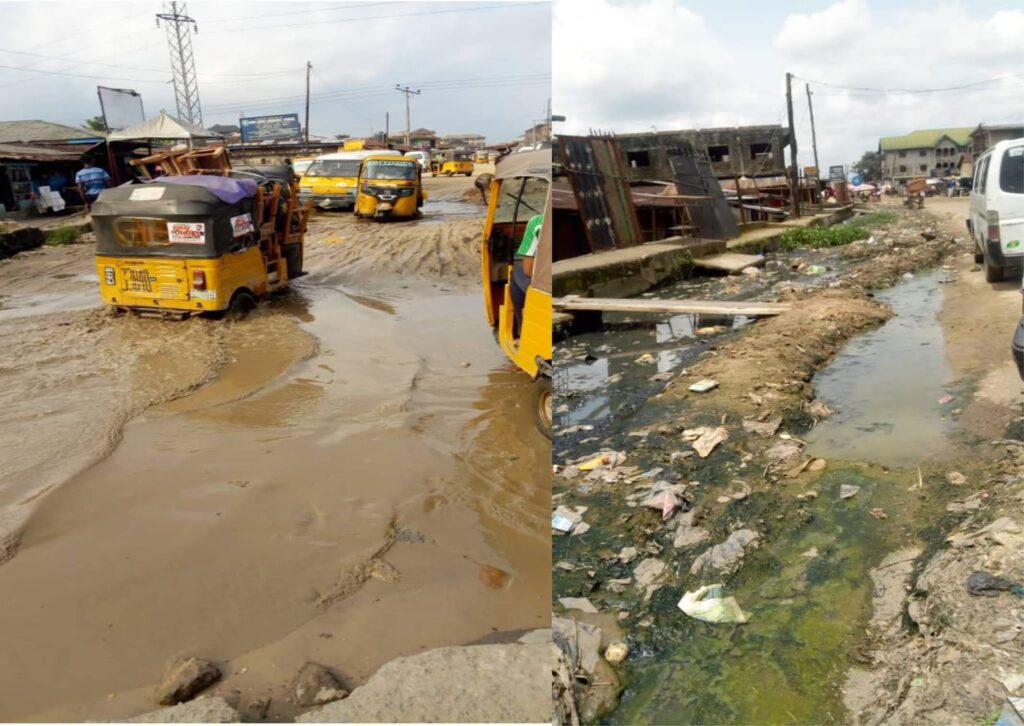
Aba in its present comatose state, speaks of irresponsibility on contemporary political leadership and administration in Abia State.

By Emeka Alex Duru

I am yet to come to terms with the photographs and videos my cousin sent to me on the state of the roads and streets of Aba metropolis that I knew. I have heard and read comments on the piteous state of the city. But I could not have imagined that the decay could be this deep and disturbing.

Growing up, I knew Aba sufficiently. From Victoria, Lagos and Ibere Streets, all in Ngwa Road, through to Cameroon Road, where we lived at various points, it was easy for us, young lads, to run rounds up to other flanks of the city as St. Michaels, Obohia, Ohanku, School, Jubilee, Faulks, Asa, Hospital, Faulks and Port Harcourt Roads.

It was usually fun, but at the risk of being caught by the parents, sneaking into Dan Fodio Road, sauntering into Enyimba (Aba Township) Stadium and hitching a ride on rented bicycles for few pieces of coins. On weekends, the temptation would always be strong to loiter around Scotland Crescent, steal a view of Chief Osita Osadebey, Oliver De Coque, Apostles Rock Group, Oriental Brothers, Paulson Kalu or any of the reigning music stars performing in Hotel De Unicoco, a top rate joint, then. Patex Cinema was also a good alternative.

The adventures were possible because of the placid environment and security that was more or less, taken for granted. The administration of the great Michael Iheonukara (M.I) Okpara of the defunct Eastern Region, took time to plan Aba and hoisted it on an enviable height with seductive network of roads, streets and other social infrastructure.

There were also factories and industries to complement the success story of the town. The most prominent ones were Aba Textile Mills, Aba Glass Factory and Ceramic Industry. The sense of order and opportunities in the city encouraged Nigerian Breweries to establish a plant in Aba. There were other facilities that made life easy.

Dr. (Dee) Sam Onunaka Mbakwe, governor of old Imo State continued from where M.I stopped by making commendable efforts to restore Aba to the original masterplan which the military regimes that ruled the country between 1966 and 1979, had distorted. Besides, his frontal attack on the Ndiegoro flood menace, which earned him the sobriquet “weeping governor”, his people-oriented governance remains a sacrifice that Aba residents do not forget in a hurry.

Today, Aba is a nightmare; literally a wasteland, lacking heroes and models. In place of good roads and streets, swamps and craters have taken over. The city is virtually, desolate. There is hardly any social amenity of sort that can be pointed at in the city.

There is no how the sorry story of the present day Aba can be told without linking it to the obvious leadership failure in the south east, particularly Abia state. As in Aba, other cities in the south east are at various levels of dilapidation. The sad reality of Aba and other townships in Abia and other states in the region is that their progressive decay is taking place at the time sons and daughters of the area are in the helm of affairs.

That of Aba is more worrisome because the city, at some points, represented to the average Igbo, a melting point – cosmopolitan village square of sort. Then, it was difficult, if not impossible to count an Igbo family that did not have one of its own residing in Enyimba City.

Aba was a place that encapsulated the never-say-die entrepreneurial spirit of the Igbo. It had a setting where the resolve and unity of purpose by the people for a noble cause could easily be guaranteed. Two slogans spoke eloquently of Aba philosophy; ‘Nzogbu, nzogbu, Enyimba, Enyi’ – a call for action and ‘Aba ma Ndi-Aba’ – Aba knows its own. The latter meant more than it sounded on the surface.

“Aba ma Ndi-Aba”, a popular expression among residents came handy on purpose, often in appreciating virtues, even when the subject was not from the city.

It was in this respect that late Igbo leader, Dim Chukwuemeka Odumegwu-Ojukwu, remained a hero to Aba residents. The people, not given to sycophancy, recalled how the Biafran leader literally put his life on the line in defence of his kinsmen, at the time it mattered most. It was thus, hardly surprising that when he died, Aba residents insisted on his lying-in-state in Aba Township Stadium where they paid him last respect.

Similar appreciation of favour was extended to the Second Republic politician, Adeniran Ogunsanya, chairman of the defunct Nigeria Peoples Party (NPP), for identifying with the Igbo at their hour of need. At his death, in fact, not only were the markets in Aba shut, buses were chartered for traders and workers to travel to Lagos to pay him last respect. It is on such occasions that the Aba ma ndi-Aba mantra would be appreciated.

Conversely, those that failed the people, were booed or stoned in the city. Justice, in Aba, was transparent and instantaneous.

When the iconic Chinua Achebe in his insightful work, “The Trouble With Nigeria”, described the Igbo as being receptive to change and highly competitive, he probably, had Aba in mind. Aba was a unique environment, a centre of opportunities, where a cart pusher or night soil man (onye oburu nshi), by dint of hard work and providence could rise to be a merchant or captain of industries.

That Aba, with such exciting profile, could now slip to the level of a dungeon, raped and abandoned by a succession of managers who ordinarily could be said to be its own, rankles exceedingly.

It will be hard to discuss the present comatose state of Aba without pushing substantial part of the blame to the present administration of Governor Victor Okezie Ikpeazu. Agreed, the rot did not commence in his time. He inherited it. But that is not reason to allow the decay to endure or progress. Governance, they say, is a continuum. Just as a regime inherits the assets of its predecessor, it also assumes responsibilities on ground.

Aba is in Ikpeazu’s Abia South senatorial district. Repositioning the city would have addressed the complaints of marginalisation which his Ngwa kinsmen had cried before his election. There is no volume of efforts or resources spent in recovering Aba that can be termed a waste. Properly harnessed, the wealth of the city can even make the revenue profile of Abia the envy of other states.

But the Governor seems to have ignored these facts. It is not too late to make amends. He still has some months in office to make marks in the city, no matter how marginal they may be. Failure to give the city the desired uplift, may remain a blot that he will live with, even out of office.

Same goes to all the Abia elders, political elite and religious leaders, who choose to keep quiet, play to the gallery, or run shows with successive governments in the state while Aba and other towns, go down by the day.

Why You Need A CCTV Policy

WHY YOU NEED A CCTV POLICY

By Tuebi S.O Egbuson Esq

Associate, Bezaleel Chambers International

[email protected]/07012290819

INTRODUCTION

A Closed-Circuit Television, popularly known as CCTV, is a device necessary for security surveillance. As a business/shop owner, CCTV is highly fundamental for the businesses’ operations, however the due diligence doesn’t just stop at installing the CCTV! One must have a CCTV policy in place to absolve them of potential liabilities that will definitely come back to bite you in the bum. This excerpt will analyse said liabilities and the necessity of having a CCTV policy.

A CCTV policy simply highlights the stance of an enterprise or shop on how the CCTV camera is to be managed, operated, and used by the organization in such a way that the privacy rights of Nigerians are protected. The significance of a CCTV policy stems from the 2019 Nigerian Data Protection Regulation (hereinafter referred to as NDPR) which was created by the National Information Technology Development Agency (hereinafter referred to as NITDA). The NDPR seeks to safeguard the rights of natural persons to data privacy, foster safe conduct for transactions involving the exchange of Personal Data, prevent manipulation of Personal Data etc. The footage derived from CCTV amounts to processing of data as defined by the NDPR and as such must be done in accordance with the law. In line with the NDPR, the following principles must be followed for the operation of CCTV;

  1. The recording must be lawful: note that you cannot place CCTV in places that ought to be private (toilets/changing rooms).
  2. It must be used for a specific purpose: that is, it must be used for the purpose its policy claims its in use for and nothing more.
  3. The processing must be adequate: one must employ the use of standard cameras and not the ones that can capture beyond clothing and it shouldn’t be outside the scope of the premises it seeks to capture.
  4. Footage must be true and accurate: footage should not be meddled or altered with ‘photoshop’ tools.
  5. Footage must be stored in a safe manner. As such, it should not be accessible to the general public.
  6. Footage cannot be kept forever, as it should only be kept for as long as necessary.

CONCLUSION & ADVICE

Being in breach of any of these guidelines will translate to being in breach of the NDPR. This may necessitate hefty fines/penalties from NITDA and in some cases a jail term. It is imperative to seek advice from a legal practitioner to aid in navigating the intrinsic legal issues that emanate from the operation of CCTV.

For Further enquiries/clarifications contact; Email; [email protected] tel; +234 701 22 0819 office; No 1 Durban Street, Wuse 2, Abuja, Nigeria.

MY AUTHORITIES

  1. The 2019 Nigerian Data Protection Regulation by the National Information Technology Development Agency
  2. Nonso Anyasi ‘Why Your Business Should Have a CCTV Policy’ https://guardian.ng/life/why-your-business-should-have-a-cctv-policy/ 4th April 2021. Accessed 10th November, 2021.
  3. ****************************************************************************************This project is funded by the law firm of Bezaleel Chambers International (www.BezaleelChambers.com)

Inaccessible justice fuelling sexual offences and child trafficking in Benue communities

By Lillian Okenwa

“Litigants who decide to take up their cases have to travel between 5 and 7 hours to the state capital in Makurdi or another 5 to 7 hours to the large city of Otukpo which has a High Court Division in search of justice.” – Michael Awo Ejeh

Access to justice remains the most basic human rights in any sane and civilised society. In Nigeria, women and children are the worst hit with the over-stretched justice system showing significant signs of strain.

Oju and Obi Local Government Areas of Benue State boast of a very large population and landmass, yet there is no State High Court Division situated in either of the two Local Governments.

Recent research shows that rape was the most prevalent form of Sexual Gender-Based Violence (SGBV) in Nigeria, with about 11,200 rape cases recorded by the National Human Rights Commission (NHRC) in 2020. However, child trafficking, gender-based violence (GBV), and sexual offences continue to thrive in Igede community of Benue State. The people of Oju and Obi Local Government comprise of the Igede tribe though some Igedes live in Cross River State.

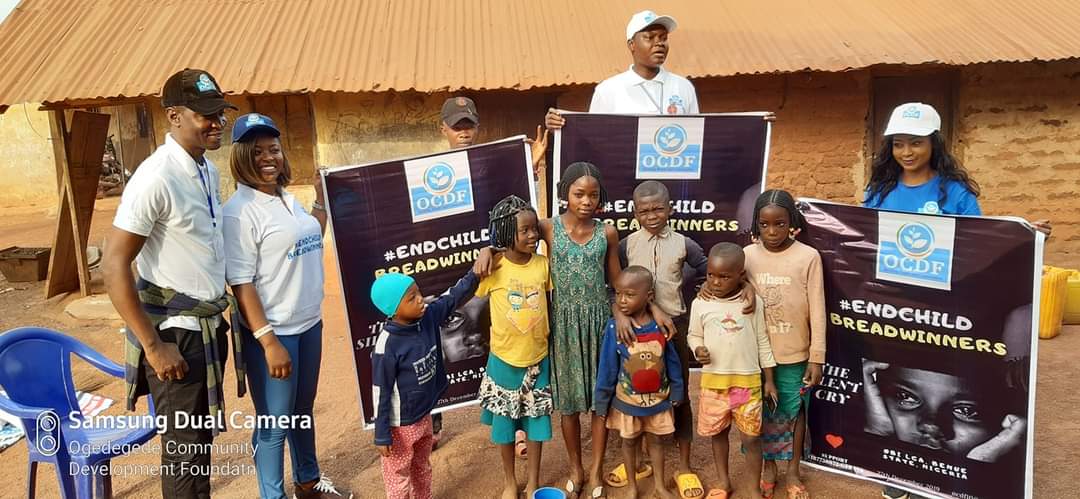
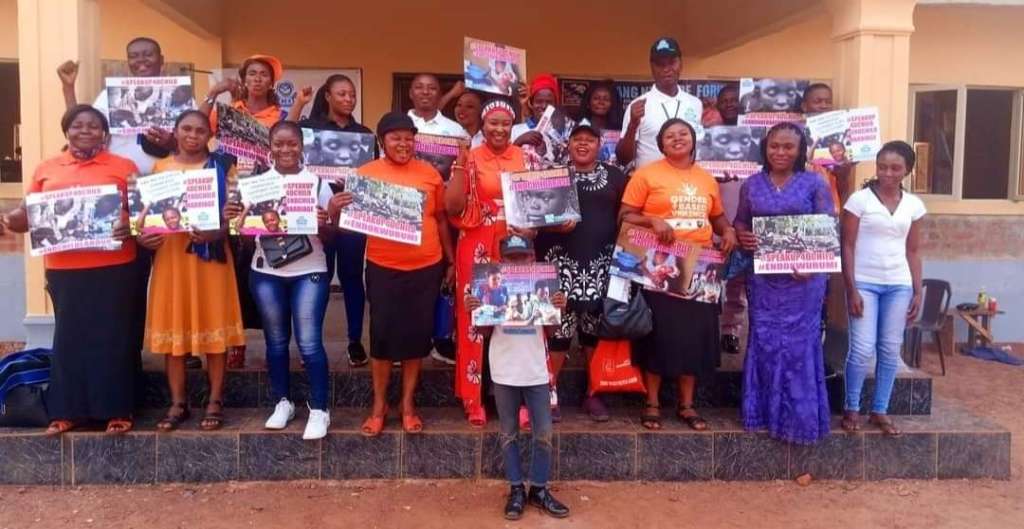
Advocacy to end Child Trafficking in Obi LGA of Benue State

The absence of a High Court in the areas has made justice elusive for thousands of aggrieved people who decide to take laws into their hands. Land disputes, communal disputes, threats to life, trafficking of children, rape, armed robbery, and homicides cases are usually frustrated because of the absence of high courts. Litigants who decide to take up their cases have to travel between 5 and 7 hours to the state capital in Makurdi or another 5 to 7 hours to the large city of Otukpo which has a High Court Division in search of justice.

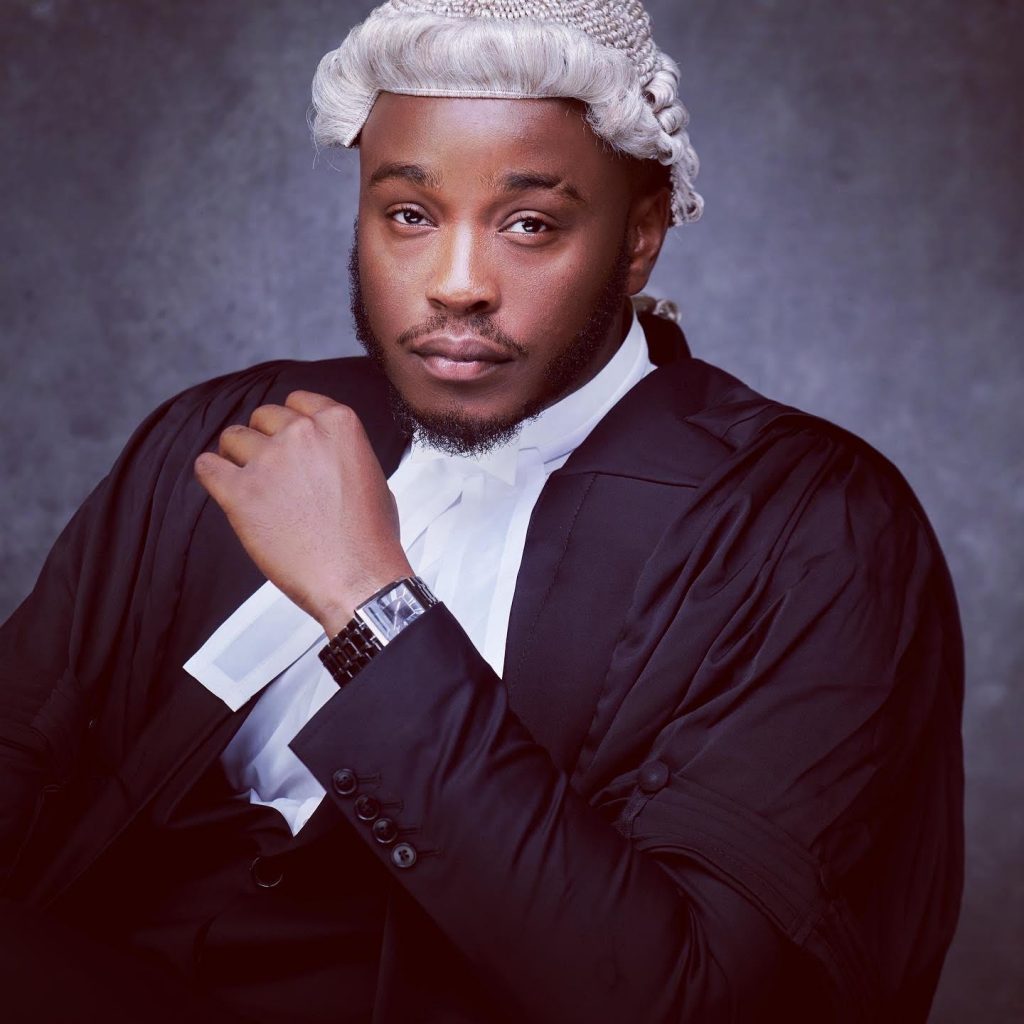
Distressed by the locals’ inability to access justice over the years, the rising cases of trafficking, domestic and sexual violence, an Abuja lawyer and founder of Ogedegede Community Development Foundation (OCDF), a non-governmental organisation (NGO) Barrister Michael Awo Ejeh has called on relevant stakeholders to act quickly before the situation gets out of hand.

Barrister Michael Awo Ejeh

Ejeh who is also seeking to end Child breadwinners and exploitative labour in Igedeland noted that: “Women and Children who are victims of domestic violence and sexual violence suffer a great deal because they do not have money to travel such long distances with their witnesses or transport the Police and suspect to these distant courts. Many of them cannot even get the approval of their families to seek justice in court for purposes of family honour. Justice is elusive in Igede land.

While underage girls are victims of trafficking in the communities, investigations reveal that trafficking of male children in Igede is worsened by an age-long traditional practice called Okwurumi which according to Ejeh, it is a socio-cultural issue that a whole lot of people don’t like to talk about.

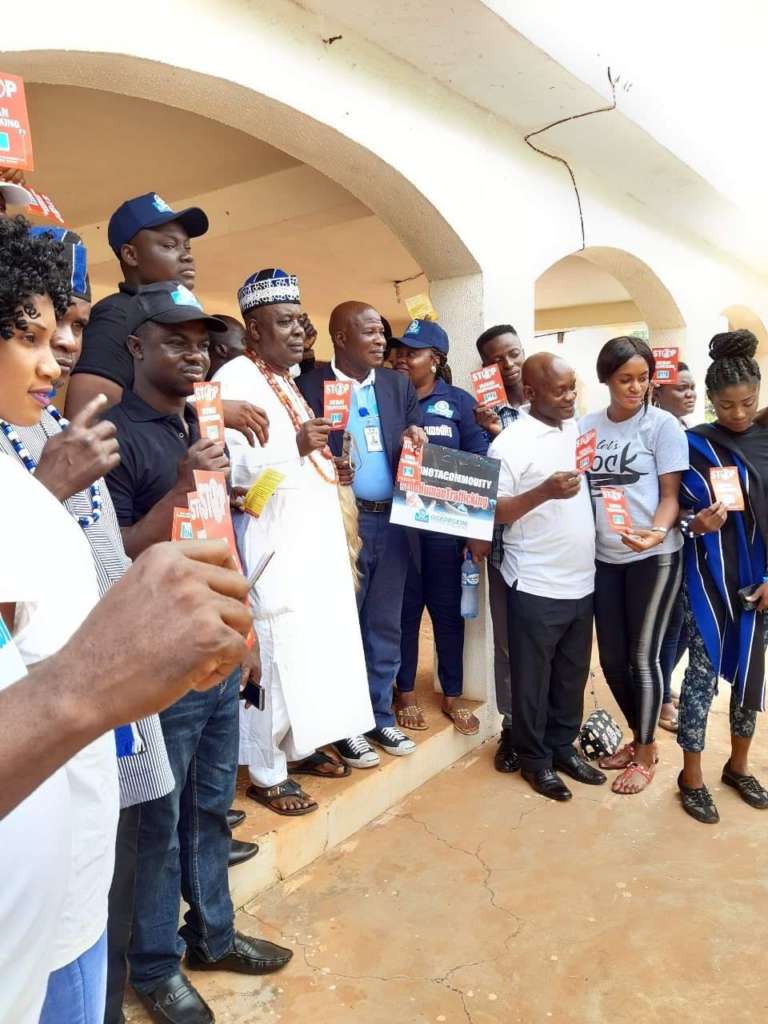
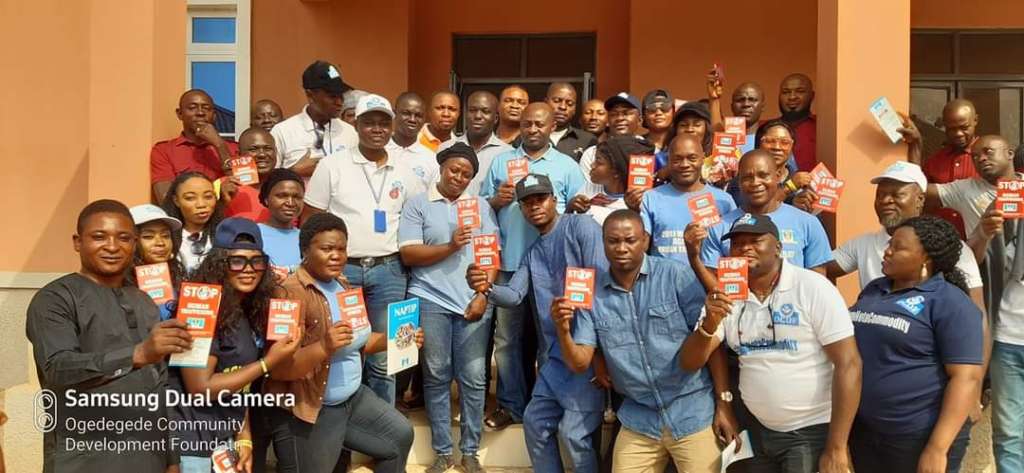
Foundation members during a rally in the palace of king of Igede Nation, Chief Oga Ero Rtd Police Commissioner at Oju

According to Ejeh, “Igede is a very remote community where there are no basic amenities like hospitals or social recreation centres. We don’t even have things that could make the youths desire to stay back at home.”

Speaking from his experience in dealing with the menace, the Makurdi Zonal Commander of National Agency for Prohibition of Trafficking in Persons (NAPTIP), Aganran Ganiu Alao, said: “At the beginning of planting season, people come in and take able-bodied men from the state to the South West, specifically to Lagos and Osun states, purposely for farming. In the course of taking them away, there is an intermediary who we call trolley.

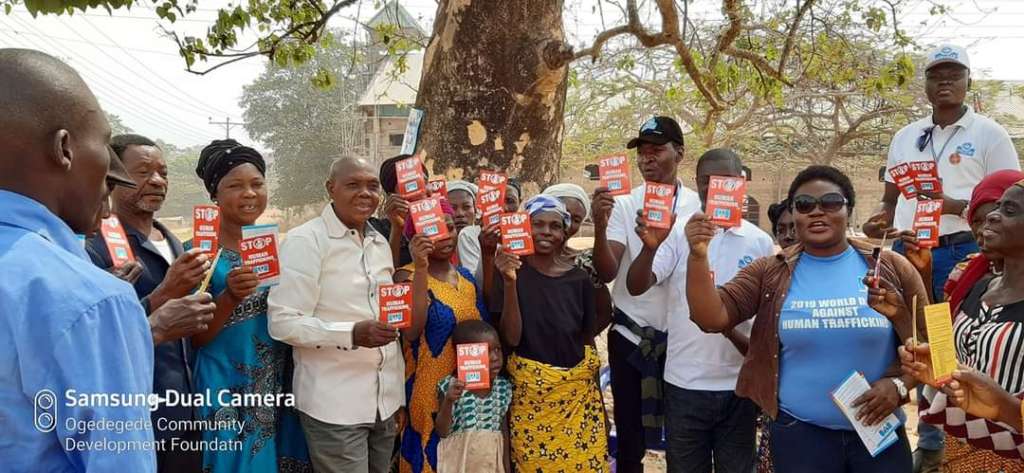
The Foundation and a Coalition of CSOs and NGOs to advocate against Child Trafficking and violence against women

“These intermediaries benefit from the labour of these victims in the sense that a certain percentage of what is due to the victims is also given to them. To us, exploitation has taken place there. Assuming they are supposed to pay those people N10,000 per month, the intermediary will be there to get N2,000 or N3,000 from that money every month.

Leading advocacy against Child Trafficking to the Federal House of Representatives member representing Oju and Obi Federal Constituency of Benue State

“The victims are always paid at the end of the year. They work from January to December when the bulk of the money is paid. At the end of the day, there is a shortage because the go-between will get a certain amount from that money. When that happens, they come to us crying that they have been exploited. That is when we come in to intercept them. Purely, it is labour exploitation.”

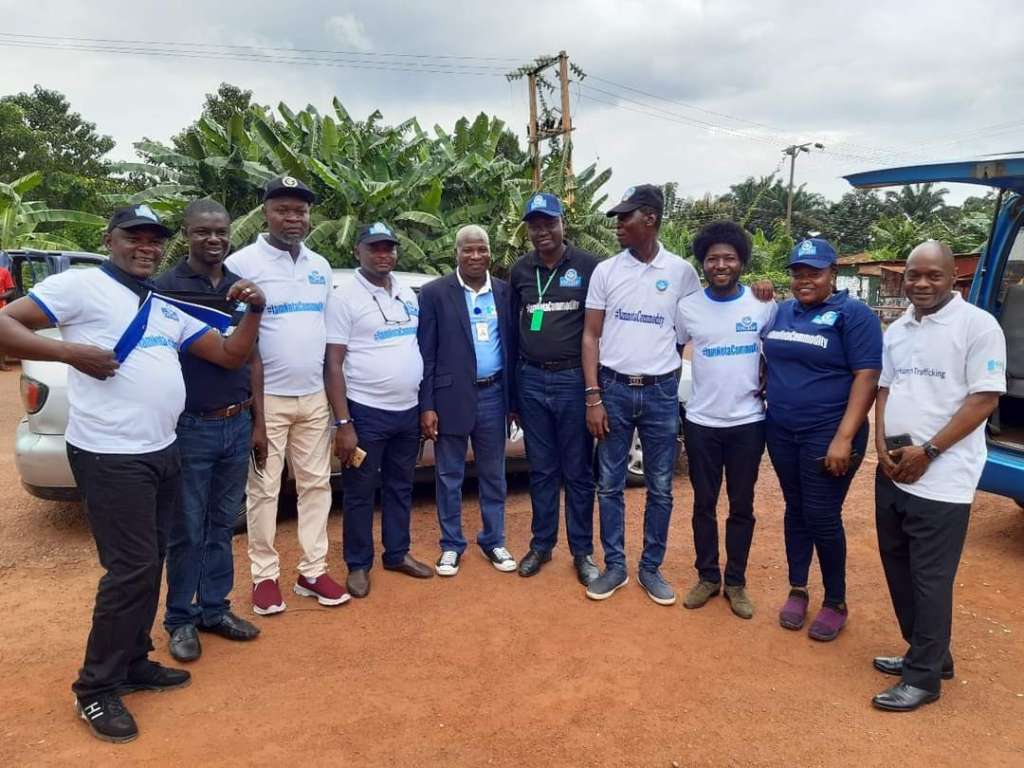
With Zonal Commander of NAPTIP, Makurdi Zone, Mr. Alao Agaran at Oju LGA during our sensitization agiant child Trafficking to the South West

The practice, he said, is synonymous with labour exploitation which is against NAPTIP law. And though child trafficking is most prevalent in Igede, the Zonal Commander said “almost all the 17 local government areas in Benue State are endemic to trafficking…. We go as far as Kwande, Zaki Biam, and as far as Guma in Nasarawa axis. Most of those areas are endemic to trafficking. That is what we are witnessing now, and it is on the rise.”

100 Gender-based violence survivors become entrepreneurs

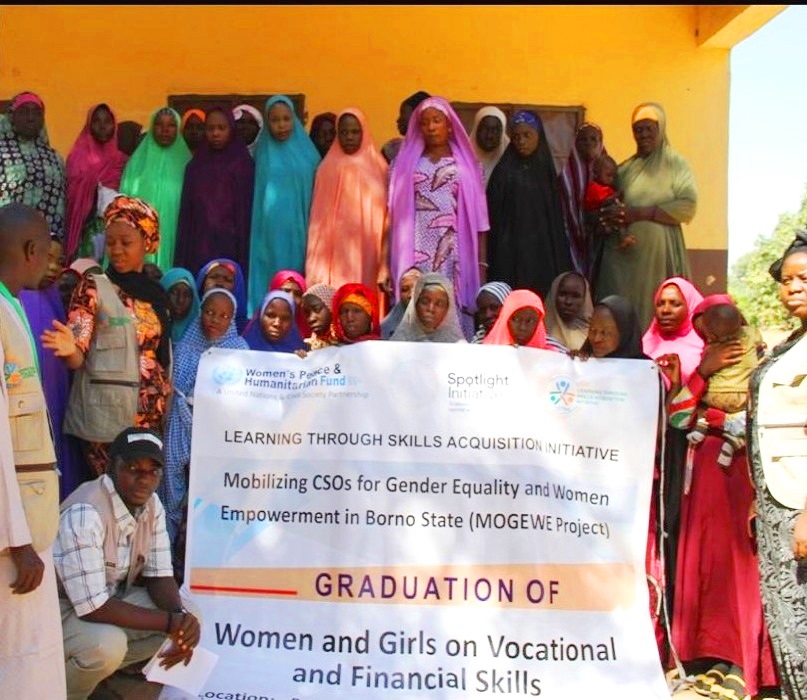
Graduation of participants

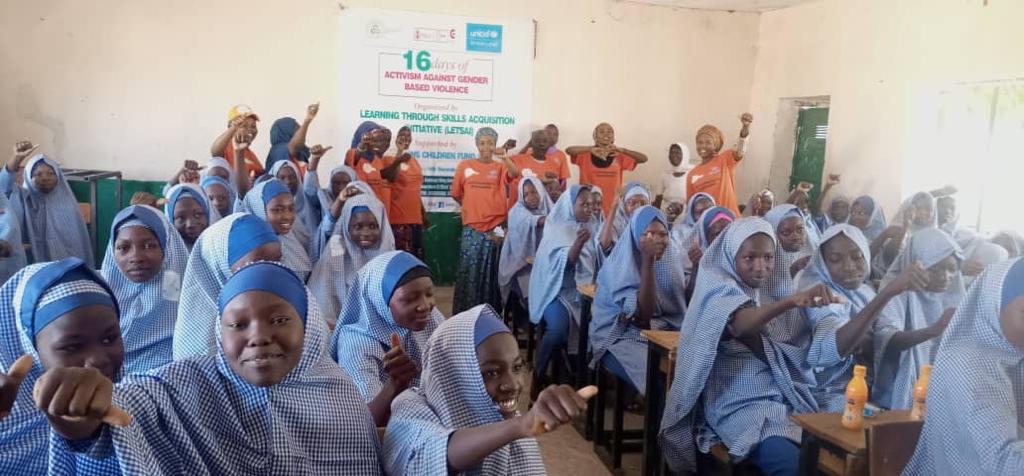
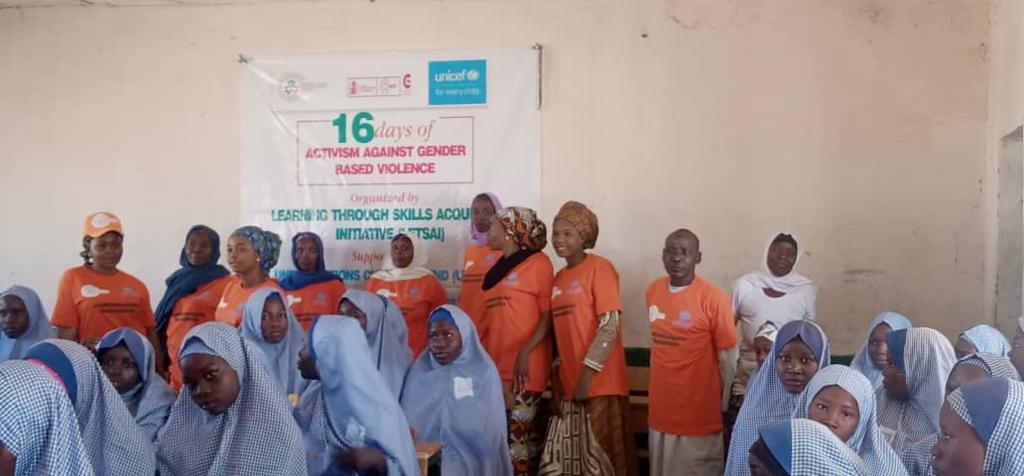
·        As LETSAI develop 16 social media messages to mark 16 Days of Activism

To support female survivors of Gender-Based Violence (GBV) and transform them into business owners of greater economic mobility and economic independence, a Maiduguri-based Non-Governmental Organisation (NGO) recently concluded an eight-month skills acquisition training for over 100 beneficiaries.

Learning through Skills Acquisition Initiative (LETSAI), a youth-led, women-focused non-profit organization trained women in cream production, Soap production, catering, and other life skills.

Start-up kits

CEO of the organization Mariam Oyiza Aliyu, an advocate for entrepreneurship and grass-root mobilizing for the national economy said the project was carried out in Pulka and Konduga Local Government of Borno state on account of the prevalence of GBV cases from the area.

While disclosing that they were funded by Women’s peace and humanitarian fund supported by UN Women, Ms. Aliyu told Law & Society that the trainees were empowered with start-up kits containing chemicals for soap and cream production as well as containers. The bakers and caterers received flour, sugar, baking powder, yeast, oil, beans, and many more during the graduation ceremony.

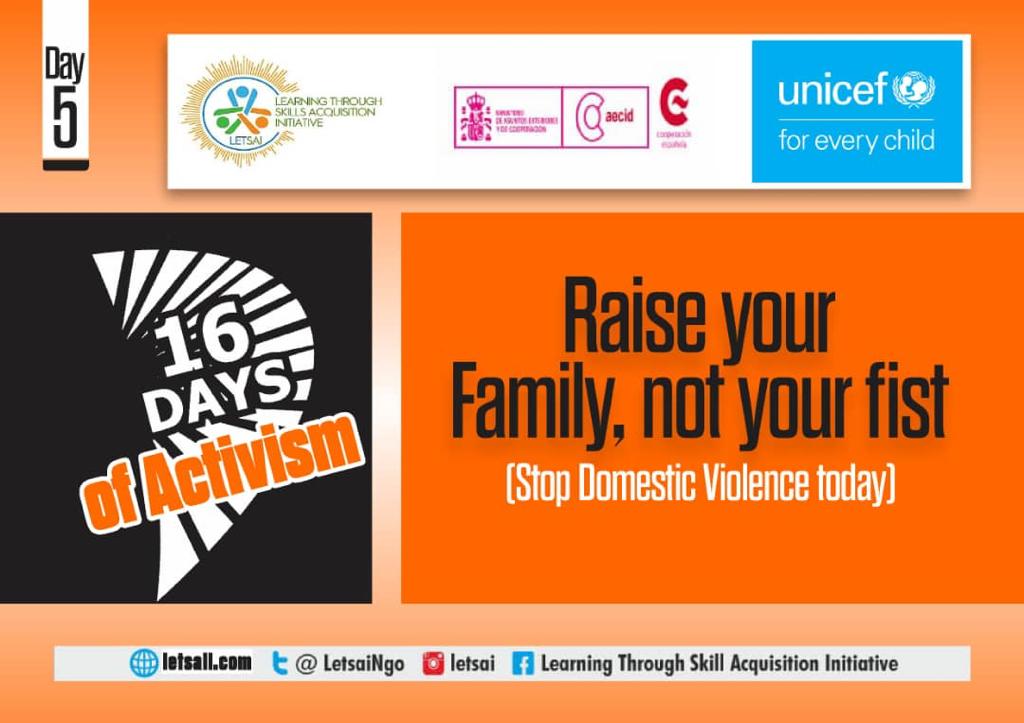
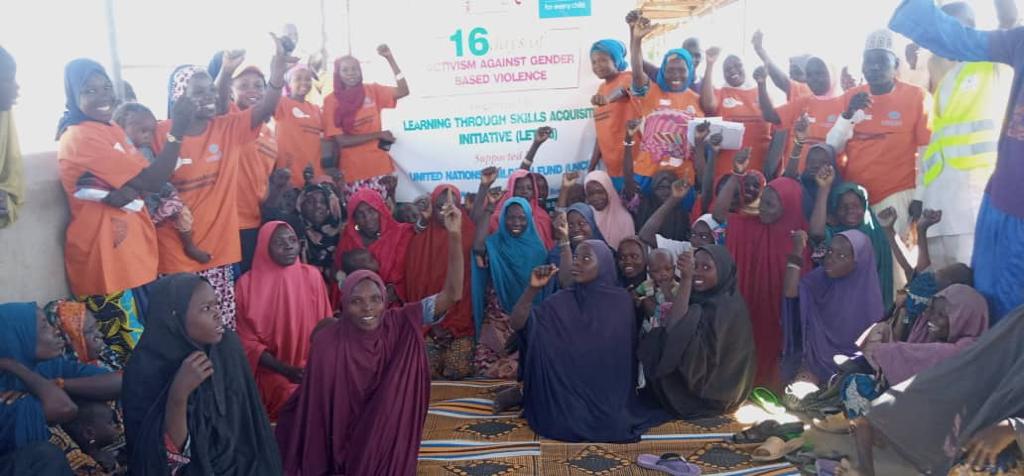
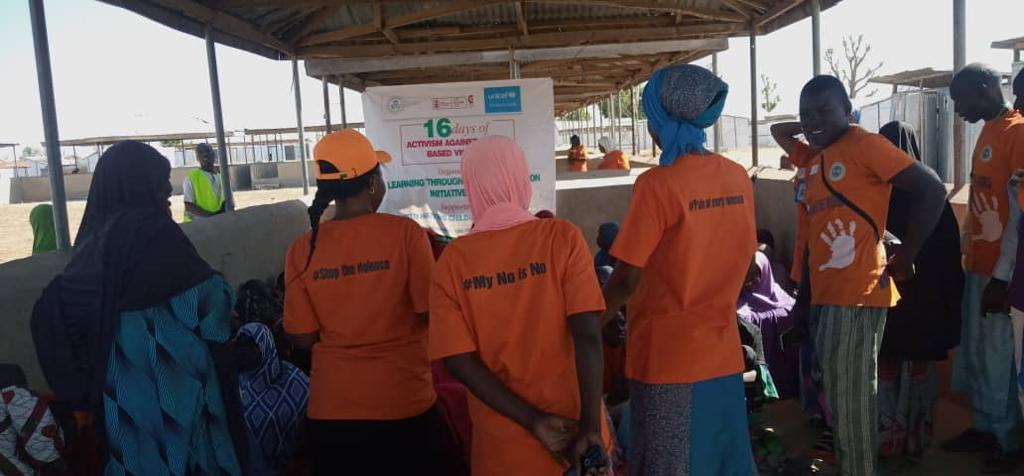
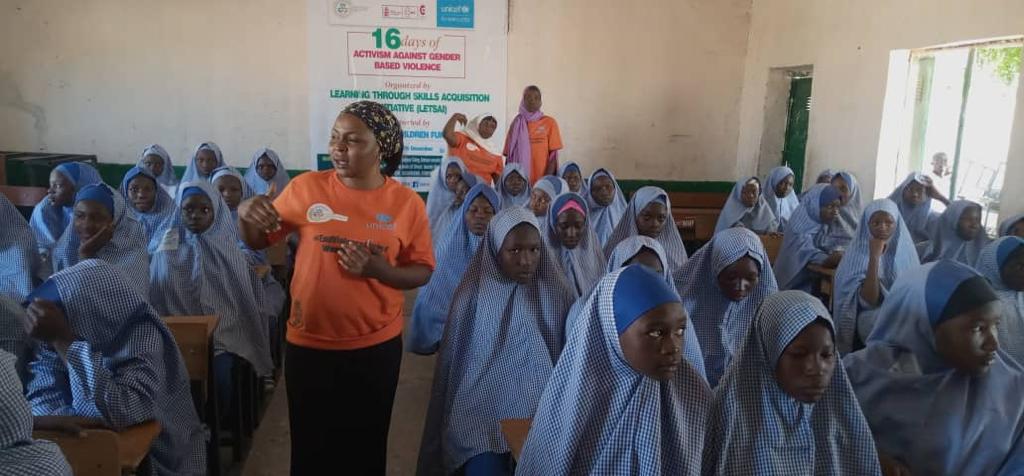
Meanwhile, to commemorate this year’s 16 Days of Activism against GBV, LETSAI with the support of UNICEF carried out an awareness campaign against GBV and the like. They also developed 16 social media messages to celebrate the project. Some of the messages include:

  • No Means No
  • Women need free Environment to be Involved in Decision making
  • I am here for Her
  • Sexual Harassment is a Crime
  • Raise your family, not your Fist
  • I stand for a GBV free Nation
  • End Violence against Women and Girls with Disabilities
  • Prevention Starts with You
  • Women and Girls with HIV/AIDS have their Rights and deserve to be Respected
  • We are all in to End Violence Against Women and Girls
  • Break the Silence, See something Say something

Nigeria: 1963 constitution is obsolete & represents incomplete decolonization ~ by Ndidi Uwechue

Independence from colonial masters was meant to be freedom for Africa, however some sixty years later, freedom has continued to elude many African countries. That is because Independence in itself is not freedom, except when it is accompanied by SELF-DETERMINATION for indigenous ethnic nationalities on their ancestral land.

Looking back at events in the 1950s, it becomes clear that corruption, injustice and mischief were going to guide “the new nation called Nigeria”. Let us first consider a key index that was manipulated, that is, population figures, which determined representation in Parliament, distribution of resources, and distribution of federal civil servants, etc. Harold Smith, a British former colonial civil servant working for the Department of Labour, before he died, confirmed that the figures of the census in 1952 had been inflated to favour the North, to make it seem that Region had more than half of the total population. Armed with this swindle, Bello, the Premier of the Northern Region must have felt very confident when just twelve days after Independence in 1960, he boasted his vision and Caliphate Agenda for Nigeria: to be an estate of his ethnic nation, the Fulani, immigrant settlers in Nigeria, and declared that the South would be conquered territory with its peoples never able to control their future. Thus it was, with this Caliphate Agenda as guide, that when preliminary results of the post-Independence 1962 census showed that the South had a higher population than the North, final results were never released, and so a new census was held in 1963 with mind-boggling figures that now made the North the most populous region in all of Africa, and therefore with a higher population than the South.

Apart from untrustworthy population figures attributed to the North, the Union called Nigeria was also shaky under its three Regions because the three main ethnic nations were dominating the others. The Middle Belt had been lumped with the Arewa Bloc, into what was referred to as the Northern Region. Joseph Tarka, a Christian and leader in the Middle Belt had preferred there be a separate Middle Belt Region because of the possibility of Arewa taking up Sharia. At the Willinks Commission of 1958 in London, it was only with reluctance that the Middle Belt agreed to be part of the Northern Region having secured an agreement that Nigeria would always be a secular state. To date too, the ethnic nationalities of the Middle Belt have felt dominated by the Hausa-Fulani and from at least 2017, began to say that they are not North Central, but Middle Belt.

Fidelity Leaderboard
In the Eastern Region, the other smaller ethnic nationalities felt they were being dominated by the more populous Igbo.

Similarly, in the Western Region, the other smaller ethnic nationalities felt they were being dominated by the more populous Yoruba. Their concerns were somewhat alleviated with the creation of the Mid-Western Region.

What is important to note and retain is that:
At Independence there were already cracks in the Union because one party, referred to as the Caliphate, wanted Nigeria to be an estate of the Fulani, and had an agenda that the indigenous peoples would not be able to control their lives. That means that the indigenous peoples would be denied their inalienable right to SELF-DETERMINATION.

RELATED POSTS
Nnaemeka Oruh: Federal Secretariat for Abia State: Eze Chikamnayo’s…

We’re not all gloom and doom, are we? ~ by Femi Adesina

Hypothesis on Saudi Arabia suspension of Flight from Nigeria…

Even though there were three, then later four Regions with Self-Determination, the more populous ethnic nations within them, ie, the Yoruba, the Hausa-Fulani, and the Igbo were dominating in their Regions. They basically took over the Sovereignties of the other ethnic nations. That means there was INCOMPLETE DECOLONIZATION of Nigeria.

This is where and why the Liberation Process of the NINAS Movement is important, and includes processes for complete and FULL DECOLONIZATION for every indigenous ethnic nationality in the NINAS Territory. What is now well known thanks to the enlightenment work of the NINAS Movement is that the illegitimate 1999 Constitution foisted on Nigerians hijacks the Self-Determination of ethnic nations. Arewa Bloc from year 2000 unilaterally took up Sharia as a function of their own expression of Self-Determination, and that has been interpreted by the NINAS Movement as Arewa having seceded from the Union, since Nigeria is meant to be secular country. Now, the rest of the territory are regaining their own right to Self-Determination by the NINAS Movement’s Proclamation of Constitutional Force Majeure on 16th December 2020 that started the process to Decommission that illegitimate 1999 Constitution.

The NINAS Movement uses a non-violent ORDERLY PROCESS that follows a similar path to what South Africa used to terminate their own Apartheid constitutional order. It involves suspending general elections of 2023 to go into a time-bound Transitional Government (all governance structures would remain in place), with Regional Referendums for Self-Determination conducted by ethnic nationalities. With the NINAS Movement’s Strategy, there will be negotiations where no indigenous ethnic nation will be left out: each will be able to choose whether they want to be in the Union of Nigeria or not, plus whether they prefer to form a different Union with culturally compatible ethnic nations, and if so, how. Every ethnic nation must now be at the discussion table, making decisions, and being part of decisions.

To repeat for clarity, as it is important to retain and act upon this information, when the British left, decolonization was incomplete. The Caliphate took over their position as overall colonizer. In addition, within the Regions, the smaller ethnic nations were dominated by the more populous ones, and their Self-Determination was being engulfed by them.

The NINAS Movement is bringing about COMPLETE DECOLONIZATION. Each indigenous ethnic nation in the NINAS Territory no matter its size, is equal to any other. There is no “minority” as classified by Bello. Each ethnic nation will be involved in discussions about their future, each ethnic nation will decide for itself, and each ethnic nation will have full Self-Determination to go in the formations of their choice. This is the Liberation Process of the NINAS Movement for Self-Determination. Please share this information widely.

TIPS