Home Blog Page 880

Obadiah Mailafia: My Man Of The Year

Sonnie Ekwowusi pays tribute to Obadiah Mailafia, columnist, social justice crusader and former deputy-governor of the central bank

Like most of his contemporaries, he would have remained in his comfortable cocoon massaging his ego or basking in what he had achieved in life. Amid the moral and political crises of our times, he would have sought alibi in sentimental falsifications or taken refuge in caricature religiosity. Like many cowardly high-profile men and women of our times, he would have become a hypocritical praise-singer of the powers that be in order to be in their good books. But he refrained from doing any of the aforesaid. Instead he decided to confront evil with his bare hands in order to bear witness to the truth and justice. He was not afraid of death. He said he was ready to lay down his life to save Nigeria. Citizenship, for him, was not something to toy with: it was to speak truth to power no matter whose ox is gored.

The shrouded circumstances surrounding his demise four months ago at the University of Abuja Teaching Hospital, Gwagwalada, Abuja might suggest that he is a political martyr, or, as some would like us to believe, a victim of state murder. Prior to his death, he had complained that he was being hunted for elimination. “I have received serious warnings that my revelations have angered some members of the political class to the extent that they want me physically eliminated. I have been warned to beware of polonium poisoning and sharp objects concealed in chairs. I know that killer squads have been paid undisclosed sums to hunt me down and to have me dispatched to Elysium. I have been told that some dark forces want me in their net so that I would be poisoned by gas administered through an air conditioner. When I am getting weak and delirious, a fake doctor would be brought in to administer an injection. That injection would be my death sentence,” he wrote. Some alleged that truly to his prediction he was murdered through food poisoning.

His first name means “man of peace”. His surname means “servant of the most powerful God”. He was eloquent as much as he was unabashedly vociferous. He was a consummate advocate of social justice. He feared no man. He feared only God. Like the Biblical Moses, his commitment to the deliverance of his people from the slavery and oppression of a tyrannical government was phenomenal. In the fashion of prophet Obadiah, one of the prophets of the Old Testament, his voice rang out like a lone voice in the wilderness in denouncement of the sponsored genocide against the Southern Kaduna Christians. He exhorted the people to trust in the power of God and justice of God, and not in the fleeting and precarious power of tyrannical rulers. Southern Kaduna is the kingdom of God not the kingdom of the devil. Justice is coming, nemesis is coming, he boldly announced. Unlike the cowardly men and women of our generation, our man of the year fearlessly spoke truth to power. Hear him, “…they told us that one of the Northern governors was the commander of Boko Haram in Nigeria. Boko Haram and the bandits are one and the same. They have a sophisticated network. During this lockdown their planes were moving up and down as if there was no lockdown. They were moving ammunition, moving money, and distributing them across different parts of the country. They are already in the South, in the rain forests of the South. They are everywhere. They told us that when they finish these rural killings, they will move to phase two. Phase two is that they will go into urban cities, going from house to house killing prominent people.”

No man, no woman of good conscience could have kept quiet in the face of genocide which overtook Southern Kaduna. No Street, no Broadway could have remained silent amid the stillness of death lying everywhere in Southern Kaduna and other parts of Nigeria. What do the living gain by keeping quiet in times of religious persecution and genocide? Nothing! Absolutely nothing! If at all they do gain anything it is the hottest places in hell as Dante would make us believe in his Inferno. Our man of the year 2021 never kept quiet until he was allegedly murdered. But what do murderers gain by spilling the blood of the innocent? Nothing! Absolutely nothing!! Since civilization is not an attribute of religious fanaticism or religious killing, curling of hair or human accent we should re-scrutinize our heritage with sharper eyes than before in order to win our civilization. The killing of our fellow human beings ought to stir in us the revulsion to hate our existence. Our generation has gone down in history as the generation in which wielders of power who know what to do to stop the killing of our fellow human beings, our brothers and sisters and members of the same human family, but, who, out of their wickedness, decide to sit back and refrain from doing anything at all. In his last literary work entitled, “There Was a Country,” Chinua Achebe regretted this wicked attitude in the following words, “My feeling towards Nigeria was of profound disappointment. Not because mobs were hunting down and killing in the most savage manner innocent civilians in many parts of Nigeria, but because the Federal Government sat back and let it happen…”

Like Chinua Achebe, it pained our man of the year that the government which ought to protect the citizens from religious massacres had been sitting back and allowing the massacres to take place. Consequently, he spoke out loudly, “I am not making this up. I have a PhD from Oxford. I am not a sensationalist, I am an economist and a central banker; by nature we are not given to sensation. Let me make it clear: I am a humanist; I am a man of peace. From the bottom of my heart, I love our country dearly and I abhor all the killings and violence which the innocent people of this country have been subjected to. I pray that Nigeria will never experience another civil war. The most elementary duty of the government is to protect its citizens. When a government fails to protect its citizens, to protect little children that is a serious matter. Any innocent boy or girl that is killed is my own child. I love Nigeria. Like Mandela, let me say if need be, I am prepared to give my life for Nigeria.”

In his classic blueprint entitled: “The Law,” Frederic Bastiat writes that the purpose of government is precisely to secure individual rights to life, liberty and property. This, for him, is the only way peace can reign and men and women can go about working to improve their well-being. But unfortunately the State which ought to protect the citizens has constituted itself into a legal plunder, plundering the citizens. Our man of the year was very sad about the killings in Nigeria especially the sponsored killings against the Southern Kaduna Christians. Day by day murderers forcefully gain entrance into your peoples’ houses, seizing parents, sibling, uncles, and family relatives including babies under three and hacking them to death with little or no response from our State security machinery. Who will not weep in the face of these atrocities? Who will not worry seeing these injustices? Our man of the year did. That is why this column has chosen him among many competitors as the man of the year 2021. For defending the rights of man, he will be remembered by succeeding generations.

In case the reader is still wondering who is being applauded, he is no other personality than Dr. Obadiah Mailafia, former Deputy-Governor of the Central Bank of Nigeria, writer, columnist, humanist, public intellectual and social justice crusader. He left this world four months ago aged 64. This posthumous award is a testament to his crusade for social justice. We will miss his voice of reason in the public square. We will miss his courage. Our only consolation however is that he has left an enduring legacy that will stand the test of time.

Akande, Tinubu, Buhari and 2023 By Olusegun Adeniyi

Former Osun State Governor and founding national chairman of the All Progressives Congress (APC), Chief Bisi Akande, released his memoir, ‘My Participations’ last week in Lagos and I have read it. The 534-page memoir, including an 11-page foreword by Nobel Laureate, Prof Wole Soyinka, was apparently written for two reasons. One, to render his own interpretation of past events in Yorubaland, especially since the return to civil rule in 1999. Two, to warn, albeit in a subtle manner, that President Muhammadu Buhari (who eulogized Akande at the ceremony) has a responsibility not to renege on a certain political agreement that facilitated his ascension to power in 2015.

Let’s begin with past events in Yorubaland. As someone who has been in politics since the Second Republic (beginning with the 1977 Constituent Assembly), and a founding member of the Alliance for Democracy (AD) in 1998, Akande belongs to a certain class of Yoruba leaders. They are old men who neither forget nor forgive an injury and for whom the past is often more important than the future. So, it is no surprise that Akande used his memoir to hit back at those who might have hurt him along his journey. But aside the Yoruba political leaders (including those now late) for whom Akande has unsavoury words, he also presented the late Ooni of Ife, Oba Okunade Sijuade and the Owa Obokun of Ijeshaland, Oba Adekunle Aromolaran as mere hustlers. Akande summarized his relationship with his former deputy, Senator Iyiola Omisore, thus: “Omisore crept into my life like a silent malignant tumor. He came in full force.”

Although the book could have been better produced and more tightly edited, Akande’s memoir is rich with historical insight and I found it enjoyable to read. Sample this: a month after the death of Chief Obafemi Awolowo in 1987, his disciples had gathered in Ikenne for their meeting when the late Mrs HID Awolowo took the chair usually sat on by her husband, wanting to preside. According to Akande, “Papa (Adekunle) Ajasin confronted her. ‘You have to leave that chair,’ he told her. ‘That is my chair!’” Awo’s wife immediately yielded the chair to Ajasin. The memoir also contains several gossipy bits like ‘Tinubu told me’, ‘Jakande told me’ etc. For instance, Akande’s bosom friend, Senator Mojisoluwa Akinfenwa has labelled him (Akande) a ‘pathological liar’. Interestingly, Akande did not directly discredit his friend in the memoir, but he quoted disparaging things about Akinfenwa which he claimed were told him by the late Chief Bola Ige!

What stands out most sharply is the division between and among Yoruba political leaders resulting from the 1999 conclave of 23 old men where Chief Olu Falae defeated the late Ige. The assassination of Ige in December 2001 remains an open sore and the single most important reason why Afenifere appears to have lost its way. Incidentally, I spoke to this issue 22 years ago in my 30th December 1999 column, ‘Before Afenifere Becomes Irrelevant’ and the subsequent one in January 2002, ‘No Longer Alu Janjan Kijan in Yorubaland’, following the assassination of Ige. I intend to come back to that issue one day.

Now, let’s begin with how Ige lost the AD presidential ticket to Falae in 1999, as recounted by Akande. With the conduct of the local government election scheduled early that year, a meeting of the party’s big wigs was convened at the home of the late Ambassador Tanko Yusuf in Kaduna. All Afenifere leaders (Bola Ige, Olaniwun Ajayi, Ayo Adebanjo, Ganiyu Daodu, Olu Falae, Segun Osoba, Femi Okunrounmu, Wahab Dosunmu, Bola Tinubu, Ayo Fasanmi) were in attendance. That night, Akande said he advised Ige to inform “his three friends” (Ajayi, Daudu and Adebanjo) about his presidential ambition. He said Ige heeded his admonition because he saw him discussing with the trio. Let’s take the rest of the story from Akande’s memoir: “We then left for Kaduna airport to board Chachangi airline for Lagos. Inside the plane, I saw his three friends talking animatedly with Chief Ayo Fasanmi. As soon as we alighted from the aircraft, Ayo Fasanmi asked me for a ride in my car to Dr Tunji Otegbeye’s house at Ikeja GRA. On our way, he told me that the three friends would not support Bola Ige’s ambition because, according to him, Bola Ige would be too tough to control as President of Nigeria. That began the surprises at the Ibadan D-Rovan meeting of Afenifere contrived committee where Chief Olu Falae was preferred to Chief Bola Ige as the presidential candidate of AD.”

On Ige’s assassination, Akande points fingers in the direction of President Olusegun Obasanjo, Chief Olabode George, the late Alhaji Lamidi Adedibu, Omisore and other Southwest PDP leaders at the time without any evidence. But it was his recollection of what transpired moments after Ige was killed that is revealing. At the residence of the deceased in Ibadan, the Police Commissioner reportedly handed Akande his mobile phone, saying President Obasanjo was on the line. The following transpired, according to Akande:

“‘Now, you see the lapses in your security! Look at what happened to Bola Ige.’ The President was shouting at the other end. I was enraged at him. ‘You must be out of your mind Mr President. How can you say lapses in my security when Bola Ige was killed in Ibadan? I rule in Osun State. I am not the Governor of Oyo State. When his cap was removed at the Ife Palace during your wife’s chieftaincy ceremony, what did you do about it?’ Obasanjo cut the line. I gave the CP back his phone. Everyone was silent except those who were weeping silently. Few minutes later, Obasanjo called back on my own line. He started sermonizing. ‘You know that Bola Ige too was my friend. What happened was very unfortunate.’”

Not surprisingly, Akande is very critical of the Afenifere leadership, especially the quartet usually called the ‘Ijebu Mafia’ (Abraham Adesanya, Olanihun Ajayi, Solanke Onasanya and Ayo Adebanjo). Since Adebanjo is the only surviving member among them, Akande berated him on sundry issues, including the way Afenifere collaborated with Obasanjo in the weeks preceding the 2003 general election on account of ethnic ‘Parapoism’. Akande, who lost the Osun State gubernatorial election of that year because of the deal which allowed Obasanjo to snooker the AD Governors except Tinubu, wrote: “Shortly after we were rigged out of office, Chief Adebanjo came out with a statement that we, the governors, sold out to Obasanjo. He refused to admit that they, the so-called Afenifere leadership, shamelessly sold out on our behalf!”

Akande has bitter words for many people, except of course Tinubu, on whom he lavished praise at every turn. There is even an entire chapter (34) dedicated to the former Lagos State Governor titled, ‘Tinubu, The Strategic Thinker’.

Given the timing of Akande’s book and the tone, some will argue that it is a ‘Manifesto’ for 2023. The tendency within the APC to which Akande belongs believes that Buhari reneged on their agreement over the choice of running mate twice, first in 2011 and then again in 2015. On both occasions, it was about the idea of equal partnership. In my 2017 book, ‘Against The Run of Play: How an Incumbent President Was Defeated in Nigeria’, I spoke with many of the principal characters, including Mallam Nasir el-Rufai and Tinubu himself on this issue. I crave the indulgence of readers to take excerpts from the book before I conclude with my take on 2023 as it affects the ruling APC:

TINUBU ON THE 2011 BOTCHED DEAL

In putting the whole episode in context, Tinubu believes that the (2011) alliance could have worked if there was good faith on the part of the CPC leadership at the time. “In any marriage or partnership, there is usually a spirit driving such union and that is the spirit of sharing. But in the middle of negotiation, the CPC pre-emptively announced the choice of Pastor Tunde Bakare as the presidential running mate,” said Tinubu in my chat with him. That decision, he added, “roiled the waters and severely complicated matters because a crucial part of the negotiations and our understanding of the partnership was that the vice-presidential candidate would come from our side or at least we would have a substantial input into the selection process.”

The announcement of Pastor Bakare as the CPC presidential running mate undercut the efforts at joint working between the two parties. “I remember that Chief Bisi Akande was so livid that he was asking them, ‘What then is the alliance for’?” recounted Tinubu who explained what transpired during negotiations that took several days. “The choice of Pastor Bakare, we were made to understand, was to pacify the Nasir El-Rufai wing of the CPC that came from the ‘Save Nigeria Group’, but it wasn’t one we could accept in the circumstance, and we made that very clear,” said the former Lagos State Governor matter of factly. With the benefit of hindsight, Tinubu reflected that what the CPC could have done “was bring Pastor Bakare to us prior to making the announcement, while explaining the rationale that made him their preferred choice for the VP position. Perhaps, we would have examined the idea. Instead, the decision, when made public had the effect of a fait accompli.”

Tinubu pointed out that in the course of the entire negotiations, Pastor Bakare “was never present and as the person whose actions and acceptance of this decision was most pivotal, his absence from the talks concerned us. When we insisted on the slot, all they kept saying was that Pastor Bakare would resign, but again no specific plan or timeline was given for this. Because of this impasse, talks ultimately dissolved and we went our separate ways in the 2011 elections.” Tinubu clarified that ACN insisted on the CPC making the position vacant “for the ACN to fill, as that had been the initial understanding of how this partnership would be structured. We had no business with the precise manner in which they would rescind the announcement of Bakare. The crucial point was that the VP slot should be available for the ACN. Eventually, it became obvious that CPC was unable or perhaps unwilling to surrender the number two slot.”

At one point during a meeting with key national figures who were urging for the merger, according to Tinubu, he emphasized that the ACN had bent and shown flexibility on all other issues as far as possible. “I remember very vividly that I told these figures, ‘Dear Leaders, you invited us to this meeting, and for the sake of the country, I have tried to bend over backwards to accommodate your positions. But you are asking me to surrender my two legs for amputation and you are not even ready to provide a wheelchair to take me home.’”

EL-RUFAI’S RESPONSE:

El-Rufai’s reflections on the turn of events contradicts that of Tinubu because, as far as he is concerned, it was “the ACN leadership who double-crossed Buhari and the CPC” in the negotiations preceding the 2011 presidential election. He also debunked the insinuation that he had any political ambition in the period preceding the 2011 general election. Narrating what he knew at the time – since he was not close to Buhari and was merely a distant CPC sympathizer by virtue of his association with Pastor Tunde Bakare – El-Rufai indicated that the agreement between CPC and ACN was that while the former would hold convention and pick a presidential candidate without a running mate, the latter would hold a convention without a presidential candidate, “because the Action Congress (AC), as the party was known at the time, was to produce the running mate in what was to be a joint ticket. That was the agreement.”

By the time the AC had their convention during which they added “Nigeria” to the party’s name and nominated Mallam Nuhu Ribadu as their presidential candidate, El-Rufai felt it was evident that there was a breach of good faith in the negotiations with CPC. “For me, that was the deal breaker. I know the pressure that was brought on Pastor Bakare to accept being running mate to General Buhari. He didn’t want the job and I was one of the people who persuaded him to take it,” said El-Rufai, who further claimed to be the one who told Buhari that Pastor Bakare was ready to step down for ACN candidate. “I remember Tinubu and his people had left for Lagos and we made frantic efforts to bring them back. I recall seeking the intervention of the Awujale of Ijebuland and the Oba of Lagos but by then, time was no longer on our side,” said El-Rufai.

To El-Rufai, the experience of the 2011 election so shattered Buhari that he was initially reluctant about revisiting the idea of any merger talk with Tinubu. “But I was part of a group that persuaded him that without the alliance with South-West, of which Tinubu remains very critical, there was no way there could be any serious opposition platform to defeat the PDP. General Buhari eventually saw our point and I was part of the team that encouraged him to visit Tinubu at his home after receiving the Silverbird Lifetime Award along with General Danjuma and others in Lagos,” explained El-Rufai, currently Governor of Kaduna State…

ENDNOTE:The foregoing may be past, but remains important, especially for the future of the APC. With growing security challenges that embolden bandits to carve out territories and collect taxes from rural dwellers in some northern states, the mounting debt burden for a country without any clear idea about repayment, collapsing social sectors like education and health, Nigeria is in a bad place. To worsen matters, we are graduating millions of our young people into unemployment and misery every year. But those are not the issues that will decide 2023 nor will our politicians even bother to engage them as they seek power. In the build-up to 2023, as it was in previous elections, the contentions will not be about programmes, policies, and ideals. What we will witness are cold calculations and personal interest, ethnicity, religion etc. in both the ruling APC and the main opposition, Peoples Democratic Party (PDP).

However, attention is now on APC, especially following Akande’s memoir where he described Vice President Yemi Osinbajo as “one of our brightest boys”. The memoir also implies that the arrangement that brought Buhari to power in 2015 presupposes that it is the turn of the Tinubu-led defunct ACN or at best the Southwest to produce the APC presidential candidate in 2023. That leaves us with the question of the exact nature of this pact between Buhari and Tinubu when they strategized to capture power in 2015.

Whatever may have been the deal, I do not envy the president. According to the author, when the idea of a political marriage between the Southwest and Northwest started with Tinubu and Buhari as principals, not only was he (Akande) skeptical, he was also warned against it. Let’s hear Akande: “One Yoruba leader after another begun (sic) to call me aside to warn about the dangers of dealing with the Fulani. I was literally being invited to many Yoruba sectoral meetings to explain if it would be practicable for our group to internalize the historical Fulani’s true or perceived antecedents of turning friends to slaves; of becoming the king among strange princes in the palace of another man’s culture; and of reducing landlord communities to territorial vassalage…”

In the event that a Northerner secures the presidential ticket of the APC for 2023, what will Akande tell these Yoruba leaders who called to warn him? How do these permutations respond to the genuine agitation in the Southeast that the presidency be ceded to one of their own? Should Tinubu (who admitted on Tuesday in Abuja that he is still consulting) decide to join the presidential race, how will he navigate the tricky issue of religion that was used to edge him out of the vice-presidential slot on two different occasions? Where does Osinbajo, whose supporters have already started their not-so-subtle campaign, stand? And very importantly, on whose side will Buhari himself tilt his support when the chips are down?

There are no easy answers to these questions, but they are what the APC may be contending with in the weeks and months ahead. And whether we like it or not, they will impact the future of our country. Meanwhile, Akande also gave his version as to how Osinbajo emerged the vice-presidential candidate to Buhari in 2015. His account is not materially different from mine, except that much of what I wrote in ‘Against The Run of Play’ came directly from Tinubu. While I recommend Akande’s memoir, interested readers might also find my book useful as we enter this most interesting political season in Nigeria.

Debo Olujimi’s Great Feat

Brilliant and respectful, Adebowale (Debo) Olujimi is someone with whom I have shared an enduring friendship for over a decade. He has accorded me the courtesy of an egbon and I also happen to know his equally respectful wife, Gbesoye. Our families have related very closely over the years but I never knew exactly what Debo does for a living beyond the fact that when I once asked a mutual friend, he simply said, “he is into oil and gas”. In the Nigerian context, that doesn’t say much. So, when two weeks ago Debo sent me an invitation to the commissioning of what he described as a 120 MT LPG Storage and Bottling Plant, I didn’t hesitate to accept. Debo, as it turns out, is a big player in the sector and an employer of labour as CEO of Emadeb Energy Services Limited.

On Monday, I joined other well-wishers at the company’s sprawling edifice in Lokogoma area of Abuja as the Nigerian National Petroleum Corporation (NNPC) Group Managing Director, Mele Kyari performed the formal opening. Afterwards, I listened to Debo as he fielded questions from the media. He said he chose the Lokogoma, Gaduwa and Apo axis of Abuja to serve the huge market so his investment is targeted not only in terms of location but also the product. “With about 126 trillion cubic feet of gas reserve in Nigeria, that is the future of our country” explained Debo who seeks to position his company strategically. “We are about to start developing our asset which has a reserve of about 120 billion cubic feet of gas at the Emadeb Ibom Field. We intend to convert some of the gas processed out of that facility to support the local market.”

The capacity of the expansive Abuja facility, which accommodates auto-gas stations and vehicle conversion garage, according to Debo, would be doubled to 240 MT within the next 18 months. And he made a pitch for stakeholders in the industry “It is capital intensive doing gas infrastructure and government needs to encourage private investors,” he said. “In the electricity sector today, the major issues are the shortage of gas and its pricing; those are things that the government has to help us to look at.”

I am delighted by Debo’s entrepreneurship in a sector that is strategic to the economy of our country as I wish him more success in his business.

• You can follow me on my Twitter handle, @Olusegunverdict

Kid bandits in the north; child cultists in the south: Who will deliver Nigeria? By Olabisi Deji-Folutile

Now that the noise and uproar that greeted the sad and unfortunate death of12-year-old Sylvester Oromoni, student of Dowen College, Lagos seems to have subsided, perhaps we can  now devote some time to ruminate over the tragedy that is fast unfolding before us as a nation.

We are always apt to shout, condemn and empathise and rightly so, when ugly incidents like the cruel murder of rising stars like little Sylvester occur. Sadly, we lack the capacity to push back hence our outcries rarely generate positive actions that can avert a reoccurrence of bad situations. We are mostly emotional responders. In the case of Sylvester, suddenly every so-called celebrity, government official, politician, lawmaker, etc had one or two things to say.

It was like there was a strong competition to be heard or seen. The noise was so much but as usual without any tangible result. What is more: it went as sudden as it came. Now, it’s business as usual. We have moved on. But for the legal action taken by Sylvester’s parents against Dowen, maybe that case could have been swept under the carpet by now. After all, we have so many of such cases in our land. For example, who still talks about the Ikoyi building collapse where over 50 people died? There are too many things competing for our attention.  Different dramas unfold everyday so we struggle to catch up with them.   Unfortunately, these emotional responses to important matters won’t take us anywhere. This is probably one of the reasons why we have gone numb and appear indifferent to all kinds  of evils going on  not only around us but in our schools – at all levels.

For example, before Sylvester’s death, Salaudee Waliu, a 400-level student in the Microbiology department of the University of Ilorin, beat his lecturer, a female, to coma. But that didn’t merit the attention of our celebrities and politicians because no big name or brand was involved. That happened mid November. Shortly before then, precisely, October 27, 2021, a student of Itori Comprehensive High School in Ewekoro Local Government Area of Ogun State had reportedly beaten a teacher to coma for stopping him from beating a fellow student during a maths class. According to reports, the boy, an SS 3 student, just entered the class without notice and descended on the girl while the teacher was teaching. It was reported that the teacher got the beating of his life for telling the boy to stop beating a fellow student.

And shortly after the death of Sylvester, precisely, December 6, students of Idogbo Secondary School at Upper Sakponba Road in Benin City, Edo State, went on the rampage. According to reports, the students attacked the school principal who had invited the police to restore law and order to the school. They also allegedly attacked the police, pursued the principal from the school before carrying out massive destruction of the school’s properties. After satisfying themselves, the students were seen celebrating themselves in a viral video.

Lastly, just this Monday, the Osun State University confirmed that one of its students was set ablaze for refusing to join a cult group. The institution in a statement released by its Public Relations Officer, Ademola Adesoji, identified the victim as Victor Oke, a part-time final year Political Science student.

According to the university authorities, Oke’s assailants had shot at him and inflicted machete cuts on him before attempting to burn him to death. Although Oke was set on fire, fortunately, he was rescued and taken to the hospital.

Recall that Sylvester was allegedly beaten to death in the privately-owned Lagos Dowen School for refusing to join a cult. Unfortunately, while UNIOSUN was able to save Oke from an untimely death, Dowen college was too busy doing some other things  that it felt were more important than looking after the children in its care. By the way, the college’s first reaction to the death of Sylvester was to say the least very disappointing!  How can a school claim not to harbour bullies in this age and time?  Haba! That was reckless. And that is the problem. How can a school solve a problem that it doesn’t want to own?

From all indications, the violence in Nigerian schools today is a reflection of what is happening in the larger society. We have enthroned violence, bloodletting, bullying, lying, deception-all kinds of evils to the extent that many children have lost their innocence.  These students no longer see anything wrong in violence. How can they when they see pictures and videos of politicians snatching ballot boxes; approaching elections as if they are going for a major warfare all the time. Yet, they see these violent people emerging as governors, lawmakers etc. They have wrongfully believed that intimidation and violence are required to be in charge in a lawless society as ours.

What with the damning report of the BBC linking cultism to politics in Nigeria with names of prominent politicians identified as culprits. The BBC had in an investigativereport, published a few days ago, averred that Nigeria runs a mafia politics where its politicians hire cult members to intimidate their rivals, snatch or guard ballot boxes and coerce people to vote. These cultists, according to the report, are armed and given money during election and later rewarded with positions in government.

A self-confessed “cultist” in the BBC report, Tony Kabaka, said, “If you sat me down and say, ‘Can you identify Black Axe in government?’ I will identify. Most politicians, almost everybody is involved.” According to him, politicians very often mobilise cult groups to help win elections.  “If government wants to seek for election they need them. Cultism still exists because government is involved, and that is the truth,” he further said.

It is not as if any Nigerian needs a BBC report to know what is happening around them. Some of us have an idea of what our politicians are capable of doing.  However, the worrying trend for me is the rate at which Nigerian students are now being recruited into cults and the level of violence in our primary and secondary schools. We need to move fast to redress this dangerous development. When a society gets to the level where education no longer counts and one cannot tell the difference between a thug and a child, there is a big problem.

We are contending with terrorists and child bandits in the north; we think this is happening because the kids are not in school, only to find university students, secondary school students, children of the rich competing with criminals in blood -letting. This is a serious problem.  Experts are apt to tell us thatCultism and many other social vices are related to economic distress arising from corruption-induced poverty. But here we are face to face with the children of the rich being knee- deep in cultism. What are they looking for? What took them there, how did they get there, what is their motivation?  Perhaps the BBC reports could offer some insights into these questions. If truly our so-called politicians are members of these secret cults, we should know from whom some of these children are taking their cues!

There is nothing special about Nigeria’s problems. Anyone can predict what is likely to happen in years to come based on today’s happenings. Serious-minded nations use indices like this to plan and avert a disastrous future. But for us, we look at the problems and keep talking about them until they fester and get out of hand.  As far back as January 29, this year, I wrote an article titled, “Cultism: A bomb awaiting explosion in Nigeria’s schools.” I

warned that we shouldn’t allow a situation where parents would be afraid of sending their children to school; or teachers abandoning the classroom to keep safe.  Unfortunately, as usual, no one seems to be listening.

Here we are today, what was predicted in less than a year ago is now being unfolded at an alarming rate before our very eyes. Yet, we can still do something if we are serious about helping ourselves. Government needs to wake up to its responsibility and stop outsourcing its education to the private sector, many of which are mere business outfits.  How well are the state and local governments doing in providing quality primary and secondary education in Nigeria? They can’t provide education and still can’t offer adequate supervision. Kid bandits are ravaging the north; cultists are holding sway in the south. Who will deliver Nigeria? Government should step up its oversight functions in schools and encourage more constructive activities like sports, games, debates, competitions and do more in the area of  rewarding   academic excellence. But most importantly, children will imitate what they see around them. So, the ball is still in the court of Nigerian leaders and its adults.

Olabisi Deji-Folutile (PhD) is editor-in-chief,franktalknow.com and member, Nigerian Guild of Editors. Email:[email protected]

Travel Ban And Counter-Ban: Who Loses?

By Afe Babalola SAN

THE advent of the COVID 19 pandemic and its ghoulish consequences on the economic, religious, and socio- political structures of many countries around the world was the focal point of the world media over the past 24 months With variants including Delta, Alpha, Garma, and Beta, it is apparent that the world will usher in a new year 2022 together with a new variant of the virus, Omicron.

In the wake of the discovery of this new variant in South Africa, some countries have re-enacted their international travel ban which was, prior to the discovery, eased. Owing to the highly transmissible nature of the new variant, countries like the United Kingdom, Italy, Singapore, Japan, and even some African countries like Egypt and Angola, have blacklisted some countries from entry into their borders. According to CNN, for instance, the Canadian Health Minister announced that “any non-Canadian who has been in South Africa, Mozambique, Namibia, Zimbabwe, Botswana, Lesotho and/or Eswatini from November 12 onward will be barred from entering the country Canadian citizens or permanent residents who have been to one of those countries will still be allowed to come home, but with strict rules: they must have a negative PCR test to board their flight to Canada, must take another virus test upon arrival, quarantine at a hotel until they have a confirmed negative test result, and then quarantine at their residence for another 141 days Other countries have varying degrees of restrictions, travel requirements and blacklisted countries.

It would seem that the international travel restriction which has generated the most public outcry, especially from sub-Saharan Africa, is the travel ban imposed on Nigeria by the United Kingdom, taking effect from 4am on 6th December 2021. This implies, therefore, that Nigerians who do not have UK citizenship or residence permit can no longer travel into the UK until the restriction is eased. It does not matter whether they are fully vaccinated or not. Justifying Nigeria’s inclusion in the “red list”, the UK Health Secretary openly declared that “over the recent days we have learned of a significant number of growing cases linked to travel with Nigeria. There are 27 cases already in England and that’s growing, and Nigeria now is second only to South Africa in terms of linked cases to Omicron”. The news of the travel ban of Nigerians from entering the United Kingdom degenerated into a media frenzy, with many describing the move by the UK authorities as health apartheid’ and ‘discriminatory Equally in reaction, the Nigerian Minister of Information stated that the travel ban was not driven by science and as being ‘unjust, unfair, punitive, Indefensible and discriminatory Perhaps, in reaction to this ban, the Federal Government of Nigeria has threatened to impose similar travel sanctions on the UK and some other countries.

It is pertinent to examine the economic consequences of the regime of travel bans and counter bans and whether there will, in fact, be a loser at the end. As popularly stated, no nation is an island and over the years, countries have always maintained bilateral and multilateral relationships in almost every sphere of human endeavour. Prior to the breakout of COVID-19, countries such as the US, Australia, the UK, Japan, Cambodia, and Vietnam have profited from Chinese citizens’ hunger for tourism: Some of these economies now depend on the influx of Chinese visitors they receive, and a significant part of their GDP comes from Chinese tourism. Some communities, such as the coastal province of KhanhHoa, have even been revitalized as a tourism-based economy focusing extensively on Chinese travels. According to the Chinese Jing Daily report, Spain has also seen a surge in tourism from mainland China, and the average per capita spending from Chinese tourists there in 2017 was $1,067. Chinese visitors were, in fact, the biggest spenders in the entire iberian peninsula, and according to the US. Travel Association and ABC News, around 3 million Chinese visitors traveled to the US in 2018, spending an estimated average of $6,700 per person for each trip. This figure outpaces international tourists’ average spending by more than 50 percent.

Tourism remains an important economic sector for most African countries, with the interest lying in the wide variety of points of interest, diversity, and multitudes of landscapes as well as the rich cultural heritage. Also, an ecotourist industry is present in some African countries including South Africa. The Statistics Research Department, in its November 2021 report, stated that travel and tourism contributed 2.8 percent to Nigeria’s GDP in 2020, which was equal to 11 billion U.S. dollars.

In view of the travel bans imposed in reaction to the recent outbreak of the COVID-19 variant, there is bound to be dire economic consequences for all parties involved, with tourism being one of the most affected. sectors. Comparatively, it would seem that the European Community with several tourist destinations will bear an appreciable portion of the brunt of the international travel restrictions. A chief economist, CarstenBrzeski, stated that this drop in tourism could add to a weakening of domestic demand, adding to existing problems stemming from the manufacturing sector, and in turn, delaying the timing of a rebound of the entire Eurozone economy to the second half of the year.” In addition, international companies have continued to bleed from the imposition of travel bans by the governments of their home countries. Earlier in 2020, it was reported that Cathay Pacific Airways has asked its 27,000 employees to take three weeks of unpaid leave after announcing a 90-percent cut in flights to the mainland. And other major airlines and cruise lines are struggling as well. The Economist reports that shares in Air China, China Eastern Airlines, and China Southern Airlines have fallen by more. than 20 percent since the first person died from the coronavirus Back in Nigeria, with the recently announced UK travel restrictions, the President of the Lagos Chambers of Commerce and Industries, Dr. Michael Olawale-Cole, reportedly spoke on the economic impact of the ban as being felt by the British authorities as follows: “I spoke to a senior representative of the High Commission yesterday and he said one of the flights that left Nigeria had only about 16 people onboard while another one had 20. That is unusual, but at a time like this, they are already feeling the impact. They are going to be badly affected with a prolonged ban

There is no doubt that any prolonged travel. restriction between the United Kingdom and Nigeria will bear negative consequences for bath countries, at least in different sectors of their economies. Earlier in the year, the UK Trade Ministry sent a trade envoy to Nigeria to discuss the terms of ‘an absolutely huge trade deal which covers the tech, financial services, agriculture, and green technology sectors Nigeria is the UK’s 46th largest trading partner, currently accounting for 0.3% of total UK trade in 2020, according to the UK Department of International Trade.

Similarly, Nigeria is à commodity dependent, import-based economy and as such, relies heavily on the opening of its borders to the international community. This is clearly apparent in Nigeria’s refusal to close its international borders in the wake of the outbreak of the COVID-19 pandemic in early 2020. It therefore seems unjustifiable that any country, whether in Europe, Asia, or the Americas will place Nigeria on a ‘red list for the new variant particularly as there had been no more than six reported cases within a population of over two hundred million.

In conclusion, there is an urgent need to strike a balance between the need to maintain seamless bilateral relations and ensuring the protection of the citizens of a country from further outbreak. It is scarce to imagine that the UK authorities’ imposition of travel ban is well advised in view of the massive vaccination campaigns already in place in many of the African countries being red listed. The required balance between safety and economic relations is not always achieved by placing international travel restrictions but by having a holistic outlook towards the resolution of pressing concerns. I can only hope that the concerned authorities will urgently fashion out a workable solution as both Nigeria and the United Kingdom stand a lot to lose if the rather-unwarranted restriction is unnecessarily protracted.

AARE AFE BABALOLA, OFR, CON, SAN, LLD, D.Litt

Building Collapse In Nigeria: Matters Arising (1)

By Muiz Banire SAN

Weeks ago, Lagos witnessed another monumental building collapse, consuming no fewer than 47 lives. A 21-floor building under construction in Ikoyi collapsed like a house of cards. Consequent upon this, a lot of brickbats took place as to the possible causes as well as possible culprits in the events leading to the collapse. This certainly was not the only building collapse in the state that was that fatalistic. There was that of Lekki Gardens a few years ago, among others. Of course, in the nation, one probably has lost count of such occurrences. In order to ascertain the factors responsible for the building collapse and identify the culprits, the governor of Lagos State set up a panel to unearth the ‘mystery’.

For some reasons, I have hitherto chosen not to comment on the issue in view of the fact that investigation is still ongoing, I presume, and in honour of the memories of those that lost their lives in the incident. May their gentle souls rest in peace. However, on a second thought, I felt that the best way to honour their memories would be to contribute to the debate and the unveiling of the factors possibly responsible for building collapse; not only in this instance but other instances, so as to reduce, if not forestall, a recurrence. In addition, after my attendance of the Lagos State real estate marketplace conference and exhibitions, I realized that, apart from being a stakeholder in the Nigerian project, I am indebted to my dear state as a stakeholder also. To this end, it became compelling for me not only to attend the panel’s session to render my version but to equally pen down my thoughts on the issue. It is in this connection that I chose to feature the subject matter in this column.

I know that practically all relevant stakeholders, at least in the built environment, know the causes of building collapse in Lagos State and Nigeria in general. At the least are factors such as the use of substandard materials, lack of supervision, lack of expertise, non-compliance with the approved building plans and institutional compromise. Consequently, it is not my intention to regurgitate what is already in the public domain as causes of the usual building collapse in the country. My pre-occupation will, therefore, be by way of putting forth possible solutions to the seemingly perennial problem of building collapse in the country.

The conversation here will not be restricted to Lagos State with the latest fatal incident but the country at large. However, I must not fail to register my view that more than half of the challenges of Lagos State could be attributed to bad physical planning. It is an area that I am not too sure that the state government has gotten right as the situation continues to degenerate. My prayer and expectation are that those currently in charge of our physical planning will be more proactive or retroactive, where necessary. Too much has gone wrong in the area and radical reforms, not so much by way of rules, but compliance and enforcement of extant laws and rules, are crucial.

There are so many laws in place in the statute books, aided by judicial decisions interpreting them, to regulate building activities in Nigeria. Failure to comply with standards and statutory stipulations has constituted a huge albatross. However, specifically focusing on a narrower area of our intervention right now, I believe that the first area that requires immediate attention in curbing building collapse is the standardization of building materials. Experience has shown largely that there are more substandard building materials in our society today than standard building materials. Developers of property often make use of the inferior building materials, not necessarily all the time with the intention to do so but innocently as a result of not only inability to distinguish the real from fake but also due to the scarcity of good ones.

Therefore, it is imperative that we find solution to the proliferation of substandard building materials. I am aware that because of the astronomical cost of land, developers, at times, have to cut corners or compromise building materials to make their projects viable on return on investment, not minding the eventual danger to the occupiers of the structures being put in place already dilapidated from construction which the Yoruba derisively call ‘egeremiti’. This is prevalent amongst commercial real estate developers whose interests hardly transcend the immediate gains, leaving the purchaser with future woes. I remember that in virtually all the joint venture property developments undertaken by my family for a tenure, always at the expiration of the tenure shall we be left any habitable structure.

We have always had to demolish handed-over structure as the buildings would have become derelict and dangerous for human habitation. But the developer would have recouped his investment at the expiration of the development agreement. He has no loss to suffer, having left us to a fate uncertain and too frightful to contemplate. My thought, therefore, is that, in Lagos State, where the material testing laboratory exists, the agency can be saddled with the responsibility for the validation of the materials to be used in buildings of three floors and above. Undoubtedly, this could be overwhelming for the agency, as such, I will further suggest the accreditation of other private firms with similar capacity, upon certification from the Agency to partake.

This will enable easy coverage of the field. The Standards Organization of Nigeria (SON) and other relevant agencies in other States must wake up to the need for this certification of building materials. It is the foundation of all that is wrong with building developments in Nigeria. This certification of building materials is, in my view, the first step we need to take. In order to ensure checks and balances, the agency or entity responsible for the processing and approval of building plans must not be allowed to participate in the monitoring, as this often compromises the supervision and creates confusion. It is not unusual to find two or more of these agencies of the government sealing a development site simultaneously. This is untidy. There must be harmony in governmental responsibility execution.

The next area commanding attention is the supervisory and monitoring responsibility. Even where the materials are genuine, the right mix and usage of the required materials needs to be assured. This is where the role of the building regulator becomes important. In Lagos State, two agencies are crucially relevant to this task and they are the Lagos State Building Control Agency (LABSCA) and the Safety Commission. Hopefully, similar agencies exist in other States, if not, they need to be established as a matter of urgency. The Building Control Agency must ensure compliance with the approved plan during the construction period up to completion while the Safety Commission ensures that all safety protocols are complied with.

Again, there is no doubt that the task could be overwhelming for the bodies, and this is where delegation to accredited bodies with capacity comes to play. The agency can accredit firms and built professionals with relevant capacities and skills to assist in the delivery of the service. This, in my view, does not have cost implication for the government as the supervision fees is to be borne by the potential developer. If anything, just like in case of the standardization of building materials, it creates more jobs and empowerment for the people. It is certainly a win-win situation for the government as it creates more employment with the multiplier effect of taming insecurity arising from unemployment, and also ensuring the fitness of developments. With this in place, I believe the stake will be higher for everybody, knowing fully well that any dereliction in the discharge of their duties would lead to professional discipline of those involved and probable prosecution for crimes in the event that that complication of crimes exists. Also instructive is the need to grant autonomy to these agencies involved in the enforcement of compliance.

Experience has shown that in so far as they remain under a ministry rather than under the auspices of the governor, compromise is promoted. So many undue interventions occur from the parent ministry where, most times, the superior officers to the driver of the agencies reside. For the purpose of Lagos, I say unequivocally that the Lagos State Building Control Agency and the Lagos State Safety Commission must directly report to the governor. This is a way to go, in addition to enhancing the personnel and logistic capacity of the agencies.

Eti-Osa Local Government & 3 Ors v Hon. Minister Of Interior & 2 Ors: The Federal High Court Erred

By Olumide Babalola

On Monday 13th day of December 2021, many families in Nigeria avoidably yet explicably entered panic mode when a disturbing message was circulated on social media to the effect that the Federal High Court had nullified all marriages conducted by the Federal marriage registry, Ikoyi among other news.

I deliberately refused to comment on the news which was subsequently reported by some major news outlet without first reading the certified true copy of the said interesting judgment.

Now, having read the 15-paged judgment handed-down by Hon. Justice D.E. Osiagor sitting in Lagos State on the 8th day of December 2021, it has become clear that, not only were the news report misleading, the decision itself deserves some academic and practical probity.

In the following paragraphs, I will respectfully express my brief opinions on some of the issues arising from the judgment as follows:

Re-litigation of issues
Although the court brushed aside the defendants’ objection based on re-litigation of issues pursuant to the earlier decision of the same court in Suit No. FHC/L/870/2002 Haastrup v Eti-Osa Local Government in 2004, the learned judge went ahead to “re-decide” the same issue – an assignment earlier rejected by Hon. Justice (Prof.) C.A. Obiozor in an earlier similar action in FHC/L/870/2002 brought by same Plaintiffs in 2017.

For the avoidance of doubt, in Haastrup’s case, the only issue that the court per Olomojobi, J. (Rtd) decided was whether local government authorities can contract and register marriages to the exclusion of other authorities. In this instant case, Justice Osiagor again “resolved” the same issue (at page 13) that: “Therefore, question 1 is resolved in the negative as the conducting of marriages is not an exclusive duty of plaintiff”

Again on the issue of registration of marriages which had been addressed in Haastrup’s case and also by Justice Obiozor in Egor Local Government and Ors v Hon. Minister of Interior, Justice Osiagor also “answered” the question in the affirmative that registration of marriages is constitutionally donated to local governments exclusively.

On whether the Hon. Minister of Interior can issue licences to contract marriages, the court again regurgitated the earlier decisions of Olomojobi, J. (rtd) and Obiozor, J in earlier decisions. In spite of all these re-arguments of issues, it is however surprising that the court held that this case is not a re-litigation of earlier decisions.

Not only must there be an end to litigation, nowhere in Olomojobi’s judgment did the court confer the power to conduct marriages on local government, hence one wonders what part of the judgment this current decision stands on.

Interpretation of judgments of court of coordinate jurisdiction

My Lord, Justice Osiagor noted at page 8 of the judgment that, ‘This present suit therefore in the main seeks the interpretation of these two decisions…” i.e the decisions of Olomojobi, J.(rtd) and Obiozor, J. This raises the question as to whether his lordship can validly interpret the decisions of courts of coordinate jurisdiction?

In Race Auto Supply Company Limited v Alhaja Faost Akib (2006) LPELR – 2937(SC), the apex court emphatically held that: “a judgment of a court of law cannot be subjected to interpretation by a court of coordinated jurisdiction.” See also the decision in Oliver Emezie v Ogugua Linus (2016) LPELR – 40514(CA), Inc. Trustees of Nigerian Governors Forum v Riok Nigeria Limited (2018) LPELR -44915(CA).

Not only does Hon. Justice Osiagor lack the jurisdiction to interpret the earlier judgments of Olomojobi, J. (Rtd) and Obiozor, J., the decisions so interpreted did not strip the Federal marriage registries in Ikoyi and Abuja of the powers to conduct marriages in any particular local government.

Enforcement of issue against the victorious party

My Lord Justice Osiagor noted at page 10 of the judgment that Obiozor, J. had once found a similar suit filed by the Plaintiffs as an abuse of court process but in the instant suit, My Lord rather found that this suit seeks to enforce the decision in Olomojobi’s decision.

It is worthy of note that, Haastrup’s judgment delivered by Olomojobi, J (Rtd),
merely resolved the position of the law and this was even in the Defendants’ favour. What Hon. Justice Osiagor has done in this case, is to enforce a declaratory judgment in favour of parties that were not even part of the initial suit and at the same time, against the victorious party in the suit sought to be enforced.

For the avoidance of doubt, Olomojobi, J (Rtd) concluded that, the bodies that can contract marriages are:

“(1) Registrars in places designated as an office
(2) Recognised ministers of religion in a licenced place of worship
(3) Marriages contracted under the licence granted by the Director-General, Ministry of Internal Affairs, Director General of a State Government in charge of marriages, any officer in the aforestated ministries and of course, the minister of Internal Affairs”

From the decision above, one then wonders, how the current judgment arrived at its decision restricting the Federal Government to Ikoyi and Abuja marriage registries. With respect to the learned judge, the current decision is a far cry from the decision it seeks to enforce especially since the current judgment appears to have reviewed the decision of Olomojobi, J.(Rtd) beyond its boundaries to the detriment of the defendants.

Confusion of registration of marriages with conduct of same

Contrary to the decision in Haastrup’s case where the court noted that conduct of marriages is an exclusive matter as opposed to registration which is a residual matter. The court failed to realise that, conduct of marriages (by the Federal government) will always precede its registration (by the local governments).

This misconception, with respect to the learned judge became evident at pages 12 and 13 that: “For emphasis, the plan and pursuit by the 1st Defendant through the 3rd Defendant to centralise the conduct, contracting and registration of marriages with the 1st Defendant as its exclusive repository undermines the 1999 Constitution … the 1st Defendant should remain in its lane….”

The learned judge clearly misconceives the marriage registries set up by the Federal Government as vehicles for registration of marriages rather than places for conduct of marriages which is an exclusive matter under the Constitution. In any case, since this issue had already been decided by Justice Olomojobi (Rtd), my Lord, Osiagor, J. needed not venture into same again as extensively done from page 11 to 13 of the judgment.

Conclusion

Reading through this decision, rather than enforce the unequivocal decision in Haastrup’s case, this judgment has further opened up more talking points even much more than the previous decisions. This is neither good for our jurisprudence nor the institution of marriage in Nigeria and it is hoped that our country can find closure on the issues as graciously suggested by the My Lord Osiagor, J. at page 13 that: “….this is without prejudice to having stakeholders meetings with the District Registrars in harmonizing, standardizing the precepts of marriage under the Act like compliance with the Marriage Act’s Form E…”

Investment Follows Knowledge

By Jude Ifesemen

It’s easy to want to jump on the bandwagon and gamble with the trend but Crypto continues to prove every day that it’s more than a gamble. Life itself is a definite gamble with constants and variables.

The crypto space is developing and your children may ask you what were you doing when others were getting on board

Photo Credit: NationalWorld

At the moment, the most important thing about Crypto is not your investment but your knowledge, to this, it is easy to understand the paranoia of the CBN- “people FEAR what they can’t conquer and HATE what they don’t understand”. However, it is foolish to ignore the trend simply because you lack investment funds. Let investment follow knowledge!

Fortunately, free courses are just a click away to teach you the basics.

Now we are entering the Metaverse and soon, WhatsApp, email, phone calls, video calls, Facebook, Instagram, Twitter, and all others shall go the way of Yahoo messenger and BlackBerry messenger. The Metaverse is real and our minds are yet to understand the diabolic of the science but it’s interesting and exciting!

Think of it this way, if the entire globe and complete human experiences can be virtually rendered to that level of detail then theoretically you can take someone into this virtual realm while they’re still sleeping if there’s a way to transmit the signals other than through visible light via the retina. That way the Matrix becomes reality.

The world we were born into has changed!

The issues plaguing us now would be so trivial in a few years! Even Gender fluidity may have found its niche as in the Metaverse you can be any Trans you desire!

You may want to spin conspiracy and Religious theories and stay away, you may even be right, but know that it may be centuries before your rightness would be right, and then society would have accepted the culture and you’ll still be wrong.

Once again, don’t stay ignorant because you’re a skeptic!

Get informed!

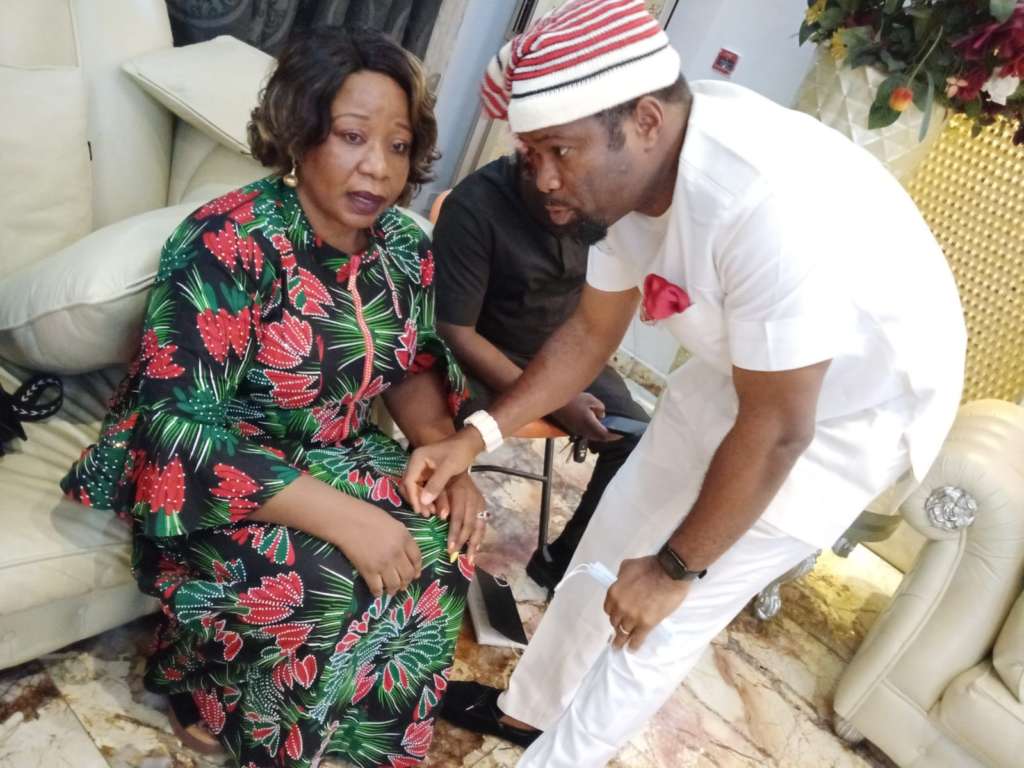
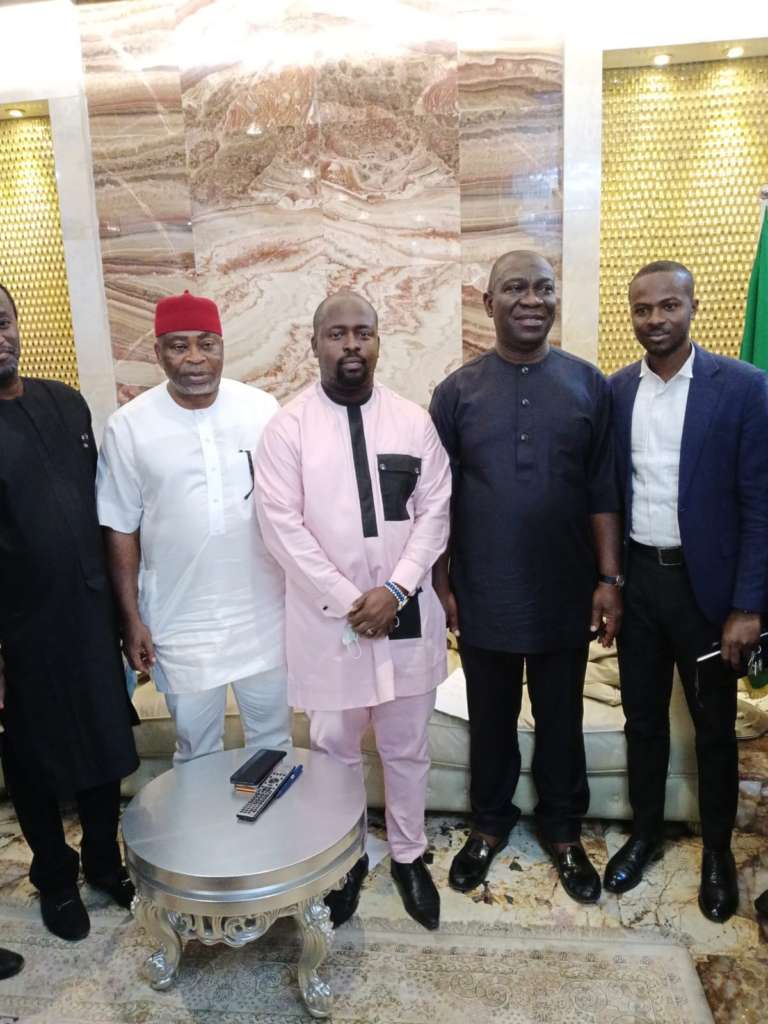
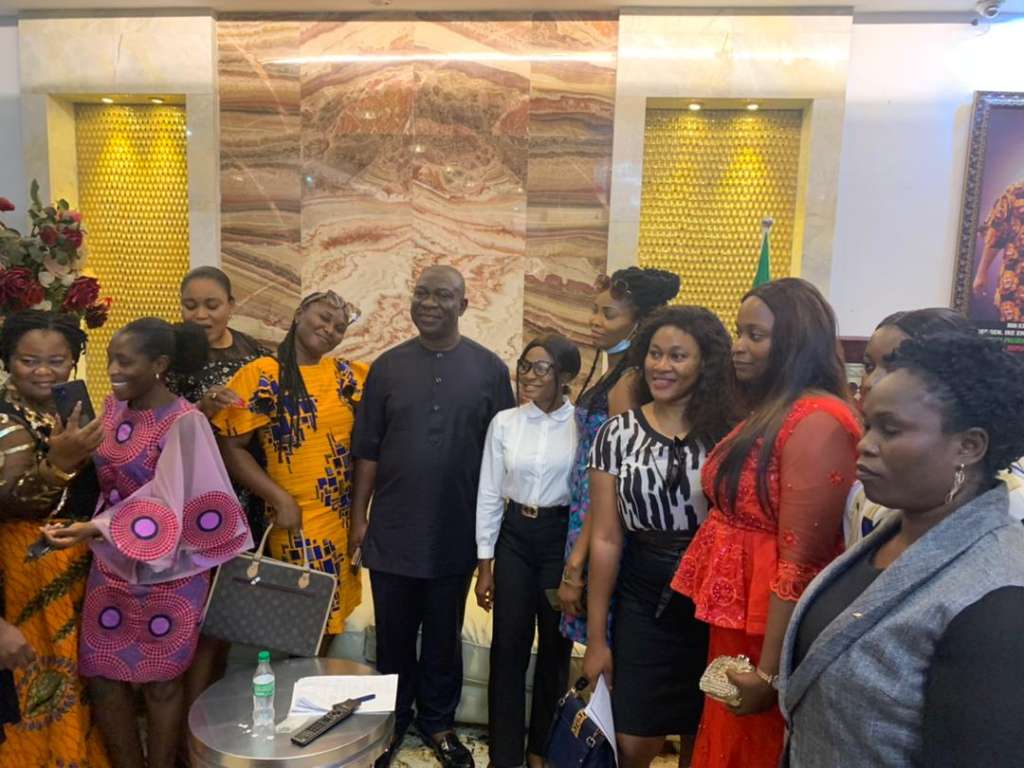
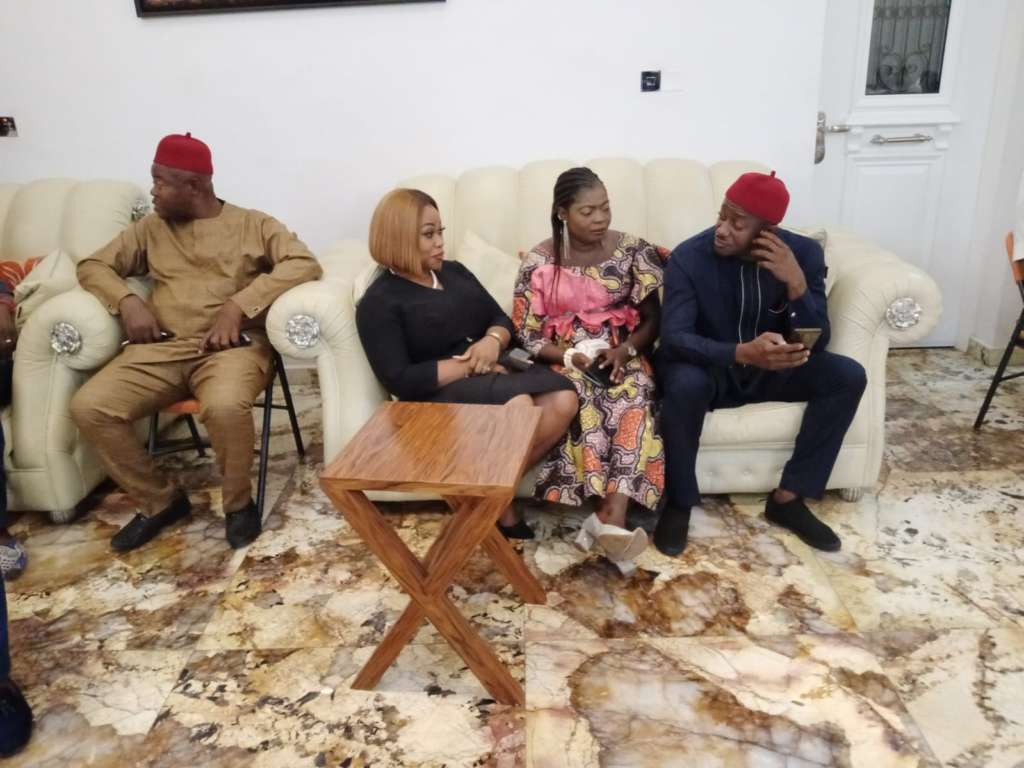
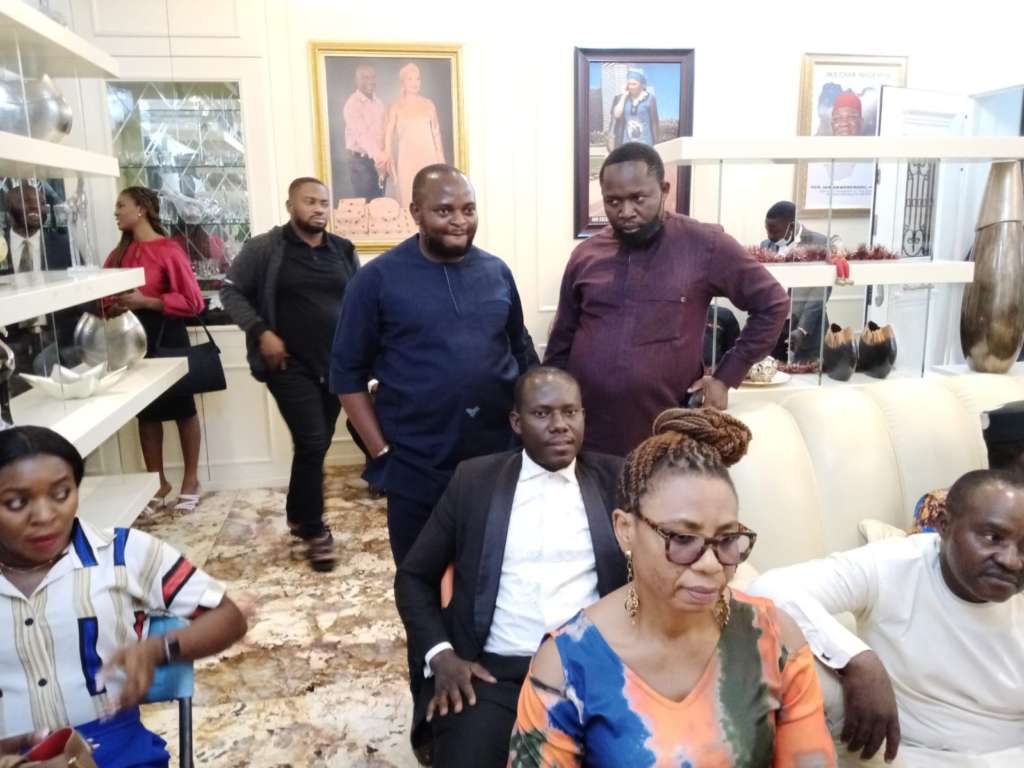
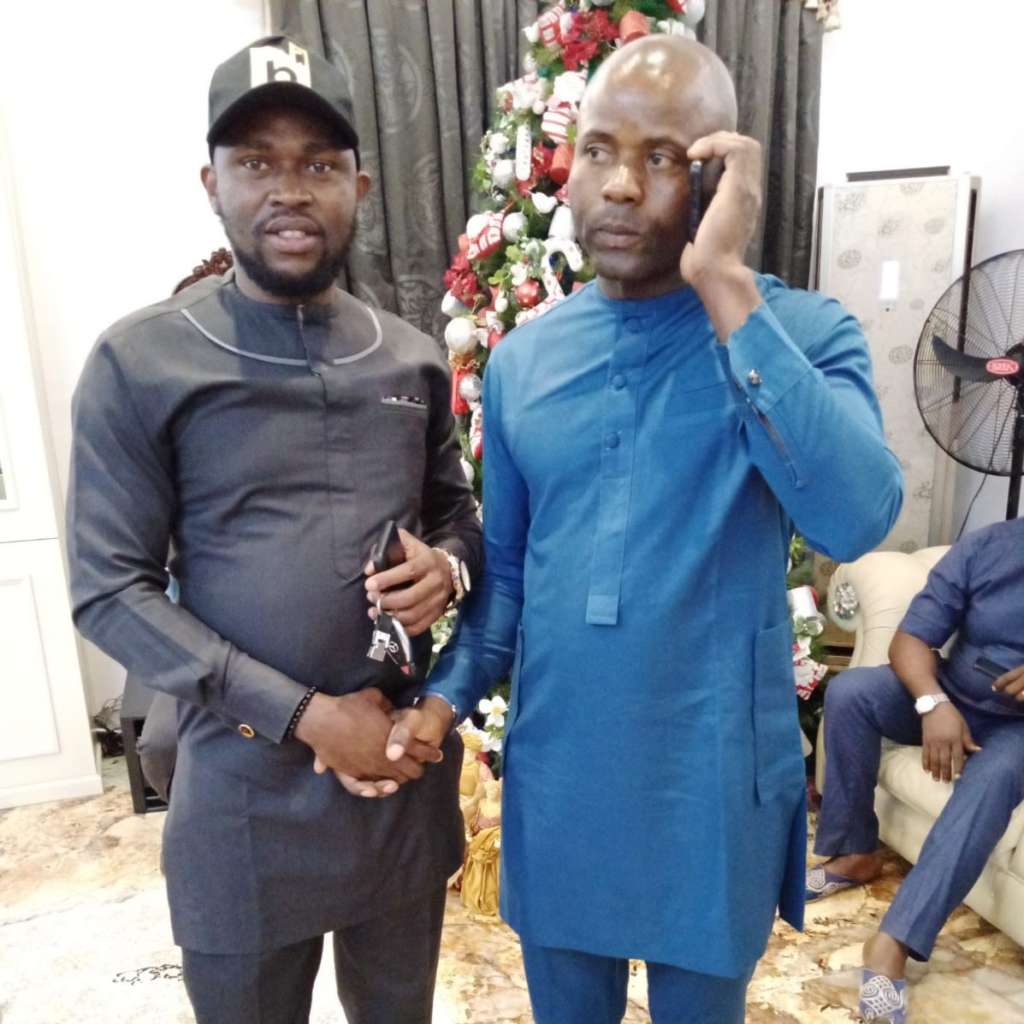
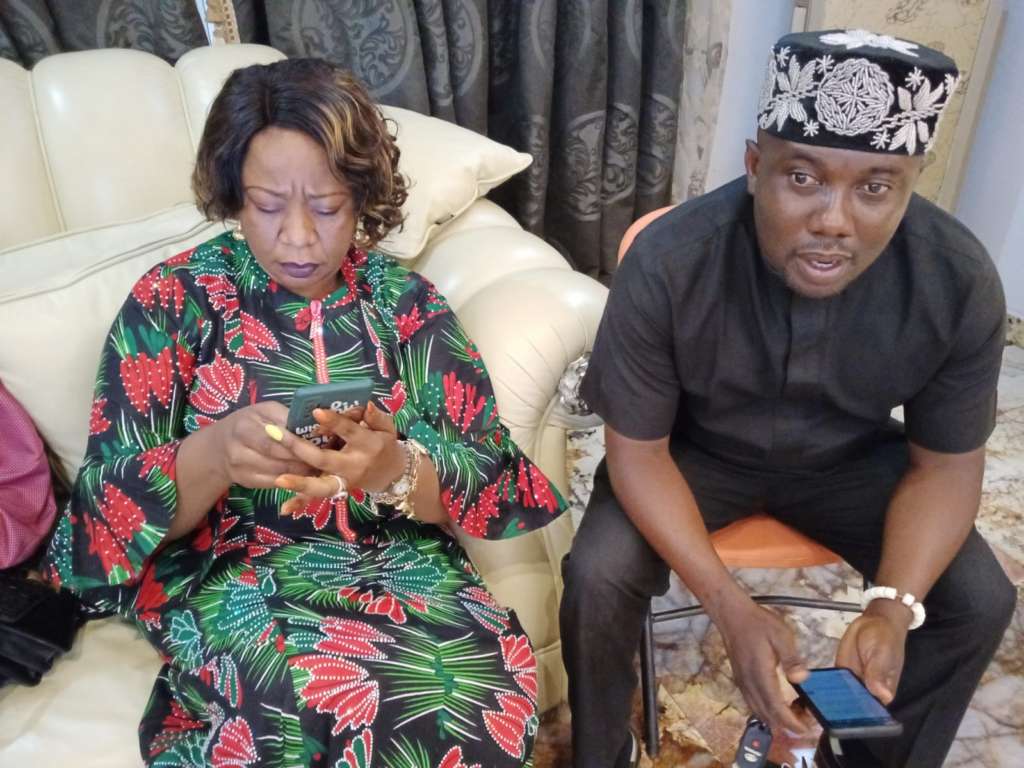
Photo news: Sen. Ike Ekweremadu hosts Enugu Lawyers in Abuja

Faces at the courtesy visit of Enugu State Lawyers Forum, Abuja to former Deputy Senate President, Sen. Ike Ekweremadu at his Abuja residence.

Judicial independence is paramount, cannot be toyed with – New Abuja NBA Chairman

Moses Ebute, SAN

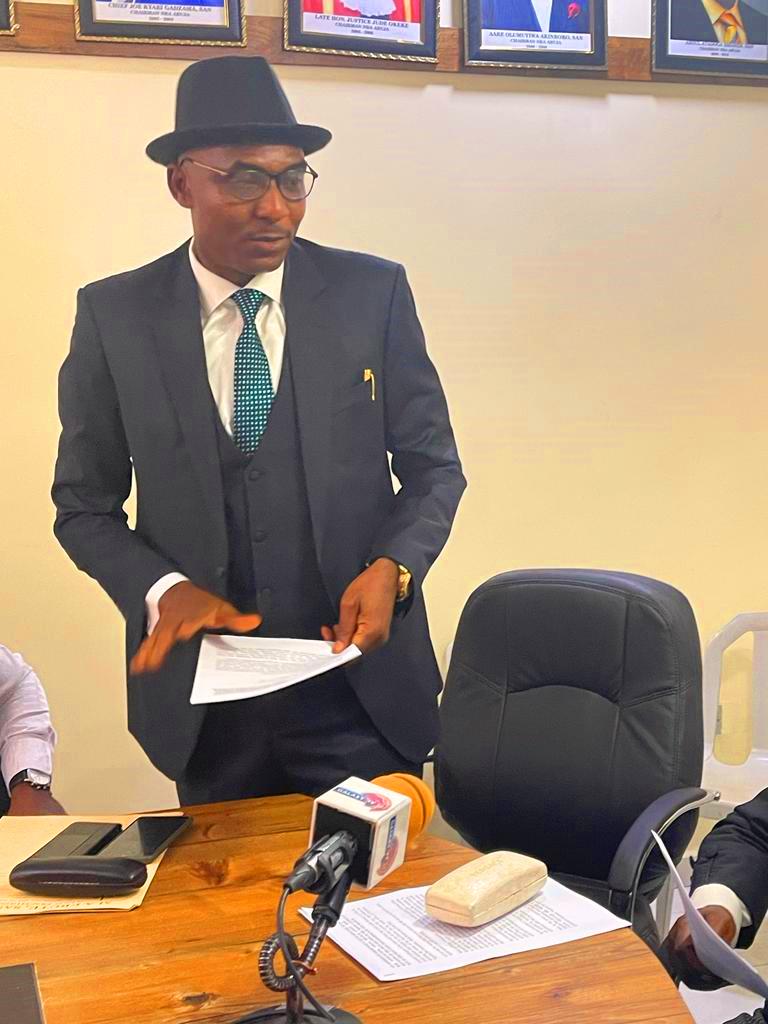
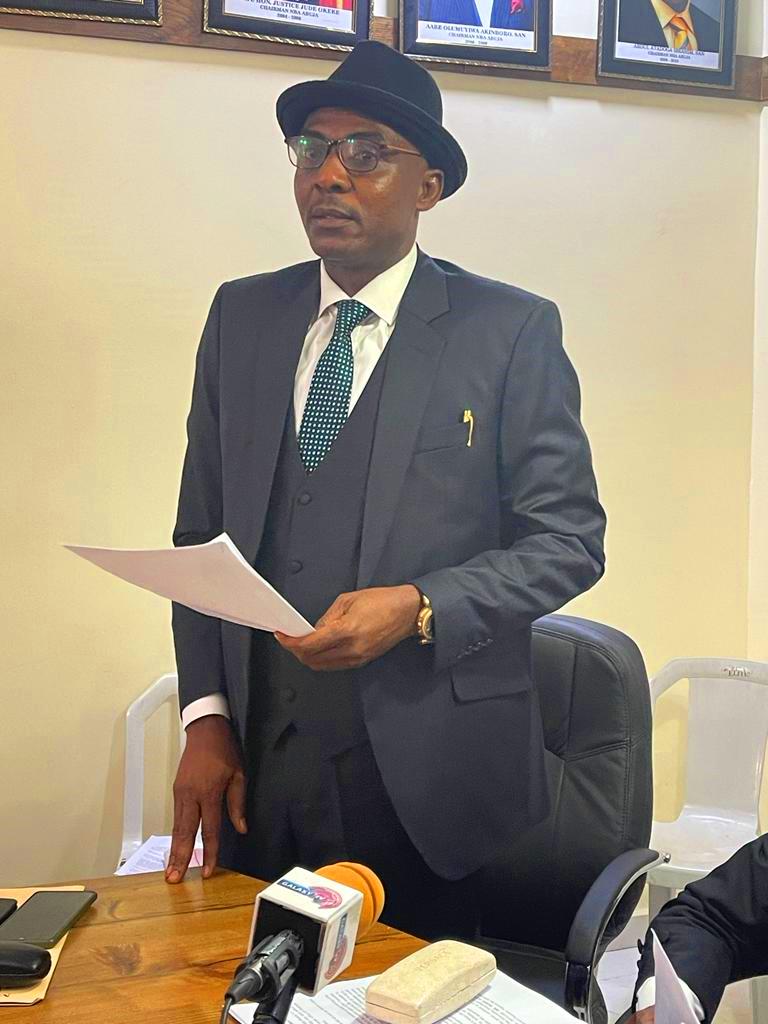
The new Chairman of Nigerian Bar Association (NBA) Abuja, Unity Bar, Moses Alfred Ebute, SAN has restated the call on the executive arm of government to ensure that the judiciary is fully independent. Ebute while delivering his acceptance speech after being sworn in on Wednesday stressed that the impartiality of the judiciary is anchored on its independence adding that judicial independence is paramount and cannot be toyed with.

Likewise, he commended Judges of the Federal Capital Territory (FCT) High Court for dispensing Justice in spite of the difficult terrain under which they work. “I assure you that the Bar will always stand by you to give support and advice or suggestions where necessary.”

Moses Ebute SAN making his acceptance speech

During a recent outing, the Chief Justice of Nigeria (CJN), Justice Tanko Muhammad said it is difficult for the judiciary to be impartial and objective in a democracy, where it remains financially tied to the executive.

Ebute a child of providence was sworn in as Chairman of the Unity Bar a day after the first anniversary of his elevation as a Senior Advocate of Nigeria. He was elected unopposed to complete the remaining six months tenure of Dr. Hauwa Shekarau who died on September 15, 2021.

The Senior Advocate pledged to protect the rights and interests of members of the Bar but noted that sanctions will be meted “where any of us is found wanting.” And with a promise to reunite the Unity Bar, Mr. Ebute said his team “will come up with programs and initiatives on traditional and emerging areas of law that will inspire and assist our members, particularly young lawyers to upscale their legal career.”

Ebute’s mentor, Chief Ogwu James Onoja, SAN at the event

Furthermore, the Learned Silk who assured that his executive committee will work closely with the Unity Bar Young Lawyers made some appeals. “I will appeal to you my elders, the giants on whose shoulders we lean and all stakeholders of this prestigious body for your support, commitment, encouragement, admonishment, suggestion, and even constructive criticism for the greater good of our Branch. We need all hands on deck in order to take the Unity Bar to a greater level. The executives cannot fulfill the mandate you have given to us without your active engagement as critical stakeholders of the Bar. I appeal for your commitment, your love, and magnanimity; the extension of cooperation and support you gave to the past chairman of the Branch to this administration.

LR: George Ibrahim Esq. Head of Chambers – O..J Onoja and Associates, Barr Lillian Okenwa, Editor in Chief, Law & Society Magazine, and Chief Onoja, SAN after the ceremony.

Moses Alfred Ebute was born on Friday, 25th November 1966. He attended St. James RCM Primary School, Ilorin, Kwara State, Government Secondary School (GSS) Otukpo, Benue State, St. Charles’ College, Ankpa, Kogi State, and School of Basic Science, Makurdi. Thereafter he headed far north to the famous University of Maiduguri for a four-year law degree programme.

In 1994, Ebute went all the way down south to the Nigerian Law School, Lagos. At that time there was only one campus of the Nigerian Law School. He was called to the bar in 1995. That same year, the New Unity Bar Chairman proceeded to Port Harcourt where severed in the chambers of Otteh O. Idoko & Co during his National Youth Service Corps (NYSC) (1995- 1996). At the conclusion of NYSC, he began his career at the law firm of E. C. Aguma & Co. in Port Harcourt. Eventually, the Learned Silk worked with J. K. Gadzama & Co., from 1996 to 2004. In the same year, he set up his firm M. A. Ebute & Co.

The Senior Advocate married Francisca Ebute on April 18, 1998, after 6 years of courtship. They are blessed with 3 lovely children now aged 22, 19, and 17 years respectively.

Ebute SAN

The manifestation of leadership traits in Ebute led to his being made the Class Prefect of Form 3A in St. Charles College Ankpa and subsequently Class Prefect of Forms 4A and 5A. He served between 1980 and 1983. From 1982 to 1983 he was also the college Mail Runner; Financial Secretary, Dekina Divisional Students Association, and Assistant Secretary, Fellowship of Christian Students.

From 1991 to 1992, Ebute was Secretary-General, Benue Students Association at the University of Maiduguri. Vice President, Igala Students Association, University of Maiduguri, 1992- 1993. The Pioneer President, Kogi State Students Union, University of Maiduguri, 1992- 1993. President, Kogi State Students Union, Nigerian Law School, Lagos 1994 set. In this capacity, he stopped the payment of bursary by installment in Lokoja.

Moses Ebute was President, National Association of Catholic Corps Members Rivers State, 1995- 1996. Head of Chambers, E. C. Aguma & Co. Port Harcourt, 1996- 2001. Head of Chambers, J. K. Gadzama & Co. Maiduguri office 2001- 2003. Publicity Secretary, Nigerian Bar Association, Maiduguri, 2001- 2002. Principal Partner, M. A. Ebute & Co. 2005 till date.

He has been the Deputy Editor-in-Chief of Bar and Bench Publishers from 2008 till date. Mr. Ebute has also been a Member and Legal Adviser, Guild of Adjudicators in Nigeria (GAIN) from 2014 till date.

He was the Alternate Chairman, Editorial Committee of the Unity Bar from 2018 to 2020, and Chairman Dispute Resolution Committee, Unity Bar from 2020 until his elevation on Wednesday as Chairman of the Unity Bar.

For Ebute, it has been a life of service and there’s no stopping him.

Bisi Akande And His Book Of Gaps

THERE have been many informed commentaries on Chief Bisi Akande’s autobiography. I intend to continue the conversation here by pointing at what I would call preliminary observations from what I have read in the book. I focus on the gaps and other inadequacies.

I start with his travails in politics. He was jailed by General Muhammadu Buhari in 1984 and he recounted that experience on 20 pages (page 197 to 216) but Akande mentioned Buhari’s name in passing only twice. Those two occasions were loudly timorous mentions. The first is on page 209 where he said decree 4 under which he was detained was issued by Tunde Idiagbon, Buhari’s deputy. That is rather strange. Decrees were signed by the Head of State, not by the deputy. The second mention is on Buhari’s overthrow by Ibrahim Babangida (page 210) which didn’t last more than a second in reading. Was it fear of Buhari or love of him that informed this treatment of Akande’s own experience in the hands of the General?

How did Chief Bisi Akande become a member of the Chief Obafemi Awolowo political dynasty? He explained that on page 116. He said he was contesting to represent his people at the constituent assembly that would write the 1979 constitution and met Chief S.M. Afolabi in Ikirun, venue of the election and Afolabi wooed him.

The Ila Orangun, Osun State, born politician said that as he arrived Ikirun, alongside others “for the election, Chief S.M. Afolabi called me aside and introduced himself to me. …He pleaded with me to join the Awolowo group” (page 116). And he was convinced.

What followed that disclosure is a chapter on page 117 that starts with “After my meeting with Chief Awolowo…” Which meeting? Meeting Chief Awolowo as what? Akande has obviously edited out some facts there leaving a gap that yawns for mention. Why? He needs to fill that gap one way or the other.

He may have deliberately left out certain details of his journey into the midst of the progressives, but he had ample space for how he became the Secretary to the Oyo State Government as against the envisaged position of commissioner. This is on page 131: “Chief Afolabi invited me into (his hotel) bedroom… He showed me the brief insertion of what the military perceived as the functions of the Secretary to the State Government as stated in the handover notes from the outgoing authorities. He confirmed that the governor-elect would offer me the post of Commissioner of Finance but pleaded with me to accept to be the Secretary to the State Government (SSG)….”

Today’s politicians should learn from this that Akande, warts and all, still had the humility to admit that his late foe, S.M. Afolabi was the benevolent squirrel who cracked his political palm kernel for him.

Baba Bisi Akande is 82 years old. By January 16, 2022, some 33 days time, God willing, the former governor of Osun State will be 83 years old. At the launch of his book that he christened: “My Participations,’ all the big birds in Nigeria’s political sky gathered in Lagos to honour him. General Muhammadu Buhari led the pack. I looked at the roll call of the ‘dignitaries’ at the event and I smiled. The gathering was a mixed bag. My elders have a descriptive name for such a flock. “Rikisi pa won po won di ore”- intrigue brings them together and they become friends. The contents of Baba Akande’s book have since gone viral, drawing comments, good and bad. Again, reading some of the reactions to the book, I drew strength from the saying of our ancestors: “Agbalagba ki sa langba langba”- an old man does not play the zig-zag game.

In the book, which ordinarily should be a reflection of the life and times of the old man, as given by him, the former deputy governor to the legend and orator, Chief Bola Ige, in the old Oyo State, decided to be a lapdog of a much younger one, Bola Ahmed Tinubu, whom he said was and probably still the only rich politician around. I beg your pardon. The name, lapdog, was never my creation. I borrowed it from Paul Ibe, the media aide to the former vice president, Abubakar Atiku. Ibe used that to describe Baba Akande, while he, Ibe, was reacting to the claim by Baba that Atiku was always beggarly in the 2007 presidential election; going cap in hand to Tinubu to fund his (Atiku’s) campaign. Don’t bother about the appellation. Baba Akande understands very well that “isoro ni igbesi”-proposition draws a response. There is eternal wisdom in the admonition that any old man who detests being an object of ridicule for the fowls should not tie a cob of maize around his waist. Some Ibes can be very rude and acerbic. That is not his fault, anyway. Everyman must protect his own pot of soup. Baba Akande used a 559-page book to do just that.

Baba’s book is also very revealing. Nigerians, especially those from the South-West, have Baba Akande to thank for putting some records straight in his book. At least, through the instrumentality of the book, the Yoruba are aware now that, contrary to the narrative that the former President Goodluck Ebele Jonathan hated the Yoruba, the man actually did all he could to maintain an equilibrium in the nation’s political power equation. The author, who was a great ‘participant’ in the 2011 power equation game, told us that Jonathan, indeed, supported the zoning of the speakership of the House of Representatives to the Yoruba region. Akande, his younger boss, Tinubu and other “participants” were the ones who gave out the number four position to Aminu Tambuwal of Sokoto State. Imagine the distance from Ibadan to Sokoto! In an attempt to sow an early political IOU, the Akande/Tinubu gang worked against Mrs Mulikat Adeola and crowned Tambuwal as Speaker. President Jonathan must be smiling by now; God will always vindicate the just. And for those South Westerners, who were recruited to be Jonathan’s haters on the false narrative that the ex-president hated them, they can now see who the real enemies of the Yoruba race are. Remember, our elders admonish us to allow lies to run for twenty years, truth will always catch up with it in seconds!

As if buttressing the “lapdog” qualification of Ibe, Akande, in the book told us, in an attempt to remind other “participants” about Tinubu’s ‘generosity’ in the 2007 general elections, that: “Bola was the only one spending the money among us. The rest of us were poor. Tinubu also put all his energy and resources into the formation of the AC and we felt he deserved a spot on the ticket”. In essence, what Baba Akande is saying about his younger boss is that because Tinubu is the ‘richest’ among the “participating gang”, the rest of the country should appreciate him and drop the presidency on Tinubu’s lap. What warped logic! If Tinubu became so rich in 2007 such that Atiku, who in 1993, funded a presidential primary and forced the late MKO Abiola to have a run off in Jos, during the SDP presidential primaries, had to go cap in hand to Tinubu, after Atiku had been vice president for eight years, Baba Akande owes us explanations on the sources of Tinubu’s stupendous wealth. Until Baba convinces us of that, we may be tempted to adopt Ibe’s description as the gospel truth of why the autobiography was written in the first instance. Ibe is no doubt, in my own estimation, rude about the “lapdog” baptism of Baba Akande, the former National Chairman of the APC himself betrayed his purpose of writing the book.

How on earth do we categorise the aspersion Baba Akande tried to cast on the reputation of the Afenifere leader, Pa Ayo Adebanjo. Just as a friend pointed out: if I considered Ibe as being rude in calling Baba Akande a Tinubu’s lapdog, what do I call Baba’s allegation that Pa Adebanjo pestered Tinubu to build a house for him (Adebanjo) in Lekki? If indeed that was the case, why should it be an old Akande to tell the tale? What happened to the caution: “inu ni agba nya, agba ki ya enu”- old ones keep secrets in their bellies and not in their mouths. If Baba Akande expects the ones following him to show him due respect, why would he describe Pa Adebanjo as a blank politically-minded leader who does not have what it takes to contest political positions? Which type of elder, in the age bracket of Baba Akande, would allege that Pa Adebanjo, the late pa Olaniwun Ajayi and Chief Olu Falae refused to suggest younger Yoruba sons to represent the South-West at the 2014 National Conference, but chose to attend themselves because of money? “They could not find any younger Yoruba to send to the conference to represent our interest. They believed, even in their old age, that they were the only people who could have gone there. Sir Ajayi, who was close to 90 at the time of the Conference, has since joined his ancestors. Chief Adebanjo celebrated his 90th birthday in 2018. Chief Falae is in his 80s. Note that Jonathan paid the conference delegates generous allowances”, he wrote. Can we also ask the Ila-Orangun politician why he has not found a younger one to carry Tinubu’s bag around instead of him doing it? Is it also for generous ‘dash’ since Tinubu has the deepest pocket?

Both Tinubu and Buhari described Akande as a honest and truthful personage, who is courageous and bold. But in naming those who did not want Buhari as president in 2015, Akande was bold in calling General Olusegun Obasanjo’s name but became less bold and courageous in naming the Northern elite who shared the same sentiment with Obasanjo. All his “courage and boldness” could allow him to pen is: “A prominent aristocratic leader from the North stayed several nights in Osogbo, persuading Governor Aregbesola to prevail on us not to field Buhari”. The same Akande who was bold in calling Obasano’s name suddenly became descriptive when it got to naming the “prominent aristocratic leader from the North”. That was the same Obasanjo the “participants” called their “navigator” in 2015!

It is not less surprising that Buhari would label Baba Akande as a man with “inflexible integrity in and out of public office, never accepting or offering bribes”. A man of such sterling qualities deserved to be jailed for 44 years in 1983 after Buhari and his gun toting soldiers chased Alhaji Sheu Shagari out of power. Buhari, who became the sole beneficiary of the December 31, 1983 military political heist, threw Akande and his fellow “corrupt” politicians in Agodi Prison, Ibadan, and threw the key to the jail house into Asejire Dam. But in 2021, the same Akande is Buhari’s Mai Gaskiya because “rikisi pa won po”.

Many “reviewers” of Akande’s book, since it was launched a few days ago, have no doubt that it is all about 2023 and Tinubu’s presidential ambition. I have no problem with that. Tinubu, being the “only one that is rich among them (us)”, can use any strategy to realise his ambition. My worry here is how Baba Akande simply forgot that only a child is sent to convert the food of the next door neighbour. It is an aberration to send an elder on such an errand. I am equally worried that Baba would agree to put all the things he wrote on a paper, knowing that his children, grandchildren and great grandchildren would have to read the book. It bothers me that Baba, at his present age, would elect to be a forerunner to Tinubu, when his age and generation say to us that rather than the lion to carry the game bag of the tiger, hunters would rather go on different hunting routes. It pains me that Baba Akande would allow an Ibe to call him a “lapdog” while we could not muster enough justification to impose on the impertinent lad, some exercises in home training.

My consolation in all the razzmatazz of the book launch is again, embedded in the wise saying that two persons do not lose out in a game of lies. If the one being lied to does not know, the ones telling the lies know. Buhari, Tinubu and Baba Akande know that whatever they said at the Eko Hotels venue of the launch of “My Participations” is nothing but “Oyo dobale, inu e loso”- Oyo man prostrates but his stomach squats. They know that they all gathered to deceive one another.

TIPS