Home Blog Page 814

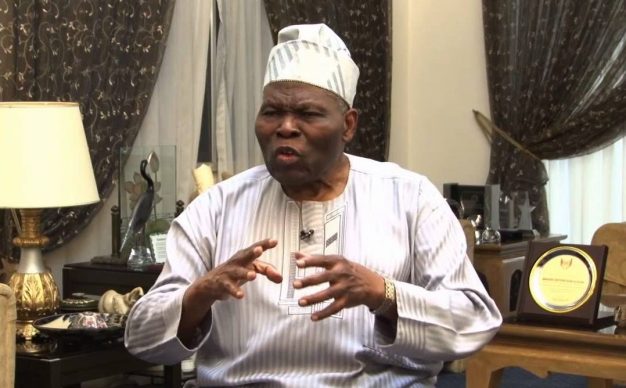
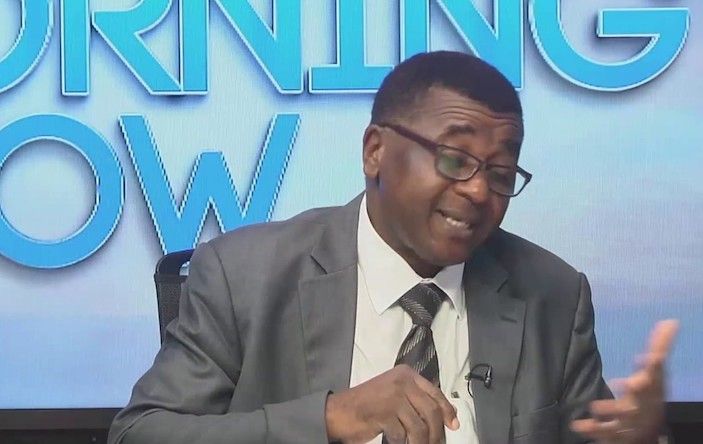
Emilokan? … as long as that is your attitude, corruption is your bed mate- Christopher Kolade

No holds barred! In this exclusive interview with Ikechukwu Amaechi, Eugene Onyeji, and Kehinde Okeowo, Dr. Christopher Kolade, veteran broadcaster, and onetime Director–General of the Nigerian Broadcasting Corporation, a former Chief Executive and Chairman of Cadbury Nigeria Plc and an ex-Nigerian High Commissioner to The United Kingdom spoke about leadership, corruption and more.

“The reason why fighting corruption here is not successful is because people are looking out for themselves first. People are self-centred. All these people who are aspiring to become this or that, are they thinking about Nigeria?  Are they saying I want to come and improve Nigeria? Is that their purpose?  No! They are saying it is their turn to come and eat of the fruits of the land.

Emilokan?

Yes! And as long as that is your attitude, corruption is your bed mate.”

Read more at https://www.thenicheng.com/as-long-as-emi-lokan-is-your-attitude-to-leadership-corruption-is-your-bed-mate-dr-kolade/

Identical twins bag first class in law

Taiwo and Kehinde Sanuade

Identical twin brothers, Taiwo and Kehinde Sanuade, have graduated with first-class degrees in Law from the University Of Ibadan.

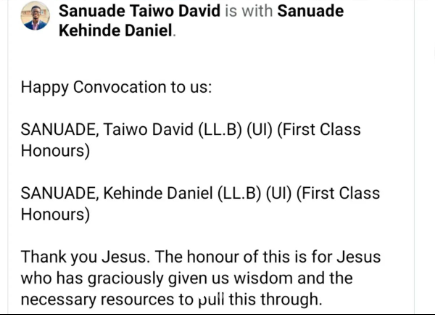
One of the twins, Taiwo, shared the good news on social media. He posted their convocation photos with the caption;

“Happy Convocation to us:

SANUADE, Taiwo David (LL.B) (UI) (First Class Honours)

SANUADE, Kehinde Daniel (LL.B) (UI) (First Class Honours)

Thank you Jesus. The honour of this is for Jesus who has graciously given us wisdom and the necessary resources to pull this through.”

Taiwo and Kehinde Sanuade

Tales my patients told me: Keep it in the family

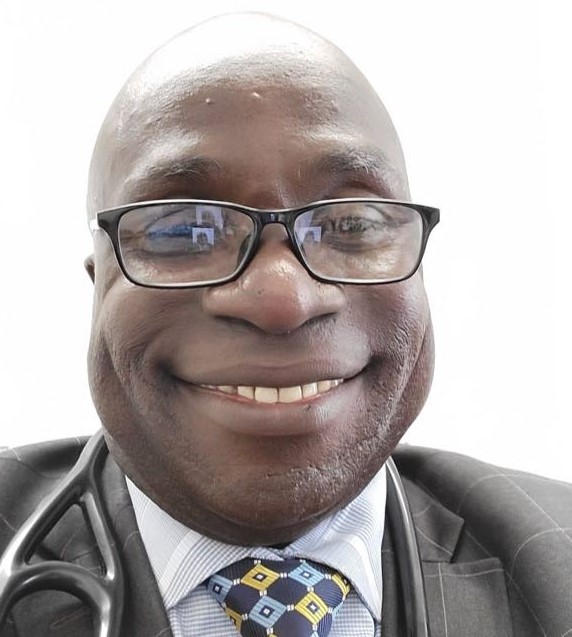
Dr. Emmanuel Fashakin

By Emmanuel Fashakin

First day back from a long vacation and my third patient was ushered into the office. “Please see down, sir”, I said politely. “I am actually a woman”, she quickly corrected me.  I was logged into the system, and her medical records were loading up in the system. When they did, I realized my error. Of course, Karen is a woman. We still have a mask policy in place in the medical practice, which made it difficult to recognize Karen. You cannot tell from her dressing because, not only is she dressed like a man, she dressed like a very tough man.

Karen is a lesbian, the husband one, or what do you call them, dominant female? Karen had a wife who lived with Karen and Karen’s brother.

Karen worked two jobs to provide for her family. Karen was also a kickboxer, now retired but her exploits in the ring has badly damaged her both knees. We referred her to orthopedic and she was given medications and intraarticular suspension for pain relief. Karen came today to be referred to another orthopedic doctor for second opinion.

Karen’s knees are very bad. The X-rays and MRI confirmed the diagnosis. She has completely buggered up her knees when she engaged in professional kickboxing. Looking at Karen even now at 46, she looks formidable. You would not want her confronting you in a dark alley. OK, if you had a head start, you could run, because Karen’s knees are bad

The orthopedic surgeon refused Karen’s plea for surgery, because in his opinion, she is too young to have new knees implanted. Especially in a young active person like that, a new knee lasts only but ten years, and they have to put new ones. There are only so many times you could slam on new metals on God-given bones.

Karen had already taken too much of my time, and I am kinda busy on the first day back, so I did not ask after Karen’s brother. The last time I saw Karen, she was raving mad. Karen worked two jobs. She came home one day to find her brother making love to her wife. What the xxxx?

Oh my goodness! Sorry, I finally told Karen after I found my voice. So what did you do to them? “Oh, I cursed them out and packed my stuff and left”. You left? You let your brother snatch your wife? Doctor, what can I do? She felt sad and helpless

I told Karen to cheer up. “It’s all in the family. It’s not like you could get your wife pregnant. Maybe with your brother, you people would have babies.” From the look on Karen’s face, my words were of little comfort; she just wants her wife back!

Emmanuel O. Fashakin, is an Attorney at Law and Medical Director

SomberTuesday series by Mojúbàolú Olufúnké Okome

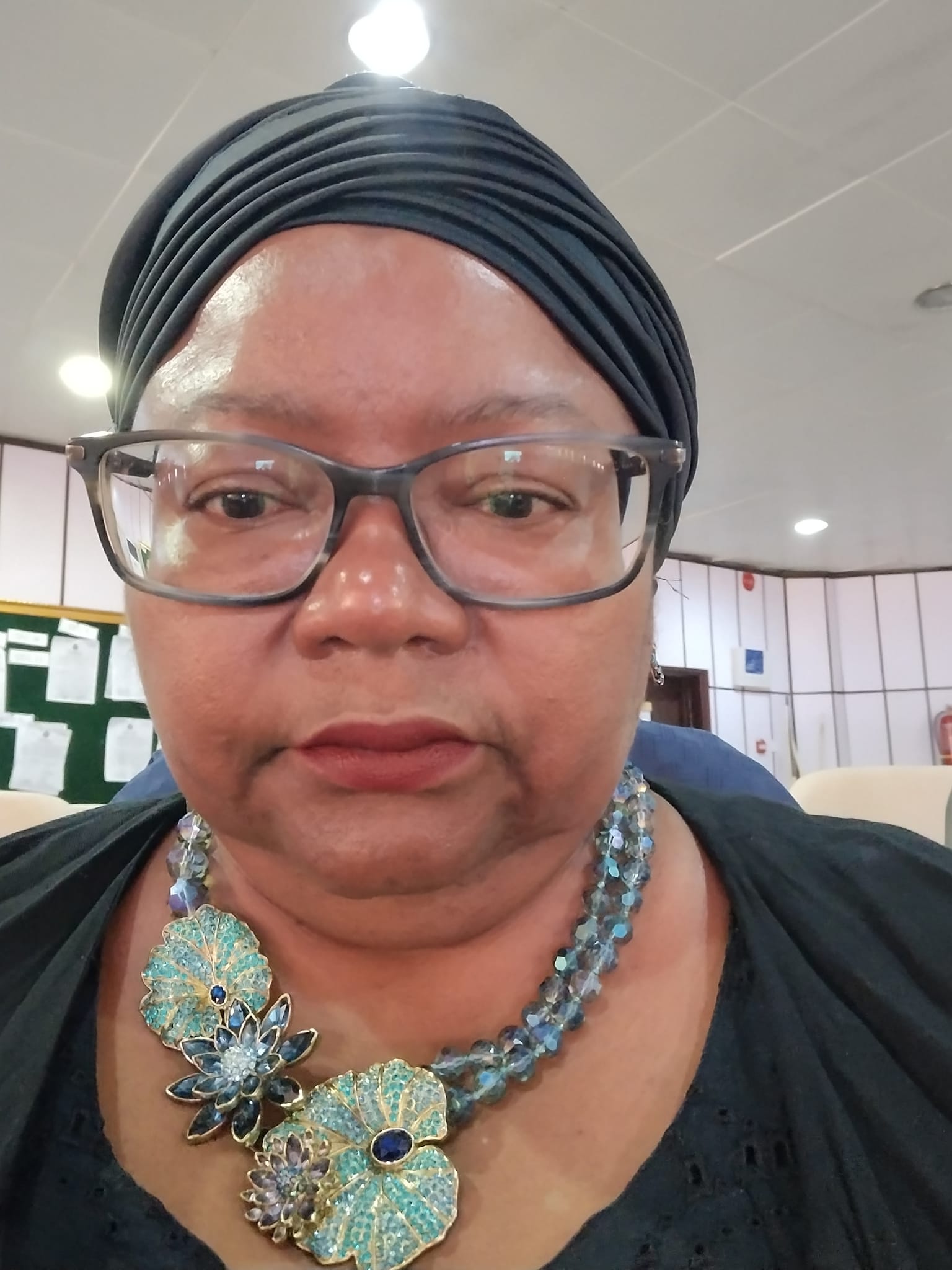
Prof. Mojúbàolú Olufúnké Okome

SomberTuesday! Electioneering campaigns are still ongoing. Candidates assure Nigerians that if elected, they will transform Nigeria and help propel it to greatness. However, historical experience casts doubt on their capacity to accomplish these laudable goals. The candidates also must remember that #EndSARS protesters called for an end to bad governance, impunity, violence, and police brutality. However, they were brutally suppressed. This conflicts with the expectations of Nigerians that our government will embrace, respect, and entrench democratic principles. The economy is in the doldrums. Insecurity is prevalent, with kidnappings and abductions normalized. Those whose kinfolk are in captivity are compelled to ransom them. One can only imagine the trauma and gargantuan financial burdens that torment and trouble them. The internally displaced and destitute victims of devastating floods have suffered losses including deaths of friends, family, and acquaintances, injuries, and losses of property, and livelihood. Two years on, #Nigeria must never forget the massacre of peacefully demonstrating youths at #LekkiTollGate and other locations. Given our current reality, we should say: #NigerianWomenArise #EndPoliceBrutalityinNigeriaNOW #EndSars #EndSWAT #EndImpunity

Howard Zinn’s statement is relevant to Nigeria’s situation: “Civil disobedience, that’s not our problem. Our problem is that people are obedient all over the world in the face of poverty and starvation and stupidity, and war, and cruelty. Our problem is that people are obedient while the jails are full of petty thieves, and all the while, the grand thieves are running the country. That’s our problem.” Let the kleptocrats give back our stolen wealth so that we can fix our infrastructure, schools, hospitals, and also offer worthwhile social protection to our people.

Let the masses enjoy the full benefits of citizenship in Nigeria. Let the leaders and political class repent and build peace with justice. This is no time for politics as usual. The people elected should be those trusted to bring justice, equity, and human security to the entire country, not expedient, unethical, and egocentric individuals determined to dominate for self-aggrandizement or sectional gain. We don’t need oligarchs’ continued domination. We also need a government that puts the interests of majority of citizens first.

Prof. Mojúbàolú Olufúnké Okome is a professor of political science at Brooklyn College in New York.

Nigerian lecturer sacked in Ugandan varsity for sexual harassment

A Nigerian lecturer, Dr. Nafiu Lukman Abiodun has been relieved of his appointment at Kabale University in the Western Region of Uganda.

Nafiu Abiodun, the Head Department of Economics and Statistics in the Faculty of Economics and Management Sciences was sacked over his alleged involvement in the sexual harassment of female students.

A Ugandan newspaper, ‘Kampala Dispatch’ reported on Tuesday that Abiodun demanded sex from female students and made those who refused his demands have been forced to retake classes.

After investigations, the university board found Abiodun guilty of sexual harassment and asked him to leave the institution.

According to the news report, the sack was handed down to him via a letter. Kampala Dispatch’ also confirmed this from the varsity Chancellor, Jay Constance Kwesiga.

The letter partly read: “I regret to inform you that the Appointments Board of Kabale University Under Min.598160/AB/21122 found you guilty of Sexual Harassment, failure to follow examination regulations, and professional negligence. The board, therefore, directed you be severely reprimanded and your interdiction be lifted.

“The board further resolved not to renew your contract as a Senior Lecturer of Statistics when it expires on 11 November 2022. You are therefore required to hand over all University property in your possession to the dean of the faculty of Economics and Management Science in the presence of the financial auditor.”

Dr. Abiodun, a Nigerian national is also the Director of Research at the University. He was banned mid-year to pave way for investigations into complaints that he was demanding sex from female students in exchange for marks.

The report further said: “Our reporter understands that Lukman would give retakes to female students that refuse.
“But his luck ran out when some of the female students recorded him demanding sex on the phone. Now in a November 11, 2022 letter addressed to Dr. Abiodun, the Kabale University Secretary Canon Johnson Munono Byaryantuma, says that investigations found him guilty of sexual harassment, failure to follow examination regulations and professional guidance.

“Kabale University Chancellor Joy Constance Kwesiga, confirmed the development when contacted on Sunday 13, November 2022 but declined to divulge details, saying that they have information that Dr. Lukman may petition the court.”

Months ago, two professors of the University of Abuja were sacked over sex for grades allegations.

Vice-Chancellor, of the University of Abuja, Prof. Abdul-Rasheed Na-Allah, confirmed this to the News Agency of Nigeria (NAN).

Na-Allah, who was on a two–day visit to the U.S., to meet with the University of Abuja Alumni Association, USA chapter, to solicit support for the institution, said: ”female students needed to be protected.”

According to him, the university will not tolerate any act of misconduct perpetrated by its staff against students.

“I have dismissed two professors since I became the vice-chancellor.”

“We cannot allow the lives of our students to be destroyed because most of the abuses destroy the lives of their victims.’’

The vice-chancellor said: ”it was sad to see some lecturers, who are supposed to be protecting the female students, becoming one of their problems.

“As I speak now, there are several investigations ongoing by a committee set up, addressing the problem,’’ he told NAN.

Sex in exchange for marks is a trending issue in higher institutions across the world. The Nigerian case appears to be the worst, according to a February 2022 research by Emmanuel Akinsuroju Oluwatosin, Federal University Oye-Ekiti.

His research details instances of sexual harassment against Nigerian students and how it affects education administrators.

He lied to me! Mr. Ibu’s daughter ends marriage

The super humorous and famous entertainment actor, John Ikechukwu Okafor, popularly called Mr. Ibu is certainly not smiling as his daughter Jasmine Okafor, a content creator recently announced her divorce from her UK-based husband.

On discovering that her husband was previously married and had three kids Chioma Jasmine Okafor who got married 9-months ago to her TikTok lover ended the relationship.

Jasmine, who announced this on her Instagram page Sunday evening, explained that her husband had lied to her about his previous marriage and kids.

After dating for two months, the duo who met on the popular social media platform, TikTok, got married on February 28, 2022.

“This was the best nine months of my life! I have no regrets whatsoever! I just won’t settle for asking you about this severally before we start! Finding out today from your mum really broke me! A foundation built upon a tiny lie won’t stand! I love how you loved me! But hate how you never mentioned your divorce or kids to me! Moving on, I don’t think I want anybody else! Just gonna love you from a distance.”

This unhappy occurrence is coming barely one week after Jasmine, in a video shared on social media, narrated how her love story began with her TikTok lover.

The man reportedly flew from the US to Gambia to see her two months after meeting on TikTok and proposed four days after their physical meeting.

There’s no doubt that Nigerian celebrities, mostly in the entertainment industry, have won the hearts of fans given their amazing talents. However, some of them had issues with their marriages.

Here are some failed celebrity marriages in Nigeria.

Tiwa Savage

Based on some revelations by the superstar songstress, Tiwa Savage, while she was giving the world hit songs during the early stage of her career, she was being hit at home by her manager turned ex-husband, Tunji Balogun, also known as Tee Billz.

The actress, in an interview, shortly after she parted ways with Tee Billz, said that while she brought joy to the faces of her friends and fans through her craft, she got bruised eyes and swollen lips as she was at some point in the marriage beaten by Tee Billz.

Barely two years after marriage to Tee Billz, Savage disclosed Tunji Balogun had been hitting her before and after their marriage.

Daddy Freeze

Popular On-Air Personality turned actor, Ifedayo Olarinde, popularly known as Daddy Freeze, has also claimed to be a victim of domestic violence. The OAP, who has also found love again, shared pictures through his social media account of scars he got from his ex-wife whom he said was in a habit of assaulting him while they were together.

Monalisa Chinda

Another popular figure who has opened up about being a victim of domestic violence is the delectable actress, Monalisa Chinda.

In 2014, the thespian opened up about domestic violence from her first marriage to Dejo Richard. Now, the actress and Public Relations Officer of the Actors Guild of Nigeria is happily married.

Korra Obidi

Korra Obidi is a talented Nigerian dancer, musician, and model. She got married to an American chiropractor, Dr. Justin Dean in 2018.

Their marriage only lasted four years as Dean announced he was quitting the marriage in March 2022.

Korra and ex-husband met in China on a popular dating app, Tinder. The 34-year-old American said his ex-wife verbally abused their child and also hurt him (Dean) emotionally, hence leaving the union. Dean said: “Many of you know I divorced Korra because we got into an argument and Korra says things to hurt me sometimes and she repeatedly told me that she regretted that June (their first daughter) ever been born.”

Tonto DikehTonto Dikeh is a popular Nigerian actress, singer, and humanitarian. She got married to an entrepreneur and philanthropist, Olakunle Churchill on August 29, 2015.

Churchill left the marriage in 2017 citing falsity and domestic violence for his reason to walk out of the marriage that was blessed with a kid. Churchill said: “Our marriage was plagued with several frivolous claims of falsity, ranging from domestic violence to false allegations and all whatnot. I never laid my hands on her. I have never done that in my life before. She made up those things to discredit my philanthropic works. I am from a proper disciplined Yoruba home.”

Toke Makinwa

Tope Makinwa is a Nigerian celebrated radio personality, television host, singer, and author.

She tied the knot with Maje Ayida, a professional fitness coach on 15th January 2014. The marriage started having issues, thus separating them in 2015 and eventually leading to divorce in October 2017.

After Toke had filed a divorce in 2016, an Igbosere High Court in Lagos dissolved their marriage on the basis of extra-marital affairs committed on the part of Ayida.


Toke also told the court that her ex-husband cheated with his mistress, Anita Solomon, in an affair that produced a child.

She added that since they got married her husband had “behaved in a way she could not reasonably be expected to continue to bear.”

Julius Agwu

Julius Agwu is a renowned and successful Nigerian stand-up comedian. He is also an actor and writer.

He got married to Ibiere in 2008. But the marriage managed to survive for 14 years. The comedian claimed Ibiere abandoned her matrimonial home because of his ill health. Agwu was diagnosed with a brain tumour, when three tumours were found in his brain.

Agwu noted that his sickness had taught him a lot of lessons. He said, “I have learnt a lot about life. I don’t want to say some things but the fact is that I have grown. Life has taught me that it is important to strategise.”

Mercy Aigbe

Mercy Aigbe is a Nigerian actress, film producer, fashionista, and businesswoman. She and Lanre Gentry, an entrepreneur got married on 19th December 2013.

Aigbe and Gentry first separated in 2017 and later got divorced in 2019 with both of them laying claims to excuses.

While Gentry accused Aigbe of sleeping around, the latter blamed her ex-husband’s mother for the failure of the marriage.

The actress got married to Kazeem Adeoti, her alleged ex-husband’s friend this year.

Aigbe said this about her first marriage: “I had a bad experience the first time, so I had some reservations and I just wanted to face my career, even though I loved him. I was happy and scared at the same time. Then, I was young and naive. Now, I handle issues differently. Also, the major reason my first marriage failed was that my ex-husband’s mum did not want him to marry from another tribe.”

Nedu

Chinedu Ani Emmanuel popularly known as Nedu is a Nigerian broadcast journalist, actor and comedian.

Nedu married Uzoamaka Ohiri in 2013, but their marriage crashed in 2018. Their marriage produced three children.

The comedian claimed his marriage has been dissolved but Ohiri has said otherwise, challenging him to produce the divorce papers.

Nedu estranged wife, Ohiri on September 3, 2021, called out Nedu for domestic violence. She accused Nedu of battering her a few weeks after she was delivered of their child by a Cesarean section.

Countering her, Nedu, on September 4, 2021, Nedu responded to his wife’s allegations and denied physically violating his wife, claiming that their first son is not his.

He wrote: ‘‘Our marriage was plagued with a lot of issues. One of which was continuous infidelity from her side that led to me conducting a paternity test on our kids which led to the revelation that our first son is not my biological son even though he was born within the period during which we were married.’’

Funke Akindele

Funke Akindele is a Nigerian multiple award-winning actress and film producer. The talented actress was married to a Lagos politician, Kehinde Oloyede on May 2012 and separated a year later on July 2013.

Funke Akindele also popularly known as Jenifa said her marriage with Oloyede did not work out and had to wait for three years before going to another marriage.

Akindele married to Abdul Bello, a Nigerian songwriter, and rapper on May 2016, but the world woke up to the shocking news on June 30, 2022, that the marriage has crashed.

Bello popularly known as JJC Skillz made the announcement himself on his Instagram handle on Friday morning.

JJC Skillz said: “Dear Friends and family, I need to let you know that Funke and I have separated. While it lasted, we shared many things and have created two beautiful children”, his post read. “The last two years have been tough for us. I have tried my best to fix things, but I believe it is beyond repair now.”

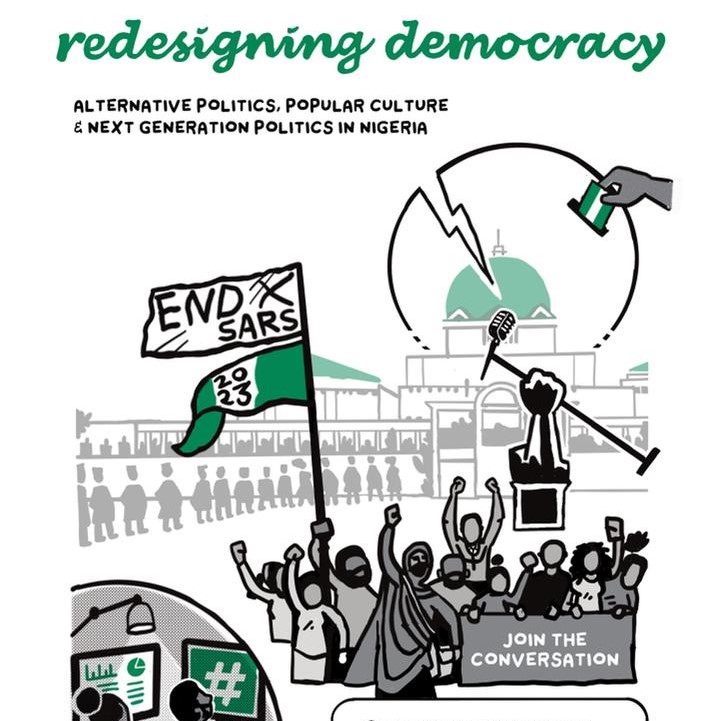
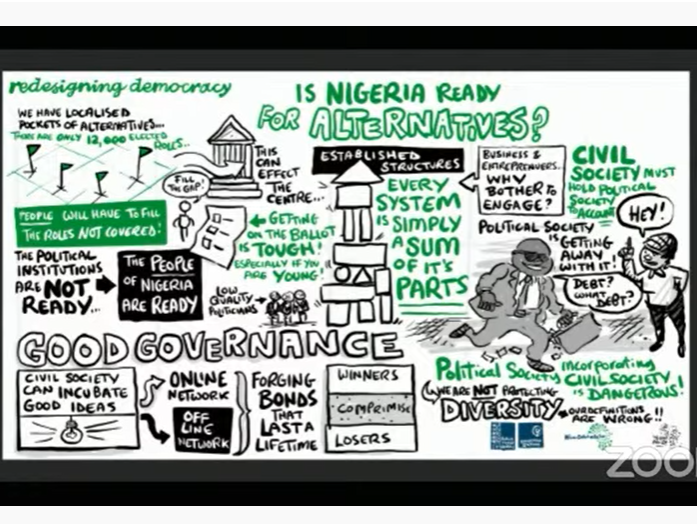
Alternative Politics, Political Alternatives, and Innovative Social Change in Nigeria, By Kayode Fayemi

My point of departure is to suggest that while there is no doubt that alternatives are a necessary, and even an inevitable component, of any living political system, it is important that as scholars and practitioners, we strive also at all times to demystify them from the excessive air of drama and circumstance in which they tend to be wrapped in scholarly discourses. This is for the simple reason that alternatives exist and are mobilised everyday and at all levels as part of our experiences of governance. In other words, alternatives, understood generally as encompassing forward-looking vision and practice that depart from a dominant but problematic and/or contested norm, are an integral part of everyday politics – and, indeed, all spheres of human endeavour.

Although they are fired by an admixture of vision, passion, and necessity, and, in highly repressive political contexts, would require to be pursued with courage and sacrifice, alternatives are also played out simultaneously at multiple levels – micro, meso, and macro. Additionally, they are carried by different actors – big and small, formal and informal, and domestic and external. Alternatives also manifest and are played out in different spaces – local, national, and even global, and at various points in times. They are the underlying drivers of the dialectics of political change.

In their intersection within a polity, they may translate into revolutionary moments of political renewal that arrest our attention. However, in most instances, they are also pursued “silently” with no less significant consequences for overall governance. Whether expressed in macro-national revolutionary terms or carried out “silently” in various localised spaces, alternatives are an embodiment of the agency of the people in all their diversities.

In our highly justified desire for a radical transformation of politics and power in Africa, including Nigeria, we very often set our sights almost exclusively at forms and levels of engagement that capture mostly the dramatic and the revolutionary on a grand national scale. This slanted approach to the mapping of change dynamics has been reinforced in recent years by such dramatic events as the so-called Arab Spring that swept through parts of North Africa and the Middle East, producing gripping moments which were served to us directly in our homes by global television, including the spectacular toppling of long-running political dictatorships and power dynasties. I suggest that even at that, underlying these grand events are an array of ordinarily anonymous or nondescript local forces, such as the neigbourhood committees, professional associations, womens’ groups, and youth networks, that were either already quietly immersed in or became converted to the quest for political alternatives and alternative forms of politics.

If the quest for alternatives is integral to everyday life and everyday politics, rather than only expressing or manifesting itself in dramatic moments of revolutionary change, then it seems to me that the strategic approaches we take to governance and the questions we ask must necessarily be different. This was a key consideration that fired my interest in the 1990s as we Nigerians pondered the issue of how best to overcome the prolonged scourge of military rule that had become a threat to national cohesion and continuity, apart from its many other failings. For me personally, as a civil society/social movement activist, that period was crunch time on how best to carry forward a struggle that had successfully hobbled continued military rule and opened up real prospects for a return to civilian rule and elected government.

Many of the Nigerians and students of Nigeria here will know that our country has a rich history of social movements with an impressive record of resistance against oppressive policies and rulership. However, there was always an historic challenge that faced the movement: How to convert resistance into power with which to push the alternatives around which militants were mobilised. 

That same challenge was posed in the lead-up to the birth of the Fourth Republic: A social movement that was strong and organised enough to make a change in national governance impossible to avoid but not powerful enough to impose its alternative as the viable path for the country to follow. In part, this problem was reflective of the conception of change in the ranks of the movement as a totalising process that needed to happen on a macro-national and pan-Nigerian scale at the same time and all at once.

Let me quickly forestall a misunderstanding: Collective pan-Nigerian territorial change of the kind that will overturn a history of socio-economic underdevelopment and governance underperformance remains the historic duty of all those who seek the rebirth of our country and continent in unity, justice, peace, progress, and security. However, achieving this goal did not require an indefinite wait for the day when like-minded actors across the Niger would be able to create the national movement and momentum to translate opposition and resistance into national power. While the search for such a national change process was going on, it made eminent sense to seek to promote alternatives in various other sites where we could effectively already begin to make a difference. And this is exactly what some like-minded people like me and others decided to do in making the transition from civil society to political society.

As a frontline political party actor since 2005, a two-term governor, a two-term Chair of the Nigeria Governors’ Forum, and a Minister in the federal cabinet, I am able to state without equivocation that at different levels, in various domains, and through many mechanisms, it was possible – and valiant efforts were made – to promote localised alternatives in the political process and governance system. That these were localised did not make them any less necessary or significant; they impacted many and also set a new tone and tenor for politics, governance, and the interpretation of citizenship. Examples of such changes are many – and will be fully documented in due course – but I note here, for now, that in Ekiti State, to use that specific example, we were successful on several fronts in shifting the overall template of governance and resetting aspects of public administration. 

Some of the changes we effected include: a) The restoration of a merit-based system of recruitment into the civil serve as we sought to rebuild state capacity and public administration; b) A raft of interventions to empower women, blunt gender discrimination, protect the girl child, and stem gender-based violence; c) the introduction of core social policies as a first step towards a new state-society compact – including a social security benefit system for the elderly; the institutionalisation of a state development plan, a system of public sector performance evaluation, and the curation of global good practices in the administration of public affairs; major investments in the restoration of values and ethics in everyday governance; efforts at restoring the civic culture in political competition; the adoption of a transition law aimed at strengthening continuity in governance and development despite administrative turnovers; the fostering of inter-generational engagements with a view to cementing a system of orderly succession, leadership recruitment, and mentorship, etc.

The initiatives taken were numerous and spanned various spheres of policy and governance. Inevitably, some required experimentation, adaptation, and innovation. Others were simply commonsensical or required us to learn from established good practices. In some cases, we registered immediate results. In others, expected results were slower in coming on account of ossified cultures that needed to be dissolved. Yet others are still work in progress. In all cases, they allowed us, within specific domains, sectors, and areas, as part of an overall strategy of change and progress, to demonstrate the feasibility of political alternatives and to practice alternative politics. Both endeavours were not without their challenges. Doing things, anything, differently ruffles feathers, high and low.

Many a stakeholder may be more invested in instant results as opposed to medium-to-long-term outcomes – remember the metaphor of “stomach infrastructure” as against physical infrastructure development. After years of failed promises, a cross section of the populace is steeped in cynicism about intentions. Assembling a team of loyal fellow travellers ready for the long haul has its own challenges. The import of all of the foregoing is that alternatives also have their own politics which must be played right for the changes in form and substance that are envisaged to have a chance of succeeding and making a difference. This fact immediately broaches upon the question of the strategy for change management that is adopted in a context in which the harvest is plentiful but the labourers are not only few, but even the ones available are poorly equipped and motivated. The would-be change maker is, therefore, also immediately confronted with critical issues of timing, phasing, and sequencing in the quest to drive an agenda of alternatives in policy, politics, and praxis.

I suggest that one of the difficulties that would-be change makers have had to deal with in the period since the birth of Nigeria’s Fourth Republic centres, inter alia, on the problem of timing, phasing, and sequencing.

I argue also that the politics of alternatives at any and every level requires alliance and coalition-building to undergird change processes. Furthermore, it will be foolhardy to assume that a ready-made and willing constituency for alternatives is in place in spite of the impression often created on social media; when crunch time arrives and the demands of change begun to be felt, the herd very often disperses amidst a crisis of expectations. Political and civic education must, therefore, go hand-in-hand with policies and leadership so that alternatives can find enduring anchorage in an organic constituency. For, even under the best of circumstances, active citizenship will need to be mobilised on an ongoing basis in order to sustain alternatives that negate established practices rooted in cronyism, maladministration, and various abuses.

In contextualising alternatives, it would be remiss of me not to make a few remarks  on what is now being described as “alternative politics” or a “third force” in Nigeria’s contemporary electoral politics. The present context of electoral politics in Nigeria is dominated by citizens who are, for many reasons, disillusioned with mainstream political parties which they blame squarely for not delivering democracy dividends.

However, if alternative politics must be taken as a wholesale reform of our political system, and we are interested in the codification of a system of alternative  politics that is consensual and developmental, then perhaps the argument to put forward, as a first step, is that our electoral system may need to be re-engineered away from the current majoritarian “winner takes all” model. Indeed, whichever political party wins the 2023 general elections, one can readily predict its going to be a close race. Imagining a race in which the eventual winner scales through with a 50.5 percent of the vote just as we recently witnessed in Kenya, it does not require a seer to predict that such an outcome is unlikely to enhance stability of the polity, let alone allow the militants of alternatives to thrive in our search for a national rebirth.

My sojourn in politics so far convinces me that any strategy for building sustainable democracy in a plural and divided society such as Nigeria must place a premium on electoral systems that will promote accommodation and inclusivity as a way of ensuring that the fractures and frictions that obstruct national change-making are blunted and dislodged. In the age of populism, elections help shape broader norms of political behaviour and we are already witnessing centrifugal, inter-ethnic and inter religious tensions as we move towards the 2023 elections. That is why as a first step, since we are unlikely to see any change in electoral reform before the election, my own view is that regardless of the outcome of the election, it would help if a national unity government is the eventual product, one that is consensus-driven with a clearly agreed agenda for broad-ranging reformation and transformation. This is especially so if the outcome of the election is not overwhelmingly definitive.

This is why I see the debate about political alternatives and alternative politics a superfluous one. Important as they are, the institutions of direct state power and electoralism are just the tip of the iceberg in the democratisation complex. Indeed, genuine democracy ought to rest on a much richer ecology of associational and organisational life and should be nourished and reproduced through every-day struggles of the citizens. But when we broadly define the everyday struggles as simply the handiwork of ‘civil society’ as in the EndSARS or Occupy Nigeria movements, we strip them bare of their spontaneity and deeper meaning and romanticise  ‘civil society’ as the rationally ordered, codified and all-knowing alternative to government and overplay our abilities as activists to counter the inherent inequities of class and markets. Even worse, we are presented or we present ourselves as antidotes to the ills of democratisation, which is why single issue causes like EndSARS have been hugely successful in form but exaggerated in their expectations and eventual outcomes. The reason for this crisis of exaggerated expectation that activists suffer is not far-fetched. The truth is that as long as we live in the post-Westphalian world of sovereign states, we exaggerate the ability of the civil society to stand up to the power of the nation-state or the mega corporations on its own steam.

This is why I am not sure that the solution to the current deficit that our democracy is experiencing can be solved with posing activism as a counterpunch to politics. For autonomous institutions to play a different role in mediating citizens’ democratic choices, their organic development must be combined in a more nuanced manner and a more systematic way with the use of public and state power.

The choice is therefore simple: one can continue to snipe on the fringe and complain that government is not listening to the yearnings of the people. Alternatively, one can stop agonising about missed opportunities and organise in a manner that places citizens as drivers of change in our quest to restore communitarian values and a future of hope and possibilities for our people.

I have taken the pain of working us through the fact that the politics of alternatives occur at various levels in part because it allows for a more precise assessment of prospects for innovation and transformation in 2023 based on the lessons of experience. Here, the two final points I would like to emphasise are as follows: First, our primary challenge at this time is not so much that alternatives are absent. Far from it. Since 1999, various alternatives have been tried out and continue to be experimented. Even now, leading consociationalists see the current Nigerian presidentialism as a good case study in electoral reform in managing conflict in divided societies. The policies and politics of alternatives are, however, unevenly spread over time and space. This fact partly explains the variegated geometry of change which we are witnessing in the country.

The second point I would like to make is that for far too long, our political culture has perpetuated the myth that strong and charismatic leaders can bring about change single-handedly – rather than convert the formal authority derived from their electoral mandate into a process of democratic renewal. Based on my own direct involvement and practical experience, on the field, innovative social change can only occur with a leadership dedicated to motivating people to solve problems within their own communities, rather than reinforcing the over-lordship of the state over its citizens. The main challenge of political leadership  in this context therefore is to reconnect democratic choices with people’s day-to-day experience and to extend democratic principles to everyday situations in citizens’ communities and constituencies.

Considering where we are today in Nigeria, it is my proposition that the next big challenge which history beckons on us all to respond to is how dispersed sites and actors of the alternatives can be meaningfully united and forged into a national movement of enduring change in which Nigerians across different geographies can recognise themselves.

What my colleagues and I did in Ekiti under my overall stewardship had its place and will continue to remain relevant. Similar efforts as we deployed in Ekiti have been played out and are still ongoing in various states of the federation. These efforts would need to be united as part of a broad leadership consensus for national rebirth. Doing so will require its own politics and a visionary type of leadership that is able to rise above faction and fraction to project a new national imagination.

I thank you all for your kind attention.

Dr. Kayode Fayemi, former governor of Ekiti State and Chairman of the Nigerian Governors Forum delivered this keynote address at the Conference on Redesigning Democracy held at the University of Oxford on Thursday 20 October, 2022.

The case against sex education

By Sonnie Ekwowusi

Last week, a group of pro-choice NGOs staged a protest against the Hon. Minister of Education, Malam Adamu Adamu for directing the Nigerian Educational Research and Development Council (NERDC) to expunge the current immoral sex education taught in Nigerian schools from the school curriculum. Worried about the immoral content of sex education curriculum in Nigeria and the wrong method deployed in using it to corrupt impressionable secondary school and primary school pupils most of whom are in the age bracket of 5-14 years, the Hon. Minister had directed last week that the immoral sex education should be removed from the school curriculum and that the teaching of sex education should be left in the hands of parents who are the primary educators of their children and religious institutions which are the custodians of morals of young people.  Rather than sexualize and damaging the character of our school pupils with a pernicious sex education, the Hon. Minister prefers that parents and religious institutions should teach sex education in order to safeguard the morals of our school pupils.

But the Hon. Minister’s directive has not gone down well with some pro-choice NGOs. Last week they issued a statement stating, among other things, that the Minister’s directive is a hindrance to progress in providing school pupils and teenagers with factual information and skills on teen safe-sex and reproductive health (otherwise known as abortion) that are necessary for young people to make rational decisions about their bodies. Also faulting the Hon. Minister on the said directive, a wife of a former State Governor, who over the years has gained notoriety as child safe-sex radical activist, has written a letter to the Hon. Minister stating, inter alia, that the Nigerian government should embrace the Comprehensive Sexuality Education (CSE) of  the notorious pro-abortion foreign NGO called the United Nations Population Funds (UNFPA).

The government should just ignore the protesting pro-choice NGOs and the wife of the former State Governor. Under the so-called CSE which the wife of the ex-State Governor is prescribing to the government (I have a copy of it right in front me as I scribble this), school pupils in open classrooms are required to touch each other’s genital saying:  “I like you”. The pupils are also expected to touch each other’s private parts and find out the differences in their respective private parts. For years now I have been following the corruption and sexualization of the Nigerian kids by the UNFPA. Under the youth peer sexuality education Training Guide/Toolkit, funded by the UNFPA and used in many public secondary schools in Nigeria, (which I also have in front of me at the moment), the students are told to share with other students with whom they feel more comfortable things like: “Your sexual fantasies (fantasies), “Your feelings about oral sex (oral)”, “Whether you enjoy erotic material (X), “Whether you have fantasized about a homosexual relationship (gay-fan),” “Whether you have had a homosexual relationship (gay-exp)”. On page 75 of the Guide, there is a condom relay race activity involving boys and girls. It instructs the peer leader to “Ask two volunteers (participants or co-facilitators) to hold the two penis models” and then to invite two teams to race to put the condoms on the models.

I remember that in 2014 the same UNFPA organized what it dubbed the third Family Planning Pre-Conference which was held at the Reiz Continental Hotel, Abuja. At that Conference, the UNFPA launched a condom-safe-sex campaign entitled, “No Hoodie No Honey”. This campaign was widely reported in the Nigerian media. The campaign was also posted on Twitter, Facebook, and on other social media.  The campaign was targeted at young Nigerian girls in the age bracket of 14-18. The campaign was aimed at supplying condoms and contraceptives to these young Nigerian girls and convincing them that “safe-sex” is their right and therefore they shouldn’t be ashamed to practice “safe sex” even if the different Nigerian cultures and religions teach otherwise. For example, one of the inscriptions on the No Hoodie No Honey roll-up stand posted on Twitter read: “Let’s push for easy access to the female condom and that a woman may buy condoms without being shamed” First: the campaign was tainted by fraud and deception. While scientific evidence consistently shows that the condoms, which contain naturally-occurring holes, do not protect its user against infections and against HIV and rarely protect against unwanted pregnancy, the UNFPA fraudulently masquerades about the cities of Nigeria and giving the Nigerian youths the false hope that condoms protect from any misdeed.

It beats the imagination that the UNFPA and others are corrupting Nigerian children with immoral CSE under the watch of the government. The American College of Pediatricians has said that CSE is one of the greatest assaults on the health and innocence of children because, unlike traditional sexuality education, CSE highly and explicitly promotes sexual promiscuity and high-risk sexual behaviors among children and teenagers. CSE programs have an almost obsessive focus on teaching children how to obtain sexual pleasure in various ways. (Please visit this site https://youtu.be/6yTvdCHgEHQ)   and view the 11-minute video to see evidence of the harmful elements of CSE.  The video provides just 15 harmful elements typically found in CSE curricula. Since each of these 15 harmful elements has the potential of causing long-term negative effects on the health and well-being of children, having even one of these elements should be reason enough to disqualify a CSE program from being taught to children in our schools. CSE harms children in the following ways and therefore should be banned in our schools. Sexualizes children; teaches children to consent to sex; normalizes anal and oral sex: promotes homosexual/bisexual behavior; promotes sexual pleasure; promotes solo and/or mutual masturbation; promotes condom use in inappropriate ways; promotes early sexual autonomy; fails to establish abstinence as the expected standard; promotes transgender ideology; promotes contraception and abortion to children; promotes peer-to-peer sex education or sexual rights advocacy; undermines traditional values and beliefs; undermines parents or parental rights; refers children to harmful resources. These are not invented by me. Please visit: www.waronchildren.org and www.investigateippf.org)

Aside from the CSE, many textbooks used in Nigerian schools have been corrupted too with lewd matters. You may be well aware that in the last twenty years or so,  classical English literature books and novels such as Macbeth, Julius Caesar, Weep Not Child, Things Fall Apart, Zambia Shall be Free, The Man Died, African Child, Akin the Drummer Boy, Mine Boy, The gods are not to blame and so forth have been removed from our school curricula and replaced with sex-related local English literature books containing lewd subject-matters to give the unsuspecting young school pupils the wrong impression that self-control is unnecessary and that casual sex makes them feel good; that they should engage in casual sex before marriage; that ‘safe sex’ is what to aim for in life provided that they don’t get pregnant. And if they do get pregnant they should procure an abortion as soon as possible. It is unfortunate that we now live in a highly-sexualized society. And one of the negative consequences of this is the sexualisation of primary and secondary school pupils. At every turn — TV, music, movies, sex education in schools — pre-teens, teens, school pupils, and teenagers are daily bombarded with the tragically misguided message borrowed from abroad that safe sex in all deviant forms, LGBT1+, gay marriage, transgenderism, and bestiality are good for them and that the resultant outcome holds no dangers for them.

About 16 years ago, an NGO called the Concerned Mothers Association, Lagos, ace broadcaster Adesuwa Onyenokwe and others brought a lawsuit against the Lagos State government at the Federal High Court, Lagos over the sexualization of the Integrated Science curriculum to include the techniques of kissing, masturbation, breast enlargement, how to do abortion, how girls can sterilize themselves and be having sex without becoming pregnant and so forth I was one of the counsel for the plaintiffs in that suit. The lead counsel in the suit was Mrs. Sylvia Sinaba SAN (of blessed memory). I remember that when the matter was called in court, the judge, who happened to be a female, was completely stunned by the sexualized issues pleaded by the plaintiffs in their Statement of Claim. In her shock, she first took up the Statement of Claim, held it up momentarily in her right hand, and queried, “What is this?”. “My Lord, these are what they are now teaching them in schools”, responded Mrs. Sylvia Sinaba SAN. Silence enveloped the courtroom.  The judge was dumbfounded. Anyway, to cut the long story short, the matter was amicably resolved out of court. In the spirit of amicable settlement, the Lagos State government at that time yanked off the offensive portion of the Integrated Science curriculum although I suspect that by now it has been brought back into the curriculum.

Between from March 27 to 29 2017, I attended a Conference which took place at the Nigerian Institute of International Affairs, Victoria Island, Lagos. One of the Speakers at that Conference was Ahmed Akanbi, a Muslim parent and a Lagos-based legal practitioner. Midway in his presentation, Ahmed did something which shocked most of the Conference attendees. He carefully dipped his hands into his handbag and brought out two English literature books containing some lewd subject matters and showed them to the audience. He told us that the two books were recommended books for primary six pupils in the primary school attended by his daughter. The title of the first book authored by Oyekunle Oyedeji is: Tears of a bride, while the second book written by Queen O. Okweshine bears the title: Precious Child.  According to Ahmed, his 9-year-old daughter in Primary 6 came back home from school one day and engaged him in a conversation that bothered on some sex experiences. At first, Ahmed was utterly stunned that his 9-year-old daughter was conversant with sex matters. But after he had regained his composure he asked his daughter where she learned about those sex experiences. It was then that his daughter opened her mouth and narrated to him how their school teacher has been using the aforesaid two books to teach them how to practice “safe sex” and how to gain sexual pleasure. Ahmed read to the hearing of the participants some sexy portions of the two books. The participants rose to their feet in utter shock.

Seven years ago, some Lagos-based NGOs also filed a law suit at the Federal High Court, Lagos against the Federal Ministry of Education and others over the smearing of the following textbooks used in many secondary schools in Nigeria- New School Chemistry for Senior Secondary Schools    By:  Osei Yaw Ababio; Revised by: L. E.S Akpanisi Herbert Igwe ; Modern Biology for Senior Secondary School By:  Sarojini T. Ramalingam, revised by  Lucy I Akunwa and J.BC Obidiwe and the New School Physics for Senior Secondary By M. W Anyakoha PhD-with the following watermark inscriptions: “I know that My Mother is a harlot and that my Father is a Kidnapper”, “I am a son/daughter of a  Harlot and kidnapper”, “I confess that my Family is bad, Evil, and a Disgrace to the Nation”, “My Parents Taught me how to love and smoke Indian Hemp, to kill and practice illegal things”. I was the leading counsel for the plaintiffs in the suit. Guess what happened thereafter? The publishers of the lewd textbooks came all the way from Onitsha to our law firm in Lagos to beg for amicable settlement of the matter out of court.

Even many English, Mathematics and Social Science textbooks used in many Nigerian secondary schools have been corrupted to include lewd matters in order to sexualize the young students. For instance, in Mathematics, a typical Maths question for primary school pupils is: “20 condoms + 5 condoms-2 condoms equals…”. At the moment in my little office, I have the latest lewd textbooks or sexualized textbooks used in corrupting our secondary school pupils in Nigeria. They include: Basic science  Junior  Secondary School Razat Publishers, 2018 edition, (for JSS3). Open pages 78 – 83 to see the harmful contents of the book- lesson on teenage pregnancy, types of abortions students can do, myths & facts about pregnancy, indoctrination of the pupils on the terminology of unsafe & safe abortion, six ways to prevent pregnancy with contraceptives, how to enjoy ‘safe sex’ without pregnancy: false information on four types of abstinence of which none is the actual definition of abstinence to be promoted among adolescents. Active Basic Science, 2014 edition By Tola Anjorin, Okechukwu Okolo, Philias Yara, Bamidele Mutiu, Fatima Koki, Lydia Gbagu: See Pages 31- 34. Cry for Justice By Ademola Adefila; See Pages 60-61, 64-65, read the description of having sex and sexual experience. Stigma By Samson O Shobayo, See the pages. The book encourages sexual relationship with HIV patients; kissing. Basic Science & Technology for Junior Secondary School 1, 2 and 3: By W.K Hamzat, S. Bakare: See Pages 29- 47 Pages 48-52 Page 64 Pages 67- 73 and Pages 86 of the three books which promote abortion, LGTB, masturbation and safe-sex with condoms. New Concept English for Senior Secondary Schools for SSS2, Revised edition (2018 edition)  By J Eyisi, A Adekunle, T Adepolu, F Ademola Adeoye, Q Adams and, J Eto, See Pages 103- 104 that contain obscene and vulgar expressions such as: “small men always thinking small and acting small ”and these vulgar words:. “He swore by the grey hairs of his head and his penis…even by the cunt of his own mother”.

It is high time Nigerian parents woke up to their parental responsibilities. Parents are the primary educators of their children. They cannot shirk this responsibility under the excuse that they are working hard to eke out a living. Most social vices in Nigeria today are caused by failed parenting. We are in trouble in Nigeria. Failed parenting engenders failed political leadership. This is regrettable. The family institution, unarguably, is indeed the fundamental unit of society. The family is the natural context in which children imbibe those cherished values which form the superstructures for the building of our national ethos. Therefore parents should rediscover themselves and reinvigorate their respective families to enable them to parent their own children to be responsible citizens. Our civilization is imperiled when families are imperiled.

Legal Giants Rotimi Williams and Richard Akinjide ”carpeted” by a young judge in a historical case of armed robbery involving a chieftain of Obafemi Awolowo’s political party, Action Group, Chief Samuel Taiwo Oredein (Alias S.T.) who rode a Mercedes -Benz car in Ibadan with the famous plate number WR 6666

By the master storyteller Onigegewura

The £13, OOO Pounds armed robbery case of Barclays Bank in Nigeria: The untold story of S. T. OREDEIN, a Political Godfather who became a robbery kingpin

There was no one in Western Nigeria who did not know S. T. Oredein. If there was such a person, he must have just arrived from Planet Jupiter. Chief Samuel Taiwo Oredein was not just a politician. He was politics personified. He was a kingmaker. He was a godfather. In fact, he was the Big Boss.

Oredein belonged to the exclusive club of the seven people who partnered with Chief Obafemi Awolowo to establish the Action Group which became the party that produced the first premier of the region. You don’t know the other founders? I will tell you. They are: Abiodun Akerele, Ade Akinsanya, J. O. Adigun, S. O. Shonibare, Ayo Akinsanya, and Olatunji Dosunmu.

S.T. did not hold a cabinet position. He was however more powerful than some Ministers of government. He was the Principal Organising Secretary of the Action Group in the First Republic. It is on record that ST had legal authority to issue query to Ministers and chairmen of government’s statutory corporations. It was Chief Oredein that broke the news of Segun’s death to Chief Awolowo.

As an acclaimed authority on political moblisation, he also wrote a book. He was the author of A Manual on Action Group Party Organisation. It was published in 1955.

When the news broke in 1971 of his involvement in a case of armed robbery, it was greeted with shock and unbelief. It must have been a mistake, people thought. Or could it have been a political frame-up?

Today, Onigegewura brings you the story of a political godfather who became a robbery kingpin.

On April 13, 1971, Nigerians woke up to hear the news of an armed robbery attack on Bacita Road. Bacita is a small town in Kwara State. It used to be a very popular town in the past. It is the location of Nigerian Sugar Company. When the company was established in 1964, it was the first integrated sugar factory in Nigeria.  The town even has an airstrip.

The armed robbery attack was as daring as it was audacious. It was carried out with military precision. Two officers of Barclays Bank and two policemen who were in the vehicles that were attacked by the armed robbers were seriously wounded. One of the wounded persons later died of his injuries at the hospital. (And in case you are wondering what happened to the then Barclays Bank, it is the bank that became our present day Union Bank of Nigeria Plc.)

At the end of the ‘operation’, the armed robbers went away with a box containing thirteen thousand pounds. That was a lot of money in 1971. Chief Awolowo was then the Finance Minister and with his prudent management of Nigerian economy, our pound was almost at par with the British pound.

Mr. Kam Salem was the Inspector General of Police at the time. The Kam Salem House on Moloney Street, Obalende, Lagos is named after him. He directed all police formations across the country to fish out those behind the attack. The police spread its dragnet and within days of the robbery, Felix Dumeh, the leader of the gang was arrested. Nigerians jubilated when they heard the news.

Felix did not make any attempt to deny being the ringleader. He promised to cooperate with the police. He told his interrogators that although he was the leader of the gang, he was not the real brain behind the daring raid. Felix must have at some point in his life aspired to be a musician. He began to sing like a canary. He started to mention names.

The investigators listened in shock as Felix began to mention one name after another. He was not mentioning names of common criminals that the police officers were familiar with. The names of people he mentioned as his backers, protectors and shareholders were names of people you only read about in newspapers.

The first person he mentioned was a Chief Superintendent of Police at the State Criminal Investigation Department in Ibadan, Patrick Njovens. The interrogators opened their mouth in wonder. Felix threw another bomb when he mentioned Mr. Yesufu Bello, an Assistant Superintendent of Police also of CID, Ibadan. The third person he listed as his backer was Amusa Abidogun, a Chief Inspector of Police stationed in Ibadan.

The investigators thought they had heard everything. They didn’t know that egun nla ni o n kehin igbale. It is the biggest masquerade that is the last to come out of the grove. Then Felix spoke again. The name came out in a whisper. It was the name they were all familiar with. I have already told you that there was no one in the Western Region that did not know High Chief Oredein.

Iya Agba, my grandmother, used to tell me that when a child’s net catches a tilapia, the child eats it alone. But when the net catches a shark, the child must run to his father. The investigators knew immediately that this was not a tilapia. The fish they were looking at was nothing but a shark. They went to brief their superior.

The Kwara State Commissioner of Police was Mr. Sunday Adewusi. He was later to serve as the Inspector General of Police between 1981 and 1983. Ha! You remember him? He was the IGP when Alhaji Shehu Shagari was the President.

Mr. Adewusi sent his officers to Ibadan Command to investigate the matter. On getting to Ibadan, Adewusi’s officers were arrested by the three senior police officers they were sent to arrest! You are saying “Haba!” The hunters became the hunted. The Ilorin officers were later thrown out of the station! They were warned never to come to Ibadan again.

The three senior officers however didn’t reckon with Adewusi’s tenacity. He came back and got the three of them arrested. He took them to Ilorin. He also invited Chief Oredein for a ‘chat’.

Chief Oredein arrived at the Police Command in a grand style. He came to Ilorin in his Mercedes car with its unique plate number: WR 6666. He expected it to be a brief meeting. He had engagements later that day in Ibadan and he had promised to be back at his base before nightfall.

Unknown to S.T., the police had done their homework thoroughly. They had painstakingly investigated the case and gathered relevant evidence and related materials before inviting the political godfather. One of the people that the police met in the course of their investigation was Mustapha Adigun who was popularly called Balewa. He got the nickname from the abbreviation of his first name, Tafa! But he was never a Prime Minister. He was also called Tafa Igiripa by some people.

Adigun claimed that Oredein was his boss during the days of politics when he (Adigun) was the head of ST’s political boys. He informed the police that in the evening of the day of the armed robbery attack, he went with his boss to the house of Felix Dumeh. In addition to his boss, the three police officers mentioned by Felix were also present. I am not sure they were wearing police uniforms for that special assignment.

Felix was said to have brought out a bottle of schnapps and some pieces of alligator pepper. He opened the bottle  and poured a little quantity on the floor and also threw some alligator pepper on the floor. Like a Chief Priest, Felix then raised the bottle of the alcoholic drink and said: “this thing wey tin we dey do, God make it no let it prove.” They all chorused amen to the solemn prayers. Felix then drank out of the bottle and chewed one alligator pepper. The four of them also drank out of the bottle and chewed alligator pepper.

Oath taking and prayers completed, Felix went to bring a brown paper bag. It was the size of a carton. He gave it to Oredein. ST was about to open the carton when Amusa Abidogun, the Chief Inspector of Police snatched it from him. Abidogun passed the carton to his superior officer Njovens, with a smart police salute. You know seniority is important in the Force. It was the Chief Superintendent of Police who finally opened the paper bag. It was full of currency.

Njovens looked suspiciously at the carton, his eyes made a mental calculation of the total sum. “How much?” He asked. Felix raised his spread left palm before saying “Five.” The senior police officer shook his head. “Is that the arrangement? Before, the arrangement was seven” Felix began to fidget. “The boys are too many on it.” Well, half a loaf of bread was still bread. Five or Seven, Njovens was not one to reject money. Akosapo la n ko owo. The proper way to reject money is to put it in your pocket, as Iya Agba used to say.

Oredein was stunned when he arrived at the police headquarters to meet both Adigun and Felix. Commissioner Adewusi asked them to repeat what they told the police. They did. In the presence of Oredein, Felix confirmed Adigun’s statement that it was Oredein that first received the carton of money from him before Abidogun snatched it from him.

The former Principal Organising Secretary of the Action Group looked blankly at Felix. With a straight face and a deadpan expression, he denied knowing Felix or ever visiting his house. Njovens, Bello and Abidogun also made feeble attempts to deny knowing Felix. Later they started to beg the future IGP to assist them because it was the devil that actually used them to collect the money. “Ise asetani ni. Mo fi Anabi ati Jesu Krisiti beyin!” That was from Alhaji Amusa Abidogun, the Chief Inspector. He offered to return part of his own share.

Chief Oredein, the master strategist, realized that the cards were stacked against him. He checked his sleeve to see whether he had an ace he could use. He found none. It was then he reluctantly admitted that all that Adigun who was also known as Tafa Igiripa said was correct. However, the Chief denied that the money was in one-pound denomination as stated by Adigun. Adigun maintained his stand. Finally, ST nodded his head that the money was actually in one-pound denomination.

It was over the radio that people heard the news. Chief Oredein had been arrested and would be arraigned in Court for armed robbery! Armed robbery! It must have been a case of mistaken identity. It could not have been the Chief S. T. Oredein that they knew. Armed robbery! Ki lo pa alaso funfun ati alaro po? What could have been the connection with the owner of a white cloth and a dyer?

In truth, Chief Oredein was not a poor man by any standard. Everybody knew he was a man of means.  Ohun ti a ko mo ni a ko mo, eni ti o ba ti ri oyun oyinbo ti mo pe omo pupa ni o ma fi bi. It is a well-known fact that the product of a white woman’s pregnancy would always be fair in complexion. Between 1942 and 1962, Chief Oredein had erected six buildings. And mind you, we are not talking of four-bedroom ‘boys quarters’ in a village o! We are talking of real buildings in strategic locations. Four of the houses were at Ibadan. He built one at Oshodi. The sixth building was in a prime area in Ikeja.

What of automobiles? ST had a total of nine vehicles, including cars and lorries for both his business and personal use. He was not only sagacious on the political field. He was also productive in the other room. He was blessed with more than 30 children.

Finally the day of the trial arrived. People had travelled all the way from Lagos, Ibadan and Ogere to Ilorin to confirm whether it was truly the Chief Oredein that was arrested. To the surprise of many of his supporters and friends, it was the author of the book on political organisation himself that was brought to court.

S.T. was arraigned alongside the three senior police officers. They were charged with abetting the commission of a robbery and of receiving stolen property as well as offence of harbouring known offenders. In other words, they were charged with receiving 5,000 pounds from the armed robbers in order to screen them from legal punishment for the offence.

It was a criminal trial like no other. It was a battle of giants. Chief Oredein and Patrick Njovens briefed Chief Rotimi Williams to appear for them. Bello and Abidogun retained the services of Mr. Richard Akinjide. The prosecution was led by the Director of Public Prosecutions for Kwara State, Mr. Anthony Ekundayo. The three senior lawyers proved their mettle. 

The trial judge was a relatively young judge, having been appointed to the Bench only two years before the trial. However, what My Lord Justice Moradeyo Adesiyun lacked in age, His Lordship made up with uncommon brilliance and exemplary courage.

At the trial, Chief Oredein testified that on the day of the robbery he was at his hometown, Ogere having left Ibadan around 6.30pm on that day and only came back to Ibadan the following day. He admitted that it was true that Adewusi confronted him on May 26 with Felix Dumeh but he stated that he denied there and then the allegations of Dumeh. His principal witness was his solicitor who claimed that he was with Chief on April 13 from about 3pm to 11pm. Chief also called an Imam and a farmer as his witnesses. They all testified that he was at Ogere on the evening of April 13.

The trial was not only being conducted in the courtroom. From Ilorin to Ibadan, From Lagos to Enugu, From Port Harcourt to Ile-Ife, people were also busy conducting their own versions of the trial. Would the young judge be able to convict ST if he was found guilty? Would AG leaders allow their former colleague to go to prison for robbery?

When His Lordship adjourned the matter to December 28, 1971 for judgment, speculations began afresh. It was said that it was to enable the judge to release the accused before the end of the year. Some said that thanksgiving services had been planned to coincide with the New Year. All Nigerians waited with bated breath for the judgment day.

Finally, the day arrived. It was a Tuesday. It was three days after Christmas and three days before the New Year.

The four accused persons were brought to the Court in a Black Maria. If ST felt any apprehension, it was not apparent. As he was led to the court, Oredein gave the sign of victory to the crowd of spectators who had come from far and near to hear the verdict. It was a good sign. It was a sign of victory. His people became happy.

Hon. Justice Moradeyo Adesiyun began by reviewing the charges against the four of them. His Lordship extensively analysed and appraised the evidence. When His Lordship noted the fact that the accused were not at the scene of the crime, Oredein turned to smile at the people in the courtroom. He would soon be on his way home.

Then came the moment. His Lordship found that though the accused persons were not physically present at the scene of the armed robbery, they had prior knowledge of the robbery before it took place and that the three of them who were police officers did nothing to prevent the robbery. His Lordship also found that they all received proceeds of the robbery.

Justice Adesiyun therefore came to the conclusion that the accused persons were guilty of the charges against them.

Chief Oredein could not believe his ears. Guilty as charged? He was not going to be free? His native cap which he had been holding, in deference to the authority of the court, clattered to the floor with a thud. The High Chief from Ogere Remo stood still as if he was Opa Oranmiyan in Ile-Ife. It was Yesufu Bello who was standing beside him that nudged him back to reality. “Chief, ‘they’ are asking if you have anything to say.”

Oredein had not prepared any allocutus. He had not expected to be convicted. Ko si eni ti o gbe oju fifo le adiye ori aba. Who could have imagined that a mother hen would fly off from her hatchery? You don’t know allocutus? It is another Latin word they taught us in Law School. It is a statement made by a defendant who has been found guilty before he is sentenced. It is like ‘A beg, tamper justice with mercy’ that a Lagos bus driver would tell you after breaking the side mirror of your Range Rover.

Allocutus or no allocutus, something must be said. The court had only convicted, His Lordship had not yet pronounced their sentences. Perhaps something could still be done. His eyes scanned the crowded courtroom. It appeared he was looking for someone or something. Whatever he was looking for was not in the court. He turned back to His Lordship.

Oredein pleaded for leniency. In a very moving voice, he informed the court of his past travails: “First it was the treasonable felony and conspiracy trial, but I was acquitted at the Supreme Court. Second, the Aberenla murder trial came, and I was in custody for 11 months before I was freed at Ijebu-Ode High Court. I humbly plead for Your Lordship’s forgiveness.”

Of course you know the treasonable felony trial the Chief referred to. The Aberenla trial he mentioned was the case over the murder of Ogunkoya Aberenla who was the Leader of Ogere Remo’s branch of Nigerian National Democratic Party of Chief Ladoke Akintola (Not to be confused with the party of the same name established by Herbert Macaulay in 1922). Aberenla’s body was never found. Onigegewura will write about his mysterious disappearance soon.

Justice Adesiyun looked at the accused persons. “If you had any conscience, you should drop your heads in shame.” His Lordship observed that they were lucky not to have been caught by the amendment to the Robbery and Firearms Decree which provided death by public execution for convicted armed robbers and those found to have aided and abetted armed robbery.

His Lordship therefore sentenced each of them to life imprisonment. There was no Federal Court of Appeal in those days. It was only Western State that had a Court of Appeal and Kwara was not part of Western State.

The four of them ran all the way to the Supreme Court.

On May 3, 1973, the Supreme Court delivered its judgment. My Lord Justice Coker who delivered the judgment of the apex court dismissed the appeal of all the convicted persons and affirmed the life sentences imposed on them by the trial court.

Chief Rotimi Williams later became a Senior Advocate of Nigeria. Mr. Richard Akinjide became a Chief, a Senior Advocate of Nigeria, and Attorney General of the Federation. Mr. Anthony Ekundayo, the DPP, was elevated to the Bench as a Justice of the High Court of Kwara State. The trial Judge, My Lord Adesiyun was also elevated. His Lordship served as the Chief Judge of Benue Statel from 1976 until his retirement in 1985.

History Does Not Forget! Historian is not a judge, History is.

▪Honour or shame from no condition arise; act well your part, for there lies the honour. …. William Shakespeare.

👆🏿👆🏿👆🏿The only useful things I will add are

1. The Nigerian Pound and the British Pound Sterling at that time WERE NOT ALMOST AT PAR…They were actually at par. See Woodhouse AC Israel v Nigerian Produce Marketing Board (1972) All ER…Per Lord Denning MR of the English Court of Appeal

2. The resultant locus classicus case law authority  of Njovens v. Director of Public Prosecution (1972) All NLR especially on the subject of cross jurisdictional criminal liability, conspiracy, robbery and armed robbery liability were accentuated in this case – Dr. Olumide Ayeni SAN


Saving the Supreme Court from Crises

By Chidi Anselm Odinkalu

Over the past fortnight, this column has addressed the multiple dimensions of the crises of attrition, retention, and replacement in Nigeria’s Supreme Court as well as the pathologies that make these resilient. Given the significance of the Court in the country, it is only proper to dwell a little on how these problems can be fixed. Three issues are immediately in focus.

One is occupational health and wellbeing for Supreme Court Justices. The tendency to reduce the triple crises of attrition, retention, and replacement in the Nigeria’s Supreme Court to an issue of appointment of brilliant academics or supposedly proven practitioners avoids the real problem. Indeed, the records suggest that premature mortality on the court has been most unkind to its brightest and best.

For instance, Chukwunweike Idigbe was reputed to be arguably the sharpest and most rigorous mind on the court at his death in 1983. Augustine Nnamani, was only the fourth holder of a doctorate degree in law to be appointed to the court, after Taslim Elias, George Baptist Ayodola Coker, and Egbert Udo Udoma; and Okay Achike was only the second law professor and the third legal academic to sit on the Supreme Court after Taslim Elias. Adolphus Godwin Karibi-Whyte, another academic who preceded him to the Supreme Court and who, like Achike, retired in 2002, was an Associate Professor at the University of Lagos before the onset of his judicial career. Niki Tobi, former Dean of Law at University of Maiduguri, followed later.

The Supreme Court does not appear to have been the kindest of working environments its most brilliant minds and there is nothing to say that it will be kinder to any bright minds who agree to go there now. If anything, the court has been somewhat of a cemetery in a quite literal manner to the brightest legal minds.

The complaint of the BOSAN about its members being denied elevation to the Supreme Court deserves to be treated with suspicion. Regrettably, it is also members of the BOSAN who saddle the court quite often with applications of the most disreputable kind, needlessly clogging up the dockets of the court and making the work of the Justices unbearable. The BOSAN can hardly complain when Justices of the same Supreme Court look upon many of these same practitioners of dubious professional ethics with determined suspicion when they look prey with intent on high judicial office.

A major problem with the court is not merely that its dockets are unmanageable, it is also that, secondly, its working methods appear inhumane and unsuited to its primary workers, who are by design senior citizens. In June 2022, it emerged that the Justices of the Supreme Court had written to the then CJN complaining of debilitating failures of health and wellbeing, including non-provision of housing and research assistants. In particular, their letter lamented that there had been no meeting of the Justices over the entire duration of the COVID-19 crisis, pointing out that the standard of healthcare in the court had deteriorated to the point where “there is a general lack of concern for Justices who require immediate or emergency medical intervention.” These complaints naturally raise the possibility that the rate of mortality as a form of attrition at the Supreme Court is preventable.

This naturally leads to a third issue of leadership of the Court. Historical mortality may be relatively high among appointees to Nigeria’s Supreme Court but it has never affected any CJN. This is surprising because many will think that the CJN, with the multiple portfolios and offices that s/he holds, would be very stressed. Over the years, the office has evolved from being a first among equals to a bit of a constitutional potentate, with infinite capacity to dispense patronage or penury in equal measure at their whim around the legal profession. Any reform of the court that does not address the urgent need to un-bundle the office of the Chief Justice is fated to failure.

It is no surprise, therefore, that recent occupants of the office appear to have been undone by allegations on the borders of judicial integrity. In three years since 2019, Nigeria has had three Chief Justices. Of these three, two left office prematurely in circumstances connected with negative imputations on judicial independence and integrity. Indeed, it has been said that the penultimate CJN left the judiciary and the Supreme Court “in a mess”. About the sack of his predecessor, The Economist wrote that it was “not merely unusual; it was also unlawful.” In that case, it appeared the judiciary was wilfully complicit in its own defenestration, itself also evidence of deeper integrity problems with that branch of government.

When legitimate questions of judicial integrity can be raised at this level, it becomes rather idle to focus on access to appointments as a panacea because even the appointment process would be corruptible and probably corrupted. In the public perception, this is largely what the current situation is with judicial appointments in Nigeria. Many believe – and there seems to be evidence to support the claim – that appointments have become a joint enterprise of politicians and judicial insiders. When BOSAN complains that its members deserve a look in, citizens sneer that BOSAN’s members desire to muscle in on this duopoly with hardly any altruistic goals in view.

These are by far the biggest causes of the attrition, retention and replacement crises in the Supreme Court. As is evident from this breakdown, appointment or replacement does not necessarily rank among them. Indeed, in the face of these, the problem that Chief Justice Ariwoola complains of cannot be altered even if we were to triple the establishment size of the court from 21 to 63 or, even worse, implement the entirely unfortunate and unworkable idea of decentralizing the Supreme Court to each geo-political zone of the country as some have advocated. In these circumstances also, legislating for Justices to serve until the day after eternity, as Afe Babalola SAN has suggested, would be a very bad idea indeed.

It is nevertheless important not to totally ignore the advocacy by BOSAN to look to the ranks of its members for appointments to the Supreme Court. Former CJN, Mohammed Lawal Uwais, has explained that he instituted the policy of confining Supreme Court preferments to serving Justices of Appeal because “there is the issue of integrity. If you have been a judge at the High Court or Court of Appeal before coming to the Supreme Court, you would have done cases where whether you are a corrupt person would have been discovered.”

It should be recalled that the Chief Justice governs preferment to the privilege of SAN. If he says that he is unable to trust the integrity of the persons whom they choose to prefer to the rank, then it is hardly a response to the crisis of appointment in the Supreme Court to suggest that the answer lies in choosing from the ranks of persons whose integrity can’t be guaranteed. What is required in the face of this claim is not to insist on preferring people to the Supreme Court from these ranks but to first reform the system of preferment in order to guarantee the rank of SAN as a quality mark of unquestionable integrity and excellence, which it can hardly be said to be presently.

In the end, it is necessary to admit that there is no magic bullet to address or resolve the crises that the new CJN has called attention to. Rather it requires a multi-dimensional approach beginning with an internal reform of the operations and management of the Supreme Court itself to improve wellbeing among its personnel both judicial and non-judicial. Caseloads in the court will need to be governed much better through appropriate filtration devices. This will require a combination of both legislation and reform of the rules and doctrines of the court. Standards of judicial ethics at all levels will need improving. If these are done, then attention to appointments could be part of the package. Absent these reforms as a package, a focus only on appointments will not be part of the solution. Rather, it will only deepen the problem.

A lawyer and a teacher, Odinkalu can be reached at [email protected]      

TIPS