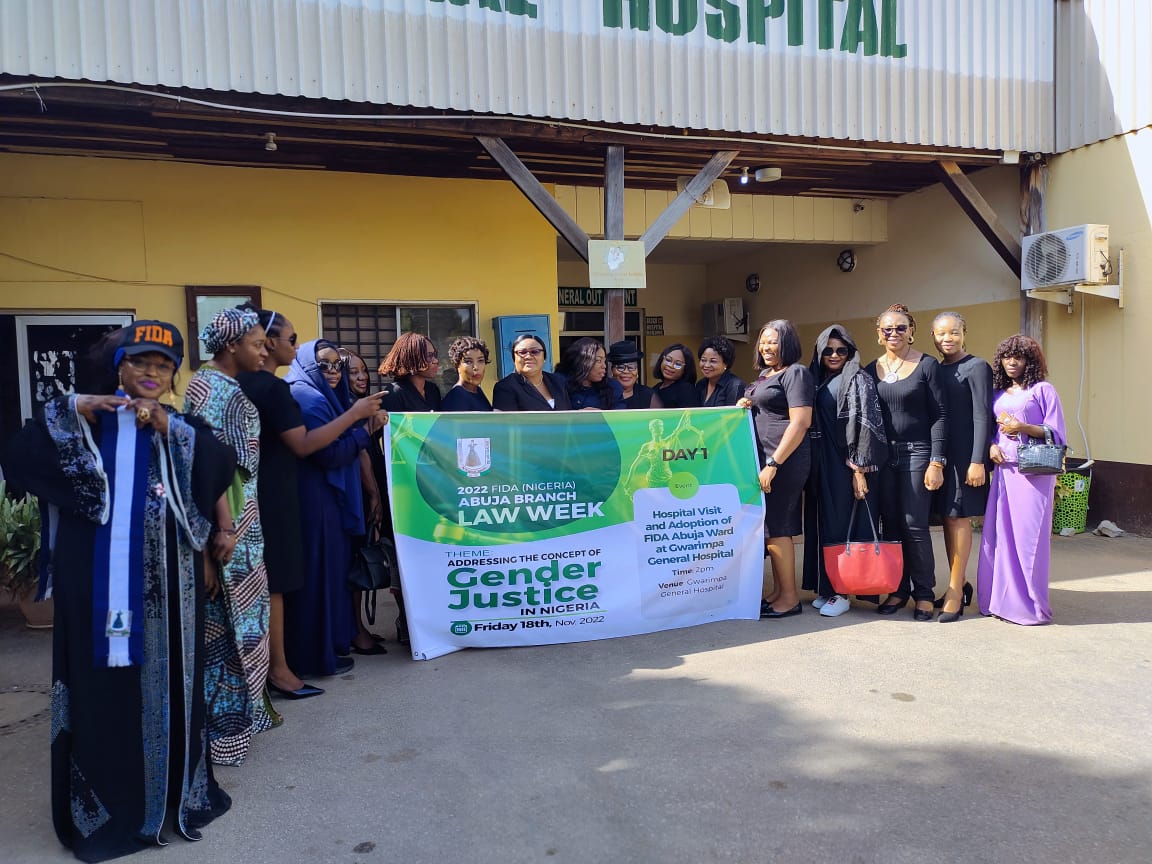
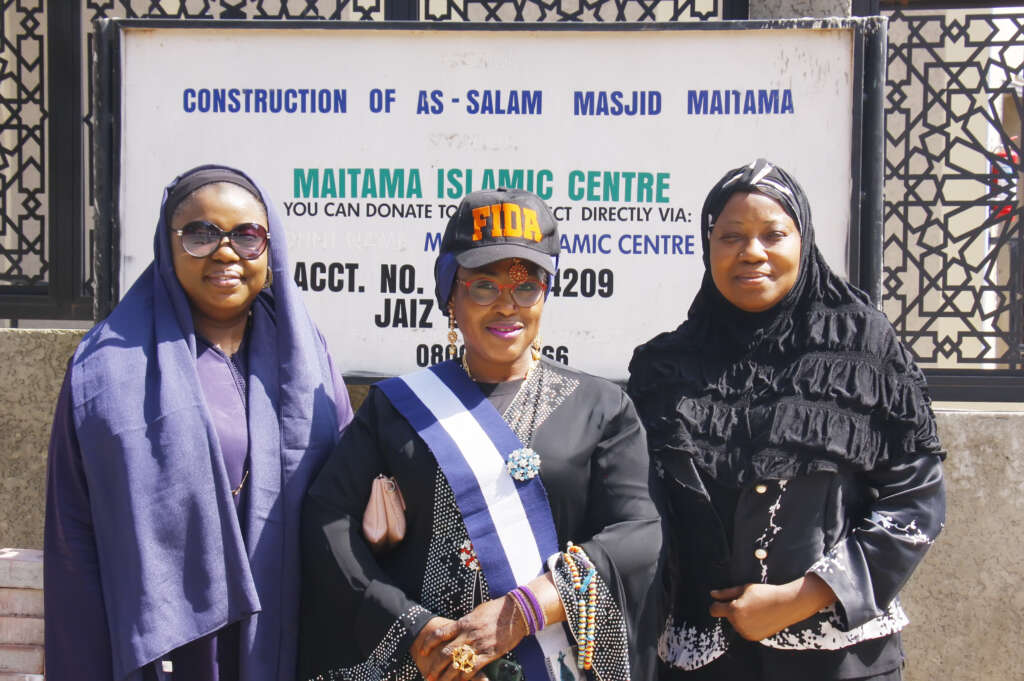
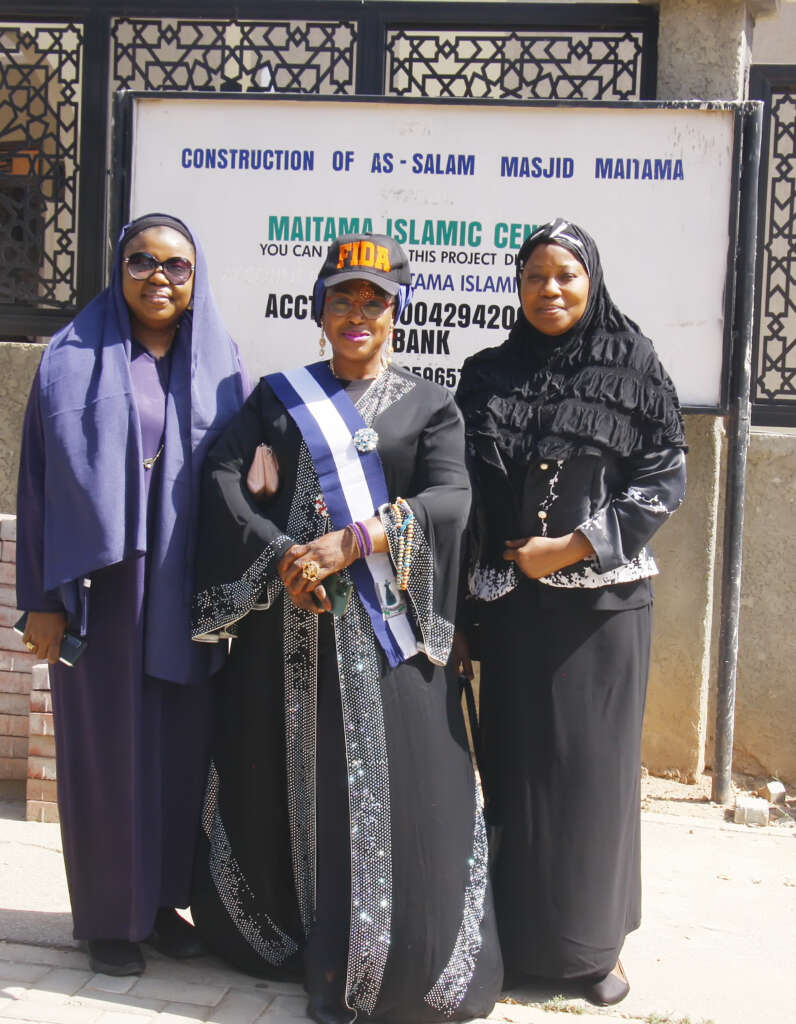
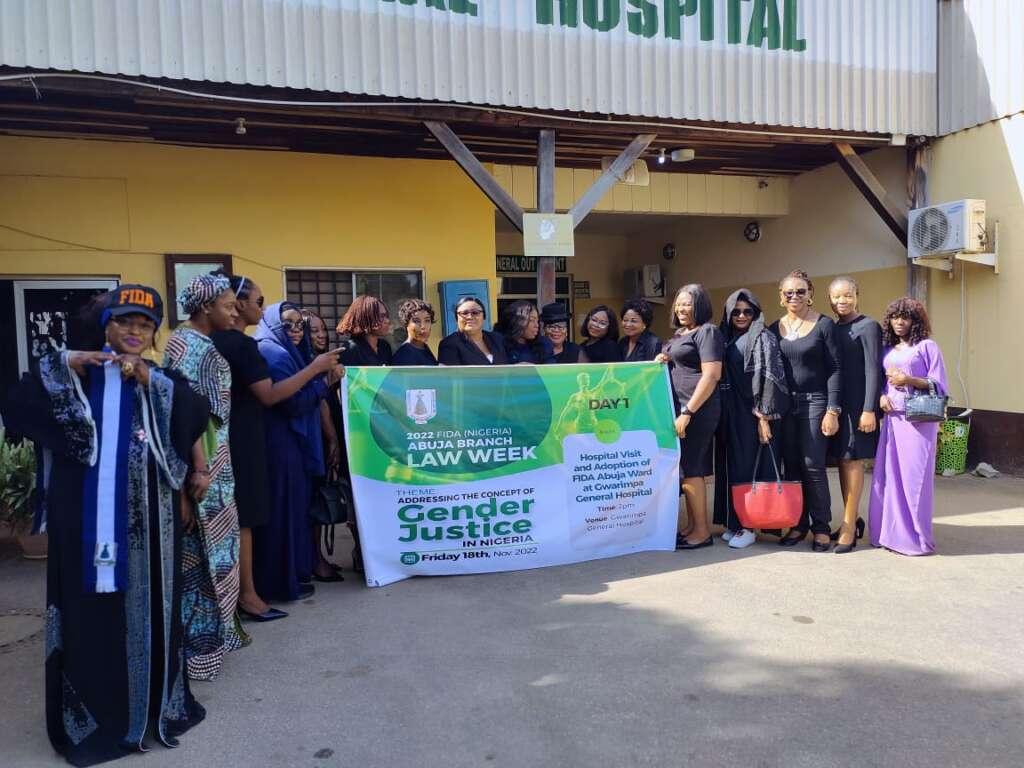
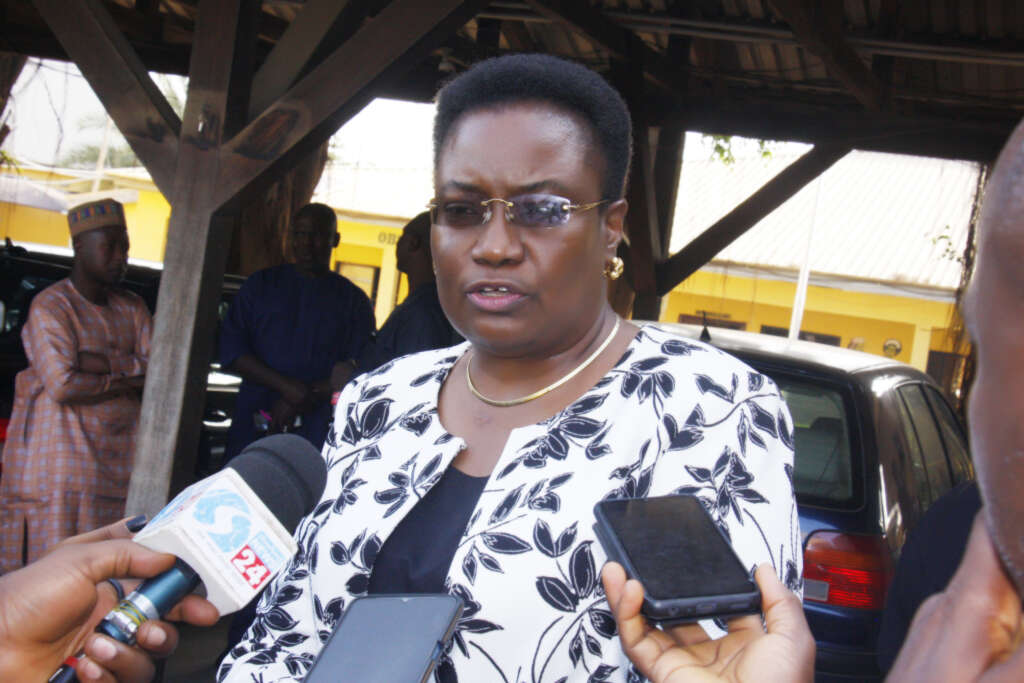
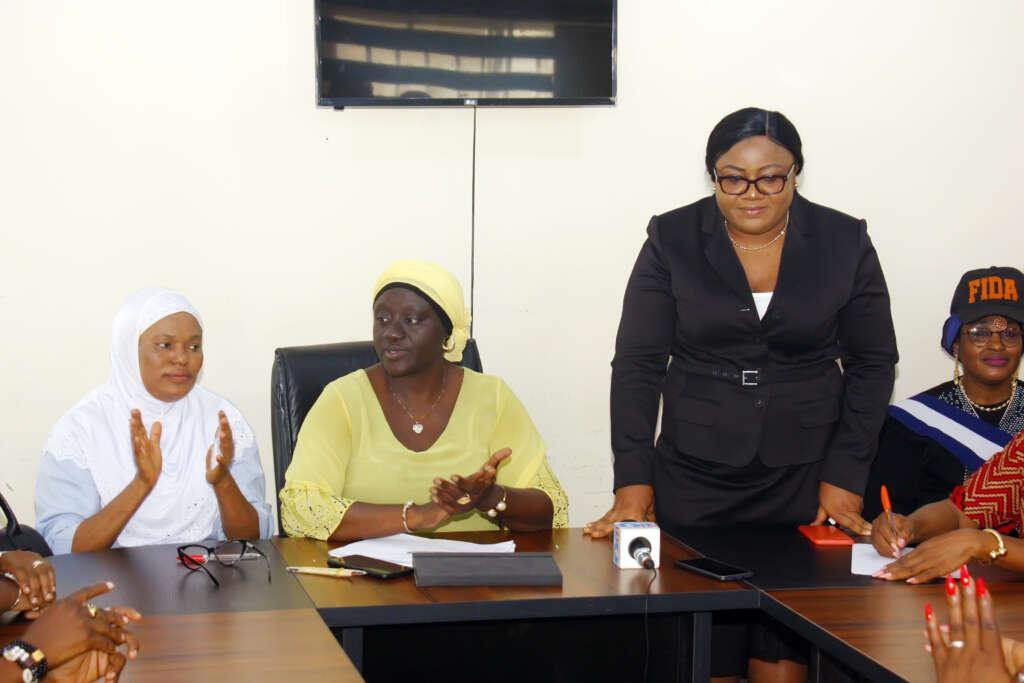
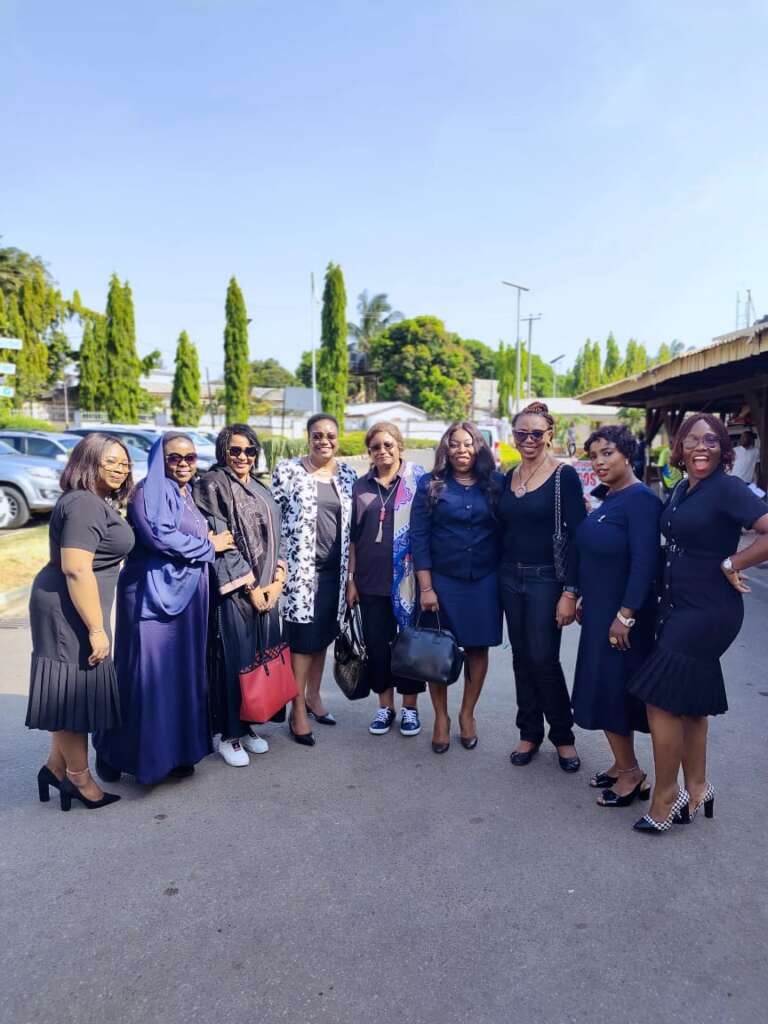
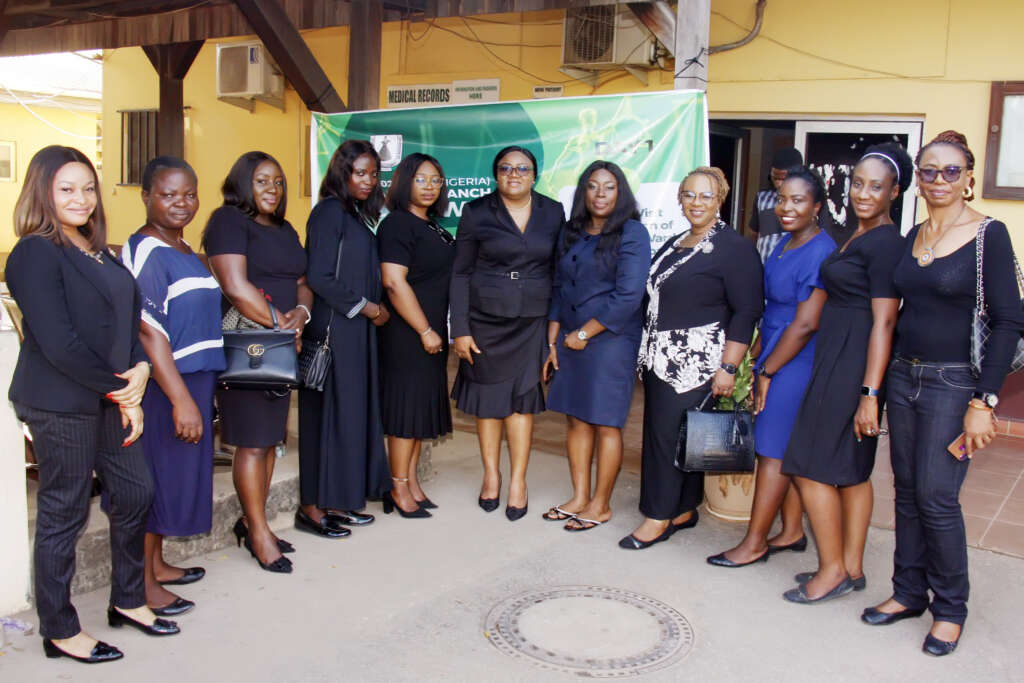
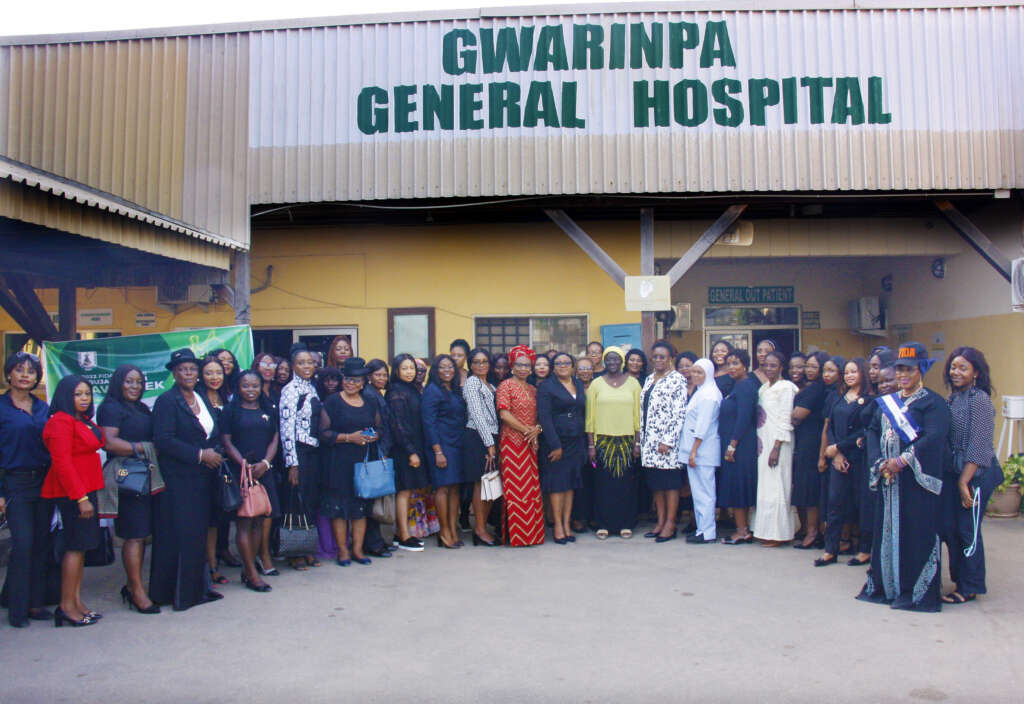
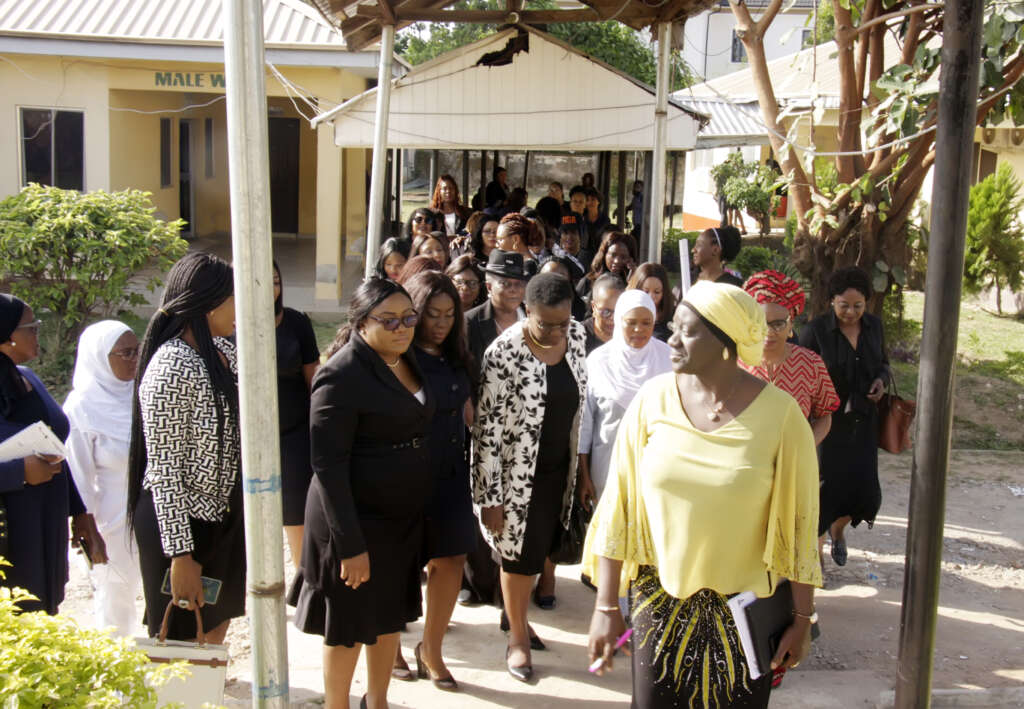
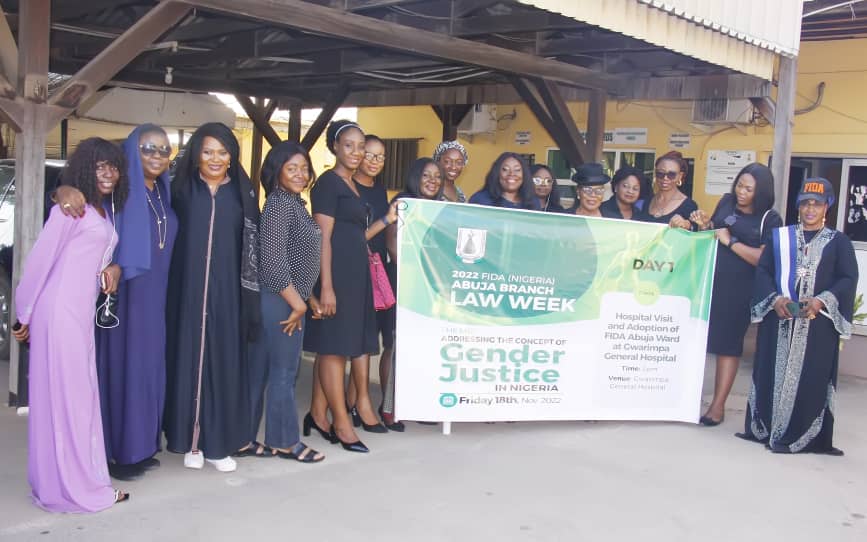
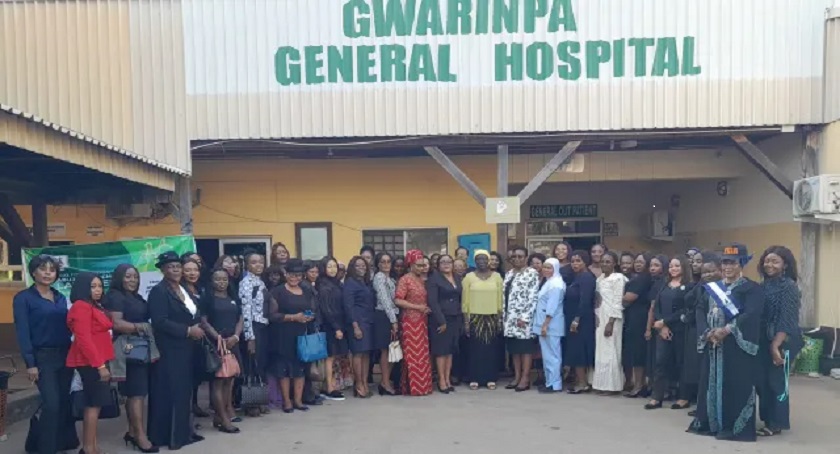
The International Federation of Women Lawyers, FIDA Nigeria Abuja branch commenced its 2022 Law Week on Friday with Jumaat Prayers at the Maitama mosque in Abuja. Thereafter members proceeded to Gwarmpa general hospital where they adopted the hospital’s labour ward.
“Each time a woman goes into labour, she puts her life on the line.” – Ezinwa Okoroafor, FIDA International Director
The 2022 Law week of the International Federation of Women Lawyers, FIDA Nigeria, Abuja kick-started on Friday with the adoption of the Labour Ward Gwarimpa General Hospital.
The branch led by FIDA International Director, Mrs Ezinwa Okoroafor, Chairperson of FIDA Abuja branch, Ms Chibuzor Maureen Nwosu, Chairperson of 2022 FIDA Abuja Law week Planning Committee, Mrs Chioma Onyenucheya-Uko, many elders and senior FIDA members visited the hospital and adopted the Labour Ward as part of activities lined up to mark its 2022 law week.
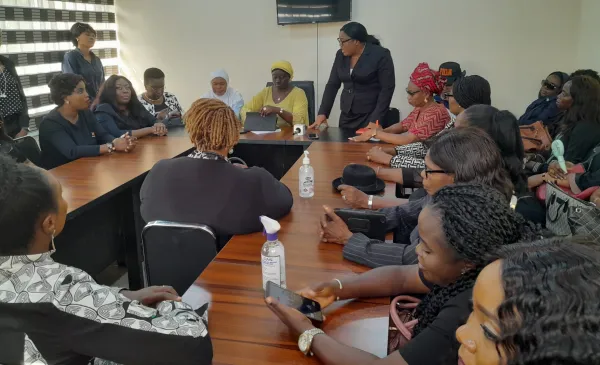
FIDA Abuja Chair delivering her address
While the adoption is in acquiescence with FIDA Nigeria’s adopt-a-ward initiative where every branch is expected to adopt a hospital Ward, the choice of Gwarimpa General hospital was premised on the fact that it caters for a number of poor income earners in the suburbs around its locality and boasts of nearly an entire top management headed by women.
The theme of FIDA Abuja’s 2022 Law week is: “Addressing the Concept of Gender Justice in Nigeria.”
In her address to the Senior management team of the hospital, Mrs Okoroafor noted that “each time a woman goes into labour, she puts her life on the line; she makes every effort to impact society by bringing out that child. When a woman is giving birth, she is helping to build the nation. She is contributing to national development. A woman should not pay the price with her life because she’s giving birth.”
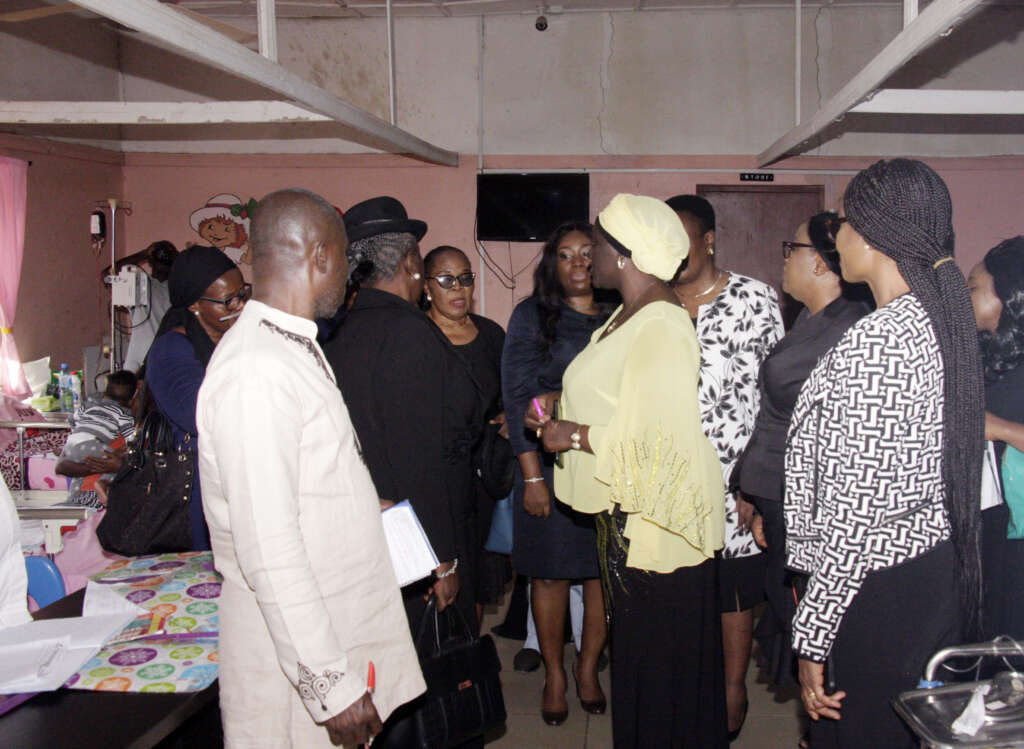
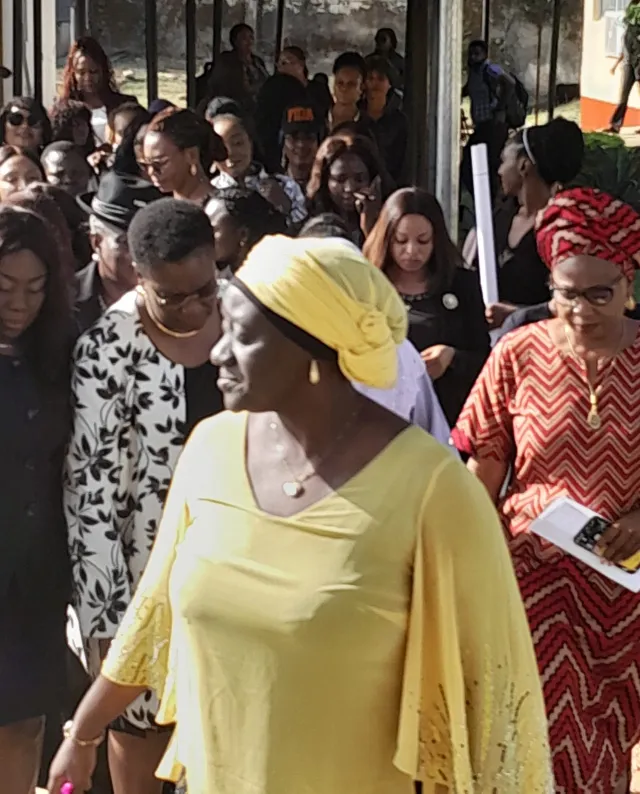
Dr. Halima Bello, CMD of Gwarimap General Hospital taking the FIDA delegation on a tour of the hospital
Okoroafor also disclosed that FIDA’s task includes protecting the interest of women and children based on the realisation that the happiness of the home and the strength of a society depends on the well-being of the women and children.
Explaining what FIDA will do for the hospital, having adopted the labour ward, the International Director said “it’s not a sprint or one-off thing. It is a journey and we will work closely with the Chief Medical Director to know the areas of need for the ward and assist in the best way possible.”
In her remarks, the Chairperson of FIDA Abuja branch, Chibuzor Maureen Nwosu revealed that the hospital was adopted on account of the high number of indigent women and children that access the hospital.
“Since we have adopted the Labour ward, it is now our responsibility to come from time to time and render the help we can. FIDA has noted some of the needs of the hospital and we will come back again to do more in order to impact the lives of women and children.”
Also, the Chairperson of FIDA Abuja 2022 law week, Chioma Onyenucheya-Ukoh noted that to make the law week a wholesome event and in furtherance to the mandate of FIDA which is for catering for the welfare and interest of women and children, there is no other better place to go except to a hospital where women on a daily basis and by the minutes labour to bring to life for the growth of society and humanity.
An elated Chief Medical Director (CMD) of Gwarimpa General Hospital, Dr Halima Bello described the visit as laudable and commended FIDA Nigeria Abuja branch for the visit and donations as well as their interest in the welfare and well-being of the women.
The CMD and her team led the members of FIDA Nigeria Abuja branch on a tour of the hospital where FIDA members observed the state of things that need their support and intervention.
Some of the items needed in the hospital include B.P apparatuses, weighing scales, standing air-conditioners, chairs, autoclave, sonic aid, bedside lockers, window blinds and many more.
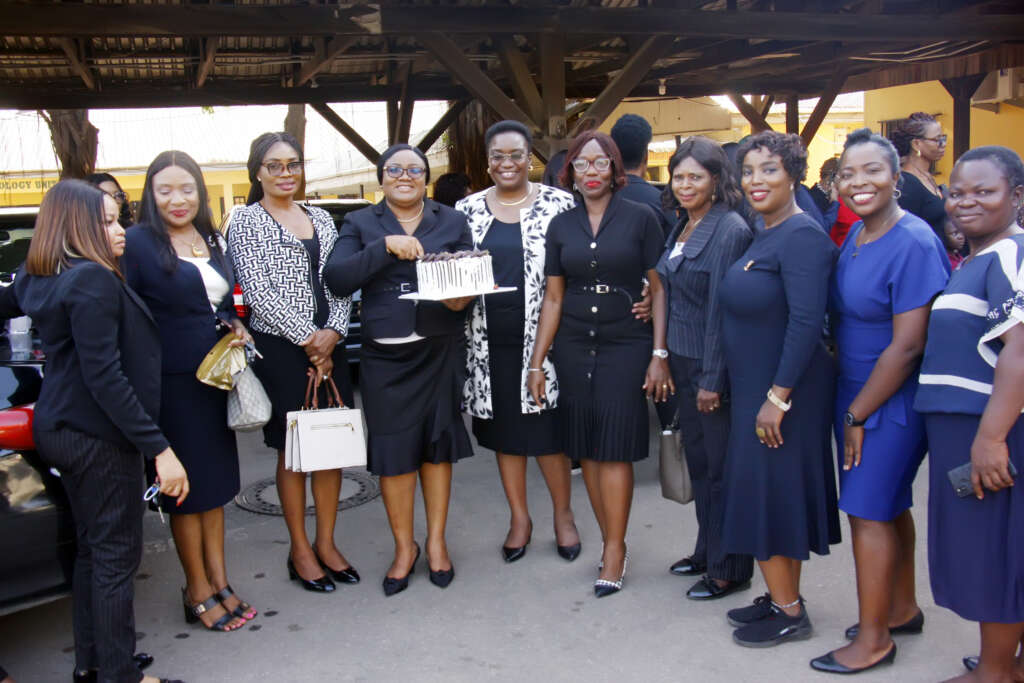
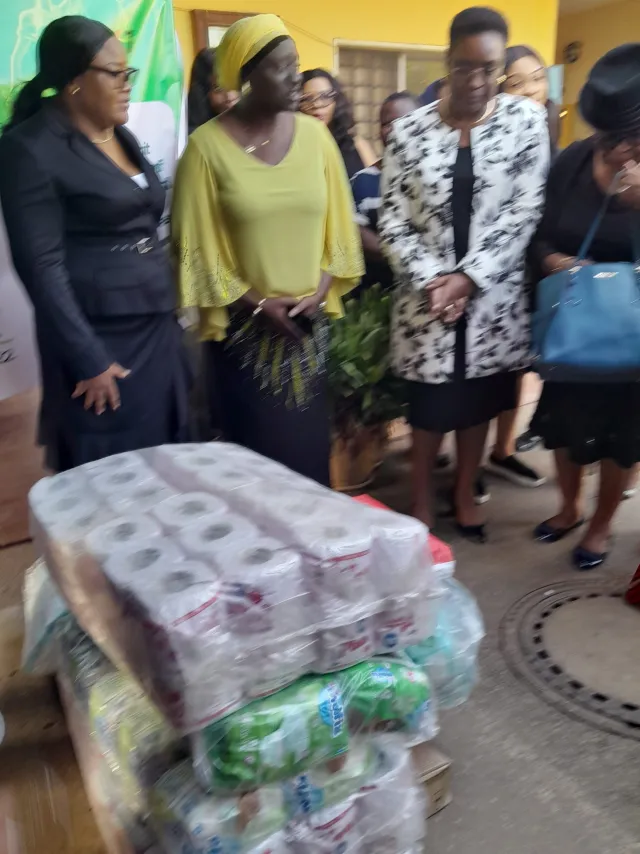
FIDA at the end of the visit made some donations to the hospital.
Oputa JSC restated the four criteria an applicant must meet for the grant of an interlocutory injunction: “…”
The statute restricts relief to contexts in which the petitioner has supplied proof of consistent use: “…”
The Supreme Court pointed out the exceptions to the no-liability-without-damage rule: “…”
Ben Nwabueze argues that Nigeria’s constitutional bill of rights incorporates freedom of private enterprise: “…”
Lead-ins like these show that you understand the authority you’re about to quote. It shows professional responsibility, diligence, and respect for the reader. It is also a smart rhetorical device.
When Jesus Christ said, “Verily I say unto you, Except ye be converted, and become as little children, ye shall not enter into the kingdom of heaven,” Matthew 18:3, Holy Bible (KJV), he was urging his followers to become childlike, not childish.
Childish, a negative adjective, connotes immaturity, peevishness, puerility, and silliness.
Childlike, a positive adjective, connotes innocence, simplicity, truthfulness, and joie de vivre.
Like many other observers, I read with interest your latest intervention at the opening of the All Nigeria Judges’ Conference of the Lower Courts recently held in Abuja. A major part of your intervention, as reported by newspapers, is a message to your brothers on the bench telling them you are not unaware of their plight in absolving their roles; the word you used was “oblivious”. You assured those judges that you are not oblivious of their challenges and implied that you will do something about it. Very well, I not only agree but I will also join you in advocating for a free, independent, fairly enumerated, and well-serviced judiciary.
Your Lordship also took his time to appreciate the efforts of his brothers for what he termed the “contributions of the Judiciary to the sustenance of Nigeria’s s democracy” and therein lies, my Lord, the crux of today’s epistle addressed to you: the role of the judiciary in a democratic system.
Ordinarily and summarily, most people are used to assuming and hoping that the main role of the judiciary in a democracy is that of interpreting the law in a way that ensures that the least of us can get justice regardless of what we are in contention for and against who we are contending. It is not often said, this assumption and hope are however built on the idea that the judiciary will make sure that all acts of the state to whom we all, governed and governors, submit ourselves are not in violation of the highest of laws that bind us all together. Those laws more than any other laws are the few ones that make up what we call the constitution.
I am sure that Your Lordship will agree with me that in public conversations around governance and the rule of law, there is, to me a sad and fascinating, tendency to talk about democracy without using the term and referring to the concept of sovereignty. It is sad and fascinating because the concept of sovereignty is to me the one concept that reminds us that legislators make laws in the name and on behalf of the people, the executive act and administer in the name and on behalf of the people and that your brothers of the bench deliver their sentences in the name and on behalf of the people too. It was worth reminding us at this point of two things. One is that what differentiates the ruled from the rulers are elections, the latter conceived here as the source of and legitimacy of sovereignty, as well as a form of contract in which manifestos are the offers and majority of votes, are the consent. Second point is that the most solemn, clearest, and most participated moment in which sovereignty is exercised and conferred is during elections.
It is therefore wise and useful in my view that we all remember that each time the judiciary intervenes in matters of elections, we must remember that sovereignty is at stake. We need to note that interventions in electoral matters more than any other intervention opens the judiciary to the scrutiny of the many in the land as it goes beyond the dispute beyond two private or individual parties in contention.
Your Lordship allow me to remind the courts through you that this scrutiny puts the judiciary on trial in matters of election and that in that trial it is natural for people to remember that of all powers of a democratic state, the judiciary is one power that is not elected by the people. More than other powers of the state the judiciary is one power whose acts and utterances must easily and generally be perceived as fair, clear, logical, timely, and based on common sense.
With facts at hand, I am sad to report that so far so bad for the judiciary, as the courts have on too many occasions transferred the will and voice of the people formulated via votes from one politician to the other and replaced one ruler with another not based on elections but based on rulings informed by persuasive skills and other capacities of lawyers.
The case of the ousted Imo state governor Emeka Ihedioha who was summarily replaced by another contending politician who got less votes from the people is an informative example from our recent past. It is not the only example but I have chosen the Imo case because some of the people of Imo state call the sitting governor a Supreme Court governor. Maybe they are foes of the sitting governors and friends of the ousted governor but the point is that the court needs to make sure its name does become linkable to such dichotomies.
If Emeka Ihedioha’s case is history, the case of Ikechi Emenike is current affairs. Printed papers and digital publications of the past days a full of the details of how the APC came up with Ikechi Emenike through an election certified by INEC as their candidate and how the court decided that the candidate of the APC should not be Ikechi Emenike but Dr. Sampson Ogah. In the historical case of Emeka Ihedioha, power was transferred from PDP to APC, in the case of Ikechi Emenike power is been transferred from one faction of the APC to another faction of the APC. In both cases, like other cases, power is being transferred by the judiciary with no regard or indeed in violation of the will and expressions of voters. What are we dealing with here, a government of the judiciary by the judiciary?
Your Lordship, such government is not acceptable in law, it does stand well with logic and it does not sit well with tradition and common sense. Even where a politician is deemed devil incarnate, a lunatic, a scoundrel, or a renowned dullard, the best and highest the judiciary should do is to send his or her mandate to the people who own sovereignty and tell them to express their wishes again through elections. Even INEC, the body charged with regulating elections, should not decide who rules or run, all it should do is make sure that the process is free and fair and take note of who wins.
Join me if you can @anthonykila to continue these conversations.
Anthony Kila is Centre Director at CIAPS Lagos. www.ciaps.org.
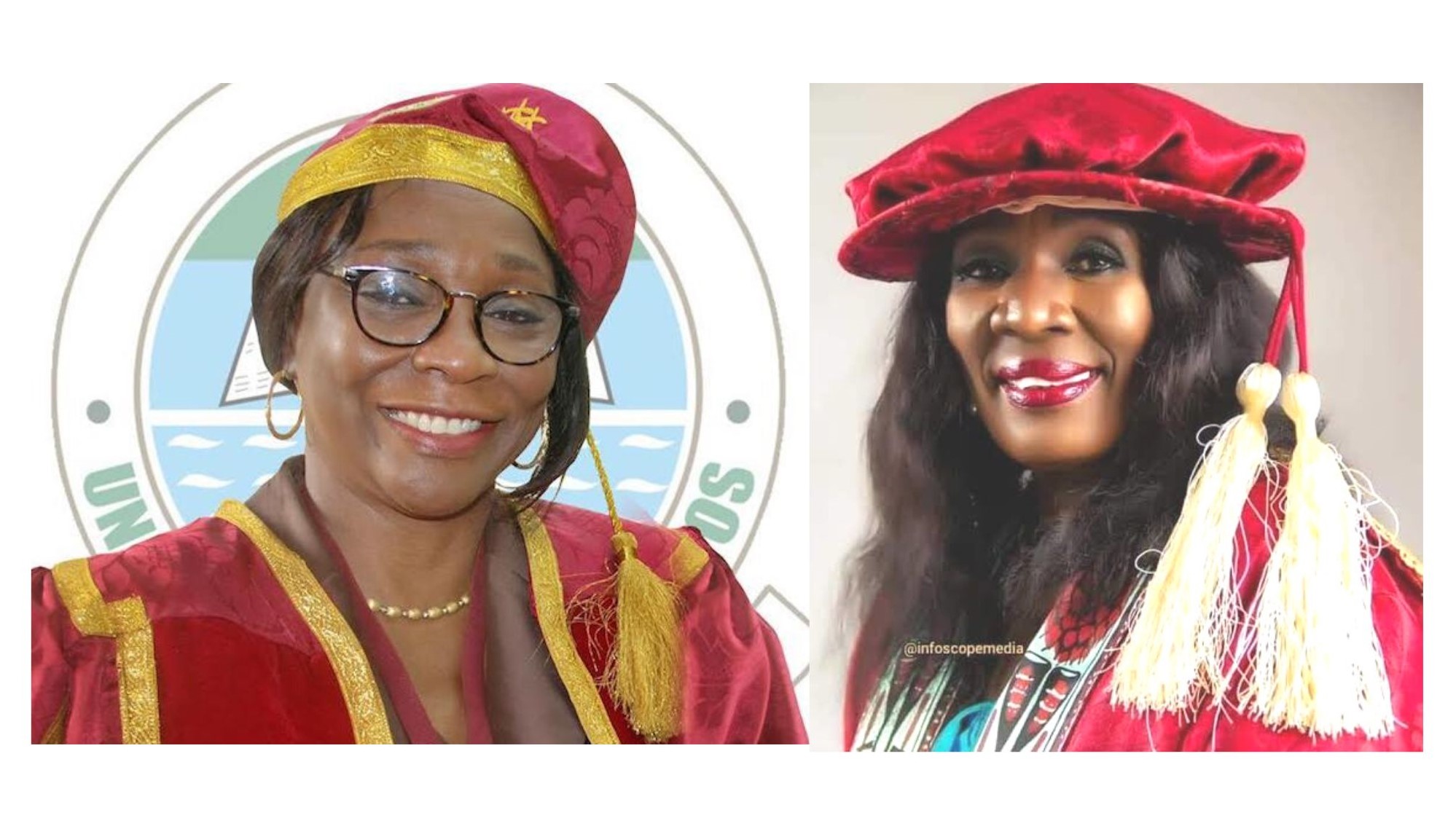
Her appointment was announced on Friday 7 October 2022 by the University of Lagos (UNILAG) governing council and when Professor Oluwatoyin T. Ogundipe’s tenure ended on 11 November 2022, she took over as the first female vice-chancellor in the university’s 60-year history.
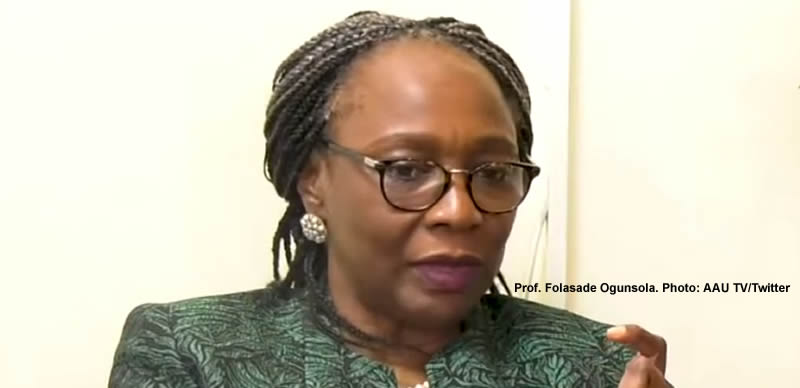
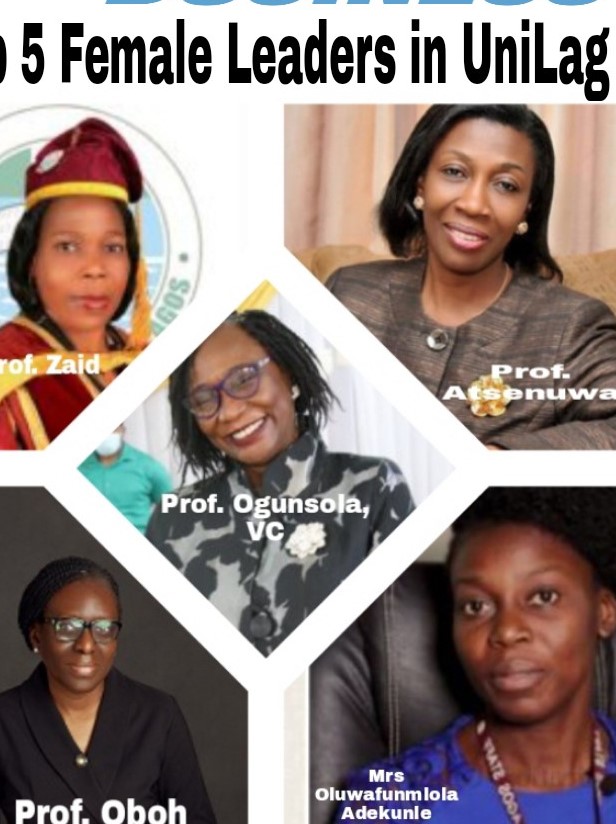
Professor Folasade Ogunsola, the 13th vice-chancellor of UNILAG, a first-generation university whose management team now boasts of five as women principal officers is a disease control specialist, with particular emphasis on HIV/AIDS. A woman of firsts, she is the first female Provost of the College of Medicine University of Lagos (CMUL).
Sequel to a crisis and the removal of the Vice-Chancellor, Professor Oluwatoyin Ogundipe, by the Wale Babalakin-led University Council, Ogunsola was appointed Acting Vice Chancellor of the University on 24 August 2020. At the time of her appointment in an acting capacity, she was the Deputy Vice-Chancellor (Development Services) of the University; a position she held between 2017 and 2021.
Her research interest is in the regulation and management of viral diseases, especially HIV. She is the principal investigator at AIDS Prevention Initiative in Nigeria at the University of Lagos.
Professor Bolanle Olufunmilayo Oboh of the Department of Cell Biology and Genetics, Faculty of Science is the Deputy Vice-Chancellor (Academic and Research) of the University of Lagos. Her election was confirmed at the Statutory Meeting of Council held on Thursday, March 3, 2022.
Professor Bolanle Olufunmilayo Oboh is a Professor of Genetics. A Biologist & Plant Scientist by training, she is a specialist in the biodiversity studies of local vegetables, tree crops, and small ruminants, especially goats. She has been on many projects, successfully delivered in many states of Nigeria, some of which are: Compliance Monitoring of Environmental Impacts of Artisanal Mining in Ekiti State for the National Environmental Standards and Regulations Enforcement Agency (NESREA), and many others.
Professor Ayodele Atsenuwa of the Department of Public Law is the Deputy Vice-Chancellor (Development Services) of the University of Lagos. Atsenuwa is a Professor of Public Law at the Faculty of Law, University of Lagos. Her teaching and research interests are wide and traverse Criminal Law and Criminal Justice, Human Rights Law, Gender and the Law, Law, and Religion, as well as Health and Migration Law.
Within the legal academia, she is widely respected for her initiatives aimed at bridging the gap between legal academics and legal practice and is acknowledged for her efforts at evolving more development-oriented law degree programmes in terms of content and teaching methodologies. Outside the university system, Professor Atsenuwa has done much to contribute to closing the gap between legal theory and practice and to the advancement of sustainable development in Africa, through her leadership engagements. A member of the Institute of Directors (IOD), she has served on the Boards of several institutions and organisations.
Prof. Yetunde Zaid is the University Librarian at the University of Lagos. She holds a Masters and Ph.D. in Library Science from the University of Ibadan, Nigeria. She has over 19 years of professional practice in managing information services to both students and faculty at the University of Lagos. A Fulbright Scholar, she won the African Research Fulbright Scholar program and completed the nine months fellowship at the James S. Coleman Africa Studies Center, University of California, Los Angeles in May 2017. Zaid is a member of various professional bodies and is currently Secretary of the Lagos Studies Association, an interdisciplinary and international association of academic and non-academic.
Mrs. Oluwafunmilola Yetunde Adekunle whose appointment was approved as Bursar by UniLag Governing Council on 6 October 2022, joined the services of the University in 2005. Until her appointment was the Deputy Bursar, Treasury. Adekunle, a Fellow of the Institute of Chartered Accountants of Nigeria (ICAN), holds Bachelor’s and Master’s degrees in Accounting from the University of Lagos.
Federal University of Technology (FUTO) Owerri, Imo State
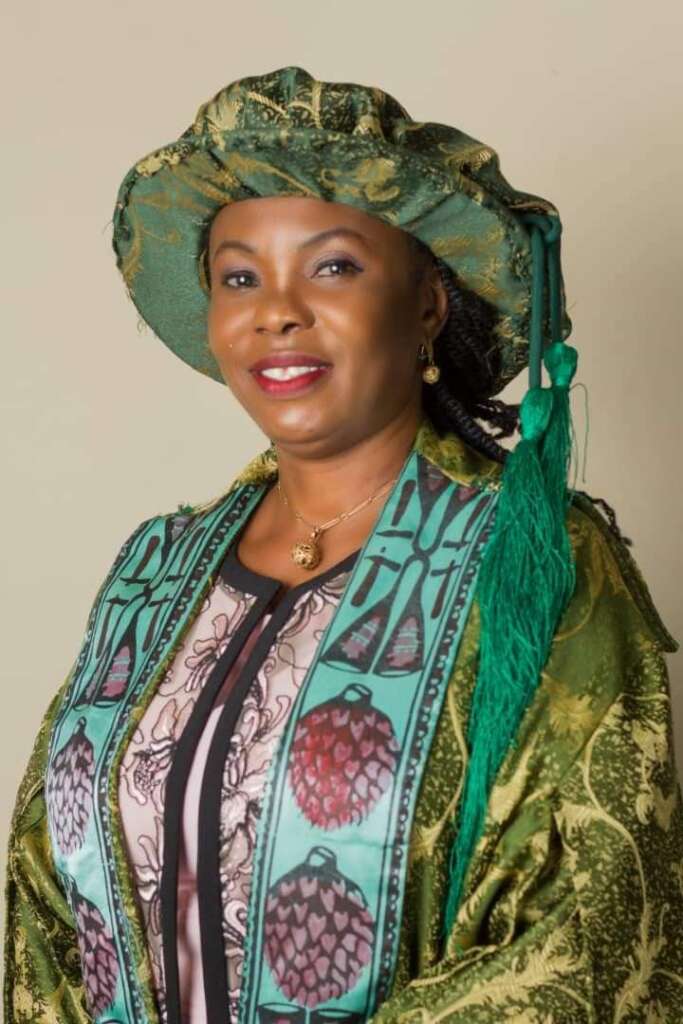
Professor Nnenna Nnannaya Oti, a professor of Soil Science and Environmental Conservation is the eighth substantive Vice-Chancellor of FUTO and the first woman to occupy that seat in 41 years.
Prof. Nnenna Oti
Born on 15 November 1958, Nnenna Oti Beat six other candidates for the position and resumed office on 19 June 2021. Prof Oti holds a Bachelor of Agriculture degree (B.Agric) in Soil Science from the University of Nigeria Nsukka, UNN; (First Class Honours), Masters in Soil Science (Soil Biology and Biochemistry Option), UNN; a Postgraduate Diploma in Irrigation Engineering (Distinction) from Catholic University Leuven, Belgium and capped her academic laurels with a Ph.D. in Soil and Environmental Conservation from FUTO.
Prof. Oti with over 34years in academia has had hands-on experience working as a consultant to the government and private sector and at various times in diverse capacities ranging from TETFund, Anambra Imo River Basin Development Authority, National Biotechnology Development Agency, etc. She has over 65 academic papers, 40 seminars, and workshop papers, edited a handbook, 50 public lectures, and over 10 technical reports for the Federal government of Nigeria. Prior to her appointment, she was the Deputy Vice-Chancellor of Academics.
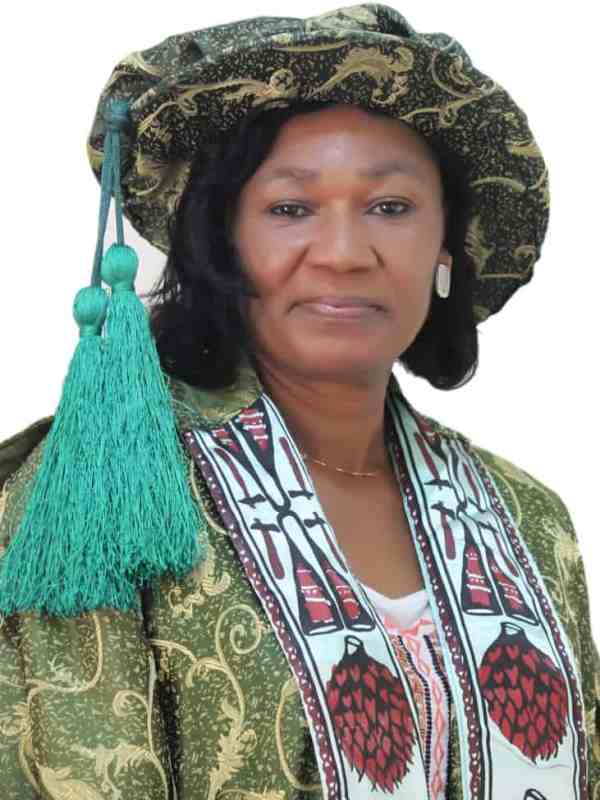
Dr. Mrs. Justina Ekere, a Chartered Librarian, emerged as the University Librarian in March 2021 after scaling through a rigorous interview process conducted by the FUTO Management led by the Vice-Chancellor (VC), Prof. Francis C. Eze. Dr. Ekere who resumed duty on 1st April was until her appointment as Chief Librarian, the Principal Librarian, and Head of the Reference Section, Nnamdi Azikiwe Library, University of Nigeria, Nsukka (UNN). She holds B.Sc. (Hons.), M.L.S, and a Ph.D. in Library and Information Science, all from the UNN. She has professional certifications from notable institutions including the Galilee Institute (GMI). Ekere underwent Professional training at Michigan State University in the U. S. and has equally gone through several other pieces of training in many countries.
Dr. Ekere
Her career progression began in 1997 when she was employed as an Assistant Librarian at the UNN and through diligence, hard work, honesty, and dedication, she has progressed and made a notable mark in the field of Library and Information Science with over twenty-three years of post qualification and cognate experience. Dr. Ekere has to her credit several articles published in highly rated reputable (Impact Factor- rated) International journals. She has also presented papers at numerous National and International conferences.
An author and reviewer, she has also contributed many chapters in highly recommended books as well as indexed works. She has been an adjunct lecturer at several Universities, including Imo State University (IMSU), Owerri, Nigeria, Enugu State University of Science and Technology (ESUTH), Enugu, Nigeria and Hezekiah University, Umudi, Nkwere, Nigeria. In 2004, the Governing Board of the American Biographical Institute (ABI) in recognition of her significant accomplishments within, and mastery of library and Information Science, conferred on her GREAT WOMAN OF THE 21ST CENTURY, a title reserved for women whose accomplishments and influence are as a result of their superior dedication and professional integrity on the global map.
Mrs. Helen Onyege Onuoha an Accountant with over 30 years of post-graduation experience in the discipline is the University Bursar. She obtained her Bachelor’s degrees in Accounting and Business Administration respectively from Morgan State University, Baltimore Maryland USA in 1984 and then went on to obtain an MBA (Master of Business Administration) in Finance from the same university in 1986. She worked in the banking sector for some years, before joining the Federal University of Technology, Owerri in 2001. She headed various units within the Bursary Department of the University before being appointed the University Bursar in April 2018. Prior to her appointment, she was the Deputy Bursar in charge of the Salaries, Advances, and Pensions Unit of the Bursary Department.
Mrs. Helen Onuoha
Onuoha is a member of several professional bodies including the Chartered Institute of Taxation and the Association of National Accountants of Nigeria. She has attended several conferences and served on many University committees.
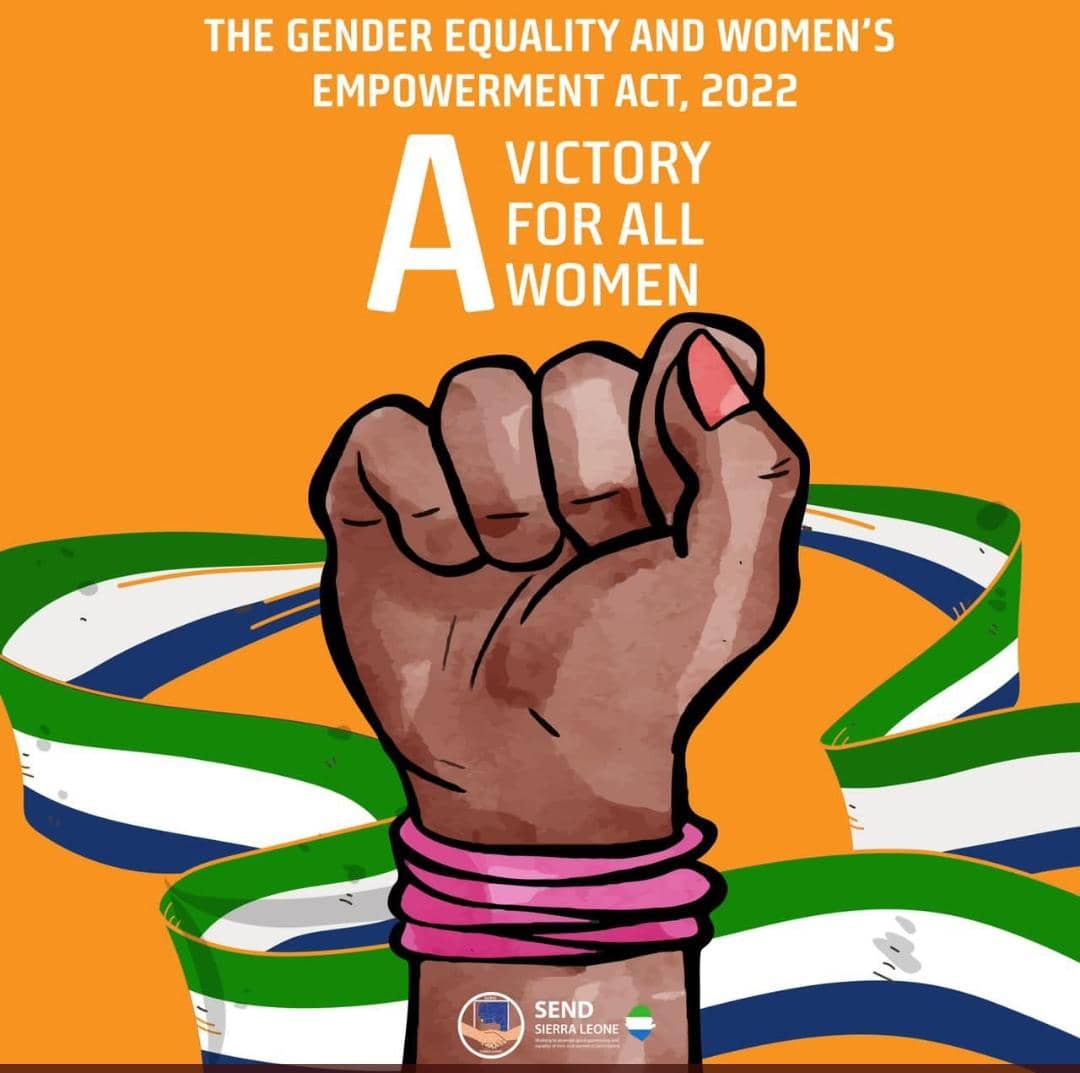
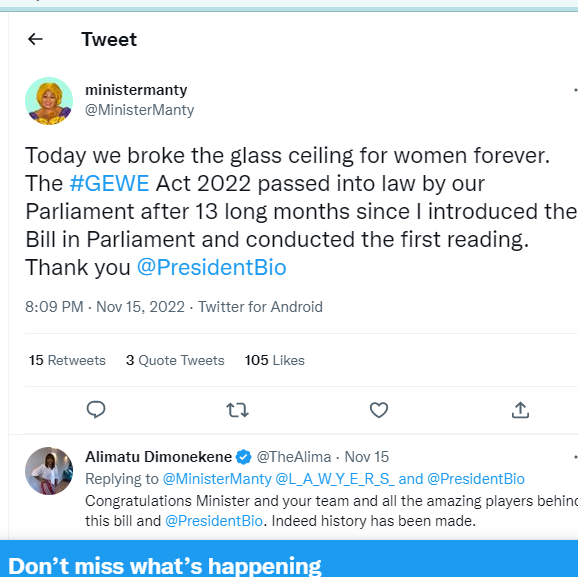
While Nigeria’s Federal Government has appealed the Federal High Court judgment which upheld the suit seeking enforcement of the National Gender Policy in Nigeria as a means of addressing discrimination against women in politics and governance, Sierra Leone has made history with its parliament unanimously passing a progressive “Gender Equality and Women’s Empowerment Act” that guarantees 30% of all public jobs will be held by women, 14 weeks maternity leave, financial inclusion, and other reforms!
Sierra Leone’s Minister of Gender and Children’s Affairs, Manty Tarawalli made the revelation on her Twitter page.
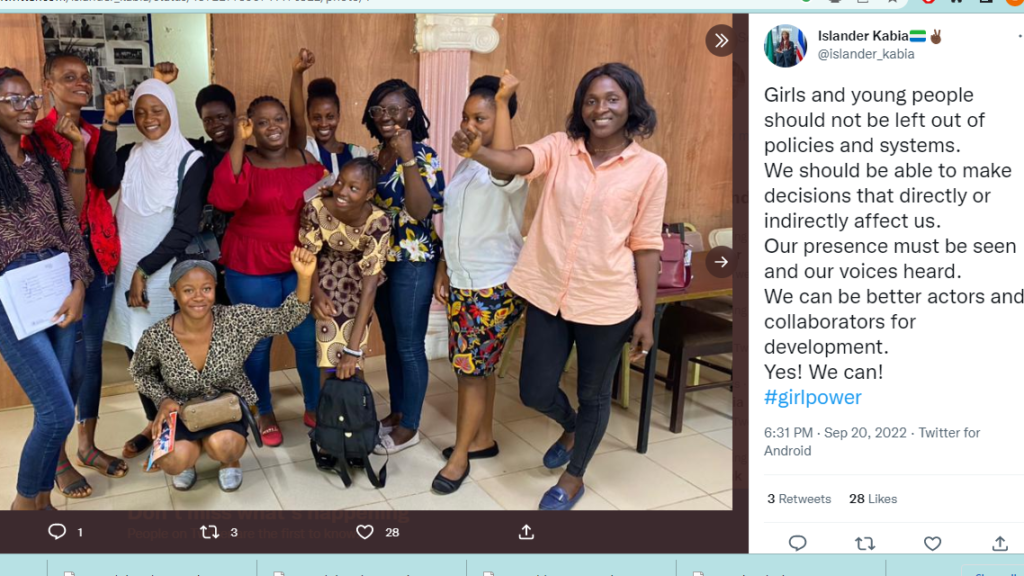
As the Sierra Leonean women rejoice, a Twitter user Islander Kabia remarked that girls and young people should not be left out of policies and systems.
In the suit filed by the Women in Politics Forum (WIPF) and a coalition of nine women groups, against the Federal Republic of Nigeria and the Attorney General of the Federation and Minister of Justice, seeking the mandatory implementation of National Gender Policy, Hon. Justice Donatus Okorowo of the Federal High held that the non-implementation of the National Gender Policy on 35% affirmative action on the appointment of women into political positions was a breach of women’s fundamental rights and dismissed the position of the Respondents.
The coalition of nine women groups comprises the Nigerian Women Trust Fund (NWTF), Women Empowerment and Legal Aid (WELA), Women in Politics Forum (WIPF), Centre for Democracy and Development (CDD- WEST AFRICA), Women Advocates Research and Documentation Centre (WARDC); Vision Spring Initiatives (VSI), YIAGA Africa, International Federation of Women Lawyers (FIDA) and 100 Women lobby group.
The applicants had argued that “The predominant appointment of men to decision-making positions, especially ministerial positions, with the exclusion of women is discriminatory against women and is in violation of sections 147 and 42 of the Nigerian constitution and article 19 of the African charter.”
The women through their counsel, Mrs Funmi Falana said that they were being discriminated against as a result of the belief that women were inferior to men.
She noted that the National Gender Policy (NGP) which provides that women should be allocated 35 per cent of all appointments, is being violated.
“Only seven of Nigeria’s 36 ministers are female. In the eyes of the law, 36 and 7 are not equivalent. Only four of the 37 members of the Federal Character Commission are women. This is ridiculous and insulting,” Mrs Falana had said.
She cited section 14(3) of the Nigerian Constitution to back her call for the enforcement of the NGP.
She noted that the provision mandates that the composition of the government of the federation or any of its agencies, and the conduct of its affairs shall reflect the federal character of Nigeria, promote national unity and also to command national loyalty.
The Nigerian government urged the court to strike out the suit but Justice Okorowo agreed with the applicants.
Unhappy with the verdict, the Nigerian government headed to the Abuja Division of the Court of Appeal seeking an order “setting aside the judgment; and striking out and/or dismissing the Respondents’ (women) suit in its entirety.”
The lawyers for Appellants (Federal Government and AGF; T. A. Gazali, SAN, T. D. Agbe, Suleiman Jibril, Ibukun Okoosi, Onyinye Halliday, O. D. Okoronkwo from Department of Civil Appeals Federal Ministry of Justice formulated 16 grounds of appeal for determination.
The government on one of its grounds submitted that: “The learned trial judge erred in law when he held that the Respondents’ suit was founded on enforcement of fundamental rights, and therefore disclosed a cause of action against the Appellants.
“Particulars Of Error: The Respondents’ suit was for the enforcement of the National gender policy. The National gender policy for 35% affirmative action on the appointment of women is not based on Chapter 4 of the Constitution. The National gender policy was a Federal Government policy which cannot be enforced by way of fundamental rights enforcement proceedings.
“The National gender policy was not made pursuant to any provision in Chapter 4 of the Constitution. The National gender policy has no bearing on the African Charter on Human and Peoples Rights Act. The Respondents’ suit was not commenced via the procedure provided under the Fundamental Rights Enforcement Procedure Rules, 2009.
“Failure to commence an action for the enforcement of fundamental rights under the appropriate procedure as provided by the Fundamental Rights Enforcement Procedure Rules, renders the entire proceedings null and void. The trial court having held that the Respondents’ suit borders on the enforcement of fundamental rights has invariably rendered the entire proceedings null and void as same was not commenced by way of the procedure provided under Order II Rule 2 & 3 of the Fundamental Rights Enforcement Procedure Rules.”
Hearing is yet to commence in the appeal which was filed on July 6, 2022.
I had known Frank for almost twenty years. He was a bright-eyed, very respectful young man who enrolled in our Medical Practice in our early years on Parsons Blvd, Flushing. Soon he got married and brought his wife to the practice. They were a happy family.
Frank was in very good health. A very handsome crossbreed of what looked like Italian/Mediterranean ancestry and African stock. Frank got a decent job and settled down to enjoy his life. The only problem was that Frank smoked. Quite a bit. I talked to him over the years but he always promised to stop “sometime.” He never did. Even after he developed high blood pressure, Frank kept his smoking habits.
Four years ago, Frank, now 38 had an accident. He was stopped at a red light when some crazy driver rammed into him from behind. He seemed ok but he came to see me the next day because he had pains in the neck. I gave him some painkillers and muscle relaxants, and also ordered X-Rays of his cervical spine, just to be sure that there are no fractures or dislocations. The result was a bombshell.
The neck was fine, but the X-Rays picked up a suspicious mass on top of Frank’s right lung suggestive of lung cancer. The radiologist suggested doing a CAT Scan of the lungs to further evaluate the findings on plain X-Ray. I promptly called Frank in to discuss the findings.
Frank’s reaction completely took me aback. In essence, he said that I was lying, that there was no cancer nothing, that I was making it up because he had refused to stop smoking. And he didn’t say it in a nice way. He was belligerent and abusive. Luckily, the wife, who is also my patient and actually until then used to be the more difficult of the two to deal with, was also present. She talked very nice and apologized on his behalf. I ordered the Cat scans.
The scans confirmed what we already suspected. Yes: early lung cancer developing in the upper lobe of the right lung, and very operable. I told Frank that the crazy driver probably saved his life. Frank was still in denial. He said he had no cancer. I didn’t argue with him but did my job by referring him to a thoracic surgeon. I was not sure what he was going to do, but my hope was that he would do the right thing after he has thought over the situation.
I didn’t hear from Frank for a few weeks, but I was happy one Monday evening, my only day for late hours consult at the time when Frank came in for blood tests preparatory for surgery. The surgery was successful and after further adjunct treatment, Frank became cancer free. After his surgery and when he felt strongly enough, he returned to the office and apologized profusely. All was well, or so it seemed.
Last Fall, Frank’s wife came to see me. It was already three years since Frank’s surgery. I had not seen Frank for a few months, but that was not unusual. She looked sad and gloomy. She said that Frank had suddenly developed a heart attack and died suddenly. I suspected that Frank went back smoking again after his brush with death three years earlier. Frank was survived by the wife and two beautiful daughters. He was 41 years old. One way or the other, the Grim Reaper got his man.
In my opinion, there’re hardly any cogent reasons to have taken any serving Judge away from his jurisdiction, for election matters.
It’s part of the problem we’re talking about; how many judges are in those states? Do we have enough already? How far have they performed in clearing the backlog of pending cases on their cause lists?
Now, you dislocate them by dragging them to election tribunals. In the 6 months or thereabouts, after the elections, the judges would abandon their own courts and the thousands of cases pending before them, for election petition tribunals. When they return from Election petition assignment, they’d take Annual leave or join Annual vacation 2023. That’s it for the year 2023. The litigants whose cases have been before them for years should go to hell.
▪Are election cases more important than the tens of thousands of cases pending before each court for years — in some cases for up to 10-15 years?
▪Why take these judges away and suspend dispensation of justice in those other cases?
▪Why not consider using
1️⃣retired Magistrates, judges/justices of High Courts, the FHC, NICN, CA, SC. Many are retired but very active, vibrant, not tired!
2️⃣Nonaligned SANs, scholars and other senior lawyers and activists. Many are willing and capable. After all, election petition job is well remunerated; that in itself is huge motivation
Besides, using serving judges makes the judges susceptible to control by the party that controls the incumbent government. Seasoned scholars, SANs, lawyers and retired jurists (chosen based on track record of performance and integrity) will be more fearless, courageous impartial and independent-minded.
He had been drinking heavily. When he eventually got behind the wheels, the vehicle began swaying from side to side.
Alas, the alcohol took charge of the steering, pressed Corporal Abayomi Edun down on his seat and then… the unthinkable happened. A General was slain.
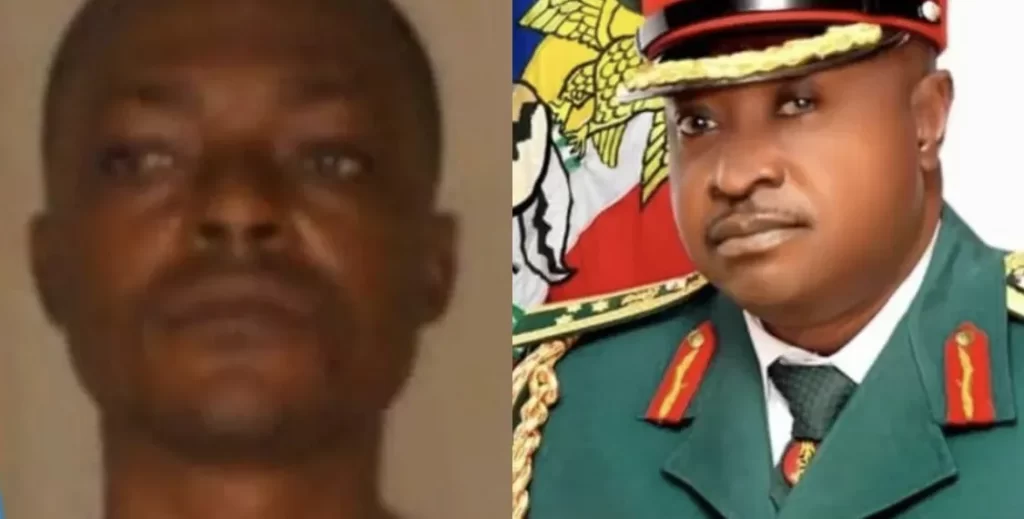
Brigadier-General Audu James was the Director of Finance of the Nigerian Armed Forces Resettlement Centre (NAFRC), Lagos.
He was killed while walking to his residence in the NAFRC Old Barracks when drunken Corporal Abayomi Edun hit him.
Sadly, he was confirmed dead at the NAFRC Medical Centre where he was taken to.
A source was quoted to have said. “Brig.-Gen. James left his office in the night. On his way trekking to his apartment inside the barracks, he was knocked down by the drunk soldier.
“The soldier also resides inside the barracks. The corporal was seen driving recklessly before hitting the senior officer,”
Corporal Edun has been detained by NAFRC provost marshals.
A fellow of the Association of National Accountants of Nigeria (ANAN), General Audu James had first and second degrees in Accounting and Finance, held memberships of the Nigerian Institute of Management (NIM), Nigerian Institute of Directors (MIoD), Chartered Institute of Taxation (ACTI), and the National Institute (mni).
Officers and men of the Nigerian Armed Forces Resettlement Centre (NAFRC), Oshodi, Lagos have since been thrown into mourning following the death of the Brigadier- General on Tuesday night.
For openly identifying with and supporting the LGBTQ community, Ama Governor, a Ghanaian law graduate, has allegedly been denied being called to the bar
Ama Governor was reportedly not invited by the Body of Benchers to the venue where the Call usually holds.
In a video that went viral on the internet, the TikTok star had earlier come out as a lesbian.
According to Ditabhey media, the Ghanaian socialite in addition to her sexual orientation has several body piercings and tattoos which reportedly led to her being sidelined after six years of rigorous study.
Ama was accused of not being committed to becoming a lawyer in good standing, and consequently denied the chance to practice law by the Ghana Bar Association.
Local media reports that some unidentified persons filed a petition against her over her contentious online personas and a punitive ruling was made against her as a result.
An unhappy Ama and some of her friends took to social media to challenge the Ghana Bar Association’s decision.
Bemoaning her fate, she said it was inappropriate and unjust for the GBA to suddenly prevent her from becoming a lawyer after she had passed all her exams.
Months ago in Nigeria, a young lawyer, Ifunanya Excel Grant came under heavy attack for posing with her lawyer robe and a wrap suspected to be cannabis or cigar on social media.
Immediately she went viral, some lawyers began to call for her disbarment insisting that she was already a liability to the bar. Others said she should be strongly admonished by the Nigerian Bar Association (NBA) for portraying herself negatively in the public.
Additional voices in the Bar held that whatever infraction she might have committed, it is not one that could get her name struck off the roll of Legal Practitioners in Nigeria.
Ifunanya Excel Grant has since reacted to the controversial post she allegedly made on social media to celebrate her call to the bar.
The pictures which elicited contentious responses mostly from lawyers had the young lady appear in a provocative dress, smoking a Cuban cigar, and was tagged “I Made it! I’m forever proud of myself! A BARRISTER & a STONER, sometimes a gangster. Celebrate with Me.”
Denying the post, Ms. Grant in a statement said it did not originate from her as she is neither on social media; and nor a Gangster.
The statement read: “My name is Ifunanya Excel Grant. I came across the article written about me on the barristerng.com website and I will like to make an official DISCLAIMER.
First and foremost the Facebook account where the displayed pictures were gotten from is not run by me. That account is a catfish account.”
According to the lawyer and model, the post is the handiwork of scammers who steal her pictures and create fake accounts pretending to be her.
“I am an Instagram model and a lot of scammers steal pictures from my page and create fake accounts pretending to be me just to scam people.
I am not on Facebook or any other social media app. The statement “I Made it! I’m forever proud of myself! A BARRISTER & a STONER, sometimes a gangster. Celebrate with Me” was not written by me.”
While clarifying that she is not a Gangster, she added that the picture with a cuban cigar was for modelling purposes, and not for her Call to Bar Celebration.
Grant who disclosed that she is currently not involved in legal practice of law warned the general public to be wary of those who want to tarnish her image.
“I AM NOT A GANGSTER or a stoner or anything of such. I was called to bar on the 28th of July, 2021. That was over a year ago.
“The pictures of me smoking my Cuban cigar (which is the only thing I smoke) was not a picture to celebrate my call to bar. I am an actress and a model.
“I do not practice law at the moment and those pictures are for modeling and acting purposes only.
I will not like anything to taint my career or tarnish my image.”
Our site uses cookies. By clicking “Accept All Cookies”, you direct Law and Society Magazine to store cookies on your device and disclose information in accordance with our Cookie Statement: cookie policyACCEPTREJECT
Privacy & Cookies Policy
Privacy Overview
This website uses cookies to improve your experience while you navigate through the website. Out of these cookies, the cookies that are categorized as necessary are stored on your browser as they are essential for the working of basic functionalities of the website. We also use third-party cookies that help us analyze and understand how you use this website. These cookies will be stored in your browser only with your consent. You also have the option to opt-out of these cookies. But opting out of some of these cookies may have an effect on your browsing experience.
Necessary cookies are absolutely essential for the website to function properly. This category only includes cookies that ensures basic functionalities and security features of the website. These cookies do not store any personal information.
Any cookies that may not be particularly necessary for the website to function and is used specifically to collect user personal data via analytics, ads, other embedded contents are termed as non-necessary cookies. It is mandatory to procure user consent prior to running these cookies on your website.