Home Blog Page 815

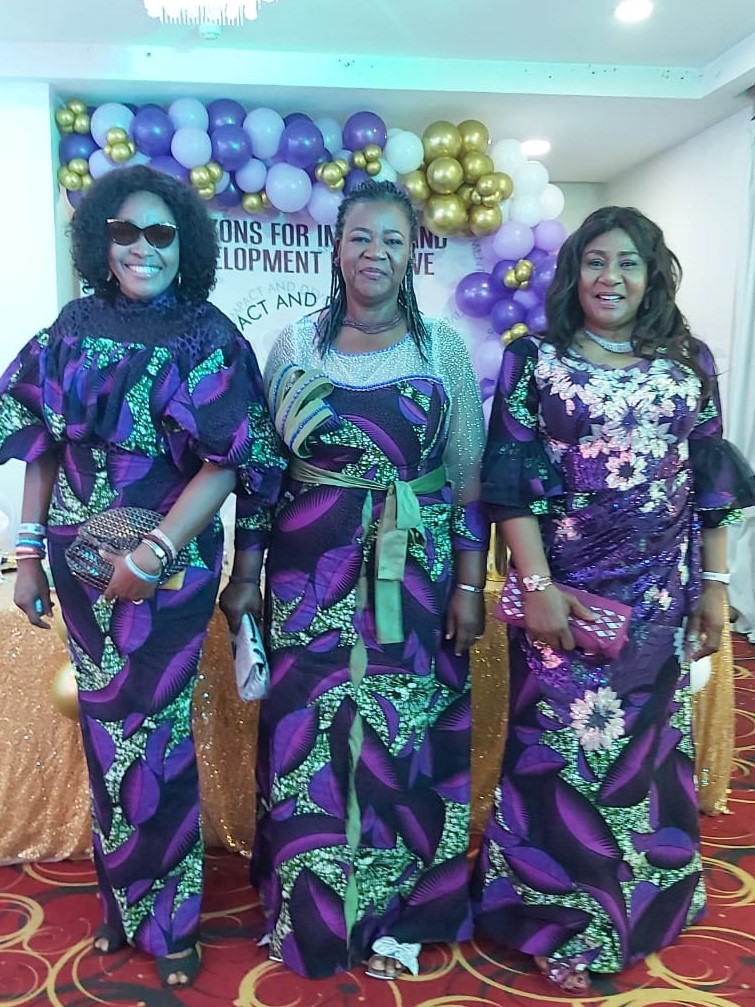
Amazons for Impact and Development Initiative kick-starts project- One Orphanage, one borehole

Amazons for Impact and Development initiative a not-for-profit organization has kick-started its operations with a zest to ensure that every orphanage across the country beginning with the Federal Capital Territory (FCT) has access to clean water.

It has been reported that 1 in 5 children worldwide does not have enough water to meet their everyday needs.

The figures in Nigeria are reportedly worrying, with 26.5 million Nigerian children experiencing high or extremely high-water vulnerability. That is 29 percent of Nigerian children.

The group at their inaugural session and gala night tagged: One Orphanage, one borehole at Abuja also called for more inclusion of women in leadership positions in the political circle.

 President of Amazons for Impact and Development initiative, Barr. Mrs. Rose Oby Nwosu, said there was a need to ensure gender equality, equity, and balance to enable women to grow in leadership.

Barr. Mrs. Rose Oby Nwosu

The Country Vice President, the International Federation of Women Lawyers, FIDA Nigeria, Mrs. Amina Agbaje was a guest of honour.

Other dignitaries at the event include the Port Harcourt-based Engr Sir Obi Iloanusi who was Chairman of the event, Mrs. Ebele Obi Cubana Iyiegbu, Esq., and High Chief Kenneth Ifekudu, CEO, Diamonds Leeds Ltd.

Dispelling the fears on the reported new- seven-count amended charge filed against our indefatigable client-Onyendu Mazi Nnamdi Kanu – before Justice B.F.M. Nyako of Federal High Court, Abuja

•Nnamdi Kanu (left) and AGF Abubakar Malami

By Ifeanyi Ejiofor

The attention of the Onyendu Mazi Nnamdi Kanu’s formidable legal team ably led by the legal Iroko of our time – Chief Mike Ozekhome, SAN – has been drawn to the much publicized (but rumored) new 7-count amended charge allegedly filed against our Indefatigable Client- Onyendu Mazi Nnamdi Kanu – by the Federal Government. From all indications, the new alleged charge has the same Charge No. FHC/ABJ/ER/383/2015, as the one already pronounced upon and struck out by the Court of Appeal, Abuja Division. The said intermediate court completely discharged Onyendu Mazi Nnamdi Kanu; and further prohibited his being tried or prosecuted in any court of law in Nigeria.

The said judgment of the Court of Appeal is extant and still subsists till date; and has not been set aside by any superior court. Onyendu Mazi  Nnamdi Kanu’ s formidable team ably by the oracle of the Law – Chief Ozekhome SAN – has already promptly appealed to the Supreme Court against the Court of Appeal’s ruling staying execution of its own judgment which had set Kanu free. The Appeal in respect thereto has been duly entered in Appeal No. SC/CR/1394/2022, at the Supreme Court, and is now awaiting a date for hearing.

It is also worthy to note that this judgment of the Court of Appeal still stands till date as same has not been set aside by the Supreme Court. It is imperative to state therefore that on the strength of this judgment, no CHARGE of whatever nature, and under any guise, can ever presented or stand against Onyendu Mazi Nnamdi Kanu before any court of law in Nigeria.

Our inquiry this evening upon reading about the phantom charge in the social media, revealed to us that the rumored charge was surreptitiously but clandestinely filed by the Federal Government hours after the judgment of the Court of Appeal was delivered on the 13th Day of October, 2022. This was even before it had received a certified true copy of the said judgment of the Court of Appeal. 

The filing of the said charge was clearly ill-informed and ill-advised, because the Prosecutor (Federal Government), we presume and may want to believe, was not at that point in time aware of the details, full import and implication, of the well delivered judgment of the Court of Appeal, at the time of filing the said charge. We also want to believe that this is what has led to Federal Government’s abandonment of the charge after it was hurriedly filed.

It is pertinent to note also that the Federal Government did not take any step to either serve the charge on our Client – Onyendu Mazi Nnamdi Kanu – or on our erudite lead Counsel – Chief Mike Ozekhome, SAN – after it was filed; even till this moment.

This to doubly assure UMUCHINEKE that our legal team eminently led by the legal icon of our time – Chief Mike Ozekhome, SAN – will be in court on Monday, the 14th of November, 2022, to tackle any underhand tactics or results the Federal Government may have planned to achieve by sleight of hand, with a charge which has been pronounced dead like “dodo”; and permanently buried.

UMUCHINEKE should never lose sleep over this new phantom charge by the grace of God, we are equal to the task in tackling any antics from the prosecutor.

Victory shall be ours, by God’s grace; and we move!

Signed:

Sir Ifeanyi Ejiofor, Esq.

IPOB’S Lead Counsel

11th Day of November, 2022.

Unbelievable litany of adulation by Prof. Emeka Chianu to his wife, Uduak

By Stephen Azubuike

Professor Emeka Chianu is a Professor of Law, at the Department of Private & Property Law, Faculty of Law, University of Benin, Benin City, Nigeria. He is one of the finest law teachers I have ever known. Prof. Chianu is a prolific writer who has many thoroughly researched works to his name. His books and articles influenced me greatly right from my days at the University of Benin.

In the course of reading his books, I found something fascinating in the introductory sections. You’ve never seen a thing like it. Prof. Chianu practically adores his beloved wife, Uduak, in all his books. I present to you his litany of adulation in honour of his wife. Enjoy!

In Law of Succession, UNILAG Press: Lagos, 2022, vii, Chianu said Uduak is loving and lovable:

Uduak is my wife of over three decades. Our love has grown with the years because she is a loving and lovable person. We are a winning combination as we share the ideal that hard work coupled with moral excellence yields immeasurable benefits: Proverbs 14:23; Amos 5:14. We exert ourselves vigorously to attain the promised thing – the life everlasting on Paradise earth: Luke 13:24; 1 John 2:25.

Uduak is a submissive wife. In Law of Landlord and Tenant (3rd ed.), Oliz Publishers: Benin, 2021, vi, he revealed:

As with many submissive wives, my dear Uduak has been content to ride pillion in our relationship. No matter what was, what is, or what will be: the thought, the promise, the benignity, the care-giving energies which make it mentally and physically possible for me to put thoughts into type, the everything – for eternity!

Chianu likened his wife to a rose in Law of Landlord and Tenant: Cases and Comments (3rd ed.), Nigeria Printer Publication: Lagos, 2020, vi:

At home, Rose is ready to hand and that is appreciated! Nothing I say can overdo the praise my vivacious wife, Uduak, deserves. Between her wise counsel and practical assistance, she blooms like blossom. To be sure, “we are satisfied with the approval and full of the blessing of Jehovah.” – Deuteronomy 33:23.

Uduak is a prized wife. In Law of Securities for Bank Advances (Mortgage of Land) (3rd ed.), Ambik Press: Benin, 2017, v, Chianu revealed her qualities:

I have spent more than half of my adult life with my prized wife, Uduak. She has proved a most loving, kind, caring, compassionate, tender, trustworthy and intimate soul-mate. For one thing, she helps me to hone my patience and perseverance, virtues required for the noble endeavour of literariness.

Chianu called her a Perfection of Prettiness in Company Law, LawLords Publications: Abuja, 2012, viii:

It would be ungallant of me to omit to mention my perfection of prettiness, my wife, Uduak, who has a way of lovingly nudging me beyond my threshold.

In Law of Landlord and Tenant: Cases and Comments (2nd ed.), Nigeria Printer Publication: Lagos, 2006, vi, Prof. humbly thanked her for marrying him:

Uduak, thank you for marrying me; you are an intimate companion, close confidant and a sweet wife.

Uduak is a housekeeper. In School Law for Proprietors, Teachers and Parents, Enslee Ltd: Benin, 2007, iv, Chianu noted:

I owe my wife, Uduak, an ocean of gratitude for being an uncomplaining tidy housekeeper, for most times, I am a jumble when I write.

Uduak helps out with typesetting – Law of Trespass to Land and Nuisance (2nd ed.), Ambik Press: Benin, 2007, v:

My dear wife, Uduak, very generously typeset some of the chapters and did so with the kindliest care. I am most grateful to her for this and all other acts of goodness which go beyond her duty as a wife.

In Employment Law, Bemicov Publishers: Ondo, 2004, vii, Chianu said Uduak is a loyal helpmate:

My loyal helpmate, Uduak, has blessed me with her enduring love, care and support. These past years Jehovah’s face has shone upon us most resplendently: Psalm 31:16a. May this be our lot in the zillion years ahead.

Uduak is a prized wife – Law of Securities for Bank Advances (Mortgage of Land) (2nd ed.), Ambik Press: Benin, 2004, iv:

My wife has continued to keep the home front warm and tranquil. She has been beside and behind me as I endeavour to remain intellectually active, administrative obligations notwithstanding. Uduak, you remain a prized wife.

Chianu said Uduak is a gift from God in Law of Landlord and Tenant, Oliz Publishers: Benin, 1994, v:

I should like to thank Uduak, my discreet, I might almost say, fastidious, wife whose meticulousness reflects in this book. She stoically put up with papers flying around in the house and kept arranging and rearranging the dining table which I converted to my study. No doubt, a capable wife is a gift from Jehovah (Proverbs 18:22; 19:14; 31:10).  

Uduak has an impeccable knowledge of English language. In Title to Improvements on Land in Nigeria, Ernslee Ltd: Benin, 1992, vi, Chianu revealed:

I wish to acknowledge the assistance of my wife, Uduak, rendered in the preparation of this book. She placed at my disposal her impeccable knowledge of English language while proofreading the manuscript. More than that, she exhibited amazing continence when I had to leave her in the cold very early in our married life while I worked on this book.

This article was first published on 6 November 2022 by Stephen Azubuike on https://stephenlegal.ng/unbelievable-litany-of-adulation-by-prof-emeka-chianu-to-his-wife-uduak/

Flogging of TikTokers: Lawyers recount how Kano magistrate court violated the constitution

Mubarak Isa Muhammed and  Nazifi Muhammad Bala, the two TikTok stars that received 20 strokes of cane as well as the additional sentence of ten thousand naira about £20) fine each, and cleaning of the court premises for 30 days for defaming Alhaji Abdullahi Ganduje, the governor of Kano State are still smarting over their humiliation.

A Magistrates’ court in Kano presided by Aminu Gabari found them guilty of defamation and sentenced them summarily.

Nigeria has seen a speedy increase in TikTok users in recent years, particularly among young people who oftentimes mock public figures, including government officials, by clipping images or videos to create comedies that attract massive followers to their accounts.

Legal practitioner, a former prosecutor in the District of Columbia, and member of the Maryland bar, Chief Chukwuma Odelugo described the entire case as a mockery of the rule of law.

According to Odelugo, “while I don’t know specifics about the criminal laws in Kano State, I doubt that the laws allow for the sentence of flogging and cleaning public toilets. Leaving aside the fine for a moment, every sentence under the criminal laws of Nigeria is subject to section 34 of the Constitution.

“Under 34(1)(a), every individual is entitled to respect for the dignity of his person, and no person shall be subject to torture or to inhuman or degrading treatment. And to this particular admonition, there are no exceptions.

“The Court probably read (1)(c) portion of section 34, which contains exceptions for prisoners. But 34(1)(a) doesn’t have any exceptions. Even then, the exception under subsection 34(1l)(c) only applies to prisoners. These people were not prisoners.

“The only purpose of this criminal prosecution was to humiliate them. And the Constitution doesn’t permit it.”

Likewise, the director of Amnesty International Nigeria, Osai Ojigho, expressed concern over the decision.

Ojigho in a statement stated that the authorities must quash the flogging sentence of Tik-tokers, noting that satirising those in authority is not a crime.

She said: “Amnesty International condemns the sentencing of Tik-Tokers, Mubarak Muhammad (Uniquepikin) and Nazifi Muhammad for allegedly defaming the governor of Kano in Northern Nigeria.”

Adding that the decision to remand them in prison for a week without trial was a brazen violation of their fair trial rights, Ojigho insisted that the authorities immediately and unconditionally release the two entertainers, as they are sentenced solely for peacefully exercising their human rights.

On the issue of flogging, the Constitutional Court of South Africa considered together five cases in which six juveniles were sentenced to receive a “moderate correction” of a number of strokes with a cane. It set out to examine whether the sentencing of juveniles to whipping under the Criminal Procedure Act was consistent with the Constitution.

The court however noted that consensus had been reached that legal provisions allowing corporal punishment of adults are inconsistent with the Constitution. Read more at https://endcorporalpunishment.org/human-rights-law/national-high-level-court-judgments/south-africa-1994-and-2000-constitutional-court-judgments/

Election Cases and bribery: Story of the Judge that does not take bribes

By P. D. Pius

I know a judge that will not accept bribe even when all others are alleged to have taken. There are many others like him in our courts but let me quote a summary of facts from a law report for you.

In the case of Ukachukwu v. Uba [2005] 18 NWLR (Pt 956) 1 at 3 it was reported as follows:

“This case strikes at the very heart of the integrity of the Nigerian Judiciary. It involved fraud, bribery, and corruption of two Justices of the Court of Appeal of Nigeria, Enugu Division. They were Hon. Justice Okwuchukwu Opene and Hon. Justice David Adedoyin Adeniji.

The two Hon. Justices were alleged to have taken bribes amounting to N27 million. Hon. Justice Opene was said to have taken N15 million and Hon. Justice Adeniji was said to have taken N12 million and as well as unascertained sums of money in three “Ghana-Must-Go” bags.

Consequent upon the bribe, they delivered a majority judgment on the 26th of February, 2004 in an election petition appeal to that court which is the final court of appeal in such matters, pursuant to Section 246 of the Constitution of the Federal Republic of Nigeria, 1999. The minority judgment, which was a dissenting judgment, was delivered by Hon. Justice Kumai Bayang Akaahs who was offered a bribe but rejected it. “

Justice K. B. Akaahs JSC (RTD) will not be found taking bribes to influence his decision on a case. He believes in substantial justice in accordance with the law. I am glad he was the one that unveiled my office at the heart of Abuja. There are many more upright judges like him. We pray for more such judges to find their way to the bench and deliver judgments based on law and substantial justice, especially in election matters.

Get a copy of Akaahs: The Conscience of a Man by Gloria Mebeiam Ballason to read his rich biography.

P. D. Pius, Esq

Abuja, Nigeria

[email protected]

08038944639

Is he really a bastard?

By Chief Raphael Makanjuola Esan

In this story of defamation gone awry between Segun Babatola v. Chief Remi Oguntuase, the moral is – be careful how you seek judgement. It might just confirm what you don’t want to…

Governor Adeniyi Adebayo of Ekiti State in the year 2000, set up a Petroleum Task Force to monitor the distribution and sale of petroleum products to ensure the availability of petrol at the controlled price. He appointed Chief Remi Oguntuase as the chairman of the Task Force.

The problem of scarcity of petrol was a matter of interest as well as concern to the public, hence the Broadcasting Service of Ekiti State, in one of its programmes, had a phone interview with Chief Remi Oguntuase on the problems facing the task force on the scarcity of petrol and the steps he was taking to combat the problems.

After answering questions from the moderator of the programme, the session was thrown open to the public for interested members of the public to ask questions from Chief Oguntuase.

The procedure was for the person who wanted to ask any question to first introduce himself and then proceed to ask his questions or make his contribution.

A seemingly hostile Segun Babatola phoned and introduce himself as Segun Babatola phoning in from Ado Ekiti.

He poured a lot of vituperation and invectives against Chief Oguntuase, accusing him of feeding fat on the public by making fortunes from the petrol scarcity by diverting petrol to a station operated by him where he was selling petrol at an inflated price, rather than the controlled price at which he was to ensure that it was sold to the public.

He refused to accept all the explanations offered by Chief Oguntuase that he did not operate any petrol station anywhere let alone sell petrol at inflated prices.

At a stage when the exchanges were really hot, the Moderator asked Chief Oguntuase if he had previously known the person phoning and making the serious allegation and Chief Oguntuase answered that he knew him as Segun Audu and not Segun Babatola and that he was actually the son of one Alhaji Audu who lived in the same area with him. After the programme, Segun Babatola commenced an action against Chief Oguntuase for defamation, contending that his Statement that he was Segun Audu rather than Segun Babatola amounted to calling him a bastard.

I was briefed by Chief Remi Oguntuase to defend the action.

I applied to the Broadcasting Service of Ekiti State for a copy of the recording of the programme where the words complained about were allegedly uttered but the Moderator said it had been obliterated and was no longer available.

I was shocked to note later during the trial that the Moderator, as a witness for the Plaintiff, on subpoena, came to court to tender the cassette on which he recorded the programme.

Chief Oguntuase briefed me comprehensively on the facts upon which he relied to say that he knew the Plaintiff as Segun Audu the son of one Alhaji Audu.

He even arranged for me to meet Alhaji Audu who told me that he was the reputed father of Segun, now answering Segun Babatola and that as his father, he sent him to two Muslim primary schools and a Muslim Secondary School and also trained him at the Technical College, Kaduna before he heard that he changed his name to Segun Babatola, claiming to be the son of one Chief J. E. Babatola, an Educationist and Politician, who once served as Minister in the Government of Western Region of Nigeria.

I pleaded all these facts in the Statement of Defence and denied that the Defendant called him a bastard but only said he knew him as Segun Audu rather than Segun Babatola by which he introduced himself on the programme. In the alternative, I pleaded the defence of justification in case the statement allegedly made by the defendant is held to be capable of conveying to the hearers the meaning that the Plaintiff was a bastard.

We further pleaded that at all material times, the Plaintiff’s mother was married to Alhaji Audu and was never married to Chief Babatola whom he was claiming to be his father and his records in all institutions he attended showed his name as Segun Audu and his father as Alhaji Audu until he allegedly changed his name to Segun Babatola, claiming to be the son of Chief Joel Ehinafe Babatola, the Olora of Ado -Ekiti.

At the trial, the Moderator of the programme at which the words complained of were allegedly uttered by my client was the first witness for the plaintiff who tendered the cassette of the recording on a subpoena duces tecum.

Then came the Plaintiff who stated that he was Segun Babatola but that the Defendant called him a bastard on the radio programme and that the statement of the Defendant lowered his reputation in the eyes of the public who heard the programme, which was listened to by a large audience of listeners in Ekiti and beyond.

Under cross-examination, I put it to him that his mother was married to Alhaji Audu as a spinster and lived with Alhaji Audu as his wife at the time of his birth and he agreed that it was true.

I also put it to him that Alhaji Audu named him at birth as Segun Audu, and he admitted that it was true.

I further put it to him that when he was of school age, Alhaji Audu as his father and as a Muslim sent him to the Ansar-Ud-Deen School, Ado -Ekiti and he was registered as Segun Audu, and he admitted that it was true.

I put it to him that as a Muslim, Alhaji Audu sent him to Ansar-ud-Deen High school, Ikole Ekiti for his secondary education and he was registered as Segun Audu, and he admitted that it was true.

He also admitted that after his Secondary School education, he attended the Government Technical College, Ado Ekiti and Higher Technical College, Kaduna, sponsored to both institutions by Alhaji Audu and registered as Segun Audu.

I put it to him that he had contact with Chief Babatola when the company in which he was working was seeking the assistance of Chief Babatola, then a Minister in the Government of Governor Adeyinka Adebayo in Western Nigeria and that it was Chief Babatola who told him that he was his biological father and persuaded him to change his name to Segun Babatola.

His answer was that it was not because of the contact that he changed his name.

He however admitted that he got close to Chief Babatola during the time of the contact and subsequently changed his name.

I put it to him that the Defendant was right when he said he knew him as Segun Audu as he might not have seen the newspaper publishing his change of name but they rejected the suggestion saying that the Defendant knew that he had changed his name. He; however, admitted that many of his schoolmates in primary and secondary school as well as technical College who did not read the Newspaper publication would still only know him as Segun Audu.

He admitted that Chief Babatola was never married to his mother but he was a product of concubinage between Chief Babatola and his mother.

He admitted that at all times relevant to this matter, Alhaji Audu was the husband of the mother who was never married to Chief Babatola but rejected the suggestion that if anyone called him a bastard, he would be right.

His next witness was Chief Joel Ehinafe Babatola, a retired Principal, a former Parliamentary Secretary and former Minister in the Government of Chief Obafemi Awolowo as well as the Government of Brigadier General Adeyinka Adebayo.

In his evidence, he testified that he was the biological father of the plaintiff although he was no at any time married to his mother. He told the court that he was interested in marrying the Plaintiff’s mother as a spinster but that the parents of the plaintiff’s mother, being Muslims, preferred that she should marry Alhaji Audu, a Muslim like them, but he was the one whose sexual intercourse with her resulted in the birth of the Plaintiff.

He testified further that when the Plaintiff came of age, he told him about their relationship and requested that the Plaintiff should change his name from that of Audu to Segun Babatola.

He tendered a copy of the Newspaper publication in which the Plaintiff changed his name from Segun Audu to Segun Babatola which was admitted as an exhibit.

He testified that since the time of the publication, the Plaintiff had been answering Segun Babatola.

Under cross-examination, the witness agreed that not all Nigerians buy and read copies of the Daily Times every day.

He also agreed that those who did not read the Newspaper would not know about the Plaintiff’s change of name from Segun Audu to Segun Babatola.

I then put it to him that at the time he said he wanted to marry the Plaintiff’s mother and had a sexual relationship with the mother which resulted in his birth, he was already married to one former Miss Familoni, a native of Ido Ekiti and he admitted that it was true.

I also put it to him that the marriage was contracted in a church under the Marriage Act, and he admitted that it was true.

He also admitted that his marriage to former Miss Familoni had produced grown-up children, one of which was a Medical Doctor and another was a graduate teacher.

I put it to him that he could not have married the Plaintiff’s mother at the time of his conception, having been married under the statute, which does not admit of his taking another wife, but he stated that he truly wanted to marry her.

I asked the witness if he knew that he would have committed the offence of bigamy if he married the Plaintiff’s mother after his statutory marriage but the court disallowed the question.

I then asked him if he knew that the complaint of the Plaintiff was that the Defendant called him a bastard and he said he knew.

I asked him if he knew the meaning of bastard and he said he did not know.

I gave him three dictionaries of the English Language as well as Black’s Law Dictionary to read the meaning of the word bastard.

I then put it to him that any child born of a father who was not married to the mother was a bastard but he said he did not know.

I also put it to him that since he was not the husband of the Plaintiff’s mother at the time of the conception of the Plaintiff, anyone who called the Plaintiff a bastard would not be wrong, but he said he would not know.

I finally put it to him that the Plaintiff was indeed a bastard and he refused to admit it.

I then modified the question and put it to him, that if the Defendant referred to the Plaintiff as a bastard, he would not be wrong but he refused to agree that he would be correct.

At that stage, I closed my cross-examination of the witnesses. After the evidence of the witness, the trial Judge asked the Plaintiff and his counsel if they would not like to review the case and make up their minds if they would continue the hearing of the case. They agreed to review the case and took a long adjournment to consider their position.

Before the next date of adjournment, they had filed a notice of discontinuance and the case struck out without any order as to costs.

Culled from Adventures in Litigation by Chief Raphael Makanjuola Esan, SAN, JP

The banker and the maiden: A true story of passion and pain – by Onigegewura

In this prose, Olanrewaju Onigegewura in his usual captivating storytelling style recounts the case of Miss Chineye A.M. Ezeanah v. Alhaji Mahmoud I. Atta (2004) 7 NWLR (Pt. 873)468).

“When my love swears that she is made of truth, I do believe her, though I know she lies, That she might think me some untutor’d youth, Unskillful in the world’s false forgeries”- William Shakespeare, The Passionate Pilgrim

When the Banker met the Maiden in the early 1990s, it was love at first sight, at least on the part of the banker. Mahmoud Attah was the Banker. Chineye Ezeanah was the Maiden. Attah was however not just an ordinary banker. He was a super banker. In fact, he was the chairman of one of the biggest banks in Nigeria at the time.

Chineye was as beautiful as she was elegant. She was described by one of the witnesses as ‘fine and charming’. Theirs was a story described by the Supreme Court as a story of so much love and so much pain. But at the time, neither Attah nor Chineye knew that what started as love at first sight would end up in court as a landmark case.

It was not exactly clear when they met. The chairman claimed they met in 1991. Chineye claimed it was in 1993. According to her, it was at her younger sister’s boyfriend’s house that they met and it was in January 1993. The chairman saw the beautiful lady who was ‘fine and charming’ and became besotted. He asked her to be his girlfriend. Chineye refused on that day. The chairman however refused to take no for an answer.

They went on as father and daughter. The chairman became the guardian. The maiden became his ward. With time, Chineye agreed to become his girlfriend. Attah must have been elated. He lavished love and money on the object of his affection. He rented an apartment for her in Maitama, Abuja. At the time when telephone was the exclusive preserve of the rich and a status symbol, the apartment had an installed telephone, courtesy of Alhaji Attah.

To ensure that the love of his life lacked nothing, Attah dedicated a protocol liaison officer of the bank where he was chairman to her. He introduced Chineye to the officer as his fiancée. It was the responsibility of the officer to run errands on behalf of the chairman for the maiden. These errands included sending the maiden money to settle her bills and other sundry assignments.

There was however a small problem. Attah was already married. His family got wind of the relationship between him and Chineye. Naturally they were not happy. Chineye’s family was also not particularly excited. Her mother specifically wanted to know the direction the relationship was going.

It was at this point that Chineye broached the issue of marriage with her lover and benefactor. Attah was however not ready to formally marry her. According to her, “on several occasions I raise it [issue of marriage] he would say he had problems as to his sperm count. He went on telling me that he would encourage me to get a husband and that he would sponsor the marriage.”

With pressure coming from his family, Attah decided to send his love to England for further studies. Of course, Alhaji Attah was not a stranger to Her Majesty’s country. He had a house in London. He also had other businesses there. His last son, at that time, was also in London. This was coupled with the fact that the bank of which he was the chairman also had a branch in the United Kingdom. Chineye therefore left for London, courtesy of her mentor who also visited her often.

If that was all, perhaps you would not be sitting down today scrolling down your device to read this story. Perhaps, Onigegewura would have been writing about another incident. Perhaps, there would not have been any story to write in the first place. Perhaps…

As it happened, Chineye applied for land allocation in the Federal Capital Territory. She paid the prescribed fee of N300. In the early ‘90s, N300 was a princely sum. The payment was made in 1993. It was however not the signature of Chineye that was on the portion meant for signature of applicant. It was the name of Alhaji Attah and his signature. It was however stated on the form that he signed for Miss Chineye. Thus, the name of Alhaji Attah appeared above that of Chineye. I hope you understand.

When a new Minister was appointed for the Federal Capital Territory, he introduced additional fee of N6,700. This payment was also made by Chineye and she was issued receipts for the two sums paid. The two receipts were in her name. With payment completed and with Chineye being out of the country, Alhaji Attah began to follow up on the processing of the file.

Finally, the certificate of occupancy in respect of the land was ready. Since Alhaji Attah was the person known to the authorities as being the one facilitating the processing of the file, the certificate was sent to him. In turn, Attah sent a copy of the certificate to his lover through her sister. Everybody was happy.

With the support of Attah, Chineye successfully completed her study in the United Kingdom and returned to Nigeria in 1997.

In April 1999, Attah was shocked to the marrows when he learnt that his lover and girlfriend had secretly gotten married, not to him but to another person. Attah thought it was an expensive April fool’s joke. He conducted a discreet investigation and he found out that it was actually true. In fact, the marriage had been contracted a year earlier in 1998.

Chineye must have assumed that Attah would be pleased with her decision to get married. After all, he had told her to get a husband and that he would sponsor the wedding. She therefore went to her former lover to get the certificate of occupancy in respect of her prime property. It was however the turn of Chineye to be shocked when Attah informed her that the land was gotten for her on the condition that she would marry him. Having breached the promise to him, she was no longer entitled to the land.

That was not all. Chineye also learnt that Attah was trying to alter the name on the certificate of occupancy. It therefore became apparent to her that the chairman was determined not to release the land and the certificate of occupancy to her. Her fears were soon confirmed when she visited the property in question and saw a building being erected on the land. She did the most natural and legal thing. She went to court.

In court, her case was pretty straightforward. She was the owner of the land. Application for the land was made in her name. Receipts for the payments were issued in her name. The land was allocated to her. There was no agreement to marry her lover who had in fact encouraged her to look for another man to marry.

To her surprise, the chairman maintained his ground that they both agreed to get married and that it was based on this marriage contract that Attah sponsored her for further studies in England, paid all the school fees and supported her throughout her stay until she returned to Nigeria in 1997. That was not all. The chairman also claimed to have incorporated companies and got allocation of shops and plots of land as well as   set up business ventures for her, all in furtherance of the marriage agreement.

To support his case and to prove that Chineye agreed to marry him, the chairman called three witnesses. The first witness was a builder who testified that Chineye once met him and introduced herself as the proposed wife of the man the builder was working for at Minister’s Hill. He also testified that Chineye used to visit the site in dispute to effect some corrections and that in fact she visited the site more than seven times.

The second witness was the liaison officer Onigegewura had earlier told you about. According to him, it was Attah who introduced Chineye to him as his fiancée. The third witness was a member of staff of Federal Capital Development Authority who claimed not to know Chineye but only treated the file bearing her name.

Lest I forget, the chairman did not only defend the case, he also counter-claimed against the young lady. When someone sues you and you also sue the person in the same case, that is counter-claim.  In the counter-claim, the chairman asked the court to declare that he was the owner of the property notwithstanding the fact that it was Chineye’s name that appeared on the certificate of occupancy.

The task before the court was therefore to determine who was the owner of the property in dispute. The High Court of the Federal Capital Territory considered the case of both parties carefully. After listening to all the witnesses and reviewing all the documents filed by both the chairman and the lady, My Lord Honourable Justice Kusherki of the High Court of the Federal Capital Territory found in favour of Chineye. The Court upheld her claims and dismissed the counter-claim of the chairman. His Lordship went further to direct Chineye “to take possession of both the plot of land… and certificate of occupancy.”

In her case before the court, Chineye had also asked to be awarded the sum of N2,000,000 as general damages for trespass on the land. The court however refused to grant this claim.

The chairman was displeased with the judgment, naturally. He appealed to the Court of Appeal. My Lords on the panel were Justices Dahiru Musdapher, Zainab Bulkachuwa and Albert Oduyemi. His Lordship Musdapher presided and read the judgment of the court. Contrary to the findings of the court of trial, the appellate court held that the chairman was the owner of the property in dispute notwithstanding Chineye’s name on the certificate of occupancy.

The court further found that the conditions of the gift of the land to Chineye having failed, she no longer had legal or equitable right to the property. Judgment was therefore entered in favour of the chairman.

It was now the turn of Chineye to be displeased with the judgment. She filed an appealed to the Supreme Court. As you know, that is the apex and final court of appeal.

At the Supreme Court, Chineye was represented by a firebrand attorney, Mrs. J. O. Adeshina. The learned counsel argued that the finding of the Court of Appeal that the property was acquired by the chairman in furtherance of a marriage agreement was not supported by evidence and the facts before the court.

The chairman, on the other hand, was represented by another brilliant counsel, Mr. O. A. R. Ogunde, who appeared with two other counsel. Mr. Ogunde argued that the Court of Appeal was right because the court found that the chairman paid all the fees for the allocation of the plot and signed the application form and that all these were done in furtherance of a marriage agreement between the parties. He submitted that as a result, Chineye was a resulting trustee of the property and not the absolute owner.

In case you don’t know what a resulting trustee is, let me attempt to explain it. It is also called implied trust. Let me illustrate it with this example. Ajangbadi purchases a property in the name of Okokomaiko. In the absence of any explanation to the contrary, equity presumes that Okokomaiko is holding the property in trust for Ajangbadi. In other words, the learned counsel argued that Chineye was holding the property in trust for the chairman. I hope you now understand. You do? Very good.

My Lord Justice Niki Tobi who read the lead judgment looked very carefully through the records of proceeding. His Lordship was trying to find evidence of the agreement for marriage between the chairman and the young lady. This was important because it was the agreement that the chairman claimed to have made him to procure the landed property in dispute.

His Lordship however was unable to find any agreement. The only thing the Honourable Mr. Justice Tobi found was the evidence of Chineye who testified that the chairman “refused to go and see my parents on the gifts and offers.” By the way, the chairman didn’t personally testify. [In law, it is not mandatory for a party to personally testify as a witness, provided that she has other witnesses.]

The Supreme Court found that there was no evidence to contradict Chineye’s testimony, particularly in respect of the chairman’s refusal to go and see her parents. The apex Court was therefore of the view that: “it is difficult to come to the conclusion that there was really an agreement to marry; not to talk of such an agreement based on the putting of the property in dispute.”

Four other Honourable Justices sat with Justice Niki Tobi to hear the case. They also examined the records of proceedings with magnifying glasses. Their Lordships were unable to find any evidence of agreement for marriage. What they found was that it was the young lady’s name that appeared on the title documents of the land. Even in the forms where the chairman’s name appeared, it was stated that he was signing for her.

At the end of the day, the Supreme Court agreed with the decision of the trial court that Chineye’s case was meritorious and that she was in fact and in law entitled to the property. Justice Niki Tobi further ordered the chairman to pay his former lover the sum of N10,000 as costs.

In Honourable Justice Pats-Acholonu’s concurring judgment, His Lordship waxed philosophical and poetic when he observed that: “this is a case that the respondent [the chairman] should have spared himself the agony of going through the court processes. For him, when the going was going good he lavished love (I imagined it was reciprocated) money and eventually landed property on the appellant [Chineye]. When the tide turned, he fell back on non-existent agreement to marry and urged the court to go the extra mile of pronouncing the existence of a resulting trustee.

I refuse to lend hand to assuage the feelings of a lover whose romance went awry. The love that once bound these two people and now got frosted can be likened to verse xxxv of Shakespeare Sonnets, a sort of lamentation, and also verse 1 of Passionate Pilgrim. Thus, we have in this case so much love and then so much pain. It is the way of the world.”

I have quoted verse 1 of Passionate Pilgrim at the beginning of this piece. I think it is proper to conclude by quoting the opening lines of Shakespeare Sonnet 35 referred to by  His Lordship:

“No more be griev’d at that which thou hast done:

Roses have thorns, and silver fountains mud,

Clouds and eclipses stain both moon and sun,

And loathsome canker lives in sweetest bud….”

So much love and so much pain. It is the way of the world…

I thank you for your time.

 -Olanrewaju Onigegewura©

Professor Cyprian Okechukwu Okonkwo, a legend, by Bethel Uzoma Ihugba

Prof Okonkwo was still lecturing while I was in school in Awka. I later got to know that my call mate and contemporary was his student. And he always spoke highly of him.

His erudition and intellect preceded him. In fact, made him seem older than he was. Like when you read about Lord Denning only to later find out he was just 40 years ago!

About six years ago, I had the privilege of working closely, for two years plus, with Prof Okonkwo. That was the first time I met the legend.

The first day he walked into our meeting place and asked for me by name and I stood up to answer, it was surreal. 

I could not believe it was Prof Okonkwo! Yes, I had spoken with him on phone before then. Yes, I was expecting him, yet it was an experience.

It was like the first time I realised that Jerusalem in the Bible was actually a place on earth. That people were actually living in Jerusalem.

He did not disappoint. His intelligence, his humility, his dexterity at reducing seemingly complex parts to simple elements and logical sequence was remarkable. For instance, while we were struggling to unpack a principle of law or statutory provision, Prof would ask one question which suddenly clears the cobwebs.

The two years working with him was remarkable. It left an indelible mark. It gave me new eyes with which to look at the law.

May his soul and souls of the faithful departed rest in perfect peace Amen.

Dr. Bethel Uzoma IHUGBA,

National Institute for Legislative and Democratic Studies, National Assembly Abuja.

Dr. Mofe Atake, SAN writes about onetime NBA President, Godwin Mogbeyi Boyo

I knew Godwin Mogbeyi Boyo very well. He was my dad’s 1st cousin from the maternal side. When my dad was a Judge in Benin and Warri after we left Lagos, he was in our house almost every day. They were very close until the Boyo/Atake saga.

As you may know I have written endlessly on Boyo and he is part of the subject matter of a book that I wrote. I cannot say all in such a public forum as this. But what transpired before Justice J. Omo-Eboh, husband to Modupe Omo-Eboh, J if you knew Boyo is typical of Boyo. Confident, the happening lawyer of his day and oozed with arrogance not necessarily in a bad way. Cannot say more than that at this stage.

Let us put it this way for simplicity. Godwin Boyo was a highly successful lawyer and the first non-Yoruba man to be the President of the Nigerian Bar Association. He was in the newspapers every day.

In those days, we had three main newspapers. The Daily Times, The Nigerian Observer and The New Nigerian. Boyo was covered daily as President of the NBA in those papers.

After the great FRA Williams, he seemed to be the ‘next happening’ lawyer of his day. Not to say that there were no other great lawyers of that day and period. Imagine he had become President of the NBA after people like Sapara Williams, Eric Moore, Sir Adeyomo Alakija, EJ Alex Taylor, (father of the great JIC Taylor), Jubrin Martins, Peter Thomas, FRA Williams. All those preceding Williams as President should have all been KCs or QCs but for Colonial discrimination against black lawyers.

Things had changed that was why FRA became a QC before those great names that I reeled out. So Boyo became President after all these eminent lawyers and top lawyers. The first non-Yoruba.

The allegedly perceived arrogance may have shown in his advocacy. No doubt he was a good lawyer. But with what Boyo achieved as a non-Yoruba at the time, he can of course be forgiven for his allegedly perceived arrogance. He was the first non-Yoruba to be President of the NBA.

Before him the main lawyer that reigned in the Midwest was Asifo Egbe father of Webber Egbe QC, SAN (former Chairman of the Body of Benchers. Sometime AG Western Region and AG Mid-Western Region) and Fred Egbe. Asifo Egbe was the first Itsekiri man and the first non-Yoruba man to qualify as a lawyer.

The Yorubas were the first with several lawyers before Asifo Egbe came along. He qualified long before, the first Ibo Lawyer Sir Louis Mbanefo. Asifo Egbe qualified in the 1920s. 1925.

You can see where Godwin Mogbeyi Boyo was coming from. So as someone who had national recognition and was a prominent lawyer in the Midwest, he had a certain air about him even in Court.

But Judges of those days were very strict and no-nonsense people. That was why J Omo-Eboh, J tried to clip his wings. Unfortunately, too, it led to a major crisis between him and my father that I need not repeat here. It is historical and now academic.

A tribute to Godwin Mogbeyi Boyo By Dele Olowu

Mr. Godwin Boyo was an accomplished lawyer and polemicist. He carried himself with great self-assurance and dressed to the hilt, often donning a bow tie. He was a man of affairs and curiously was appointed a Commissioner when Biafra occupied the midwest for six weeks from August 9 1967 to October of that same year.

After liberation, Ogbemudia became Governor and set up what was called a Rebel Atrocities Commission headed by the famous Justice Omoh-Eboh. Its remit was to probe damage done to people and resources by the rebels during the occupation. The Commission sat daily at the present House of Assembly on ring road in Benin. I had just finished my Higher School from St Patrick’s College Asaba and,  as one who had vague intimations of a career in law I was among those who went to watch the extremely compelling proceedings. The day of Mr. Boyo’s appearance was a special draw! Dr. Mudiaga Odje was lead Counsel while Mr. E k. Clark was junior counsel to the Tribunal.

Mr. Boyo wearing a luminous bow tie was represented by his own wife. There was a murmur of concern from Justice Omoh Eboh when after Mrs. Boyo stood up and called her client, Mr. Boyo responded ” yes darling” in the sweetest bedroom voice.  An outraged Omoh Eboh asked in fury “What did I hear?” It was a deliberate taunt from Mr. Boyo but he back-heeled explaining with great guile that he had said “My Lord”.

The proceedings contained many high points and at no stage did Mr. Boyo indicate a sense of surrender or guilt. At a point Mr. Boyo was asked what his reaction would be if he was asked to refund the money he was paid as salary during the period of the occupation of the midwest by Biafra. Mr. Boyo argued valiantly that he would refund his salary only if all the civil servants and policemen who worked and got paid refund their pay. 

He dropped a howler, when he insisted that he would refund his salary if Judges including Justice Omoh Eboh who sat during the occupation also refund their earnings. Justice Omoh Eboh was incandescent but Mr. Boyo, a figure of courage, kept on and said he heard that Justice Omoh Eboh sat in Ubiaja during the period of the occupation. There was much uproar as Mr. Boyo insisted that funds from which he was paid was owned by the Federal govt and not by the Biafran occupation.

I heard in that Tribunal for the first time and from Mr. Boyo that there is a difference between possession and ownership.

Not much came out of the work of the Tribunal but in my teenage imagination, Mr. Godwin Boyo was certainly one of the heroes of the experience.

Predictably he enjoyed a busy practice and a huge reputation in the world of jurisprudence. I am glad to be reminded of his useful contributions and again of what might have been, had I followed my infatuation with the wig to the end. May his soul rest in peace.

Dele Olowu

TIPS