Home Blog Page 74

He Paid ₦25.7m in Ransoms—Bandits Still Killed Him: The tragic story of a Zamfara education director

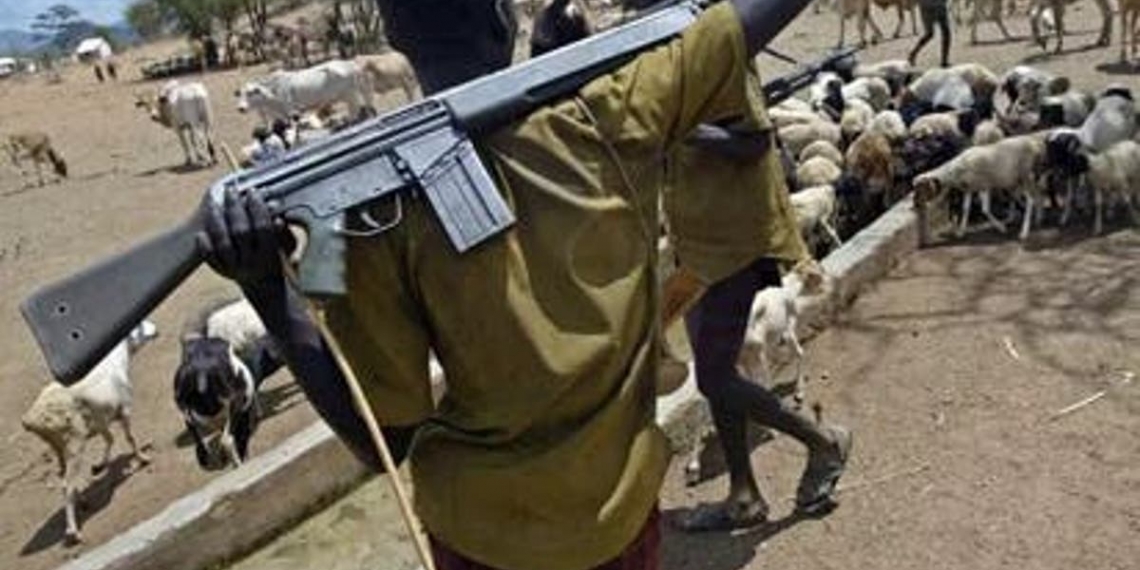
The killing of a senior administrator at the College of Education Maru, Bashar Sani, has once again drawn attention to the worsening insecurity gripping rural communities in Zamfara State, where families frequently pay huge ransoms to kidnappers yet still lose their loved ones.

Investigations reveal that Sani, widely respected in his community as an educator and public servant, had paid approximately ₦25.7 million in ransom and other demands over several years in desperate attempts to secure the release of relatives abducted by bandits.

In the end, despite those payments, he would become their victim.

A Cycle of Abductions

According to family members and community sources, the ordeal began several years ago when armed bandits raided the family’s home in Tsohon Tasha, Maru Local Government Area, abducting Sani’s two wives.

Determined to secure their freedom, he reportedly paid about ₦2 million to the kidnappers.

But the payments did not end the attacks.

Months later, the bandits returned and kidnapped his younger brother, Hassan Sani, plunging the family into another round of negotiations.

Hassan confirmed that his brother paid ₦3.5 million to secure his release.

“In addition to the ₦3.5 million he paid for my freedom, the kidnappers also demanded airtime recharge cards and mobile phones, which he also provided,” Hassan said.

A Desperate Move for Safety

Traumatized by repeated attacks, the family relocated to the Shiyyar ’Yan Hudu area of Maru, hoping the more densely populated neighbourhood would provide safety.

For about 18 months, they lived without incident.

Then the bandits returned.

Gunmen stormed the area, abducting Sani, one of his wives—who had previously been kidnapped—and his daughter, along with several other residents.

During the same raid, attackers reportedly killed the wife of a policeman and abducted her five children.

Escalating Demands

The kidnappers initially demanded 20 million for the release of Sani and his relatives.

Family members say the ransom was paid in full.

But the criminals continued to escalate their demands.

In addition to cash, they demanded motorcycles, four mobile phones, and airtime recharge cards worth ₦200,000, all of which were delivered.

“They later demanded 15 motorcycles, but after negotiations they reduced it to three motorcycles, which we also bought and delivered,” Hassan said.

After receiving the motorcycles, the kidnappers instructed the family to return home and wait for instructions on collecting the hostages.

A Grim Discovery

Days later, the family received directions to Gidan Kano village, Maradun Local Government Area, where the captives were said to have been released.

When relatives arrived, they found Sani’s wife, daughter, and several other victims.

But Sani was missing.

“When we asked about him, his wife told us that he had already died while in captivity,” Hassan said.

Further accounts suggest he died in the bandits’ camp after enduring prolonged torture and untreated medical complications, including a fractured leg sustained during captivity.

A Symbol of Northern Nigeria’s Security Crisis

Residents of Maru described the killing as a tragic reflection of the deepening security crisis across rural communities in Northwest Nigeria, where armed bandit groups continue to carry out kidnappings for ransom with little fear of consequence.

Community leaders said Sani devoted his life to education and public service and was widely admired for his commitment to the development of young people in the region.

His death, they said, has renewed calls for stronger security interventions to protect vulnerable communities across Zamfara and other parts of northern Nigeria.

For many residents, however, the tragedy also underscores a painful reality: in many rural areas, even paying millions in ransom offers no guarantee of survival.

A Country Without Earthquakes — Yet shaken by itself, By Max Amuchie | The Sunday Stew

The thought returned to me during a quiet moment of reflection after signing off on the maiden edition of The Sunday Stew. It triggered the memory of a conversation from many years ago with Professor Jibril Aminu, the elder statesman who passed away on 5th June 2025, in Abuja at the age of 85. In the days following his death, many tributes recalled his intellectual brilliance. Those who knew him in his student years often spoke of his exceptional performance at the medical school of the University of Ibadan. I was told that he had set an academic record there that remained unmatched for many years. Whether that record still stands today I cannot say with certainty, but his reputation for academic brilliance has certainly endured.

My awareness of him, however, did not begin in medical circles. I cannot remember precisely when his name first entered my consciousness, but I do know that he became Minister of Education the year preceding my admission as a student at the University of Calabar. A year after he was appointed minister, a nationwide controversy erupted over the location of a cross at the Christian chapel of the University of Ibadan. The debate stirred strong opinions across campuses and in the wider public space, reflecting the delicate intersection of faith, identity, and public institutions in Nigeria.

Like many students of that era, I followed the debate closely. His name surfaced repeatedly in the national conversation.

But my earliest personal recollection of someone speaking about him with familiarity came a little later.

It was during our NYSC orientation camp in Zaria, Kaduna State. In the first days of camp, friendships formed quickly, as they often do when young graduates from different parts of the country suddenly find themselves sharing the same uncertain future. One of the friends I made was Sanusi Maiwada, who had studied agriculture or agricultural engineering — I can’t remember precisely — at the University of Sokoto, now Usmanu Danfodiyo University.

We spoke often about what life after national service might look like. Opportunities, ambitions, the usual uncertainties that follow graduation. At one point during one of those conversations, Sanusi mentioned casually that after camp he intended to travel to Lagos to see Professor Jibril Aminu about his future plans. I remember being struck by the ease with which he spoke the name — as though access to a figure of such stature was not unimaginable. This is because at the time we were at the orientation camp, Aminu had left office as minister but remained one of the truly influential Nigerians of the day.

 ​I felt Sanusi Maiwada was very lucky to be associated with a figure of such formidable stature: an ex-minister who remained deeply consequential in the national scheme of things.

 That brief exchange stayed with me. I lost contact with Sanusi Maiwada after NYSC and never learned what became of his plans. But the moment lingered. It was another small thread that kept Professor Aminu present in my awareness long before I would encounter him personally.

Years later, in 2012, that meeting finally happened. I was the Bureau Chief of BusinessDay in Abuja when my colleague, Tony Ailemen, arranged an interview with Professor Aminu at his Asokoro residence. By then, he had left active public life, having held a succession of roles that exposed him to the breadth of governance and academia: Executive Secretary of the National Universities Commission (NUC), Vice Chancellor, University of Maiduguri; Minister of Education, Ambassador to the United States, and Senator of the Federal Republic. He had seen Nigeria from the corridors of policy and politics, and he had seen the world — engaging with foreign leaders, international institutions, and global challenges.

That meeting revealed a man whose insight was shaped not by speculation, but by decades of experience in public service and leadership at the highest levels. He remained a widely respected figure in the then-ruling People’s Democratic Party (PDP) and commanded considerable regard in his home state of Adamawa. Yet despite his stature, he carried his perspective lightly: measured, observant, and quietly piercing.

During that interview, against the backdrop of global natural disasters — Hurricane Katrina in the United States, famine in Ethiopia, the harshness of the Sahara Desert, earthquakes in Haiti, Japan, and Turkey, and typhoons in the Philippines — he made a remark that has lingered with me ever since: while other nations contend with nature’s fury, we in Nigeria, largely spared from these hazards, somehow manage to create disasters for ourselves.

Delivered quietly, almost conversationally, the observation was unmistakably clear.

Across the world, geography dictates many of the challenges nations must confront. Japan lives with earthquakes powerful enough to reshape coastlines, as seen in the 2011 Tōhoku Earthquake and Tsunami which triggered the Fukushima Daiichi nuclear disaster. In the Caribbean, the 2010 Haiti Earthquake reduced entire sections of Port-au-Prince to rubble. More recently, the 2023 Turkey–Syria Earthquakes flattened neighbourhoods across southern Turkey and northern Syria. Across the Pacific, the Philippines regularly braces against storms like Typhoon Haiyan — among the most powerful tropical cyclones ever recorded.

In Africa, the famine in Ethiopia in the 1980s claimed hundreds of thousands of lives, while the harshness of the Sahara Desert shapes both the lives and survival strategies of communities and countries across the Sahel. In these cases, nature imposes hardship, yet human ingenuity and adaptation often determine survival.

 In Nigeria, by contrast, the crises we face are largely self-imposed, avoidable, and yet persist due to governance failures and neglect. These are nations and regions where nature itself periodically rebels; Nigeria, in contrast, faces no such geological hostility.

We sit outside the world’s major earthquake belts. We have no active volcanoes threatening cities. Hurricanes rarely form along our coastline. Nature, in many respects, has been generous to Nigeria.

Yet our country often operates under the shadow of permanent disaster. Not because the earth trembles beneath us, but because we repeatedly create tremors ourselves.

Our most persistent crises are not natural. They are manufactured: kidnapping, insurgency, banditry, corruption, collapsing infrastructure, policy inconsistency, and institutional fragility have become recurring emergencies in our country. None of these emerged from the soil. They emerged from decisions.

Consider insecurity. Across large parts of our country, farmers abandon fertile land out of fear. Highways that should connect markets instead generate anxiety. Communities negotiate daily life under the shadow of armed groups. This is not the work of nature. It is the consequence of institutional weakness and leadership failure.

The same pattern appears in infrastructure. Countries prone to earthquakes enforce strict engineering standards because the ground beneath them cannot be trusted. Nigeria faces no seismic threat. Yet buildings collapse with disturbing frequency. The earth did not move. Standards did.

Even flooding, one of the few natural hazards we occasionally experience, often reveals deeper governance failures. Blocked drainage systems, chaotic urban planning, and construction on waterways transform ordinary rainfall into catastrophe. The rain falls everywhere. But disaster follows where planning disappears.

The observation Professor Aminu made that afternoon still lingers. It was a simple remark, delivered almost in passing. Yet the longer one reflects on it, the more unsettling its truth becomes. Nigeria is not threatened by earthquakes. We are not battered by hurricanes. Nature, in many respects, has been kind to us. Yet we often behave like a nation permanently under disaster.

In the next edition of The Sunday Stew, we will take a deeper look at this paradox — examining, one by one, some of the most significant self-inflicted and man-made crises that continue to hold the country back. Because if our greatest problems are indeed created by us, then understanding them clearly may be the first step toward finally overcoming them.

Don’t miss it.

Stay seasoned.  See you next Sunday.

•Max Amuchie, CEO of Sundiata Post, writes The Sunday Stew, a weekly syndicated column on faith, character, and the forces that shape society, with a focus on Nigeria and Africa in a global context.

X @MaxAmuchie | Email: [email protected], +234(0)8053069436

The views expressed by contributors are strictly personal and not of Law & Society Magazine.

A back to the future moment for the Nigerian Bar Association

By Chidi Anselm Odinkalu

When the then Chief of Army Staff, Ibrahim Babangida – a two-star general – turned the page on the military regime of Muhammadu Buhari in the last week of August 1985, political opposition was largely decimated in Nigeria. A mixture of brute force, regime nihilism, and carefully targeted lynching sold as a fight against rampant corruption had combined to quieten the coalition of restiveness comprising the press; organized labour and students; and politicians.

The only active constituency of opposition left were professionals, comprising some doctors in the Nigerian Medical Association (NMA) and lawyers in the Nigerian Bar Association (NBA). For Ibrahim Babangida, his route to regime longevity lay in co-opting both. From the medical profession, he persuaded Olikoye Ransome-Kuti, a respected pediatrician with activist pedigree, to become his Health Minister. Professor Ransome-Kuti was the elder brother of rebel musician, Fela Anikulapo-Kuti. Their other brother, Bekolari Ransome-Kuti, was one of the leaders of the protesting medical doctors.

The NBA was by far the most effective of the critical outposts in the country but it embodied two mutually contradictory camps. The president of the association at the time was Bola Ajibola, an Egba blueblood, who led the association in articulating activist opposition against the default of the Buhari regime to military tribunals in defiance of liberal notions of fair hearing before civilian judges. As “Special Military Tribunals increasingly replaced law courts”, Prince Bola Ajibola emerged as the unlikely face and voice of a constituency of enlightened values.

In opposition to Ajibola from within the Bar, a former national Public Secretary of the NBA, Chief Gani Fawehinmi, threw his considerable support behind the campaign of the Buhari regime against what was widely perceived as plunder by the civilian politicians whom it overthrew. For Gani, radical measures were required to course correct from the path to which the politicians had set the country. As far as he was concerned, the steps by the Buhari regime were consistent with that and deserved support.

This high-profile tension within the NBA on such an existential issue of regime survival added spice to the moment and, somewhat ironically, bolstered the association’s public standing. Ibrahim Babangida could not resist the allure of the gold-dust of the NBA for his mission of regime usurpation.

In one deft move, he decided to decapitate the association by making Bola Ajibola an offer to be his Attorney-General of the Federation and Justice Minister at a time that he knew Ajibola could not resist. After all, it was an invitation to undo the mess for which he led the NBA to an irretrievable falling out with Muhammadu Buhari. Ebele Nwokoye, the first Vice-President of the association served out the remainder of Ajibola’s tenure before being elected president for a two-year tenure until August 1987.

For the next six years, Bola Ajibola held sway in one of the most consequential tenures in the office of the Attorney-General of the Federation and Minister of Justice. When Taslim Elias died in August 1991 while serving as a judge of the International Court of Justice (ICJ) in The Hague, Babangida nominated Ajibola to serve out the remainder of the term of Judge Elias. To replace Ajibola as Attorney-General of the Federation and Minister of Justice, he returned and captured yet another president of the NBA, Clement Akpamgbo.

In succession to Clement Akpamgbo, Priscilla Kuye, then first Vice-President of the association, stepped up, becoming the first (and thus far the only) female president in the history of the NBA. The association was due to elect a new president the following year and Priscilla Kuye threw her hat into the ring for an elective mandate as president in her own right. It did not materialize.

The 1992 conference in Port Harcourt, Rivers State, at which the association was to conduct the election disintegrated in disarray and pandemonium amidst fisticuffs, ex parte court orders and allegations of wielded firearms. It was the year before the election that was supposed to exit the military from power in Nigeria.

A secret post-mortem convened by the senior-most surviving past-president of the NBA at the time, Frederick Rotimi Alade (FRA) Williams, identified several structural factors in the crisis, including polarization in the association, increased (political and security) interest in the office of NBA president, and “external influence”. Among the immediate causes, the report – which was never officially published – listed “too many participants” and “over-use of money” in the contest for the NBA presidency as well as what it called “election fever.”

Underlying the recommendations of the report was a sense that participation in the leadership elections of the association should be a privilege of longevity and networks at the Bar not a right of all members. At that time, there were fewer than 20,000 lawyers – both living and dead –  on the Roll of lawyers in Nigeria. It advised the NBA to consider a system described as “assured succession” or “hierarchical ascendancy” in which leadership would circulate among a magic circle of male, senior lawyers.

As the association resumed life six years later, participation in elections in the NBA evolved from a mass membership entitlement to a privilege of a small circle of delegates. These comprised the elected officers of the association, members of the National Executive Committee, selected delegates representing the branches pro-rated to the official size of each branch, as well as Life Benchers and Senior Advocates of Nigeria, SANs. The Association felt captured.

One decade later, the movement to open up elections in the NBA to every member caught fire on the back of new opportunities created by the digital revolution. It was increasingly a matter of when not if. In 2015, Augustine Alegeh, the president of the association, achieved a constitutional amendment mandating digital elections based on universal suffrage for every member of the association who meets the criterion of paying the annual Bar Practising Fees.

Since then, elections in the NBA have become even more intensely contested and more controversial too. A population used to opaque, backroom deals and tactile politics showed up as deeply suspicious of elections decided in the ether. A segment of senior lawyers in the association have since advocated a return to the discredited delegate or indirect system of leadership election and has gone as far as to blame the “so called universal suffrage” for  “indiscipline at the bar.”

2026 is another election year in the NBA. Already, two different judges of the High Court of Oyo State in Ibadan have issued orders restraining the NBA’s electoral processes.

One suspiciously audacious court order among the two effectively requires the association to only recognize one aspirant for the contest for the presidency of the NBA, on the ground that he is the “consensus candidate” of a body called “Egbe Amofin”, a society of lawyers of Yoruba descent. His name is Muyiwa Akinboro and his denial that he is desperately shopping for a judge to impose him as president of the NBA in 2026 increasingly rings hollow. By a rotational arrangement written into the NBA constitution, the presidency of the association this year will come from the old Western Nigeria.

There are a few problems with this order though. The “Egbe Amofin” is unknown to the constitutional organs of the NBA. Relatively few voters in the association belong to the body. The order of the High Court in Ibadan will subsist until 15 April, by which date the association will be struggling for time to accomplish an incident-free transition.

The idea of a president of the NBA imposed by order of a high court judge with no regard for the franchise of the members is no longer such a far-fetched proposition. Of course, that will guarantee an end to the NBA as we know it.

The points of coincidence with the Port Harcourt debacle of 1992 are tantalizing. It is the year preceding a national election in 2027. Externalities are very palpable. A woman is the ring as a leading candidate for the presidency of the association. Once again, court orders are in the picture, essentially to frustrate her. It may not be 1992 all over again but it sure does feel like, for the NBA, the more things change, the more they remain the same.

A lawyer and a teacher, Odinkalu can be reached at [email protected]

The views expressed by contributors are strictly personal and not of Law & Society Magazine.

Japan confirms suspected ballistic missile from North Korea amid US-Iran-Israeli conflict

North Korea has reportedly attacked Japan with a suspected ballistic missile, the Japanese authorities said on Saturday.

The development was shared on the verified X account of the Prime Minister’s Office of Japan as officials continued to monitor the situation.

In the message posted online, the Prime Minister’s Office stated: “North Korea has launched a suspected ballistic missile. More updates to follow.”

The post did not provide further details about the missile or where it may have landed.

North Korea has conducted several missile launches in recent years, which are closely monitored by Japan and regional partners.

Authorities are expected to provide further updates as more information becomes available.

Meanwhile, the United States and Iran are currently engaged in a military conflict in the Middle East, which escalated in late February 2026 after coordinated airstrikes by U.S. and Israeli forces on Iranian military and strategic targets.

Iran responded with missile and drone attacks on Israeli territory, U.S. bases, and allied Gulf states. Iranian-backed groups, including Hezbollah, have also been involved.

The conflict has affected the Strait of Hormuz, a key global oil shipping route, causing concerns about energy supply.

There have been casualties and injuries on both sides, including U.S. service members, and civilian casualties in the region.

No formal ceasefire exists, and military operations continue as both sides monitor and respond to each other.

‘Papa Ajasco’, Abiodun Ayoyinka laments financial, career struggles

A Veteran Nigerian actor Abiodun Ayoyinka, popularly known for portraying the beloved “Papa Ajasco” character in the long-running family sitcom, has spoken candidly about the severe financial hardship and career limitations he has faced for several years.

In a recent emotional interview with internet personality, Lucky Udu, Ayoyinka explained that the “Papa Ajasco” character has been trademarked and registered by the production company, severely restricting his ability to use the persona for personal projects, endorsements, advertisements, or public appearances.

“That particular character has been registered,” he said. “Anybody that wants to use me outside, they want to use me with the character with everything that I have. But it has never been easy for me. That’s why you don’t see me on adverts. You don’t see me on billboards and all that. So it’s painful.”

He added that he lacks exclusive rights to the character and must seek permission even to reference it commercially.

“I don’t have the right. I can’t use the name unless I go and take permission,” Ayoyinka stated. “Because of this, I have limited opportunities.”

The actor, who said he retired five years ago from his civil service role with the Lagos State Council for Arts and Culture, described his post-retirement life as extremely difficult.

“Things have never been okay,” he told his interviewer. “No car in my home, no house of my own. I don’t have a car.”

Ayoyinka appealed directly to his fans and the public, using the interview as an opportunity to share his current reality.

Five sacrifices a man should never make to please a woman, Funke Egbemode

Let me start with these three stories. Not fairy tales but real-life type stories, the kind you hear in salons, offices, church corridors and beer parlours where men whisper their regrets over sweating bottles of beer and spicy nkwobi.

Yemi was the kind of man mothers prayed their daughters would marry. Handsome, soft-spoken, responsible, the first son who had carried his siblings through school. He became the family pillar very young and God blessed him early too.  When he married Teni, everybody said, “That girl has hit jackpot.”

Teni, however, had different ideas about what jackpot meant.

Six months into the marriage, she started complaining about Yemi’s family.

“Mummy calls too much.”

“Your sister visits too often.”

“Why must they come to this house every weekend?”

Yemi, who grew up believing one marriage must last till the end of one’s life was, began to cut back. First, he reduced visits to his parents. Then he stopped picking his sister’s calls when Teni was around. Eventually, he stopped sending money home because “it caused tension” in his marriage. Teni established her little ‘queendom’. Peace returned to the house but something else quietly left.

Yemi’s laughter. He buried his head and heart in his career. He spent more time at work, or hanging out with his childhood friends. Soon he started seeing his siblings and mother outside his home. And when Teni complained, he calmly told her he would never allow his mother or siblings make Teni uncomfortable in her home. That was why he was meeting them elsewhere.

Two years later, Teni walked out of the marriage complaining of neglect and loneliness. Note: Teni still left Yemi for someone “more emotionally available,” Yemi still ended up where he started, alone in his apartment

He had sacrificed his roots for a woman who, he didn’t know, never intended to stay.

And that, my dear readers, is the first sacrifice a man must never make.

1. Never Sacrifice Your Family

Marriage should be about addition, not subtraction.

Any woman who demands that a man abandon his parents or choose between her and his siblings or long-standing family responsibilities as proof of love is not building a home; she is building a cage.

Yes, there are toxic families. Yes, boundaries are important. But cutting off the people who raised you simply to keep your partner happy is emotional bankruptcy.

A wise woman does not compete with a man’s mother. She learns to coexist with the institution called family.

If love demands you erase your history, then it has become dictatorship.

And dictatorships never end well.

Let’s look at Tola and Musa before and after the ‘empty wallet’

Musa was the kind of man whose generosity was legendary among friends. If Musa had ₦5,000 and you had a problem worth ₦4,000, Musa would give you ₦4,500.

Then Musa met Tola.

Tola loved beautiful things. Not the ordinary beautiful — the Instagram beautiful. Designer bags, spontaneous trips, champagne birthdays, surprise photoshoots.

At first Musa tried to keep up.

When she hinted about a phone, Musa bought the newest one.

When she admired a handbag, Musa bought it.

When she said her friend’s boyfriend took her to Dubai, Musa started researching flights.

The problem was Musa earned a respectable salary, not billionaire money.

Credit cards appeared. Loans followed. Borrowing became normal.

But Tola was impressed.

For a while.

Then came the day Musa could not fund her birthday trip to Zanzibar.

“Maybe you are not ambitious enough,” she said coldly.

Two months later she was posting engagement photos with a man who drove a better car.

Musa was left with debts, embarrassment and a financial recovery plan that looked like a 10-year prison sentence.

Which leads to sacrifice number two.

2. Never Sacrifice Your Financial Stability

Love should not turn a man into an ATM or a tool for emotional blackmail.

There is a difference between generosity and financial suicide.

A man who destroys his financial future to impress a woman is not romantic; he is a reckless fool.

The truth many people avoid saying aloud is this: some relationships are powered by lifestyle, not love.

When the lifestyle drops, so does the affection. A woman who is allergic about ‘flexing and slaying’ will eventually slay you.

The right woman will admire your discipline, not drain your bank account trying to compete with social media illusions.

If pleasing her means loans, debt, sleepless nights and financial lies, then the relationship is already bankrupt. Get out of that boat. It’s full of holes.

Story Three: Chinedu and the Disappearing Man

Chinedu was once the life of every gathering.

He played football on Saturdays, debated politics with friends on Sundays. His WhatsApp voice notes were famous for laughter that could shake walls.

Then he met Lara.

Lara did not like his friends.

“They are childish.”

“They drink too much.”

“They distract you from your goals.”

Soon Chinedu stopped attending football.

Group chats were muted.

Old friends gradually stopped calling because every conversation ended with “Lara said or Lara won’t approve …”

Then something strange happened.

Lara started complaining.

“You are boring these days.”

“You have no social life.”

“You depend too much on me.”

Chinedu had unknowingly erased the very personality Lara had originally fallen for.

By the time the relationship ended, he realised something painful: he had sacrificed his identity trying to become the man she wanted.

Which brings us to sacrifice number three.

3. Do not become someone else to please a woman.

A relationship should refine you, not erase you. Your hobbies, friendships, passions and personality are part of what makes you attractive in the first place.

When a man abandons everything that makes him himself just to maintain a relationship, he becomes a shadow of the person she met.

Ironically, that shadow eventually becomes unattractive.

People fall in love with individuals, not empty spaces.

Do not shrink yourself to fit inside someone else’s comfort zone.

4. Never Sacrifice Your Principles

Some men bend their moral compass in the name of love.

They lie for their partners or cover up questionable behaviour.

They engage in shady deals to “provide better.”

But principles are like the foundation of a house, once cracked, everything above begins to wobble.

A woman worth keeping will respect a man who stands by his values — honesty, integrity, discipline — even when it is inconvenient.

If love demands you betray your conscience, you are not in a relationship.

You are in moral captivity.

5. Never Sacrifice Your Peace of Mind

Finally, the biggest sacrifice a man must never make is his peace.

There are relationships where a man walks on eggshells every day.

One wrong word triggers drama.

One delayed call sparks suspicion.

One honest opinion becomes an argument.

Soon the man becomes a hostage to emotional storms.

His phone rings and his blood pressure rises.

That is not love.

Love may challenge you, stretch you, even annoy you occasionally — but it should not consistently rob you of calmness.

Peace is too expensive to exchange for emotional chaos.

Relationships require compromise. Both partners must adjust, accommodate and sometimes sacrifice comfort for the sake of love.

But there is a line between compromise and self-destruction.

A man should never sacrifice his family, financial stability, identity, principles or peace of mind.

If keeping a relationship requires you to lose all five, then you are not building love.

You are performing slow emotional suicide.

And here is the irony.

The women who truly deserve love are usually the ones who never ask for those sacrifices in the first place.

They do not want a man who has lost himself.

They want a man who knows exactly who he is and refuses to disappear just to make someone stay.


Two men sentenced to 15 years imprisonment for flogging 12-year-old househelp to death

An Ikeja Sexual Offences and Domestic Violence Court has sentenced two men to 15 years’ imprisonment each over the death of a 12-year-old housemaid.

The convicts, Edidiong Edem, a 22-yera-old painter, and Alex Effiong-Etim, a 21-year-old mechanic, were handed the jail terms by Justice Abiola Soladoye after entering a plea bargain on an amended charge of involuntary manslaughter.

Delivering judgment on Thursday, March 12, 2026, the court found the duo guilty and imposed a 15-year custodial sentence on each of them.

Justice Soladoye ruled that the punishment would take effect from the date the convicts were first remanded in a correctional facility.

The court heard that the men flogged the victim with a broom, an assault that ultimately resulted in her death.

Edem and Effiong-Etim were initially arraigned before the court on February 25, 2022, where they pleaded not guilty to the charge. 

However, they later opted for a plea bargain agreement dated February 25, which led to the amended charge of involuntary manslaughter.

Earlier during proceedings, the prosecution, led by state counsel Oluwaseun Adewoye, told the court that the offence occurred in January 2022 at Military Estate in the Eleko area of Lagos State.

According to the prosecution, the convicts recklessly flogged the young girl on her legs with a broom, inflicting injuries that later became infected with tetanus and eventually led to her death.

The prosecution further stated that the offence contravened Section 224 of the Criminal Law of Lagos State, 2015.

“Where Did the Money Go?” Falana questions government spending as study reveals 63% poverty spike after subsidy removal

By Johnson Agu

Nigeria’s controversial economic reforms are facing renewed scrutiny after a new study revealed that nearly two-thirds of the country’s population slipped below the poverty line following the removal of petrol subsidies, intensifying concerns that ordinary citizens are bearing the cost of policies whose benefits remain elusive.

The research, presented at a policy dialogue in Abuja organised by Agora Policy, found that the national poverty rate surged from 49.8 percent to about 63 percent after the government scrapped the decades-long fuel subsidy.

The policy was announced by President Bola Ahmed Tinubu during his inauguration speech on May 29, 2023, as part of sweeping economic reforms intended to stabilize public finances and boost government revenue.

But the findings suggest the immediate impact on households has been severe.

“After the subsidy removal, poverty increased from a baseline of about 50 percent to 63 percent,” said Mohammed Shuaibu, a senior lecturer at the University of Abuja who presented the study.

Although government social protection programmes, such as cash transfers, helped moderate the crisis, poverty only declined slightly to about 56.2 percent, still far above pre-reform levels.

Rising Pain, Lingering Questions

The findings are likely to intensify debate over Nigeria’s economic reform agenda, particularly as millions of citizens continue to grapple with soaring fuel prices, higher transport costs, and surging electricity tariffs.

For critics, the most troubling question is not whether the reforms boosted government revenue, but how that revenue has been used.

Prominent human rights lawyer Femi Falana said the reforms had indeed increased government income but raised serious concerns about transparency and priorities in public spending.

“The cardinal objective of the reform was to boost government revenue. It did,” Falana said.

“But the question is how the government has spent that revenue.”

He added that many Nigerians remain sceptical about whether the proceeds from subsidy removal are being channelled into meaningful social programmes.

“The real issue for me,” Falana said, “is whether citizens can trust government spending and priorities compared to social interventions that directly support households.”

Unequal Impact Across Society

According to the research, the economic shock triggered by subsidy removal was far fromevenly distributed.

High-income households were largely shielded from the worst effects of the policy, while low-income families experienced the sharpest decline in living standards.

The study found that the poverty gap, an indicator of the depth of deprivation, widened dramatically, rising from 31.6 percent to more than 45 percent after the policy change.

In practical terms, this means not only that more Nigerians fell into poverty, but that the poor became even poorer.

Household consumption also declined sharply across the country.

“Across the board, household consumption declined following both subsidy removal and electricity tariff adjustments,” Shuaibu said.

Rural households and urban low-income families were particularly affected as rising fuel and transport costs rapidly eroded purchasing power.

Survival, Not Recovery

Focus group discussions conducted across Nigeria’s six geopolitical zones revealed a stark reality: many families are coping with the reforms not through recovery but through sacrifice.

Households reported cutting food consumption, reducing travel, rationing electricity, and borrowing money just to meet basic needs.

“Households adjusted to the shocks not through recovery but through sacrifice,” Shuaibu said.

Many participants also reported receiving little or no support from government intervention programmes designed to cushion the impact of the reforms.

Businesses told a similar story.

Rising fuel and electricity costs have significantly increased operating expenses, forcing some companies to raise prices, lay off workers, or shut down entirely.

Others have turned to alternative energy sources to stay afloat, but many said promised government support programmes had either failed to reach them or were too small to make a difference.

Government’s Defence of the Reforms

Officials insist that the painful reforms were unavoidable.

Speaking at the dialogue, Muhammad Abdullahi, Deputy Governor for Economic Policy at the Central Bank of Nigeria, said the country inherited severe economic distortions that made policy changes inevitable.

“Nigeria faced severe macroeconomic imbalances, economic distortions and collapsing revenues before the reforms,” he said.

He noted that oil revenue had collapsed dramatically over the past decade, falling from about $92 billion in 2012 to less than $2 billion in 2023, placing enormous pressure on public finances.

The CBN official also revealed that the country’s foreign exchange reserves were far weaker than they appeared.

Although official reserves were listed at about $32 billion, much of the funds consisted of borrowed resources, leaving net reserves of only about $800 million at one point.

Macro Gains, Micro Pain

Some economists argue that the reforms are beginning to produce positive macroeconomic signals.

According to Abdullahi, inflation has been declining steadily and Nigeria is gradually moving toward single-digit inflation.

Non-oil exports have also increased, reaching about $6 billion last year.

But critics say those gains remain largely invisible to ordinary citizens.

“The economy may be improving at the macro level,” said Chinyere Almona, Director-General of the Lagos Chamber of Commerce and Industry.

“But that improvement has not trickled down to the common man.”

She noted that subsidy removal alone could save the government roughly $7.5 billion annually, funds that should be invested in infrastructure and human capital development.

“For the private sector, what we want to see is that the savings from subsidy removal are actually being used to build infrastructure,” she said.

Reform Fatigue and Public Distrust

For many Nigerians, however, the debate is increasingly defined by a familiar frustration: reforms that promise long-term gains but deliver immediate hardship.

With widespread reports of corruption, wasteful spending, and the re-looting of public resources, public trust in government assurances remains fragile.

As policymakers push ahead with economic restructuring, the central question facing Nigeria’s reform agenda is becoming harder to ignore:

Will the painful sacrifices demanded of citizens translate into real improvements, or simply deepen the cycle of austerity, inequality, and broken promises?

Shock, confusion in Rivers court as ‘dead’ lawyer appears, intervenes for litigant

A Magistrate’s Court sitting in Port Harcourt was thrown into confusion on Wednesday after a lawyer, believed to have died last December, appeared before the court to represent a client.
  
Earlier, during proceedings presided over by Senior Magistrate Kingsley Briggs, a matter came up for hearing and the counsel representing the litigant failed to appear in court.

When the magistrate inquired about the lawyer’s whereabouts, the litigant informed the court that his counsel had died in December 2025.
  
The revelation stunned the court, prompting Briggs to immediately consult the court’s record book. 
  
Upon reviewing the records, the magistrate confirmed that the same lawyer was recorded as present in court  on February 10, 2026.
  
According to the magistrate, the lawyer had on that date intervened on behalf of the litigant, and pleaded with the court not to issue a bench warrant against his client, explaining that the litigant was ill and required medical attention.
  
Briggs explained that based on the lawyer’s plea, the court exercised discretion and declined to issue the bench warrant, instead adjourned the matter till March 11, 2026.
  
The development sparked confusion among the audience in the courtroom, as the litigant insisted that his lawyer had died two months before the February court appearance.
  
In an effort to resolve the situation, Vice Chairman of the Nigerian Bar Association (NBA), who was present in court, suggested that the family of the deceased lawyer be contacted for clarification.
  
A family member, who was subsequently reached, confirmed that the lawyer had indeed died in December 2025. The lawyer, he added, was allegedly strangled to death in his Oyigbo apartment.
  
The family member further disclosed that the matter had been reported to the police and investigations into the circumstances surrounding the death were still ongoing.
  
The strange development left both the court and observers confused, raising questions about how the name of the deceased lawyer came to be recorded as present during the February court proceedings.
  
Court officials were said to be reviewing records to determine what transpired during the earlier sitting.

The case was subsequently adjourned.

The Guardian

Emmanuel Nwude, two lawyers jailed for tampering with forfeited property, forgery and fabricating evidence

About eight years after legal proceedings, a Lagos Special Offences Court has convicted notorious fraudster Emmanuel Nwude and two lawyers linked to him for offences related to forgery and dealings involving forfeited property.

Justice Mojisola Dada of the Special Offences Court sitting in Ikeja, Lagos, on Wednesday, March 11, 2026, sentenced Nwude alongside his lawyers, Emmanuel Ilechukwu and Rowland Kalu, to one year imprisonment each.

The three defendants were convicted after facing a prolonged trial that began in 2018 following their arraignment on an amended 15-count charge.

The charges bordered on conspiracy, forgery, uttering of false documents, dealing with forfeited property, attempt to pervert the course of justice, and fabricating evidence.

One of the counts presented before the court stated: “Emmanuel Nwude, Emmanuel Ilechukwu and Rowland Kalu, between 2011-2012, at Lagos within the jurisdiction of this Honourable Court, without due authorization by the Commission, dealt with the property known as Plot Y Mobolaji Johnson Street, Oregun, Ikeja ,whereas you knew that the property was forfeited to the victims of crimes as restitution in the judgment delivered on 18th day of November,2005 by Hon. Justice Oyewole in ID/92C/04 – FRN vs. Emmanuel Nwude and 6 Ors and the victims subsequently sold the property to Rosaab Industrial Design Limited and which Rosaab Industrial Design Limited later assigned to G. C. Nweze and Company Limited.”

At the commencement of the trial on March 2, 2018, all the defendants pleaded “not guilty” to the charges, prompting the court to proceed with a full trial.

During the trial, the prosecution counsel, Nnaemeka Omewa, called five witnesses and tendered several documentary exhibits which were admitted by the court as evidence against the defendants. The prosecution later closed its case on March 19, 2019.

Following the prosecution’s case, Nwude and his lawyers filed a no-case submission, arguing that the evidence presented was insufficient to require them to enter a defence.

However, in a ruling delivered on September 19, 2019, the court dismissed the application and ordered the defendants to open their defence.

Rather than comply immediately, Nwude proceeded to challenge the ruling at the Court of Appeal in Appeal No. CA/LAG/CR/1244/2019.

The appellate court eventually dismissed the appeal and directed him to return to the trial court to present his defence.

Complying with the appellate court’s directive, Nwude opened his case on February 22, 2021. During the proceedings, he testified in his own defence and called three additional witnesses before closing his case.

His co-defendants, Ilechukwu and Kalu, who both served as his legal counsel, also testified on their own behalf. They subsequently closed their defence on February 27, 2025.

Following the conclusion of testimonies, the court ordered all parties to file their final written addresses and adjourned the matter to June 25, 2025.

The defendants submitted their addresses at different times, with the third defendant filing a response to the prosecution on June 20, 2025.

At the June 25, 2025 sitting, the court further adjourned the matter to September 25, 2025.

However, the proceedings took an unexpected turn on that date when Dr. Babajide Martins, Director of the Directorate of Public Prosecution (DPP), Lagos State, appeared in court.

Martins informed the court that he had been instructed to take over the prosecution of the case following a petition submitted to his office by the second defendant, Ilechukwu.

Justice Dada questioned the timing of the move, noting that the matter had already reached the stage for adoption of final written addresses and was close to conclusion.

When asked to explain why the DPP would seek to take over a case at such a late stage, Martins reportedly could not provide a clear justification.

The court subsequently adjourned the case to November 5, 2025, to allow the first defendant’s counsel file his reply on points of law to the prosecution’s final address.

The trial eventually culminated in the conviction and sentencing of the three men on Wednesday, bringing the long-running case to a close.

TIPS