Home Blog Page 71

‘I Heard a Loud Sound—Then My Neck Started Bleeding’: Survivor recounts Maiduguri blasts as death toll rises

A survivor of the explosions that ripped through Maiduguri on Monday night has described the moment the blasts tore through a crowded market area, leaving dozens dead and scores injured in one of the city’s deadliest attacks in recent years.

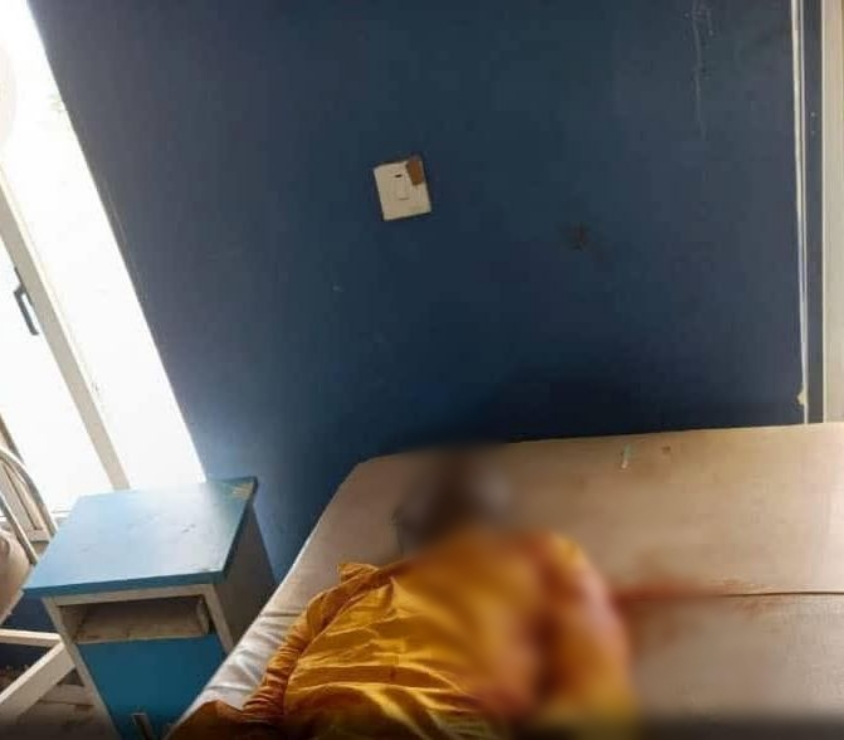
“I heard a loud sound—and suddenly my neck started bleeding,” said Abacha Mustapha, speaking from his hospital bed at Umaru Shehu Hospital.

Mustapha said he had just broken his fast and was preparing to leave the market when the first explosion detonated.

“We were closing our shops when it happened. People started running in different directions. Some fell, others were shouting. At first, I didn’t even understand what had happened,” he said.

Chaos in a Crowded City

Eyewitnesses said the blasts struck at a peak hour, just as traders were closing for the day and residents were returning home after evening prayers.

The explosions hit multiple locations, including the entrance of the University of Maiduguri Teaching Hospital, the Monday Market, and the Post Office area.

Panic spread rapidly.

“It was chaotic,” Mustapha said. “There was confusion everywhere.”

Bleeding heavily from his neck, he said his brother acted quickly.

“My brother used his cloth to tie my neck to stop the bleeding and rushed me to the hospital. If not for him, I don’t know what would have happened.”

Rising Casualties

Emergency responders say the scale of the attack is significant.

The National Emergency Management Agency (NEMA) confirmed that at least 23 people were killed, while 146 others are receiving treatment for injuries ranging from shrapnel wounds to severe burns.

A total of 169 victims were evacuated to hospitals across Maiduguri.

“108 are currently receiving treatment at UMTH, 20 at Umaru Shehu Hospital, and 17 at Maiduguri Specialist Hospital,” said Surajo Abdullahi, NEMA’s zonal coordinator.

Hospitals were quickly overwhelmed as families rushed in search of loved ones.

A City on Edge Again

For many residents, the blasts mark a chilling return to a past they believed was behind them.

Maiduguri—once synonymous with frequent bombings and insurgent violence—had enjoyed years of relative calm.

“That fear is back,” one resident said. “The gory scenes, the panic—everything feels like it used to.”

The attacks, reportedly carried out around 7:25 p.m. and suspected to be linked to Boko Haram, have raised concerns about a renewed surge in violence in Nigeria’s northeast.

Residents are now calling for tighter security around markets and other densely populated public spaces.

Government Response

President Bola Tinubu condemned the attacks, describing them as “deeply upsetting” and vowed that Nigeria would not succumb to terror.

“These are desperate attempts by criminals and terrorist elements trying to instil fear,” Tinubu said in a statement.

He announced that service chiefs had been directed to relocate to Maiduguri to take charge of the security situation. At the same time, emergency agencies were instructed to ensure proper care for the injured.

“There is no place in Nigeria where terrorists will find safety,” he said. “We will locate them, confront them, and completely defeat them.”

Lingering Questions

Despite repeated assurances, questions persist about Nigeria’s ability to confront insurgent groups decisively.

Islamic cleric Ahmad Gumi has repeatedly claimed that authorities know the identities and locations of terrorist actors.

“The government knows every terrorist by name and by location,” he said in a recent interview, adding that his engagements with armed groups were conducted alongside security agencies.

The government has not publicly responded to those claims.

For survivors like Mustapha, however, the focus remains on survival—and recovery.

“I’m just grateful to be alive,” he said.

Doctors threaten nationwide protest over alleged plot to impose candidate in NMA election

Tension appears to be growing within the ranks of the Nigerian Medical Association (NMA), ahead of its 2026 national elections, as doctors across the country are threatening to protest over what they describe as the unconstitutional disqualification of a leading presidential candidate, Prof Ofem Enang and the surreptitious imposition of a preferred candidate.

The controversy has also drawn attention to the role of the current NMA President, Prof Bala Audu, who is accused by some members of attempting to influence the outcome of the election scheduled to be held in Kano from April 26 to May 2, 2026.

In a statement issued Tuesday, the Renaissance 2026 Campaign Team, led by its National Campaign Coordinator, Dr Ezoke Epoke, described the reported disqualification of Enang as a violation of due process and the NMA Constitution, warning that it could undermine the integrity of the association’s electoral process.

The campaign team said Enang met all constitutional requirements for nomination and submitted his forms within the stipulated deadline, adding that he was neither formally notified of any deficiency nor allowed to respond before the alleged disqualification.

According to the group, Article 11(1) (b) of the NMA Constitution clearly states that “all members shall be eligible to contest election to any office,” provided they meet the laid-down requirements.

It explained that the constitution only requires that nomination forms be properly completed and submitted before the deadline, with a proposer and seconder who are members in good standing of the association.

The campaign team said Enang personally submitted his nomination forms before the deadline in the company of seven state chairmen, in line with the constitutional provisions guiding the electoral process.

It stressed that the constitution provides for the opening of nomination envelopes by the Secretary-General or Deputy Secretary-General in the presence of at least one other national officer, after which the names of nominated candidates and their sponsors are compiled.

According to the statement, the constitution does not empower the National Officers’ Committee (NOC) or any individual to arbitrarily disqualify a candidate who has been properly nominated and seconded.

“At no point in Article 11 is any authority granted to the National Officers’ Committee or any individual to unilaterally disqualify a properly nominated and seconded candidate,” the campaign team said.

It therefore called for the immediate reinstatement of Enang as a duly nominated candidate and urged the NMA leadership to comply with the letter and spirit of the constitution.

The group also appealed to former NMA presidents, past secretaries-general and other stakeholders to intervene to prevent what it described as a dangerous precedent capable of plunging the association into crisis.

“Our concern goes beyond Dr Ofem Enang; it is about defending the integrity of the NMA, protecting democracy and upholding the rule of law within our profession,” the statement added.

Reacting to the development, Secretary of the NMA Federal Capital Territory branch, Dr Akinnagbe Fernandez, also questioned the basis of the disqualification, describing it as inconsistent with the association’s constitution.

Fernandez said the alleged decision was reportedly based on claims that photocopies of certain documents were not submitted, even though the originals were already in the custody of the NMA secretariat.

“The purported disqualification of Prof Ofem Enang is based on the claim that photocopies of certain documents were not submitted, even though those original documents are already before the NMA secretariat,” he said.

He maintained that Article 11 of the NMA Constitution does not recognise “incomplete documentation” as a ground for disqualification once nomination forms are properly completed and endorsed by qualified sponsors.

“The constitution does not recognise incomplete documentation as a ground for disqualification. So long as the nomination form is properly completed and the proposer and seconder are members in good standing with current practising licences, the candidate is eligible to contest,” Fernandez said.

He warned that the development could trigger widespread discontent among doctors across the country if not urgently addressed.

Attempts to reach the NMA President, Prof Bala Audu, for comment were unsuccessful as he did not respond to calls placed to his phone.

‘Scandalous’: NBA slams judge over order to make lawyer kneel

The Nigerian Bar Association (NBA) has condemned an alleged courtroom incident involving Justice Mohammed Umar, describing the reported directive for a lawyer to kneel as inconsistent with judicial standards and the dignity of the legal profession.

A report by Channels Television indicated that the incident occurred during proceedings in a case involving Sowore, who is being prosecuted by the Department of State Services over alleged cyber-related offences.

According to the report, the presiding judge warned the defence counsel over his tone while making submissions and at one point ordered him to “come out and kneel down” in open court. Other lawyers present reportedly intervened, pleading for leniency, after which the judge adjourned the matter and rose for the day.

The association, in a statement issued on Monday by its President, Afam Osigwe, said it was concerned about reports that the judge ordered Marshall Abubakar, who appeared as lead defence counsel to activist Omoyele Sowore, to kneel during proceedings at the Federal High Court in Abuja.

According to the NBA, the directive reportedly followed an exchange in court in which the lawyer raised his voice while addressing the judge over the suitability of a hearing date, prompting threats of committal for contempt.

The association said the development raises serious concerns about courtroom conduct and adherence to due process.

“The courtroom is a temple of justice, governed by law, procedure, and decorum,” the statement read, stressing that judicial authority must always be exercised within established legal limits.

While acknowledging that judges are empowered to maintain order and discipline, the NBA emphasised that such powers are not absolute.

“A judex directing a legal practitioner or indeed any person whatsoever to kneel in court is not a recognised judicial sanction under our laws and does not align with the standards of judicial conduct expected on the Bench.

“The dignity of the court must be preserved not only in outcome but also in process, and this includes the manner in which judicial authority is exercised”, the association stated.

It further noted that although the power to punish for contempt is well recognised, it is governed by clearly defined procedures designed to ensure fairness, objectivity, and respect for the rights and dignity of all parties.

“If a judge is of the view that a person has acted in a manner that is contemptuous of the court, the judge MUST follow the accepted way of conducting proceedings for such allegations,” the NBA added.

The association also reminded lawyers of their professional responsibilities, urging them to maintain restraint and decorum in court at all times.

“While lawyers are entitled, indeed obligated, to advocate firmly and fearlessly on behalf of their clients, such advocacy must always be exercised within the bounds of courtesy and decorum. Disagreements with the court, no matter how strongly felt, must be expressed through proper legal channels,” it said.

The NBA stressed that the relationship between the Bar and the Bench is fundamental to the administration of justice and must be guided by mutual respect. It called for calm and urged that any grievances arising from courtroom incidents be addressed through appropriate institutional and disciplinary mechanisms.

Reacting to the development, Sowore criticised the incident in a post on X, questioning the state of justice in the country.

“How do you expect justice in a country where a judge orders a solid lawyer to kneel down…?” he wrote, adding that the lawyer stood his ground during the exchange.

Also commenting, human rights lawyer Inibehe Effiong described the reported directive as unacceptable, saying, “Corporal punishment has no place in the temple of justice. It is better to be imprisoned as a lawyer than to be compelled to kneel right in the courtroom.”

The NBA reiterated its commitment to upholding the rule of law, professional standards, and judicial ethics, noting that it would engage relevant authorities where necessary to ensure that the integrity of the legal system is preserved.

Dubai airport suspends landing permissions for flights till further notice, says IndiGo amid US-Israel, Iran conflict

Dubai International airport on Monday suspended landing permissions for flights operating into DXB until further notice, IndiGo said in its travel update on X amid the US-Israel, Iran conflict.

This comes after Missile and drone strikes hit several parts of the United Arab Emirates (UAE) earlier today, disrupting flight operations at Dubai airport, sparking a blaze at a key oil facility. A Palestinian civilian was killed on the outskirts of Abu Dhabi after a missile struck a car, the UAE’s state media office said.

IndiGo stated, “Customers travelling to/from Dubai are requested to check their flight status at http://bit.ly/31paVKQ for real-time updates before leaving for the airport. We are also sending notifications to keep customers informed of the latest updates. We continue to monitor the developments closely and appreciate our customers’ patience and understanding during this challenging time.”

Travel Update: Dubai Flights

As per the latest update issued by Dubai Airport authorities, landing permissions for aircraft operating into DXB have been suspended until further notice in view of the prevailing situation in the region.

Customers travelling to/from Dubai are…— IndiGo (@IndiGo6E) March 16, 2026

During the course of the conflict, Iran has repeatedly targeted locations in the UAE, affecting commercial aviation and striking energy infrastructure on both sides of the Strait of Hormuz. The attacks have intensified economic strain on the oil-rich nation, which has long served as a major global hub for business and travel.

Also Read | Returning from Dubai for safety: will it affect my tax residency?

Authorities also mentioned that the typically quiet northern emirate of Umm Al Quwain was struck by a drone that damaged an unspecified structure, although no casualties were reported.

The series of strikes followed remarks by Iran’s Foreign Minister Abbas Araghchi a day earlier, in which he alleged that US military bases in the Middle East had been used to carry out air raids and that missiles were launched from the UAE targeting Kharg Island. Officials in the UAE have rejected the accusation.

Adnoc oil loading reportedly halted at UAE’s Fujairah

In the eastern emirate of Fujairah, a drone strike on oil infrastructure triggered a fire, just days after smoke billowing from a major Emirati energy facility in the area.

Also Read | Dubai Stocks Fall Into Bear Market as Iran War Enters Third Week

Following repeated attacks on the installation, the UAE’s state-owned oil company Adnoc has suspended the loading of crude into storage tanks at its Fujairah site, according to an AFP source familiar with the operations.

“Adnoc oil loading at Fujairah is suspended,” AFP cited the source as saying.

Also Read | Will Indians continue to invest in Dubai realty?

Meanwhile, since the conflict began, the UAE has reported a total of seven fatalities, including five civilians and two members of the armed forces who lost their lives in a helicopter crash attributed to a technical fault.

Earlier, Dubai Airports said flight operations were gradually returning to normal at what is typically the world’s busiest international aviation hub, following a nearby fuel tank blaze caused by a “drone-related incident”. Officials said the fire had been brought under control and confirmed that no injuries were reported.

Earlier in the day, Dubai Airports has confirmed the gradual resumption of some flights to and from Dubai International (DXB) to selected destinations, following the temporary suspension implemented as a precautionary measure.

According to a statement posted on the airport’s website, “Passengers are advised to check with their airlines for the latest updates regarding their flights.”

Credits: Livemint

This baffling syndrome makes fathers feel pregnant

Couvade syndrome is experienced by almost half of all partners. It is changing how scientists think about how non-pregnant parents-to-be are affected by their partner’s pregnancies.

The symptoms can appear suddenly. Nausea, severe fatigue, numb arms, tender skin across their arms and chest or a general sense of discomfort or not feeling like themselves. It’s a list that many who have been through pregnancy might reecognise.

Click here to continue reading.

Lagos content creator protests return of long BRT queues in Ikorodu

A Lagos-based content creator has lamented the resumed long queues at the Bus Rapid Transit terminal in Elepe, Ikorodu, questioning the availability of buses despite assurances from the Lagos State Government following her protest.

The creator, Onyinyechi Nwachukwu, popularly known online as Darkskinned Ella, shared a video on social media showing a large crowd waiting at the terminal early Monday morning.

In the caption accompanying the video, she questioned whether the buses deployed earlier in the week were only temporary.

“These people don tire me! Mondays are always hectic that’s why I had to check myself and then the LONG QUEUE AGAIN. @lamataonline the many buses that were provided Thursday and Friday, was it just for show?” she wrote.

In the video, the 23-year-old videographer said she arrived at the terminal by 6 a.m., but commuters were still stranded without buses.
“Good morning Nigerians, I got here by 6 a.m. and right now the time is currently 6:30 a.m. We are in the same situation, no bus. We actually thought this change was permanent, what happened?” she said.

She also questioned why only one bus was available despite the large number of passengers waiting.
“So on Thursday and Friday it was just for face, is that what it is? Just one bus that is here, just one bus out of the whole crowd,” she added.

Nwachukwu has been documenting her daily commute on the BRT system as part of her online series titled the “100 Days BRT Challenge,” where she highlights the challenges commuters face in Lagos.

Speaking in an exclusive interview with PUNCH Online, she explained that the idea behind the project was to document the realities of commuting in the city while balancing a full-time job and content creation.

“I started the 100 Days BRT Challenge because life in Lagos can be very stressful. I personally struggle a lot trying to balance my daily routine.
“As a full-time 9-to-5 worker and content creator, my days are very demanding. So, I decided to document 100 days of my life to show the reality of my daily experiences and struggles in Lagos State,” she said.

The content creator also recounted an incident in which she was allegedly harassed while filming at a BRT station.

According to her, a staff member approached her and asked her to stop recording, claiming that she had been instructed by superiors to warn the creator.

“She claimed her superiors had asked her to warn me to stop recording. I asked her why I should stop, but she didn’t give me any clear explanation,” she said.

Nwachukwu added that the confrontation escalated the following day when the staff member allegedly attempted to seize her phone.

“She threatened to seize my phone and asked me to leave the queue and go to another one at the motor park. I told her she had no right to seize my phone or dictate what I could record,” she said, adding that she continued filming to document the situation.

Responding to the allegations earlier, LAMATA said the incident was misunderstood and related to privacy concerns rather than harassment.

Kolawole Ojelabi, Head of Corporate Communications at LAMATA, said filming individuals without consent within transport facilities is discouraged.

“In line with the privacy law, filming individuals without their consent within our transport infrastructure is discouraged.

“One of the ground staff of one of our Bus Operating Companies attempted to communicate this policy to the individual who was filming, but the message was unfortunately received with aggression,” he said.

The agency also addressed complaints about bus shortages along the Ikorodu corridor, explaining that buses operate on scheduled routes and may not always be immediately available.

“Each route has a specific number of buses allocated to it. Once these buses are loaded and depart with passengers to their destinations, subsequent commuters may have to wait for the buses to return before boarding,” Ojelabi said.

He also dismissed claims that buses had been diverted for private events, describing the allegation as untrue.

“This is not true. Buses are not expected to be on charter,” he added.

LAMATA noted that it is working with private operators to expand the fleet and reduce commuter waiting times.

The BRT system in Lagos is regulated by LAMATA, which oversees policy, infrastructure, and system management, while daily operations are handled by private bus operators including Primero Transport Services Limited.

Concerns about long queues at BRT terminals have persisted for years.

Reports by PUNCH Metro dating back to 2020 documented similar complaints from commuters, particularly along busy routes such as the Ikorodu corridor, where demand for buses often exceeds available supply.

CONSENT: The Story of Savannah Bank v Ajilo

By Sani Ammani

I. The Land
The land did not move.

It sat where it had always sat, at No. 1 Oyekanmi Street, off Itire Road, in Mushin, Lagos. It held the weight of the buildings on it. It held the roots of whatever grew there. It absorbed rain and gave nothing back except more land, the same land, patient and mute.

In December of 1965, a man named Abraham Oladotun Samuel bought it. He paid his money. He signed his name. The deed of conveyance recorded the transaction in the old colonial language of fee simple, full ownership, unconditional, without end. The land registry in Ibadan recorded this fact: No. 31, Page 31, Volume 896. His name sat in that register like a stone pressed into soft ground.

The land was his.
He could sell it.
He could build on it.
He could die and leave it to his children.
He could go to any bank, lay the title deed on the table, and walk out with money.
He knew this.
The bankers knew this.
The lawyers who drew the deed knew this.
The whole system moved on this shared understanding.

Nobody told him what was coming.
Nobody told any of them.

II. The Decree
In 1978, the soldiers gave Nigeria a new law.

They called it the Land Use Act. General Olusegun Obasanjo’s military administration signed it into existence on 29 March without ceremony, without referendum, without asking the millions of Nigerians who owned land whether they consented to what was about to happen to it.

Decrees do not ask. They announce.
And this one announced everything.
Section 1 of the Act said everything. All land was vested in the Governor.
Every farm.
Every compound.
Every plot a family had tended since before anyone remembered.
Every title deed sealed with wax and registered in any city in any part of the country. The soldiers vested it all in the Military Governor. He was now the trustee. Nigeria held its land in his name.

The Act had a purpose beyond revolution. Before 1978, Nigeria carried two land systems within one body. In the North, the government had always been the allocating authority; you held land because the state permitted you to hold it, and you needed its consent to pass it on. In the South, you held land because you bought it or inherited it, and you needed nobody’s permission to do with it as you wished. The Act came to end this split. One country, one system, one governor holding it all in trust.

Section 34 reached backwards into the past. It said those who already held developed land in urban areas when this Act commenced shall continue to hold it, as if the Military Governor had already issued them a statutory right of occupancy.
As if.
The land stays.
The man stays.
Only the legal character of his holding changes, quietly, the way a river changes colour in the dry season without anyone watching.

And Section 22 was the lock on the new door. It said that no holder of a statutory right of occupancy granted by the Military Governor could transfer, mortgage, or otherwise dispose of that right without the Governor’s written consent.
No consent. No deal.

The Act came into force.
Lagos went about its business.
Transactions continued.
Banks advanced money.
Deeds were signed, sealed, stamped, and registered.
Mortgages were created.
Nobody wrote to the Governor.
Nobody sought consent.

The system moved the way systems move when the people inside them do not yet know that the rules have changed.

III. The Man and the Bank
The man who once called himself Abraham Oladotun Samuel had now become Ammel O. Ajilo.

A man who renames himself knows what it means to hold a thing and call it by a new name. He had built a company, Ammels Photo Industries Limited, which he ran as the managing director. The company needed money. This is not unusual. Most companies need money. He had land. He had a title deed. He went to the Savannah Bank of Nigeria Limited looking for money.

On 5 September 1980, two years after the Land Use Act had done its silent work on his title, Ajilo signed a deed of legal mortgage. He pledged all his rights, title and interest in No. 1 Oyekanmi Street to Savannah Bank. The bank advanced credit to Ammels Photo Industries. The deed was registered. It carried a power of sale, the standard clause that gave the bank authority to sell the property if the debt went unpaid.

Nobody wrote to the Governor of Lagos State. Nobody asked for consent. Nobody thought to ask.

Five years passed.

The debt was not repaid. The bank reached for its power of sale.

IV. The Notice
On 24 May 1985, a piece of paper appeared on the gate of No. 1 Oyekanmi Street.

It was an auction notice. David B. Oni-Orisan, acting as the bank’s licensed auctioneer, had pasted it there and published it widely. It announced to the world that this property, the property Ajilo had owned since 1965, the property he had mortgaged in 1980, the property on which his name had sat in the registry like a stone, would be sold by public auction on Friday, 14 June 1985.

Two weeks.

Ajilo read the notice.
He understood what it meant.
He also understood something the bank did not.

On 12 June 1985, forty-eight hours before the auction hammer was to fall, Ajilo walked into the High Court of Lagos State and filed a case. He asked the court for declarations. The auction notice, he said, was invalid, null and void. The mortgage deed itself was null and void. The bank had no power of sale to exercise. Section 22 demanded the prior written consent of the Governor of Lagos State. That consent had never been sought. That consent had never been obtained. The transaction was void from the day it was signed.

The auction did not take place that Friday.

V. The Argument
The bank’s argument was a distinction.

Chief F. R. A. Williams, Senior Advocate of Nigeria, one of the finest legal minds in the country, stood before every court and made the same careful case. He agreed that Ajilo was a deemed holder of a statutory right of occupancy and that Section 34(2) had converted his freehold title into that right on 29 March 1978.

But Section 22, he argued, did not apply to deemed holders. It applied only to those who had received an actual, direct, formal grant from the Military Governor, a positive act of the state, a certificate issued, or a grant made.
Ajilo’s right had not been granted.
It had been deemed.
It arose by operation of law, not by the Governor’s hand.
Two different things.
Two different rules.

The argument had weight. A man who owned his land before the Act, who needed no favour from any government to acquire it, should not suddenly find himself unable to pledge it to a bank without queuing at a Governor’s secretariat. The Act could not have intended to freeze the commercial life of every Nigerian who had owned land before 1978.

The High Court rejected the argument.

Justice Hotonu held the mortgage void ab initio. The consent requirement of Section 22 applied to Ajilo.
No consent, no valid mortgage.
No valid mortgage, no power of sale.

Simple.

Savannah Bank was unhappy with Justice Hotonu’s decision. It appealed to the Court of Appeal.

The Court of Appeal rejected the argument.
Kolawole, JCA, said every rights holder, whether under Section 34 or Section 36, needed the Governor’s consent before dealing with his interest.

Nnaemeka-Agu, JCA, added that the Governor’s authority over deemed rights was beyond question under Section 38 of the Act.

The bank was again unhappy. So, it appealed to the Supreme Court.

VI. Seven Judges and One Question
At the Supreme Court,
Chief Williams appeared for the bank.
Dr H. O. Kusamotu appeared for Ajilo.
The court admitted Professor A. B. Kasunmu SAN as amicus curiae, a friend of the court, because the court knew this was no ordinary property dispute.

Seven justices of the Supreme Court heard the appeal on 27 January 1989.
Justice Andrews Otutu Obaseki, JSC, delivered the leading judgment.
He did not begin with the parties. He began with the country. Since the promulgation of the Act, he wrote, the vast majority of Nigerians had been unaware of its revolutionary effect. They did not know it had swept away all the unlimited rights they had held in their land. This appeal was one of the earliest cases to bring that revolutionary effect to deep and painful awareness. The disbelief was real. The anger was real. The sense that something had been taken without consent was real. But the remedy was not to pretend the Act said something it did not say. The remedy was to change the Act.

That work belonged to legislators. This work, the work of saying what the law was, belonged to judges.

Justice Obaseki JSC turned to Section 34(2). It said a deemed holder was to be treated as if he held a statutory right of occupancy issued by the Military Governor. The words as if were the key. An English court had said it plainly long before: if you are commanded to treat an imaginary state of affairs as real, you must also imagine the real consequences and incidents which, if that state had in fact existed, would inevitably have flowed from it. Ajilo was to be treated as a holder of a grant by the Military Governor, with all the consequences of such a grant, including Section 22.

Then came the killing concession. In his written brief, Chief Williams himself had acknowledged that Section 38 of the Act, which preserved the Governor’s power of revocation over deemed rights, existed precisely because, without it, someone might have argued that deemed rights were exempt from the revocation power in Section 28. He had cited the Latin maxim ‘expressio unius est exclusio alterius’, which means ‘mention of one thing excludes another.’

Obaseki JSC took that concession and turned it around. If the Governor could revoke a deemed right under Sections 38 and 28, and the ground for such revocation under Section 28 was a breach of Section 22, then Section 22 necessarily applied to deemed holders. You cannot be revoked for breaking a rule that does not bind you.

The concession had given away the case.

Justice Nnamani JSC saw the larger picture. The whole purpose of the Act was to end the duality between the North and the South: one country, one land system, one Governor managing it all. To read the Act as creating two classes of holders, one subject to its consent requirements, the other free to deal with land as in 1965, was to undo the very revolution the Act came to accomplish. The legislature did not enact a half-measure. The courts would not read it as one.

Belgore JSC was shorter still. It made no difference, he wrote, whether the Military Governor physically granted the right of occupancy, or was deemed to have granted it, or was to be regarded as if he had granted it. All three formulations said the same thing. Any alienation required his prior consent. The statute had one clear mission: to telescope all tenures into the Governor’s hands. There was nothing in it to suggest two categories. The courts add no words to clear statutes.

The other four justices concurred without hesitation.

The appeal was dismissed.
Unanimously.
Costs of five hundred naira to Ajilo.

VII. What Remained
Ammel O. Ajilo kept his land.

The auction that had been planned for a Friday in June 1985 never happened. The notice posted on his gate was declared to be what he had said it was: invalid, null and void. The mortgage deed, Exhibit A, executed in 1980, registered in the Lagos State Land Registry, was void from birth. The bank held nothing. Its power of sale rested on a document the law did not recognise.

But the case had never been only about one plot in Mushin.

When the Supreme Court spoke, it addressed every bank that had accepted a mortgage over land previously held in freehold after March 1978 without the Governor’s written consent. It spoke to every lawyer who had drafted such a deed. It spoke to every borrower who had signed one. It told them: the transaction you believed was valid is void. Not voidable. Not irregular. Void, as if it had never happened.

The land at No. 1 Oyekanmi Street sat as it had always sat. Patient. Indifferent. Holding the weight of whatever stood on it.

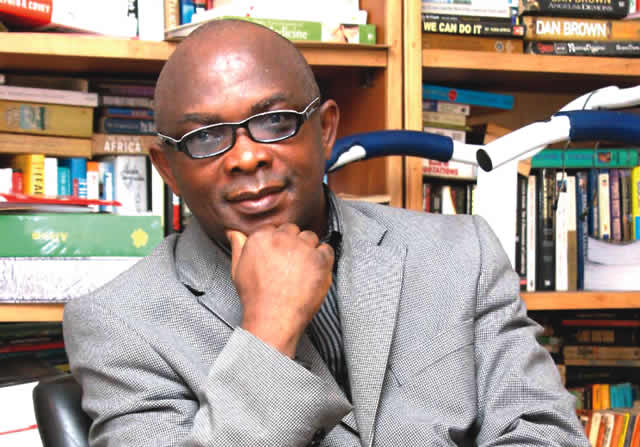
Thank you for reading. You have just read the facts and principles of Savannah Bank of Nigeria Ltd & Anor v. Ajilo & Anor (1989) LPELR-3019(SC). My name is Sani Ammani. I am a retired poet and recovering writer. I write from the ancient city of Kano. You may reach me at [email protected]

I have taken the liberty of attaching my picture. I felt it was only fair that you see exactly who is responsible for this piece, so you have a face to blame for its length.

We Trained Our Children for Years—Now They’re Kidnapped’: Parents demand end to NYSC

Abba Musa Usman, the kidnapped member of Nigeria’s National Youth Service Corps (NYSC), recently appeared alive in a disturbing video months after his abduction, but Haruna Danjuma, National President of the Parent-Teacher Association of Nigeria, warns that the government must either guarantee corps members’ safety or discontinue the scheme.

The disturbing video intensified national outrage and renewed calls for the federal government to either guarantee the safety of corps members or scrap the programme entirely.

The victim was abducted by armed bandits on January 9 while travelling to Sokoto State to begin his mandatory national service.

A video that surfaced online around the 19th day of Ramadan (March 8–9, 2026) showed the young graduate confirming he was still alive but remained in captivity. In the footage, he appealed desperately for help, contradicting earlier rumours that he had been killed.

The video emerged after reports that his family had already paid ₦10 million in ransom, only for the kidnappers to abruptly cut communication and later demand additional items—including motorcycles—before releasing him.

Despite the payment, Usman remains in captivity.

Rising Anger From Parents

The case has triggered fresh alarm about the safety of young graduates participating in Nigeria’s mandatory national service programme.

“On behalf of parents, we are not happy with what is happening,” Danjuma told Sunday PUNCH.
“It is painful to lose a child. Parents struggle to train their children from birth through university, only for them to be kidnapped during NYSC.”

Participation in the NYSC scheme is compulsory for Nigerian graduates under the age of 30, making the government responsible for their welfare during the service year, he said.

“If the government cannot protect these children, then scrap the NYSC,” Danjuma added. “The value of the scheme is already defeated if the participants are not safe.”

He urged the federal government to require state governors and security agencies to formally guarantee the safety of corps members before they are deployed.

Amnesty International: “Parents’ Fears Are Justified”

Human rights advocates have echoed the concerns.

Isa Sanusi, Executive Director of Amnesty International Nigeria, said families are being forced into an impossible situation—negotiating directly with kidnappers to save their children.

“The concerns of parents are absolutely legitimate,” Sanusi said.

“There is no way someone would train a child up to university level, send him to NYSC, and then end up paying ransom to kidnappers.”

Sanusi accused authorities of failing to provide adequate institutional support to families dealing with abduction cases.

“For NYSC to leave parents to struggle with ransom payments while waiting to see whether their children will be killed is quite irresponsible,” he said.

Even if the programme is not scrapped, Sanusi argued, corps members should not be posted to areas with active security threats.

Dangerous Roads for Corps Members

Usman’s abduction highlights a growing pattern in northern Nigeria, where highways in the North-West and North-East have become increasingly dangerous.

Armed groups frequently target travellers, including corps members, for kidnapping.

Security reports suggest kidnappers earned more than ₦46.1 million from abducting NYSC members between 2023 and early 2025.

Some victims have reportedly been held for months—or even up to a year—before release.

Although the NYSC management has previously disputed claims of widespread killings of corps members, officials acknowledge that security risks remain high in certain regions.

A Case That Shocked the Country

Usman, a graduate of Plant Science and Biotechnology from Federal University Gusau, was travelling to Sokoto when he was seized by bandits.

Earlier reports said his family had even held a burial ceremony for him on March 5, believing he had been killed after failing to raise the ransom.

Days later, the kidnappers released a new video showing him alive but visibly weak.

The footage, which also shows him being beaten by the abductors, has circulated widely online and reignited public debate about the safety of young Nigerians participating in the service scheme.

A National Debate Rekindled

The NYSC programme—established in 1973 to promote national unity by posting graduates to states outside their regions—has long been a cornerstone of Nigeria’s post-university experience.

But rising insecurity has led to growing calls for reform.

For many parents, Usman’s ordeal represents a painful question: Should young graduates be required to serve in parts of the country where their lives may be at risk?

Until that question is answered, critics say, the future of the programme will remain under intense scrutiny.

How Salaries of Lower Court Judges Encourage Corruption in the Judiciary: Lagos State Government is not doing enough

By Bayo Akinlade Esq.

Yes, we are back again on this issue.

Fuel pump prices have gone up again while we continue to struggle with bringing justice closer to the common man.

When a Lower Court Judge cannot comfortably get home or conveniently pay his or her house rent; just know that we are in big trouble in Lagos State.

House rents have gone up and the same Magistrates are saddled with the responsibility of deciding most tenancy disputes, how do you think they will feel if their landlords take them to court to recover premises from them.

Transportation costs are high and our magistrates are saddled with deciding cases around traffic and other violations….most of our Lower Court Judges don’t have cars…what kind of State Government do we have?

These Magistrates are Lawyers in the 3rd arm of Government earning less than 300k per month and we expect them to do justice and maintain their integrity? ( You say that’s no excuse and I say; why should we give them an excuse )

While the State Executive and the Legislative arms fill their pockets with unjust gains the Lower Courts Judges in Lagos are systematically starved of the much needed resources to enable them do their jobs to maintain law and order.

Why is the State Government providing extra funds to Federal Government paid State Judges while ignoring the needs of its own Judicial Structure which is made up of the Magistrate and Customary Courts?.

Why are salaries of Lower Court Judges so small and insignificant?

Why are they suffering while their counterpart politicians smile to the bank?

What is our gain in a society that lacks Justice?

What if the Lower Court Judges go on strike? Perhaps then we will understand their value.

Speak up for the Lower Courts in your constituency

NBA should speak up for its members in the Lower Courts

Akinlade is Convener; Fight Against Corruption in the Judiciary and Citizens Support For Lower Courts

Middle Belt Group urges Goodluck Jonathan to run for 2027 election

The New Nigeria Integrity Movement (NMIM), Middle Belt Zone, has called on former President Goodluck Ebele Jonathan to consider returning to national leadership in the 2027 general election, citing the urgent need for experienced and stabilising leadership amidst worsening national challenges.

The call was made in a communiqué issued at the end of a strategic meeting of the group, during which members reviewed the current state of the nation and expressed deep concern over rising insecurity, economic hardship, and the deteriorating living conditions of millions of Nigerians.

According to a media release jointly signed by Hon. Pastor Peter Hassan, National Leader, and Dr. Blessing Eliagu, Secretary, “Nigeria is currently facing a critical moment marked by widespread poverty, hunger, and persistent insecurity across several communities, particularly in the Middle Belt region.”

The statement continued, “Across the nation, millions of Nigerians are experiencing unprecedented economic hardship. Poverty has deepened, hunger has become widespread, and many families now struggle daily to secure basic meals.”

The group acknowledged that while infrastructure development remains important for long-term national growth, it does not immediately address the urgent crisis of hunger and livelihood confronting many Nigerians.

They therefore urged Dr. Jonathan to offer his leadership and experience once again in service to the nation.

“We believe that former President Jonathan represents calm, experienced, and credible leadership capable of restoring hope, rebuilding trust in governance, and initiating policies that directly address the economic suffering of citizens,” the communiqué stated.

The organisation also appealed to democratic leaders and partners around the world to support efforts aimed at strengthening democratic governance and stability in Nigeria.

The group described Jonathan as one of Nigeria’s most experienced statesmen, noting that his tenure demonstrated respect for democratic principles, tolerance, and commitment to national unity.

“His leadership style reflected humility, respect for the rule of law, and dedication to democratic values,” the statement added.

It further argued that his return could help reinforce the principle of power rotation, which it described as an important mechanism for maintaining national balance and political stability in Nigeria.

The movement stressed that its appeal is driven not by partisan considerations but by concern for the wellbeing and survival of Nigerians.

“Nigeria requires a national reset – one that focuses on human welfare, economic recovery, and national cohesion. Silence in the face of the current suffering is not an option,” the group said.

The organisation also called on Nigerians to continue advocating peacefully for responsible leadership and policies that prioritise the welfare of citizens.

“Nigeria deserves better. The time to act is now,” the communiqué further stated.

TIPS