Nigeria is confronting a sweeping public health emergency, one that experts say is quietly spiralling into a national catastrophe.
From overstretched hospitals to a mass exodus of doctors, the country’s healthcare system is buckling under the weight of multiple crises, leaving an estimated 65 to 70 percent of Nigerians without access to quality care.
At the centre of the alarm is a growing call for urgent reform. Speaking at a major international conference, Sunday Obeka, Vice Chancellor of Wesley University, warned that community health—particularly in rural areas—has been dangerously neglected.
“If you visit rural communities today, the gaps are glaring,” Obeka said. “Community health must become a national priority, not an afterthought in budget allocations.”
A System Under Strain
The warning came during the institution’s maiden International Conference on Community Health, which drew local and global experts to examine the theme: “Community health in a globalised society: prospects, challenges and way forward.”
Participants painted a stark picture: a country battling infectious disease outbreaks, rising non-communicable illnesses, and a healthcare workforce in decline.
Nigeria currently carries the world’s heaviest malaria burden—accounting for roughly 27 percent of global cases—while also grappling with recurring outbreaks of cholera, Lassa fever, measles, and tuberculosis.
At the same time, a “silent epidemic” of hypertension and diabetes is accelerating, signalling a dangerous double burden of disease.
The ‘Brain Drain’ Crisis
Perhaps the most immediate threat is the mass migration of medical professionals.
In the past five years alone, approximately 16,000 doctors have left Nigeria, leaving a severely depleted workforce to serve a population exceeding 230 million. In many hospitals, departments once staffed by hundreds now operate with a fraction of their personnel.
The impact is particularly severe in rural communities, where access to skilled healthcare workers is limited or non-existent.
“Healthcare delivery is collapsing in underserved areas,” one conference participant noted, pointing to widening inequality between urban and rural populations.
Broken Infrastructure, Rising Costs
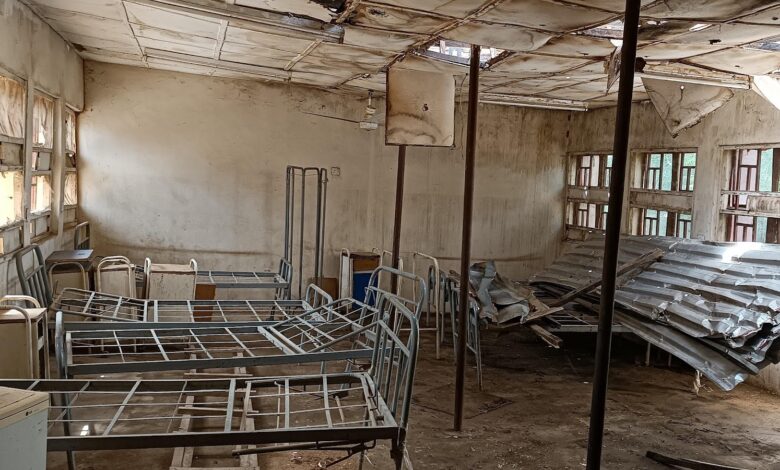
Even where healthcare facilities exist, many are barely functional.
Across the country, primary healthcare centres are plagued by unreliable electricity, inadequate equipment, and critical shortages of essential medicines. A recent report found that barely a third of required drugs are available at the primary care level.
For most Nigerians, the cost of care is another barrier. With roughly 97 percent of the population lacking health insurance, millions are forced to pay out-of-pocket, pushing an estimated five million people into poverty each year.
A Generation at Risk
The crisis extends beyond infrastructure.
Nigeria continues to record some of the world’s highest maternal mortality rates, while more than two million children suffer from severe acute malnutrition, most without access to treatment.
Mental health services are also critically under-resourced. With only a few hundred psychiatrists nationwide, millions of Nigerians with mental health conditions remain untreated, particularly in conflict-affected regions in the northeast.
In states like Borno, years of insurgency have left large portions of healthcare infrastructure in ruins, compounding an already dire situation.
Calls for Accountability and Reform
Despite government efforts, including a ₦260 billion allocation in 2024 to revitalize primary healthcare centres, experts say progress has been slow and uneven.
Critics point to systemic inefficiencies, corruption, and weak policy implementation as major obstacles.
At the conference, Bashir Idris of the Community Health Practitioners Registration Board of Nigeria emphasized the need for stronger collaboration, training, and accountability across the sector.
But speakers agreed on one point: without urgent and sustained intervention, Nigeria’s healthcare crisis could deepen into a full-scale humanitarian emergency.
“The warning signs are no longer subtle,” Obeka said. “The question is whether we act now, or pay a far greater price later.”