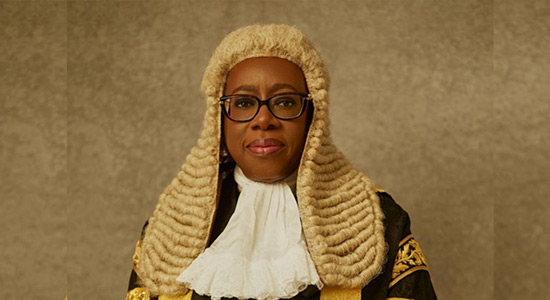
Nigeria’s electoral umpire is facing mounting scrutiny, and a coordinated defence.
A coalition of civil society organizations has thrown its weight behind Joash Ojo Amupitan, chairman of the Independent National Electoral Commission (INEC), warning that sustained attacks against him risk undermining public confidence ahead of the 2027 general elections.
At a press conference held this week, advocacy groups and governance stakeholders dismissed allegations circulating online about the INEC chairman as misinformation, describing them as part of a broader campaign capable of destabilizing Nigeria’s fragile democratic process.
A Battle Over Credibility
The intervention comes at a politically sensitive moment, as INEC ramps up preparations for a series of key elections—including governorship polls in Ekiti and Osun states—and the high-stakes 2027 general elections.
Speaking on behalf of the coalition, Prince Peter Bassey defended Amupitan’s record, citing what he described as “measurable achievements” within months of assuming office in October 2025.
Among them: the early release of the 2027 election timetable, the conduct of the Anambra governorship election, and the organization of the Federal Capital Territory Area Council polls—all presented as evidence of a shift toward transparency and institutional discipline.
Civil society leaders say these steps are critical in restoring trust in Nigeria’s electoral system, long plagued by allegations of irregularities, logistical failures, and political interference.
Misinformation and Political Tensions
At the centre of the controversy is a wave of online claims linking Amupitan to a controversial social media account—allegations the coalition insists are false.
According to the groups, forensic checks revealed that the account in question does not belong to the INEC chairman, describing the claims as a “deliberate distortion” fuelled by bad actors seeking to discredit the commission.
They warned that unchecked misinformation—particularly in the digital space—could erode institutional credibility and inflame political tensions.
“We condemn this development in totality as it threatens the existence of our democracy,” the coalition said in a joint statement signed by multiple civic leaders, including Felix Attah and representatives from youth and regional advocacy groups.
A Test of Nigeria’s Electoral System
The defence of Amupitan underscores a broader struggle over the credibility of Nigeria’s electoral institutions.
Since taking office, the INEC chairman has positioned himself as a reform-minded leader, emphasizing adherence to constitutional provisions, electoral laws, and international best practices. His administration has also pledged expanded voter registration efforts and increased stakeholder engagement.
Supporters argue that these moves signal a break from past controversies that have dogged the commission.
Critics, however, remain sceptical—pointing to Nigeria’s long history of disputed elections and unresolved legal battles as reasons for continued vigilance.
High Stakes Ahead of 2027
With political tensions rising and party disputes—such as those involving the African Democratic Congress—testing INEC’s regulatory authority, analysts say the commission’s credibility will be pivotal in shaping the legitimacy of the next electoral cycle.
Civil society groups are now urging Nigerians to resist what they describe as politically motivated attacks and to support institutional reforms aimed at strengthening democratic governance.
“At this critical moment,” the coalition said, “national interest must take precedence over misinformation and distraction.”
For Amupitan and INEC, the message is clear: the road to 2027 will not only be about organizing elections—but defending the integrity of the system itself.