The latest Nigerian Bar Final examination results have sparked fresh conversations about performance trends in legal education, with figures revealing a wide gap between top-performing candidates and those who fell short.
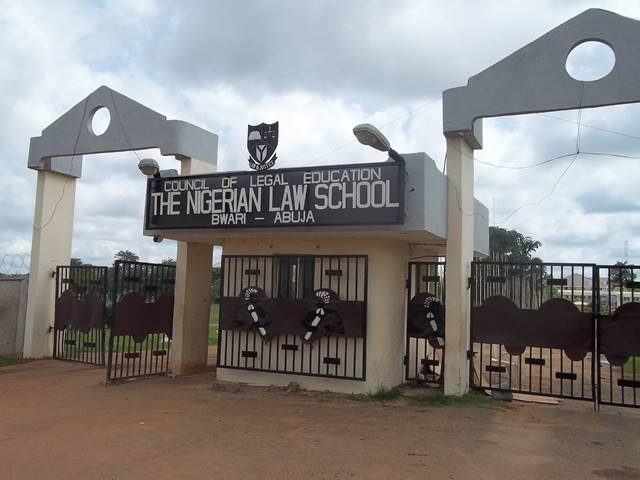
At its recent meeting, the Council of Legal Education, chaired by Emeka Ngige, formally approved the December 2025 Bar Final results presented by the Director-General of the Nigerian Law School, Olugbemisola Titilayo Odusote.
The figures tell a story of both achievement and concern.
Out of a total of 7,602 candidates who sat for the examination, only 212 candidates, just 2.8 percent, earned a First Class, underscoring the rarity of top-tier performance in Nigeria’s final gateway to legal practice.
A further 1,216 candidates (16 percent) secured a Second Class Upper division, while the largest share, 2,961 candidates (nearly 39 percent), fell into the Second Class Lower category, highlighting a heavy concentration of mid-tier results.
At the lower end of the spectrum, 1,622 candidates (21 percent) obtained a simple Pass, while 314 candidates (4.1 percent) were placed on Conditional Pass, requiring remediation before full qualification.
More troubling, however, is the number of candidates who failed outright. A total of 1,067 candidates, approximately 14 percent, did not meet the required standard, effectively halting their immediate path to legal practice. An additional 210 candidates (2.8 percent) were absent from the examination entirely.
In aggregate, this means that over 18 percent of candidates either failed or could not complete the process, raising fresh questions about preparedness, training quality, and the increasing pressure within Nigeria’s legal education pipeline.
While the Council of Legal Education retains the authority to approve results, the final step into the profession lies with the Body of Benchers, which is responsible for formally admitting successful candidates to the Bar.
The latest results arrive at a time of growing debate over standards at the Nigerian Law School, with critics pointing to persistent gaps between university legal education and the practical rigours of Bar examinations.
For many candidates, the outcome represents the culmination of years of study. For others, it signals a setback in an already highly competitive and demanding profession.
Beyond individual results, the broader implication is harder to ignore:
Nigeria’s legal system continues to produce thousands of graduates, but only a select few emerge at the top, while a significant number struggle to cross the final threshold.
As conversations around legal education reform intensify, the numbers from the December 2025 Bar Finals may serve as both a benchmark, and a warning.
Below is a summary of the result.
- Total Candidates: 7,602
- First Class: 212 (2.8%)
- Second Class Upper: 1,216 (16%)
- Second Class Lower: 2,961 (39%)
- Pass: 1,622 (21%)
- Conditional Pass: 314 (4.1%)
- Fail: 1,067 (14%)
- Absent: 210 (2.8%)
Key Takeaways
- Only 2.8% achieved First Class
- 14% failed outright
- 18%+ failed or were absent
- Majority fell under Second Class Lower (39%)