Home Blog Page 69

Benefits of constructive criticisms and feedbacks, By Richard Odusanya

Leaders should not ignore critics because criticism is an inevitable, necessary component of leadership that, when managed correctly, provides opportunities for growth, innovation, and enhanced self-awareness. In summary, effective leaders do not fear criticism; they ensure it informs, but does not define, their leadership. Facing criticism or discontent can be challenging. As Norman Vincent Peale (the late author of The Power of Positive Thinking) said, “The trouble with most of us is that we’d rather be ruined by praise than saved by criticism”.

In the golden words of William Henry Gates III (Bill), an American businessman and philanthropist. Bill profoundly posited: “We all need people who will give us feedback. That’s how we improve”. Bill’s philosophy emphasizes that constant, honest, and constructive feedback is essential for personal growth and success.

At this point, permit me to share with you one piece of feedback from a distinguished Academic and Researcher who reacted to my above post as follow:

“In academia, we RE-SEARCH. This means we criticise and build. What I see with most of my people is that we criticise, but are unable to appreciate, commend and build. You cannot build and sustain anything significant if the Culture DNA is perpetual criticism; this is why the post, in my opinion, is incomplete. In psychology we are warned about always condemning children because it is known that this eventually affects their later undertakings and response to society. Nigeria, Nigerians and Nigerian leaders are toddlers in the development growth cycle. There is nothing wrong in criticising, but if this is what those leading the nation gets, it becomes expected, diffuse and inconsequential to a significant extent.

This is what I now call the “DanBwala Effect”, as demonstrated in the head to head interview. In this stage of our development, we cannot afford to behave like the developed countries, instead, we should do what they did in the earlier stages of their development putting all hands on deck in innovation and creativity. We would have more failures than successes, but our disparate successes would combine together to give us what we want!

I am not a social scientist, given that I can only see society with the lenses of an Engineer and hardcore scientist. Theories and hypotheses exist so that they can be re-evaluated and interrogated relative to prevailing situations, and where required, modified accordingly. This is why we have a number of economic theories and principles. The current orientation of our society (at least 90% of our people) is to condemn & damage regardless of situation and that is discouraging to those who might have meaningful contribution. Please, recall that we have been like this from before Nigeria was formed. I argue it is time to change if we are serious about development.

Finally, how do you score a person who was supported by the Nigerian people from primary school to PhD level working in foreign land, after all that, but whose only contribution to Nigeria is shooting bullets of criticism at it? Those we left behind are trying their best in my opinion, they cannot act beyond their capabilities. They might be getting things wrong, but they are the ones the majority of people are presented for elections. This perspective is fairness and equity! We need to start looking deeper into the causes of our dilemma and not just the effects.”

My sincere regards and appreciation for what you are doing & our debate. Cheers.

From the researcher’s perspective; it is crystal clear that, “constructive criticism” if presented in a way that shows one the flaws and presents an alternate solution without judgment will be much more acceptable to the recipient. And, also if delivered correctly, as in the proper meaning of being constructive and not out of spite, malice, threatening or intentional harm, then the criticism may actually be beneficial and more likely to be acceptable and considered.

Following from the above: I wish to state clearly –from my personal experience and perspective; constructive criticism is a bona fide review about our work and it’s loopholes, which is certainly free from any personal biased opinions. And the best part about this sort of criticism is that, it brings genuine methods of improvement and suggestions along with it. Whereas, negative criticism is totally a pessimistic condemnation, done out of anger, hatred or jealousy. Such people with small mindsets just try to find a way or the other to pass cynical remarks about other individuals (especially, when they are unconditionally working hard and leading themselves towards the path of success).

In conclusion, I wish to emphasize the importance of constructive criticism. Feedback is important for the growth of both individuals and organizations, but it can be difficult to give and receive. Finally, criticism or feedback is only someone’s opinion as long as no value is attached to it. It is how we perceive it that makes all the difference.

@richardODUSANYA

[email protected]

The views expressed by contributors are strictly personal and not of Law & Society Magazine.

When the party forgets why it began

On the Unchecked Proliferation of Religion and the Quiet Unravelling of Its Purpose

By Charles Obiajulu Ugwu-PhD

The Proverb They Never Exported

Somewhere in the hill country of Central Africa, where the Tutsi people have long read the world through proverbs that cut to the bone, there is a warning that travels quietly but lands with force. It concerns the nature of a gathering, a party, a feast, a celebration and what happens when no one remembers to close the gate. The warning is simple: as the party enlarges beyond its original company, something irreversible begins. Resources thin. The mood shifts. Strangers multiply, some well-meaning, some not. The host loses the room. The music grows louder but the joy grows thinner, and by the end of the night the occasion that was supposed to bind people has become the very thing that unravels them.

This proverb, rooted in the lived wisdom of a people who have known firsthand the devastation that follows when social complexity is mismanaged, was never intended to reach boardrooms in London or theology faculties in Nairobi. Yet it arrives there anyway, uninvited and entirely relevant. Because what the Tutsi elder described in the vernacular of celebration, a Welsh academic named Dave Snowden later mapped in the language of systems theory.

His Cynefin framework pronounced kuh-NEV-in, from the Welsh word for habitat lays out how systems behave as they grow in scale and compositional diversity. Simple systems can be managed. Complicated ones require expertise. Complex ones require navigation rather than control. And chaotic ones? They demand that someone pulls the emergency cord before the whole structure collapses inward.

The Tutsi proverb and the Cynefin framework were born in different centuries, on different continents, in entirely different intellectual traditions. They describe the same thing. That convergence is not a coincidence. It is a diagnosis.

Forty-Five Thousand Versions of the Same Book

There are, as of the most recent scholarly counts, more than 45,000 distinct Christian denominations in the world. The number is not static. It grows. Every few months, somewhere on the planet, someone disagrees with their pastor, or a bishop with his synod, or a congregation with its mother church, and a new expression of the faith is born fresh letterhead, fresh doctrine, fresh certainty that this time, finally, the thing has been understood correctly.

Think about what that number actually means. If you spent one year attending each denomination one Sunday per year per body, you would die before you completed the survey. Your grandchildren would continue it. Their grandchildren might finish. Forty-five thousand is not diversity. It is fragmentation wearing the costume of diversity.

Christianity is not alone in this arithmetic. Islam, while structurally more resistant to formal schism its architecture leans centralising rather than congregational has nonetheless produced an extraordinary proliferation of movements, schools, brotherhoods, revivalist strands, and militant offshoots. Where Christianity fractures through theological disagreement, Islam often multiplies through geography, politics, and interpretation. The result in both traditions is a landscape of religious bodies so numerous and varied that the very concept of a coherent tradition begins to strain under the weight of its own membership.

One should pause here and resist the lazy liberal instinct to celebrate this as pluralism. Pluralism, properly understood, is the co-existence of distinct traditions that maintain genuine dialogue and mutual accountability.

What we are describing is not that. It is closer to what a biologist would call speciation under selective pressure, organisms splitting and adapting not out of any teleological wisdom but out of the brute mechanics of survival and competition. The question that neither biologist nor theologian tends to ask loudly enough is: at what point does the branching stop strengthening the tree and begin hollowing it?

The Mandate That Outlived Its Moment

To understand why this proliferation was not only permitted but actively encouraged, one must return to the scriptural engine that powered it. The image Jesus offered his disciples in Matthew’s gospel was agrarian and urgent: a vast field of ripe grain, and not nearly enough hands to bring it in before the weather turns. The harvest is plentiful, the labourers are few. Go, therefore. Multiply. Spread.

In the context of the first century Mediterranean world, this was not a metaphor about institutional growth. It was a call to movement, to personal witness, to the costly work of carrying an unpopular message into hostile territory. The early Christians who heeded it were not building denominations. They were risking their lives. The mandate was born in scarcity scarcity of time, of resources, of people willing to take the risk.

Now consider what the world looks like from where that mandate stands today. In Nigeria alone, it is estimated that there are more than 38,000 registered churches, and that figure does not account for the countless unregistered fellowships operating out of warehouses, school halls, and living rooms. In Brazil, Pentecostal Christianity has grown at such velocity that sociologists describe it less as a religious revival and more as a social transformation of the national character. In South Korea, the Yoido Full Gospel Church seats 30,000 worshippers in a single service and has satellite congregations across the globe. The labourers are no longer few. They are legion. The fields that once lay empty are now planted so densely that the crops are choking each other.

Yet the mandate continues to be quoted as though it were 32 AD. Seminaries continue to ordain. Missions continue to dispatch. The theological logic of scarcity persists long after the empirical conditions that justified it have reversed. This is not an accident of oversight. It is a structural feature of institutions that have confused their founding mandate with their permanent identity.

When Growth Becomes the God

There is a small church in rural Ghana the kind that exists in thousands of iterations across the continent where the founding pastor built something genuinely remarkable over thirty years. He knew his community. He buried their dead, arbitrated their disputes, counselled their marriages, and organised their harvests. The church was, in the truest sociological sense, the connective tissue of a functioning community. Then his eldest son took over.

The son had been to Bible college. He had attended conferences. He had watched the mega-churches rise in Lagos and Accra and concluded that scale was synonymous with anointing. He launched a building campaign. He established satellite branches. He developed a media presence. Offerings were restructured to fund expansion. The community-facing ministries that had made his father’s church essential; the school feeding programme, the free clinic on Thursdays, the widow’s support fund were quietly deprioritised. They did not generate growth metrics. Within a decade, the church had tripled in membership and halved in usefulness.

This story has ten thousand variations. It is being replicated today in cities and villages from Manila to Manchester.

And what it illustrates is not merely bad leadership. It illustrates the logic of a system in which growth has been so thoroughly sacralised that it can no longer be questioned without appearing to question God. When expansion becomes the evidence of divine favour, and contraction becomes the evidence of spiritual failure, you have created an institution that is structurally incapable of honest self-assessment.

The sociologist Max Weber described this pathology in secular institutions as the routinisation of charisma the process by which the original fire that animated a movement hardens into bureaucracy, and the bureaucracy then serves its own perpetuation rather than the movement’s founding purpose. Religious institutions are particularly vulnerable to this because they carry an additional layer of armour: the claim of divine sanction. To question whether the institution has lost its way is, in many religious cultures, to question God. That is an extraordinarily effective mechanism for suppressing accountability.

The Snake and the Mirror

In ancient iconography, the ouroboros the snake devouring its own tail was a symbol of eternity and cyclical renewal. Today, in the context of institutional religion, it has become something less poetic: a precise diagram of what happens when a body grows by consuming the very substance that justified its existence.

Consider the economics. The prosperity gospel, now one of the fastest-growing theological movements on the planet, inverts the relationship between spiritual leadership and material wealth in a way that would have been recognisable to Amos or Micah as an ancient heresy. The pastor becomes wealthy; the congregation is told that their own wealth follows from their giving to the pastor. The mechanism is not incidental to the theology it is the theology. And the theology, unsurprisingly, generates growth, because it speaks to the material aspirations of people whose material circumstances are genuinely desperate. The church grows. The founder prospers. The community remains exactly where it was.

This is not a problem exclusive to Africa or to Pentecostalism, though those contexts provide its most vivid illustrations. A particular church spent decades managing the scandal of systematic child abuse not primarily as a moral emergency requiring the protection of children but as a reputational emergency requiring the protection of the institution. Leaders moved predatory priests not to stop the predation but to contain the disclosure. The institution ate its most vulnerable members and called it pastoral care. That too is the ouroboros.

Meanwhile, in the Islamic world, the mechanisms of compulsory giving zakat, required of every Muslim as one of the five pillars of faith have in certain contexts been captured by religious and political elites who direct those resources toward institutional expansion and ideological consolidation rather than toward the relief of the poor they were designed to serve. The giving remains. The serving thins. The party continues. No one asks what happened to the guests.

Vice at the Same Velocity

Here is the fact that should give every sincere religious person pause: the social metrics that religion has historically claimed to address poverty, family breakdown, moral confusion, exploitation of the vulnerable have not improved in proportion to religion’s growth. In many measurable respects, the communities most saturated with religious activity are also among those most saturated with social dysfunction.

This is not an atheist talking point. It is a data point. Nigeria ranks among the most religious nations on earth by every available survey church attendance, prayer frequency, self-reported faith importance and simultaneously ranks near the bottom of global indices for governance, corruption, and human development. Brazil’s Evangelical boom has coincided with the continued immiseration of its favelas. The American Bible Belt, where religious practice remains among the highest in the developed world, records the highest rates of divorce, teenage pregnancy, and opioid addiction in the nation.

Correlation is not causation, and one should be careful not to make religion the villain of a story whose causes are multiple and complex. But what one can say with confidence is this: the assumption that religious proliferation produces social virtue that more churches and mosques mean better communities is not borne out by the evidence. At best, the relationship is neutral. At worst, it is actively inverted, because religious structures can insulate communities from the secular institutions, professional expertise, and critical thinking that might otherwise address these problems more effectively.

The party has grown enormous. The neighbourhood outside is in no better shape than before.

Implosion in Slow Motion

Systems theorists use the term implosion to describe a particular kind of collapse not the dramatic outward explosion of a structure under pressure, but the quieter, more insidious process by which a system turns its energy inward, consuming itself. An imploding star does not explode; it collapses under its own gravitational weight. An imploding organisation does not fail loudly; it grows more internally complex, more resource-intensive, more focused on its own maintenance, until one day someone looks up and realises that nothing useful is being produced.

The signs of implosion in contemporary religious institutions are not difficult to read, if one is willing to look. The proliferation of denominations is itself a sign not of richness but of the impossibility of coherence at scale. Forty-five thousand Christian bodies cannot agree on what Christianity is. They can only each assert their version, recruit, grow, and assert again. This is not theological vitality. It is theological entropy.

The monetisation of spiritual practice is another sign. When a congregation measures its pastor’s anointing by his fleet of cars, or measures its own spiritual progress by the size of its financial seed offering, the vocabulary of faith has been hollowed of its original content and filled with the logic of a market. The market may grow. The faith has departed.

The export of conflict is perhaps the most dangerous sign. Religious institutions that can no longer find coherence internally often find it externally, by identifying enemies the wrong denomination, the wrong interpretation, the wrong God. In parts of Nigeria and Kenya, inter-denominational rivalry has become indistinguishable from gang competition. In the Middle East, Islamic factionalism has underwritten conflicts of an almost incomprehensible human cost. The party, unable to agree on what it is celebrating, has begun fighting over the tables.

What the Elder Knew

The Tutsi elder who first framed the crowded-party proverb was not a theologian, a sociologist, or a systems theorist. He was a man who had watched gatherings long enough to understand their arc. He knew that the moment of maximum joy in any gathering is not the moment of maximum size. It is the moment before the crowd loses itself when the host still knows every face, when the food is still enough, when the music still means something to the people dancing to it.

That moment, in the history of many religious traditions, existed. It was the early church in Jerusalem, sharing meals and resources in communities small enough to actually know one another. It was the first generation of Islam in Medina, where the faith was a living social contract rather than a doctrinal claim. It was the Catholic monasteries of medieval Europe, which whatever their sins, were genuine centres of literacy, medicine, and agricultural innovation for communities that had nothing else. It was the African independent churches of the early twentieth century, which gave dignity and agency to people from whom colonialism had stripped both.

Those moments are still replicable. They do not require a particular theology. They require honest reckoning with the question that the crowded party always eventually forces: is this gathering still in service of the people who came, or have the people who came become merely in service of the gathering?

To ask that question is not to be faithless. It is to be faithful to something older and more essential than the institution. Every tradition worth the name has, within its own resources, the tools for this reckoning. Christianity has its prophetic tradition Isaiah, Amos, Jesus himself, who drove the traders from the Temple not because commerce was evil but because commerce had colonised the one space meant for something else. Islam has its concept of islah reform, renewal, the return to original purpose. The question is whether those tools are still being taken down from the wall, or whether they have become decorative.

The party is very crowded now. The music is very loud. And somewhere near the back, past the people who came to be seen and the people selling things at the door, are the people who came because they were hungry not for prosperity, not for belonging to a winning team, not for a supernatural guarantee of earthly success, but for the thing that the party was, at its origin, supposed to offer: meaning, in the face of a world that provides very little of it for free.

Those people deserve better than an institution that has forgotten why it opened its doors. They deserve the honesty of leaders willing to look at the crowd and ask, without flinching, whether what is growing here is the harvest or the weeds.

Dr Charles Obiajulu Ugwu is a contrarian thinker writing from Lagos.

The views expressed by contributors are strictly personal and not of Law & Society Magazine.
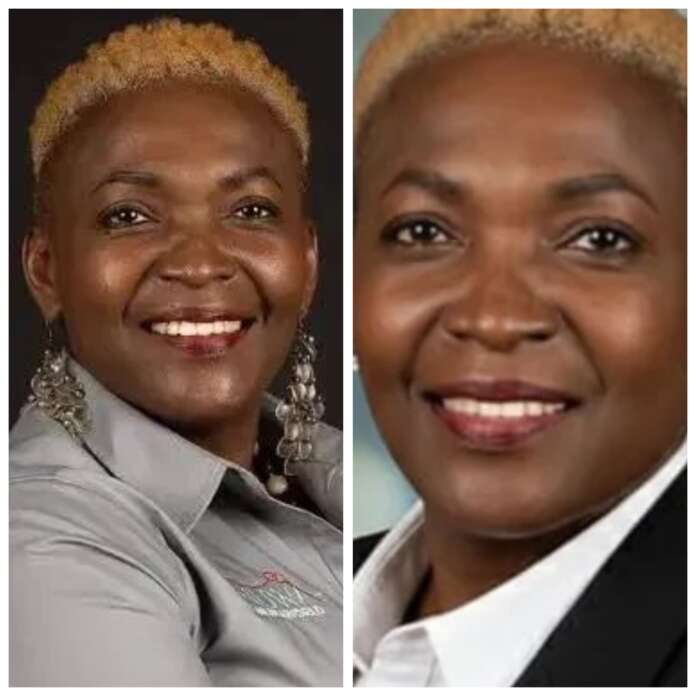
She killed her husband, then wrote a book on grief…

A woman from  Utah was convicted on Monday of aggravated murder after poisoning her husband with fentanyl and then self-publishing a children’s book about coping with grief.

Prosecutors said Kouri Richins slipped five times the lethal dose of the synthetic opioid into a cocktail that her husband Eric Richins drank in March 2022.

Prosecutors said she was $4.5m in debt and falsely believed that when her husband died, she would inherit his estate worth more than $4m. They also said she was planning a future with another man she was seeing on the side.

“She wanted to leave Eric Richins but did not want to leave his money,” the Summit County prosecutor, Brad Bloodworth, said.

Richins stared at the floor and took deep breaths as the judge read the verdict.

The jury deliberated for just under three hours. Afterwards, family members on both sides of the case left the courtroom hugging and crying.

Richins was also convicted of other felonies, including an attempted murder charge in what authorities alleged was another effort to poison her husband weeks earlier on Valentine’s Day with a fentanyl-laced sandwich that made him black out. Jurors also found Richins guilty of forgery and fraudulently claiming insurance benefits after his death.

Sentencing was scheduled for 13 May, the day her husband would have turned 44. The aggravated murder charge alone carries a sentence of 25 years to life in prison.

“Honestly I feel like we’re all in shock,” said Eric Richins’ sister, Amy Richins. She said the family can now focus on honouring her brother and supporting his sons. “We got justice for my brother.”

The scheduled five-week trial was cut short last week when Kouri Richins waived her right to testify, and her legal team abruptly rested its case without calling any witnesses.

Richins’ lawyers said they were confident that prosecutors did not produce enough evidence to convict her of murder.

Prosecutors said Richins, a real estate agent focused on flipping houses, was deep in debt. She had opened numerous life insurance policies on her husband without his knowledge, with benefits totalling about $2m, prosecutors alleged.

They showed the jury text messages between Richins and Robert Josh Grossman, the man with whom she was allegedly having an affair, in which she fantasised about leaving her husband, gaining millions in a divorce and marrying Grossman.

The internet search history from Richins’ phone included “what is a lethal.dose.of.fetanayl”, “luxury prisons for the rich America” and “if someone is poisned (sic) what does it go down on the death certificate as”, a digital forensic analyst testified.

Bloodworth replayed for the jury a clip of Richins’ 911 call from the night of her husband’s death. That’s “not ‘the sound of a wife becoming a widow’,” he said, quoting the defence’s opening statement. “It’s the sound of a wife becoming a black widow.”

Source: The Guardian excluding headline

Leadership, zoning & Anambra’s political history 

By Ifeanyichukwu Afuba 

Shortly, on March 17, 2026, Anambra State will witness it’s ninth tenure transition since creation of the State in 1991. Professor Charles Soludo’s swearing in on Tuesday, March 17, will mark the third consecutive, second – tenure in the State. Soludo’s second term inauguration carries with it the distinction of not being trailed by a legal challenge of his electoral victory. The development signals a new high in Anambra’s complex politics. What is the secret of the appreciation in Anambra’s politics? Closer attention to the State’s political history reveals two major factors at play in her democratic journey. By the extent and consistency of their influence, these elements have functioned as drivers of political engineering.

As with any other progressive society, Anambra’s gradual turnaround can be traced to a conscious decision to raise the bar. This thirst for development was behind the struggle for splitting the old Anambra State into two. On realisation of the quest in August 1991, the extent of work to be done in the new State was staggering. It was not just the lack of infrastructure but also the challenge of leadership. Although enormity of the task sobered the euphoria of a dream come true, Ndi Anambra quickly went to work. Consensus was soon achieved on the need for a mature candidate, possibly a statesman, in the governorship election which was only four months away.

The dire conditions of the State ruled out any chances of trying greenhorns, puppets or political cowboys. Emphasis was laid on rich experience in government or cognate equivalent in private sector. Familiarity with levers of government, international development agencies and financial institutions, were considered crucial for driving the growth of the State. These assets aggregated towards technocracy. Everyone understood the mood. Anambra did not want the ‘professional’ politician. As it were, the portrait fitted the late Dr Chukwuemeka Ezeife, a retired federal permanent secretary, who went on to win the keenly contested election. Looking back, Ezeife’s critics at the time now concede that his “conservatism” and frugality were beneficial to the State, with significant government impact achieved in just two years.

This political consciousness did not wane with the interregnum of military rule between late 1993 and mid 1999. In the governorship process of the Fourth Republic, Third Republic Speaker of the House of Representatives, Agunwa Anaekwe, Dr Chinwoke Mbadinuju and Professor Aloysius Nwosu were front runners for the job. When the wheeling and dealing of internal party politics threw up Mbadinuju, there was concern about what the turbulence of his emergence meant. There was a sense of fait accompli which struck down other party options. Dr Alex Ekwueme was pursuing his presidential ambition in the PDP and that foreclosed the other two registered political parties, Alliance for Democracy and All Peoples Party as vehicles for the state governorship. Mbadinuju had recognition as a practicing lawyer and former Special Assistant to the Vice President. The crisis that rocked Mbadinuju’s governorship was not necessarily a case of miscalculation by the electorate. The set qualification was met. It was therefore less an error of judgement by society but majorly abdication of oversight expected of the Ekwueme establishment.

Nevertheless, relevant lessons were learnt from the Mbadinuju episode. The imperative of a strong, independent candidate laid down at creation of the State had proved a lived truth. Majority of Ndi Anambra vowed never again to a stooge of power speculators. This consideration was what set Mr Peter Obi’s candidacy apart from that of Dr Chris Ngige in the 2003 governorship contest. Both had satisfactory resume; one a successful businessman cum corporate captain, the other a veteran of medical and public service.

But Obi’s capacity to foot the election bill by himself could not be ignored. Yet, these were not the only parameters. Inclusiveness, fairness and balance are rubrics for a united and stable community. Power shift to another senatorial zone was a foregone conclusion. Between the central and north senatorial districts, the odds weighed in favour of the central. The central zone had better candidates, an assessment proved by the fact that Obi topped the poll scores followed distantly by Ngige. It suffices to note that both performed well within the circumstances they held office. George Moghalu, an unsullied candidate who contested the same 2003 election under the ANPP banner, was hobbled by the fact of being from the south senatorial zone.

Mr Peter Obi’s reelection in 2010 was partly influenced by the zoning factor. While the APGA brand and his reformist leadership counted, the principle of rotation was no less imperative. By the Court of Apppeal decision that Ngige’s declaration as winner of the 2003 election “is hereby set aside” and the Supreme Court pronouncement that Obi as the person first elected “has a four year tenure”, a fundamental shift occurred. Ngige’s three year stay on the saddle, presented a moral problem. It would be grievous miscarriage of justice for Obi as an individual and the central zone as a collective to suffer the consequences of Ngige’s personal gamble.

Obi’s qualification for second tenure superceded the status of a truncated, technical period in office. And so in the town hall of Anambra’s politics, the central senatorial district had served only four years. This aggregation of opinion was put to test with the governorship bid of two strong candidates. Andy Uba, the powerful manager, free enterprise section of Olusegun Obasanjo’s presidency, vied as Labour Party candidate. Charles Soludo, fresh from aura of Central Bank, ran on the PDP ticket. Both candidates, who hail from the south senatorial zone, lost. Their defeat was seen as a statement on the zoning policy.

There was no debating where the next Governor would come from at the end of Obi’s second tenure in 2014. Anambra North senatorial district was raring to go. But as in all human affairs, understanding varied. Majority of Ndi Anambra were steadfast that the logic of zoning meant the north zone. Just before Willie Obiano won the APGA primaries, there were calls on Professor Charles Soludo to join the race. It was a delicate, uneasy moment as Soludo warmed up to the invitation. But sobriety once more took over. The justness of zoning loomed large, too sharp to be blunted, too bright to be eclipsed. APGA would have had a terrible time trying to discredit a cause it had championed with much conviction and success. What was more, Obiano fitted the technocrat qualification attached to the governorship office. Soludo heeded the voice of superior reasoning, demonstrating by his withdrawal, grace of selflessness, deference to the common good. Ifeanyi Ubah of south zone, considered by some as an irrepressible politician, mounted a challenge to the zoning order by contesting the election. He lost woefully. He would lose again in 2017 to the zoning formula. 

By 2017 when Obiano won his second tenure, the concept of power rotation had appreciably been internalised. It’s inherent merit could not be a respecter of status or fancies. Mr Peter Obi led Oseloka Obaze, the PDP candidate from the south zone, on the campaign trail. It was an ill advised, ego trip seeking to upturn a cordial and working social contract. The move was doomed by the combined effects of Obiano’s sterling performance, the wide acceptance of zoning and appeal of the APGA brand. Aside the occasional attempts at subsuming the zoning agreement to personal whims, there is another explanation for the seemingly blind opposition to it.

Many of the politicians who embark on a patent violation of it’s letters are not oblivious of what they are doing. The election they purport to contest is often a dummy to get noticed, draw attention and force themselves into public reckoning. For some others, the outward defiance of zoning is a rehearsal for future polls. Ifeanyi Ubah and Andy Ubah moved from apparently rejecting zoning to contesting the next senatorial elections. It’s also in this context that the insistence of Paul Chukwuma, who hails from Obiano’s north senatorial district in contesting the 2025 governorship poll, makes sense.

Soludo’s election in 2021 and reelection in 2025 confirms that the reign of technocracy and zoning in Anambra’s government and politics is thriving. The trend continues to endure, with great results for society. Soludo’s strides in education, infrastructure and economic development alone are indicative of the store in great leadership. Outside the tangible, social stability is to be appreciated. It has come from a felt sense of proportion and fair play. Steadily, the application of zoning is growing beyond the spheres of APGA. Even after spouting the superiority of open contest, other political parties later bring the wisdom of zoning to bear on the choice of their candidates. It is telling that the contending parties in the November 2025 poll, APC, Labour Party and ADC all picked their candidates from Soludo’s south zone. As the current dispensation gets underway, it’s hoped that the system that has brought Anambra much value will continue to flourish.

Wale Adenuga speaks out on Papa Ajasco row, clears air on actor’s welfare

Veteran producer Wale Adenuga has broken his silence on the controversy surrounding the Papa Ajasco franchise, saying there’s no irreconcilable dispute with Abiodun Ayoyinka, the actor behind the iconic character.

Adenuga explained that Ayoyinka, a respected and versatile actor, had been part of the production since its inception and had benefited from opportunities, including vehicles and a house in Ogun State.

Adenuga clarified that the Papa Ajasco name was copyrighted and could not be used without authorisation, but actors were free to take on other roles and endorsements with approval.

He dismissed claims of financial neglect, saying Wale Adenuga Productions operated in line with industry standards and obligations to cast and crew.

The producer’s statement follows a viral video and media interview featuring Ayoyinka, which sparked concerns about the actor’s welfare and the use of the Papa Ajasco brand.

Adenuga attributed the controversy to misinformation and emotional commentary, reaffirming the company’s commitment to maintaining good relationships with its artistes.

Iran says, “This war will hit everyone no matter race, religion”

Iran’s Foreign Minister, Abbas Araghchi, has warned that the global consequences of the current war “will affect everyone.”

The minister stated on Wednesday, March 18, that all individuals, regardless of race, religion, or economic status, will be impacted by the conflict.

He made this remark while advocating for increased resistance from western officials against the war.

“[A] wave of global consequences has only commenced and will affect all – irrespective of wealth, religion, or race,” Abbas Araghchi shared on X.

His post included a copy of the resignation letter from Joe Kent, the director of the US National Counterterrorism Center, which was submitted on Tuesday, March 17.

In his resignation letter, Kent expressed that he could not “in good conscience” endorse the ongoing war in Iran, as “Iran posed no imminent threat to our nation”.

Abbas Araghchi noted a “growing number of voices – (including) European and US officials” declaring that the war against Iran was unjust.

“More members of the international community should take similar action,” his post concluded.

My abuser and his wife flogged me naked, said I’ll never amount to anything in life – Nigerian lady who was a maid shares her story 20 years later

A Nigerian woman, Nenye Uzowulu, who worked as a maid has shared her grass to grace 20 years later.

Taking to Facebook on Monday, she recalled when the couple she had worked for said she would never amount to anything in life because poverty was in her lineage. 

“20yrs ago! My abuser and his wife looked into my eyes after flogging me na*ked in their sitting room, and said that I will never amount to anything in life. That poverty dwells in our lineage. Did I give up in life? No,” she wrote.

“One thing they don’t know is that I’m a girl with so much energy. They know me…as Chinenye Uzowulu, the daughter of a poor man who gave her daughter out as a maid bcos life was never fair to him. But what they don’t know is my story. 

“A beautiful story God kept intact for me. I’m that poor girl from the trenches. Thank God for grace. I don’t look like what I passed through. 

Anywhere they are dealing with abusers wake me up even if at midnight. 

Re: We Trained Our Children for Years—Now They’re Kidnapped’… By Godswill Iyoha Iyoke

Kidnapped NYSC members are not just victims. They are a metaphor for Nigerian citizens.
Mobilised to serve the nation, yet abandoned in their moment of danger.

Their ordeal reflects a deeper crisis: a state that fails in its most basic duty—protection of its people.

As in sundry other cases, families are left to negotiate, communities to intervene, and victims to endure, while government response remains, slow, ineffective or totally absent. This is the real proof of poor governance—not just insecurity, but the normalization of abandonment.

Read Also: We Trained Our Children for Years—Now They’re Kidnapped’: Parents demand end to NYSC

When citizens rely on luck, connections or personal means, instead of institutions for safety, the social contract is broken.

Until leadership prioritizes security, welfare and accountability, the fate of all Nigerians may just be similar to that of unlucky corps members.

Iyoha is a legal practitioner with special interst in Public Interest, Development Law & Legislative Advocacy. He was a member of the 2014 National Conference.

We have met the enemy, and he is us, By Olufunke Baruwa

The famous line, “We have met the enemy, and he is us,” attributed to the American comic strip character Pogo, captures a truth that societies often resist confronting. It is easier to blame external forces for our decline—colonial legacies, global conspiracies, international institutions, or geopolitical manoeuvrings—than to face the uncomfortable reality that sometimes the greatest threat to a nation’s progress comes from within.

In Nigeria today, one of the most corrosive internal threats is the steady erosion of truth. Truth, once regarded as a moral anchor and the foundation of leadership, has become negotiable. Integrity has become transactional. And the line between political loyalty and national patriotism has been blurred beyond recognition.

In this new environment, those who speak inconvenient truths are vilified, harassed, or silenced. Meanwhile, those who bend facts, revise their past statements, and weaponise propaganda are rewarded with proximity to power.

The tragedy is not merely that this is happening; it is that increasingly, many Nigerians appear willing to accept it and defend it.

When Truth Becomes Optional

Public discourse in Nigeria has always been mostly noisy, but what we are witnessing today is something deeper than disagreement. It is the normalisation of intellectual dishonesty. Facts are not debated; they are dismissed. Evidence is not interrogated; it is replaced with slogans. And those who dare to point out contradictions are labelled enemies.

The recent media rounds by a certain presidential spokesperson illustrates this troubling phenomenon. Once known for his fiery criticism of the current administration while serving in opposition ranks, he now finds himself defending policies and positions that he previously condemned.

Political realignment is not unusual. Politicians change camps all the time; alliances shift, and ideological flexibility is hardly new. But what unsettled many Nigerians during the interview was not merely his political migration; it was the categorical denial of statements that remain widely documented in the public domain.

In an era where the internet rarely forgets, watching public figures insist they never said what they clearly said has become a kind of theatre of the absurd. Yet the deeper issue is the broader culture that allows such contradictions to pass without consequence. In fact, rather than being disqualified by these inconsistencies, individuals who demonstrate this remarkable elasticity of truth often find themselves elevated into positions of influence.

Another one has built a formidable online presence over the years, combining commentary, political advocacy, and social media mobilisation. But critics argue that his brand of political engagement often thrives on selective facts, shifting narratives, and the relentless framing of opponents as enemies of progress.

Again, political advocacy is not inherently problematic. Democracies require passionate defenders of ideas and policies. But when advocacy consistently bends reality to suit political convenience, it contributes to a broader erosion of public trust. And that erosion has consequences.

When citizens cannot distinguish between genuine information and partisan propaganda, public discourse becomes polluted. Policy debates become personality contests. National priorities become subordinated to factional loyalty.

Truth becomes merely another casualty of political warfare.

When Patriotism Becomes Partisanship

Perhaps the most worrying development in Nigeria’s public space is the gradual conflation of patriotism with political allegiance. To question government performance is increasingly framed as hostility toward the state. To highlight failures is interpreted as sabotage. And to demand accountability is dismissed as political opposition.

But patriotism is not blind loyalty to those in power. It is loyalty to the country itself, its people, its institutions, and its future. A society where citizens are punished for pointing out problems is a society that has chosen denial over progress.

We saw a troubling illustration of this recently in Lagos, when a young woman posted a video highlighting the poor state of transport infrastructure in parts of the city. Rather than sparking a constructive conversation about urban mobility and public service delivery, the video triggered a wave of online and physical harassment.

Instead of addressing the issues raised, critics focused on discrediting the messenger. Her motives were questioned. Her identity was scrutinised. Her audacity to speak publicly was framed as an attack on the government. The message was unmistakable: silence would have been safer.

The danger of this environment is that it slowly trains citizens to self-censor. People begin to weigh the personal cost of honesty. They calculate the risks of speaking out versus the safety of remaining quiet. And gradually, public conversation becomes dominated by those who are willing to say whatever serves their interests.

In such a climate, truth tellers become isolated voices, while professional propagandists multiply. But the damage does not stop there.

When a society rewards those who manipulate facts and punishes those who present them, it creates a distorted incentive structure. Young people watching the system learn a powerful lesson: integrity is optional, but loyalty to power pays.

That lesson, once internalised, becomes difficult to reverse.

Reclaiming the Courage to Tell the Truth

Nigeria’s political crisis is often framed in terms of institutions—weak governance, electoral manipulation, corruption, or policy inconsistency. All of these are important. But beneath them lies a deeper crisis: a moral erosion of public life.

Societies do not collapse only because of bad policies; they collapse when truth itself loses value.

When leaders can deny their own words without consequence, when citizens are harassed for pointing out basic realities, and when propaganda is rewarded with influence, the foundation of democratic accountability begins to crack.

Truth is not merely a philosophical concept; it is the currency of trust in public life. Without it, institutions become hollow. Elections become rituals. And governance becomes a performance rather than a responsibility.

The question then becomes: how does a society recover from this erosion? The answer does not lie solely with politicians. It lies with citizens, journalists, civil society actors, and institutions that must collectively defend the value of truth.

Media organisations must resist the temptation to treat obvious falsehoods as just another “side” of the story. Civil society must continue to document contradictions and hold public figures accountable. And citizens must reject the culture of intimidation that silences honest voices.

Most importantly, we must reclaim the distinction between patriotism and political loyalty. A citizen who points out broken roads, failing hospitals, or poor infrastructure is not an enemy of the state. They are often its most committed defender.

Progress begins with acknowledging reality.

Looking in the Mirror

Ultimately, the phrase “we have met the enemy, and he is us” is not an accusation directed at a single individual or political camp. It is a mirror held up to society; and a society that refuses to face its own reflection risks losing sight of the truth.

It asks whether we, as citizens, are willing to confront uncomfortable truths. Whether we are prepared to challenge misinformation even when it comes from those we support. Whether we value integrity more than proximity to power.

Nigeria’s future will not be determined solely by the individuals who occupy public office. It will also be shaped by the standards we collectively choose to tolerate.

If we reward dishonesty, we will attract more of it. If we punish truth-telling, fewer people will risk it. But if we begin to insist that facts matter, that integrity matters, and that patriotism requires honesty, the culture can begin to change.

The views expressed by contributors are strictly personal and not of Law & Society Magazine.
Fragments of tragedy, By Funke Egbemode

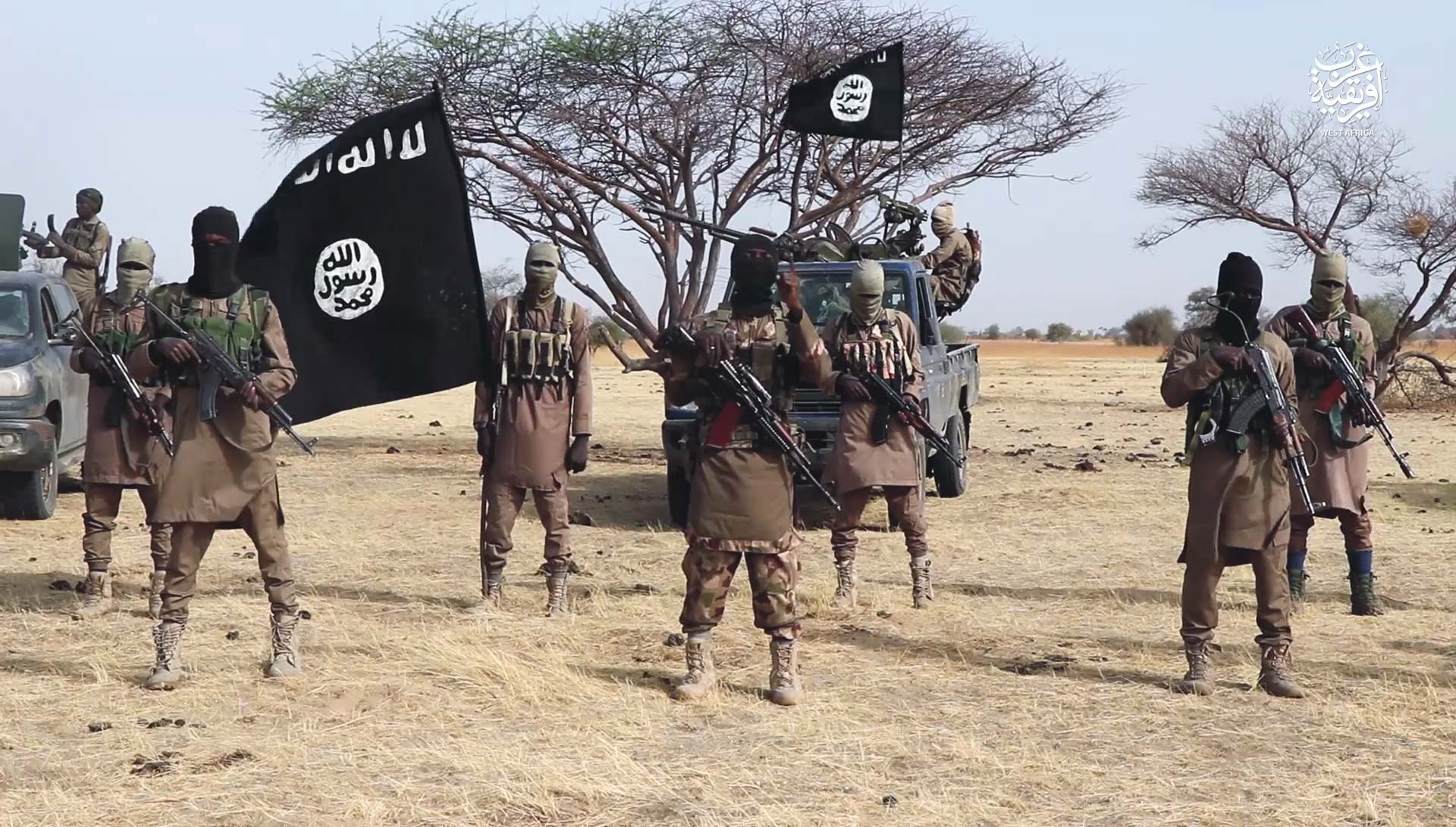
Zainab Musa was once the proud mother of four children in a small farming village near Bama. Her husband, Musa, grew millet and maize, and their evenings were simple—lantern light, laughter, and bowls of tuwo out in front of their little house. Then one night, the sound of motorcycles, dozens of them screeching through the village, shattered the quiet.

“They came shouting,” Zainab recalls. “At first we thought it was soldiers.”

But they were from Boko Haram bandits. Before the bewildered villagers could say ‘Allau Akbar’, the insurgents had set houses on fire, shot men who tried to run, mauled the aged and weak. Musa, Zainab’s husband pushed his wife and the children out through the back door while he ran toward the front, hoping to distract them. That was the last time she saw him. Multiple gunshots that tore through the night told her that her life would never be the same again.

Zainab fled with her children through the bush for two days before reaching safety. Today she lives in an IDP camp on the outskirts of Maiduguri. Where her village once stood is now a big pile of ashes.

Ibrahim Abdullahi wanted to be a teacher. His father wanted him to be a Muslim cleric. His mother told him he could be both if he stayed focused on his studies. Unfortunately, Ibrahim was just 14 when bandits attacked their village in Zamfara State. Both his father and mother were killed in the chaos.

Suddenly, Ibrahim found himself responsible for his two younger sisters, aged seven and five.

They walked for three days with a group of fleeing, villagers before arriving at an IDP camp.

Read Also: Echoes of Trauma: Why Nigeria must confront the trauma of its women, By Lillian Okenwa

Now Ibrahim fetches water, queues for food rations, and comforts his sisters when they cry at night.

“I used to dream of becoming a teacher,” he says quietly. “Now I just want my sisters to grow up alive.”

At an age when he should be in school playing football, Ibrahim is learning how to survive.

Read Also: Echoes of Trauma: The silent wounds of Nigerian men, By Lillian Okenwa

Read Also: Fake Trump Tweet, Real Crisis: Bombings, airport breach, and mass kidnappings expose Nigeria’s security strain

Maryam Bello’s husband was shot in front of their children. She still clutches the now rusted key to the house that was set ablaze in the early morning raid that changed her life forever. She went to bed a happy mother of four and a ‘landlord’s wife. By the time the day broke, she was a homeless widow with a dozen and one questions from her children she had no answer to, more questions she herself needed the owner of the universe to answer too.

Her village near Kankara was attacked by armed bandits who were looking for cattle and ransom victims.

Maryam’s husband refused to reveal where the cattle were hidden.

They shot him in front of their children.

The bandits then burned their home.

Maryam escaped with her three children and now lives in a cramped tent.

When rain falls, water seeps into the tent. Food is once a day. Bouts of malaria and diarrhea were their regular visitors.

But what hurts Maryam most is watching her children forget what life used to be like. She does not even know where to restart their lives.

Abubakar Sani was once a prosperous farmer in a rural community outside Sokoto. Today, he is a casual farm hand in Lagos, living in an uncompleted building with his sons who work in a car wash. His family once cultivated groundnuts, beans, and sorghum. Then the bandits arrived.

At first they demanded “taxes”—bags of grain and livestock. The villagers paid out of fear.

Soon the demands became kidnappings.

One night the bandits returned, firing guns and ordering everyone to leave.

Abubakar and his family eventually joined the hundreds of displaced Nigerians who travelled days in open trucks from the north to Lagos.

Now the man who once owned acres of farmland survives on leftovers and a meagre daily pay.

“I used to feed people,” he says, staring at the ground. “Now I struggle with my children and wife over food, cover my children with my robe when it rains and when where we live is flooded.”

His greatest pain is not hunger. It is the loss of dignity.

Seven-year-old Fatima no longer speaks.

Her silence began after an attack on her village near Gwoza during one of the worst waves of insurgent violence.

Militants from Boko Haram stormed the community she lived with her parents.

Fatima watched as her grandfather was shot while trying to help them escape. The old man’s blood splattered on her face. She wiped her face in reflex, stared at her bloody palms, screamed and then fainted. When she came to, she did not utter a word and hasn’t, since that tragic night.

Doctors say trauma can silence children like that.

Sometimes Fatima sits quietly drawing houses in the sand with a stick.

Every drawing has a door, a tree, and smoke rising from a cooking fire.

Perhaps it is the home she remembers.

Or the home she still hopes to return to.

These five stories are only fragments of a much larger tragedy. Just on Monday, the Maiduguri multiple blasts increased the tally and our fears. Police confirmed 23 dead, 146 injured on Tuesday. The days of suicide bombings that we thought were gone came back on Monday . And it just might be the beginning of worse days.

Think of how many dreams died in that blast. Think of the number of futures and destinies that were altered, some forever, in the explosion.

For more than a decade, violence linked to Boko Haram and armed bandit groups has displaced millions across northern Nigeria, particularly in states like Borno State, Zamfara State, and Katsina State.

IDP camps were meant to be temporary refuges.

For many families, they have become long-term homes.

Children grow up there without classrooms. Parents struggle without farms or jobs. Widows mourn husbands buried in hurried village graves.

Behind every statistic is a face like Zainab’s, Ibrahim’s, Maryam’s, Abubakar’s, or little Fatima’s.

In their desolation, anger, distress and silent tears lies the some fragile hope, the only thing they can hold on to like a life jackets. But they are drowning, a region is almost under water, dragging the rest of us slowly with it. Believe it or argue with it, the next two years will have one of us eating their words.

I should be writing about the President’s UK visit or worried, like everybody else, about Nigeria becoming a one-party state. Well, I don’t care because I’m too scared to care. Didn’t security operatives just found suspected bandits around Akure Airport before the Maiduguri Monday Market blast? Are bandits not carrying off women and children in Jobele in Oyo State? The ones hauled off into the dark during vigil in Kwara, have they all returned? Ask yourself , are people still closing their eyes while praying in Kwara churches? If we take a headcount, is it the number of Muslims ‘who closed their mouths’ at the beginning of Ramadan that will ‘open those mouths’ this week, in the comfort of their homes, with their families, at prayer grounds? Think of the number of abductions we have had in the north alone, during this holy month, alone. The bandits are daily showing that they have Nigeria by the balls. They are squeezing and even threatening to fry our national balls like akara. And we just scream, curse, scream and return to politics.

It’s tiring. I’m tired, scared shitless. No apologies for my language here today. I don’t care that you even think I should care. Come on, bandits, suspected or confirmed, at an airport in a state capital in the South West!

This is not Iran or Gaza, yet we have 3,900 IDP camps. Yes. How many of those does Gaza have?

How then is this the time to worry about people who are trying to secure their jobs? Because we are afraid of being kidnapped, we are paying air fares that feel like ransom. The bandits are now a step ahead, ready to set up branches at the airports. And you want to worry about governors who don’t want to lose their security votes or buy their own cars or pay for security details? You can amend the Constitution all you want, any way you want, Nigerian politicians have finally found the winning strategy and they are doing their best to keep their careers afloat. They are saving themselves. We are drowning, all of us. How do I know or I’m just exaggerating? Think of these two real examples.

One, our Sheik Uncle has said it ho-ha that each time he had had to ‘visit’ the bandits’ coven, he was always accompanied by representatives of the security agencies, all the agencies . Ah. Were my ears deceiving me? I listened to it again. So everybody knows where everybody is? And nobody wants to catch anybody? I am thoroughly confused. Or is Uncle lying? Okay, why has the government not arrested Uncle? They, all the government security agencies ,all the big men in Nigeria know something that they are not telling us. Just close your eyes and imagine the import of what Uncle revealed and the silence that followed.

Two, our Oyinbo Uncle who promised to come with blazing guns to exterminate terror in Nigeria has swallowed the pestle meant for pounded yam. What he swallowed is not digesting, so he cannot bring the rescue guns. He cannot sit, stand or sleep. I was banking on him at least putting the fear of God in those children of perdition. But Uncle is stuck there and we are stuck here.We need something, anything, whatever kind of help. Too many ghosts. Too much bloodshed.

I just feel helpless today. Whether the President goes to UK or not, what will change? Yet something must give. I’m even tired of writing on this subject but we must helplessly trudge on, right?

The views expressed by contributors are strictly personal and not of Law & Society Magazine.

TIPS