Home Blog Page 67

Guinea Disputes Morocco’s 1976 AFCON Victory, Mounting Pressure on CAF

Guinea Football Federation has called on the Confederation of African Football (CAF) to review the outcome of the 1976 Africa Cup of Nations, citing what it describes as inconsistencies following a recent ruling involving Senegal.

The appeal comes after CAF stripped Senegal of the 2025 AFCON title over a walkout incident and awarded victory to hosts Morocco, despite Senegal having won on the pitch.

Guinea’s football authorities argue that similar disciplinary standards should be applied retroactively, pointing to a key moment during the 1976 tournament, which was decided through a four-team round-robin format.

In the decisive match between Morocco and Guinea, the latter took the lead in the 33rd minute through Chérif Souleymane. Moroccan players briefly left the pitch in protest over a refereeing decision before returning to continue the game. Ahmed Makrouh later equalised in the 86th minute, securing a 1-1 draw that allowed Morocco to win the title with five points, while Guinea finished second.

Guinea has now urged CAF to reassess that result under the same principles applied in the 2025 ruling. “Give us back our 1976 AFCON trophy,” the federation said, adding that sanctions should apply in cases where teams walk off the pitch during matches.

The recent CAF decision to award Morocco a 3-0 victory over Senegal has reignited debate over historical officiating and disciplinary standards, with Guinea arguing that consistency should extend to past tournaments.

However, sports legal analysts have noted that regulations such as Article 84, cited in the Senegal case, were not in force in 1976 and are rarely applied retroactively.

CAF has yet to respond to the request, with observers suggesting the appeal could test the organisation’s willingness to revisit historical decisions.

Tradition or Terror?  Viral video shows women assaulted at Delta state festival, police launch probe

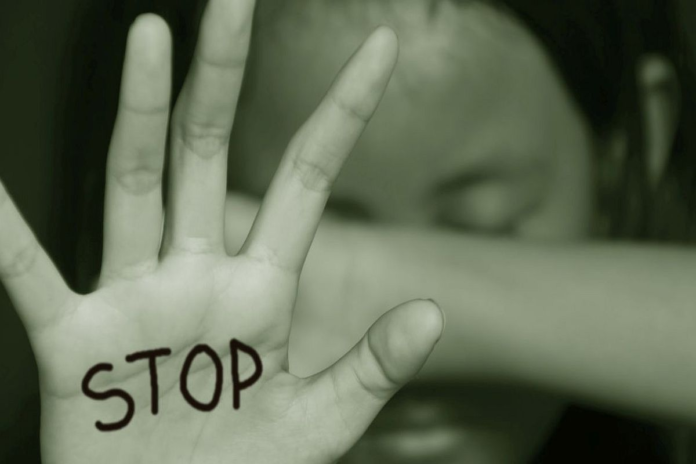
A wave of outrage has swept across Nigeria after a viral video allegedly captured the sexual assault of women during a traditional festival in Ozoro, sparking nationwide condemnation and urgent calls for justice.

The disturbing footage, widely circulated on X, appears to show groups of young men attacking women in public—forcefully tearing their clothes and subjecting them to acts of molestation.

The incident reportedly occurred on Thursday, March 19, during an annual community festival in Ozoro, where some accounts claim women are expected to remain indoors. Allegations suggest that women seen outside during the event may have been deliberately targeted.

While reports of rape have also surfaced, authorities say these claims have yet to be independently verified.

‘No Culture Justifies This’: Public Fury Erupts Online

The footage triggered an avalanche of reactions online, with the hashtag #StopRapingWomen trending as users demanded immediate action from authorities.

Many commentators accused society of normalizing violence against women under the guise of tradition, insisting that cultural practices cannot override fundamental human rights.

“This is alarming and unacceptable,” one user wrote, echoing widespread frustration over what many described as systemic failure to protect women.

Others criticized what they called a recurring pattern of deflection whenever sexual violence is reported—particularly debates that shift focus toward false accusations rather than victims’ safety.

Police Condemn ‘Barbaric Act,’ Order Investigation

Responding to the backlash, spokesperson for the Delta State Police Command, Bright Edafe, described the incident as “alarming, disgusting and embarrassing.”

He confirmed that the Commissioner of Police, Aina Adesola, has ordered a full-scale investigation.

“No custom or tradition is superior to the rights of citizens,” the police said in a statement, pledging that those responsible would be arrested and prosecuted.

Authorities also called on witnesses to come forward with information to aid the investigation.

As of press time, no arrests have been announced.

A Deeper Debate: Culture vs. Human Rights

Beyond the immediate outrage, the incident has reignited a broader national conversation about the intersection of culture, gender-based violence, and accountability.

Rights advocates argue that traditions which enable harm, particularly against women, must be urgently re-examined and, where necessary, abolished.

The alleged events in Ozoro have become a flashpoint in that debate, with many Nigerians warning that silence or delayed justice could reinforce a dangerous precedent.

Growing Demand for Accountability

For many, the issue is no longer just about one incident, but about a pattern of impunity.

Activists and citizens alike are demanding:

  • Swift arrests and transparent prosecution
  • Protection for victims and witnesses
  • Clear government stance against harmful cultural practices

Until then, the anger online shows no sign of fading.

Watch the video below:

Rooney Slams AFCON 2025 Decision: “Senegal beat them fair and square.” 

Ex-England captain, Wayne Rooney has criticised the Confederation of African Football’s decision to award the 2025 Africa Cup of Nations to Morocco.

CAF’s Appeal Board overturned Senegal’s 1–0 victory, ruling that their walk-off in protest of a stoppage-time penalty violated Articles 82 and 84. The match was subsequently recorded as a 3–0 forfeit in favour of Morocco.

Reacting to the ruling, the former Manchester United star expressed disbelief, insisting that Senegal had rightfully won the match on the pitch.

Read Also: Senegal government alleges corruption over Afcon, says “Senegal will defend its rights to the very end.”

“It’s crazy. If I were a Moroccan player, I wouldn’t accept it. Senegal beat them fair and square,” Rooney said.

“The Senegal team beat them fairly.”

Meanwhile, the Fédération Sénégalaise de Football (FSF) has condemned the decision, describing it as unfair, unprecedented, and unacceptable.

The federation also confirmed plans to challenge the ruling at the Court of Arbitration for Sport.

Abuja lawyer sues Nigeria’s FG over deal to share citizens’ health data with US

A legal practitioner, Bernard Okpi, has filed a suit at the Federal High Court in Abuja challenging a health cooperation agreement between Nigeria and the United States over concerns about data privacy, constitutional breaches and transparency.

In the suit marked FHC/ABJ/15/549/2026 and dated 16 March, Mr Okpi is asking the court to determine whether the Bilateral Health Cooperation Memorandum of Understanding (MoU), signed on 19 December 2025, violates the rights of Nigerians.

The defendants in the case include the President, the Attorney-General of the Federation, the Federal Ministry of Health and Social Welfare, the Senate President and the Speaker of the House of Representatives.

Concerns over data sharing

At the centre of the suit is the provision of the MoU that allegedly allows for the collection and transfer of sensitive health data of Nigerians to the United States government.

According to the court filings, the data could include medical records, blood samples, pathogen testing and genetic sequencing.

Mr Okpi argued that a related but undisclosed “Specimen Sharing Agreement” obliges Nigeria to provide such data within five days of request and could remain in force for up to 25 years.

He contended that the arrangement amounts to a breach of the National Health Act 2014, which protects the confidentiality of patient information, as well as the Nigeria Data Protection Act 2023 governing the processing and transfer of personal data.

The plaintiff also argued that the agreement violates Section 37 of the Constitution, which guarantees citizens’ right to privacy.

Religious and legislative concerns

The suit further raises concerns about alleged emphasis on Christian faith-based health facilities in the agreement.

Mr Okpi said any healthcare programme tied to religious considerations in a multi-faith country like Nigeria could trigger social tension and may contravene constitutional provisions on non-discrimination and freedom of religion.

He also questioned the role of the National Assembly, arguing that agreements with significant national implications should be subjected to legislative scrutiny and approval.

Among other reliefs, the plaintiff is seeking a declaration that the MoU is unconstitutional and an order suspending its implementation, which is scheduled to begin on 1 April 2026.

He also asked the court to compel the government to publish the full text of the agreement.

Government yet to release full agreement

The controversy surrounding the MoU has been heightened by the non-disclosure of its full contents.

In February, PREMIUM TIMES submitted Freedom of Information (FOI) requests to the Federal Ministry of Health and Social Welfare and the US Embassy seeking details of the agreement.

While the ministry has yet to respond, the US Embassy Abuja, in an email signed by its spokesperson, Nicole Holler, said the MoU is not publicly available.

The embassy stated that the agreement would provide about $2.1 billion in funding over five years, subject to annual approval by the US Congress, with Nigeria expected to contribute more than $3 billion in counterpart funding.

On concerns about religious bias, it said: “The jointly negotiated MOU reserves funding for Nigeria’s 900 faith-based clinics and hospitals which currently serve more than 30 percent of the population.

“The majority of faith-based health facilities in Nigeria are Christian and provide services to all Nigerians. Investments in these facilities are positioned to complement efforts in publicly managed facilities and strengthen Nigeria’s overall health infrastructure.”

On eligibility of other public facilities, the embassy added: “US government resources will be directed to organisations that have the capacity to deliver services to a significant portion of clients.

“In Nigeria’s case, faith-based clinics represent approximately 10 per cent of health care service providers but currently serve more than 30 per cent of the population.”

Background and earlier concerns

Nigeria and the United States signed the MoU in December 2025 as part of efforts to strengthen health security, expand primary healthcare and improve disease surveillance.

However, differing public descriptions of the agreement by Nigerian authorities and the US government have raised questions.

While Nigeria described the MoU as a technical and inclusive framework, the US places a strong emphasis on Christian faith-based healthcare providers and includes about $200 million in dedicated support for such institutions.

In January, the African Democratic Congress (ADC) called on the federal government to clarify the terms of the agreement, citing concerns over transparency, sovereignty and possible constitutional breaches.

The party said the differences between both governments’ accounts raised “fundamental questions” about the actual content of the agreement and warned against any arrangement that could appear sectional or undermine national unity.

It also questioned provisions allowing the United States to pause or terminate programmes under the MoU based on its national interests, describing such conditions as potentially inconsistent with Nigeria’s sovereignty.

In a separate analysis, Nigeria Health Watch, also raised concerns about the lack of transparency surrounding the agreement, noting that the full text has not been made public.

Its Managing Director, Vivianne Ihekweazu, said the absence of the full document makes it difficult to fully assess the implications of the MoU, particularly regarding data sharing and national control.

Mrs Ihekweazu also highlighted particular concern about provisions related to health data sharing. A circulated summary of the MoU refers to negotiations on regulated data-sharing arrangements, raising questions about data ownership, privacy and national control.

Similar clauses in other African countries have sparked debate, especially where agreements included references to long-term sharing of pathogen samples or access to national databases.

“Until the final signed MoU between Nigeria and the United States is made public, it is not possible to fully understand the commitments made or their implications for Nigeria’s sovereignty,” Mrs Ihekweazu noted.

Tales my patients told me: “Accident” prone Archie! By Emmanuel Fashakin

Archie loves to come to the Brooklyn office. The girls working in the office don’t like him. He often uses the bathroom, displaying his thing, with the bathroom door wide open. He sometimes grabbed half-reamful pieces of printing papers and takes them to his house for his own use, until I sternly confronted him. Archie is a little bit mentally challenged.

Although he is middle-aged, he shakes like a leaf when the girls report his malfeasance to me and I confront him. He acts like a dog with tails between its legs, muttering “yes, Doc; yes, Doc.” It appears that Archie just enjoys coming to the office whenever he is bored, or maybe to see the girls.

He would come in and ask for referrals to see Urologist, Dermatologist, Orthopedics, Podiatrists, all at once, and he would not show up in any of their offices. He would then come three to four weeks later, asking for the same referrals all over again. I sort of like Archie, and would give him his referrals all over again. He would leave the office, smiling, “Thanks brother; thanks Doc.” I have no problems with him as long as he listens to me.

About six years ago, on learning that I am also an Attorney, Archie requested my help in suing his old lawyer to recover his money. Archie broke his right arm in an accident and was given substantial monetary award. He informed me that his attorney swindled him and that he was not given his full share. I informed Archie to find another lawyer because, in order to avoid conflict of interests, I do not accept legal cases where I had also acted as a physician, and besides, I was very busy at the time and not accepting new legal cases. My explanation had not stopped Archie from asking me periodically to take his case.

Archie came in four weeks asking for something totally different. This time Archie told me that he had been involved in an accident, hit by a car while trying to cross the street. He wanted referrals for X-Rays, MRIs, Orthopedics, Physical Therapists, etc. I asked him for the particulars of the accident, the insurance of the driver, police report, etc. I told him I needed all that because State Law would not allow me to use his regular medical insurance for his accident case. Archie informed me that all the papers were in his house, and since he lived only half a block away, he was back to the office in about ten minutes.

On examination of the police report, I stared at Archie incredulously, because, the officer responding to the call wrote that the car driver asserted that Archie threw himself on his car while he was moving slowly in traffic, and a witness on the scene corroborated it! I looked at Archie in disgust: “You threw yourself on the car!”, I exploded accusatorily. “No Doc, I didn’t”, Archie protested, then added, “Doc, how much am I going to get now?” Any doubts in my mind vanished. I was tempted to reply Archie: “Six months in the Penitentiary, that’s what you’ll receive”, but I controlled myself. Since Archie had no visible injuries, I drove him away. I refused to bill neither his medical insurance nor the No-Fault accident insurance — I don’t what to partake in anybody’s sins.

However, after about two weeks, Archie, undaunted, was back in the office, still asking for MRIs, X-Rays, etc. I jokingly told him that the police were looking for him to repair the poor fellow’s car on which he had thrown himself on the street. He just shrugged his shoulders and said that nobody was looking for him but he left the office without bothering me. But last week, Archie was back, newly emboldened to pursue a claim. As a compromise, I sent him for X-Rays, which are much cheaper than an MRI. I told him that based on the police report, he was unlikely to get any money, but his greed is getting the better of him. I am beginning to feel that Archie’s original accident, resulting in his broken arm, may not have been an accident at all.

Archie’s case reminded me of another patient many years ago. He came in and confided in me that he was busted acting as a donkey in staged motor accidents. Five young men would pack themselves in a car and insert themselves in fast-moving traffic, and then their driver would slam on the brakes suddenly, hoping the driver coming behind would hit them. They would all claim significant injuries to their necks, backs, limbs, etc.

He collected a lot of money as a donkey until the insurance companies got wise regarding these unfortunate five who were always together and were unlucky to be rear-ended by other drivers. And they always had the same injuries a few weeks apart. He landed in criminal court and he came clean, pleading guilty. The judge was gracious and allowed him to serve weekends only in jail so that he would not lose his job, and he was a first offender (really?). He would be incarcerated at Rikers Island Prison after work on Fridays, and he would be released on Sunday night so he could go back to work on Monday.

When next you see a car packed with people speeding crazily, please keep a safe distance because they might be donkeys trying to bait you into an accident.

Emmanuel O. Fashakin, M.D., FMCS(Nig), FWACS, FRCS(Ed), FAAFP, Esq.
Attorney at Law & Medical Director,
Abbydek Family Medical Practice, P.C.
Web address: 
http://www.abbydek.com
Cell phone: +1-347-217-6175
“Primum non nocere”

Right of Reply From a Garden: Re No judge has the power to order a lawyer to kneel in court

I have seen the press statement by the President of the NBA Mazi Afam Osigwe SAN, a man I do hold in very high esteem, condemning the reported case of a judge ordering a lawyer to kneel down in open court in the course of proceedings. I have no idea of what transpired in court that would have driven the judge to anger and I’m not ready to speculate at this time.

Let me state right from the onset that if we are to be truthful to ourselves as lawyers, we must admit that the standard of decorum and the character that lawyers exhibit these days in court is appalling, disgraceful and condemnable. It is so bad that if we are to go by the stipulations in the Rules of Professional Conduct (RPC) some 75% of legal Practitioners today in Nigeria ought to have their names struck off the Rolls kept by the Chief Registrar of the Supreme Court and barred from practice.

Read Also: “Unacceptable!” Uganda Law Society defends lawyers’ dignity, throws weight behind NBA

Today you see a lawyer talk back at a judge and even throw tantrums and storm out of the court while the judge is speaking. I do not know what else we can do to stem the tide of these madness being exhibited by lawyers everyday in Court except to crack down hard on indiscipline. Nobody is talking about the conduct of the lawyer in question that day but everybody is talking about the reaction of the judge . Is the judge mad to flare up to the extent of asking the lawyer to kneel? What if he had sent the lawyer to Kuje for at least 6 months ?

On 23rd September 2025 the Supreme Court of Nigeria (coram M.Lawal Garba, Tijani Abubatkar, C. E. Nwosu-Iheme , H. S. Tsamani and A. Y. Tukur JJSC) unanimously dismissed Appeal No SC/180/2018 Economic Financial Crimes Commission vs Chief Nkereuwem Udofia Akpan and Access Bank – a frivolous Appeal brought by the EFCC challenging the judgment of the Court of Appeal Abuja (coram T. Akomolafe-Wilson, E. Akommaye-Agim and T. Yusuf Hassan JJCA) in CA/A/282/2013 Chief Nkereuwem Udofia Akpan vs EFCC ,& 2 Ors) delivered on 17th August 2017directing the EFCC to tender a public apology to my humble self and publish same in National Newspapers. Today six months later the EFCC is yet to comply yet the same EFCC is busy arresting lawyers and trying them for various offences but when the judgment is against EFCC, the EFCC wont obey, anyway that is a story for another day.

What is relevant for today’s discussion is what I witnessed firsthand at the Supreme Court on that fateful day. In the course of proceedings, a lawyer of more that 28 years standing practically insulted a 5 man Panel of the Supreme Court with uncouth language and slanderous conduct and utterances . On that day I was in Court with colleagues Levi Uche Abonyi Esq, Moni Olih Esq and we were led by Victor Abasiakan Ekim Esq who are all living witnesses to those unfortunate event . In fact sitting in the Supreme Court that I concluded within me that some lawyers actually deserve to be flogged sincerely. The other day a junior lawyer told a magistrate “na lie” in open court and we think such lawyers deserve any modicum of respect?

So back to the Proceedings of 23rd September 2025 , all 5 justices were so angry and they wanted to walk out the lawyer and order that the lawyer should never appear before them as well as refer the case to the Legal Practitioners Disciplinary Committee (LPDC)
It took the intervention of about 4 SANs led by one Adegburuwa SAN (I hope I got that spelling right. )The court decided to forgive that day and I personally was angry.

Truth is many lawyers deserve to be walked out from the courts and ordered never to return but I think the controversy will be if they are ordered to do frog jump on the way out.

Now the power of a judge to punish for contempt brevi manu is unquestionable, however, what is questionable is the exact limit of extent of such powers. In the absence of a clear delimitation of what a judge can do or not do in the circumstances, the options are open ended and like everything that is open ended there is a chance is same being abused by overzealous or jumpy men on the bench

Can a judge order a contemnor to do press-ups, frog jump, write an apology or in the instant case, kneel-down?
I know the court has power to walk out counsel from the court, commit to prison or refer unsavory conduct to the LPDC . It has happened that a judge even specifically chosed a particular prison for a convicted contemnor as in the case of my late mentor Chief Gani Fawehinmi, who was ordered to be incarcerated in Gashua (wherever that is on the map)

So what’s the extent of the judges power to punish for contempt brevi manu and what other options are open to the convict?

I was at a joint last night with friends who were all lawyers and we discussed everything from the upcoming NBA elections to national politics , the Presidents State Visit to the UK and the general insecurity in the country and I put the question to my drinking mates whether they will rather spent 6 months in prison for contempt or kneel down for a few brief seconds in open court and everyone agreed that kneeling down is better .

I know who Afam Osigwe SAN is speaking for but definitely not for those 13 lawyers drinking beer with me at that joint last night. So the Ayes had it 13-0 in favour of kneeling down so as to escape prison time in the event upon a conviction for contempt brevi manu This is the difference between political correctness and the stark reality on the ground. Would you say we reached a wrong decision on account of being tipsy?
I believe in a democracy, the majority will carry the day but it’s doubtful if the majority is always right
Anyway what do I know about personal choices and voting patterns in democratic settings not being a politician – if you follow my drift

Seriously speaking there is an urgent need to amend the relevant statutes and give our judges more powers to punish erring lawyers for contempt brevi manu and I don’t care if such amendments includes the power of telling lawyers to do frog jump out of the Court.

One way or the other the current madness being exhibited by lawyers in court must end and drastic situations requires drastic situations.

While.my good friend Mazi Afam Osigwe SAN is within his rights to issue a statement condemning the act on behalf of the NBA as President I respectfully disagree in principle with him that the statement did not devote ample space to condemn the dwindling state of professional ethics and increase of rascality I and unprofessional conduct at the Bar. We must not be misunderstood by the public as
condoning uncouth language and slanderous conduct at the Bar We should not send mixed messages to the public on this vexed issue We should go beyond bellicose rhetorics and political correctness in dealing with this hydra headed monster. Everything from dress code to mode of addressing the court has been affected

I should conclude on a personal note that may God forbid that I should ever be disrespectful to the Court or misbehave in court and may that day never come but if it does happen, then I will be glad to be ordered to merely kneel down than be sent to 6 months in prison in this country untill I’m purged of said contempt.

Given a choice between being remanded in prison for six months or to to kneel down, as punishment for unruly conduct and or contempt brevi manu, I will chose the later.

Chief Nkereuwem Udofia Akpan, Constitutional Rights Advocate and Author writes from Abuja
and can be reached at [email protected] or on X formerly Twitter @Chiefnkereuwem

The views expressed by contributors are strictly personal and not of Law & Society Magazine.

The Cybercrimes Act, the Civil Space and the Courts, By Godswill Iyoha Iyoke

The tightening of Nigeria’s civic space is no longer evident only in executive excesses; it is increasingly reflected in the posture of the courts, particularly in their handling of bail applications for alleged offences under Section 24 of the Cybercrimes Act, 2015.

Originally enacted to combat genuine acts of bullying, criminal intimidation, extortion and blackmail, Section 24 has, in practice, evolved into a convenient tool for policing speech that merely offends, criticizes, or embarrasses the powerful and politically exposed personalities.

Many prosecutions under this provision stem from expressions, which are often crude, sometimes intemperat; and which offences traditionally belong within the realm of civil defamation, or what earlier jurisprudence dismissed as harmless and “mere vulgar abuse.” Such threats are neither physically hurtful to the person nor do they threaten national security. They are, in most cases, negligible affronts to personal ego.

More concerning, however, is the judicial attitude towards cases under this law. Bail, a constitutional right, which is anchored on the presumption of innocence, is increasingly being treated, by the courts, as a privilege to be sparingly granted rather than a right to be protected.

Courts, in some instances, impose onerous conditions or allow judicial processes, that effectively punish defendants before trial. The implication is clear: the process itself becomes the punishment. This marks a troubling departure from the established legal principles and jurisprudence on defamation.

There is a pressing need for Nigerian courts to develop a jurisprudence that accommodates a higher threshold for speech in a democratic society. Historically, even offensive or insulting language; in the absence of incitement or tangible harm, had been tolerated as part of the rough texture of public discourse. In our African societies and cultural settings, expressive excesses, including satire, ridicule, and even insult, have long functioned as informal mechanisms for speaking truth to power.

By blurring the line between criminal conduct and civil wrongs, and by allowing the coercive process of pre-trial detention, the courts risk entrenching a culture of repression. The judicial detention of individuals for speech-related offences, coupled with the denial of reasonable bail, even when suspects are under administrative bail of law enforcement agencies, constrains civic participation and undermines public confidence in the justice system.

The implications extend beyond the legal sphere into the heart of democracy itself. A society in which citizens have to calculate the risk of losing their constitutionally guaranteed detention, before expressing dissent is one where accountability is diminished and power becomes insulated from scrutiny.

It is therefore imperative for the courts to reclaim their role as guardians of liberty and democratic order. This entails a more judicious scrutiny and management of cases brought under Section 24, a reaffirmation of the distinction between criminality and civil injury, and a principled commitment to protecting citizens’ rights.

Anything less risks converting the judiciary from a shield for the protection of citizens into an instrument of intimidation.
At stake in these so-called cyberbullying cases is not merely the fate of individual defendants, but the vitality of Nigeria’s civil space and the enduring promise of its constitutional democracy.

EFCC Returns N3.9 billion to NNPC amid mounting fears of ‘relooting’ and deepening trust deficit

Nigeria’s anti-graft agency, the Economic and Financial Crimes Commission (EFCC), has returned over ₦3.9 billion in recovered funds to the Nigerian National Petroleum Company Limited (NNPCL), a move officials say underscores institutional accountability—but one that has reignited public anger over corruption, opacity, and fears of recycled looting.

The handover, confirmed in a statement by EFCC spokesperson Dele Oyewale, took place Wednesday at the commission’s headquarters in Abuja.

Representing EFCC Chairman Ola Olukoyede, Secretary Mohammed Hammajoda said the recovered sum, ₦3,936,145,822, was the outcome of “meticulous investigations” into financial irregularities within NNPC Ltd.

“We will continue to serve this country with courage and integrity,” Hammajoda said, presenting the funds.

Receiving the money on behalf of NNPC, Executive Vice President (Downstream), Mumuni Dagazau, described the recovery as evidence of “strong institutional cooperation” aimed at improving transparency.

Public Scepticism: ‘Recovered Today, Relooted Tomorrow?’

Despite official assurances, the development has triggered widespread scepticism among public affairs analysts and civil society observers, many of whom question whether the recovered funds will ultimately benefit Nigerians, or disappear again into the system.

The concerns are rooted in Nigeria’s long history of corruption scandals, including repeated allegations that previously recovered public funds, such as the infamous Abacha loot, were re-diverted.

Critics argue that without transparent tracking mechanisms, independent oversight, and prosecution of offenders, the recovery risks becoming symbolic rather than transformative.

Opaque System, Missing Details

Notably, the EFCC statement did not disclose:

  • The specific fraud schemes involved
  • The identities of individuals responsible
  • Whether prosecutions are ongoing

This lack of detail has further fuelled concerns about accountability in a corporation long accused of financial opacity.

Over the past year, the EFCC has investigated several former NNPC officials, including ex-Group Managing Director Mele Kyari, over corruption allegations tied to refinery rehabilitation and financial mismanagement.

Kyari has denied wrongdoing, describing allegations of his arrest over a purported $2.9 billion fraud as “clear mischief.”

Other officials, including former Chief Financial Officer Umar Ajiya Isa, have also faced investigation in connection with multi-billion-dollar refinery spending. However, no direct link between those cases and the recovered ₦3.9 billion has been publicly established.

Billions Spent, Refineries Still Idle

The refund comes against the backdrop of decades of massive spending on Nigeria’s refineries, facilities that have consistently underperformed or remained idle despite trillions of naira in maintenance and rehabilitation costs.

Public frustration has intensified following recent admissions by NNPC leadership that past efforts to revive the refineries were built on “self-deception,” raising questions about how billions were spent with little to show.

Analysts say Nigeria’s inability to refine its own crude has left the country vulnerable, particularly amid global energy shocks, while private players like the Dangote Refinery increasingly dominate the downstream sector.

A Pattern of Recovery Without Closure

The EFCC has, in recent months, returned recovered funds to several government entities, including:

  • ₦1.28 billion to Enugu State
  • ₦387 million to Jigawa State

While these recoveries are often celebrated, critics argue they expose a deeper systemic problem: funds are repeatedly stolen, partially recovered, and rarely traced to final accountability.

The Bigger Question: Who Pays the Price?

For many Nigerians, the issue is no longer whether funds are recovered, but whether corruption is truly deterred.

With rising fuel prices, economic hardship, and persistent governance failures, citizens are increasingly questioning whether anti-corruption efforts are delivering real change, or merely recycling public wealth within a closed system.

Harriet Tubman, the spy: uncovering her secret Civil War missions

Any student of American history is no stranger to Harriet Tubman. Called the Moses of Her People, Tubman famously escaped slavery herself in 1849 and then returned to guide family and friends to freedom along the Underground Railroad. She freed dozens of people through her work in the 1850s. Perhaps her most significant, but less celebrated, contributions came during the Civil War, when she worked for the Union as a nurse, soldier, and spy.

Tubman’s skills and abilities, honed in the backwoods of Maryland as she spirited people north, were crucial to penetrating slave-holding power in South Carolina and delivering a devastating blow to the Confederacy. In one night, she led a mission that freed hundreds.

Click here to continue reading.

61-year-old free after 19 years in prison for robbery he didn’t commit

A man who spent nearly two decades in prison for a roughly $550 robbery was exonerated and freed on Monday, after prosecutors said they now agree he didn’t commit the crime, Associated Press reports.

“It cost me 20 years, but they said they corrected it now. So that’s all that matters. So I’m good with that,” Kenneth Windley, 61, was quoted as saying as he left a Brooklyn courthouse, at liberty for the first time since 2007.

The report published on Tuesday revealed that prosecutors said new evidence, including confessions from two other men who were convicted of similar robberies, supported his longstanding claim of innocence.

“This case is really a cautionary tale of how things can seem one way but, without careful analysis, not be what it purports to be,” Brooklyn District Attorney Eric Gonzalez, a Democrat, reportedly said after shaking Windley’s hand outside court.

“Had we known what the evidence was, this case should have never happened,” he added, noting that he had apologised privately to Windley.

AP reports that Windley was arrested in 2005 after buying a stove for his mother with a money order that turned out to be stolen, while Windley denied that he was involved in the robbery.

The money order had reportedly been snatched from a 70-year-old Gerald Ross by two thieves who followed him home from a trip to a bank and a post office.

According to NBC News, a review of the case that the prosecutor’s office released on Monday revealed that two men followed the old man into his apartment building and robbed him in the elevator, stealing $485 in cash and two blank, unsigned money orders — one for $542, the other for $9.

AP added that the thieves put Ross in a chokehold and took the money orders, cash, and a bank book from him.

“Ross regularly got money orders for his rent and life insurance payments at that post office, which helped him and the authorities follow a paper trail after the robbery.

“The trail soon led to Windley, who had given his name, driver’s license and address when purchasing the stove at an appliance store.

“From the start, Windley said he had nothing to do with the robbery. He said he’d simply bought a $542.77 money order at a discount from a couple of acquaintances, who insisted that it was valid but that they couldn’t use it for a bureaucratic reason,” the report continued.

According to the review, Windley testified that he’d never used a money order before and didn’t ask whether it was stolen.

“He was duped,” one of Windley’s lawyers, David Shanies, reportedly told the court Monday.

Ross was said to have identified Windley as one of the thieves from a photo array and then a live lineup, both of which were six weeks or longer after the robbery.

AP’s report continued, “Windley testified at his trial, telling jurors how his acquaintances had approached him and sold him the money order, but the jury convicted him in 2007 of robbery. Because of prior felony convictions, he was sentenced to 20 years to life in prison. His appeals failed.

“Early on, Windley told prosecutors what he knew about the men who sold him the money order: their nicknames and some information about their legal names. After his conviction, a friend and private investigators helped him flesh out the men’s identities and persuade them to come forward about what had happened, according to the D.A.’s report.

“In sworn statements and then in interviews with D.A.’s office representatives, the two men said that they had robbed Ross together and that Windley was not involved, according to the report. It called their admissions “compelling.”

“It doesn’t give their names, referring to them only as “Suspect 1” and “Suspect 2.” Both are serving prison time on other robbery convictions, according to the D.A.’s office. Those convictions all involved male victims in their 60s and older who were followed home from banks and check-cashing offices in Brooklyn in 2005 and 2006.”

Prosecutors were said to have concluded that if the jury had known those men’s identities and robbery records, the information would likely have raised a reasonable doubt about the charge against Windley.

“No new charges have been brought in the case. The legal time frame for bringing charges ran out years ago, and Ross has died,” AP added.

While heading off on Monday afternoon to celebrate with his family, Windley reportedly said he wasn’t bitter about what he’d been through.

“I’m just going to move on from there,” he was quoted as saying.

TIPS