I came of age in Nigeria during absolutist, totalitarian military regimes and was shaped by the anti-military rhetoric and activism that surrounded me.
Although democracy hasn’t lived up to its promises, which has fueled what I consider misguided and amnesiac nostalgia for military rule, I would rather we fix our badly deformed civilian system through trial and protest than return to the dark days of brutal military monocracy.
That is why news of an alleged abortive coup plot last year unsettled me, particularly because many of those implicated are northern Muslims. In a country riven by deep primordial fissures, I doubt we can recover from the northern-led overthrow of a civilian government headed by a southerner.
The Defence Headquarters initially denied it. It described reports of a coup attempt as not just “false and misleading”, “entirely false”, and “malicious” but as deliberately fabricated to “cause unnecessary tension and distrust among the populace”.
The Director of Defence Information, Brigadier General Tukur Gusau, said what Sahara Reporters described as a coup was merely “indiscipline and breach of service regulations” by 16 officers who felt stymied by “perceived career stagnation caused by repeated failure in promotion examinations, among other issues”.
But news platforms such as Sahara Reporters, Premium Times, and Daily Trust quoted unnamed sources in the upper echelons of the military and the Tinubu administration who insisted the Defence Headquarters was being economical with the truth and that there had indeed been a real attempt to overthrow the government.
The confidence with which these reports were presented, despite the anonymity of the sources, led me to write my November 1, 2025, column titled “The Coup That Dare Not Speak Its Name”, in which I argued that the government owed the public transparency about what had happened.
I wrote: “Secrecy accelerates suspicion. Nigeria’s citizens have matured politically; they can process national challenges without descending into chaos. Shielding the public from reality infantilises the electorate and breeds cynicism.”
On January 26 this year, the Defence Headquarters, which had earlier dismissed the reports as “false and misleading”, made a dramatic reversal and acknowledged that there had indeed been a plan to violently overturn the Tinubu government. It also said the implicated officers would face military tribunals.
After multiple peaceful protests by the wives and relatives of the accused, formal charges were eventually filed. Six suspects, including a retired major general and a serving police inspector, were charged with terrorism and treason. In a 13-count charge sheet, the federal government alleged that they “conspired with one another to levy war against the state to overawe the president of the Federal Republic”.
Although respected analysts such as Chidi Odinkalu have questioned the plausibility of the evidence cited in media reports to substantiate the alleged coup, I do not have sufficient information to independently assess the credibility of the claim.
What is not in dispute, however, is that what we are witnessing is uncharted territory. Since Nigeria’s independence, there is no clear record of military officers being tried for an alleged coup attempt under a civilian administration.
The closest parallel is the 2004 episode during the Obasanjo presidency, when the government announced that it had uncovered and foiled a coup plot. The Guardian quoted presidential spokeswoman Remi Oyo as saying that Hamza al-Mustapha, then in prison in Lagos, was suspected of involvement.
From what I recall, that episode produced neither a formal court-martial proceeding nor a full civilian trial. Instead, scores of senior and mid-level officers were detained, questioned and then retired or dismissed. What is unfolding now is therefore without precedent.
This is why the intervention of respected human rights lawyer Femi Falana deserves careful attention. In an April 23 statement, he called for the immediate suspension of the government’s secret court-martial of 36 soldiers accused of plotting a coup. He described the proceedings as unconstitutional, illegal and a violation of due process.
Falana argued that trying the soldiers behind closed doors undermines transparency and the right to a fair hearing, especially in light of the gravity of the charges against them. His central legal contention is that offences such as treason and terrorism fall within the jurisdiction of civilian courts, not military tribunals, even when the accused are soldiers.
He warned that subjecting some suspects to court martial while others implicated in the same alleged plot face civilian prosecution creates a two-track system of justice that affronts the principle of equality before the law.
He urged the Attorney-General to halt the military proceedings, transfer the case to the Federal High Court, and ensure that all suspects are tried openly and uniformly under civilian law.
Falana’s argument raises a deeper question that goes beyond this case. What does it mean to be governed by law in a democracy that still carries the institutional reflexes of military rule? A state that derive its legitimacy from and is bound by the constitution cannot choose opacity when transparency is inconvenient, nor can it apply different standards of justice to people accused of the same crime.
If the government is confident in the strength of its case, in the unimpeachability of its evidence against the accused, it should have no fear of public scrutiny. I know there is legitimate argument to be made about the risk of inspiring copycats if the trial is open, but coups are not crimes of imitation like bank robberies. They require coordination, access to arms, insider networks, and timing. Those conditions are not created by watching a public trial. If they exist, secrecy will not eliminate them.
Second, secrecy is more likely to breed suspicion than prevent instability. When the state hides proceedings, it invites rumours, conspiracy theories, and loss of trust, which can be more destabilising than any supposed copycat risk.
Third, transparency is a deterrent. A public, evidence-based trial exposes the consequences of plotting against the state and demonstrates that institutions can respond lawfully. That is more likely to discourage would-be conspirators than embolden them.
Fourth, courts already have tools to protect genuinely sensitive information. Specific details can be redacted or heard in camera without turning the entire process into a secret proceeding.
But there is also a broader political risk. In a country with a long and traumatic history of coups, secrecy around allegations of military insurrection heightens suspicion. When the government first denied the existence of a coup and later admitted it, it created a credibility gap that only openness can close. Conducting trials behind closed doors only deepens that gap and invites speculation about what is being concealed.
If the accused are guilty, a transparent trial will expose their culpability and reinforce the legitimacy of the state. If they are not, secrecy will have compounded injustice. Either way, opacity serves no one except those who benefit from weakening public trust in institutions.
If the suspects are found guilty through a fair, transparent and evidence-based process, they should face the full consequences of their actions. I would never defend any attempt to seize power through violence. But guilt must be established beyond all shadows of doubt. It is not enough to allege; the government must prove its case in the open.
The views expressed by contributors are strictly personal and not of Law & Society Magazine.
Six female first class graduates from UNIZIK who also bagged first class honours at the Nigerian law school speak with Oghenovo Egodo-Michael and Anjola Dawodu about their time as undergraduates and how they graduated with flying colours
Integrity, hard work earned me two first class degrees— Fortunata Alex-Uzoatu
Tell us about your background and what inspired you to study law.
I am a double first-class graduate of both the Nigerian Law School and Nnamdi Azikiwe University. I am from Umugama, Umuchu, in Aguata Local Government Area of Anambra State. I had my primary education at Kristobell Junior Academy and my secondary education at Nigerian Navy Secondary School. I am a Christian who believes deeply in the providential hand of God.
I have an unconventional story behind my decision to study law. From primary school, I had always wanted to become a nurse. In fact, my mother had already bought me books on nursing, stages of pregnancy, and other child-care science materials, which I read with great interest. However, one day, my school principal came into our class and called out the names of students who had not paid their school fees. I was shocked to hear the name of one of my classmates. After the principal left, I asked her what had happened. She told me that a lawyer had taken all her father’s money while trying to recover his seized goods from the Nigeria Customs Service.
In my childish understanding, I thought it seemed admirable to legally take other people’s money. From that moment, whenever anyone asked what I wanted to become, I proudly answered, “a barrister.”
Were there any unconventional study methods or strategies you used that others might not expect?
I believe there is nothing entirely new under the sun, so my methods may not have been unconventional. However, my first “secret” can be summed up in three words: the right information. I made sure I understood each lecturer’s expectations, used the right study materials, and practised with past questions. This required actively making inquiries.
Second, I read ahead of classes, especially since some legal concepts can be difficult at first glance. This gave me a foundation before lectures and helped me connect ideas more easily. Attending classes was also non-negotiable. If there were 500 classes, I attended about 480. The remaining 20 may explain why I was close to a Second Class Lower in my first year. Classes helped me understand both the lecturer’s mindset and the coursework.
I also made extensive use of mnemonics to remember long lists.
Also, I believed strongly in repetition. I would read a topic multiple times, regardless of how many revisions it took. I also went beyond class notes to make my scripts stand out. My exam papers were often written in both red and blue ink, as is common in law exams. Importantly, I never left any question unanswered, even when unsure.
Lastly—and most importantly—there was the God factor. After each examination, I would pray over my scripts, my registration number, and for favour in the marking process.
Did you ever experience self-doubt, and how did you push through it?
Yes, I experienced a great deal of self-doubt. There were times I feared I might fail the Bar finals, even though I had prepared extensively. With the Nigerian Law School system, anything can happen.
Students are graded based on their lowest score, and to earn a First Class, one must have A grades in all five courses—Civil Litigation, Criminal Litigation, Corporate Law, Professional Ethics and Skills, and Property Law. With such a system, my doubts were understandable. I even cried at times because it felt like everything could go wrong.
However, I reminded myself that during my undergraduate studies, I had achieved a perfect 5.0 CGPA three different times. That gave me hope and strengthened my belief that I could succeed again.
What was it like combining school with work, internships or other responsibilities?
I am currently working at Banwo and Ighodalo as an NYSC Associate. While I was in school, I consciously kept my priorities in order. My scale of preference was: academics, competitions, internships, and extracurricular activities.
Now that I have completed my studies, I can devote my full attention to my work as a lawyer.
What habit or mindset contributed the most to your academic achievement?
I shunned all forms of examination malpractice, and this made me study with determination, knowing that failure was the only alternative if I did not prepare adequately. I often sat in the front row, directly in front of the invigilator, as a reflection of my confidence in honest preparation.
The key habits that guided me were diligence, perseverance, integrity, hard work, and trusting God.
I battled imposter syndrome to bag first class — Chukwuamaka Ajieh
What inspired you to study Law?
I completed my primary education at Graceville International School, Asaba, and my secondary education at Queen’s College, Yaba, Lagos. I studied Law at Nnamdi Azikiwe University, Awka, where I graduated with a First Class, and proceeded to the Nigerian Law School, Kano Campus, where I also graduated with a First Class.
I did not initially have a clear inspiration to study Law. Like many outspoken and bold children, I was often told I would make a good lawyer. Also, because I did not enjoy Mathematics and was unwilling to pursue a course I considered less prestigious, I embraced the idea of studying Law.
However, my passion for Law became genuine after I experienced injustice firsthand without the resources to seek legal redress for myself and my family. That experience shaped my perspective and solidified my decision to pursue Law as a meaningful career.
What was the highlight of your experience studying Law?
The highlight of my experience was my final year at Nnamdi Azikiwe University and my time at the Nigerian Law School.
My final year was the most stable academic session I experienced. I took courses I enjoyed and challenged myself with others like Tax Law. It was a turning point, as I finally operated at a pace that allowed me to thrive, leading to my best academic performance.
My law school experience, though intense, was equally transformative. Studying in Kano State exposed me to a new environment, diverse people, and different perspectives. It significantly boosted my confidence, as success required deep understanding and application, not just memorisation.
Excelling among peers from different universities also helped me overcome imposter syndrome. It reassured me that my achievements were earned through competence and hard work.
Were there gaps in the system or challenges with lecturers that tested your resilience?
Yes, there were. The academic calendar at Nnamdi Azikiwe University became extremely fast-paced due to efforts to recover lost time from strikes and the COVID-19 pandemic. At one point, we had four semesters in a year instead of the usual two. That was mentally demanding and made it difficult to determine whether I truly understood the material or was simply studying to pass exams.
Additionally, many lecturers were practising lawyers, which meant lecture schedules were often unpredictable. While this added practical value to our learning, it was challenging, as classes could be fixed on short notice.
What was it like combining school with work, internships or other responsibilities?
It was manageable because I focused on internships during school breaks, while virtual ones were scheduled conveniently.
However, balancing school with my fashion business was more challenging. I used my skills as a designer to earn income while studying. Despite this, I always prioritised my academics whenever there was a conflict.
What habit or mindset contributed the most to your academic achievement?
One key habit was going beyond surface-level understanding. I made a conscious effort to study concepts in context. For every legal principle, I read the relevant sections of the law in full, including surrounding provisions, to understand their scope and application. I applied the same approach to case law.
I also developed the habit of simplifying and paraphrasing concepts in my own words while preserving their meaning. This ensured I truly understood what I was studying and could express it clearly in exams.
Additionally, I maintained a positive mindset and surrounded myself with like-minded friends. My faith also played a vital role, helping me stay calm, focused, and grounded throughout my academic journey.
I didn’t compete with anyone — Emmanuella Otu
Tell us about your background and what inspired you to study law.
I am a double First Class law graduate of Nnamdi Azikiwe University and the Nigerian Law School, Port Harcourt campus. I am the only daughter, and I was born in Lagos State before my family relocated to the East, where I spent most of my life. I completed my primary education at the National Root Crops Research Institute, Umuahia, Abia State; and my secondary education at Federal Government College, Okigwe, Imo State. I graduated from Nnamdi Azikiwe University in 2024 and completed Law School in 2025.
Interestingly, when I was just two years old, someone told my parents that I looked like I would become a lawyer. They often reminded me of this as I grew up. When it was time to choose between Arts and Science in JSS3, many expected me to choose Science because I performed well academically. However, I took time to reflect, discussed it with my parents, and ultimately decided to study Law.
My dad would often call me a “mathematical lawyer,” expressing his belief that I would excel in any field I chose. Another subtle influence was a prolonged legal case that frequently took my father away from home. As a child, this bothered me, and I thought studying Law would allow me to “handle the case properly.” Looking back now, that reasoning makes me smile, but it played a role in shaping my decision.
How would you describe your experience studying law at the university?
It was a full and dynamic journey with many layers. From my first year, I was deeply involved in a wide range of activities, including faculty and university politics, competitions, clubs, mooting, and writing. I also ran a business alongside my studies.
That made me a very active student. There was always something to do, somewhere to be, or a task to complete. By God’s grace, I was able to navigate it all. It required courage, hard work, compromise, and resilience, but I am grateful that it all paid off.
Somehow, I still graduated with a First Class. Even I cannot fully explain how, but I believe that what seems impossible is often closer to reality than we think.
As a female student, did you ever feel the need to prove yourself more than your male counterparts?
No, I never saw myself as being in competition with anyone. I focused on my own journey and on expressing my unique strengths.
I believe that embracing femininity and recognising the power within it is key to defining our place in the world. In both my university and law school, I did not experience discrimination or limited opportunities based on gender. While subtle biases may exist in some environments, they were not significant in my experience.
That said, I would love to see more women in leadership roles, especially in academic settings, where they have the capacity to lead.
What does graduating with a First Class as a woman mean to you?
It is a reminder that there are no limits to what I can achieve. It is both an encouragement and a reward for years of hard work and sacrifice.
There were moments I could have chosen to relax, but I stayed committed to my goals. Seeing the results now is deeply fulfilling. I am also grateful to serve as a source of inspiration to others, especially young women who look up to me.
A first class represents excellence, but being a woman with a first class, represents legacy; and I am proud to carry that.
Achieving double first class changed how I see myself — Kaosisochukwu Ndukwu
Was there a defining moment when you realised you could graduate with a first class?
The defining moment dates back to my 300 level at the university. I had a revelation from God that I had been given academic dominion. Before then, I had been an average student in secondary school.
When that revelation came, it took time for me to fully believe it and accept that I could achieve a first class, and even emerge as the best in my class. But over time, that conviction grew stronger, and I began to run with the vision God gave me. I eventually graduated from the university with a CGPA of 4.84, emerging as the best in my class, the best female graduating law student, and the student with the highest recorded CGPA in my faculty at the time.
However, law school tested that conviction. I struggled with feelings of inadequacy, fear and constant worry. I cried a lot during that period because I felt immense pressure to prove that my university result was not a fluke. At some point, I even avoided telling people about my first class because I felt I was underperforming and didn’t want to raise expectations.
It wasn’t until after my exams that I regained my confidence. For four months before the release of the law school results, I was already giving thanks to God for a first class. Once again, God fulfilled His promise, and I graduated with a first class.
What inspired you to study law?
I grew up in an academic environment. My parents are doctors, and that experience played a significant role in shaping my academic journey.
I was not particularly outstanding academically while growing up. I struggled with Mathematics and needed extra coaching from my mother just to perform at an average level. I also faced some health challenges that affected my performance. Among my siblings, I was the lowest-performing during my early years, and I was comfortable with that.
My turning point came in senior secondary school when I published my first book, ‘If You Looked Inside A Girl’, which emerged as the first runner-up for the ANA/NECO Teen Author Prose Prize. That achievement made me realise I had potential.
Initially, I wanted to study English Literature because of my passion for writing, and I even imagined becoming a professor in that field. However, I was strongly advised to study law instead, as it was seen as a more prestigious and financially rewarding option. I eventually agreed, especially because I realised I could still pursue writing alongside law.
My interest in law deepened through reading legal novels, watching law-themed films, and observing the profession in practice. By the time I started studying law, I found it genuinely interesting. Participating in moot court activities and joining the Intellectual Property Club further strengthened my passion.
What was the highlight of your experience studying law?
One of the biggest highlights of my journey was being named the Best Graduating Student of my faculty in 2025, and also emerging as the Best Graduating Female Student in the university. It felt like a confirmation of everything I had believed and worked towards.
I vividly remember the joy in my home when a lecturer confirmed my final CGPA. My parents and I danced around the house. During my convocation, despite my preference for a quiet celebration, my parents went all out—they put up a large banner in my faculty, printed customised materials, and hosted a big celebration.
Another major highlight was successfully maintaining my first class and replicating that success at law school. Making my parents proud again meant a lot to me.
Did gender expectations shape your experience in any way?
Not significantly. I never approached my journey with the mindset of achieving “as a woman” or trying to prove a point. My drive came from a personal desire to discover my capabilities and meet the high standards I set for myself. My success was not about breaking barriers, but about striving to excel.
How has achieving a double first class shaped your identity and ambition?
Achieving a double first class has given me a strong sense of conviction that with discipline and focus, I can excel in any endeavour. It’s almost hard to remember the version of myself who lacked ambition or didn’t see herself as exceptional.
This achievement has raised my expectations for myself and strengthened my drive to pursue bigger goals. I am passionate about making an impact through my writing and in the academic space, and my results have reinforced my belief that these goals are attainable.
I am determined to reach the full extent of my potential, and I’m excited about the next phase of my life.
I refused to settle for less than excellence —Chisom Arumeze
Tell us about your background and what inspired you to study law.
I am from Akegbe-Ugwu in Nkanu West LGA, Enugu State. My parents are traders. Growing up, people often suggested different career paths for me. Many thought I should become a radio presenter, while others believed I was smart enough to study medicine. They were quite surprised when I chose the arts.
Truthfully, I was not entirely certain about the path I wanted to take. What I did know, however, was that I had a strong interest in protecting the rights of women and children. Academically, I performed well throughout primary and secondary school, consistently ranking among the top students. Despite this, I struggled with confidence and often downplayed my achievements. Whenever I came first, I would convince myself it was because the environment was not competitive enough, and that I had simply been lucky. I was afraid of leaving that environment because I doubted my ability to compete with what I considered “truly intelligent” people.
In 2019, my father insisted that I register for the Unified Tertiary Matriculation Examination. I was 15 at the time and initially resisted because I was unsure of what to study. He not only ensured I registered but also chose law as my preferred course. I made a personal deal with myself that if I gained admission into the Faculty of Law at Nnamdi Azikiwe University, it would mean I had competed with the best and proven I belonged among them. As it turned out, I got in.
Before then, I had no real interest in studying law. So, I would say my father’s desire to have a lawyer in the family—especially as the first person in his lineage to attend a tertiary institution—was a major influence. Of course, I also came to appreciate that law is a noble profession that opens doors across various industries.
Did you employ any unconventional study methods?
Not particularly. I stayed consistent, studied daily, and practised past questions, just as advised. I also taught others when I could, as teaching helped reinforce my understanding. These are fairly common strategies among law students.
However, one thing I took very seriously was rest. Our lecturers emphasised that fatigue and tension were major causes of failure. I made sure my schedule allowed for both study and adequate rest. On days when I couldn’t sleep, I deliberately relaxed by watching movies to ease anxiety.
I also surrounded myself with the right people and engaged in discussions, which helped deepen my understanding. Additionally, I focused on understanding how to present answers effectively, as I realised that knowing the material alone was not enough; presentation mattered just as much.
Did you ever experience self-doubt, and how did you push through it?
Yes, constantly. My doubt was not about passing the Bar exams, but about achieving a first class. From the first day, seeing others answer questions with ease made me feel unprepared.
After a pre-Bar exam where I lost marks due to poor presentation despite knowing the answers, my confidence dropped significantly. I began to dismiss the idea of a first class.
To overcome that, I started preparing for tests during weekends. That experience boosted my confidence and reignited my drive for excellence. Each week, I pushed myself to do better.
I also leaned on supportive colleagues and reminded myself that trying and failing was better than not trying at all. On difficult days, I engaged in activities outside my routine to lift my mood.
Above all, I committed my journey to God. I realised that fear limits potential, so I consciously chose to believe that achieving a double first class was possible, and that belief made all the difference.
What was it like combining law school with other responsibilities?
I was fully immersed in my studies during law school. I had a remote job before resuming, but I had to quit because it would have been too demanding to balance both effectively.
There was a particularly difficult period when my father faced a serious health challenge. As the first child, I felt a responsibility to step in, but my family ensured I remained focused on my studies by relieving me of those burdens.
Aside from that, I did not combine law school with other commitments. I dedicated the entire year to it, participating only in the required court and law firm attachments.
What habits or mindset contributed the most to your success?
One key mindset was aiming higher than the minimum. If I needed 70 to secure an A, I prepared as though I needed 100. That way, even if I lost marks, I would still meet my target.
I also surrounded myself with like-minded individuals whose progress motivated me to keep going. Another driving force was my desire to stand out.
Some people argued that a first class does not guarantee success, but my perspective was simple: neither does a lower grade. So, why not aim for the highest possible achievement?
Ultimately, striving for excellence gave me a deep sense of fulfillment and opened doors for me. I reminded myself that others had achieved this before, so it was possible. Despite my doubts, I chose to try, and I succeeded.
I was overwhelmed but didn’t quit — Florence Ukwe
What first inspired you to study law?
My name is Ukwe Florence. I come from a family of eight. My dad is a priest, and my mum is a lecturer with a doctorate in English. I am the fifth of six children, so I grew up in a structured, education-focused environment. Most of my older siblings went into professional fields, which shaped how I viewed career paths early on.
I was born and raised in Imo State, where I completed my primary and secondary education. I was a strong student, particularly in the arts, so I naturally leaned in that direction.
To be honest, there wasn’t a dramatic moment that inspired me to study law. It was more of a natural progression; law seemed like what top arts students pursued at the time. I was also influenced by my sister, who was studying law then and is now a lawyer. That exposure made the path feel more familiar and attainable.
What part of your law school journey stretched you the most?
The most challenging part of my law school journey was balancing academics with responsibilities I couldn’t put on hold. While many people focused solely on law school, that wasn’t my reality.
At the time, I was planning a girls’ conference, which was quite demanding. I was also mentoring about 30 young women, meeting them every Friday for two hours. In addition, I served as Vice President of the Christian Law Students’ Fellowship of Nigeria. While those roles were manageable, the conference planning and mentorship were intense.
At one point, during court attachment, I broke down in tears in court. We were struggling with funding, plans were falling through, and at the same time, I felt guilty for not reading as much as I should. The pressure from both sides was overwhelming.
On top of that, law school itself demands daily consistency. There were days I was physically unwell but still had to read to keep up. It wasn’t just academic pressure; it was learning to function effectively despite everything else.
Another major challenge was the volume of reading. The workload is intense, as what you cover in a day in law school could easily take weeks in university. Initially, it was overwhelming trying to process and retain so much information. But over time, I adjusted, built discipline, and found my rhythm.
Did you ever experience self-doubt, and how did you overcome it?
Yes, I did. I think everyone experiences that at some point in law school.
One period that stands out was during chambers attachment. I felt I wasn’t reading enough, and it triggered panic. I remember going out with a friend one day, and when I returned, I broke down in tears because I hadn’t read.
That fear led to a cycle of self-doubt. I began forgetting even simple things, and that further shook my confidence.
What helped me was my faith. Prayer grounded me and helped me manage the anxiety. I also watched YouTube videos of first-class graduates sharing their journeys. Hearing their stories made me realise that my struggles were normal.
There was also a moment after a Criminal Litigation exam when I became extremely anxious about my performance. I had to step away, find a quiet space, and release the tension. After that, I prayed, calmed down, and moved on.
After the conference, I intentionally cut off distractions. I stayed off social media to maximise my study time. My mindset was simple: once I finished any responsibility, I went straight back to my books.
What habits or mindset contributed the most to your academic achievement?
One key habit was visualisation. Almost every night before sleeping, I imagined achieving my goal— telling my parents I made a first class, calling my friends, and celebrating the moment. Over time, it felt real, and that kept me motivated daily.
Another strategy was active recall. After learning a case, I repeatedly brought it to mind throughout the day by recalling facts, principles and applications. That helped with retention.
I also prioritised sleep during exams. Initially, it didn’t make sense, but I found that being well-rested improved my clarity and ability to analyse questions effectively.
Consistency was crucial too. I read every day and stayed engaged in class.
Finally, I constantly listened to testimonies of people who had achieved first class. I even downloaded and repeatedly watched a video of one graduate sharing her journey. It reinforced my mindset and kept me focused, especially during high-pressure periods.
Lagos, Nigeria — A fresh controversy over solar power regulation in Nigeria’s commercial capital has ignited public anger, exposing deeper frustrations over a broken electricity system that millions of Nigerians say has forced them into self-reliance, only to be met with new layers of bureaucracy.
The Lagos State Government has moved to clarify that permits and administrative fees for solar installations apply only to residents of government-owned social housing estates, not to private homeowners or tenants across the state.
But the explanation has done little to calm a growing backlash fuelled by widespread distrust and long-standing failures in Nigeria’s power sector.
The uproar was triggered by a viral video showing officials from the Lagos State Ministry of Housing confronting a resident over solar panels installed on his home, insisting he obtain approval and pay a fee.
For many Nigerians already grappling with erratic electricity supply, the optics were explosive: a government seemingly taxing citizens for generating their own power.
Officials insist that is not the case.
According to Wale Ajetunmobi, senior special assistant on media to Governor Babajide Sanwo-Olu, the policy is narrowly targeted at structural modifications within state-owned housing estates, where the government acts as facility manager.
“Only residents living in government-owned social housing estates are charged administrative fees for alterations,” Ajetunmobi said, describing solar installations in such settings as structural changes that require approval for safety, design compliance, and liability reasons.
Yet for many Lagosians, the clarification misses the point.
The incident has tapped into a deeper national crisis: a chronic failure to provide reliable electricity despite Nigeria’s vast natural resources, abundant sunlight for solar, large gas reserves, and untapped coal potential.
Years after reforms and repeated promises, stable power remains elusive, forcing households and businesses to depend on costly alternatives like diesel generators and increasingly, solar systems.
Against that backdrop, any hint of regulation, let alone fees, on solar adoption is being interpreted as punitive.
“This feels like being punished for surviving,” one Lagos resident said on social media, echoing a sentiment that has rapidly gained traction online.
The outrage has been amplified by recent revelations from within government itself. Even Deputy Governor Obafemi Hamzat publicly decried what he described as “crazy billing,” recounting how electricity charges at his official residence surged from ₦2.7 million to ₦29 million in a single month—an experience many Nigerians say mirrors their own.
Across Lagos, residents report estimated billing practices that often produce exorbitant charges despite prolonged blackouts, with some bills exceeding annual rent. For many, solar power is no longer a luxury or environmental choice, it is a necessity.
That necessity is now colliding with regulation.
While the state maintains that oversight is essential, citing past incidents involving roof damage and fire outbreaks linked to unapproved installations—the timing of enforcement has raised questions. Critics argue that the focus should be on expanding access to reliable electricity rather than policing alternative solutions.
The controversy also highlights a broader policy gap. Nigeria’s Electricity Act, which decentralizes power generation and allows state governments to develop independent electricity solutions, was widely seen as a turning point. But implementation has been slow, and tangible improvements remain limited.
In Lagos and beyond, residents say the burden of solving the power crisis has effectively been shifted onto individuals, who must now generate, fund, and maintain their own electricity supply.
The result is a growing tension between regulators and citizens navigating a system where public infrastructure has failed to keep pace with demand.
For now, the Lagos government insists the policy is about order, safety, and accountability within its estates. But in a country where millions still live in darkness despite vast energy resources, the optics are harder to manage.
For many Nigerians, the issue is no longer just about permits, but about a deeper question: why, in an energy-rich nation, citizens are still left to power their own lives—and now, potentially, pay for the privilege.
The marriage between popular businessman Olakunle Churchill and Nollywood actress Rosy Meurer has hit the rocks.
Sources confirmed to LIB that Meurer filed for the dissolution of the marriage on Monday, April 21, 2026, officially ending the union contracted in 2021. The couple, who have two children together, have also heightened separation rumors by unfollowing each other on Instagram.
The development marks a dramatic turn in a relationship that has long been shrouded in controversy. Meurer was previously accused by actress, Tonto Dikeh, Churchill’s ex-wife, of having an affair with him before their 2017 split. Following his divorce from Dikeh, Churchill married Meurer in 2021, and they subsequently welcomed two children.
This latest separation comes shortly after reconciliation efforts between Churchill and his ex-wife, Tonto Dikeh, with both parties recently coming together to celebrate their son’s birthday.
While neither party has released an official statement regarding the cause of the split, Churchill shared a cryptic post this afternoon, stating that if he is ever in a situation where he has to choose between anyone else or his kids, he will be choosing his kids.
Blames political failures for Nigeria’s economic crisis
Lagos, Nigeria — The Governor of Abia State, Alex Chioma Otti has issued a stark warning ahead of Nigeria’s next election cycle, declaring that the country’s economic future hinges not on rhetoric or quick fixes, but on hard political choices that will determine whether millions face prosperity—or deeper hardship.
Delivering the 2026 TheNiche Annual Lecture at the Nigerian Institute of International Affairs, Otti drew a direct line between political behavior and economic outcomes, arguing that corruption, vote-buying, and opportunistic leadership have become structural barriers to growth.
“There is no silver bullet,” Otti said, dismissing any expectation of rapid turnaround in an economy grappling with unemployment, poverty, and declining investor confidence. Instead, he called for “tough decisions” and a break from what he described as a culture of political expediency and institutional decay.
In unusually blunt terms, the governor warned that Nigeria’s elections have increasingly been reduced to transactional exercises, where votes are treated as commodities and public office as an investment to be recouped.
“If we treat elections as bazaars,” he said, “those who win will not serve—they will recover their investments and prepare for the next cycle.”
Otti’s remarks come at a pivotal moment, with political momentum already building toward the 2027 general elections. He framed the coming vote as a defining national crossroads.
“Poverty and prosperity, employment and joblessness, security and anxiety will all be on the ballot,” he said, adding that the implications of voters’ choices would extend far beyond politics into the everyday economic realities of Nigerians.
The governor also took aim at what he described as a dangerous disconnect between leadership and economic governance, arguing that incompetent or self-serving political actors inevitably trigger economic decline—from shrinking GDP to rising poverty and weakened institutions.
Nigeria’s persistent economic struggles, he suggested, are not inevitable but self-inflicted.
“Economics does not respond to sentiment,” Otti said. “It responds to decisions—and the quality of those decisions depends on who is in power.”
Citing his administration’s experience in Abia State, Otti argued that reform begins with changing leadership behaviour rather than relying solely on policy shifts. He pointed to increased investor confidence, improved infrastructure, and revenue growth as evidence that governance reforms can yield rapid, tangible results.
But he cautioned that progress requires difficult trade-offs, including reducing wasteful public spending, prioritizing infrastructure over short-term welfare handouts, and investing in sectors like power and transportation to unlock productivity.
He also warned against populist policies that prioritize immediate consumption over long-term economic sustainability, arguing that such approaches undermine both growth and human dignity.
“Teaching people to produce is more sustainable than handing out temporary relief,” he said.
Beyond policy, Otti emphasized civic responsibility, criticizing declining voter turnout and political apathy as key drivers of Nigeria’s governance crisis. Participation, he argued, must go beyond voting to include active engagement and accountability.
“Things will continue to deteriorate if citizens stay away from the process,” he warned.
On security, the governor described insecurity as a major economic drain, stressing that instability not only consumes public resources but also deters investment and stifles growth.
Despite the grim diagnosis, Otti struck a cautiously optimistic tone, insisting that Nigeria’s trajectory can still be reversed—if both leaders and citizens make the right choices.
“The nation will go in whatever direction we choose,” he said. “It is as simple as that.”
With less than a year before critical political decisions begin to crystallize, Otti’s message was clear: Nigeria’s economic fate will not be decided by chance—but by the ballot.
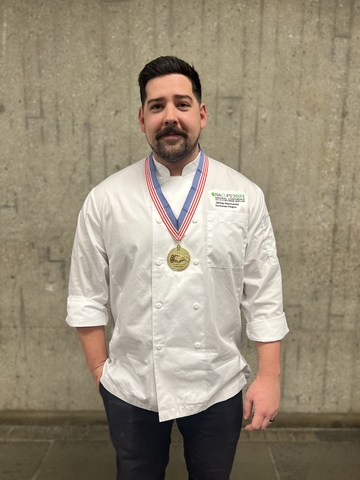
The man who won the 2025 “Chef of the Year” at the University of Massachusetts (UMass) Amherst has been accused of murdering his wife inside an on-campus hotel on Wednesday, April 22.
Jeffrey MacDonald admitted to police that he intentionally beat his wife, Emma MacDonald, “to death using his hands, feet, as well as a variety of other objects,” according to a police report obtained by the Boston Globe.
Jeffrey MacDonald, a 36-year-old executive sous chef of UMass Amherst dining, said it was “his intent to kill his wife in doing so” inside their room at the UMass Campus Centre hotel.
Police responded to the on-campus lodging around 7:40 p.m. after reports of an emergency when a “violent struggle” broke out between Jeffrey MacDonald and police.
At one point, Jeffrey MacDonald allegedly threw multiple objects at the police and repeatedly struck one of the officers in the face.
After subduing the chef, officers entered the room and discovered Emma MacDonald’s lifeless body inside the hotel’s room 413, according to the outlet.
Emma, a 31-year-old staff member at the university, was pronounced dead at the scene.
“Given the significant nature of the female’s injuries, it seemed apparent to investigators that her injuries had resulted from a violent assault,” the police report stated.
University officials said in an email sent out to staff on Thursday, April 23, that there was no threat to the campus.
“I want to acknowledge that this is heartbreaking and deeply unsettling news for our campus. Our thoughts are with those affected, including the families, friends, and colleagues of the individuals involved,” Chancellor Javier Reyes said, according to Boston25 News.
“I also recognize that the lack of complete information may add to the distress many are feeling, but this is necessary to protect the integrity of the ongoing investigation.”
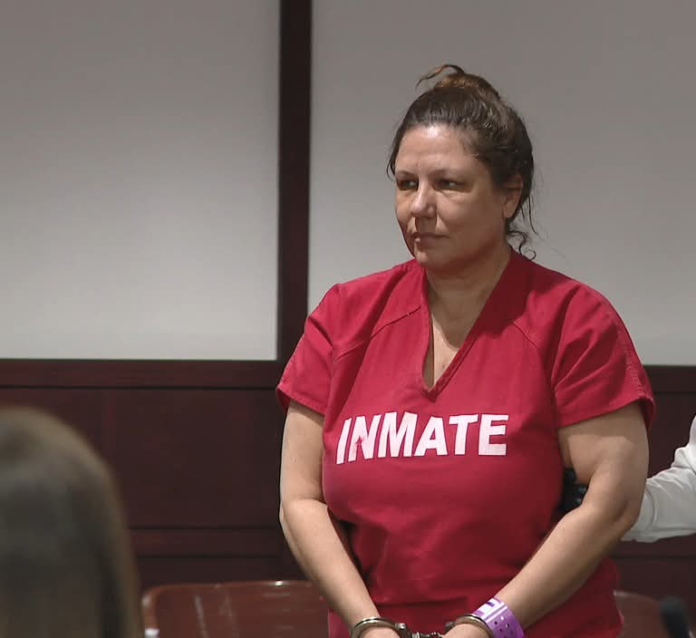
MacDonald was arrested and charged with first-degree murder and one count of assault and battery upon a police officer.
He pleaded not guilty during his arraignment at Eastern Hampshire District Court on Thursday, April 23.
MacDonald’s arrest comes nine months after UMass Amherst honored him for being named the 2025 “Chef of the Year” by the American Culinary Federation.
“This distinguished honor is a testament to MacDonald’s talent, leadership, and commitment to advancing the culinary profession. His recognition at the national level follows a series of impressive accomplishments, including being named the Northeast Regional Winner of the NACUFS Culinary Challenge and receiving a gold medal from the ACF,” the university said in a statement at the time.
“Being honored as Chef of the Year by the ACF is an incredible milestone,” MacDonald said. “I’m grateful for the support of my colleagues at UMass Dining and the inspiring culinary community that I’m fortunate to be part of.”
MacDonald is being held without bail, with a next court hearing scheduled for May 22.
His court-appointed attorney requested that MacDonald be evaluated for competency to stand trial, the Boston Globe reported.
Onetime Super Eagles striker, Michael Eneramo, has died.
According to a report by SCORENigeria on Friday, Eneramo reportedly slumped and died while playing a football match in Kaduna State.
The 40-year-old was said to be featuring at the Angwan Yelwa pitch in the Television area of Kaduna when the incident occurred.
The former international came on as a substitute in the second half before collapsing without any contact.
A source, speaking with the outlet, said, “He slumped and died right on the spot. Efforts to revive him were unsuccessful.Related News
“He was pronounced dead at the hospital.”
Eneramo, who had retired from professional football, previously played for several clubs, including Besiktas of Turkey, Tunisian side Esperance, and Nigerian club Lobi Stars.
Before his death, he was said to be running a football academy.
Meanwhile, the official Super Eagles X handle mourned the former striker on Friday, posting his picture with the caption, “Rest in peace Michael.”
Nigerian Footballers that Died on the Pitch
Several Nigerian footballers have tragically died on the pitch or during training sessions, with the most famous instance being Samuel Okwaraji in 1989. These incidents often involved sudden cardiac arrest or undiagnosed heart conditions.
Samuel Okwaraji (1989): Perhaps the most iconic and tragic case. The 25-year-old midfielder collapsed in the 77th minute of a World Cup qualifier against Angola at the National Stadium, Lagos. An autopsy revealed congestive heart failure linked to an enlarged heart.
Endurance Idahor (2010): The 25-year-old former Nigeria U-23 striker collapsed during a match for his Sudanese club, Al-Merrikh, and died in the ambulance.
David Oniya (2015): David collapsed just three minutes into a friendly match in Malaysia while playing for T-Team FC. He was 30 years old.
Amir Angwe (1995): A striker for Julius Berger who collapsed during a semi-final of the African Cup Winners’ Cup against Maxaquene at Onikan Stadium, Lagos.
Experts claim that of these deaths were attributed to hypertrophic cardiomyopathy (an enlarged heart), which can remain undiagnosed in elite athletes until a fatal event occurs.
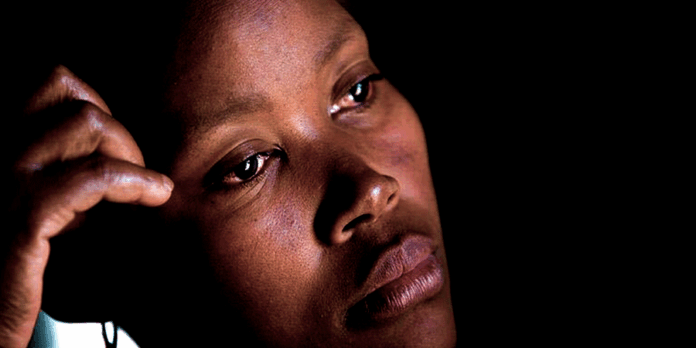
“Many don’t truly want submissive wives, they want voiceless women who’d take whatever they do and continue to stay loyal even in abuse,” he added.
He argued that this mindset reflects a troubling distortion of what partnership should mean, where control is mistaken for leadership and silence is wrongly equated with respect.
According to him, such expectations not only normalise unhealthy dynamics but also perpetuate cycles of emotional and physical harm, making it harder for women to assert their dignity, safety, and autonomy within relationships.
Fresh controversy has engulfed the College of Nursing Sciences, Agbor, Delta State, as no fewer than 54 nursing graduates have been denied enrollment for the upcoming Nursing and Midwifery Council of Nigeria (NMCN) qualifying examination under what affected parties describe as “arbitrary and punitive conditions.”
Among those affected is a student previously queried over a viral video involving Nigeria’s First Lady, Remi Tinubu, further fuelling suspicions of victimisation and targeted punishment within the institution.
Multiple lecturers and parents, who spoke to SaharaReporters on condition of anonymity, accused the school management of imposing an “unofficial and unjustified” requirement mandating students to retake a pre-council examination despite having previously passed it.
“We are appealing for urgent intervention because what is happening is not in line with the official guidelines of the Nursing and Midwifery Council,” one lecturer said.
“To the best of our knowledge, the Council’s requirement is primarily based on at least 80 percent attendance and successful completion of training. Forcing these students to retake an exam they have already passed raises serious ethical and procedural concerns.”
Parents of the affected students also expressed deep frustration, describing the situation as emotionally draining and financially crippling.
“Our children have already taken this pre-council examination while in school. Suddenly, they are being told to take it again before they can be registered for council exams. This is not only unfair but also traumatic,” a parent lamented.
According to sources, while a handful of students reportedly complied with the directive out of fear, the majority resisted, insisting that their earlier results should remain valid.
This resistance, insiders claim, may have triggered the school’s decision to exclude them from the enrollment process.
“The provost has already registered other students and left out these 54,” another lecturer disclosed.
“There is a growing perception that this is more about punishment than policy. Some students have attempted this exam multiple times; second, third, even fifth attempts. Delaying them again could destroy their morale and careers.”
Efforts by the students and their families to resolve the matter internally have reportedly failed. SaharaReporters learnt that visits to the school authorities and appeals made in Asaba yielded no positive outcome.
Parents warned that if urgent intervention is not made before the council portal closes within the week, the affected students may be forced to wait until the next examination cycle in November, an outcome they described as “devastating.”
“This is about their future,” another parent said. “Many of us can no longer afford repeated fees and expenses. We are begging the authorities and the Council to step in and save these students from further hardship.”
Sources further alleged that the provost had insisted that “nothing can be done” to reverse the decision, a stance that has heightened tensions within the school community.
When SaharaReporters contacted the College Provost, Mrs Evbodaghe Rita Ogonne, she said, “The decision is from the council and it is because they did not have the attendance.”
“And if you need any further information on this, call the state PRO. This is a state government school. Thank you,” she added.
The controversy echoes an earlier episode that brought the school into the national spotlight. In March 2025, students of the Delta State School of Nursing went viral after a video surfaced showing them chanting a song that rejected First Lady Oluremi Tinubu as “our mother.”
The incident occurred during activities linked to her pet project, the Renewed Hope Initiative, which had brought the First Lady to Delta State on an official visit.
At the event, Delta State Governor, Sheriff Oborevwori, had praised the administration’s efforts in the health sector, asserting that Nigeria was witnessing significant transformation. He also commended the First Lady’s commitment to improving the welfare of ordinary Nigerians, citing the visible impact of the Renewed Hope Initiative since its launch in 2023.
As part of the programme, professional kits were distributed by the First Lady to the wives of South-South governors, who serve as state coordinators of the initiative across the region.
Upon her arrival, the First Lady paid a visit to the Traditional Rulers’ Council Chambers of Delta State, where all the rulers were holding their monthly meeting, chaired by the Orodje of Okpe, retired Major General Felix Mujak Peruo.
However, a part of the event that generated reactions on social media was a video showing the students of the Delta State School of Nursing receiving the First Lady.
The Master of Ceremony had called Oluremi “everyone’s mother,” in apparent reference to her “being the mother of the nation.”
The students, however, rejected this title.
While the Master of Ceremony said, “Na our mama be this” (translated as “this is our mother”), the students responded, “Na your mama be this” (translated as “this is your mother”).
One of the affected students, Osato Edobor, had earlier gone viral in March 2025 after appearing in the video alongside fellow students chanting “Na your mama be this,” in response to the MC who referred to Oluremi as “our mother” during her visit to the state.
Edobor was also previously questioned for allegedly recording and sharing “an unauthorised” video during Oluremi’s visit.
Osato also reportedly failed her final examination under controversial circumstances in May 2025.
Sources familiar with the situation told SaharaReporters that the development appeared to be a politically motivated act of victimisation.
According to sources, Edobor had maintained an excellent academic record prior to the incident and was regarded as one of the top-performing students in her class, making her sudden failure suspicious.
Following the viral video, the school management issued her a disciplinary query, accusing her of engaging in a “malicious act” by recording and posting the clip on social media.
The Provost, Mrs Ogonne, argued that Edobor’s actions violated institutional ethics and tarnished the school’s reputation, particularly as she appeared in uniform.
However, the Delta State Government later intervened and directed that the query be withdrawn, stating that no student should be victimised over the incident.
Our site uses cookies. By clicking “Accept All Cookies”, you direct Law and Society Magazine to store cookies on your device and disclose information in accordance with our Cookie Statement: cookie policyACCEPTREJECT
Privacy & Cookies Policy
Privacy Overview
This website uses cookies to improve your experience while you navigate through the website. Out of these cookies, the cookies that are categorized as necessary are stored on your browser as they are essential for the working of basic functionalities of the website. We also use third-party cookies that help us analyze and understand how you use this website. These cookies will be stored in your browser only with your consent. You also have the option to opt-out of these cookies. But opting out of some of these cookies may have an effect on your browsing experience.
Necessary cookies are absolutely essential for the website to function properly. This category only includes cookies that ensures basic functionalities and security features of the website. These cookies do not store any personal information.
Any cookies that may not be particularly necessary for the website to function and is used specifically to collect user personal data via analytics, ads, other embedded contents are termed as non-necessary cookies. It is mandatory to procure user consent prior to running these cookies on your website.








_1777038128.jpeg)