Islamic terrorism is deadly, very deadly and genetically stubborn. It is a double-faced scourge, mutating in conformity with its ecosystem. In Nigeria, public officers pretend they do not understand Salafism. So, the citizens are paying a heavy price for this.
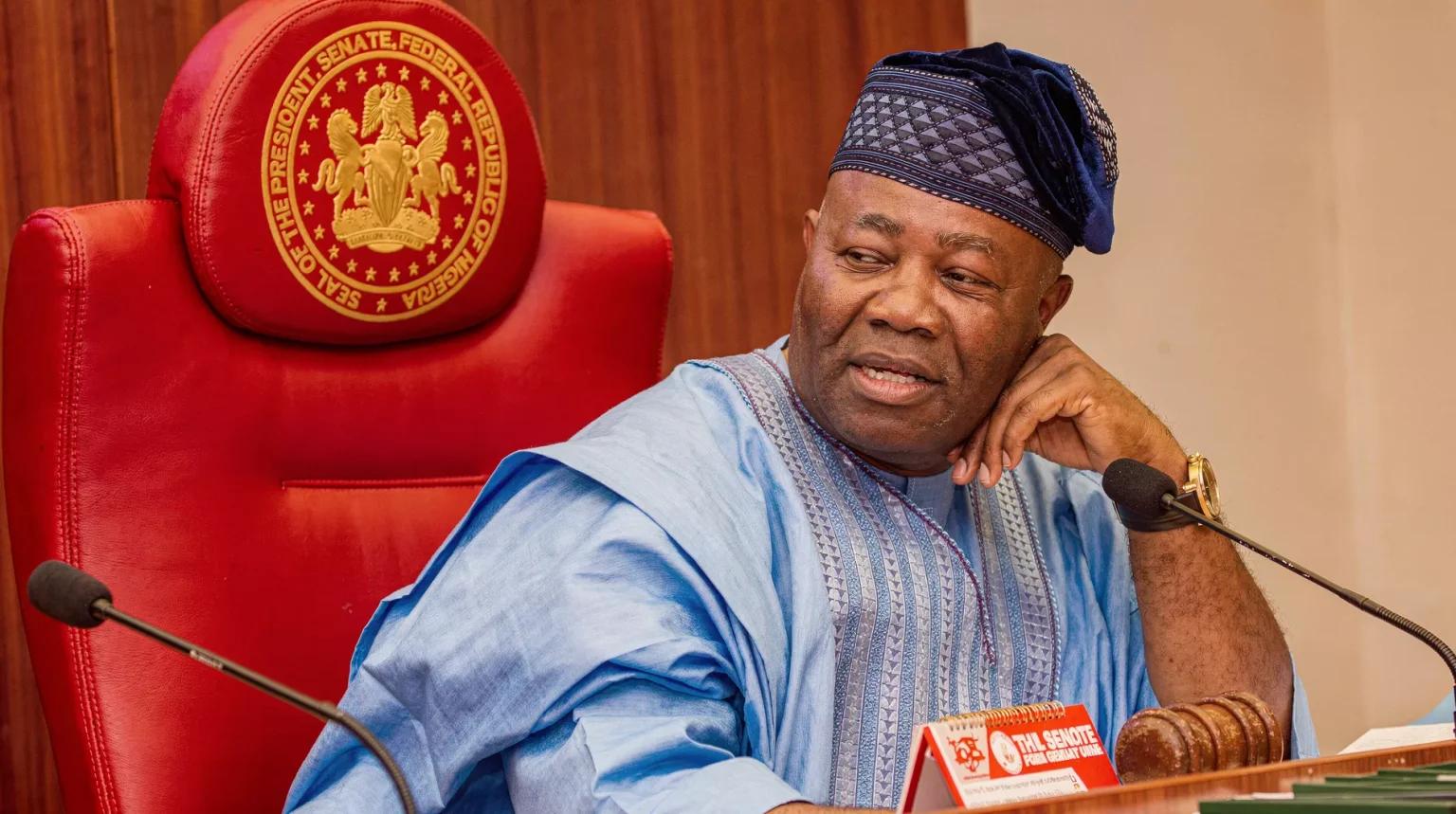
In this context, the Senate President—the No.3 citizen—whose voice should reflect the gravity of Nigeria’s challenges, underestimated the scourge during the inauguration of the Nigeria Revenue Service headquarters in Abuja on April 14.
In essence, Godswill Akpabio demonstrated a troubling tendency to reduce national trauma to political theatre. This is ludicrous.
In his homily, he claimed that Nigeria’s worsening insecurity is merely the handiwork of political enemies and that attacks and bombings would cease once President Bola Tinubu secures victory in the 2027 elections. This is profoundly insensitive. It trivialises a pandemic that continues to consume lives and livelihoods nationwide.
Nigeria has been under the siege of Islamic terrorism since Boko Haram launched its deadly offensive in 2009 in the North-East.
According to Kashim Shettima, the Vice-President, at least 100,000 Nigerians have been killed due to it.
These are not abstract numbers; they represent fathers, mothers, children—entire families erased.
In the same period, over 2.2 million Nigerians were kidnapped, with more than N2 trillion paid in ransom between 2024 and 2025. These figures expose a country under siege. There was no election when terrorists carried out these atrocities. To suggest otherwise is to distort reality and insult the memory of the dead.
Apart from that, Boko Haram’s cardinal aim is “to establish a caliphate.” The extremists do not believe in Nigeria’s sovereignty. Under Goodluck Jonathan, they seized 27 LGAs in Adamawa, Borno and Yobe states. They have spread to the North-West and North-Central, seizing communities and collecting levies and tributes.
This is not a matter for jokes or flippant commentary. Entire communities have been wiped out, leaving behind ghost towns and mass graves.
The toll on the country’s security forces has also been severe. More than 116 soldiers have reportedly been killed in terror attacks since 2023—a conservative estimate given the frequency of unreported casualties.
Senior officers are not spared. The killing of a brigadier-general, Oseni Braimah, on April 9 and the slaughter of Musa Uba (also a brigadier-general), four months earlier, underscore the boldness of insurgents and the vulnerability of even the most protected.
Schools have been forced to shut down in many regions, denying children their right to education and dimming hopes for the future.
The horrors of mass abductions remain fresh. The kidnappings in Chibok in April 2014 and Dapchi in February 2018 shocked the world, yet similar incidents persist. Communities in Kaduna, Kebbi, Niger, and lately, Kwara states have endured their own ordeals.
In February, nearly 200 people were massacred in Kwara, with many others still languishing in captivity. Across Plateau, Benue, and Taraba, mass graves have become grim markers of a nation at war with itself.
At the weekend, Boko Haram threatened to relocate over 400 captives held in its den if its brazen demand of N5 billion ransom is not met.
Against this backdrop, Akpabio’s remarks are inappropriate. They signal a leadership disconnected from the lived realities of ordinary Nigerians. While citizens navigate insecurity without protection, the political elite move around in convoys and armed escorts, insulated from the chaos that engulfs the rest of the country.
Akpabio’s unguarded statement reflects a pattern.
In 2023, he casually mentioned at plenary that a “token” had been sent to senators’ bank accounts, only to hastily retract when he realised cameras were rolling.
During nationwide protests against hunger and poor governance in 2024, he reportedly told demonstrators to continue protesting “while we are here eating.”
Such remarks betray a mindset that trivialises public hardship and elevates privilege above accountability.
The consequences of this attitude are profound. When leaders fail to acknowledge the severity of a crisis, they undermine efforts to address it.
Human Rights Watch has consistently linked Nigeria’s worsening insecurity to the government’s failure to protect its citizens.
Transparency International identifies corruption as a key driver of the violence, eroding institutions and enabling impunity.
The Global Terrorism Index ranks Nigeria as the fourth most terrorised country in the world—a damning indictment of the state’s capacity to safeguard its people.
Reports from Kwara now suggest that armed groups are embedding themselves in rural areas and advancing southward, threatening neighbouring states like Oyo. This pattern indicates a dangerous expansion, not a politically induced anomaly. The implications are clear: without decisive and sincere action, the crisis will deepen.
Leadership demands empathy. It requires recognising the pain of citizens and addressing it with urgency, not dismissing it with political rhetoric. Akpabio’s comments fail this basic test.
Nigeria is bleeding. Its people are weary, anxious, and increasingly disillusioned. At such a time, the Senate President should be rallying the nation toward solutions, not trivialising its suffering. Words matter, especially from those in power. When they are used carelessly, they deepen wounds that are already far too deep.