Lagos, Nigeria — A fresh controversy over solar power regulation in Nigeria’s commercial capital has ignited public anger, exposing deeper frustrations over a broken electricity system that millions of Nigerians say has forced them into self-reliance, only to be met with new layers of bureaucracy.
The Lagos State Government has moved to clarify that permits and administrative fees for solar installations apply only to residents of government-owned social housing estates, not to private homeowners or tenants across the state.
But the explanation has done little to calm a growing backlash fuelled by widespread distrust and long-standing failures in Nigeria’s power sector.
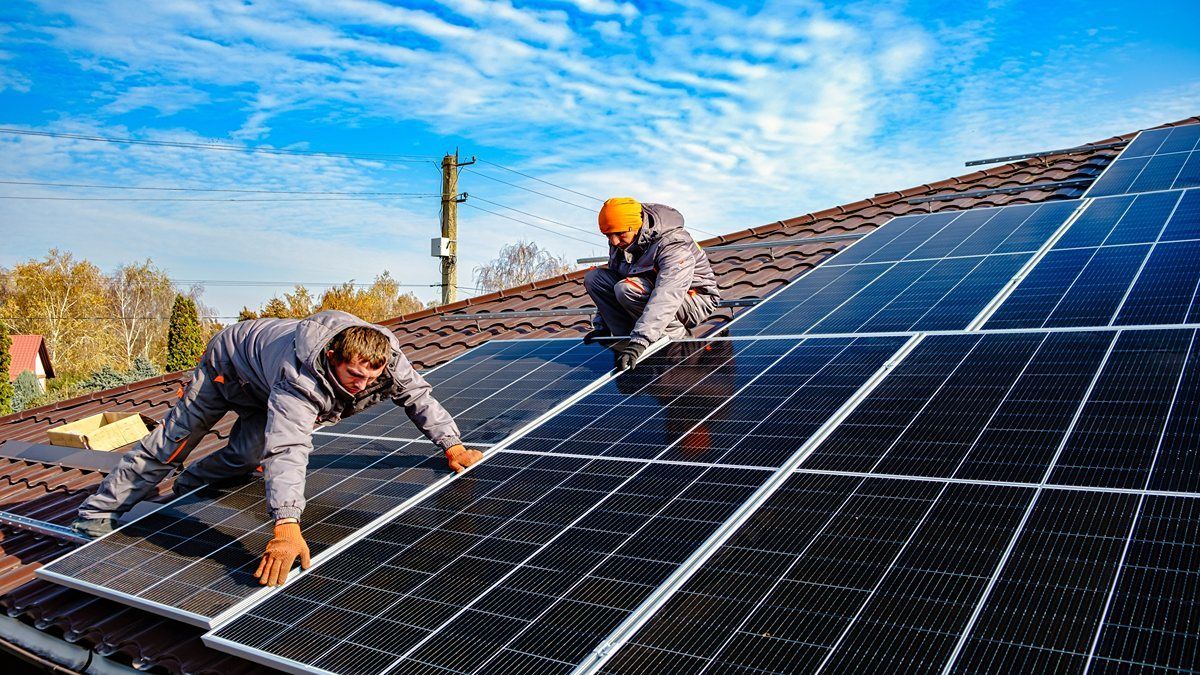
The uproar was triggered by a viral video showing officials from the Lagos State Ministry of Housing confronting a resident over solar panels installed on his home, insisting he obtain approval and pay a fee.
For many Nigerians already grappling with erratic electricity supply, the optics were explosive: a government seemingly taxing citizens for generating their own power.
Officials insist that is not the case.
According to Wale Ajetunmobi, senior special assistant on media to Governor Babajide Sanwo-Olu, the policy is narrowly targeted at structural modifications within state-owned housing estates, where the government acts as facility manager.
“Only residents living in government-owned social housing estates are charged administrative fees for alterations,” Ajetunmobi said, describing solar installations in such settings as structural changes that require approval for safety, design compliance, and liability reasons.
Yet for many Lagosians, the clarification misses the point.
The incident has tapped into a deeper national crisis: a chronic failure to provide reliable electricity despite Nigeria’s vast natural resources, abundant sunlight for solar, large gas reserves, and untapped coal potential.
Years after reforms and repeated promises, stable power remains elusive, forcing households and businesses to depend on costly alternatives like diesel generators and increasingly, solar systems.
Against that backdrop, any hint of regulation, let alone fees, on solar adoption is being interpreted as punitive.
“This feels like being punished for surviving,” one Lagos resident said on social media, echoing a sentiment that has rapidly gained traction online.
The outrage has been amplified by recent revelations from within government itself. Even Deputy Governor Obafemi Hamzat publicly decried what he described as “crazy billing,” recounting how electricity charges at his official residence surged from ₦2.7 million to ₦29 million in a single month—an experience many Nigerians say mirrors their own.
Across Lagos, residents report estimated billing practices that often produce exorbitant charges despite prolonged blackouts, with some bills exceeding annual rent. For many, solar power is no longer a luxury or environmental choice, it is a necessity.
That necessity is now colliding with regulation.
While the state maintains that oversight is essential, citing past incidents involving roof damage and fire outbreaks linked to unapproved installations—the timing of enforcement has raised questions. Critics argue that the focus should be on expanding access to reliable electricity rather than policing alternative solutions.
The controversy also highlights a broader policy gap. Nigeria’s Electricity Act, which decentralizes power generation and allows state governments to develop independent electricity solutions, was widely seen as a turning point. But implementation has been slow, and tangible improvements remain limited.
In Lagos and beyond, residents say the burden of solving the power crisis has effectively been shifted onto individuals, who must now generate, fund, and maintain their own electricity supply.
The result is a growing tension between regulators and citizens navigating a system where public infrastructure has failed to keep pace with demand.
For now, the Lagos government insists the policy is about order, safety, and accountability within its estates. But in a country where millions still live in darkness despite vast energy resources, the optics are harder to manage.
For many Nigerians, the issue is no longer just about permits, but about a deeper question: why, in an energy-rich nation, citizens are still left to power their own lives—and now, potentially, pay for the privilege.