Home Blog Page 64

“Release Our Fighters”: Armed bandits issue chilling warning, claim secret deal with Nigerian government

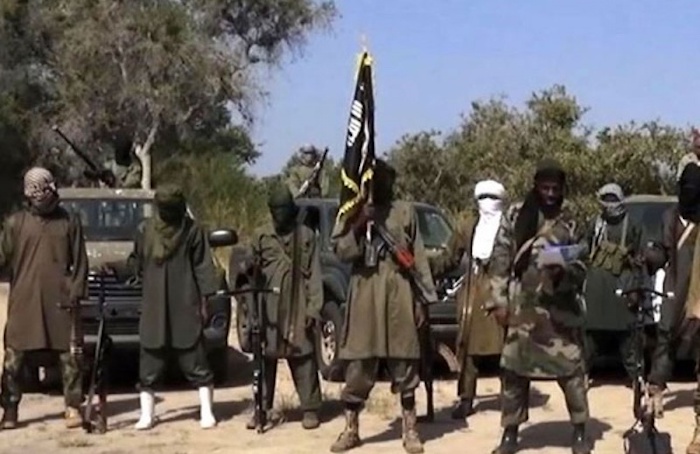
Armed bandits operating across northern Nigeria have issued a rare and provocative public warning, expressing anger over the alleged detention of their members and accusing authorities of reneging on a purported agreement.

In a viral video circulating on social media, a yet-to-be-identified bandit leader, flanked by heavily armed fighters, voiced frustration with Nigerian authorities, demanding the immediate release of detained members across Kaduna and Kano states, as well as the Federal Capital Territory, Abuja.

The footage, shared Monday by security analyst Makama Zagazola on X, shows the group alleging that government officials had previously engaged them in negotiations and struck a deal that has since been broken.

“We had an agreement,” the masked leader said in the video, claiming that representatives of the government approached the group and reached an understanding, the terms of which were not disclosed.

He further alleged that several of their members, including women, are currently in detention nationwide, and accused authorities of ignoring repeated demands for their release.

Allegations of Secret Negotiations

The claims come amid longstanding reports of informal contacts between local authorities and armed groups operating in forested regions of northern Nigeria, allegations that have remained highly controversial.

While some reports have suggested that intermediaries or officials have held meetings with bandits in attempts to broker peace or secure the release of abducted victims, both state and federal authorities have consistently denied entering into any formal agreements or paying ransom.

Government officials have repeatedly maintained that negotiations with criminal groups are not part of official policy, emphasizing instead a security-led approach to tackling banditry and insurgency.

Rising Tensions

The emergence of the video is likely to further inflame concerns over Nigeria’s fragile security landscape, particularly in the northwest and central regions where kidnapping, armed raids, and extortion have become widespread.

Analysts say such bold statements by armed groups, especially those invoking alleged agreements, are unusual and may signal internal pressure or attempts to influence public perception and government response.

As of now, authorities have not issued an official response to the latest claims in the video.

The development adds another layer of complexity to Nigeria’s ongoing fight against banditry, raising fresh questions about accountability, strategy, and the possibility, real or perceived, of backchannel dealings between the state and non-state armed actors.

Alabra V Min FCT and the pains of land owners (1), By Ebun-Olu Adegboruwa, SAN

NTRODUCTION

Land has more or less become gold in many parts of Nigeria. Perhaps due to lack of concrete and enduring government policy on housing, many developers prey on hapless home seekers to take undue advantage of them. In many instances, joint venture agreements are hastily executed with land owners under the guise of estate development but in truth the motive is to grab their land. We can verily excuse private developers as those motivated by greed for profit. What can we say of the government, created to protect the people but is robbing them blind, daily?

How does a government set out to deprive the people of their ancestral heritage and identity in the name of compulsory land acquisition? There exists in virtually all parts of Nigeria oppressive legislation that deprives the people of the use and management of their land. These laws take away the proprietary interest in land from the land owners and transfer title and all interests in land to the government. Since the introduction of the Land Use Act by the then military government of General Olusegun Obasanjo (Retd.), many communities have lost their identity to the rapacious policy of compulsory acquisition. It is totally ungodly in my view for people to suffer to create and develop settlements over the years and suddenly be rendered homeless by fiat. And as if knowing the evil of such policy, the Land Use Act has been inserted into the Constitution to shield it from any amendment or repeal.

Whereas I may agree that there is need for planning in the management of land, especially where it is needed for development, there must be some form of inclusivity when it comes to compulsory acquisition so as to give a sense of belonging to the people, who form the basis of governance. People should not learn about the acquisition of ancestral homes through mere publication in official gazette, newspaper advertorials or mobilization of caterpillars for demolition. If the legitimacy of every government is derived from the people as eloquently stated in the Constitution, then the takeover of land by the government must follow a transparent process of consultation, dialogue and consensus with the land owners. It is painful to once own land and suddenly lose all traces to such inheritance. You walk around every day seeing massive developments going on around your land and there is nothing to show that you ever owned it, turning land owners to unwilling victims in their own country. Permit me to share with you the unfortunate fate of some indigenous people of the Federal Capital Territory.

READ ALSO: Tinubu’s UK jamboree: When Commander-in-Chief abandons battle, Ikeddy Isiguzo

THE FACTS OF THE CASE

The facts of the case are as stated in the decision of the Supreme Court reported as Alabrah v Min F.C.T. (2026) 4 NWLR (Pt. 2033) 113. According to the appellants, they were the original inhabitants of Anguwan-Iya and Anguwan-Audu villages of Toge Community, where they were living as traditional rural settlers with agriculture as their major occupation prior to the creation of the Federal Capital Territory in 1976. They claimed that they continued to live in the community until 14th May 2012 when the respondents demolished their houses, household properties, farm products, household revered traditional and historical artefacts and ornaments. They claimed that about 209 houses were demolished out of which about 80% were built before the creation of the Federal Capital Territory and have been continually renovated.

Further, that the demolition of their houses was illegal and unlawful as the same deprived them of their right to own and reside in their ancestral homes without due notice and compensation, and that their constitutional right enshrined in the 1999 Constitution of the Federal Republic of Nigeria (as amended) was breached. They further contended that they suffered huge damages as a result of the illegal demolition for which they were entitled to be compensated by the respondents who were yet to compensate them despite their written application for compensation as required by the Federal Capital Territory Act. In the circumstances, the appellants instituted an action at the Federal Capital Territory High Court and claimed the following reliefs:

“a. A declaration that the demolition of Angwan-Iya and Angwan-Audu Villages of Toge Community by the defendants on or about the 14/5/12 is illegal, unlawful and a deprivation of the plaintiffs right to own and reside in their ancestral home having not been compensated and or resettled by the defendants.

b. A declaration that the wanton destruction of the plaintiff’s movable and household properties inclusive of their farm produces by the defendants is illegal and unlawful.

c. Order directing the defendants to effect immediate payment of compensation and resettlement of the plaintiffs in accordance with legally set and acceptable standards.

d. An order directing the defendants to effect immediate replacement of all movable and household properties (inclusive of farm produce) destroyed by the defendants in the course of the wanton demolition of Angwan-Audu and Angwan-Iya villages of Toge, or;

e. N150,000,000.00 (One Hundred and Fifty Million Naira) damages being the assessed value of all the movable and household properties inclusive of farm produce destroyed by the defendants in Angwan-Iyae and Angwan-Audu villages of Toge.

f. N305, 000,000.00 (Three Hundred and Five Million Naira) damages being the value of 209 houses destroyed by the defendants in Angwan-Iya and Angwan-Audu villages of Toge Community, Abuja; or,

g. An order directing the defendants to effect immediate reconstruction of the 209 housing units destroyed by the defendants in Angwan-Iya and Angwan-Audu of Toge Community) Abuja.

h. A perpetual injunction restraining the defendants, their agents, privies, or any person (s) claiming through them, from trespassing, claiming, developing and/or interfering with the land constituted in the plaintiffs’ place of abode, that is, Angwan-Iya and Angwan-Audu of Toge Community, until the plaintiffs are fully compensated and resettled.

i. N500,000,000.00 general damages for unlawful and illegal invasion, demolition and destruction of plaintiffs’ houses, moveable and household properties, artefacts, historical and traditional ornaments and heritage as well as the associated trauma to which the plaintiffs were subjected to by the unlawful acts of the defendants.”

The appellants called 2 witnesses and tendered several documents in proof of their case. On their part, the respondents did not call any evidence but maintained that by virtue of the Federal Capital Territory Act 1976, all land within the Federal Capital Territory became vested in the Federal Government of Nigeria and that any person who claims any right or interest in any land comprised in the Federal Capital Territory shall submit, in writing, particulars of his claim to the Executive Secretary of the Federal Capital Territory on or before the expiration of a period of twelve months from the date of the commencement of the Order made under section 2 of the Federal Capital Territory Act 1976 and that the appellants failed to comply with the provisions.

At the conclusion of hearing, the trial court, by its judgment delivered on the 11th of December, 2014 found in favour of the appellants and held that there was no evidence in court in proof of the fact that the President published an Order in a gazette in compliance with section 2 of the Federal Capital Territory Act to commence the twelve months period within which compensation could be applied for. The trial court awarded the appellants the sum of N500,000,000.00 (Five Hundred Million Naira) as damages for the demolition. Aggrieved by the decision, the respondents approached the Court of Appeal, wherein the court set aside the judgment of the trial court holding that the action of the appellants was statute-barred. Dissatisfied with the judgment of the Court of Appeal the appellants appealed to the Supreme Court which dismissed the appeal.

JUDGMENT OF THE SUPREME COURT

The Determination of Whether Action Statute-Barred:

The question as to whether or not an action is statute-barred is dependent on the nature of the action and the relevant provisions of the statute of limitation. It touches on the jurisdiction of the court. The jurisdiction of the court is determined by the plaintiff’s claim as endorsed on the writ of summons and elaborated in the statement of claim. A cause of action is said to be statute-barred if, in respect of it, proceedings cannot be brought because the period laid down by the Limitation Act or Law has elapsed.

THE EFFECT WHERE ACTION STATUTE-BARRED:

When an action is statute-barred, the plaintiff who might have had a cause of action loses the right to enforce the cause of action by judicial process because the period of limitation had elapsed. An action commenced after the expiration of the statutory period within which an action must be brought is not maintainable. In other words, when a statute of limitation prescribes a period within which an action must be initiated, legal proceedings cannot be properly and validly instituted after the expiration of the prescribed period. Any such action instituted must be struck out as not being properly instituted before the court.

In the instant case, the right of the appellants to commence an action against the respondents for compensation was extinguished by operation of the law – that is, section 6(3) and of the Federal Capital Territory Act 1976 – having not provided any evidence that they indeed wrote an application for compensation within the 12 months period stipulated by the Act. In the circumstances, the trial court was neither competent nor conferred with any jurisdiction to have entertained the appellants’ claims against the respondents since the action was statute-barred. The Court of Appeal was therefore right to have set aside the judgment of the trial court and in holding that the maker of the Act did not intend the issue of compensation to linger ad infinitum.

Alleged anal assault of infant in Ogun school ignites police probe

The Ogun State Police Command has launched an investigation into the alleged indecent assault of an eight-month-old baby at a private school in the state.

PUNCH Metro learnt that the incident occurred on Wednesday, March 18, at the school where the baby’s mother, Gloria Umukoro, is employed.

According to Umukoro, the school had closed early for revision week, and she stayed behind to complete examination questions.

She said the baby, who was dressed in a diaper, was initially in the care of the school principal. About 30 minutes later, the school director, Mr Korede Afuye, returned the child to the principal.

“In my presence, the principal placed her on the floor because she was restless and did not want to stay on her lap. She urinated there, after which the principal left for the office. My colleague also left, leaving me alone with the baby,” Umukoro said.

She said she initially noticed wetness around the baby’s leg and assumed it was urine.

“About 10 minutes later, I picked her up and was shocked to see she was bleeding,” she added.

Umukoro said a colleague, who is a nurse, examined the baby and confirmed that the bleeding was from the anus, with visible bruises around the area.

The mother alleged that the school director was the last person to handle the child before the injuries were discovered.

“I asked who carried my baby last, and he was identified as the last person. I went to the office to confront him and demanded to know what happened. I could not understand how she became injured within such a short time,” she said.

She added that the school management urged her to remain calm, but she insisted on reporting the matter to the authorities.

“This is not something that can be resolved informally, considering my baby’s condition,” she said.

The case was subsequently reported to the police for investigation.

Confirming the development, the Police Public Relations Officer of the Ogun State Command said the matter had been referred to the State Criminal Investigation Department for further investigation.

The PPRO said, “A case of indecent assault involving an eight-month-old baby was reported on March 18. The matter has been transferred to the State Criminal Investigation Department, specifically the Gender Unit, for further investigation. The identity of the child is being protected.”

The police added that investigations are ongoing to determine the circumstances surrounding the incident.

PUNCH

History Tinubu should have learnt, By Suyi Ayodele

How a government that claims to have made huge savings from oil subsidy removal still goes about acquiring foreign loans, as if borrowing is going out of fashion beats sane imagination.

By January 22, 1962, President Bola Ahmed Tinubu was a 10-year-old lad. His 73-year-old age claim gives that statistics. A child strapped on the mother’s back, our elders say, does not know that the journey is far. Tinubu, at age 10 in 1962, would not have been able to appreciate what the elders of that era did to save Nigeria from a second form of slavery.

But a child, who did not witness history, it is equally said, should at least witness the retelling of history. A his-tory retold, the elders further submit, is greater than the history itself (Bí omodé ò bá bá ìtàn, ó máa bá àróbá; àróbá ni baba ìtàn).

Whatever Tinubu missed out in 1962, when the young independent Nigeria severed the military enslavement pact known in history as the Anglo-Nigerian Defence Pact of 1960, is contained in all our history books. Does the President read? Or do those around him read history so as to guide the President properly in his choices of international relations?

Sixty-five years after the Nigerian Government fully detached itself from eternal open slavery to the United Kingdom (UK), after securing independence from Great Britain on October 1, 1960, President Tinubu, willingly, last week, handed over Nigeria to its former colonial master.

From Wednesday through Friday, when he finally returned to Lagos, Tinubu, his wife and the close to 150 other entourage to the United Kingdom, were grinning from ear to ear in celebration of the “historic” moment. UK’s Prime Minister, Sir Keir Starmer, while receiving Tinubu at the No 10 Downing Street, Westminster, London, said the visit was “historic” in that in the last 37 years, no Nigerian leader had paid such an official visit to the UK!

For a government that is desperate for a second term and needs every appearance of international recognition or endorsement, visiting the UK and dining with King Charles and Queen Camilla by President Tinubu, is a huge achievement. Tinubu’s Lagos lap boy, Governor Babajide Sanwo-Olu, summed up the feelings of the camp when he became so enthusiastic about the visit, and tweeted, to the embarrassment of his media handlers, that: “I received His Excellency, President Bola Tinubu on his arrival at the Fairmont Hotel in Windsor ahead of the state visit.”

Rather than the normal protocol of the host country receiving the visiting Head of State of another country, Tinubu’s boys were the same set of people who flew ahead of the President to receive him on the ‘official state visit’, and also flew back to line up like expectant primary school pupils to ‘receive’ the president when he re-turned to Lagos last Friday.

While the Tinubu camp has been busy celebrating the “historic” visit, they have not bothered to tell us at whose instance the ‘visit’ was arranged. How much did it cost Nigeria for the hired lobbyists to pull through the ‘State visit’? How much did it cost our purse in terms of estacode, logistics and other allowances to cater for the close to 150 delegates that ‘accompanied’ the President on this ‘visit’?

While we are at that, there is one troubling revelation that came from the visit. By the stroke of the pen, President Tinubu has signed off Nigeria as a new official colony of the UK. This is the summary of the two major agreements he signed while his ‘State visit’ lasted.

The UK, no doubt, is a master of international diplomacy. From the era of colonialism to post-colonialism and neo-colonialism, the UK has never left anyone in doubt that it would only deal whenever it is sure that its economy and the wellbeing of the UK citizens are secured, protected and guaranteed with solid agreements.

That was exactly what the UK achieved with Tinubu. The former colonial master proved that it would do anything to preserve its stranglehold on desperate nations headed by equally desperate leaders. So, when the UK saw the opportunity in the much-desired ‘State visit’ by Tinubu, the country recognised that the Nigerian leader needed, very badly, the UK endorsement. And it was willing to give it, but at a huge cost to Nigeria and Nigerians.

That was why the agreement to ease migrant returns to Nigeria was proposed and Tinubu willingly signed. The British, I bet, must have looked into our President’s dilating eyeballs to read his desperation and concluded that under such a psychological composition, Tinubu would sign anything under the earth. And, true to type, our President did not disappoint!

By that deal, Nigeria has agreed that the UK can easily remove people, who have no right to stay in the UK, and ship them to Nigeria! All that is required is for the UK Government to issue the UK Letter, an identification document detailing people without valid documents, and without the protocol of procuring any further travel documents, have them loaded to an aircraft en route to Nigeria!

READ ALSO: The £746M Ports Deal: Great for Britain, perhaps not for Nigeria

The UK Home Office explained that by the deal, people who overstay their visas, foreign criminals and others regarded as failed asylum seekers, would be easily transported to Nigeria. The only ‘beautiful’ aspect of the deal is the principle of ‘structured return pathway’ embedded in it and the promised ‘Reintegration Support’ by the Tinubu administration. However, the snags in the two border on how to marry a ‘structured return pathway’ clause with the provision of UK Letters as stated above, and how a government that has not been able to handle, successfully, the integration of Internally Displaced Persons (IDPs) in Nigeria, will now give ‘integration support’ to the UK-based Nigerians with criminal records and others that will soon be shipped back to Nigeria! If the iconoclast, Fela Anikulapo Kuti, were to describe this, he would simply intone: government magic!

If Tinubu’s allies expect Nigerians to accept the claim that the UK ‘State visit’ was driven by altruistic motives, the £746M loan agreement he secured undermines that narrative. By the terms of the deal–reportedly aimed at revamping Tin Can and Apapa Ports-, it is easily evident that the primary objective of the arranged ‘visit’ was to obtain the loan, and in the process, secure recognition and endorsement the Tinubu administration desperately needed from the UK Government.

The British Broadcasting Service (BBC), in its report on the loan deal, anchored by Becky Morton, Political reporter, says: “A separate deal, worth £746m, will see two major ports in Lagos refurbished with the help of UK-backed loans. UK Export Finance (UKEF), the UK government’s export credit agency, has provided a guarantee to the banks loaning the funds under the condition at least 20 percent of the contracts are sourced from the UK. At least £236m of supplier contracts will be redirected to British firms, including £70m for British steel – the company’s largest ever export backed by UKEF. It comes as the UK sets out a new strategy to boost the domestic steel industry.”

The implications here are grave! What Tinubu signed off in the £746m loan deal is the future of Nigeria’s steel industry. While the UK is doing everything to protect its own steel industry by imposing almost 50 percent tariffs on imported steel, Nigeria is taking a loan worth £746m, with almost half of the borrowed sum retained by the lending country while Ajaokuta Steel Company Limited remains comatose! Conceived as Nigeria’s largest steel plant, designed to produce 1.3 million metric tonnes of steel annually in its first phase, and in spite of having reached 98 per cent completion in 1994, the expansive project has suffered from decades of mismanagement, corruption, and inaction which have all conspired to render it moribund.

In another report by the BBC titled: “UK sets target to boost steelmaking and cut imports”, written by Jemma Crew, Business reporter, it is stated that: “The government has set a higher target for the UK to make half of the steel it uses and has announced higher taxes on buying steel from overseas. Imported steel quotas will be low-ered and anything brought in above that level will be subject to a new 50% tariff, the business department said. The UK steel industry, which has been calling on the government to shield it from cheaper steel made abroad, welcomed the measures.”

UK Business Secretary, Peter Kyle, who announced the measures in Port Talbot, in Wales, where steel maker Tata is building an electric arc furnace which will make steel by melting scrap metal, was quoted by the BBC to have denied that “the new tariffs were a protectionist measure that would push up prices for manufacturers who use foreign steel and their customers”, but said: “I’m announcing really ambitious targets for use of British steel in the British economy, from 30% to 50%. But also, I need to defend the sector from anti-competitive behavior from elsewhere in the world.”

That is a nation that protects its own. Here in Nigeria, we have the multi-billion-dollar Ajaokuta Steel Mill, the Itakpe Iron and other steel mills across the country that are in various states of coma. Rather than seek their revival; rather than take conscious efforts at revamping them, President Tinubu travelled with close to 150 delegates to the UK to obtain a loan of £746m, with provisions that make half the facility retained in the economy of the lending country.

By the spirit of the loan agreement, UK banks and the UK steel industry will manage the loan, sell the UK steel and still provide the ‘technical expertise’ for the running of the two ports to be ‘revamped’! This is a deal that the Aso Rock Villa orchestra asks us to hail; this is the deal that the Tinubu hangers-on said had made the Presi-dent the man to beat in negotiation!

Going by the way President Tinubu acts daily with impunity, he, unarguably, is the luckiest President to have ever ruled Nigeria. If he wins his second term bid by January next year, he may as well become the luckiest President to have ever ruined the country. The beauty of his rulership and ruination is that he gets away with anything , even blue murder!

I don’t know how superstitious the President is. But whatever is responsible for his stranglehold on Nigeria’s neck is worth his deification. When one’s deity stands by one through thick and thin, our elders say such should be venerated daily with generous libation. I recommend that the President holds on tightly to whoever pounds his yam for him and assures him that the soup needed to eat the delicacy will not be a problem.

Nigerians are not necessarily docile. But there is a peculiarity with the Tinubu Presidency. Everything Nigerians fought against while Tinubu was in the opposition, they have accommodated easily with the Lion of Lagos on the throne! What Nigerians defended with their blood 64 years ago (neo-colonialism), is what Tinubu signed last week in the UK without a whimper from any quarters!

From the removal of subsidy to the latest pain in the land, there are still a huge number of the citizenry who believe that Tinubu is God-sent. Even when the government lies and becomes even ashamed of its own tissue of lies, some Nigerians still go to the marketplace and the rooftops to defend the government!

On May 29, 2023, at his inauguration, Tinubu announced, extempore, that “subsidy is gone.” Many watchers of the nation’s economy argued that that was a reckless statement by the new President. They posited that such a thoughtless pronouncement would lead to economic crisis and the ripple effects on the masses would be unimaginable.

The government’s Hallelujah orchestra said otherwise. They argued, with every fibre of their being, that by re-moving the oil subsidy, the Tinubu government would make huge savings that would be deployed for use in other sectors of the nation’s economy. Almost three years after the projection of the ‘huge savings’ from subsi-dy removal, Nigeria still goes begging for loans from virtually all the countries of the world.

How much has the government saved from subsidy removal? Nobody knows because the government is not transparent enough to tell the people the ‘gains’ that have accrued from that policy. All we know is that at every opportunity, this administration goes cap in hand, soliciting loans and mortgaging the future of the country to the creditor countries.

How a government which inflicted pain on the people in the name of economic reforms would abandon its own steel industry in a state of coma but would take a loan from a foreign country to develop that country’s steel industry is unfathomable! What about the Foreign Reserves this government said it has increased? How do you have a rich Foreign Reserves and you still go about taking foreign loans? Is this country really a joke?

The views expressed by contributors are strictly personal and not of Law & Society Magazine.

The £746M Ports Deal: Great for Britain, perhaps not for Nigeria

By Kachi Okezie, Esq

In Llanwern, the steelworks to the East of Newport, my South Wales home city, the mood is upbeat. Likewise in Scunthorpe, Lincolnshire, where the UK’s last two remaining blast furnaces are located.

The ports upgrade and steel supply deal signed on Thursday, March 19, 2026 at 10 Downing Street between the UK and Nigeria is good news and a welcome break from the ongoing frustration with Keir Starmer’s Labour government. Newport is a Labour stronghold, represented by my friend Jessica Morden, who has held the seat since 2005, focusing on local issues such as steel industry support and cost-of-living help. 

At the other end, the tattle among Nigerians arising from the  deal swings like a  pendulum between two extremes: industrial realism and the geography of regional equity. Those in support of President Tinubu’s reforms under his Renewed Hope Agenda are quick to point to the deal as a momentous take-home from the President’s record-breaking state visit as guest of King Charles III, the first such visit by a Nigerian President in 37 years.

Those opposed to the deal, on the other hand, question the need for yet another port project in Lagos which they say is already congested. They point to the need to decentralise critical infrastructure such as seaports and prioritising other parts of the country fir such projects.

Whatever one’s persuasion, the £746 million agreement to modernise the Apapa and Tin Can Island ports is something of a masterclass in the “new realism” of 21st-century diplomacy. Certainly for Britain. Described by Prime Minister Starmer as a “historic” milestone, marking the first state visit by a West African leader to the United Kingdom in 37 years, the deal moves Nigeria’s maritime strategy from a memorandum of understanding to a multi-billion naira engineering reality. 

Yet, beneath the diplomatic high-fives lies a complex matrix of industrial survival, geopolitical maneuvering, and an intensifying domestic debate over whether this investment serves a truly national interest or a parochial, Lagos-centric agenda.

To evaluate this deal fairly, one must first strip away the language of development assistance. For the United Kingdom, this is not an act of international charity; it is a cold-eyed exercise in national economic self-interest. Through UK Export Finance (UKEF), the British government is guaranteeing a loan from Citibank on the EXPLICIT condition that at least £236 million of the resulting contracts flow back to British firms. Tim Reid, CEO of UKEF, hailed the deal as a landmark that demonstrates the agency’s ability to “unlock opportunities” for British businesses in high-growth markets.

The standout beneficiary is British Steel, which secured a £70 million “record-breaking” contract to supply 120,000 tonnes of steel billets from its Scunthorpe plant. For a Labour government navigating a difficult 2026 election season and under pressure to prove its “Securonomics” strategy can save the country’s foundational industries, this is an essential political win. 

UK Trade Secretary Peter Kyle emphasised that the deal would strengthen British Steel’s global standing while directly supporting jobs and economic growth in Scunthorpe. British Steel CEO Allan Bell was equally emphatic, describing the contract as a “major boost” for the company and its employees.

There is a pointed historical symmetry here: while the British steel industry has spent decades weathering the storms of privatisation and ownership changes, from Corus to the complex stewardship of the Mittal family, it is now being revitalised by Nigerian infrastructure debt. It is a sharp irony that while Mittal’s venture into Nigeria’s Ajaokuta Steel Mill famously ended in a decade of legal gridlock and a massive $496 million settlement for the Nigerian state, it is now the UK’s own industry that is finding stability through a Nigerian port project. The UK is essentially “buying” its own industrial resilience by guaranteeing Nigeria’s credit.

Beyond the balance sheets, there is a compelling geopolitical logic. If the UK does not “grab” these opportunities, China certainly will. The nearby Lekki Deep Sea Port stands as the primary example of the alternative model: a $1.5 billion marvel where the China Harbour Engineering Company holds a majority stake and a 45-year operating concession. The UK deal offers a sovereignty-preserving alternative; by providing guarantees rather than direct equity-for-debt swaps, the UKEF model allows the Nigerian Ports Authority (NPA) to retain 100% ownership. Nigeria is not “selling the farm”; it is borrowing the tools to fix it. While the £236 million earmarked for British firms functions as a “Scunthorpe Surcharge,” it is a premium many strategists argue is worth paying to avoid the long-term geopolitical strings attached to the Chinese model.

However, as the United Kingdom celebrates its industrial coup, a more strident criticism is bubbling over in Nigeria. The central question being asked from Port Harcourt to Calabar is: Why Lagos again? To many Nigerians, this deal looks less like a national necessity and more like a parochial, even nepotic, project designed to favour President Tinubu’s political heartland. Lagos is already over-served with maritime infrastructure, they argue. Between the legacy ports of Apapa and Tin Can and the newer Lekki facility, the city is a logistical juggernaut. Meanwhile, the seafront states of Cross River, Akwa Ibom, Rivers, Abia, and Delta remain trapped in a state of perceived government-sponsored underdevelopment. The ports of Calabar, Warri, and Port Harcourt have faced decades of neglect, with critics arguing that their exclusion is a deliberate choice to centralise economic power, according to crtitics. 

While the Minister of Marine and Blue Economy, Adegboyega Oyetola, argues that the project aligns with broader economic goals to improve port operations and transparency, the counter-argument is that this focus is regionally imbalanced. If the South-South ports are not dredged and their quay walls are not fortified with the same urgency as those in Lagos, they can never compete, nor contribute to national economic activity, productity and GDP. By doubling down on the Lagos corridor, the administration is perceived as further marginalising the rest of the country, leaving potential maritime hubs like Calabar, Port Harcourt, Onne, Warri anf the Ibom Deep Sea Port to languish.

Ultimately, the UK-Nigeria port deal is a study in trade-offs. President Tinubu has stated that the deal will strengthen Nigeria’s position as a key maritime hub in West and Central Africa, providing the infrastructure to lower costs for the entire federation. The United Kingdom has secured a much-needed outlet for its steel and a strategic foothold in a vital market. But for Nigeria, the success of this deal will not be measured by the number of jobs it creates in Llanwern or Scunthorpe. It will be measured by whether the government uses the revenue generated from these modernised Lagos ports to finally breathe life into the dormant quays of the Delta and the South-South. 

Without that regional balance, the deal remains a brilliant piece of British business, but a potentially divisive chapter in Nigerian politics.

The views expressed by contributors are strictly personal and not of Law & Society Magazine.

My president visits our king, By Lasisi Olagunju

Three politicians—America, Britain, and Nigeria—died in a stampede over oil, influence, and global validation.

In the afterlife, they were received by Angel Gabriel, who said:

“You have lived by power and persuasion. As politicians, you have surely sinned. Before you enter Heaven, you must pass through the Swamp of Lies.”

As in life, America stepped forward first, eager and confident. He waded in and found the swamp barely reached his ankles. He smiled to himself: At least, whatever I did, I told my lies in the name of a greater good.

He turned to look back.

Britain was behind him, sunk to his knees in thick mud. America frowned and shouted:

“This makes no sense! You cheated, you enslaved and colonised everyone; you mastered empire, shaped the world in your image, bent truth to your will, and yet you are only knee-deep?”

Britain raised a finger to his lips and replied calmly:

“Lower your voice. I am standing on Nigeria… and he does not even know.”

The joke, as I have told it here, is an adaptation drawn by me from an anonymous source, its plot and characterisation I reworked to fit my own telling. Like all enduring humour, it turns the mirror inward. Look closely at the mud of lies: Britain stands, still, on the back of a submerged Nigeria.

This is not about being patriotic or not; and it is neither self-hate nor self -denigration. A joke about oneself is an invitation to self-examination and self-recognition, to laugh, and in laughing, to reckon. In his essay, ‘Liberty, Laughter and the Law: Jests and Jokes as Symbols of a Free People’ (May 1948), Nat Schmulowitz captures this insight with enduring clarity:

“The most salutary of all laughter is the laughter which we laugh at ourselves, for this kind of laughter means always that we have laid bare and discarded some weakness, some power of injustice in ourselves. A vain man, a frightened man, a bigoted man, or an angry man, cannot laugh at himself or be laughed at; but the man who can laugh at himself or be laughed at has taken another step towards the more perfect sanity which brings peace on earth and goodwill toward man.”

Nigeria is the joke, and, tragically, the laughter that sustains it.

I grew up hearing England described as Ilu ọba—the king’s country. It unsettled me each time I heard that. Were our own obas not kings? Why should a distant land exclusively own royalty which we have here in abundance?

President Bola Tinubu’s recent visit to England, as guest of King Charles III, seemed to answer that question of my childhood. In that carefully staged moment, one truth quietly surfaced: there is only one king—the King of England.

And King Charles played his role to perfection: You saw him when he took our president’s hand and led him along the walkway. He did it with a faintly paternal air as though steadying our president, and in that gesture, quietly defining the terms of the relationship. The one that you plan to sell, you must first feed and make secure.

Then came the substance.

On Thursday, UK Prime Minister Keir Starmer hosted President Tinubu at Downing Street, where both countries sealed a deal tied to the refurbishment of the Lagos Port and TinCan Island Port. Under the £746 million arrangement, British Steel will supply 120,000 tonnes of steel for the work, with UK Export Finance guaranteeing the loans on the condition that at least 20 percent of the contracts go to British firms.

That last part channels no less than £236 million of the total sum back to the UK.

In simple terms, a substantial part of the “loan” effectively returns to the lender’s pocket. The principal is known, but the interest on the loan is not publicly stated and is not publicly known.

What do all these mean? I asked experts and they told me that the implications of the deal are significant, and not entirely comfortable.

They said the deal sits at the intersection of development finance and economic sovereignty.

They said that at its core, the contract is tied financing; the recipient must spend the funds on goods and services supplied by the lender. Broke Nigeria gets funding (via UK Export Finance), but on the condition that a big portion of the project must be executed by British firms.

They said the conditions attached to the deal is textbook paternalism: “We will help you but we will also decide how that help is used.” Alágbárí l’ògá múgù. They will use múgù’s money to eat àrósò.

They said that the loan structure carries several consequences. These consequences, they said, include reduced procurement freedom for Nigeria. By this they meant that, for the project, Nigeria cannot freely choose the most competitive suppliers globally.

They said that requiring at least 20 percent UK sourcing, the deal limits open competition, potentially excluding cheaper or more efficient alternatives from other countries, or even from local firms.

They mentioned capital flight and contrasted it with local retention. A guaranteed share of the contract (at least £236 million) flows back to UK companies. And what does that mean? It means less of the project value circulates within Nigeria. It means fewer opportunities for Nigerian contractors and manufacturers. It means reduced multiplier effect on the local economy. It means Nigeria is owing more than it is borrowing. It means the lender is also the receiver of the loan.

And, it is significant that the deal came in the same week the UK launched what it called a new steel strategy to revamp its steel industry, produce up to 50 percent of its own steel, cut imports by 60 percent, and impose a 50 percent tariff on excess imports.

UK Business Secretary, Peter Kyle, said: “I’m announcing really ambitious targets for use of British steel in the British economy, from 30 percent to 50 percent.” The strategy, according to him: “The UK government’s vision is a revitalised steel sector…that can provide a secure supply of steel to meet their customers’ needs, support our national security, and provide high-quality, secure and long-term jobs.”

The new strategy landed with the Nigerian deal, same week, different scenes. Coincidence? Someone said in encounters between power and need, coincidence is seldom accidental. Analytical psychologist, Carl Jung, says there are no coincidences; only connections we have not yet understood.

You hear all this and you ask: where is Nigeria’s own steel ambition in this deal? Ajaokuta? What, exactly, does Nigeria gain from this forward-and-backward loan arrangement?

Does this visit echo something more troubling—like leading the bull, gently, to the abattoir?

If that is it, then it is safe to say that the moment where King Charles III takes the president’s hand suggests a subtle hierarchy, paternal, guiding, almost instructional. The hand-holding is no longer metaphorical, it becomes contractual guidance. If you like, call it master–servant logic in economic form. The walkway movement intuited, the economics quietly confirmed.

The loan arrangement reinforces the asymmetry of benefit and control in international relations. Consider this: the UK hosts the Nigerian president; it secures export markets for its steel and contracts for its firms, sustains jobs in places like Scunthorpe, and advances its industrial policy. Nigeria, in return, comes home scented with the lingering perfume of King Charles’s courtly embrace.

At another level, the Nigerian child loves the white king. President Yar’Adua visited the White House in December 2007 and declared the visit eternally unforgettable:

“This is a moment that I’ll never forget in my life.” He blew that into his host’s microphone. President Tinubu did not use those cringing words but he said much more than that with swag and steez.

Critics of Tinubu’s London tourism liken him to Rome’s Emperor Nero who “sang and plucked his lyre while the capital of the world burnt down around him.” They say Tinubu should not have flown abroad while his own Rome faced the fire of terrorism and mass murder in Maiduguri. He has ignored the critics. He is aware that whatever he does won’t reduce the amount of libation daily poured at his shrine.

Indeed, those who call Tinubu Nero may, in fact, be paying him a compliment.  In ‘Nero Reconsidered’, Edward Champlin describes the notorious Roman Emperor as a very “popular monster” who died at 30 and was for centuries wanted back by “everyone.”

He wrote: “The truth is that outside of court circles and Christian congregations, Nero was vastly popular, both before and after his death…Whatever else he may have been, Nero was a clever man, and one who was much more attuned to the psychology of his people than were some disgruntled elitists or angry sectaries.”

Nigeria has many of such “disgruntled elitists (and) angry sectaries” who criticise every act of the hardworking president. 

Like Nero, our president loves the sound of his lyre and plays it undisturbed even if the capital is on fire. He understands the psychology of Nigerians. He knows they love him and his ways and would dance with him even if the country becomes Gaza at the hands of the enemy. He knows he did no wrong going to the House of Windsor to sell Nigeria.

Perhaps what we deserve is not really democracy. Perhaps it is what Thomas Jefferson might have recognised, in spirit, as monocracy, a curious blend of monarchy and democracy, a system based on the personal rule of an individual without legal or constitutional constraints. It is the reason power gathers today around one figure with a reverence that borders on the sacred.

Our president loves the British monarchy. We all do, and it showed in the ecstacy that governed our UK news throughout last week. We should also go further to make king out of our president – king with real powers. The Americans, whose system we borrowed, wrestled openly with the same tension. At the dawn of their republic, the absence of a king felt almost unnatural. Vice President John Adams worried aloud that without the trappings of monarchy, authority itself would wither. “Take away thrones and crowns from among men,” he warned, “and there will be an end of all dominion and justice.” He even fretted that the plain title ‘President’ would invite contempt from the world.

 “What,” John Adams asked, “will the common people of foreign countries, what will the sailors and soldiers say, ‘George Washington, President of the United States’? They will despise him to all eternity.”

Never mind that there were dissenting voices to what Adams professed. They were fierce, irreverent, unyielding. They cautioned: “We did not dethrone King George only to enthrone King Congress.” And in his pamphlet, ‘Common Sense’, Thomas Paine stripped monarchy of its mystique, reducing it to accident and conquest, its grandeur a story too fragile to survive scrutiny.

Between Adams and Paine lies the enduring argument: the pull of monarchy against the (in)discipline of democracy.

And today with King Donald Trump, is America not back to what they spent centuries running away from? Monarchy.

It is within that unresolved tension that we must read the recent encounter in London.

When the king held the president’s hand, it was a small gesture, fleeting, almost incidental, yet heavy with suggestion. It lingered just long enough to invite interpretation: not quite two figures moving in equal stride, but one, however gently, steadying the other across an unseen threshold. In that clasp lay a metaphor too telling to ignore. The king owns the president.

With words you can enchant and capture. So, when the king decided to go Naija in his speech, he went WAZOBIA, strictly Yoruba, Hausa, Igbo. First, what he called a Yoruba proverb: Rain does not fall on only one roof. Next, according to him, a Hausa proverb: When the music changes, so does the dance. He decided to be so predictable with what came next. He called it an Igbo proverb: knowledge is never complete; two heads are better than one.

The king invoked not one, but three strands of Nigerian wisdom: shared fate, shifting power, and collaborative knowledge. But proverbs, like history, are layered. The rain falls on all roofs, but not all roofs are built alike. Some are tiled; others are thatched. Between Britain and Nigeria lies that uneven architecture—so uneven that when the rain comes, one household becomes the drainage for the other.

The steel-port arrangement is, in effect, one party’s way of using the other to shield its steel industry from the vagaries of a troubled global economy.

The future of Nigeria-Britain relations will be decided in how the tension between partnership and hierarchy is resolved. If the rain must fall on both roofs, then fairness demands that the two roofs be strengthened. If the music has truly changed, then both nations must help compose it. And if two heads are indeed better than one, then neither should seek to use the other for money ritual.

The views expressed by contributors are strictly personal and not of Law & Society Magazine.

Nigeria Festival Horror? Women’s groups demand immediate government intervention over ‘organised sexual violence’ as Ozoro community pushes back

A growing controversy surrounding a traditional festival in Delta State, Nigeria, has ignited nationwide outrage, with women’s rights groups demanding the swift government intervention over what they describe as “institutionalised rape culture,” after disturbing reports and viral footage of sexual violence flooded social media. However, community members have pushed back, insisting the event is being dangerously misrepresented and distorted in public discourse.

The dispute centres on the Aluedor (also called Alue-Do) festival in Ozoro, headquarters of Isoko North Local Government Area in Delta State, after disturbing videos circulated online showing women being chased, stripped, and sexually assaulted in broad daylight.

A coalition of more than 500 civil society groups under Womanifesto has condemned what it described as a pattern of “organised and institutionalised sexual violence” carried out under the guise of cultural practice.

In a statement signed by co-convener Dr. Abiola Akiyode-Afolabi, the group said eyewitness accounts and viral footage point to serious human rights violations.

“This is not our culture. This is organised, institutionalised rape culture, and it must be named as such,” the statement said.
“No tradition, deity, or community authority has the right to suspend the bodily autonomy of women.”

The coalition argued that such acts violate Nigeria’s Constitution and the Violence Against Persons (Prohibition) Act, stressing that threats of violence or restrictions on women’s movement amount to criminal offenses.

Womanifesto called for immediate government intervention, including the deployment of security forces, arrests of suspects seen in viral footage, and public assurances from federal authorities that no cultural practice supersedes the law.

The group also urged traditional leaders in Ozoro to publicly denounce any interpretation of the festival that permits violence against women.

Disturbing Footage Sparks Outrage

The Noble Delta Women for Peace and Development (NDWPD) echoed those concerns, describing the reported incidents as “reprehensible” and a gross violation of human rights.

In a statement signed by Anita Igwala, the organization said multiple victims—including students of Southern Delta University in Ozoro—required medical attention following the incident.

“Assault, harassment, and dehumanization of women under any guise is wholly unacceptable,” the group said, while expressing solidarity with victims and their families.

However, NDWPD also rejected claims that the festival itself promotes sexual violence.

“There is no such thing as an ‘Ozoro rape festival,’” the statement said. “Any individuals who used the event as cover to assault women have desecrated the tradition and committed criminal acts.”

The group called for a full investigation and prosecution of perpetrators, alongside a broader review of cultural practices that may expose women to harm.

Community Pushback

Amid mounting criticism, residents and community figures in Ozoro have strongly denied that the festival endorses or encourages sexual violence.

Speaking to reporters, local indigene Comrade Lucky Agelive described the Aluedor festival as a rare and sacred fertility rite, sometimes held only once in a decade, primarily within a specific clan.

According to him, the ritual involves symbolic acts—such as pouring sand on the abdomen—intended to invoke fertility blessings for women seeking children.

Agelive said the festival is not community-wide and that prior announcements traditionally advise women to remain indoors during the ritual period.

While condemning the scenes shown in viral videos, he rejected allegations of rape, acknowledging instead that cases of molestation may have occurred.

He attributed the violence to “outsiders and miscreants” who allegedly exploited the gathering.

A non-indigene resident, Faith Oghenevoke, also described the festival as historically non-violent, saying she had lived in the community for years without witnessing such incidents.

She characterized the behaviour captured in the footage as the actions of “a group of unruly youths,” rather than a reflection of the cultural practice itself.

Arrests and Calls for Accountability

According to residents, security agencies have arrested at least 11 suspects in connection with the incident, though authorities have yet to release an official statement confirming the figures.

Traditional leaders, including the Ovie of Ozoro Kingdom, have reportedly distanced the community from the alleged abuses.

Community representatives are now urging the public to avoid what they describe as “misleading narratives,” while supporting calls for a thorough investigation.

A Broader Debate

The controversy has reignited a wider debate in Nigeria over the intersection of culture, gender rights, and accountability.

Women’s rights advocates argue that cultural practices must evolve and align with modern legal and human rights standards.

“Culture must never be used as a shield for violence,” NDWPD said. “Any tradition that endangers women’s dignity does not deserve protection.”

As investigations continue, pressure is mounting on authorities to deliver justice, and to determine whether the events in Ozoro represent isolated criminal acts or a deeper systemic issue.

Morocco’s Hakimi and Nigerian politicians, By Lasisi Olagunju

A mother sits her son beside her, looks into his eyes and tells him:

“Son, listen to me carefully. I want to tell you some important things.”

“Okay, Mom, what is it?” The boy replies and the lesson class becomes a conversation in morality.

“First, always be kind. Speak gently and respect everyone, young or old.”

“Even if someone is not kind to me?”

“Yes. Kindness shows your true strength. Second, always tell the truth. If you make a mistake, don’t be afraid.”

“Will you be angry if I am honest?”

“I may correct you, but I will be proud of your honesty.”

“Third, learn to be responsible. Clean your space, finish your work.”

“Even small work matters?”

“Yes. Small good habits make a strong person. Be thankful for your food, family, and every small blessing.”

“I will remember, Mom. Thank you for teaching me.”

When something profound happens, it does not end in the moment; it travels. It finds voice in story, in song, in art.

The foregoing mother-son conversation, drawn from a fictional animation circulating online, echoes that journey. It sharpens my reflection on Morocco’s national team captain, Achraf Hakimi, and the quiet, stubborn discipline of a son guided by his mother’s word.

“My mother told me to refuse the Africa Cup of Nations trophy. I am officially refusing it, and I hope my teammates do the same. We had our chance to win it, but we couldn’t,” he said at the weekend.

In our tradition, we say a child who listens to the mother hears tomorrow before it speaks. Hakimi, it would seem, listened.

The Confederation of African Football (CAF) at the weekend announced a decision to overturn the result of the 2026 AFCON final, awarding Morocco a 3–0 victory after ruling that Senegal had forfeited the match.

The ruling, swift, severe, and not without loads of criticisms, was CAF’s ultimate sanction for Senegal’s brief walk-off in Rabat, staged in protest against a disputed stoppage-time penalty awarded to Morocco. It was a decision that, while administrative in form, has left a lingering question about justice in the game.

Hakimi heard CAF and said no. This medal is not mine. There is, in his refusal, a lesson older than football and deeper than sport: that honour is not what is handed to you, but what you are willing to decline. He chose principle over profit; he insisted that Senegal (who won on the field) were the rightful champions. In doing so, he drew a clear line between legality and legitimacy. It is a distinction which Nigeria’s electoral process, and its dispute resolution system, often struggles with.

“Snatch it, grab it, and run with it.” You remember who said this, when and where and the aftermath. We are hearing even scarier promises as we prepare for the next set of elections.

To the utterer of the 2023 erudition in political banditry of snatching, grabbing, and running with the snatched, Hakimi offers a rare lesson in winning or losing with integrity. He offers even more to Nigeria’s entire political class, its electoral umpire, and the judiciary.

Elections may be decided through technicalities, procedural rulings, or judicial interpretations. But beyond the letter of the law lies a deeper question: does the outcome reflect the will of the people?

The stance underscores a simple truth: a decision may be lawful, yet lack moral authority. And when that happens, it risks public rejection.

This is where the judiciary comes in. Like CAF in this case, courts, particularly the Supreme Court, are final arbiters. But finality is not the same as credibility. When rulings appear to contradict what the public perceives as clear outcomes, institutions risk eroding trust. CAF today finds itself embarrassed, its authority intact on paper, but weakened in legitimacy, after both the supposed “winner” and the perceived “loser” rejected its decision.

For INEC, the lesson is clear: credibility must go beyond process to reflect genuine outcomes. For the judiciary, it is a call to ensure that justice is not only done, but seen to align with fairness and common sense. For politicians, the message is simpler still: power gained without legitimacy will always sit uneasily like a bird perched on a fraying rope.

It is in moments like this that sport reasserts its higher purpose. The Hakimi decision is one more reason many insist that sport exists to repair a world repeatedly broken by politics and politicians. And the people know. They will always choose contest over crisis, peace over carnage.

The insight is not new. The French historian, Jean-Baptiste Duroselle, offers a vivid illustration in his masterwork, ‘La Décadence: 1932–1939’. Writing of 1930s France, he observes that “the regiments that had won the First World War received less applause from French crowds when they paraded on July 14 than did the champions and the main pack of riders of the Tour de France that same month.”

The telling comparison, cited in Paul Dietschy’s study, Creating Football Diplomacy in the French Third Republic, 1914–1939, captures a timeless truth: the crowd, weary of war, turns instinctively to play; exhausted by the theatre of power, it seeks the fairness of the field.

Hakimi has shown that leadership is not just about winning; it is about honouring the truth of the contest. And sometimes, the strongest statement a player can make is to refuse a victory that is not truly theirs.

The views expressed by contributors are strictly personal and not of Law & Society Magazine.

Ozoro’s day of shame: How a cultural festival allegedly mutated into coordinated sexual violence

Photo Credit: Beyond the Classroom Foundation

By Monday Osanyade

It was meant to be a day of colour, rhythm and ancestral pride. Instead, Thursday, March 19, 2026, has been etched into the collective memory of Ozoro Kingdom as a day of fear, violation and institutional reckoning — a day when a cultural celebration allegedly devolved into what residents now describe, in hushed tones, as a “festival of rape.”

In Oramudu Quarters, the epicentre of the chaos, the lines between festivity and criminality blurred with terrifying speed. What should have been an expression of heritage became, according to multiple accounts, a coordinated assault on women — a breakdown not only of order, but of the very cultural codes the festival was meant to uphold.

Traditionally, the Ozoro festival is not an impromptu affair. It is announced, structured, and governed by clearly communicated rules — including restrictions that often require women and girls to remain indoors during specific hours. But this time, something critical was missing. There was no formal notification. No clear guidance. No community-wide sensitisation, The Guardian investigation revealed.

That vacuum may have proved deadly.
Unaware of any restrictions — or even that a festival had been sanctioned — women and girls went about their normal routines. Students of Delta State University, Ozoro, and visitors unfamiliar with local customs found themselves suddenly trapped in a hostile environment they neither anticipated nor understood. What followed, according to eyewitness accounts and emerging evidence, was not random. It was systematic.

Authorities and community leaders are increasingly rejecting the notion that this was a cultural mishap. Instead, early findings suggest that criminal elements exploited the ambiguity surrounding the festival to carry out targeted acts of sexual violence. Women were allegedly stripped, molested, assaulted — some raped — in broad daylight or under the thin veil of festivity.

The brazenness of the attacks has shocked even long-time residents.
“This was not culture. This was criminality wearing a cultural mask,” a local civil society advocate said, echoing a sentiment now widely shared across Delta State.

The backlash was swift. Chairman of Isoko North Local Government Area, Godwin Ogorugba, did not mince words. He described the acts as “inhumane, barbaric and totally unacceptable,” warning that no tradition could justify the degradation of women.

More significantly, he revealed that the festival itself may not have had official approval — a disclosure that raises troubling questions about how such a large-scale event unfolded without oversight.

He says the incident “sacrilegious and barbaric. This is a condemnable and wicked act for the youths to hide under any form of guise to molest and assault harmless and innocent women during the kingdom’s festival. The act is unacceptable, shameful, and completely at variance with the customs and values of the Isoko people”.

“This is very disappointing. Painfully, there was no official notification or approval from the community leadership for any such festival, making the incident even more troubling.

“It is disheartening that young people, who should represent the pride and future of our society, would engage in acts that degrade and violate the dignity of women, our mothers and sisters for just no cause.

“No cultural or social activity justifies, any form of molestation, harassment, intimidation and misconduct. Every individual, indigene or non-indigenes deserves to be treated with respect, dignity and protected under the law. Not under my watch should this barbaric take place.

“We are a peaceful and accommodating people, but we will not allow a few individuals to tarnish the image of our land. This unfortunate incident must serve as a lesson, and such behaviour will not be condoned under any circumstances,”

At the state level, the reaction was equally forceful. Commissioner for Works (Rural Roads) and Public Information, Charles Aniagwu, condemned the assaults, calling them “barbaric” and insisting that no group should be allowed to weaponize culture as a shield for crime.

Aniagwu said “The Delta State Government strongly condemns the harassment of ladies and the reported cases of rape during the Ozoro Festival.

“Such barbaric acts are totally unacceptable and have no place in our society. We are calling on the Police and other security agencies to fish out the perpetrators of these heinous acts and bring them to justice. No individual or group should be allowed to hide under the guise of a festival to perpetrate criminal activities.”

Law enforcement response has been one of the most decisive aspects of the aftermath. The Delta State Police Command confirmed the arrest of 15 suspects, including an alleged chief organiser, Omorede Sunday, alongside several others identified as Samson Atukpodo, Steven Ovie, Ugbevo Samson, Afoke Akporobaro, Evidence Oguname, and six others; through video footage and intelligence gathering.

Police spokesperson Bright Edafe described the incident as “alarming, disgusting and embarrassing,” stressing that it bears no resemblance to any legitimate cultural practice.

The arrests followed a directive from Commissioner of Police Aina Adesola, who deployed the Command’s Special Assignment Team (CP-SAT) to unravel what appears to be a premeditated exploitation of a public gathering.

Preliminary findings, according to the Police, point clearly to “criminal elements who took advantage of the situation to perpetrate sexual violence.”

Yet beneath the arrests and official condemnations lies a more troubling reality — one that may ultimately define the true scale of the tragedy. Sexual violence in Nigeria remains vastly underreported. Stigma. Fear. Distrust of authorities. These forces conspire to keep victims silent.

In Ozoro, however, that silence is already palpable. How many women were assaulted? How many will come forward? How many will carry the trauma in silence? For now, no one can say. Not just for those who allegedly carried out the assaults, but for the systemic failures that allowed the situation to escalate — the absence of communication, the lack of preventive security, and the ease with which cultural narratives can be manipulated.

For now, there is outrage. There are arrests. There are promises of justice. But history suggests that outrage fades. What remains to be seen is whether Ozoro — and indeed Delta State — will confront the deeper issues exposed by this incident: Weak community governance structures. Poor festival regulation. Endemic gender-based violence, and a justice system that victims often do not trust.

Until those issues are addressed, the danger is clear: What happened in Ozoro may not be an aberration. It may be a warning. And as investigations continue, one fact stands unchallenged: March 19, 2026, was not just a day of crime. It was a day that forced a community — and a state — to look in the mirror.

Culled from The Guardian

A city full of waste, By Lasisi Olagunju

London of the 1850s, like Lagos 150 years later, was a city of wastes and disease. It was the world’s largest city, and was a theatre of filth; its River Thames swollen with human waste, with dead animals, and industrial discharge. London’s stench entered everywhere, including literature. Charles Dickens writes in ‘Little Dorrit’: “Through the heart of the town a deadly sewer ebbed and flowed, in the place of a fine fresh river.”

The odious smell of 1858 is preserved on the website of the London Museum in these words: “A very smelly summer in the city. Modern London can be a grimy place. It often smells. But 1858’s Great Stink was on another level.” Curtains were soaked in chemicals to mask the smell; the wealthy fled; disease spread. Then, compelled by necessity, the British state acted. Within weeks, legislation was passed, and a modern sewer system began to take shape; one that still undergirds London today.

I am writing this for Lagos and other cities of filth. Some cities die by dirt because authorities choose politics over duty, they fear to act.

Cities we admire today for their cleanliness did not arrive there by accident; they chose it, fought for it, and sustained it. They, too, had their seasons of filth.

In January 1951, writing on environmental sanitation in Canada, J. R. Menzies, Chief of Public Health Engineering in Ottawa, observed that “there are still far too many open dumps on the outskirts of our urban areas which are an eyesore, a nuisance, and a breeding ground for flies and vermin.” Seventy-five years on, those words could well describe our cities.

Lagos may not be the filthiest city in Nigeria, but it is a city-state that calls itself Centre of Excellence. Excellence and sludge should not sleep in the same bed. But in Lagos, gutters are clogged with refuse, canals are choked with plastic, walkways are dumpsites. These are the realities our streets preserve, not by accident, but by the daily choices of citizens who normalise the nuisance of filth.

Last week, an overwhelmed Lagos State government announced the reintroduction of the monthly sanitation exercise, to run from 6:30 a.m. to 8:30 a.m. on the last Saturday of every month, beginning April 2026. It is a policy that once defined civic discipline in the state. Now, like many things resurrected from memory, it returns to a chorus of both approval and resistance.

Critics of monthly sanitation exercise argue that it infringes on personal freedom, citing a court judgment. Freedom, they say, must not be curtailed, even for cleanliness. It is an argument that sounds persuasive until one asks: what is freedom in a society where disorder is a shared burden? As you answer that, you should not forget that a city cannot be free if it is not clean; and it cannot be clean if its citizens are free to defile it without consequence.

Public order begins in private habit. A city is not dirty by accident; it is dirtied by choice—repeated daily, normalised over time. 

The Yoruba have a proverb: “Ilé la ti ń kó ẹ̀so r’ode”—it is from the home we take adornments to outside. But we take outside more than the desirable. We export virtues and vices. The misguided one who sneaks their refuse into a neighbour’s dustin transfers both cost and stench. The man who leaves his house spotless only to empty his waste into a roadside drain has merely transferred filth, he has not removed it.

Someone once told me that nature, unlike man, keeps a faithful account. People drive miles to dump refuse on highways, pour waste into canals, and block the drainage systems meant to protect them. When the rains come as they always do, the same waste returns, flooding homes, displacing families, and spreading disease.

History offers its own lessons. Cities that endure are cities that discipline themselves. In 19th-Century London, the Great Stink forced a reluctant government to act. What followed was more than an engineering response; there was a civic awakening. Cleanliness became not just policy, but culture.

Lagos stands at a similar threshold. If a monthly exercise is what we need to intubate a gasping environment why not have it? The monthly sanitation exercise may not, in itself, be a magic wand. Two hours of sweeping may not undo thirty days of negligence. But symbols matter. Rituals matter. They remind a people of their duty and collective responsibility.

But government must do more than the monthly ritual. Many residents still do not understand waste sorting, recycling, or proper disposal. That gap must be filled by enforcement, and more importantly by education. A policy imposed without understanding breeds resistance; a policy embraced with knowledge breeds ownership.

Yet, beyond knowledge lies will. The success of this initiative will depend not only on government directives, but on citizen cooperation. Laws can compel compliance; only values can sustain it. Sustainability is to know that cleanliness is not a monthly event; it is a daily ethic.

Those who oppose the monthly exercise in the name of freedom must also reckon with responsibility. Freedom without order is chaos in slow motion. The right to move freely cannot include the right to endanger others through collective neglect. A society that refuses small disciplines invites larger crises.

Nigeria’s attempt at civic discipline has a long history. Colonial records are full of efforts at defeating filthy living. I read Robert Stock’s ‘Environmental Sanitation in Nigeria: Colonial and Contemporary’ (1988). Stock reminds us that environmental sanitation formed the fifth phase of the War Against Indiscipline (WAI), launched in Kano on July 29, 1985, by Major-General Tunde Idiagbon. To spur compliance, a one-million-naira prize was announced for the cleanest state capital. What followed was a wave of frenzied sanitary activity across the country. State governments established sanitation task forces, hired additional workers to clear refuse, and ordered the closure of offices and businesses on designated clean-up days. Mobile sanitation courts were empowered, prosecuting defaulters with uncommon urgency. For a moment, order held. Streets were swept, drains cleared, and a sense prevailed that public space mattered. But discipline imposed without deep-rooted civic culture proved difficult to sustain. When the urgency faded, old habits quietly returned.

That history now shadows Lagos. The question is not whether monthly sanitation exercises can work—they once did. The question is whether this generation can internalise what was once enforced: that cleanliness is not a government programme, but a civic ethic.

In the end, the question is not whether Lagos should have a monthly sanitation exercise. The question is whether Lagosians are ready to see themselves as custodians of their environment, not its occupants who are free to clog its air with stench.

People who say Lagos works should know that a city is more than its roads and bridges. A state or city is a reflection of the habits of its people. And when those habits promote decay, no policy, however well-intentioned, can save it.

A popular hospital in Ibadan has this inscription: We care, God cures. Caring actually cures and saves. The city we do not care for will soon decay. Lagos, and all other cities of filth, must choose between convenience and consequence; between neglect and renewal, between a freedom that dirties and a discipline that cleans.

The views expressed by contributors are strictly personal and not of Law & Society Magazine.

TIPS