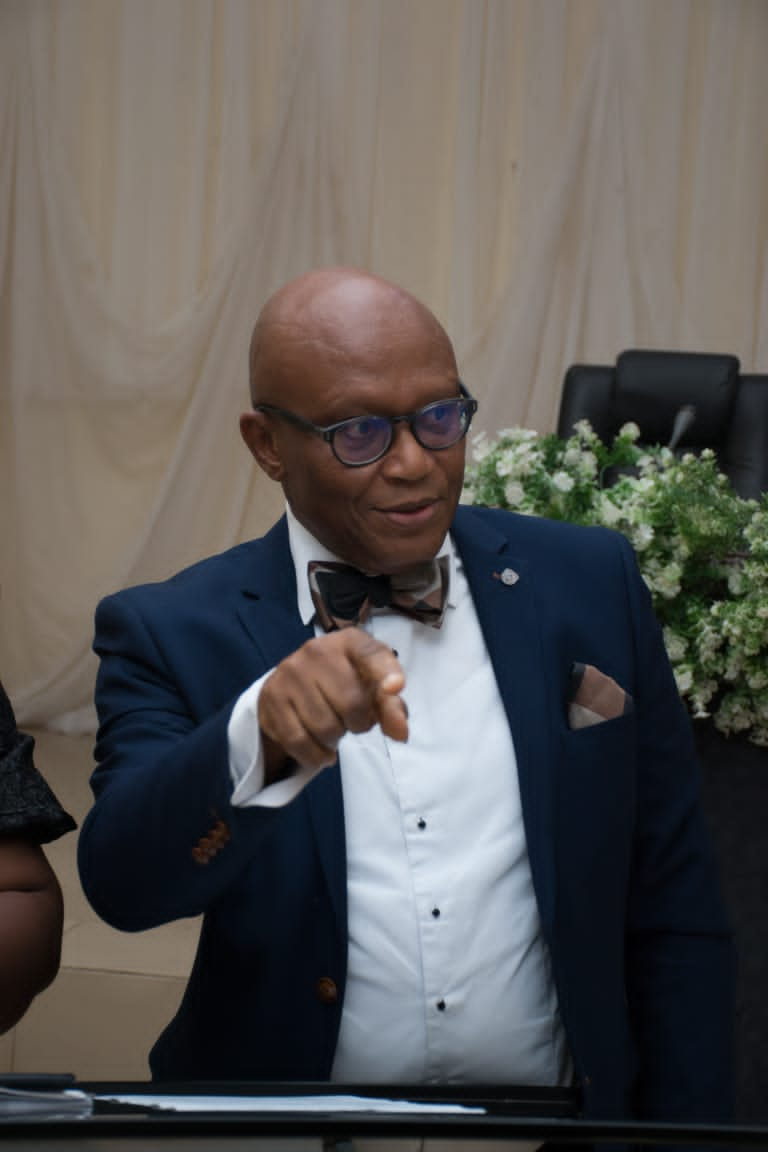
The Nigerian Communications Commission (NCC) has directed Mobile Network Operators (MNOs) to compensate subscribers whose network quality of service experience is below specified targets within specific locations.
The Commission gave this directive in a statement issued on Sunday by Nnenna Ukoha, Head, Public Affairs Department, stressing that the Commission’s position is that subscribers should not be made to bear the full burden of service disruptions where operators fail to meet prescribed standards of service delivery.
Part of the statement said “Under this directive, erring operators will compensate affected users directly for breaches of Quality of Service (QoS) Key Performance Indicators (KPIs).
“Mobile Network Operators (MNOs) shall be required to pay these compensations for instances of poor quality of service recorded within specified time frames.
“The compensation will be provided in the form of airtime credits, calculated based on subscribers’ average spending patterns and their presence within Local Government Areas where service failures occur.”
According to Ukoha, the directive is rooted in the Commission’s broader regulatory philosophy that places the consumer at the centre of Nigeria’s telecommunications ecosystem, stressing that telecommunications services today underpins economic activity, social interaction, and access to digital opportunities.
“When service quality is poor, the consequences affect productivity, commercial activities, and even public confidence in our communications system.
“While regulatory fines have traditionally served as a deterrent against poor service delivery, the Commission is adopting a more consumer-focused approach that strengthens accountability within the industry, ” the statement said.
“The Commission has designed this measure to complement existing and ongoing efforts to strengthen service quality monitoring and enforce performance standards.
“Further to this directive by the Commission to MNOs on compensation to consumers, the Commission is also mandating Tower Companies who own the critical infrastructure for Quality of Service delivery, such as masts, to invest in infrastructure with measurable outcomes using sums that it has fined these companies, in addition to other financial fines the Commission will deem appropriate.
“The Commission will continue to reinforce the obligation of operators to invest consistently in network resilience, capacity expansion, and infrastructure upgrades to meet the growing demand for telecommunications services.
“At the same time, it will deploy regulatory tools that promote fairness, transparency, and accountability across the sector, ensuring that every subscriber receives the quality of service they deserve while sustaining a telecommunications industry capable of powering Nigeria’s digital future,” the statement added.
The United States significantly reduced its imports of Nigerian crude oil in January 2026, with purchases falling by approximately 47.16 percent month-on-month, according to the latest data from the U.S. Census Bureau and the U.S. Bureau of Economic Analysis. Meanwhile, U.S. exports to Nigeria have risen sharply during the same period, highlighting a notable shift in trade dynamics between the two countries.
Figures from the U.S. International Trade in Goods and Services report indicate that U.S. crude imports from Nigeria fell to 1.664 million barrels in January 2026, down from 3.149 million barrels recorded in December 2025. This represents a decline of 1.485 million barrels within one month, showing a significant contraction in Nigeria’s share of the U.S. crude market.
In value terms, the drop was equally steep. The customs value of Nigerian crude imports declined from $217.36m in December to $115.99m in January, while the cost, insurance, and freight value fell from $223.10m to $118.95m over the same period. The difference between the two measures reflects additional costs such as shipping and insurance included in CIF values, which are excluded from customs valuation.
This means that in January, the CIF value of Nigerian crude was about $2.96m higher than its customs value, compared to a wider gap of about $5.74m in December. The narrowing gap suggests relatively lower freight or insurance costs, or shorter shipping distances within the period.
The contraction comes amid a broader slowdown in total U.S. crude imports, which declined from 198.29 million barrels in December to 188.21 million barrels in January, representing a drop of about 5.1 per cent. Total import value also fell, with customs value decreasing from $11.41bn to $10.56bn, while CIF value dropped from $12.04bn to $11.15bn.
Within Africa, Nigeria lost ground to some peers. While total African crude exports to the U.S. remained flat at 6.933 million barrels, Angola recorded a sharp increase, rising from 575,000 barrels in December to 2.062 million barrels in January.
Ghana also emerged as a new supplier with 738,000 barrels, having recorded no measurable exports in December. By contrast, Libya saw its exports to the U.S. decline from 2.137 million barrels to 1.086 million barrels over the period.
Nigeria’s share of total U.S. crude imports also weakened. The country accounted for roughly 0.88 per cent of total U.S. crude imports in January, down from about 1.59 per cent in December, reflecting the sharp reduction in volumes.
Further analysis of U.S. trade data shows that crude oil remains the dominant component of Nigeria’s exports to the United States. Total U.S. imports from Nigeria stood at $183m in January 2026, compared to $297m in December 2025.
With crude oil imports valued at $115.99m (customs basis) and $118.95m on a CIF basis, crude accounted for approximately 63.4 per cent to 65.0 per cent of total U.S. imports from Nigeria in January. This compares with about 73.2 per cent in December on a customs basis, indicating a relative moderation in crude dominance as overall imports declined.
The PUNCH further observed that the U.S. recorded a goods trade surplus of $419m with Nigeria in January, up from $84m in December. This was driven by a rise in U.S. exports to Nigeria, which increased from $381m to $602m, even as imports from Nigeria declined.
Across Africa, the U.S. posted a trade deficit of $503m in January, reversing a $174m surplus recorded in December. Total U.S. imports from Africa rose from $2.88bn to $3.54bn, while exports to the region edged slightly lower from $3.05bn to $3.04bn.
The PUNCH earlier reported that Nigeria accounted for about 52 per cent of Africa’s crude oil exports to the United States in 2025. According to the previous report, total U.S. crude imports from Africa stood at 89.371 million barrels in 2025, down from 103.631 million barrels in 2024, representing a decline of 14.26 million barrels or 13.8 per cent.
Out of the 89.371 million barrels imported from Africa in 2025, Nigeria supplied 46.618 million barrels, compared to 50.793 million barrels in 2024. This was a drop of 4.175 million barrels or 8.2 per cent year on year.
Despite the lower volume, Nigeria’s share of Africa’s crude exports to the U.S. rose. In 2025, Nigeria’s 46.618 million barrels accounted for 52.2 per cent of Africa’s total shipments, up from 49.0 per cent in 2024, when it exported 50.793 million barrels out of the continent’s 103.631 million barrels.
The PUNCH earlier reported that the Nigerian National Petroleum Company Limited recorded a profit after tax of N385bn in January 2026, even as crude oil and condensate production rose to 1.64 million barrels per day, according to the firm’s latest monthly operational report.
The January 2026 NNPC Monthly Report Summary, released on Monday, showed that the state-owned energy company generated N2.571tn in revenue during the month while remitting N726bn as statutory payments to the Federation.
This means the company recorded a sharp 47 per cent decline in its monthly revenue, which fell from N4.82tn in December 2025 to N2.57tn in January 2026. This contraction occurred despite a marginal increase in the company’s after-tax profit.
It disclosed that Nigeria produced 1.64 million barrels per day, up from 1.55 million barrels per day recorded in December 2025. This represents an increase of 0.09mbpd, or about 5.8 per cent month-on-month.
The PUNCH observed that the decline in crude exports to the U.S. occurred despite higher production. The trade outcomes come against the backdrop of renewed US protectionist rhetoric and tariff-focused trade policies associated with US President Donald Trump, which have influenced sourcing decisions, pricing structures, and trade flows globally.
Last year, Donald Trump signed an executive order raising Nigeria’s tariff rate from 14 per cent to 15 per cent, with Washington implementing its “reciprocal” tariff regime.
The order, issued in late July, took effect on August 7, 2025. Although crude oil has been exempted in several cases, the higher duty applies directly to a wide range of non-oil Nigerian exports, creating uncertainty for American importers and dampening demand ahead of and after the effective date.
With crude oil exports largely exempted from the new tariff regime, non-oil exports appear to have borne the brunt of the disruption.
A renowned economist and Chief Executive Officer of the Centre for the Promotion of Private Enterprise, Dr Muda Yusuf, downplayed the impact of the U.S. tariffs on Nigeria.
“Our trade with the US is not that strategic. When anything goes wrong, it is not as if it can have any fundamental effect on our economy. Our trade exposure to them is very limited,” Yusuf explained.
He noted that Nigerian exports to the US are dominated by crude oil and a handful of other commodities, such as fertilisers, making the country’s trade profile narrow and underdeveloped in non-oil areas. Yusuf added that Nigeria’s tariff exposure is relatively moderate compared with other countries.
However, he identified another challenge beyond tariffs: US visa policy. “The bigger challenge for Nigeria’s trade relationship with the US is Washington’s visa policy. Barriers to travel limit business interactions and investment inflows. That is more critical than tariffs in the long run,” he said.
Since its inception, the Trump administration has steadily rolled out a series of visa restrictions and travel bans targeting Nigeria and several other countries.
It is either Nasir El-Rufai is a very lucky man, or he is a very strong man. He was arrested by his friends, charged variously for multiple offences, none of the various courts has yet ruled on his bail application, but he arrived home in Abuja on Saturday. His jailers mourned with him and said he needed to arrive home early enough to bury his mother who died the previous day.
“But, the court is already seized of the matter. How did he do it outside the courtroom?” An exasperated lawyer asked me.
“That is the definition of power; you can’t find it in any dictionary,” I told him.
A disciple of Confucius asked him: “Is there any one word that could guide a person throughout life?” Confucius replied: “How about ‘reciprocity’! Never impose on others what you would not choose for yourself?” So, here, one question lingers: if Nasir were president, would a former friend in his custody be allowed to go home and mourn such a loss? It is a question he owes the public an answer to.
While we wait for his answer, let me add, quickly, that his arrest and prosecution illustrate a deeper contest between reason and unreason. Arrested on February 16, 2026, detained, released two days later, and rearrested immediately on February 18, the sequence reads less like a coherent legal process and more like a struggle for control of the levers of power. The situation raises an unsettling question: should process itself become punishment? If an offence is bailable, must the system wait for personal tragedy before conceding a right already guaranteed by law? In this drama, the court emerges diminished, reduced to learning, from social media, what it had deferred to pronounce.
One only wishes Nigeria could extend the ‘right’ enjoyed by El Rufai to all detainees. But that is not the way of the world. When a slave falls sick, the household rebukes him as a habitual invalid; but when the master’s child complains of fever, medicine and delicacies compete for his lips.
Chief Ebenezer Babatope was the Director of Organisation of Chief Obafemi Awolowo’s Unity Party of Nigeria (UPN) in 1983 when General Muhammadu Buhari axed the second republic. Babatope was detained without trial by Buhari throughout his 20 months in power. His father fell ill while he was in Buhari’s jail. When Babatope’s father died, he pleaded with Buhari to let him go home to bury and mourn his father. The reply he got from Buhari was a query on how he knew that his father died. Ebino Topsy was supposed to be incommunicado in detention.
You’ve heard repeatedly that there is something called karma, a concept of moral cause and effect. Rooted in Hindu philosophy, karma slithered its way into English language and became a moral weapon against the wicked. Roman statesman, Cicero, uttered it his elegant way: “ut sementem feceris, ita metes” (literally: “as you have sown, so shall you reap”). Others said it in a shorter form: “quod severis metes.” The translation is the same.
Beyond Roman philosophy, most religions affirm the principle of sowing and reaping as an inevitability in human life. Yet, it does not operate evenly for all.
If you are strong and lucky, every force on earth, including karma, will worship you and stand on your mandate. I cite the luckiest Nigerian ever, Muhammadu Buhari. Buhari’s autumn came in August 1985, he lost power and was detained by his friend and successor, Ibrahim Babangida. Then his mother died. How was he treated? Because he was not Babatope, the General did not get the same treatment he gave the UPN man.
Buhari’s biographer, John Parden, wrote in the book ‘Muhammadu Buhari: The Challenges of Leadership in Nigeria’ that “after the death of his mother in December 1988, Buhari was released and (he) travelled to Daura for the mourning.”
Different strokes. Detained Nasir El-Rufai was back in Abuja on Saturday, released outside the formal processes of the court, to mourn and bury his mother who died the previous day.
I have nothing against Bola Tinubu releasing his destiny helper from where he kept him. After all, as the Yoruba remind us, “bí a bá ńjà, bí i ti ikú kọ”—our quarrels are not meant to be fatal. Besides, in this season, every birth, every death is political and should be so treated. Someone said if the president did not release the man on time to bury his mother, the sun would have risen in the west and set in the east. They said the president’s politics would have suffered the fatwa of the mallam(s). I don’t know if I should believe that.
The lesson here (if it is a lesson) is that if you are strong enough, it is possible to sin against the powerful, get arrested by a motley of agencies, have your lawyers file your bail application, have the matter adjourned till March 31, and yet secure freedom on March 28 without any formal pronouncement from the court.
Literature has long anticipated this tense drama. I consult the master here, William Shakespeare. In ‘Measure for Measure’, power bends justice even as it preaches morality; authority manipulates outcomes while cloaked in virtue, and the law becomes theatre. In ‘King Lear’, power detaches from moral legitimacy: authority remains, but justice collapses. In ‘Macbeth’, ambition overrides order, hollowing out legitimacy and turning institutions into mere instruments. Across these works, the pattern is constant: when power escapes restraint, process becomes performance, and justice, an afterthought.
Beyond Shakespeare’s theatre of power, Jonathan Swift’s satire speaks with unvarnished contempt for its duplicities. In ‘Gulliver’s Travels’, he exposes the absurdity and arbitrariness of legal and political systems that hide behind the façade of rules. Consider the tiny officials of Lilliput, quarrelling over trivialities while exercising immense authority. Their pettiness is not comic relief alone; it is a mirror showing how institutions often cloak arbitrariness in the language and ritual of procedure.
Dig deeper into literature and you encounter Franz Kafka’s ‘The Trial’: the protagonist here was arrested and prosecuted by a system he cannot comprehend.
“I don’t know this law…It probably exists only in your heads,” he told those keeping him.
“You’ll find out when it affects you,” a policeman replied the detainee.
Kafka’s enduring insight is stark: a legal system that cannot explain itself has already abandoned justice. The quintessential nightmare of opaque authority.
Then comes George Orwell, the great anatomist of political power. In ‘Animal Farm’, rules shift with the convenience of those in control; in ‘Nineteen Eighty-Four’, authority goes further still, defining reality itself. In Orwell’s world, power bends process, rewrites it, works hard on it until truth becomes whatever power says it is.
At the burial of his mum on Sunday, those who jailed El Rufai were fully there. They sat with him as co-mourners.
“Will he go back to jail now that the burial is over?”, a ‘wicked’ professor-friend asked me.
I didn’t know what answer to give.
What, then, are the implications of El-Rufai’s ordeal and reprieve for democracy?
The episode raises profound questions about institutional integrity. Judicial supremacy is eroded when outcomes of trials appear to originate from outside the courtroom. The court, in such circumstances, risks becoming symbolic rather than decisive. Citizens are left to ask: where does authority truly reside?
When a justice system begins to operate with two courts, one visible, the other invisible, democracy is already in a kidnappers’ den. If bail and other legal reprieves are granted without transparent legal grounding, they invite a deeper anxiety: that the same unseen authority that grants relief can, with equal arbitrariness, impose punishment.
In all of this, the real losers are the courts: arbiters turned onlookers, spectators in their own game.
The views expressed by contributors are strictly personal and not of Law & Society Magazine
There is a different kind of silence in the countryside. It is not the anxious quiet of a ringing phone, but the heavy stillness of abandoned farmlands. Crops rot where they were planted. Footpaths disappear into overgrowth. Entire communities live with one eye open—not listening for a call, but for the distant echo of motorcycles approaching.
Brigadier-General Lawal Bature Mohammed (rtd), former Commander of the Zamfara Community Protection Guards (CPG), was meant to be part of the solution. Instead, he became part of the story. Popularly known as Dan Gusau, he was shot by bandits in a brutal attack last year, sustaining severe bullet wounds that required evacuation to Egypt for advanced medical treatment. He would later succumb to those injuries. His funeral prayer was held on Thursday evening, March 26, 2026, in Sabon Gari, Gusau, the Zamfara State capital, where he was laid to rest in accordance with Islamic rites. In a functioning system, men like him secure the land. In this one, they are claimed by it.
Last week in The Sunday Stew as we examined kidnapping in the first part of The Insecurity Triad, I promised that today we would turn to the next front in Nigeria’s deepening security crisis—banditry. If kidnapping is the marketplace where human lives are traded, then banditry is the siege that makes that market possible. It is the slow, grinding occupation of Nigeria’s rural heartland. While kidnapping targets the individual, banditry targets the land itself. This is no longer just a “Nigerian problem.” In a world of fragile supply chains, the rural siege of Northern and Middle-Belt Nigeria has become a critical bottleneck for global food security.
From Raids to Occupation
Banditry in Nigeria has evolved beyond sporadic violence into something more structured and enduring. What began as cattle rustling and opportunistic raids has matured into a system of territorial control. Across vast stretches of the North-West and North-Central, armed groups now operate within what are effectively “ungoverned spaces”—zones where the authority of the state is weak or absent. In these areas, bandits do not simply attack; they administer, regulate, and extract.
In the vast “ungoverned spaces” of the Northwest, banditry has evolved into a medieval form of territorial sovereignty. It is no longer enough for criminal gangs to raid a village; they now “tax” the very act of survival.
The Harvest Toll: Farmers in states like Katsina, Zamfara, and Niger are forced to pay “protection fees” just to plant their seeds, and a second “exit fee” to harvest their crops.
The Price of Defiance: Refusal to comply often invites violent reprisals—raids, kidnappings, or the destruction of entire communities. This is not taxation in the civic sense. It is coercion, enforced through fear and sustained by violence.
The Abandoned Acre
According to recent agricultural surveys, over 2.5 million hectares of arable land remain uncultivated due to the threat of violence. Entire farming seasons have been lost, not to drought or flood, but to insecurity. For the Nigerian farmer, the land is no longer just a source of livelihood—it is a contested space. Stay and risk death. Pay and perpetuate the system. Or flee and lose everything.
This has triggered widespread displacement, with thousands of rural families relocating to urban fringes or internally displaced persons (IDP) camps, where livelihoods are uncertain and futures diminished.
Perhaps nowhere is this convergence more evident than in Zamfara State, where banditry and illegal mining have become dangerously intertwined. In these territories, the bandit is no longer just a raider of farms, but a gatekeeper of gold. Control of land now means control of both harvest and mineral wealth. This dual economy—agricultural extortion above ground and illicit extraction below it—has created a powerful incentive structure that makes the crisis far more difficult to dismantle.
But this model is no longer confined to Zamfara. It has expanded into the Federal Capital Territory (FCT) and its neighbouring states—Niger, Nasarawa, and Kaduna—evolving into what can only be described as a sophisticated conflict economy.
Recent security assessments from agencies such as the EFCC and the Ministry of Solid Minerals indicate that these armed groups no longer rely solely on kidnapping or rural taxation. They are now actively managing, taxing, and securing mineral extraction as a parallel revenue stream to fund their operations.
The “Mining–Insecurity” Nexus
The Federal Government has identified illegal mining as a primary enabler of banditry. The Minister of Solid Minerals, Dele Alake, has noted that many bandit attacks are not random acts of violence, but are often linked to efforts to clear communities from mineral-rich lands.
Attacks in parts of the FCT—such as Kwali, Kuje, and Bwari—have forced residents to flee. Once these areas become effectively “ungoverned,” illegal mining syndicates move in to extract gold, lithium, and lead without resistance.
Security data from late 2025 suggests that over 60% of bandit camps in the North-Central region are located within 10 kilometres of illegal mining sites, highlighting the strategic overlap between violence and resource extraction. This is not incidental. It is deliberate—violence as a precursor to extraction.
Revenue Streams and the Financing of Violence
Illegal mining now funds banditry through multiple, structured channels: •Direct Extraction: Armed groups occupy mining sites and compel artisanal miners, who are often displaced work under coercion. The extracted minerals are sold to middlemen and trafficked through porous borders.
•Protection Fees: Mining syndicates pay “rent” or protection money to bandit leaders to guarantee uninterrupted operations and shield themselves from rival groups or security interventions.
•Barter Systems (Minerals for Arms): In some cross-border corridors, gold and lithium are exchanged directly for small arms and light weapons, bypassing formal financial systems and making these transactions extremely difficult to trace. What emerges is a closed-loop system where natural resources finance insecurity, and insecurity protects resource exploitation.
Geographic Hotspots: The New Resource Frontiers
The mineral-rich belt surrounding Abuja has become a focal point of this evolving crisis: Niger State (Shiroro & Munya): Rich in gold deposits, these areas have seen bandits transition from cattle rustling to controlling mining pits, using proceeds to acquire more advanced weapons and logistics. Nasarawa State: The recent lithium rush has triggered a surge in illegal mining. Security agencies have uncovered multiple sites where so-called “conflict minerals” are extracted to fund local armed groups.
FCT Forest Corridors: Remote zones along the Bwari–Tafa axis serve as strategic transit hubs, where minerals are aggregated before being transported to urban centres or smuggled across borders. These zones form a resource corridor of insecurity, linking rural violence to national and transnational economic networks.
Economic Loss and the Limits of State Response
The financial implications are staggering. Nigeria is estimated to lose approximately $9 billion annually to the illegal export of gold and other solid minerals. In response, the Federal Government established a specialised Mining Marshal Corps in 2025 to secure mining sites and disrupt illegal operations. However, reports indicate that these forces are severely stretched. Many illegal mining locations are situated in deep forest territories, where bandit groups have established fortified positions and high-intensity operational bases. The result is a familiar pattern: a state struggling to project authority into spaces where criminal economies have already taken root.
A Self-Inflicted Famine
As I argued in the second edition of The Sunday Stew, “A Country Without Earthquakes,” nations across the Sahel often endure poor harvests and famine as a consequence of natural forces—chief among them desertification. History offers even starker examples, such as the devastating famine in Ethiopia during the 1980s, where environmental stress combined with structural weaknesses to produce humanitarian catastrophe.
Nigeria’s case, however, is more troubling. Our crisis is not primarily driven by nature, but by human agency. Banditry—this self-inflicted disaster—is now producing conditions of severe hunger. Farmers are heavily taxed, fields are abandoned, and entire communities have been emptied of productive life. What drought and desertification achieve through nature, banditry is now replicating through violence. The result is the same: scarcity, displacement, and hunger—but with one critical difference. This is a crisis we have created, and therefore one we can resolve.
From Farm to Table: The Inflation Spiral
For the international observer, this is a clear case of what can only be described as “Agricultural Terrorism.” When the acclaimed “Breadbasket of Africa” is under siege, the consequences extend far beyond national borders. Nigeria’s food inflation, currently hovering at record highs, is a direct result of this disruption: Reduced agricultural output leads to scarcity; Scarcity drives price increases; Rising prices erode household purchasing power. The result is a vicious cycle of economic strain, hunger, and vulnerability.
The “Bandit Tax” and the Price of a Meal
The correlation between banditry and food costs in 2026 has moved beyond temporary disruption. It has hardened into what can only be described as a structural tax on the Nigerian dinner table. While headline inflation figures have shown signs of statistical moderation, the lived reality tells a different story. The underlying cost of food remains stubbornly high, driven by persistent insecurity in Nigeria’s primary “food basket” regions.
Insecurity has created an invisible but deeply entrenched cost layer—what analysts describe as an informal tax regime imposed by bandits. Farmers in Zamfara, Katsina, and Niger are compelled to pay ‘protection fees’ and ‘harvest taxes,’ costs that are passed directly to consumers.
Apart these taxes imposed on Zamfara, Katsina and Niger farmers there is also Transportation Premium: Transporters moving goods to Abuja now pay between ₦5,000 and ₦50,000 per trip, adding an estimated 20%–30% to retail prices.
This is taxation without representation, enforced not by the state, but by armed actors embedded within the supply chain.
Current Food Prices in Abuja (March 2026)
Despite a modest decline in overall inflation (15.06%), food inflation rose to 12.12%: Rice (50kg): ₦75,000 – ₦90,000 Maize (50kg): ₦60,000 – ₦70,000 Beans (50kg): ₦70,000 – ₦85,000 Garri (50kg): ₦45,000 – ₦60,000 Yam (per tuber): ₦2,500 – ₦4,000
For the average Nigerian household, these are not just prices—they are signals of a shrinking economic margin of survival.
Closing the Gate
For the Nigerian government and the international community it is important to state that food security is not a climate issue; it’s a security sovereignty issue.
If kidnapping is the “venture capital” of the Triad, then banditry is its “real estate strategy.” To break the siege, Nigeria must pursue economic sovereignty: Secure the value chain; Deploy surveillance technology; Reclaim indigenous control of land.
Banditry is the quiet strangulation of Nigeria’s food system and the slow erosion of rural life. A nation that cannot secure its farms cannot secure its future.
Join me next week for Part III: The Ideological Ghost and the War for Nigeria’s Soul.
Trust Is sacred. Stay seasoned.
•Max Amuchie, CEO of Sundiata Post, writes The Sunday Stew, a weekly syndicated column on faith, character, and the forces that shape society, with a focus on Nigeria and Africa in a global context
X – @MaxAmuchie | Email: [email protected] | Tel: +234(0)8053069436.
The views expressed by contributors are strictly personal and not of Law & Society Magazine.

The Kano State Hospitals Management Board (HMB) has confirmed the tragic loss of one of the quintuplets delivered at Murtala Muhammad Specialist Hospital, while the four surviving infants remain under close supervision in intensive care. The announcement underscores both the fragility of their condition and the ongoing efforts of medical staff to stabilize the newborns.
In a clinical update released on Sunday, the Board explained that the babies were born prematurely and immediately admitted to the hospital’s Special Care Baby Unit (SCBU). There, they are being treated for complications associated with very preterm birth and extremely low birth weight, with healthcare professionals providing round-the-clock care to improve their chances of survival.
According to the statement signed by the HMB Public Relations Officer, Samira Suleiman, all the neonates were placed on intensive care support immediately after birth, including incubator care, intravenous fluids and antibiotic therapy, which was later upgraded based on clinical assessment.
The Board disclosed that Baby 1, a female weighing 1.3kg, died after receiving a blood transfusion due to complications associated with apnoea.
The remaining babies are currently under close monitoring. Baby 2, a male weighing 1.3kg, has also received a blood transfusion and is being closely observed. Baby 3, a male weighing 1.2kg, is reported to be stable under intensive care, while Baby 4, also male and weighing 1.2kg, has received a transfusion and continues to receive specialised care. Baby 5, a female weighing 1.0kg, remains under observation in the SCBU.
The HMB noted that all the babies experienced episodes of hypoglycaemia, which were promptly managed, adding that feeding has been introduced using breast milk substitutes, with the babies tolerating measured quantities.
It further stated that all the neonates are undergoing phototherapy to treat neonatal jaundice, a common condition among premature infants.
The Board, under the leadership of Dr Mansur Mudi Nagoda, said all necessary medical interventions were instituted promptly from delivery through admission and ongoing care.
It emphasised that premature multiple births are medically complex and carry significant risks despite best efforts, while commending healthcare workers at the facility for their resilience and dedication in managing the case.
The HMB assured the public of its commitment to quality healthcare delivery and called for continued support and understanding for medical personnel involved in the care of the surviving infants.
As Africa approached the turn of the Millennium, the leaders of the continent were well on the way to reaching a consensus that “democracy, good governance, respect for human and peoples’ rights and the rule of law are prerequisites for the security, stability and development of the Continent.”
To many, this meant the conduct of elections. Indeed, two decades later, the African Court on Human and Peoples’ Rights would affirm that the only legitimate basis for the exercise of political power on the continent is “regular conduct of free and transparent elections … through universal suffrage.”
Around the same time, the leadership of the continent in the Organisation of African Unity (OAU) was grappling with the meaning of “free and transparent elections.” Senior ambassadors of the OAU reached a decision recommending to the organization to outlaw “manipulation of the Constitution aimed at preventing a democratic change of government” or “any form of election rigging and electoral malpractice, duly established by the OAU or ascertained by an independent and credible body established for that purpose.”
One decade earlier, in 1989, the OAU deployed to observe the referendum on the independence of Namibia, marking the first that the continental organization would observe an election in Africa. Until then since its creation in 1963, the OAU did not much concern itself with the business of how governments came to power anywhere in the continent. In the first decade of its involvement in election observation, the OAU did not see an election that it did not agree with.
This was a source of comfort for rulers all over the continent. In Nigeria, for instance, Sani Abacha, the four-star general who ruled Nigeria from November 1993, did not have anything against the idea of an election as long as it did not lead anyone into the misapprehension of a contest.
By June 1998, General Abacha was on the cusp of transitioning the country into elective governance. In the election that would have been overseen by him, there were five recognized parties. These were: the Democratic Party of Nigeria (DPN); United Nigeria Congress Party (UNCP); National Centre Party of Nigeria (NCPN); Grassroots Democratic Movement (GDM); and the Congress for National Consensus, (CNC). All five parties shared one presidential candidate in General Sani Abacha.
The death of General Abacha in June 1998 sadly frustrated that plan but opened up a playbook in election management that had, until now, not been seriously revisited in Nigeria.
By the time the All Progressives Congress (APC) came to power in Nigeria in 2015, the African Union (AU), successor to the OAU, had logged about 500 election observer missions around the continent. Over that period, the OAU/AU still did not see an election that it did not approve of.
The AU did, however, evolve some underlying principles to govern elections, which were eventually embodied in a continental charter on democracy, elections and governance. These require the existence of independent election management bodies to manage the elections, such as Nigeria’s Independent National Electoral Commission, INEC. They also require respect for “political pluralism and tolerance”, another way of saying that elections should not exclude competitive candidates.
The African Union usually deploys observer missions to these elections. Where there are disputes, the AU also requires an independent judiciary to resolve them.
This is usually done by way of election litigation. Cases around elections can occur before or after the vote. Historically in Nigeria, this distinction is very important. Regular courts oversee pre-election litigation but only election petition tribunals can adjudicate on disputes over the outcome of an election.
Until 2007, that distinction appeared well settled.
However, following the 2007 cycle of elections, the Supreme Court awarded the governorship election in Rivers State to Rotimi Amaechi who was not even on the ballot in the vote. He had been manipulated out of the party primaries in an act of party political impunity. In response, the Supreme Court hijacked the election outcome on his behalf by judicial fiat in a case that had in fact originated as a pre-election dispute.
That case raised the significance of pre-election disputes in Nigeria and consolidated the transfer of the right to vote in Nigeria from citizens to the judges. By 2019, the Supreme Court awarded the Governorship election in Zamfara State to a well-beaten candidate after disqualifying the winner in a pre-election dispute and precluding his party from the contest by refusing to order a re-run.
Under colour of law, African governments have increasingly used the courts to re-make elections as largely free of contest. Six months ago, for instance, the president of Côte d’Ivoire, Alassane Ouattara, used the courts to ban all competitive candidates from the presidential election. When the result was announced, the election management body awarded him some 90% of the votes.
This past week, retired President of the Court of Appeal, 82 year-old Isa Ayo Salami, floated the idea of such un-contested elections for Nigeria in remarks that simultaneously disparaged his former colleagues in the judiciary while also querying why they sanctioned the candidacy of Peter Obi of the Labour Party in the 2023 general elections.
It is worth recalling that in 2011, a committee of the National Judicial Council chaired by former President of the Court of Appeal, Umaru Abdullahi, considered a consolidated set of petitions concerning the conduct of Isa Ayo Salami in the Sokoto State governorship election in 2007. One of the complaints included “call logs that throughout the month of September up to October 2010 when the judges wrote and delivered the judgment in Ekiti,…. Justice Salami,…. and the person he claimed to be Justice Salami’s said agent….were in close telephone contact by voice or SMS with the counsel to [Action Congress] candidate and official of the party.” The Committee in the end did not have to make a finding on this but the allegations of close affinity between the former judge and the party that is now the All Progressives Congress (APC) are not new.
Isa Ayo Salami has floated a kite which could consummate an Abacha-style election under a ruse of law. The Electoral Act 2026 creates ample room for such mischief. Among other things, the Act, which became law on 19 February, requires all parties to maintain “a digital register of its members containing the name, sex, date of birth, address, State, Local Government, ward, polling unit, National Identification Number and photograph in both hard and soft copies.”
The logic of keeping this register in hard copy defies understanding. The staggering cost and logistics – not to mention waste – of doing so should not detain us at the moment. The Act goes further: the parties must submit the register (presumably both hard and soft copies) to the INEC at least 21 days before party primaries, which must occur between 23 April and the end of May. In effect, the parties, which have until now not been required to have digital registers, must create them in less than two working months. The cost of failure to do this is will be disqualification of their candidate(s) from the contest.
Nigeria’s judiciary has evolved and not necessarily for the better in the intervening period. There is ample room for pre-election judicial mischief in the 2026 Electoral Act, which the courts could easily use to preclude competitive candidates from the contest.
It will be surprising if this is not deployed to block competitive candidates from the presidential election in January 2027. The irony is that the president whose claim to fame is his advocacy against military rule, could be the person who eventually appropriates the methods of Nigeria’s maximum military ruler to make himself the only competitive candidate in an un-contested election in 2027.
A lawyer and a teacher, Odinkalu can be reached at [email protected]
A fresh legal storm is sweeping through Nigeria’s judiciary—this time fuelled not just by words, but by the resurfacing of a long-buried report that is now reigniting questions about credibility, accountability, and the moral authority of those who shape public opinion on justice.
At the centre of the unfolding controversy is Isa Ayo Salami, a retired President of the Court of Appeal, whose recent claim that the emergence of Peter Obi as a presidential candidate in the 2023 election was a “judicial error” has triggered a fierce backlash.
But what might have remained a provocative opinion has now escalated into something far more consequential.
A Report Resurfaces—and Raises New Questions
Human rights lawyer and former National Human Rights Commission chairman, Chidi Odinkalu, has revealed that he has obtained the 2011 investigative report of a committee set up by the National Judicial Council to probe allegations involving Salami and former Chief Justice of Nigeria Aloysius Katsina-Alu.
According to Odinkalu, the 59-page report—chaired by former Court of Appeal President Umaru Abdullahi—contains “mouth-watering” disclosures, including claims tied to alleged call log communications between Salami and lawyers associated with the Action Congress of Nigeria (ACN).
While Odinkalu stopped short of drawing explicit conclusions, his decision to spotlight the document—and invite the public to “reach your own conclusions”—has injected new intensity into an already heated debate.
Perhaps more striking, he suggested, is not just the content of the allegations, but what he described as the absence of “indignation or credible rebuttal” at the time.
From ‘Judicial Error’ to Judicial Reckoning
The controversy began when Salami reportedly criticized the circumstances surrounding Obi’s candidacy, linking it to what he described as declining judicial competence.
That remark struck a nerve.
For many, it reopened broader concerns about how judicial decisions influence political outcomes in Nigeria—especially in high-stakes electoral contexts where court rulings can reshape democratic trajectories.
But Odinkalu’s intervention has shifted the focus from the present to the past—turning the spotlight back on Salami himself.
A Clash That Reopens Institutional Memory
What is now unfolding goes beyond a personal exchange.
Legal analysts say the episode has evolved into a deeper institutional reckoning—one that forces uncomfortable questions about whether individuals with contested judicial histories can credibly critique systemic failures.
Odinkalu’s pointed reference to the 2011 probe has revived discussions about Salami’s suspension over a decade ago, bringing unresolved controversies back into public consciousness.
Supporters of Salami argue that his critique reflects legitimate concern about the judiciary’s direction and should not be dismissed on the basis of past disputes.
Critics, however, insist that credibility matters—and that public criticism of the judiciary must come from voices whose records can withstand scrutiny.
Judiciary, Politics, and the Fragile Trust Equation
At its core, the clash underscores a deeper and more enduring problem: Nigeria’s judiciary remains caught in a complex interplay of law, politics, and perception.
The resurfacing of the NJC report highlights how historical allegations—whether proven, disputed, or unresolved—continue to shape present-day narratives about integrity and competence.
Meanwhile, Salami’s remarks have amplified fears about declining standards within the courts, even as Odinkalu’s response raises questions about who gets to define those standards.
The result is a public discourse where legal arguments are inseparable from personal histories—and where trust in institutions is constantly negotiated in the court of public opinion.
A System Under Scrutiny
As reactions continue to unfold, the episode serves as a stark reminder that Nigeria’s judiciary is not only judged by its decisions, but also by the credibility of those who interpret, defend, and critique it.
In a system already grappling with questions of consistency, independence, and public confidence, the re-emergence of past controversies may prove just as consequential as any current ruling.
Because in Nigeria’s legal landscape, history is never truly past—it is often the most powerful argument in the present.
I have managed to locate the 2011 report of the @njcNig Committee that investigated the allegations against then CJN Aloysius Katsina Alu & then PCA, Isa Ayo Salami. It runs into 59 pages. Former President of the @CourtOfAppealNG, Umaru Abdullahi, chaired the Committee.
The law of contempt of court has its origins in English common law, where it developed as an inherent power of courts to protect the administration of justice and maintain their authority. Historically, contempt was rooted in the idea that the authority of the King’s courts must not be undermined. Any act that obstructed justice, disobeyed court orders, or scandalized the court was punishable summarily. This power was considered essential because courts lacked enforcement mechanisms and had to rely on their inherent authority. One of the earliest articulations of the scope of contempt appears in R v. Gray[1900] 2 QB 36, where the court held that publications calculated to bring a judge into contempt are punishable. However, the strict approach of early common law gradually gave way to a more balanced view. By the 20th century, courts began to recognize the tension between contempt powers and freedom of expression, especially in democratic societies with the intention that the administration of justice thrives on the freedom of legal practitioners to present arguments fearlessly, even when such arguments are critical of the court or opposing positions.
A written address is one of the means through which lawyers present legal arguments and is a fundamental tool of advocacy, allowing counsel to marshal facts, law, and reasoning in support of a client’s case. However, a recurring concern in legal practice is whether a lawyer can be held liable for contempt of court for opinions expressed in such written submissions.
This article argues that, except in cases of clear abuse, a lawyer should not be punished for contempt merely for expressing legal opinions in a written address. This position is supported by both Nigerian and foreign judicial authorities, as well as principles of fair hearing and the rule of law.
A written address is not evidence but argument. It is the counsel’s opportunity to interpret the law, critique judicial authorities, and persuade the court to adopt a particular position. The right to fair hearing under Section 36 of the Constitution of the Federal Republic of Nigeria 1999 guarantees that parties must be afforded the opportunity to present their case fully. This necessarily includes robust and even critical legal argumentation.
Contempt of court, particularly in facie curiae (in the face of the court), is designed to protect the dignity and authority of the court. However, it is not meant to stifle legitimate advocacy. The power of contempt must be exercised sparingly and with restraint, as it carries the risk of judicial overreach.
Nigerian courts have consistently cautioned against using contempt proceedings to punish counsel for discharging their professional duties. In Adeniyi v. Governor of Oyo State,(1982) 9 SC 1 the court emphasized that counsel must be allowed reasonable latitude in presenting arguments, even where such arguments may appear critical. In Nwankwo v. State,(1985) 6 NCLR 228 it was held that the right to defend a client includes the right to make submissions that may not align with the court’s preliminary views.
In Atake v. Afejuku (1994) 9 NWLR (Pt. 368) 379 (SC), a legal practitioner was summarily convicted for contempt by a trial judge over statements made in the course of proceedings, which were perceived as disrespectful to the court. The Supreme Court set aside the conviction, holding that the alleged conduct did not justify contempt. The Court stressed that counsel must be allowed latitude in presenting their client’s case, and contempt powers must be exercised cautiously.
The court warned that the power to punish for contempt must not be used to intimidate counsel or suppress legitimate advocacy. The court underscored that counsel should not be punished for statements made in the course of bona fide legal argument, provided they are relevant to the case. In Okoduwa v. State, (1988) 2 NWLR (Pt. 76) 333 (SC), during a criminal trial, issues arose regarding the propriety of counsel’s submissions, which were alleged to be improper. The Supreme Court held that counsel cannot be punished for making submissions in good faith, even if forceful, provided they are relevant. However, the Court noted that insulting or scandalous language would not be protected.
It is noteworthy that foreign jurisprudence strongly reinforces the principle that lawyers must be free to express opinions in court processes without fear of contempt sanctions except where it is a scurrilous abuse.
In R v. Gray,[1900] 2 QB 36, the court distinguished between scurrilous abuse and legitimate criticism, holding that only the former constitutes contempt. A judgement may be criticised, even strongly, Such criticism must be fair, temperate, and made in good faith. It should be directed at the reasoning, conclusions, or legal principles, not the personality of the judge. It must not impute improper motives or attempt to undermine public confidence in the administration of justice. The court went further to state that:
“fair and temperate criticism made in good faith does not amount to contempt; the mischief lies in scurrilous abuse, not legitimate critique made in the course of advocacy.”
Also, in Bridges v. California, 314 U.S. 252 (1941), Public comments and publications were made about pending court proceedings, raising the issue of whether such expressions constituted contempt. The Supreme Court of the United States overturned the contempt findings, holding that only speech posing a clear and present danger to the administration of justice can be punished.
In Ambard v. Attorney-General of Trinidad and Tobago, [1936] AC 322 (PC), Lord Atkin famously stated that:
“Justice is not a cloistered virtue; she must be allowed to suffer the scrutiny and respectful, even outspoken, comments of ordinary men.”
The court emphasized that legal submissions, even if strongly worded, do not amount to contempt unless they obstruct justice.
In Bridges v. California,314 U.S. 252 (1941), the Supreme Court of the United States held that freedom of expression must be protected, and contempt powers should not be used to silence criticism unless there is a clear and present danger to justice.
Chilling effect cannot be overemphasized; that if lawyers fear contempt sanctions, they may resort to self-censorship, thereby weakening the adversarial system.
Notwithstanding the above, a lawyer may be liable for contempt if the language used is abusive, scandalous, or intended to ridicule the court. In R v Gray (Supra) a barrister published a written article referring to a judge in highly abusive terms, including describing him in a derogatory and insulting manner following a decision. The court held him guilty of contempt, ruling that the publication was scurrilous abuse calculated to bring the court into contempt, not legitimate criticism. In Re Johnson, (1887) 20 QBD 68, a legal practitioner used offensive and abusive language in documents filed before the court, attacking the court rather than addressing legal issues. The court found the conduct contemptuous, holding that court processes must not be used as vehicles for abuse or insult. It was further held that the submission was irrelevant and aimed at undermining the authority of the court. There was a clear intention to obstruct or interfere with the administration of justice.
It is imperative to mention that the protection is not absolute but conditional on professionalism and relevance. A lawyer should not be held liable for contempt merely for expressing opinions in a written address except as stated in the cases cited herein above. Both Nigerian and foreign authorities affirm that the right to present robust legal arguments is essential to the administration of justice. The power of contempt must therefore be exercised cautiously, ensuring that it does not become a tool for suppressing legitimate advocacy. Ultimately, the balance lies in preserving the dignity of the court while safeguarding the lawyer’s duty to argue fearlessly within the bounds of decorum and relevance.
G. Ogbom, PhD, Notary Public, is a legal practitioner based in Port Harcourt, Rivers State. He can be reached via [email protected] or [email protected].
The Vice President of Malawi, Dr. Jane Ansah on Friday delivered a powerful tribute highlighting the far-reaching impact of Prof Joy Ezeilo (SAN)’s lifelong commitment to human and women’s rights.
Speaking through her daughter Janet Ansah at the 60th birthday celebration of the renowned legal scholar and human rights activist, Malawi’s Vice President emphasized that Ezeilo’s unwavering advocacy has not only uplifted vulnerable communities but also reshaped the landscape of justice and equality, leaving a legacy that continues to inspire reform and progress.
Speaking with conviction, Janet Ansah underscored that Ezeilo’s work has played a critical role in strengthening institutions and advancing the protection of fundamental rights. She noted that her dedication has transformed countless lives, reinforcing the importance of sustained advocacy in building inclusive societies where dignity, fairness, and opportunity are accessible to all.
“Her legacy shines in the minds she has shaped and the hope she has inspired. She remains a beacon for all who believe in justice,” she said.
Likewise, Enugu State governor, Peter Mbah, described a legal scholar and human rights activist, Prof Joy Ezeilo (SAN) as an “icon whose life reflects courage and service.”
Mbah noted that her work as a former United Nations special rapporteur on trafficking in persons and her role in founding the Women’s Aid Collective (WACOL), which provided support and protection for abused women and vulnerable groups were great achievements.
The governor who was represented by the state commissioner for agriculture, Mr Patrick Ubru, revealed that Prof Ezeilo chose justice over comfort and humanity over silence.
“Her life is a testament to service and sacrifice,” he said.
In her remarks, a former education minister, Dr Oby Ezekwesili, praised Ezeilo’s exceptional contributions, describing her as a rare personality whose impact transcended borders.
She highlighted the significance of celebrating individuals who dedicated their lives to service and social transformation.
According to her, Ezeilo’s life embodies scholarship, activism, and humanity, saying that she had spent years advocating for the vulnerable and using the law as a tool for justice.
“She has become a garment for many – wrapping the poor, the violated, and the voiceless in the warmth of her advocacy,” Ezekwesili said.
Many other dignitaries and friends of the celebrant who graced the ocassion eulogised the Senior Advocate for her selfess service to humanity.
Jarvis Butts, the man convicted of killing Na'Ziyah Harris, 13, and sexually abusing multiple other girls, was found dead in his cell at the Charles Egeler Reception and Guidance Center in Jackson, Michigan
A pedophile who murdered a 13-year-old girl after getting her pregnant has died in prison in an apparent suicide, officials said.
Jarvis Butts, 43, was found dead in his cell at the Charles Egeler Reception and Guidance Center in Jackson, Michigan on Wednesday.
Our site uses cookies. By clicking “Accept All Cookies”, you direct Law and Society Magazine to store cookies on your device and disclose information in accordance with our Cookie Statement: cookie policyACCEPTREJECT
Privacy & Cookies Policy
Privacy Overview
This website uses cookies to improve your experience while you navigate through the website. Out of these cookies, the cookies that are categorized as necessary are stored on your browser as they are essential for the working of basic functionalities of the website. We also use third-party cookies that help us analyze and understand how you use this website. These cookies will be stored in your browser only with your consent. You also have the option to opt-out of these cookies. But opting out of some of these cookies may have an effect on your browsing experience.
Necessary cookies are absolutely essential for the website to function properly. This category only includes cookies that ensures basic functionalities and security features of the website. These cookies do not store any personal information.
Any cookies that may not be particularly necessary for the website to function and is used specifically to collect user personal data via analytics, ads, other embedded contents are termed as non-necessary cookies. It is mandatory to procure user consent prior to running these cookies on your website.