By Law & Society Magazine Editorial Board
Nigeria is becoming a country where kidnapped children wait for rescue while politicians prepare for the next election cycle.
Across Kwara, Borno, Oyo and several other states, frightened citizens are appearing in videos released by terrorists and armed groups, pleading for help from captivity. Many of them are women, children and elderly people who now depend entirely on whether the Nigerian state can secure their freedom. Yet, while communities grapple with abductions and repeated attacks, much of the political establishment appears increasingly consumed by calculations for 2027 — coalition talks, endorsements, defections and succession battles.
The contrast is difficult to ignore.
In one part of the country, families are searching forests for missing relatives, schools are shutting down out of fear and rural communities are sleeping in anxiety. In another, politicians are already mapping out electoral strategies for an election still years away.
A nation facing this level of insecurity should not appear so politically distracted.
One of the most heartbreaking symbols of the crisis is Mary Akanbi, also identified as Temitope Mary, a teacher abducted alongside other teachers and pupils of Yawota Baptist Nursery and Primary School in Oriire Local Government Area of Oyo State during a terrorist raid in the community, alongside her 18-month-old daughter, Christianah Akanbi.
In a viral video released by her captors, Mary appeared visibly distressed with the child strapped to her back as she pleaded for help from President Bola Ahmed Tinubu, Governor Seyi Makinde and the Christian community. Her voice trembled as she appealed for urgent intervention.
The image of a nursing mother begging for rescue while holding a toddler in terrorist captivity should have shaken the nation to its core. Instead, the country seems to move quickly from one tragedy to another, with outrage fading almost as rapidly as the headlines themselves.
The abduction was not an isolated incident. Armed assailants attacked Community High School, Ahoro-Esinele, LA/LEA Primary School, Esiele in the same area, abducting dozens of pupils, students and teachers, including numerous toddlers. Among those kidnapped was a mathematics teacher, Michael Oyedokun, who was later beheaded by the attackers.
The victims remain in captivity.
Another haunting example of Nigeria’s heightened insecurity crisis came from Kaiama Local Government Area of Kwara State, where terrorists released a disturbing video showing some of the 176 abducted residents of Woro and Kososo communities still being held in captivity months after they were seized.
The victims — mostly women and children abducted on February 3, 2026 — appeared exhausted, weak and emotionally broken. Dressed in dirty clothes and seated under the watch of armed men, they begged for help in what the terrorists described as their “last opportunity” to appeal to the government and the public.
The footage should haunt the conscience of the nation.
In the background, one of the armed men, speaking in Hausa, openly claimed responsibility for the mass abduction.
“We are the ones who kidnapped the people of Woro and Kososo,” the terrorist said calmly.
He claimed the captives had been indoctrinated and then announced that they were being allowed one final opportunity to speak before authorities.
One young woman, visibly drained and struggling emotionally, stepped forward to address Nigerians directly.
“Today is April 8. Please, we are begging you, this is the last opportunity they gave us,” she said in English. We have small children with us and some pregnant women. Please assist us.”
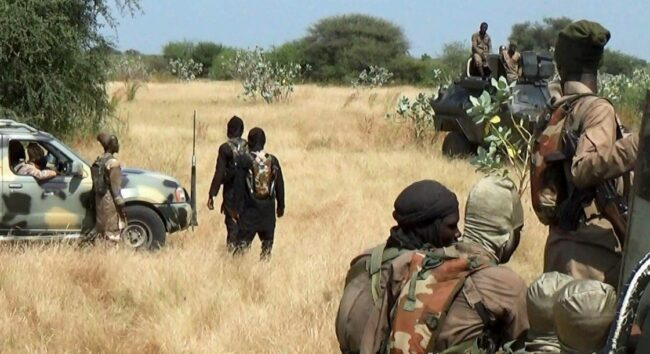
At the same time, another chilling video surfaced from the Northeast. A faction of Boko Haram known as Jama’atu Ahlis-Sunna Lidda’Awati Wal-Jihad (JAS) released footage showing 416 abductees seated on the ground in an open area.
The captives — mostly women, children and elderly people — appeared exhausted and emotionally drained. Speaking in Hausa, several of them appealed directly to the Nigerian government, the Borno State government and local authorities to rescue them.
Their words carried the desperation of people uncertain whether anyone was still listening.
The terrorists later released another video issuing an ultimatum, reportedly demanding a multibillion-naira ransom or the release of their detained members in exchange for the captives.
The message was calculated and unmistakable: armed groups now feel emboldened enough to publicly negotiate with the Nigerian state through mass hostage videos. That alone should alarm the country.
For years, Nigerians have watched the same cycle repeat itself. Terrorists attack vulnerable communities. Security agencies issue statements condemning the violence. Officials announce rescue operations and promise justice. Then another community is attacked.
What has changed in recent years is the scale of the crisis and the growing perception that the political class is losing focus on the country’s most urgent problem.
The insecurity is no longer confined to isolated conflict zones. Communities across Borno, Kaduna, Katsina, Zamfara, Plateau, Kwara and Oyo have all experienced attacks, kidnappings or mass displacement. Places once considered relatively safe are now confronting the same fears long associated with Nigeria’s most troubled regions.
Rural residents increasingly feel abandoned. Parents are afraid to send children to school. Worshippers fear gathering at remote prayer grounds. Farmers are cut off from their land. Villages are emptying as families flee repeated violence.
Yet national political conversations increasingly revolve around alliances, endorsements and the race for 2027. This is where public frustration is coming from.
Critics, civil society groups and opposition figures have repeatedly argued that the country’s leadership appears more invested in political positioning than in confronting the daily reality of insecurity. Whether entirely fair or not, that perception is becoming widespread. And perception matters.
A government’s first responsibility is the protection of lives. When citizens begin to doubt that responsibility is being treated as the highest priority, trust in institutions begins to erode.
That erosion is already visible in many communities where residents now rely more on vigilantes, local security groups and self-help arrangements than on formal state protection.
History shows that this path is dangerous.
When citizens lose confidence in the ability of the state to secure them, communities begin to fragment along ethnic, religious and regional lines. Distrust deepens. Armed groups exploit fear and abandonment. Violence becomes normalised.
Nigeria must not allow itself to drift further into that reality.
The names of the abducted children in Oyo should not disappear into statistics. Christianah Akanbi is only 18 months old. Other captives are schoolchildren barely old enough to understand the crisis surrounding them.
These are not numbers in a security briefing. They are human beings whose lives now depend on the seriousness and urgency of the state’s response.
The repeated hostage videos emerging from terrorist camps should force a national reckoning. They are not just propaganda tools. They are evidence of a deepening humanitarian and security crisis that can no longer be treated as routine.
No political ambition should overshadow that reality.
There will always be elections in a democracy. There will always be coalition talks, defections and political calculations. But none of those things matter to citizens trapped in forests waiting for rescue.
For the families watching those videos, politics is no longer an abstract debate about power or strategy. It is about whether their loved ones will return home alive
That is the emergency Nigeria should be focused on now.