A Monument to Convenient Memory: The Intellectual and Moral Failures of Yakubu Gowon’s My Life of Duty and Allegiance
By Agbeze Ireke Kalu Onuma, AI-KO
Preface: How I Came to This Book, and Why It Left Me Furious
A few days ago, I ran into a post that read in part: Danjuma and Dangote give three billion and five hundred million respectively. I did not follow up to read what the occasion was. I did not click. I did not linger. I scrolled past it the way one walks past the noise of a generator in the background — present, irritating, but not demanding of attention. I moved on.
Then someone drew my attention to the fact that Gowon had finally written his memoir. That was different. That was news that made my heart scream, in the way that very few pieces of Nigerian news are capable of making my heart scream. My heart screamed not from joy alone, but from that particular mixture of hope and apprehension that comes when something long anticipated finally arrives and you realise, in the moment of its arrival, that you are not entirely certain you want it.
I started reading and listening for more. It was news in the way Nigerians like to make out of a simple happenstance a mountain of national significance. Gowon has finally spoken. The last standing titan of 1966 has put down his account. The man who presided over the bloodiest war in African history has opened his mouth, after decades of meaningful silence, and the country was ready to listen. I watched the Arise News clips on YouTube covering the launch event. I read the commentaries from many voices I know would not go beyond ten pages of the staggering volume, people who were performing interest rather than conducting it. I read the establishment tributes — fulsome, uncritical, celebratory — from people in positions where honesty is a professional liability and sycophancy is a survival strategy.
Then I started asking around for the book itself. And they of course made sure they priced readers out of it — that particular Nigerian cruelty of charging more for a book than a working person earns in a week, as though the ideas contained within it are so precious that access must be rationed by economic circumstance. Yet even at those prices, the book was nowhere to be gotten through my own channels. I reached out to my friend who shares books online with me, the quiet network of readers who pass volumes around with the furtive solidarity of people who know that knowledge is too important to be hoarded by those who can afford it. This too was a dead end.
I eventually got hold of it. And I spent a better part of the next several days reading and not reading — reading and sighing, reading and getting angrier with each page that turned, reading and then putting the book down to stare at the ceiling for a while before picking it up again, reading and making notes in the margins that grew progressively less composed as the pages accumulated.
I left the book sad. Angry and upset in the way one feels when something one genuinely wanted to believe in refuses to believe in itself. What was all of this for? I asked myself that question with genuine bewilderment. How many trees were cut down to get this whole enterprise published — and I mean that less as a joke about environmental cost than as a genuine question about intellectual necessity. Not nonsense, precisely. Gowon is not a stupid man, and the book is not without moments of interest. But there is something worse than nonsense: there is the production of mass, of weight, of institutional authority, of the appearance of reckoning — all without the substance of it. Even Soviet propaganda books do better, I found myself thinking. At least you knew what you were getting with Soviet propaganda, and it was free. This book costs you money to buy, time to read, and something harder to quantify — a kind of hope — when you finish it.
These were the steps that led me to writing this review: unplanned, in the sense that I had not scheduled it; necessary, in the sense that I could not not write it. I had called for this memoir. I had looked forward to it. I had told people for years that the day Gowon actually sat down and gave his account would be a day of national reckoning. It came with a sad whimper instead of the reckoning.
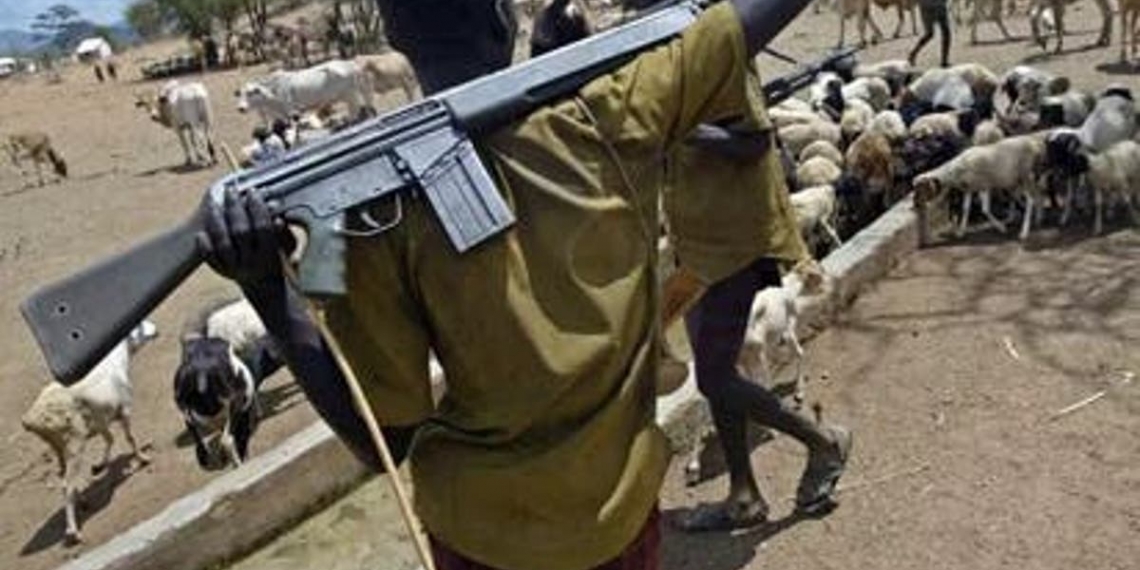
There is one specific area I want to flag before I descend fully into analysis. The question of the Benue, Plateau, and broader Middle Belt crisis — the slow-burning, structurally sustained catastrophe of violent conflict between farming communities and nomadic herders, a catastrophe with its roots deep in the political geography and ethnic power arrangements of the Gowon era — I expected much more. This is, after all, a man who came from the Middle Belt, who understood its particular geography of belonging and exclusion, who was himself a kind of product of the complex identity negotiations that define that region. He had both the personal authority and the structural insight to provide a genuine account of how that crisis was seeded, what federal decisions nourished it, and what accountability looks like for a leader who came from there and left it worse than he found it. He did his best, but delivered an anticlimax. A few paragraphs where there should have been chapters. A gesture where there should have been a confession.
Let me explain why, and everything else besides.
I. The Man, the Myth, and the Machinery of Anticipation
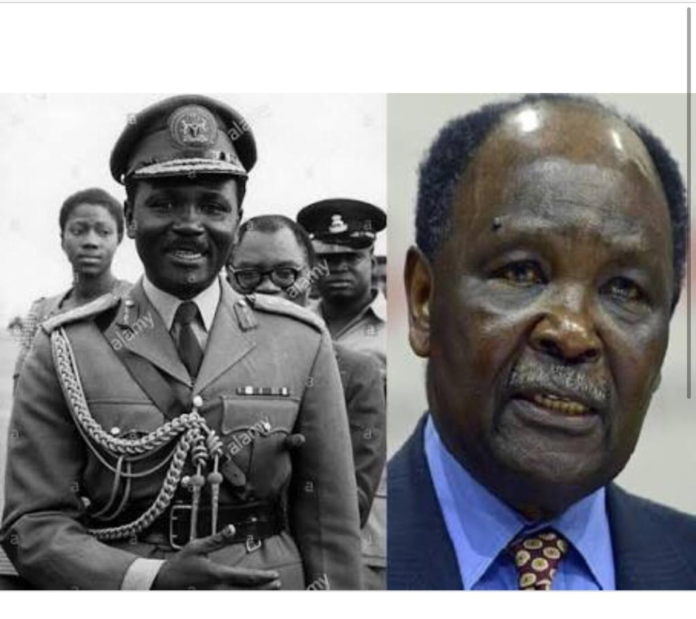
To understand why the failure of this memoir is so acute, one must first understand what was expected of it and why those expectations were legitimate rather than merely sentimental. Yakubu Gowon is not simply a former head of state. He is a kind of loadbearing pillar in the architecture of Nigerian national mythology — the figure around whom the story of national survival in its most extreme test was organised, the man whose face and whose policies determined the terms on which the country came back together after the secessionist war, the author of the phrase that has functioned as the official summary of post-war reconciliation for over half a century.
He is also, crucially, the last one. Everyone else from that period of supreme consequence — Ojukwu, Awolowo, Azikiwe, Ironsi, Danjuma in a different sense, the entire gallery of military and political figures who made the choices that broke and remade Nigeria — has either died or retreated into a silence from which they have produced nothing of comparable scope. Gowon alone survived to produce this accounting. And so the expectations attached to the memoir were not merely literary or historical; they were existential. Here, finally, was the chance for the record to be set straight, for the competing narratives to be resolved, for the nation to receive from its most consequential surviving actor something approaching truth.
I remember the day I first heard the memoir was actually coming. Not rumour, not the perennial speculation that surrounds figures of Gowon’s stature, but confirmed: the book exists, it is 881 pages, it will be published. My first reaction — and I am not embarrassed to admit this — was relief. There is a particular kind of fatigue that comes from spending years arguing about a period of history in the absence of the primary witness’s testimony, from constructing analyses of decisions made in rooms to which you have no key. I thought: at last. At last we will have something to work with. At last the man will speak with the full weight of his own account, in his own words, in the volume that such a life demands.
What arrived was 881 pages of something else entirely.
I watched clips of the launch on Arise News because that is where Nigerian elite cultural productions are celebrated, that gleaming studio with its confident presenters and its guests who arrive already knowing what they are going to say. I watched the endorsements accumulate — from establishment figures who have a professional interest in the continuation of the founding mythology of Nigerian statecraft, from religious leaders for whom Gowon’s Christian faith is itself a form of testimony, from political figures who understand that celebrating the memoir costs nothing and might one day be recalled as a gesture of loyalty. I watched and I listened and I thought: none of these people have read it. Or if they have read it, they have read it in the way that people read documents they have already decided to endorse — selectively, confirmingly, with the conclusions already in place before the reading begins.
Then I read it myself. And the anger that accumulated over those days of reading was not the anger of a disappointed fan. It was the anger of someone who has spent years insisting that Nigeria’s history must be told honestly, who has argued in print that the suppression of difficult truth is itself a form of national violence, and who now held in his hands 881 pages of proof that the most consequential living witness to Nigeria’s most consequential crisis had chosen, in the end, comfort over honesty.
II. The Architecture of Avoidance: Memory as a Strategic Weapon
Before one has read fifty pages of My Life of Duty and Allegiance, the structural intention of the work announces itself with unmistakable clarity. In the preface — which should be the site of the author’s most honest declaration of purpose, the place where the writer squares with the reader about what they are undertaking together — Gowon performs what I can only describe as a preemptive intellectual retreat. It is, as strategic manoeuvres go, rather elegant. He writes:
“I want to emphasise that I am telling my story without access to my crucial personal records since many important documents taken from my desk after my removal in July 1975 were discarded by those who succeeded me.”
Read this carefully. Read it again. Here is a man who presided over nine years of military rule, who commanded the federal forces through a thirty-month civil war that cost, by conservative estimates, between one and three million lives — depending on whose accounting method you trust — and who now wishes us to accept his account of these events based entirely on unverified, uncorroborated personal memory. And he accomplishes this by simultaneously placing the blame for the absence of documentary evidence on his successors. In one sentence, he lowers the bar for historical proof to floor level, and in the same breath, he absolves himself of the intellectual obligation to substantiate his claims. He then proceeds, over the remaining 860-odd pages, to present this impoverished evidentiary foundation as definitive historical truth.
I cannot overstate how significant this rhetorical move is. It is not merely an honest disclosure of a genuine limitation. It is an immunisation against cross-examination. The reader who dares to press Gowon on any specific claim — about the conduct of the war, about the humanitarian decisions made in the conflict’s final stages, about the political machinations around the Aburi Accord, about the post-war currency policy — has already been preemptively disarmed. The documents are gone, you see. He told you at the beginning. One cannot help but notice that this convenient destruction of evidence serves the author far more generously than it serves the historical record. The British National Archives contain substantial documentation from this period. The United States National Archives contain more. The International Committee of the Red Cross holds records. Academic researchers have spent decades in archives across four continents reconstructing the documentary history of the Nigerian civil war. But Gowon’s specific papers, taken from his specific desk — those are gone, and so we must trust his memory.
The memoir then compounds this structural evasion with an equally telling declaration of purpose:
“By choosing to write, I took a conscious decision not to reopen old wounds but to clarify my thinking on policies and plans at a period often narrated by others. My story is one of conviction evaluated by circumstances at the crossroads of expectations and reality.”
Let us parse this with the care it demands. He frames his leadership not as a series of deliberate, forceful, structural decisions made by a head of state commanding the full apparatus of the Nigerian government, but as a passive journey through circumstances — a man caught at a crossroads, reacting, coping, enduring, surviving. The language of agency has been systematically drained from the text before it has even properly begun. He is not a man who decided; he is a man to whom things happened, who responded with the convictions that circumstances allowed.
This rhetorical trick — the transformation of an actor of enormous historical power into a passive witness to events, a man buffeted by circumstances rather than a man who shaped them — is the central intellectual fraud of the memoir, and it operates with extraordinary consistency on every page. I found myself annotating this pattern obsessively as I read: page after page on which Gowon’s role is described in the passive voice, in which the grammatical subject of the sentence is “circumstances” or “the situation” or “the need of the hour” rather than “I decided” or “I commanded” or “I chose.”
Consider also the phrase not to reopen old wounds. This is one of the more breathtaking euphemisms in recent Nigerian public writing. The wounds of the Nigeria-Biafra War have never closed. They fester in structural inequality, in ethnic suspicion, in the political economy of marginalisation, in the bodies of survivors who are now grandparents, in the children of those grandparents who grew up hearing stories that their government told them did not happen the way they happened. There are no new wounds to open. There are only old wounds that Gowon’s memoir, in its deliberate silence, refuses to clean.
And consider: a period often narrated by others. The complaint of the powerful man — that lesser people have been telling his story wrongly. The historians, the survivors, the journalists, the children who starved, the mothers who buried them, the officers who fought and were denied their due — all of these are others whose narrations Gowon has finally arrived to correct. The audacity is astonishing. The silence lasted forty years. And when it finally broke, it broke in the direction of grievance.
When I wrote in my earlier essay on Gowon that he was a tragic jester performing in his own theatre of shadows, I was pointing precisely at this quality: the capacity to stand at the absolute centre of a catastrophe and genuinely believe — or at the very least convincingly perform the belief — that one was merely watching from the wings. The memoir confirms, with uncomfortable thoroughness, that this is not a performance in the ordinary sense. It is a worldview. Gowon truly appears to understand his years of supreme power as a series of situations he was thrust into by providence, responded to with prayer and patriotism, and eventually departed from through the fickleness of lesser men. The possibility that the structural disasters of his era might be traced to identifiable decisions, made by identifiable people in identifiable rooms, with consequences that could have been foreseen and avoided — this possibility is never engaged. It is not even raised to be dismissed. It is simply absent from the book, as thoroughly as if it had been taken from his desk by his successors and thrown away.
III. The Opening Lie: A False Portrait of Reluctance
Let us turn now to the memoir’s other central conceit, one that operates alongside the architecture of avoidance and reinforces it from a different angle: the claim that power found Gowon, not the other way around. He was, in his own rendering, an innocent man ambushed by history, a reluctant soldier who stepped into a burning building only because others would not stop screaming at him.
He writes of the moment in July 1966 when junior officers pressed him to assume leadership:
“Rather than consider my suggestions, the loud voices of the junior officers in the hall hit me with the force of a three-ton truck.”
“They wanted me to be their leader. They wanted me to assume the position of Head of State and Supreme Commander… they added that I was the only officer acceptable to them.”
“Otherwise, they would keep up the momentum of the coup and execute it to its logical conclusion, which certainly would not be devoid of more bloodshed! I certainly did not want this. I instantly declined the offer.”
Read that last sentence carefully. I instantly declined the offer. And yet he accepted. The “instant decline” that was not a decline. The refusal that became acquiescence. And in that small, revealing contradiction — a sentence that cancels itself within the space of two breaths — we see the entire architecture of this memoir. Gowon will claim virtue and then describe the opposite action. He will insist on his reluctance and then take the power. He will tell you he didn’t want it and then hold on to it for nine years.
“I never aspired to and was unprepared for the new role that fate had now thrust on me.”
“Barely 24 hours earlier, I had been an independent arbiter seeking to put an explosive situation under control. Now, without warning, I had become the issue.”
“Set before me was a semblance of what could be considered an alternative between the rock and the deep blue sea.”
Notice the language of victimhood — fate had now thrust on me, without warning, the rock and the deep blue sea. Gowon deploys the rhetoric of a man with no options, no agency, no culpability. But this is a rhetorical sleight of hand of the grossest kind. There is a name for a man who takes power when power is offered, regardless of how the offer is framed. That name is not victim. And there is a name for a man who then holds that power for nearly a decade while millions die. That name is not reluctant.
“It dawned on me that I could not hope to successfully resist the load of leadership responsibility that had been placed on my frail shoulders.”
Frail shoulders. Placed. These words do enormous political work. They construct a fiction: that Gowon bore power the way a mule bears a load it did not ask for. But the mule does not govern. The mule does not prosecute a three-year blockade. The mule does not silence critics, exile rivals, or preside over the starvation of an entire population. Only a man with agency does that. And a man with agency is responsible for what his agency produces.
IV. God as Alibi: The Prayer That Absolved Everything
Perhaps no passage in this memoir is as theologically troubling as the one that immediately follows Gowon’s account of accepting power. Having conceded that he could not refuse — or rather, that he chose not to — he pivots to prayer:
“When it was clear that I could not get out of the commitment to be the new Head of State, I was suddenly overwhelmed by indescribable fear — that the buck ends with me.”
“I requested everyone in the room with me to leave and I went down on my knees to pray to God for grace, mercy and guidance beseeching God to grant me the wisdom of Solomon.”
“I also prayed for the courage of David to fight every Goliath on my path. And what a relief I felt after that.”
What a relief. Let us sit with those three words. A prayer is offered. A relief is felt. And then a nation goes to war.
This is the memoir’s most audacious move: the deployment of God as moral cover. Gowon’s Christianity is not in question here. What is in question is the function that religiosity performs in this narrative. The prayer episode does two things simultaneously: it signals humility — the powerful man on his knees — and it transfers accountability. I asked God, God gave me relief, therefore God sanctioned what followed. It is the oldest trick in the book of power — divine invocation as ethical laundry.
The wisdom of Solomon he prayed for did not prevent the starvation of Biafran children. The courage of David he sought did not move him to challenge the men around him who were making the war more brutal than it needed to be. What happened between that prayer and the decisions that followed? The memoir does not say. The memoir is very good at describing the kneeling and very quiet about the catastrophes.
There is something almost obscene about a man invoking Solomon’s wisdom in a preface and then failing, for nine years, to demonstrate it — and then, fifty years later, writing a book about it without noticing the discrepancy. Prayer without atonement is a ceremony without cleansing. The gods do not heed libation poured over concealed bones.
V. The Noise Around the Book: Nigerian Celebrity Culture and the Evasion of Scrutiny
There is something I want to say about the reception of this memoir that is as important as anything I want to say about the memoir itself, because the reception is part of the problem. Nigerian public culture has developed, over several decades of elite impunity and institutional decay, a remarkable capacity for the celebration of significant gestures in place of significant acts. We are very good at marking occasions. We are very accomplished at producing the imagery of reckoning — the press conference, the book launch, the commemorative lecture, the twelve-camera setup at the event where the important man speaks about important things — without the substance of reckoning ever actually occurring.
The launch of My Life of Duty and Allegiance was a masterpiece of this genre. I watched the clips from Arise News and felt the familiar dislocation of the Nigerian intellectual who has spent time outside the country’s epistemological bubble — the sense of watching a performance in a language everyone around you speaks fluently but which you have, through some combination of distance and stubbornness, partially lost. The guests at the launch spoke with great authority about a book many of them had not read. The commentators on television offered assessments of historical significance for a memoir they had encountered, at best, through the publisher’s summary and the author’s own public statements about its contents. The establishment figures provided endorsements that were really endorsements not of the book but of Gowon’s continued standing as a national saint, a figure whose very survival is treated as a kind of grace.
I thought of all the Nigerians I have known who carry the memory of the civil war and its aftermath not as a chapter of political history but as the defining trauma of their family lives. The grandmother who walked through the forest with a child on her back and has never spoken of it since. The father who returned from the war to find his house occupied and who rebuilt, with a silence that his children have spent their adult lives trying to decode. The generation born in the years immediately after the war’s end into a world of twenty-pound settlements and empty promises of reconstruction, who grew up understanding from an early age that the federal government’s magnanimity was a rhetorical gesture rather than a material commitment. None of these people were at the book launch. None of their testimonies structured the conversation about what Gowon’s memoir means. The conversation, as it always is in Nigerian elite culture, was conducted entirely among the people who were already comfortable with the official version of events, who had the most to lose from the official version being seriously challenged.
I want to be clear about what I mean when I call this a cultural failure, because I am not simply complaining about a book launch. I am pointing at something structurally important: the reason Gowon was able to write 881 pages of self-exculpation and have it received as a significant historical contribution is not that Nigerian public culture lacks intelligent readers. It is that Nigerian public culture has, through long practice, developed the habit of separating the celebration of a document from the critical examination of its contents. The celebration happens at the launch, before anyone has read it. The examination — if it happens at all — takes place later, in academic journals, in small magazines, in online essays read by people who were never going to attend the launch anyway. The two conversations never quite meet.
This is one of the things that made writing this review feel urgent rather than merely optional. Someone has to be in the room — even if only metaphorically — saying: I read this book, all of it, and here is what it actually says and what it refuses to say. Someone has to bring the two conversations into proximity.
VI. The Tragedy of 1966: Standing at the Epicentre While Watching the Walls Fall
The bloody events of 1966 are the ur-text of modern Nigerian political history — the moment from which virtually every subsequent structural failure of the Nigerian state can be traced with some degree of analytical confidence. The January coup of that year, in which a group of mainly Igbo military officers killed the Prime Minister, several premiers, and a number of senior military officers — most of them Northerners — set in motion a chain of events whose consequences we are still living. The counter-coup of July 1966, in which Northern military officers reversed the January action and targeted Eastern officers for killing in barracks from Lagos to Kaduna, was the moment that placed Yakubu Gowon — the Christian Northerner, the Middle Belt compromise, the man nobody had particularly strong feelings about — at the head of the federal government.
He was 32 years old. He was, by the testimony of virtually everyone who knew him at the time, a decent and well-liked officer of no particular political ambition. He was placed in supreme authority not because of the force of his vision but because he was the acceptable face of the Northern military establishment at a moment when the acceptable face was the most important political commodity available. He did not seize power. Power was pressed into his hands by men who had seized it from others.
The memoir’s treatment of the July 1966 counter-coup — the very event that catapulted Gowon to the position from which all his subsequent decisions would be made — is perhaps the single most revealing passage in the entire work. In Chapter 12, he records his reaction to the targeted killing of Eastern officers:
“I asked why they killed all senior officers in Lagos and Kaduna, and further asked, ‘do you realise the damage this has done to the esprit de corps of the army and the Nigerian armed forces?’ After I asked, ‘why did you kill Ademulegun?’, I realised I should not have bothered because the answer to the question was obvious.”
I read this passage three times in succession when I first encountered it, because I could not quite believe that it said what it appeared to say. Men had just been murdered along ethnic lines. The institutional coherence of the armed forces — an institution that, in the absence of a functioning civilian government, was the only mechanism capable of holding the country’s divergent communities in some form of common structure — had been catastrophically breached. The social contract between the regions of a multi-ethnic nation, already badly frayed by the January coup and its aftermath, had been torn at its most fundamental seam. And Gowon’s recorded concern — the thing that he chose to say, in this moment of supreme crisis, to the men who had carried out an ethnic purge — was for the “esprit de corps.”
He then asks why they killed Ademulegun specifically. And he immediately acknowledges that the answer was obvious. Which means he understood, in the moment, that the killings were deliberate, targeted, and ethnically motivated. Not random. Not the result of confusion or miscommunication. Deliberate. And having understood this, he dropped the matter.
I spent a long time sitting with this passage and trying to give it every possible charitable reading. Perhaps the context of the full chapter makes it less stark. Perhaps Gowon is representing a conversation that was itself constrained by the chaos of the moment, and the full record of his response has been compressed into these few lines. Perhaps what looks like moral passivity is actually the diplomacy of a man trying to hold a situation together that was moments away from complete disintegration. I extended these charities as far as I could.
But the charity runs out, finally, at the following question: what did Gowon do, in the days and weeks after the counter-coup, to signal to the Eastern officers, to the Eastern population, and to whatever remained of the national political community, that the federal government was not an instrument of ethnic revenge? The historical record is clear: very little. The men who carried out the counter-coup were integrated into the new federal military command structure. No meaningful accountability was imposed. No public acknowledgment was made of the ethnic character of the killings or of the government’s obligation to the communities whose sons had been killed. The Northerners who had carried out the coup became, in effect, the power base on which Gowon’s authority rested. He could not condemn them without condemning the foundation of his own government.
This is the tragic bind at the heart of the Gowon story: he was simultaneously the prisoner and the beneficiary of the forces that placed him in power, and the memoir shows no awareness of this bind at all. He writes about the period as though he were a free agent responding to circumstances from a position of unconstrained authority, when the actual historical record suggests that he was, from the very beginning, operating under severe constraints imposed by the men who had made him head of state and who could unmake him just as quickly.
VII. The Pogroms and the Silence of the Sovereign
What followed the July 1966 counter-coup — in September and October of that year — was among the worst episodes of ethnically organised mass violence in Nigerian history. The anti-Igbo pogroms in the North, in which thousands of Igbo people were killed and hundreds of thousands more were driven from their homes, traumatised an entire generation and made the subsequent logic of Biafran secession comprehensible, if not inevitable, to millions of people who had never previously thought of themselves as separatists.
The memoir deplores these killings. Gowon’s expressed horror at the pogroms is, by all indications, genuine — one of the places in the book where the emotional register feels less managed, less filtered through the machinery of self-presentation. He describes the mass exodus of Easterners from the North with evident distress. And he insists, as he has always insisted, that the federal government did what it could to protect Igbo lives.
But the question that the memoir cannot bring itself to ask — the question that a genuinely honest accounting would place at the centre of any discussion of this period — is not whether Gowon personally abhorred the violence. It is whether the mechanisms of the federal state were deployed with anything approaching the urgency that the situation demanded. It is whether the failure to prevent the pogroms, and the failure to hold anyone accountable for them, constituted a fundamental breach of the social contract that the federal government claimed to represent. And it is whether Gowon, as the head of that government, understood at the time — as he must have understood — that Igbo people in the North were receiving a very clear message about the limits of their safety within the Nigerian federation.
This question matters not only as a historical matter but as a structural one, because the mass exodus of Easterners from the North in 1966 was not merely a response to immediate violence. It was a rational calculation, by millions of people who had lived for years in Northern cities, built businesses, raised families, and integrated themselves into Northern urban life, that the Nigerian state was not able or willing to guarantee their security. When those millions returned to the Eastern region, they brought with them a transformed political consciousness — a lived understanding that their place in Nigeria was conditional in a way that their neighbours’ place was not. It was this transformed consciousness, more than any elite calculation by Ojukwu or any other leader, that gave Biafran secession its popular base.
The memoir engages none of this. The pogroms are described, mourned briefly, and then the narrative moves on — to the Aburi meeting, to the political maneuvering of late 1966, to the twelve-state decree of 1967. The human and political meaning of what had just happened — the implications for the legitimacy of the federal government’s claim to represent all Nigerians, the moral weight of the federal failure to protect — is set aside in favour of the procedural narrative of political events. And in that setting aside, the memoir makes its most fundamental choice: to be a record of political procedures rather than a reckoning with human consequences.
VIII. Aburi and Its Aftermath: The Art of Blaming the Other Man
The Aburi meeting of January 1967 — held in Ghana at the invitation of the President, in an attempt to find a political solution that might avert the looming civil war — is one of the most contested events in Nigerian political history, and the contestation is not simply about what was agreed but about what the agreement meant and why it was not implemented. The memoir’s treatment of Aburi is instructive precisely because it is so one-sided, and the one-sidedness is so thorough that it takes a moment to register as a choice rather than simply as the obvious account.
Gowon’s version is straightforward: he attended Aburi in good faith, agreements were reached, and then Ojukwu returned to the East and insisted on an interpretation of those agreements that was maximalist, self-serving, and designed to achieve confederation rather than federation — effectively independence by procedural stealth. The federal government, advised by its civil servants and legal counsel, found it impossible to accept this interpretation, and Ojukwu’s intransigence made the subsequent political breakdown inevitable.
There is some truth in this account. The Aburi documents were genuinely ambiguous, and Ojukwu’s reading of them was unquestionably the more maximalist. The adviser who has most often been cited as the architect of federal resistance to the Aburi terms — Chief Allison Ayida, the federal economic adviser — did argue, with considerable technical sophistication, that the confederation model implied in Ojukwu’s reading of Aburi was incompatible with the functional operation of the Nigerian state.
But what the memoir cannot bring itself to acknowledge — or, perhaps more precisely, what it has decided is not relevant — is that the federal government’s own actions in the weeks after Aburi provided Ojukwu with the political evidence he needed to argue that good-faith implementation was impossible. The twelve-state decree of May 1967, announced unilaterally and without meaningful consultation with the Eastern region, divided the Eastern region in a way that separated the oil-producing communities of the Niger Delta from the Igbo majority that would form the core of any Eastern state. Whether or not this was the primary motivation for the decree — and there are historians who argue, persuasively, that the fragmentation of the regions was a genuinely federalist goal rather than a specifically anti-Eastern one — its effect on Eastern political consciousness was electric.
Ojukwu and the Eastern leadership read the twelve-state decree as confirmation of what they had feared: that the federal government intended to use the machinery of constitutional revision to strategically weaken the Eastern region’s resource base and political coherence. Whether this reading was accurate is, in some sense, beside the point. The point is that it was a comprehensible reading — that a reasonable person in the Eastern region’s position, having lived through the January coup, the July countercoup, the pogroms, and the mass exodus, and now watching the federal government redraw the political map of their region without their consent, might genuinely conclude that the federal state was not operating in their interests.
Gowon’s memoir has no room for this comprehensibility. Ojukwu is, throughout, the intransigent, the unreasonable, the propagandist, the man who chose personal ambition over national survival. The Eastern population is, by implication, the misled — people who would have been content to remain within Nigeria had their leader not inflamed them with false narratives. The idea that millions of Igbo people made a rational calculation, based on their own experience of the Nigerian state, that they were safer outside it than within it — this idea is not available to a narrator who has committed himself to the story of a federal government acting with generosity and good faith toward a recalcitrant secession.
IX. The War Itself: What the Memoir Refuses to See
The thirty months from July 1967 to January 1970 were among the most catastrophic in the history of any African country in the post-independence era. The death toll — from combat, from deliberate starvation, from disease, from displacement — is disputed, but no serious historian puts it below one million, and many credible estimates reach two to three million. The images of starving children that circulated internationally from 1968 onwards constituted one of the first global humanitarian media events of the television age and produced a permanent shift in international public understanding of the capacity of modern war to devastate civilian populations.
The federal blockade that produced many of the famine conditions of the war’s final stages is among the most contested decisions in Nigerian military history. The federal government’s argument — that allowing food and medicine into Biafra through channels it did not control would also allow weapons — had a certain military logic, however brutal. Ojukwu’s counter-argument — that the deliberate withholding of food from a civilian population constituted a weapon of war — had a humanitarian logic that is harder to dismiss.
Chinua Achebe, in There Was a Country, offered the most sustained and personal account of the famine’s human consequences, and in doing so, he directly accused the federal government of using starvation as a conscious instrument of war. Gowon’s response to this accusation, both in public statements and in the memoir, has been unwavering and consistent across the five decades since the war’s end: “That was not what we were.” He has maintained that he has “no cause to regret” his wartime decisions.
This response — this formulation, specifically — is one of the most telling things Gowon has ever said about himself and about his relationship to accountability. “That was not what we were.” Not: here is the evidence that the charge is wrong. Not: here is the documentation of federal food supply efforts, here is the record of the Red Cross negotiations, here is the account of what the federal command structure understood and intended. Simply: that was not what we were. It is a statement about identity rather than about evidence. It is the assertion that a good person cannot have done a bad thing — that because Gowon knows himself to be a man of conscience and faith, the things done under his command must be understood through the lens of his conscience and faith rather than through the lens of their effects on the people who experienced them.
I have encountered this rhetorical move before, in different contexts and with different practitioners, and it always signals the same thing: the point at which a person has decided that their self-knowledge is a more reliable guide to the meaning of their actions than any external evidence. It is, in a fundamental sense, the refusal of accountability — not the denial that things happened, but the assertion that things cannot be evaluated except through the inner experience of the person who authorised them.
When I sit with this passage and think about the children who died in the final months of the war, the mothers who buried them in the red soil of the Eastern region, the doctors who documented their condition with the despair of people who understood that what they were seeing was preventable — I find that I cannot let the phrase “that was not what we were” do the work Gowon intends it to do. It may well be true that starvation was not the intention. It is certainly true that the federal government did not sit down and draft a policy called “starvation of Eastern civilians.” But intention and consequence are not the same thing, and a statesman who cannot acknowledge the gap between them — who cannot say: we may not have intended this, but this is what happened, and this is what we owe to those it happened to — is not engaging with history. He is managing his reputation.
X. The Middle Belt Wound: What a Son of the Soil Left Unsaid
This is the section that matters to me in a particular way, because it is the section where the memoir’s failure is most personal and most inexcusable. I said at the beginning of this essay that I expected much more from Gowon on the question of the Benue, Plateau, and broader Middle Belt crisis, and I want to explain precisely what I expected and precisely why the anticlimax is so devastating.
Gowon is from Plateau State. He is Angas — from a community that is part of the complex mosaic of ethnicities, religions, and historical identities that define the Middle Belt, that belt of territory stretching across the centre of Nigeria that has never been simply Northern in the way that Sokoto is Northern, never been simply Southern in the way that Onitsha is Southern, but has always occupied the uncomfortable, contested, structurally marginalised middle — caught between the gravitational pulls of the Muslim North and the Christian South, with its own identity claims that have rarely been given adequate space in either direction.
The Middle Belt as a distinct political identity has its roots in the colonial period, was given institutional expression in the Middle Belt Union and subsequent political movements, and has been the site of recurrent, devastating conflicts — between indigenous farming communities and Fulani herders, between Christian and Muslim populations, between communities whose claims to ancestral land have been contested by the logic of political boundaries drawn without reference to those claims. The violence in Benue, Plateau, Kaduna, and the surrounding states has killed tens of thousands of people over the past three decades and displaced hundreds of thousands more. It is one of the most serious ongoing humanitarian crises in Nigeria, and it has its structural roots in decisions made during the period of military rule — decisions about the organisation of the federal structure, about the allocation of grazing reserves, about the political status and land rights of different communities within the states created during the Gowon era.
Gowon could have written about this from the inside. He is a son of this soil in the most literal sense. He understands — or should understand — the way that the creation of the twelve-state structure, and subsequently the proliferation of states, affected the political standing of Middle Belt communities: giving them administrative units of their own while simultaneously depriving them of the political weight that would have come from larger regional consolidation. He understands the way that the military’s management of herder-farmer conflicts — typically treating them as local security matters to be suppressed rather than structural problems to be addressed — established the pattern that has continued under every subsequent government. He understands, if he is willing to acknowledge it, that his own decisions and the decisions of governments that followed his, about land rights, about grazing reserves, about the political representation of minority communities, created the conditions in which the current violence has become self-sustaining.
None of this is in the memoir with any seriousness. The Middle Belt crisis gets the treatment that inconvenient complexity always gets in My Life of Duty and Allegiance: acknowledgment, generic regret, and then the turn to something more comfortable. A few paragraphs. A gesture. An anticlimax where there should have been a chapter, or several chapters, of genuine engagement with the structural legacy of his governance in the region he came from.
What makes this particularly striking is that the Danjuma who gave three billion — T.Y. Danjuma, whose name appeared in that social media post I scrolled past at the beginning of this story — is himself a Middle Belt figure, a Taraba man who has watched the violence escalate in his home region and who, in a remarkable intervention a few years ago, publicly called on Middle Belt communities to arm themselves and defend their own lives because the federal government could not be trusted to do it for them. That intervention — from a man who served as Defence Minister and was himself part of the military establishment — was a damning indictment of the structural failure of the Nigerian state to protect its Middle Belt citizens. Gowon had, in his memoir, the opportunity to engage with the history of that failure, to trace it from the decisions of his era, to offer the kind of structural analysis that might contribute to understanding it.
He did not. He chose the anticlimax. And that choice, in a region that is currently bleeding, is not a neutral literary decision. It is a form of abandonment.
XI. “No Victor, No Vanquished”: The Most Expensive Lie in Nigerian History
Let me say something that I know will make some people uncomfortable, because it challenges the most sacred cow of Nigerian post-war mythology: “No Victor, No Vanquished” was, from the moment it was spoken, a beautiful lie told by a man who may have believed it, spoken in circumstances that made it politically necessary, and subsequently deployed for five decades as a substitute for the actual work of reconciliation. It is the most expensive phrase in Nigerian political history, because its cost has been paid, year after year, in the currency of unaddressed grievance.
Gowon spoke those words on January 15, 1970, at the formal close of hostilities. He meant them genuinely — I am willing to extend that charity, because Gowon is a man of genuine personal benevolence and because the alternative interpretation, that he knew the phrase was empty and spoke it cynically, does not cohere with everything else I understand about him. He meant it as a statement of intent: there will be no reprisals, there will be no humiliation of the defeated, there will be reintegration and reconstruction and reconciliation and renewal.
But intention and policy are different things, and the gap between the intent expressed in the phrase and the policies implemented in its name was vast. Let me be specific, because the memoir is not.
The twenty-pound currency exchange was not a gesture of reconciliation. It was, whatever its stated technical rationale, a policy that effectively expropriated the savings of the Eastern middle class and delivered them to the federal state. A trader who had worked for twenty years and accumulated the equivalent of five hundred pounds in savings returned to the federation with twenty pounds. A civil servant who had built a modest financial foundation through decades of careful employment received twenty pounds. The Igbo middle class, which had been the most educationally ambitious and economically mobile social formation in Nigeria, was materially reset to a position of poverty in a single administrative stroke. This is not incidental to the story of post-war Nigeria. It is foundational to it. The pattern of Igbo economic and political marginalisation that has characterised the subsequent decades has its roots, in significant part, in this single policy decision.
The property question was equally unresolved. Eastern Nigerians who had owned property in other parts of the country — in Lagos, in Kaduna, in Kano, in Port Harcourt’s non-Igbo quarters — returned to find those properties occupied. The legal mechanisms for resolving these disputes were structurally indifferent to Eastern claims, and many families never recovered what they had left behind. Meanwhile, the property they had left in the East during the war — some of it occupied by neighbours, some of it claimed by the new states created during the Gowon era under the Abandoned Property Edict — was subject to the same structural disadvantage.
The military reintegration of Biafran soldiers proceeded on paper but proved deeply uneven in practice. Officers who had served in the Biafran forces were to be reintegrated at the ranks they had held before secession, which sounds equitable until one notes that promotions had occurred on both sides during the war, that the Biafran side had promoted extensively on merit in ways that the federal side did not recognise, and that the practical effect of the formula was to structurally demote many Eastern officers relative to their Northern and Western counterparts who had continued to advance within the federal military structure. The consequence, over the following decade, was a progressive disappearance of Igbo officers from the senior levels of the Nigerian military — a disappearance whose effects on the political balance of the country can scarcely be overstated, since the military was, throughout the 1970s and 1980s, the primary site of political power.
None of this is engaged with any seriousness in the memoir. The Three Rs — Reconstruction, Rehabilitation, Reconciliation — are presented as a genuine programmatic achievement. The memoir does not ask why, if the reconciliation component had been effectively implemented, the grievances that fuelled MASSOB, and then IPOB, and then the various expressions of Igbo marginalisation politics that have occupied Nigerian political space for the past three decades, accumulated with such force. It does not trace the line between the incompleteness of the post-war settlement and the specific demands of those who, today, insist that the only honest reckoning with the civil war is the one that acknowledges that there were, in fact, a victor and a vanquished, and that the vanquished are still paying.
In the Chapter 23 passage where Gowon addresses the competing literature of the period, the mask slips in a way that is both revealing and infuriating:
“His [Ojukwu’s] stories were easily digestible because they appeared so palatable, yet they were so far away from the truth. Later day writers, too, have rehashed some of these stories in enchanting prose that made pretensions to speaking truth about war-time Nigeria too subjective and well-off mark.”
The writers Gowon dismisses as producers of “enchanting prose” making “pretensions to speaking truth” include Chinua Achebe, whose There Was a Country is one of the most carefully documented personal-historical accounts of the war ever produced. They include Wole Soyinka, a Nobel laureate who was imprisoned for his opposition to the war and whose engagement with the period carries the authority of lived experience and decades of sustained inquiry. They include a generation of historians, journalists, researchers, and survivors whose work has been subjected to the rigours of peer review, editorial scrutiny, and the cross-examination of competing sources from multiple archives on multiple continents. To reduce this entire body of testimony — this archive of suffering and analysis accumulated over fifty years — to “enchanting prose” that is “so far away from the truth,” without a single specific rebuttal, without engaging a single factual claim, without offering any counter-documentation: this is not a historical argument. It is a dismissal. It is the response of a man who has decided that his own memory is the only admissible evidence.
XII. The Sovereign Narrative: Elite Gossip as the Enemy of Structural Truth
One of the more insidious rhetorical strategies of My Life of Duty and Allegiance is its use of interpersonal drama — gossip, essentially, among the elite military and political class — as a substitute for structural analysis. When the memoir engages with historical controversy, it tends to do so by personalising it: reducing systemic conflicts to clashes of ego, ideological disputes to personal animosities, structural failures to individual betrayals.
The book is unusually energetic in detailing interpersonal conflicts and alleged individual failings among Gowon’s contemporaries. There is considerable attention given to the allegation that Olusegun Obasanjo refused to serve under Murtala Muhammed — offered as evidence of Obasanjo’s personal vanity and political ambition, a reading that conveniently positions Gowon as the reasonable moderate surrounded by difficult personalities. There is the striking claim about Ojukwu’s alleged financial dealings with the Rothschild banking family — unsubstantiated, offered without documentary evidence, with the breezy confidence of a man who knows that his word carries the authority of his position.
These revelations have a certain tabloid vitality. They confirm, for a reading public that has always been hungry for insider accounts of the military era, the worst suspicions about the men who shaped Nigeria’s foundational decades. Senior military officers as petty, ambitious, self-serving, financially compromised — yes, the public believes this readily, because the public has spent sixty years watching the consequences of exactly this pattern. So the gossip lands easily. It satisfies a hunger for confirmation.
But the rhetorical function of this gossip in the memoir is considerably less innocent than its entertainment value. By reducing complex, systemic ideological conflicts — between regional autonomy and federal authority, between competing visions of what Nigeria was for and who it served — into clashes of ego and personal ambition, Gowon subtly accomplishes two interrelated things simultaneously.
First, he elevates his own persona by contrast. Surrounded, as he presents himself to be, by vain, ambitious, financially compromised, and temperamentally difficult men, the solitary reluctant moderate emerges as the only figure whose motivations were genuinely national rather than personal. This flattering self-portrait is constructed not through direct self-praise — Gowon is too theologically modest for that — but through the strategic diminishment of everyone around him. He is the still point in a turning world of human smallness.
Second, and more consequentially for the historical record, the focus on personal failings distracts from the structural forces at work. Ojukwu’s alleged banking arrangements, if they occurred as described, are interesting. But they do not explain — and the memoir does not attempt to use them to explain — why millions of ordinary Igbo people, who had no relationship with the Rothschild banking family and no financial stake in the perpetuation of Biafra as a political entity, were willing to endure starvation, bombardment, and catastrophic suffering in defence of the Biafran state. The question of what drove those ordinary people is a structural question, not a personal one. It is a question about what the Nigerian state had failed to offer them, about what they feared from the federal government’s victory, about what the accumulated history of the preceding five years had taught them about their security within Nigeria.
The memoir cannot ask this question, because asking it would require acknowledging that the Biafran project had a popular legitimacy rooted in something more profound than elite manipulation — that it expressed, however imperfectly, however tragically, the genuine political conclusions of millions of people who had been given adequate reasons to distrust the Nigerian state. To acknowledge this would be to complicate the simple moral architecture of the book, in which federal magnanimity confronts Biafran intransigence. So instead, there is gossip about the Rothschilds, and the structural question is never asked.
XIII. The Twenty Pounds and the Architecture of Structural Dispossession
I want to return to the currency question because I do not think it receives adequate attention in the existing literature on post-war Nigeria, and because the memoir’s treatment of it — or rather its non-treatment, its glancing acknowledgment without engagement — is particularly revealing of the book’s fundamental intellectual evasion.
When the federal government implemented the twenty-pound exchange rate for Biafran currency in January 1970, it was not implementing a neutral technical policy. It was making a choice about who would bear the cost of the war’s conclusion. Someone had to bear that cost — the destruction of physical infrastructure, the dislocation of economic activity, the disruption of the financial system. The question was whether the cost would be distributed across the entire federation or concentrated in the region that had lost the war.
The twenty-pound policy concentrated it in the East. Decisively. Comprehensively. Without meaningful mitigation. And in doing so, it converted the rhetorical magnanimity of “No Victor, No Vanquished” into its practical inverse.
Consider the specific social consequence. The Igbo professional class — the teachers, the civil servants, the traders, the doctors, the lawyers who had built careers and accumulated modest savings over decades — found themselves economically reset to the position of people with nothing. Not because they had committed crimes. Not because they had been specifically targeted for punishment. But because they happened to hold their savings in a currency that the federal government chose, for reasons of economic management, to exchange at a rate that made those savings worthless.
The indigenisation decrees of the early 1970s — which restricted ownership of certain categories of business to Nigerian citizens who could demonstrate specific qualifications — operated in an environment in which Eastern Nigerians were simultaneously trying to rebuild from the war’s destruction and managing the consequences of the currency expropriation. Their capacity to participate in the redistribution of economic assets that the indigenisation decrees enabled was structurally compromised before the redistribution had even begun.
This is what I mean when I say that the structural consequences of the Gowon era continue to shape Nigeria today. The pattern of Eastern Nigerian under-representation in the commanding heights of the Nigerian economy — in banking, in large-scale trading, in the federal civil service at senior levels — has its roots in the specific policy decisions of the immediate post-war period. It was not inevitable. It was made. And the memoir, which speaks with such warmth about the magnanimity of reconstruction and rehabilitation, does not engage with the mechanisms by which the official narrative of magnanimity was contradicted by the material reality of dispossession.
XIV. The Aphorisms of a Man Who Has Not Reckoned
Among the passages from this memoir are several that read differently from the rest — too polished, too philosophical, too literary for a military memoir, bearing the cadence of a speechwriter’s hand or an editorial collaborator’s ambition. Among the slogans re-examined in Chapter 36 are the war-era standards:
“To keep Nigeria one is a task that must be done.”
“Go on with One Nigeria.”
These slogans — reproduced with what appears to be genuine nostalgia — were the propaganda soundtrack of a war in which children starved. The slogan To keep Nigeria one is a task that must be done was chanted while mothers watched their children’s stomachs distend with kwashiorkor. It was printed on the currency of a state that was simultaneously enforcing a food blockade. The fact that Gowon can reproduce these slogans in 2026 without apparently hearing their obscenity is not a small thing. It is a window into the kind of mind that could have presided over that period and slept at night.
Beyond these slogans, there are also philosophical declarations attributed to the memoir that deserve equally careful scrutiny:
“A nation that misplaces its memory soon begins to quarrel with its own reflection. A society without memory becomes an orphan in time.”
“The decisions of that period cannot be understood by those who examine them with the arrogance of comfort.”
“Every generation that inherits peace must learn to speak gently about the choices made in the season of peril.”
The first aphorism — about a nation that misplaces its memory — is being deployed by a man who has been misplacing his nation’s memory for five decades. The orphan in time is precisely what the children of the Nigeria-Biafra War became when their government told them their suffering was settled history, their dead were counted and mourned and done with, and the nation was moving on. Gowon quotes a warning against memory loss in a book that is itself an act of strategic forgetting. The irony is not subtle.
The second aphorism is even more revealing: The decisions of that period cannot be understood by those who examine them with the arrogance of comfort. This is the eternal gambit of men who made terrible decisions in terrible times: the claim that only those who were there can judge. The person who examines Gowon’s wartime decisions from the comfort of 2026 is, by this logic, disqualified from judgment by the very fact of having survived. But the children who died of kwashiorkor were not comfortable. The mothers who buried them were not comfortable. The Igbo professional who found twenty pounds where his life savings used to be was not comfortable. These are not the people being told to check their arrogance. The critic, the historian, the essayist — those are the people this formulation is designed to silence.
And the third aphorism: Every generation that inherits peace must learn to speak gently about the choices made in the season of peril. Gently. There it is. After everything. After the starvation, the twenty pounds, the abandoned promises, the Middle Belt left bleeding — the request, dressed in the language of wisdom, is for gentleness. Gowon does not ask for forgiveness. He does not offer confession. He asks that the next generation should speak of his choices gently.
I decline.
XV. The Fickleness of Men: The 1975 Coup and the Collapse of the Transition Promise
July 29, 1975. The date on which Gowon’s government was ended by a palace coup while he was attending an OAU summit in Kampala, Uganda. He learned of his overthrow from a BBC radio broadcast. He has described the moment in interviews over the years with a certain composed dignity — the Christian stoicism of a man who believes that what is given by God’s will is also taken by it. In the memoir, he returns to this composure:
“The coup that terminated our administration made me more aware of the fickleness of human nature…it is not my style to want to expose people, especially close friends, who might have betrayed my trust. Instead, I leave them to the pangs of their conscience.”
This passage contains, in miniature, the entire intellectual failure of the book. The July 1975 coup was not primarily caused by the fickleness of human nature. It was caused, most immediately and most directly, by Gowon’s announcement in October 1974 that the promised return to civilian rule by 1976 was “no longer realistic.” This announcement — unilateral, unjustified by any compelling new circumstances, made without consultation with civilian political actors or the Nigerian public — represented the betrayal of the most significant political commitment his government had made. The 1973 constitution-drafting exercise, the 1973 census (itself deeply contested), the entire institutional apparatus of transition had been assembled on the premise of a 1976 handover. When Gowon cancelled that premise with a phrase — “no longer realistic” — he did not simply disappoint expectations. He invalidated the legitimacy claim that had allowed military rule to be tolerated: that it was a temporary expedient pending the restoration of civilian government.
The coup that followed was not simply the fickleness of his colleagues. It was the institutional consequence of a broken promise. The military officers who removed him — Murtala Muhammed foremost among them — did so in a context where Gowon’s cancellation of the transition had undermined his authority even within the military hierarchy. The coup reflected, among other things, the judgment of men who served the same institution that its nominal head had forfeited his claim to continue leading it.
The memoir does not engage with any of this. It does not ask why Gowon made the announcement cancelling the transition. It does not examine whether the decision was wise or whether alternatives were available. It does not reckon with the political consequences of the broken promise — not just for Gowon’s own authority but for the broader political culture, for the lesson it taught about the reliability of military commitments to democratic transition. Instead, Gowon retreats into the moral superiority of the betrayed friend. He has been let down by the fickleness of men. He leaves them to their conscience. He will not expose them.
This passage crystallises the memoir’s central intellectual failure, its deepest evasion. Gowon consistently substitutes personal moral categories — loyalty, betrayal, duty, conviction — for institutional ones. He thinks about his years in power not as an exercise of state authority with structural consequences for millions of people, but as a series of personal relationships — with his military colleagues, with his God, with Nigeria conceived of as a kind of intimate personal obligation. Within this framework, the concept of accountability cannot even be properly formulated, because accountability is an institutional concept, and Gowon’s entire worldview is resolutely, constitutively personal.
This is not a small thing. It is the defining characteristic of a particular model of Nigerian leadership — the conflation of personal virtue with political legitimacy, the assumption that good intentions exempt a ruler from the obligation to account for consequences, the treatment of political office as a spiritual calling rather than a public trust. Gowon embodies this model with unusual purity, and the memoir is its fullest, most explicit expression. In writing it, he has not only failed to provide the historical accounting that Nigeria needed. He has provided, however unintentionally, a manual for the evasion of accountability that future leaders can study with profit.
XVI. What 881 Pages Do Not Contain: The Ledger of Omissions
A book must be judged not only by what it says but by what it withholds, because the shape of what is withheld is often as significant as the shape of what is said. Let me be specific about what My Life of Duty and Allegiance does not contain.
It does not contain a single declassified document that fundamentally alters our understanding of any major event of the period. The memoir makes large claims — about Ojukwu’s foreign financial dealings, about the humanitarian conduct of the federal military, about the good faith of federal reconstruction efforts — that are offered entirely on the authority of the author’s unverified memory, without reference to cables, memoranda, situation reports, diplomatic dispatches, or any of the documentary infrastructure that a government of nine years would ordinarily generate.
It does not contain a serious engagement with the scholarly literature on the period. The historians who have spent careers reconstructing the events of 1966 to 1975 — scholars like J. Isawa Elaigwu, whose biography of Gowon is the most comprehensive academic study of the man; John de St. Jorre, whose contemporaneous account of the civil war remains a standard reference; or the growing body of revisionist historiography that has engaged with declassified British, American, and Commonwealth documentation — are not engaged, not debated, not even acknowledged as existing. The memoir inhabits a hermetically sealed universe in which the only evidence that matters is what the author remembers, and the only counter-testimony worth addressing is that which can be dismissed as propaganda.
It does not contain an apology. Not for the conduct of the war. Not for the currency policy. Not for the broken transition promise. Not for the structural arrangements that left the post-war Eastern region impoverished and under-represented. Not for the command failures that allowed the July 1966 purge to proceed without meaningful response. Not for the Middle Belt structural legacies that continue to produce violence. Not for any specific decision or failure. The memoir offers, in place of apology, an endless reiteration of intention: he meant well, he acted in good faith, history will judge, he has no cause for regret. This is not accountability. It is the performance of accountability’s absence dressed in the costume of Christian dignity.
It does not contain a serious theory of what went wrong. Fifty-five years after the war’s end, the country is still arguing about why it happened, who bears responsibility, and what would have prevented it. A memoir by the federal head of state who presided over the war’s prosecution and its aftermath should be the primary site for at least one serious attempt to answer these questions — not definitively, not conclusively, but seriously, with the weight of reflection that the occasion demands. The memoir does not attempt this. What went wrong is, in Gowon’s account, always what other people did: Ojukwu’s intransigence, the January coup plotters’ miscalculation, the fickleness of his military colleagues in 1975, the propaganda of later-day writers. The question of what the federal government’s own decisions contributed to the crisis, the war, and the incomplete peace is never seriously asked.
It does not contain the voice of the ordinary people — the farmers, the teachers, the traders, the mothers — who bore the material weight of the decisions it describes. This is perhaps its most fundamental failure as historical testimony. A memoir of this period that contains no seriously engaged reckoning with the experience of those who suffered its consequences is not a full historical account. It is a partial account dressed as a complete one, and the partiality is not neutral. It consistently favours the perspective of those who had power over those who experienced its exercise.
XVII. The Theatre of Shadows: On Gowon as Tragic Figure
I want to preserve here, even within the anger that structures this review, the distinction I have always tried to maintain when writing about Gowon: between the man and the consequences of his governance; between personal character and structural accountability; between the individual’s tragedy and the nation’s catastrophe. These are not the same thing, and conflating them — as the memoir itself conflates them, in a different direction — produces distortion.
Gowon is, by the testimony of virtually everyone who has known him personally, a man of genuine warmth, deep faith, and authentic personal decency. His commitment to Christian reconciliation, to interreligious dialogue, to the welfare of his country as he understands it, has been consistent across five decades of post-power life. His Nigeria Prays organisation, his involvement in peace initiatives, his willingness to engage with communities across the divisions that his own governance helped to deepen — these are not nothing, and they are not irrelevant to a complete picture of the man.
But in calling him a tragic figure, I have always meant something specific: the tragedy is not that he is a bad man, but that he is a genuinely good man who was handed extraordinary power at a moment of extraordinary crisis, and who lacked the political imagination — and, perhaps more precisely, the institutional instincts — to understand that personal virtue is an insufficient instrument of state. He understood duty in personal terms: loyalty to colleagues, faithfulness to God, the obligation of stewardship. He did not, or could not, understand accountability in institutional terms: the obligation of a holder of state power to account to the people over whom that power was exercised for the consequences of its exercise.
The tragedy is the gap between the man’s genuine love for Nigeria — which I believe is as real as it is consistent — and his governance’s concrete consequences for millions of Nigerians who experienced that love at a distance, mediated through policies that impoverished them, decisions that exposed them to violence, and a settlement that declared them unvanquished while treating them as the vanquished in every material respect.
The memoir is the latest act in this theatre of shadows. In it, Gowon performs the role of the devoted servant: humble before God, loyal to the nation, burdened by the weight of history’s cruelty, betrayed by lesser men, sustained by faith. It is, on its own terms, a moving performance. The problem is that it is performed on a stage constructed to conceal the structural reality of what lies behind the curtain. The shadows around Gowon — the shadows of the dead, of the displaced, of the structurally marginalised, of the millions who still await the reconciliation that was declared but never delivered, of the Middle Belt communities still bleeding in his hometown region — have their own theatre. And in that other theatre, the performance looks very different.
The jester — and I use this word with the full awareness of its provocation and its precision — is not malicious. He is not cynical. He genuinely believes in the sincerity and value of his performance. But the court around him has changed, and the audience has grown, and there are now people in the seats who did not attend the original performance and who are watching a different show entirely. They are watching the shadows.
XVIII. The National Stakes: Why This Book Is an Active Disservice
Nigeria, in 2026, is a country grappling with the full accumulated weight of its foundational crises. The security emergencies in the Northeast, the Northwest, the Middle Belt, and the Southeast are not separate phenomena requiring separate analyses. They are manifestations of a common structural failure: the failure of the Nigerian state to develop legitimate, inclusive, accountable institutions capable of commanding the allegiance of the diverse communities it administers. The roots of this failure run deep into the period of military rule, and deepest of all into the specific decisions of the Gowon era.
In this context, My Life of Duty and Allegiance is not merely a bad book. It is, in a specific and serious sense, an actively harmful one, because it reinforces the single most destructive tendency in Nigerian political culture: the insistence that personal intention is sufficient justification for structural failure. The book teaches — by its very existence, by the establishment endorsements it has attracted, by the official celebration with which its launch was greeted — that a leader can preside over a catastrophe, refuse to account for it, wrap the refusal in the language of duty and faith, and be rewarded with adulation and commemoration rather than the rigorous cross-examination that history demands.
President Tinubu’s reported characterisation of the memoir as “a compass for Nigeria’s future” is perhaps the most dispiriting comment in the entire reception of the book. A compass points in a specific direction. This memoir points nowhere except inward, toward the author’s self-justification. It offers no diagnosis of what went wrong and therefore no prescription for what must change. As a model for how leaders should engage with the consequences of their rule, it is the opposite of a compass: it is a hall of mirrors, in which every reflection shows the same face, and the face always looks serene.
The younger generation of Nigerians who are currently bearing the costs of the structural failures of the foundational era deserve better than this. They deserve leaders who can look at the record and say: here is what we got wrong; here is what the evidence shows about why; here is what those of us who held authority owe to those who suffered. They deserve a historical culture that insists on this kind of accounting, that does not celebrate the memoir that avoids it, that does not mistake the production of a very large book for the performance of historical responsibility.
I think often about the young Nigerian reading this memoir who has grown up in Benue State, or in the suburbs of Enugu, or in the internally displaced persons camps of the Northeast, who is trying to understand how the country arrived at its current condition. What does this memoir give that young person? A record of intention. A chronicle of good faith. An assertion that what happened was not the fault of the man who presided over it. Is this a compass? Is this, in any meaningful sense, useful?
XIX. The Duty That Was Refused: On Atonement and the Long-Lived
There is a burden that falls upon the very old who were also the very powerful. It is not the burden of self-flagellation or public humiliation. It is the burden of honest witness — the obligation to contribute, before the final accounting, the fullest possible truth of what was decided, what was understood, and what was missed. This burden grows heavier, not lighter, with the passage of time, because as witnesses die and documents disperse and memory fades, the testimony of those who were present becomes more rather than less precious. The living survivor of power is, in a real sense, a custodian of history on behalf of those who cannot any longer speak for themselves.
Gowon had, in writing this memoir, the opportunity to discharge this burden. He is the last surviving titan of 1966. He was present at the decisions that broke the country and at the decisions that reconstituted it. He had access to knowledge — about what was said in rooms, about what was understood and what was deliberately not understood, about which decisions were genuinely forced by circumstances and which were chosen despite alternatives — that no archive can fully recover. Had he chosen to deploy this knowledge honestly, even imperfectly, even while maintaining the positions he has defended for decades, the memoir could have been a genuine historical contribution.
The concept I return to here is political atonement — not in the religious sense alone, but in the political sense: the acknowledgment that those who exercised power over others, especially in periods of catastrophic violence, have an obligation that extends beyond personal repentance into public accounting. Prayer without atonement is a ceremony without cleansing. The gods do not heed libation poured over concealed bones. Gowon has prayed publicly for Nigeria for fifty years. He has established foundations, participated in peace initiatives, represented the nation at international forums with a dignity that has brought credit to him and to the country. These are not nothing. But they are not atonement, because atonement requires the prior act of honest reckoning — of naming what was done, acknowledging what it cost, and accepting the weight of having done it.
The memoir is his final public opportunity for this reckoning. He has declined it. One is left, at the end of 881 pages, with the melancholy sense of a great opportunity finally and permanently foreclosed — not with anger alone, but with something closer to grief, for what could have been said and was not, for the historical gift that was in his hands and that he chose to withhold.
XX. A Final Accounting: The Anger and What It Means
I want to be honest about why I am angry at this book, because the anger requires explanation and the explanation requires honesty about what the anger is not. I am not angry on behalf of any ethnic group or regional constituency, though I understand and share the specific grievances of communities who feel most directly failed by the record the memoir glosses. I am not angry as a partisan. I am not angry as a journalist performing outrage for an audience.
I am angry because I believe that Nigeria’s survival as a functioning political community depends, more urgently than almost anything else, on the development of a culture of honest historical reckoning. A culture in which those who exercised power are expected — not merely invited, not merely encouraged, but genuinely expected — to account for its consequences. A culture in which the production of a memoir by a former head of state is understood as a public act with public obligations, not a private enterprise in reputation management. A culture in which the celebration of a document is preceded by, and conditional upon, a serious reading of its contents.
I am angry because the book has been celebrated rather than challenged in the establishment reception. Because the very figures who should be demanding accountability have chosen instead to offer endorsement. Because the conversation about the memoir has been conducted, almost entirely, among people who have a structural interest in the continuation of the founding mythology of Nigerian statecraft and a structural disincentive to challenge it.
I am angry because the next generation of Nigerian leaders — and there are, in every generation, young people paying close attention to what behaviour is rewarded and what is sanctioned — will observe that a man can preside over a thirty-month civil war, break a democratic transition promise, leave the country structurally deformed, write an 881-page memoir that accounts for none of it, and receive congratulations from the sitting president.
And I am angry, finally, because I love this country. Because I have spent years studying its history and its possibilities, arguing with people who claim it is irredeemable and insisting that it is not, believing stubbornly that the people who make up Nigeria are capable of constructing something better than what they have been given. That capacity — that stubborn belief — requires a historical culture that insists on honesty. And this book is an assault on that culture.
My Life of Duty and Allegiance is a long book. It is an empty book. It is intellectually lazy in its refusal to engage with the evidentiary record. It is historically naive in its treatment of complex structural forces as personal moral dramas. It is biased to the point of dishonesty in its systematic dismissal of competing accounts and its selective architecture of memory. And it is, in the most precise sense I know how to deploy the word, a disservice to the nation — because it squanders the last great opportunity of one of Nigeria’s most consequential figures to contribute something true to the historical record.
It is historically more confusing than it needed to be, and would have been better not written in the form in which it arrived. Not better not written at all, perhaps — because even a bad memoir leaves a trace, and that trace can be interrogated. But better written differently: with humility instead of serenity, with engagement instead of dismissal, with the weight of consequence rather than the lightness of clean intention.
Nigeria is an orphan in time, staring into a distorted mirror, still trying to understand why the ghost of 1966 has never been laid to rest. Gowon held the key to at least a portion of that understanding. He was, for the duration of this memoir’s writing, the custodian of a history that belongs not to him but to all of us. He chose, in the end, to keep it.
This book should not be celebrated. It should be read — carefully, critically, in sustained dialogue with the scholarship it ignores and the testimony it dismisses — as a document of what accountability looks like when it is refused. In that sense, it is historically instructive. It teaches us not what Gowon claims it teaches, but what we already suspected and now have confirmed in 881 pages of elaborate, high-quality evasion: that those who hold power in Nigeria have always been more committed to the management of their own legacies than to the honest accounting that their country requires and that their history demands.
That is the burden of this memoir. Not the burden of duty, as the title claims. The burden of unearned absolution — claimed from a nation still bleeding from wounds the author helped to make, and which he has now chosen, perhaps finally, not to heal.
“A nation cannot heal if its leaders refuse to remember accurately. And a people cannot move forward if the men who made their past refuse to own it.”
Works and Sources Engaged in This Essay
This review draws directly from My Life of Duty and Allegiance by General Yakubu Gowon (2025), and engages throughout with the following works and intellectual traditions:
Chinua Achebe, There Was a Country: A Personal History of Biafra (2012) — whose careful, personal documentation of the famine and the humanitarian consequences of the federal blockade provides the most important counter-testimony that Gowon reduces to “enchanting prose.”
J. Isawa Elaigwu, Gowon: The Biography of a Soldier-Statesman (1986) — the most comprehensive academic study of Gowon’s life and governance, whose careful reconstruction of the Gowon era provides the scholarly scaffolding against which the memoir’s claims must be evaluated.
Wole Soyinka, The Man Died (1972) and You Must Set Forth at Dawn (2006) — which document from lived and sustained experience the political and human costs of the military era, and which belong to the tradition of testimony that Gowon’s memoir cannot bring itself to engage.
John de St. Jorre, The Nigerian Civil War (1972) — the contemporaneous journalistic account that remains one of the standard references for the conduct and consequences of the war, written by a foreign correspondent who was present.
Frederick Forsyth, The Making of an African Legend: The Biafra Story (1969) — the contemporaneous account from the Biafran side, whose access and detail remain historically significant regardless of its evident sympathies.
Various dispatches and analyses in the British press, 1967–1970 — part of the international journalistic record that documents the war’s humanitarian dimensions in ways that the memoir does not engage.
The British National Archives, Foreign and Commonwealth Office files on Nigeria, 1966–1975 — which contain substantial documentation of British official understanding of the war’s conduct and of the post-war settlement’s implementation, and which provide the archival context that Gowon claims is unavailable.
The Author’s own earlier essay, “Gowon: A Tragic Jester in His Theatre of Shadows” (Medium, Combing the Dust Series, April 2025) — which developed many of the analytical frameworks applied and extended in this review, and whose central argument — that Gowon’s sincerity has always been part of the historical problem rather than its solution — finds its fullest confirmation in the memoir under review.
The larger tradition of Nigerian historiography — Tekena Tamuno, Obaro Ikime, Toyin Falola, and the community of scholars who have insisted, against the convenience of official memory, on the structural accountability of those who exercised power during the foundational era — provides the intellectual community within which this review situates itself.
About the Author
Agbeze Ireke Kalu Onuma is a writer, cultural critic, and historian of Nigerian political thought. The author of the Combing the Dust series on Medium, his work has engaged for years with the intersections of power, memory, accountability, and identity in postcolonial Africa. He is a passionate and stubborn defender of honest historical inquiry, a reader of books that deserve to be read and a critic of books that deserve to be challenged. He writes from the conviction that the suppression of difficult truth is itself a form of national violence, and from the belief — stubborn, improbable, necessary — that Nigeria is capable of more than it has been given.
Contact the Author: [email protected]
A.I
May 26, 2026
The views expressed by contributors are strictly personal and not of Law & Society Magazine.