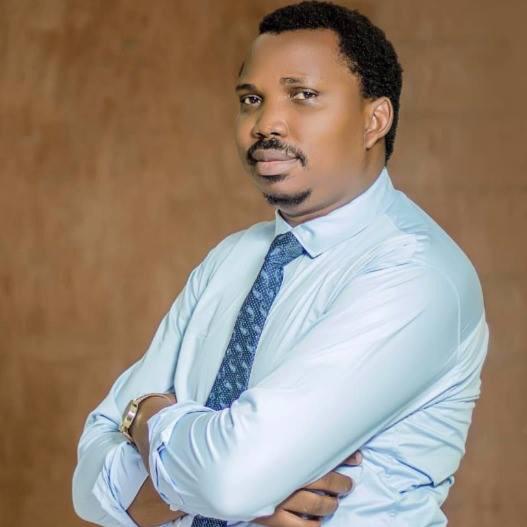
A 30-year-old man on trial in the Albanian capital, Tirana, has reportedly shot and killed the presiding judge.
Appeals court judge Astrit Kalaja died on Monday as he was being transported to the hospital, Albanian police said.
According to Al Jazeera, the suspect fled the scene but was later detained, and the revolver he is believed to have used was also found, police added.
The gunman also shot a father and son who were party to the trial. They were both rushed to the hospital, where their injuries were deemed not to be life-threatening.
The Albanian press reported that the court case concerned a property dispute.
Albania’s Prime Minister Edi Rama described Kalaja’s death as a “tragic event”, saying that it should prompt a “reflection” on the courts’ internal security system.
In a statement posted on X, Rama called for tougher sentences for gun-related crimes. The judge’s killer should face “the most extreme legal response”, he wrote.
Meanwhile, President Bajram Begaj condemned the killing as “a terrible attack against the entire justice system”.
Between January and June this year, there were 213 gun-related incidents in Albania, according to data from the South Eastern and Eastern Europe Clearinghouse for the Control of Small Arms and Light Weapons.
Under Albanian law, illegal gun possession is punishable by up to three years in jail.
Since sweeping judicial reforms backed by the European Union and the United States were launched in Albania in 2016, the country has seen a large court backlog build-up, with tens of thousands of cases delayed for years.
The key identifier of an “elite” class is not merely their bank account balance but their ability and willingness to use their economic and political heft to shape the society around them.
That’s why a hereditary landowner and member of the UK House of Lords is considered an elite, while your average Premier League footballer (who may have more money than the HoL member) is not. The difference is in the willingness and ability to wield that power meaningfully.
The reason I keep on saying ‘Nigeria has no elites’ is that I was born and raised among the subset of Nigerians who erroneously consider themselves to be elite, and I am very familiar with their thought process. It is the exact same thought process that you would get from a sugarcane seller in Mile 12 market if overnight he was given a house in Maitama, a Lexus SUV, a beautiful yarinya, and N150m in the bank.
The nouveau-riche sugarcane seller would not be concerned with higher thoughts like how to use his newfound fortune to transform the economic reality of Mile 12 market while positioning to benefit from the transformation. Nope. He would only be concerned with ensuring that he keeps hold of what he has so that he never has to sleep in a wheelbarrow on a side street off Ikosi Road again.
That’s exactly what the privileged Nigerian is upstairs – a sugarcane seller who happens to live in Ikoyi. No matter how many decades they have spent in Ikoyi, their reality is still defined by the desperate quest to escape or avoid poverty. Every Nigerian millionaire or billionaire that you know feels financially insecure. It doesn’t matter whether they are worth $1m or $25bn – they are all viscerally terrified of sinking into poverty, and the sum of their decision making is a series of short term deals and compromises to avoid poverty, without any kind of higher, long-term guiding principle.
I know this especially well because I was raised in a house where everybody who is somebody in Lagos stopped by once in a while to work on a real estate deal with my old man, and I would regularly overhear everybody from bank CEOs to retired military generals and air vice marshalls saying things “Our leaders are [insert whiny complaint].” And I would wonder – who are the “leaders” that these extremely privileged people sound so oppressed and intimidated by? Is it not their friends and coursemates from Jaji?
Later on, it made sense when I realised that once you are in power in Nigeria, you become God, and even your family changes its rules for you. I’ve seen families override their olori-ebi because one 50 year-old uncle became somebody in Abuja. Conversely, as soon as you leave power in Nigeria, you sink into total irrelevance, and people treat you like your body has a smell. The entire Nigerian sense of value and self-worth is welded to money and power. Once you don’t have these 2 things, you might as well be wearing Harry Potter’s invisibility cloak – even your family and contemporaries stop treating you with respect.
The effect this has on elite formation is that unlike in other societies where elites gravitate toward different ideas shared by different camps, and then fight for the right to imprint those ideas on their society (Democrat vs Republican; Maoist vs Dengist; Tory vs Labour etc), privileged Nigerians ONLY gravitate toward one thing – economic power. They have no elite sense of identity outside of money in the bank, a 4-wheeled status signaller on the road, and an overpriced house in a neighbourhood that has a constant bad odour and potholes.
That is also why Nigeria’s political actors do this thing called “decamping,” where they switch affiliation to whatever political party is in power. Their entire conception of the world is built around access to the levers of economic power so that they can avoid ending up in a wheelbarrow in Mile 12 market.
That’s literally all there is to Nigeria.
200 million sugarcane sellers.
The views expressed by contributors are strictly personal and not of Law & Society Magazine.
In a significant challenge to Nvidia’s dominance, OpenAI announced Monday it would buy 6 gigawatts of computing power from data centers that will run exclusively on AMD chips.
Nvidia (NVDA) has become the go-to AI chipmaker in recent years, propelling it to a $4.6 trillion market capitalization that has made it the world’s most valuable public company. OpenAI, famous for its ChatGPT AI chatbot, is the artificial-intelligence frontrunner that just made waves when it launched the breakthrough video generator Sora 2.
Just two weeks ago, the companies announced a $100 billion partnership, in which Nvidia agreed to start delivering chips in 2026. OpenAI CEO Sam Altman said in a post on X that the company plans to increase its Nvidia purchasing and that the AMD partnership is “incremental” to its “work with Nvidia.”
But AMD is no slouch, and demand for AI computing power is so high that OpenAI needed to hedge its bets.
The deal will provide OpenAI with 1 gigawatt of power by this time next year and it will add another 5 gigawatts on future generations of AMD’s high-end Instinct processors. OpenAI will work with AMD (AMD) to build the technology, and it will invest significantly in AMD to fuel its chip-building capabilities.
Shares of AMD jumped 36% in premarket trading on the news. Shares of Nvidia fell 2%.
“With a 10% stake in AMD this quickly brings Lisa Su and AMD right into the core of the AI chip spending cycle and is a huge vote of confidence from OpenAI and Altman,” Wedbush Securities analyst Dan Ives wrote in an industry note Monday morning.
The companies said the partnership would deliver tens of billions of dollars of revenue for AMD, but they didn’t disclose the exact amount of the deal. AMD issued OpenAI a warrant of 160 million shares of its stock, worth more than $26.3 billion at Friday’s closing price. Those shares would vest over time as the partnership achieves specific milestones, including share-price targets and overcoming technological hurdles for what Lisa Su, AMD’s CEO, called “the world’s most ambitious AI buildout.”
“This partnership is a major step in building the compute capacity needed to realize AI’s full potential,” Altman said in a statement. “AMD’s leadership in high-performance chips will enable us to accelerate progress and bring the benefits of advanced AI to everyone faster.”
Su called the partnership a “win-win.”
The amount of money getting thrown around the AI industry is staggering. In addition to the AMD and Nvidia deals, OpenAI agreed last month to pay Oracle $300 billion over five years for 4.5 gigawatts of data center space. And OpenAI is believed to have inked a $10 billion chip design deal with Broadcom to train its AI models, a move that could potentially reduce its reliance on partners like Nvidia and AMD.
That’s why the AMD announcement may have been significant, but not exactly surprising — OpenAI has been diversifying its supply of chips for a while, notes Ben Barringer, global technology analyst at Quilter Cheviot.
“AMD is another big player in this space, so this deal is a logical move from OpenAI and is great news for AMD,” said Barringer.
It’s no surprise that the eight most valuable companies on the market are all heavily invested in AI — and all are worth more than $1.4 trillion. Following Nvidia are Microsoft (MSFT), Apple (AAPL), Google (GOOG), Amazon (AMZN) and Meta (META), each of which announced new consumer-focused AI products in recent months. Broadcom, with a $1.6 trillion valuation, is No. 7 on the list. And Elon Musk’s Tesla, which has bet its future on AI-powered robotaxis and could soon make a large investment in Musk’s xAI company, is No. 8 on the list.
Although those companies have driven enormous market gains over the past several years, many Wall Street analysts fear that the AI market has become a bubble — powered by unsustainable gains that are driven more by FOMO than fundamentals.
The Medical and Dental Council of Nigeria has warned doctors, especially newly qualified professionals, against over-reliance on Artificial Intelligence, saying it neither has the logical reasoning nor empathy they have garnered in their training.
This is as former Rivers State Governor, Dr Peter Odili, appealed to the Federal Government to review the remuneration of doctors and health workers to reduce the brain drain syndrome.
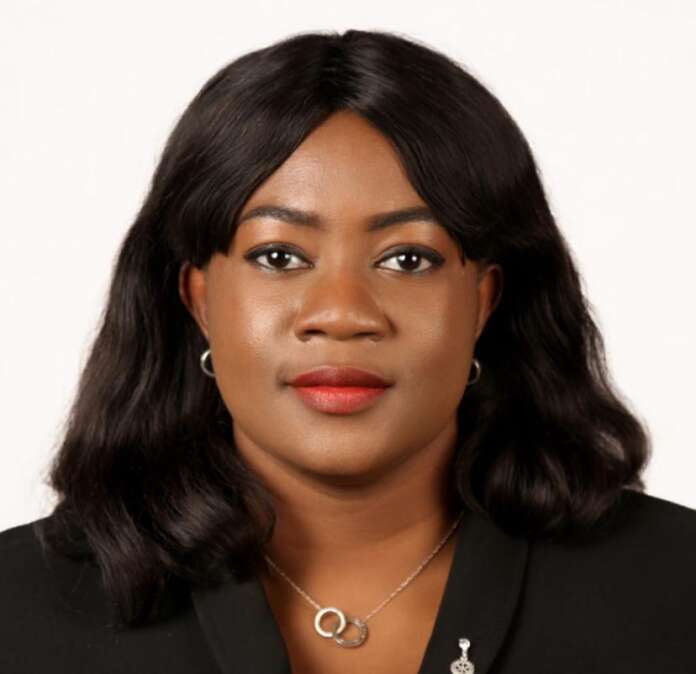
The Registrar/Chief Executive Officer of the MDCN, Prof. Fatima Kyari and Odili, spoke during the induction/oath-taking for 65 Bachelor of Medicine, Bachelor of Science graduands of the PAMO University of Medical Sciences in Port Harcourt on Monday.
Kyari, who presided over the induction, administered the physician pledge to the graduands and urged them to be mindful of the significant impact of their contributions, saying they should not see their induction into the medical profession as an arrival at their destination, but the start of a journey.
She added, “As doctors, you don’t only use your pens. It’s not about what you know. But you also use your hands, and you also use your hearts. That is what makes your a doctors. You might be the AI generation, but you must also remember that AI is machine learning.
“The AI we have today is learning language models and machine learning. They depend on human performance being transferred to them, and on what they know.
“So don’t rely too much on AI. Think about what you can give outside the AI. AI does not have the feelings that you have. AI does not have the logical reasoning that you have. And AI does not have the empathy that you have. And that is what makes you Doctors. That gives you the influence that you have.”
The MDCN boss continued, “You must respect your team, the public, and the patients. Respect is a mutual thing. If you need respect, you give it out, noting that they have been trained by competent teachers, hence they should justify the training they have received.
“As you excel in the science of Medicine, remember to also be empathetic and caring because the patient in front of you is not thinking about who you are. What they are thinking is, is this Doctor the right person to treat me? So there is trust, and you must maintain that trust.”
In his speech, Pro-Chancellor of PAMO University of Medical Sciences, Dr Peter Odili, expressed happiness at the progress the institution has made in less than eight years of its existence.
While noting that it was the third set of Medical Doctors the institution has produced, Odili said, “PAMO in this short period of existence has added not less than 330 health care professionals, “ even as he announced a cash gift of N100,000 to each of the 65 new Doctors.
He said if other institutions in the country move at the same pace, the mass exodus of Doctors and health workers in search of greener pastures will be minimized, and therefore appealed to the federal government to review their remuneration.
According to him, “Nobody will worry about who’s running away to Japa, or whatever they call it, looking for greener pastures. If we have more than enough on the ground, you won’t miss those who go. So let me use this opportunity to thank the Rivers State Government, especially the Governor, for the initiative and the sustenance of the scholarships to our indigenous students.”
The PAMO Varsity Pro-Chancellor urged other states to emulate the Rivers government’s example because, according to him, it will lay the foundation for good health across the country.
While commending President Bola Tinubu for his ‘bo;d initiatives’ in the health sector, Odili stressed the need for special attention to the training of health professionals because they hold the key to national health. A healthy nation is a wealthy nation.
“We congratulate him and urge the federal government to invest more and also look at the review of the remuneration of health workers,” even as he thanked the MDCN Registrar for honouring the institution with her physical presence.
Earlier in his address, the acting Vice Chancellor, Prof. Smith Jaja, said the institution was inducting 65 Medical graduates into the very noble profession, saying the graduates have gone through the best training any medical graduate can receive.
He added, “These are the first medical graduates who sit for the final examinations and graduate from the PAMO Teaching Hospital.”
While charging the newly inducted Doctors to uphold the ethics of their profession, as it will be binding on them for the rest of their lives, saying, “It is not a pledge that you make frivolously.”
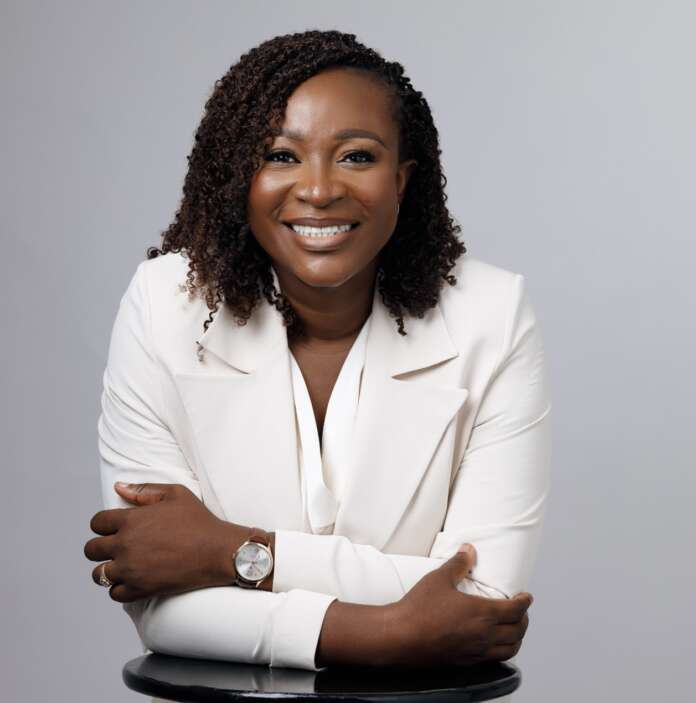
On Saturday, 4 October 2025, Chief Mrs Rosemary Onoja, an accomplished Chartered Accountant and wife of Dr Ogwu James Onoja, SAN, was coronated by the Catholic Women Organisation (CWO) of Idah Diocese, Kogi state, as 𝐎nobule 𝐎memele (noble woman)
Noting that a noble woman carries grace as her crown, wisdom as her garment, and kindness as the fragrance that follows her steps, CWO Idah Diocese, said the conferment was a show of their appreciation for the massive support Mrs Onoja has rendered women of the diocese and beyond, over the years.
Alive with the festivities, the ancient city of Idah, the traditional headquarters of the Igala Kingdom, thronged with dignitaries from far and near, even as Elder Dr Ogwu James Onoja, SAN, stood proudly beside his amiable wife, during the coronation.
Fondly called ‘Mummy General’, Chief Mrs Onoja, principal partner at Rosemary Onoja & Associates (Chartered Accountants), is described as a manager par excellence and a woman full of generosity.
Congratulations to the Chairman, executives, and members of the Nigerian Bar Association, Bukuru Branch, Jos, Plateau State, as you gather for your annual Law Week event from 6th-7th October 2025.
As you delve into the thought-provoking theme of “Understanding Artificial Intelligence in Legal Practice: Issues, Dilemmas, and Challenges,” I wish you enlightening discussions, engaging debates, and fruitful interactions.
May this occasion strengthen bonds, foster collaboration, and inspire innovative approaches to harnessing technology in the legal profession.
Please accept my heartfelt goodwill wishes for a resounding success and enjoyable Law Week. May the Almighty bless your endeavours and illuminate the path to justice.
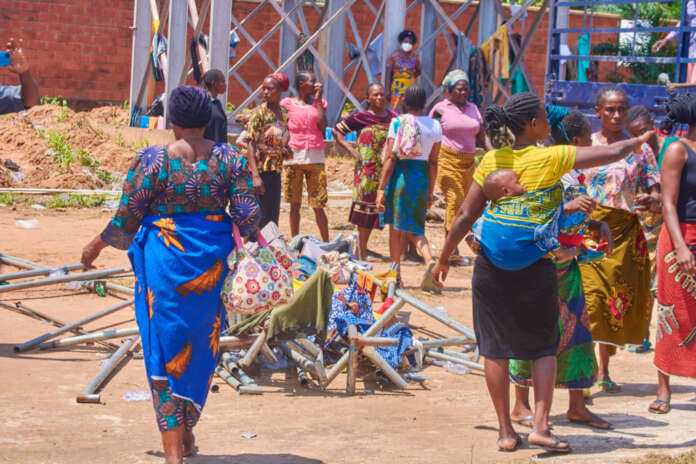
Nigeria’s minister of works, Engr. David Umahi has been dragged before the Inspector General of Police (IGP) over allegations of massive land grabbing in a community in Ebonyi state.
In the 6 October, 2025 petition filed on behalf of Njoku Chita family of Umuchima village in Uburu Community of Ohaozara Local Government Area, Ebonyi State by their lawyer, Silas Onu, Esq., it was alleged that after the family made huge sacrifices by relinquishing large Swathes of land for the establishment of David Umahi Federal University of Health Sciences (DUFHUS), the minister arbitrarily continued appropriating other portions of the family land.
Also alleging threats to life for crying out, Onu, Esq. added: “Our clients are at a loss as they thought that the University is now a federal institution and wondered why a private citizen would be setting up a committee to expand the land of a Federal University by expropriating privately owned lands.”
The full petition reads:
Sir,
PETITION ON THREAT TO THE LIFE OF PRINCE NJOKU BY ENGR. DAVID NWEZE UMAHI (MINISTER OF WORKS, FEDERAL REPUBLIC OF NIGERIA) AND MR. ENEKWACHI AKPA (AIDE AND ASSOCIATE OF THE MINISTER OF WORK).
The above subject matter refers.
Our services have been retained by Njoku Chita family of Umuchima village in Uburu Community of Ohaozara Local Government Area, Ebonyi State (hereinafter referred to as ‘our clients’) and we make this Petition at their behest.
Our petition is as follows:
Our clients informed us of a phone call conversation that was initiated by Mr. Enekwachi Akpa who is an aide and associate of the Minister of Works on 5th September 2025 at about 12 noon with Phone number 0803 787 4427. The call was made to Prince Njoku (one of our clients) on his phone number 0813 164 1522, regarding the entire family stance over an expanse of their own land.
It has to be established, firstly, that our clients have made huge sacrifices for what was termed “community development” by freely relinquishing many hectares of their indisputable family lands, amongst which is the land where the “David Umahi University of Medical Sciences, Uburu” is built upon.
Our clients were cajoled into relinquishing that large expanse of land under the belief that it was their own sacrifice for the development of the community.
However, Engr. David Nweze Umahi (the Minister of Works) who is from Umunaga village of Uburu has long before he became the Governor of Ebonyi State, been grabbing lands from helpless and indigent villagers – mostly from Umuchima village. The trend worsened when he became the Governor, as he basically expropriated lands in the name of government, for himself in the community with a threat that all lands belong to government and government could take over any land and pay compensation to whoever refuses to allow him have his way.
The University was built on forcefully confiscated lands, a large part of which belongs to our clients and they accepted their fate for the good of the entire community. He went on to also forcefully takeover our clients’ land located behind a place known as Ene Ofor’s compound, where he built his so called “Industrial Cluster” which is his private industry anyway. Furthermore, even after his tenure as Ebonyi State Governor, Engr. Umahi continues to assert the power of a state government in his bid to own the entire community which he has since totally personally surveyed and now appointed a committee for the expansion of the “University land”. Kindly find attached a leaked survey plan covering private properties that he carried out as if he were now the state, marked as annexture 1.
Our clients are at a loss as they thought that the University is now a federal institution and wondered why a private citizen would be setting up a committee to expand the land of a Federal University by expropriating privately owned lands.
When this committee began its illegal expansion activities, our clients were once again cajoled into surrendering more of their family land for the sake of peace and “development” – which are actually all Engr. Umahi’s private developments, anyway.
As if all of our clients’ personal sacrifices were not enough, Engr. Umahi, after indicating in his private survey of other people’s properties wherein he indicated that the “Njoku Chita” lands are “Not part of” in annexture 1, still went on to maliciously design his road project straight through our clients ancestral home where their patriarch and other family members are buried, and insists that the houses therein must be brought down for his road to pass through into his private developments.
When our clients refused, the phone call referred to in paragraph 1 of this petition was made to a family member who was on the ground to stop the construction through their land. In the phone call, Minister David Nweze Umahi could be heard saying that he “uses his personal money to develop the community and some people will think that they are wise, there will be consequences”. A copy of the voice recording is enclosed in a flash drive as annexture 2.
Our clients understand the phone call to mean that they will be dealt with unless they give up their ancestral home for Umahi’s private developments. This is not an isolated case, as there are many others instances in the community where Umahi’s village youths were deployed to physically attack persons who have legitimately purchased lands in areas that Minister Umahi covets, leading to persistent tension in the community. Our clients believe that the Umunaga youth will only act in such rage with Umahi’s express support and directive. The only reason why people still leave in fear of reacting is that he has overarching control over the state government and other government institutions in the state – which will not last forever.
A recent case in which his village youth were deployed and destroyed the properties of private land owners, with threats to kill anyone found in the lands, was abruptly withdrawn from court after a charge was preferred against the criminals. The withdrawal was done on the directive of Minister Umahi and since then, his quest for expropriation has widened.
Apparently, no Court or security agency in Ebonyi State can restrain the Minister as they are all under his influence and with our clients resolve to resist the Minister’s latest attempt to forcefully take over their land by running a road through the middle of their ancestral home, this being after they had given him a land through which he can build his road, they may likely face his “consequences”.
With his insistence that there will be consequences for our client’s refusal to allow him into their land for his private purpose, our clients now are in fear for their safety in the community and elsewhere, including those who are resident abroad that have been threatened with “deportation” (repatriation) by the Minister over this issue – they are resolved to fight for their right, instead of living as Umahi’s slaves.
This has led to the relocation of all our client members out of the community since the phone call of 5th September 2025 as they aren’t sure of what consequences awaited them and will rather fight alive than dead.
The ground work cutting through our clients’ land has already begun in total disregard of their right and ownership and soon, the Minister will take down the buildings thereon and desecrate the graves of those buried in th land.
As a federal Minister, our clients are shocked that with all the federal roads needing urgent attention in Ebonyi State, Umahi is more interested in mapping out roads on private village lands for a project that is not of the Federal Government, but as he claimed, being funded by him to develop the community. The question now is, why should anyone embark on a private community development project where the lands of villagers are forcefully annexed with threats and without the consent of the entire community?
If this abuse of power is not stopped, today may not be the day its impact will be felt. One day, Umahi will be out of power and what will happen in the community can only be imagined. His activities have created a total sense of fear in the community as any dissent attracts painful retribution from his “boys”.
We know that your office has the legal powers to call the Minister to order regarding his insatiable drive for grabbing private lands in his community using the cover of government and investigate him for the threat he made against our clients, but we are unsure if the will to carry out this lawful duty exist. However, ours is to lay the complaint before lawful authority and hope that the law will prevail, especially against a man who, like Napoleon, is now the now STATE.
Sir, we invite your office to conduct a thorough investigation into this matter and can guarantee you that others who are victims of these same actions by Minister Umahi will come out to testify of how he took their lands for no good reason or overriding public purpose – all are for his own private estate development, covering the entire community.
We thank you in anticipation of your swift action and assure you of our clients’ cooperation throughout the investigation.
Sincerely,
SILAS, Joseph Onu, Esq.
Principal Consultant
Cc:
His Excellency, President Bola Ahmed Tinubu, GCFR.
Beneath the plains of East Africa, the ground is quietly changing shape. GPS stations, satellite radar and field geologists now track subtle tears that lengthen year after year. As faults step down and magma pries the crust apart, valleys sink, lakes stretch and new volcanoes rise. What looks like solid rock is slowly loosening its grip, hinting at coastlines not yet drawn. Scientists say this continental rift could, over deep time, open a new ocean, reshaping borders, resources and risk.
East African Rift: where a continent starts to split
The East African Rift stretches more than 3,000 kilometers from Ethiopia’s Afar region through Kenya and Tanzania to Mozambique. Here, the African Plate divides into the Nubian block on the west and the Somali block on the east. Scientists compare the setting to a living laboratory. Because every fault, dike, and volcanic field shows change.
Heat rising from deep mantle rock thins the lithosphere, so stresses crack the crust. Magma wedges into those cracks, then cools to form new rock. This is how oceans begin. The process mirrors the early Atlantic, which opened after South America drifted from Africa about 180 million years ago, when plate boundaries reorganized.
Rift widening sounds tiny at a few millimeters per year, yet the math adds up. Over millions of years, those millimeters become hundreds of kilometers. That’s why specialists say the seeds of a new ocean already exist beneath eastern Africa. The land flexes, the ground shakes, and valleys sink as blocks slip and rotate.
How a new ocean begins under our feet
At Afar, the rift meets the Red Sea and the Gulf of Aden in a rare triple junction. Three plate boundaries intersect, so spreading, faulting, and volcanism stack together. This crossroads hosts frequent earthquakes and young lava flows, which outline the direction the crust is pulling. NASA imagery tracks these changes season after season.
Beneath the surface, magma intrusions open vertical fractures called dikes. These dikes push rock sideways, while shallow faults step down to form long valleys. Over time, the valley floors drop and thin. When seawater finally spills in, a narrow basin becomes a spreading ridge. The cycle shifts from continental rifting to seafloor growth.
Christopher Scholz, a geophysicist at Syracuse University, frames East Africa as a front-row view of continental breakup. His point resonates because researchers combine GPS, radar interferometry, and field geology to watch shifts as they happen. Those tools, supported by work from the Geological Society of America and the U.S. Geological Survey, tighten timelines and illuminate early ocean birth.
Surface signs: quakes, lava, and a changing landscape
People already notice the rift at the surface. In 2018, a several-kilometer fissure emerged in southwestern Kenya, severing roads and fields. Intense rainfall helped reveal it, yet subsequent investigations connected the fracture to deeper tectonics. The incident demonstrated how rapidly ground can shift when a fault ruptures under stress and water.
In the Afar Depression of Ethiopia, frequent eruptions and clusters of minor tremors indicate zones where magma ascends. Black basalt flows cool into ropey textures and fresh plates of rock. Those features, mapped from space and checked on the ground, match the rift’s geometry. They also outline future shorelines as low areas keep sinking.
Infrastructure feels the strain. Roads crack, pipelines buckle, and homes settle where sediments shift. Good practice calls for flexible designs, careful siting, and monitoring that blends GPS with local surveys. Communities need clear hazard plans because the same forces that may one day form a new ocean also trigger short, damaging events right now.
Timelines, numbers, and maps of a possible new ocean
Rates matter, so scientists quantify them carefully. The rift widens by a few millimeters yearly, modest to the eye yet decisive through geologic time. If present trends hold, many researchers expect seawater to flood parts of the rift valley in roughly 5 to 10 million years. That scale guides long-range scenarios, not daily decisions.
These projections rely on stacked evidence: satellite data, ground GPS, seismology, and chemistry of young lavas. NASA archives show widening valleys; USGS catalogs quakes that track active faults; peer-reviewed studies quantify uplift and thinning. Together they build a consistent picture, even as uncertainties remain about exactly where the new ocean will first cut through.
Why this slow split reshapes science and society
Earth never stands still, and the East African Rift proves it with numbers, maps, and lived experience. The land pulls apart millimeter by millimeter while researchers watch and communities adapt. One day, tides may roll across this valley and fill a basin that becomes a new ocean. Until then, knowledge, care, and bold planning can turn risk into resilience.
This article, originally published 5 October 2025 by Moon and Garden, is based on verified sources and supported by editorial technologies.
YouTube has agreed to pay $24.5m to settle a suit brought by Donald Trump in 2021 that alleged the platform wrongly suspended his channel after the January 6 attack on the US Capitol. The Google subsidiary is the latest in a long string of tech companies to make a multimillion-dollar payout to the president over past decisions about his accounts.
Trump had filed the suit against YouTube and Alphabet CEO Sundar Pichai, alleging that the platform had “accumulated an unprecedented concentration of power, market share, and ability to dictate our nation’s public discourse”. YouTube said it suspended Trump’s channel because it had violated the website’s policies against inciting violence. Because of the settlement, the case is now dismissed. Google did not immediately return a request for comment.
The news comes just a week after YouTube announced that it would allow creators who were once banned for spreading misinformation about Covid-19 and the 2020 US presidential election to be reinstated. In its announcement, YouTube said it celebrated conservative voices on its site and blamed the account suspensions on pressure from Joe Biden.
Facebook-parent company Meta settled a similar lawsuit with Trump in Januaryfor $25m, and the social media platform X, previously Twitter, settled another for $10m in February. Most of the payout from the Meta suit will go to Trump’s presidential library fund. For the YouTube settlement, Trump has directed $22m of the payment to go to restoring and preserving the National Mall and supporting construction of the White House ballroom, according to documents filed in the US district court for the northern district of California. The lavish ballroom is expected to cost around $200m.
The three cases were first brought by Trump lawyer and ally, John Coale, according to the Wall Street Journal, which first reported the news. Coale told the Journal that Trump’s return to the White House was instrumental in reaching the slew of settlements with tech companies, saying: “If he had not been re-elected, we would have been in court for 1,000 years.” Coale is now Trump’s deputy special envoy to Ukraine and Belarus.
In an email to the Guardian, Coale said Trump was an “ideal client”.
“Glad it and the others I filled [sic] for DJT in July or [sic] 2021 ended to the tune of 60mil,” Coale added. “We got $$$ and changed tech behavior I believe.”
The case against YouTube had been closed in 2023, but Trump’s lawyers filed to reopen the case after he won the presidency. Before his victory, all three of the lawsuits faced uphill court battles. A federal judge dismissed the case against Twitter in 2022, and the suits against Meta and YouTube were stayed, then the latter was administratively close. Trump’s lawyers, however, revived the cases with appeals to overturn each ruling.
YouTube first suspended Trump’s channel for seven days on 12 January 2021, after he posted a video saying the speech he made to his supporters on January 6 before the Capitol riot was “totally appropriate”. YouTube said it suspended the channel over “concerns about the ongoing potential for violence”. The company then extended the ban without an end date.
Ten: that’s the age of the youngest person with HIV that Sesenieli Naitala has ever met.
When she first started Fiji’s Survivor Advocacy Network in 2013, that young boy was yet to be born. Now he is one of thousands of Fijians to have contracted the bloodborne virus in recent years – many of them aged 19 or younger, and many of them through intravenous drug use.
“More young people are using drugs,” Ms Naitala, whose organisation provides support to sex workers and drug users in the Fijian capital Suva, tells the BBC. “He (the boy) was one of those young people that were sharing needles on the street during Covid.”
Over the past five years, Fiji – a tiny South Pacific nation with a population of less than a million – has become the locus of one of the world’s fastest growing HIV epidemics.
In 2014, the country had fewer than 500 people living with HIV. By 2024 that number had soared to approximately 5,900 – an elevenfold leap.
That same year, Fiji recorded 1,583 new cases – a thirteenfold increase on its usual five-year average. Of those, 41 were aged 15 or younger, compared to just 11 in 2023.
Fiji’s assistant health minister has called the HIV epidemic a “national crisis”
Such figures prompted the country’s minister for health and medical services to declare an HIV outbreak in January. Last week, assistant health minister Penioni Ravunawa warned Fiji may record more than 3,000 new HIV cases by the end of 2025.
“This is a national crisis,” he said. “And it is not slowing down.”
The BBC spoke to multiple experts, advocates and frontline workers about the reasons for such a meteoric rise in case numbers. Several pointed out that, as awareness around HIV spreads and stigma diminishes, more people have been coming forward and getting tested.
At the same time though, they also noted that countless more remain invisible to the official figures – and that the true scale of the issue is likely much bigger than even the record-breaking numbers suggest.
‘Sharing the blood’
Underpinning Fiji’s HIV epidemic is a spiralling trend of drug use, unsafe sex, needle sharing and “bluetoothing”.
Otherwise known as “hotspotting”, this latter term refers to a practice where an intravenous drug user withdraws their blood after a hit and injects it into a second person – who may then do the same for a third, and so on.
Kalesi Volatabu, executive director for the NGO Drug Free Fiji, has seen it happen firsthand. Last May, she was on one of her regular early morning walks through the Fijian capital of Suva, offering support and education to drug users on the streets, when she turned a corner and saw a group of seven or eight people huddling together.
“I saw the needle with the blood – it was right there in front of me,” she recalls. “This young woman, she’d already had the shot and she’s taking out the blood – and then you’ve got other girls, other adults, already lining up to be hit with this thing.
“It’s not just needles they’re sharing – they’re sharing the blood.”
Bluetoothing has also been reported in South Africa and Lesotho, two countries with some of the world’s highest rates of HIV. In Fiji, the practice became popular within the past few years, according to both Ms Volatabu and Ms Naitala.
Kalesi Volatabu has spent more than a decade working at the frontline of drug awareness and advocacy in Fiji
One reason for its appeal, they explain, is a cheaper high: multiple people can chip in for a single hit and share it among themselves. Another is the convenience of only needing one syringe.
These can be difficult to come by in Fiji, where pharmacies, under police pressure, often demand prescriptions for syringes, and there is a lack of needle-syringe programmes.
Although there is growing acceptance and approval for the rollout of such programmes – which provide clean injecting equipment to drug users in an attempt to reduce the transmission of blood-borne infections like HIV – implementation in the highly religious and conservative country has proven challenging.
Ms Volatabu says there is a “drastic shortage” of needle-syringe sites, which is fuelling dangerous practices like needle-sharing and bluetoothing and putting the onus on NGOs to distribute syringes as well as condoms.
In August 2024, Fiji’s Ministry of Health and Medical Services (MOH) recognised bluetoothing as one of the drivers for the country’s rise in HIV cases. Another was chemsex, where people use drugs – often methamphetamine – before and during sexual encounters.
In Fiji, unlike most other countries around the world, crystal meth is predominantly consumed via intravenous injection.
MOH also found that of the 1,093 new cases recorded in the first nine months of 2024, 223 – about 20% – were from intravenous drug use.
Kids on meth
Fiji has become a major Pacific trafficking hub for crystal meth over the past 15 years. A large part of this is due to the country’s geographic location between East Asia and the Americas – some of the world’s biggest manufacturers of the drug – and Australia and New Zealand – the world’s highest-paying markets.
During that same period, meth has spilled into and spread throughout local communities, developing into a crisis that, like HIV, was recently declared a “national emergency”.
And according to those on the frontlines, the age of users is trending downwards.
“We see more and more of these young people,” says Ms Volatabu. “They are getting younger and younger.”
Fiji’s most recent national HIV statistics cite injectable drug use as the most common known mode of transmission, accounting for 48% of cases. Sexual transmission accounted for 47% of cases, while mother-to-child transmission during pregnancy and childbirth was cited as the cause of most paediatric cases.
Everyone the BBC spoke to agreed that lack of education is a central factor in the epidemic. Ms Volatabu and Ms Naitala are both working to change that – and Ms Naitala says that as a greater awareness around the dangers of HIV spreads throughout the community, “bluetoothing” has, in her experience, fallen out of favour.
More people are getting tested and seeking treatment for HIV, leading to more robust data around the scale of the crisis.
But there is still a worry that the official case numbers are merely the tip of the iceberg – and a fear of what may lie beneath the surface.
The avalanche
José Sousa-Santos, head of the Pacific Regional Security Hub at New Zealand’s University of Canterbury, says “a perfect storm is brewing”.
“The concern is across all levels of society and government in regards to Fiji’s HIV crisis – not just what’s happening at the moment, but where it’s going to be in three years’ time and the lack of Fiji’s resources,” he tells the BBC. “The support systems – the nursing, the ability to distribute or to access the drugs for treatment of HIV – just aren’t there.
“That’s what terrifies us, the people that work in the region: there is no way that Fiji can deal with this.”
José Sousa-Santos has been ringing the alarm bell on Fiji’s HIV epidemic for years
Following its declaration of an outbreak in January, the Fijian government has sought to improve its HIV surveillance and enhance its ability to address the likely underreporting of cases.
The Global Alert and Response Network, which was called upon to provide that support, stated in a recent report that “addressing these pressing issues through a well-coordinated national response is crucial in reversing the trajectory of the HIV epidemic in Fiji”.
That report also noted that staffing shortages, communication issues, challenges with lab equipment and stockouts of HIV rapid tests and medicines were impacting screening, diagnosis and treatment.
Data collection is slow, difficult and error-prone, it added – hampering efforts to understand the extent of Fiji’s HIV epidemic and the efficacy of the outbreak response.
That leaves many experts, authorities and everyday Fijians in the dark. And Mr Sousa-Santos is predicting an “avalanche” of cases still to come.
“What we’re seeing at the moment is the beginning of the avalanche, but you can’t stop it, because the infections are already happening now, or they’ve already happened – we’re just not going to be able to see them and people aren’t going to look to get tested for another two to three years,” he says.
“There’s nothing that we can do at the moment to stop the number of infections that have already happened over the past year, and that are happening now. That’s what’s really terrifying.”
Our site uses cookies. By clicking “Accept All Cookies”, you direct Law and Society Magazine to store cookies on your device and disclose information in accordance with our Cookie Statement: cookie policyACCEPTREJECT
Privacy & Cookies Policy
Privacy Overview
This website uses cookies to improve your experience while you navigate through the website. Out of these cookies, the cookies that are categorized as necessary are stored on your browser as they are essential for the working of basic functionalities of the website. We also use third-party cookies that help us analyze and understand how you use this website. These cookies will be stored in your browser only with your consent. You also have the option to opt-out of these cookies. But opting out of some of these cookies may have an effect on your browsing experience.
Necessary cookies are absolutely essential for the website to function properly. This category only includes cookies that ensures basic functionalities and security features of the website. These cookies do not store any personal information.
Any cookies that may not be particularly necessary for the website to function and is used specifically to collect user personal data via analytics, ads, other embedded contents are termed as non-necessary cookies. It is mandatory to procure user consent prior to running these cookies on your website.