Home Blog Page 199

Breaking!!! Alleged Certificates Forgery: Science and Tech minister resigns, Tinubu thanks him for service

  • Again, UNN disowns Uche Nnaji’s certificate in fresh letter to Premium Times

The presidency has announced that Minister of Innovation, Science and Technology, Uche Nnaji, has put in his resignation.

Bayo Onanuga, Presidential spokesman, confirmed this in a statement late Tuesday.

Nnaji is currently in the eye of the storm over his academic qualifications.

Following an investigation by PREMIUM TIMES, the University of Nigeria, Nsukka (UNN), disowned the Bachelor of Science degree certificate in the possession of the former Minister, saying the politician did not complete his studies at the institution and was never issued a certificate.

According to PREMIUM TIMES, Simon U. Ortuanya, the Vice-Chancellor of UNN, stated that although Nnaji was admitted to the institution in 1981, he did not complete his studies and was never awarded a degree.

Onanuga, in the statement, said: “President Bola Ahmed Tinubu has accepted the resignation of Geoffrey Uche Nnaji, the Minister of Innovation, Science, and Technology, following some allegations against him.

“President Tinubu appointed Nnaji in August 2023. He resigned today in a letter thanking the President for allowing him to serve Nigeria.

“Nnaji said he has been a target of blackmail by political opponents.

“President Tinubu thanked him for his service and wished him well in future endeavours,” Onanuga’s statement read.

Meanwhile, the University of Nigeria, Nsukka (UNN) has again disowned the Bachelor of Science degree certificate in the possession of the Minister of Innovation, Science and Technology, Uche Nnaji.

Mr Nnaji presented the discredited certificate as part of his credentials to support his ministerial appointment in 2023.

The university, again on Tuesday, distanced itself from the certificate, in a fresh letter responding to PREMIUM TIMES’ separate Freedom of Information (FoI) request to the institution’s registrar.

The new letter dated 6 October (Tuesday) and signed by Senior Deputy Registrar (Records), F.C. Achiuwa, on behalf of UNN Registrar, Celine Nnebedum, came four days after PREMIUM TIMES received a similar response from the vice-chancellor to the newspaper’s separate FoI enquiry.

Corroborating Vice-Chancellor Simon Ortuanya’s earlier letter dated 2 October, the new communication from the Registrar’s office maintained that although Mr Nnaji was admitted into the university in 1981, he neither graduated nor was issued any certificate.

“We wish to inform the Premium Times that although he (Nnaji) was admitted into the University of Nigeria, Nsukka in 1981, we have searched through the University of Nigeria graduation record for 1985 session and we could not find Mr Nnaji Geoffrey Uchechukwu’s name,” the registrar office wrote.

The official stressed that “there is no indication” that the degree certificate which the minister possesses “was issued by the University of Nigeria.”

The letter is the latest confirmation of PREMIUM TIMES’ findings from two years of investigating Mr Nnaji’s credentials. This newspaper published an investigative report on Saturday revealing that the minister forged the UNN bachelor’s degree and national youth service certificates he presented to secure his ministerial appointment.

UNN’s vice-chancellor, Mr Ortuanya, who assumed office in August, had similarly written to PREMIUM TIMES in his 2 October response to the newspaper’s FoI request that from every available records and information from the university, “we are unable to confirm that Mr Geoffrey Uchechukwu Nnaji, the current Minister of Science and Technology, graduated from the University of Nigeria in July 1985, as there are no records of his completion of study in the University of Nigeria, Nsukka.”

“Flowing from above, the University of Nigeria, Nsukka DID NOT and consequently, COULD NOT have issued the purported certificate, or at all, in July 1985 to Mr Geoffrey Uchechukwu Nnaji, the current Minister of Science and Technology.”

Alongside his response, Mr Ortuanya shared with PREMIUM TIMES the university registrar’s earlier letter dated 13 May 2025, issued to the Public Complaints Commission, stating that “there is no indication that the certificate was issued by the University of Nigeria.”

There are now three letters from the university since May consistently contradicting an earlier response to the People’s Gazette newspaper on the matter. On 21 December 2023, Celine Nnebedum, the university registrar, responded to the newspaper’s enquiry, saying Mr Nnaji graduated from the institution in July 1985.

The official has since recanted the claim in the letter sent by her office to the Public Complaint Commission in May and in the latest one sent to PREMIUM TIMES on Tuesday.

Why PREMIUM TIMES got double confirmation

PREMIUM TIMES couriered separate FoI request letters to the offices of UNN vice-chancellor and registrar on 29 September.

It was an approach we adopted learning from the experience of the first attempt to get the official information regarding Mr Nnaji’s certificate from the university during the two years of investigating the minister’s academic credentials.

Instead of responding to our initial enquiries, the university officials gave our reporters the cold shoulder and passed the buck between themselves.

We first made an FoI request to the university on 1 February 2024. But officials failed to respond to our enquiry despite several reminders and follow-up visits to the institution by our reporter. During one such visit, a registry staff member compelled our reporter to pay a N15,000 processing fee. We did, but still received no response to our letter.

On 29 September, we sent separate letters to the university’s registrar and the vice-chancellor in hopes of getting a different outcome.

The vice-chancellor happened to be the first reply to our letter on 2 October. Then the registrar’s response followed on Tuesday (6 October), reiterating that the minister did not complete his studies at the institution and was not issued a certificate.

What we found in our investigation

Allegations of certificate forgery have swirled around Mr Nnaji since July 2023, when President Tinubu sent his name along with those of other ministerial nominees to the Senate for confirmation.

Critics have long insisted that Mr Nnaji did not complete his university education and that both the bachelor’s degree and NYSC certificate he presented to President Tinubu, as well as to the offices of the Secretary to the Government of the Federation, the State Security Service, and the Senate, were forged.

A painstaking two-year investigation published by PREMIUM TIMES on Saturday revealed that Mr Nnaji forged the credentials he submitted to President Bola Tinubu and the Nigerian Senate during his ministerial confirmation in 2023.

The report specifically exposed how the minister forged his degree and NYSC certificates.

This newspaper reported on Sunday that the minister has admitted that UNN never issued him a degree certificate.

Many Nigerians have expressed outrage over the minister’s certificate forgery.

On Monday, Mr Nnaji was absent from a press conference his office called to address the matter. His aides, however, appeared on his behalf during which they made unsubstantiated claims, including the claim the minister indeed graduated from UNN.

PREMIUM TIMES later published documents showing that at the time Mr Nnaji claimed to have graduated from UNN and purportedly proceeded to participate in the mandatory national youth service, he was still exchanging correspondences with the institution on how he could re-sit a failed terminal course examination.

As a deflection strategy, Robert Ngwu, the spokesperson for the embattled minister, falsely accused PREMIUM TIMES of receiving N100 million in bribes from the Enugu State Government when he appeared on Channels Television Tuesday morning.

Retired Nigerian police officers’ wives lament at National Assembly, claim, ‘They ask widows for sex before paying gratuity

The wives of retired Nigerian police officers on Tuesday joined their husbands in a protest at the National Assembly, decrying the poor welfare conditions faced by their families.

They lamented that during their husbands’ years of active service, the officers were not provided with basic protective gear, such as bulletproof vests, and were often the first to be hit by bullets during operations.

The women, who marched alongside some retired officers and widows of those who died in service, said many families of fallen policemen had been abandoned without any form of assistance from the Nigeria Police Force or the government.

They also called on the Nigerian government to remove the police from the Contributory Pension Scheme (CPS), describing it as a fraudulent system that has worsened the suffering of retired officers and their families.

One of the officers’ spouses said, “We are ready, and we are telling the National Assembly now; they should remove retired policemen from the pension scheme with immediate effect. It is our right. Let them give retired police officers their rights because the suffering is too much. Our children are suffering.

“When our husbands were serving, they had no bulletproof vests or protective gear. They were the first to be shot in any operation. And the widows whose husbands died have not been paid their gratuities.”

“Before they even call us to come and collect our husbands’ gratuities, they will demand to sleep with us or our children. You can imagine such wickedness. Why is the police authority so indifferent? Enough is enough. They should please answer us,” the protester said.

Earlier on Tuesday, SaharaReporters reported that human rights activist and former presidential candidate Omoyele Sowore joined retired police officers and their wives to protest at the National Assembly in Abuja, demanding the removal of the Contributory Pension Scheme (CPS).

Sowore Joins Retired Police Officers And Their Wives To Protest At National Assembly, Demands End To ‘Fraudulent’ Pension Scheme

Oct 07, 2025

Image

Sowore Joins Retired Police Officers And Their Wives To Protest At National Assembly, Demands End To ‘Fraudulent’ Pension Scheme

The protesting retirees and their spouses described the pension system as a “fraudulent arrangement” that has left them impoverished after decades of service to the nation.

They called for an immediate return to the defined benefits scheme, arguing that the CPS has denied them fair and adequate compensation.

Sowore, who stood in solidarity with the protesters, pledged his continued support until their demands are met.

He condemned the government’s handling of pensioners’ welfare, saying that those who served the country faithfully deserve dignity and comfort in retirement, not hardship.

“I’m not just fighting for the police; I’m fighting with retired policemen. You started this struggle, and I’ll continue to support you,” he said.

“The people holding your destinies in their hands must know that Nigerians will no longer keep praying while they suffer. One day, people will stop praying and take action.”

The activist also criticised the political class for enjoying luxury and frequent allowances while retired officers and other civil servants struggle to survive.

He urged unity among all retirees across security and civil services, emphasising that the fight is not just for retired police officers but for all workers facing similar injustices under the CPS.

Sowore commended the retirees for their resilience and peaceful conduct, assuring them that their agitation would continue to draw national attention until meaningful reforms are implemented.

He said, “If those in power refuse to listen, one day the people will rise. When citizens are continuously mistreated, the government will eventually hear from them in a way they never expected. For too long, they’ve taken advantage of the people’s patience, believing Nigerians will always endure and pray rather than act.

“But one day, prayers will stop, and people will take action. That’s what I want you to understand. I’m not praying for you to merely get your time in office; I’m walking with those who will break free from those holding their destinies hostage.”

Credit: Sahara Reporters

Ethiopian officials arrive Nigeria to study Nigeria’s electoral system, visit INEC

The Independent National Electoral Commission (INEC) on Monday, October 6, 2025, received officials from Ethiopia to understudy Nigeria’s electoral system and exchange ideas on election management.

The Ethiopian delegation, comprising the National Election Board of Ethiopia (NEBE) and the Coalition of Ethiopian Civil Society Organisations for Elections (CECOE), will spend a week in Nigeria.

Receiving the Ethiopian officials, the INEC Chairman, Prof. Mahmood Yakubu, described the visit as an opportunity for mutual learning and deeper understanding between the two leading African nations.

Yakubu stated that Nigeria and Ethiopia, the continent’s most populous countries, are both multi-ethnic and multi-religious, operating federal systems to manage their diversity.

Yakubu said both nations share similar electoral responsibilities, including the conduct of elections, regulation of political parties, voter education, and constituency delimitation.

He added that INEC would hold nine technical sessions for the delegation, covering all aspects of Nigeria’s electoral process and management structure.

The sessions, according to him, will focus on strategic planning, election monitoring, voter registration technology, stakeholder engagement, and inclusivity for displaced persons.

Yakubu noted that other stakeholders, including the media and Inter-Party Advisory Council, would join selected sessions to enrich the exchange.

The INEC boss added that the timing of the visit coincided with voter registration in the Federal Capital Territory (FCT) ahead of the February 2026 area council elections.

The NEBE Deputy Chairman, Tesfaye Neway, said the visit would strengthen partnership and enhance credible elections and institutional excellence in Africa.

Neway commended INEC for its transparency and technological innovation, describing it as a model for electoral institutions across the continent.

He said Ethiopia aims to learn from Nigeria’s experience in voter registration, civic education, and technology-driven electoral reforms.

Also speaking, the Executive Director of CECOE, Abera Hailemariam, stressed the importance of civil society collaboration in advancing voter education and public awareness.

Hailemariam expressed interest in understanding how Nigeria conducts voter education across its numerous languages and diverse population.

African Bar Association condemns      politicized campaign and due process   violations targeting ICC prosecutor, Karim Khan KC

The African Bar Association  (AfBA) is deeply alarmed by the unprecedented and highly politicized campaign currently being waged against Mr Karim A. A. Khan KC, the Prosecutor of the International  Criminal  Court (ICC).

Evidence now publicly available, including the Whistleblower recording and other recent disclosures, reveals a coordinated effort to discredit Mr. Khan, manipulate investigative processes, and undermine the independence of the Court itself.

The AfBA notes with grave concern the sustained and simultaneous media campaign, apparently designed to influence and pressure ongoing investigations, damage Mr. Khan’s reputation, and apply improper pressure on the ICC’s independent organs and the external investigators.

This calculated manipulation of public discourse is wholly inconsistent with the principles of fairness, impartiality, and institutional independence on which the Court was founded. There has been no condemnation at all by the Court or the ASP of this media onslaught directed at the Prosecutor.

Last month, the African Bar Association formally submitted its observations regarding an applicant who openly threatened the ICC Appeals Chamber, warning judges that failure to decide a matter concerning the Venezuela situation – against Mr. Khan –  would result in calls for sanctions against them. The complainant invoked U.S. Senator Marco Rubio and tagged Israeli Prime Minister Benjamin  Netanyahu.  This is nothing short of an assault on judicial independence. (link to submission: Registry Transmission of ‘Observations from the African Bar Association and the International  Association of Democratic Lawyers regarding the International  Criminal Court Prosecutor Karim A.A. Khan’s Request to be Excused  from the Venezuela  I Situation  I  International Criminal Court)

It has now emerged that Mr. Khan is being targeted from all directions, with interference reaching ‘deep into the very structures designed to uphold fairness. The Assembly of States Parties (ASP) Bureau – which should remain a neutral arbiter – has. shown deeply troubling signs of prejudgment. If members of the Presidency and Bureau are engaging with complainants or forming pre-determined views, this amounts to interference at the most extreme level and a direct betrayal of their mandate.

It is unacceptable that political appointees in the form of the bureau who have created a novel external process have been prejudging the outcome of that process before it concludes.

Statements by a senior US politician reportedly made to Mr. Khan that “this Court is for Africa and thugs like Putin” reflect a deeply entrenched bias that the African Bar Association finds wholly unacceptable.  

Such remarks strip the institution of moral legitimacy and risk reinforcing perceptions of double standards in international justice. Importantly, Mr. Khan’s leadership-particularly in recent actions – has demonstrated the legitimacy of the Court and the independence of his Office, at a time when that credibility was urgently needed. Attempts to reverse or undermine this progress through backdoor channels, smear campaigns, media pressure,  and political threats must be condemned.

The African Bar Association, therefore, calls for:

1.  An Independent and Impartial Review of all actions taken to date against Mr. Khan –   including those by ICC staff and officials briefing the press – and of the impact of external political and media interference.

2.  The  Immediate  Removal of ASP  Bureau Members who have demonstrated prejudgment, engaged with complainants, or otherwise conducted themselves in a manner incompatible with neutrality. A formal and transparent investigation must be launched into these actions, and its findings made public.

3.  Immediate  Safeguards to protect ICC judges, prosecutors, and staff from intimidation, threats, and orchestrated disinformation campaigns  –  from both internal and external actors.

4.  A Public Commitment from the ASP and ICC leadership to uphold prosecutorial independence, institutional integrity, and due process for all Court officials, regardless of nationality or the political sensitivity of their work.

The African Bar Association reaffirms its unwavering commitment to the rule of law, the independence of international institutions, and the rights of victims of atrocity crimes everywhere. We stand firmly for justice –   but justice must never be compromised by political agendas, backdoor pressure, or media manipulation.

True justice requires fairness, and fairness demands courage. Date at Abuja, Nigeria this 6th day  of October 2025

High Chief Ibrahim Eddy Mark

President

Nigerian Immigration Lawyers seek clarification on applicability of NCIA scheme to legal practitioners

The Nigerian Immigration Lawyers Association (NILA) has formally submitted a letter to the Comptroller-General of the Nigeria Immigration Service (NIS), Mrs. Kemi Nanna Nandap, requesting official clarification on whether the newly introduced Nigerian Certified Immigration Agent (NCIA) accreditation scheme applies to licensed legal practitioners in Nigeria.

In the communication, NILA commended the NIS for its efforts in introducing the NCIA framework as part of wider reforms to promote integrity, accountability, and professionalism in immigration service delivery. The Association, however, expressed concern over uncertainty within the legal and business communities as to whether lawyers are required to obtain NCIA accreditation before continuing to advise or represent clients in immigration-related matters.

NILA emphasized that in comparable jurisdictions—including the United Kingdom, Canada, Australia, and the United States—lawyers are expressly exempt from separate immigration agent accreditation requirements because they are already subject to rigorous professional and ethical regulation by their respective bar associations or law societies.

The Association, therefore, urged the Comptroller-General to issue an official advisory clarifying that duly licensed Nigerian lawyers are exempt from the NCIA accreditation requirement. According to NILA, such clarification would ensure that the NCIA achieves its intended purpose of regulating non-lawyer immigration facilitators, without inadvertently undermining the rights and functions of legal practitioners under the Legal Practitioners Act.

The letter, signed by Prince Ebere Nwokoro, FCArb, FNILA, Trustee and 1st Vice President of NILA, was also copied to the Attorney-General of the Federation, the Minister of Interior, the President of the Senate, the Speaker of the House of Representatives, the Chairman of the Body of Benchers, and the President of the Nigerian Bar Association.

NILA reaffirmed its commitment to constructive engagement with the NIS and other relevant stakeholders in strengthening Nigeria’s immigration system and ensuring fair, ethical, and effective regulation of immigration practice.


For Further Enquiries, Please Contact:

Mrs. Pamilerin Akabunwa
Assistant Publicity Secretary
Nigerian Immigration Lawyers Association (NILA)
Tel: +234 907 537 6943 ; +234 707 554 5856
Email: [email protected]

Of tinted glass, Nigeria police and the law

By Ebun-Olu Adegboruwa, SAN

INTRODUCTION

The Nigeria Police Force is in the news again, for the enforcement of the ban against tinted or shaded glasses in motor cars. On April 25, 2025, the police announced its intention to compel the procurement of a written permit on all cars with tinted glasses. Although no cogent reason has been proffered for the implementation of this policy inherited as part of the military invasion of our political space, it would seem from all indications that the goal is that of revenue generation. The challenge with this is that Nigerians have been taxed and overtaxed and if the rationale behind the current tax reform laws is to harmonise all taxes, then there has to be a rethink of this policy by the police.

THE LAW AGAINST TINTED OR SHADED MOTOR GLASSES

On 8th February 1991, the federal military regime of General Ibrahim Babangida (Retd) enacted the Motor Vehicles (Prohibition of Tinted Glass) Decree 1991, in the following terms:

“The Federal Military Government hereby decrees as follows:

1.    (1) Except with the permission of the appropriate authority designated for the purposes of this Decree and for such good cause as may be determined from time to time by the appropriate authority, no person shall cause any glass fitted on a motor vehicle to be-

(a) tinted; or (b) shaded; or (c) coloured lightly or thickly (d) darkened; or (e)     treated in any other way, so that the persons or objects in the motor vehicle are rendered obscure or invisible.

(2) In this section, “good cause” means health or security reasons.

2. (l)     Notwithstanding anything to the contrary contained in any law, rule of law, enactment or the Constitution of the Federal Republic of Nigeria 1979, as amended, any person who without the permission of the appropriate authority-

(a) causes any glass fitted on a motor vehicle to be treated in any manner specified in section 1(1) of this Decree

(b) does or omits to do any act for the purpose of enabling or aiding another person to tint, shade, colour, darken, or treat in any other way any glass fitted on a motor vehicle in any manner specified in section 1(1) of this Decree

(c) aids another person in tinting, shading, colouring, darkening or treating in any other way any glass fitted on a motor vehicle in any manner specified in section 1(1) of this Decree ; or

(d) counsels or procures any other person to tint, shade, colour, darken or treat in any other way, any glass fitted on a motor vehicle, commits an offence under this Decree and shall be punished in the manner set out in this Decree.

(2) Any person who commits an offence under paragraph (d) of subsection (1) of this section may himself be charged with tinting, shading, colouring, darkening or treating in any other way the glass fitted on the motor vehicle or with counselling or procuring the tinting, shading, colouring, darkening or treating in any other way the glass fitted on the motor vehicle.

(3)     In this Decree –

(a) reference to the “appropriate authority” means reference to the Inspector-General of Police or any person or authority authorised by him to give such permission as is contemplated in subsection (1) of section 1 of this Decree

(b) reference to “permission” includes registration.

3. It shall be the duty of the buyer, donee or importer of a motor vehicle with tinted, shaded, coloured, darkened or treated glass to change all the glass within a period of 14 days from the date of arrival in Nigeria or date of purchase (whichever is applicable in each circumstance).

4. (1) Any person who commits an offence under this Decree shall on conviction be liable to a fine of N2,000 or to imprisonment for a term not exceeding 6 months or to both such fine and imprisonment.

(2) Where an offence under this Decree has been committed by a body corporate, every person who at the time of the commission of the offence was a proprietor, director, general manager, secretary or other similar officer servant or agent of the body corporate (or a person purporting to act in any such capacity) as well as the body Corporate shall be guilty of the offence and may be proceeded against and punished accordingly.

5. The Federal High Court shall have jurisdiction to try offenders under this Decree.”

WHY THE POLICY IS WRONG

Understandably so, Nigerians have kicked against the enforcement of this law on so many grounds. First, it is not reasonably justifiable. The cars in issue were not manufactured in Nigeria and the owners have no control over the specification or mode of the car. To enforce such a blanket ban, the government must have a ready alternative which it can offer to its citizens. Second, these cars are driven freely in other parts of the world without the need for a permit. Third, if the ban on tinted or shaded motor glasses is that of security, all that the police need to do is to ask the motorist to wind down his glasses for random security check.

THE COURT CASES

The Nigerian Bar Association has challenged the enforcement of this policy in court in Abuja and the police was duly served with the originating processes in the suit but it claimed that since there is no positive order from the Court, the enforcement will proceed notwithstanding the court case. Subsequently on October 2, 2025, the Federal High Court in Warri issued an order, directing the police to show cause why an order of injunction should not be made to stop the enforcement of the policy. There has been some controversy on the purport and effect of the order of court for the police to show cause. Let me dwell on this a little more.

Under and by virtue of Order 26 Rule 8 of Federal High Court (Civil Procedure) Rules, 2019:

“2. Where a motion is made ex-parte, the Court may make or refuse to make the order sought, or may direct the motion to be made on notice to the parties to be affected thereby or may grant an order to show cause why the order sought should not be made.

C— ORDER TO SHOW CAUSE

13. An order to show cause shall specify a day when cause is to be shown, be called the return day to the order, which shall ordinarily be not less than three days after service.

14. A person served with an order to show cause may, before the return day, produce evidence to contradict the evidence used in obtaining the order, or setting forth other facts on which he relies to satisfy the Court to discharge or vary such order.

15. On the return day, if the person served does not appear and it appears to the Court that the service on all proper parties has not been duly effected, the Court may enlarge the time and direct further service or make such further order as seems just.

(b) if any other relief is sought, the Judge may at any time grant in the proceedings such interim relief as could be granted in an action begun by writ;

(c) the Judge may impose such terms as to costs and as to giving security as he deems fit.”

WHY THE POLICY MUST BE HALTED FORTHWITH

In law, an order for a party to show cause why an injunction should not be made is a preliminary court order that puts the respondent on notice to demonstrate why they should not be restrained by an injunction. The effect is that it requires the respondent to argue against the grant of the injunction, and if they fail, the court may issue the injunction based on the applicant’s argument. The party to whom the order is directed has the duty to show cause, or present reasons, why the injunction should not be granted, and this may involve demonstrating that they have a sufficient legal remedy or that the balance of convenience does not favour the applicant. The legal effect of the order is that the respondent is obligated to appear before the court and argue their case against the injunction being granted. The burden of proof rests heavily on the applicant for the injunction to show that a serious issue to be tried exists and that damages will be inadequate compensation. However, if the respondent fails to show cause, this failure will strengthen the applicant’s case for the injunction.

The court’s order serves as a formal notice to the respondent about the potential injunction and allows them to be heard on the matter. The order aims to maintain the current state of affairs (status quo) while the court considers the application for injunction. If the respondent fails to show cause or provides insufficient reasons against the injunction, the court can proceed to grant the injunction. And even when no positive order of injunction has been made, the respondent is required to keep matters in status quo because the court will not aid a party who is guilty of taking steps to jeopardize the subject matter of the application for injunction. In the case of John Aikpkokpo-Martins however, the court specifically directed the police to maintain the status quo, effectively halting the implementation or further implementation of the policy, pending the hearing and determination of the application for injunction. As the police are established to maintain law and order and to enforce decisions of the court, the policy on tinted motor glass permits should be suspended for now.

Iyaloja of Benin: Lessons in cultural diversity

By Suyi Ayodele

President Theodore Roosevelt (October 27, 1858-January 1919) was the 26th president of the United States. He served from 1901 to 1909. When asked to rein in his 19-year-old daughter, Alice, whose conducts had become so embarrassing to the people, the man known as TR, had this to say: “I can do one of two things. I can be President of the United States, or I can control Alice Roosevelt. I cannot possibly do both.”

Children of the mighty and most powerful, in some instances, are pains to their parents. Yoruba sociology of parenting categorises children based on their behaviours in the public. There are some children regarded as àkóìgbà, which refers to the category of children who are patently impervious to correction. An àkóìgbà child, though well-brought up, remains an outcast in behaviour. He or she behaves in manners that negate the home training given from the cradle.

Read Also: Iyaloja-General at Oba of Benin’s Palace

The second categorisation is the àbíìkó or àbíìpabé children. These are the ones whose antisocial behaviours can be excused because the fault lies with poor parenting. An àbíìkó or àbíìpabé child receives no home training and, as such, has nothing going on for him or her in terms of good upbringing. In the real street lingo, they are called born throwey (born and throw away).

There are some known as omo òwúrò alé. Children in this category are the ones who were given the normal proper family training but, along the line, abandoned those lofty morals due to bad influence and adopted behaviours that conflict with their family. The beauty of an omo  òwúrò alé is that timely intervention can save the situation and bring them back on track.

The worst category is the omo pàpànlagi. Those in this typology are lost, completely – nothing can change them. They attach no importance to family values and have no sense of shame. When an omo pàpànlagi exhibits his or her characters in the public place, the opprobrium is always on the family. Unfortunately, the majority of members of his or her family are of good accounts, good characters and enviable dispositions. The question is: how does an omo pàpànlagi acquire the bad behaviour?

When a child displays any character that indicates an error in his or her upbringing, the African society has a way of correcting that. In most cases, the reaction of those who experience the detestable character is to send the unruly child back home. This method, I dare posit, is common in Yorubaland where the saying: Òde la ti únkó omo tí kò ní èkó (a bad child receives lessons in good conduct from outsiders) holds sway.

Back to Alice Roosevelt. Two biographers, Colin McEvoy and Tyler Piccotti, in a July 23, 2025, piece titled: Hunter Biden and the 8 Most Problematic Presidential Children of All Time, say of Alice thus: “Although her actions might seem harmless by today’s standards, Alice Roosevelt was such an unconventional woman during her day that she repeatedly made headlines and caused headaches for her father Theodore Roosevelt…. Alice smoked and swore in public, which was practically unheard of among female socialites at the time. She also attended and placed bets at horse races and took her pet snake to parties. Before William Howard Taft became president, Alice buried a voodoo doll of Taft’s wife, Nellie, in the White House front yard, earning herself a ban from the nation’s capital.”

Alice was so notorious that she featured again in another article by the Newsweek, The Most Problematic Presidential Children, published a year earlier on June 13, 2024. That notoriety by Alice informed why Americans called on their president to do something about the behaviour of his daughter, and he quipped the opening quote.

Nigeria has its fair share of Alice Roosevelt. Noemie Emery, on June 25, 2003, details misbehaviours of the children of the mighty and powerful in Why Have So Many Presidents’ Kids Gone Wrong? A reading of the portraits of the children mentioned in the piece will resonate with what Nigerians have experienced in the hands of spoilt brats of their leaders. Something close to Emery’s piece occurred the penultimate week in Edo State.

What played out in the sacred palace of the Oba of Benin, last Thursday, between the Benin monarch, Omo N’Oba N’Edo Uku Akpolokpolo Oba Ewuare II, and the self-imposed Iyaloja General of Nigeria, Mrs. Folasade Ojo-Tinubu, daughter of President Bola Ahmed Tinubu, calls for sober reflection.

Every society defines its own structure. The Benin people of Edo State are a peculiar lot. When our elders say how we behave here is a taboo in another land (bí a ti únse níbí, èèwò ibòmíì), they probably have the Benin people in mind.  

That is exactly what the Benin sovereign, Oba Ewuare II, did to Mrs. Folasade Ojo-Tinubu when she came calling to the Benin Palace with the misadventure of Iyaloja of all Edo Markets.

The uniqueness of the Benin Palace lies more in the carriage of the oba. The Omo N’Oba is the epitome of the culture, tradition and custom of the Benin people. In him, the people find their essence. His personage speaks royalty in all ramifications. Thus, what one can do and get away with in many palaces will no doubt attract severe sanctions if done in the Omo N’Oba’s palace.

If there is any Black nation that still holds to its foundational culture, give it to Benin. Everything in the ancient city, and by its people, revolves around the monarch. He, like the modern-day executive president, is the fountain of honour. The Omo N’Oba owns every inch of Benin land. He creates dukedoms and appoints Dukes to oversee them in trust. He is the law, the judge and jailer!

The Benin palace operates a new level of protocol. For instance, the Omo N’Oba does not wait for anybody. The oba, hailed as Umogun, determines who he sees. And when he sits in his court, the entire kingdom bows in deference. In any of his court sessions, he determines the proceedings. He appoints who to talk and dictates what to say. Benin palace functionaries, at any time, can read the body language of the oba and act accordingly.

Another unique nature of the Benin palace is the way different guests to the ancient palace are treated differently. Beyond the general courtesy extended to guests, the issues to be discussed determine how the king reacts. For issues of less importance, the Omo N’Oba does not speak directly. Especially when it has to do with the tradition of the Benin Kingdom, the palace does not place a premium on the personality of the guest. For the oba and his subject, it is Benin tradition before any other thing.

When the oba prays, he calls on God and the ancestors – because without the tradition, there is no kingdom. Therefore, when anyone approaches the palace with any alien tradition different from that handed over by the ancestors, the palace does not spare any effort at setting the record straight.

One of the traditions of the Benin people is that when the oba speaks on any matter, his words become law. No one fights the palace and becomes popular. Whatever the Oba of Benin hates, becomes abhorrent to the entire Benin. Whoever clashes with the oba becomes an enemy of the entire kingdom.

Once a person is declared the enemy of the palace, Oghionba, the person immediately becomes a pariah. No Benin son or daughter associates with anyone who has a score to settle with the Uku Akpolokpolo! This is an unwritten code that has passed from generation to generation. There is nothing to show that such will change soon. This is one of the lessons any guest to the palace must learn and understand before venturing to the sacred ground where the Oduma (Lion) of Benin Kingdom resides. ‘Civilisation’ has not succeeded in changing that order!

Albert Lekan Oyeleye, a professor of English Language, taught Pragmatics, Semantics and Discourse Analysis at the University of Ibadan. In his Truth Condition seminar class a few years ago, he posited that meanings are in binary oppositions of plus or minus. He added that when words are spoken, they carry meanings that are not of surface values, called ‘Deep Structure’ in that branch of Linguistics. ‘Deep Structure’ meaning states that one must consider all the variables to be able to arrive at the intended meaning of any spoken word.

When the Omo N’Oba looked at the president’s daughter last Thursday, and said: “You are in Benin, the home of culture. We have our culture here,” my mind raced to Oyeleye’s ‘Deep Structure’ and the binary opposition of meaning. I asked: what was the deep structure implicature of the statement?

If, without being speculative, one applies Oyeleye’s Truth Condition, can one successfully submit that what the Benin monarch told the president’s daughter is: in case you have no culture where you come from, here in Benin, we have our culture? This semantic implicature is further amplified by the next question Oba Ewuare II asked Mrs. Ojo-Tinubu thus: “Do you know the role of Iyeki in Benin culture?”

But more importantly, and still in the realms of Pragmatics, when the oba considered the response from the self-styled Iyaloja General of Nigeria, the next step the Benin monarch took, indicated clearly that the issue in discourse is of no importance – indeed an aberration in Benin Kingdom. He simply directed a chief to educate the woman on how Benin runs its market system. “Iyaloja is a bit alien to us here in Benin. I have discussed this matter with my chiefs and those who are knowledgeable”, the Omo N’Oba said, and directed Chief Osaro Idah, the Obazelu of Benin, to educate Mrs. Ojo-Tinubu.

Those who were physically present during the encounter recalled that the Benin monarch was visibly angry – justifiably so. Ever since the encounter, there have been series of activities in Benin City surrounding the issue of Iyaloja of all Edo Markets. The debate in town centres on the misadventure of Mrs. Folasade Ojo-Tinubu to impose on the ancient kingdom of Benin, a strange market structure that makes an individual the head of all markets in Edo State.

In a daring move, Mrs. Ojo-Tinubu had, earlier, before coming to the palace, inaugurated one Pastor Josephine Ibhaguezejele. as the Iyaloja of all markets in Edo State. She did that at the Festival Hall of the Edo State Government House. The Benin Palace had the information in disbelief. It was after the ‘installation’, that the president’s daughter ventured into the sacred palace ground to ask the Omo N’Oba to rally support for Josephine Ibhaguezejele. Sacrilege!

Naturally, such a stranger-than-fiction position would infuriate the palace which had in 2024, kicked against such an anomaly. What gave the Iyaloja General of Nigeria the boldness to go ahead and do what she did? What height of bravado propelled her to visit the palace to ask the Omo N’Oba to rally support for the new Iyaloja of all Edo Markets?

When the Omo N’Oba asked if Mrs. Ojo-Tinubu understood the concept of Iyeki, what the oba was saying was that Edo markets are not without leaders. The only difference is that while, for instance, Mrs. Ojo-Tinubu could transmute from being an Iyaloja of Lagos to Iyaloja General of Nigeria, no such position exists in Benin, nay the entire Edo State.

According to Benin culture which Oba Ewuare II lectured the president’s daughter on, no single market leader can control another market in Benin. The oba was emphatic when he told Mrs. Ojo-Tinubu that “Iyaloja is a bitalien to us here in Benin. I have discussed this matter with my chiefs and those who are knowledgeable.”

The concept of Iyeki, a pure traditional position, according to Chief Idah who spoke on behalf of the oba, is different from the social and cosmetic Iyaloja General of Nigeria, Mrs. Ojo-Tinubu parades. What the Benin palace told the president’s daughter could pass for an inaugural lecture on cultural diversity.

While anyone without a single store in any market can become Iyaloja General in the culture that produces the like of Ojo-Tinubu, in Benin, and the entire Edo State, no single individual can lord it over other market women in different markets in the state.

More importantly, too, while it is possible for President Tinubu’s daughter to turn the Iyaloja chieftaincy title to a family affair and transmute from being Iyaloja of Lagos, the position formerly held by the late Alhaja Abibat Mogaji, to becoming Iyaloja General of Nigeria, in Benin, an Iyeki (market leader) is the representative of the Oba of Benin in any Benin market. The occupier of that position also carries out some assigned duty for the oba in the market.

This is why Chief Idah, speaking for the oba, tutored Mrs. Ojo-Tinubu: “Iyaloja is alien to us here in Benin. Every Iyeki has a special relationship with the palace. Are you aware of that? Do you know that every Iyeki has a cultural role to perform inside every market?

“The Oba does not interfere so long as the Iyeki does what is expected of her in the shrine of a particular market on behalf of the Oba. We are not going to say much, except to explain to you the concept of Iyeki in Benin. Iyeki is independent in every market, like the Oba Market, Ogiso Market, and others. The traders select their leaders from within the market. The Iyekis  do more than the role of coordinating traders. There are certain shrines in all the markets. They play certain roles on behalf of the palace. After their selection, they bring the person to the palace for confirmation.

“The novelty of a general Iyeki is alien to Benin custom and tradition. We just believe the Iyaloja is your socio-cultural thing, like you have other clubs. It is not in our culture to have a general Iyeki. Iyeki is particular to each market. No one has the right to control another in a different market. The Iyeki in Oba Market has no role to play in Ogiso Market. The Oba established the market for all in the society.”

Let us go back to Alice Roosevelt. Why would President Tinubu’s daughter flout Benin culture? I ask this question because on April 30, 2024, she had written a letter to Oba Ewuare II, asking him to provide all necessary support for Pastor Isi Ibhaguezejele, as her appointed Iyaloja of all Edo markets.

In the letter, Mrs. Ojo-Tinubu did not just introduce herself as the Iyaloja General of Nigeria but also as: “…the First Daughter of President Bola Ahmed Tinubu (GCFR).” You may wish to ask as I did, what is the import of that family background in a letter seeking support for a venture? What was she trying to tell the oba? Then she went ahead to say:

“With greatest sense of responsibility and utmost regard to our Royal Father, His Royal Majesty, Omo N’Oba N’Edo, Uku Akpolokpolo Oba Ewuare II, The Oba of Benin, I humbly write to introduce PASTOR MRS JOSEPHINE ISI IBHAGUEZEJELE as the Edo State lyeki-Elect.

“With the development, it is her responsibility to see to the day-to-day affairs of the traders in the state (Edo State).Your Majesty, I humbly request that you give your daughter every necessary backing to succeed in this great and noble assignment as I look forward to your fatherly blessing for her to be fruitful in her newly assigned responsibilities.”

Expectedly, the letter, when it became a public document, generated a lot of heat in Benin. All daughters and sons of the Benin Kingdom, at home and in the Diaspora, rose in its condemnation. The agitation was heavy such that the president’s daughter backtracked.

The prevailing situation in Edo State then was not favourable. That was the period Governor Godwin Obaseki of the Peoples Democratic Party (PDP), was holding sway. There was no way the self-imposed Iyaloja General of Nigeria could have appointed a stooge in the state.

But after the September 21, 2024, gubernatorial election which produced the current Governor Monday Okpebholo of the All Progressives Congress (APC), Mrs. Folasade Ojo-Tinubu got her confidence back. Her father’s political party is the ruling party in the state. The rumours of the installation of Pastor Josephine Isi Ibhaguezejele as Iyaloja of Edo markets gained traction. But many did not believe that the venture would be revisited so much so that the Omo N’Oba had earlier rejected it.

Now the president’s daughter has installed an Iyaloja for Edo Markets, with the full support of the Coordinator, Office of Edo State First Lady, Mrs. Edesili Okpebholo-Anani and possibly the Edo State Government’s tacit support as implied in the use of the Government House Festival Hall. In contrast, Oba Ewuare II, Oba of Benin, who by tradition and custom, determines what happens in his kingdom, has said that such a position is alien to Benin tradition. The die is cast! Who blinks first? Who shifts ground: the Benin tradition or the position of “the First Daughter of President Bola Ahmed Tinubu (GCFR)?”

This is where President Tinubu should act. As the father of the Iyaloja General of Nigeria, and as an elder, President Tinubu must tutor his daughter that it is not every cloth that the chameleon imitates. The president must act fast before people begin to ask questions that will interrogate his parenting method for his children.

President Tinubu, this time, cannot speak the way TR spoke when asked to caution his recalcitrant Alice. Tinubu, I submit here without hesitation, must be President of Nigeria and control Folasade at the same time. Unlike TR, our PBAT must “possibly do both.” This is the Toro (half Kobo) I have to loan to the President.

The views expressed by contributors are strictly personal and not of Law & Society Magazine.

The London property that exposes Nigeria’s rot

By Gideon Christian

A quiet house at 79 Randall Avenue, North London, has become the unlikely centerpiece of one of the most extraordinary property fraud cases ever to involve two of Nigeria’s most prominent figures: the late General Jeremiah Useni and Chief Mike Ozekhome, SAN.

That Nigerian politicians are corrupt is no news to anyone. What is remarkable is how their corruption is facilitated, even legitimized, by senior members of the Nigerian Bar in foreign courts. The case, decided in early September 2025 by the UK’s First-tier Tribunal (Property Chamber), revealed how this property – purchased in 1993 at the height of General Sani Abacha’s regime – was registered under the false name “Tali Shani.”

Read Also: Just In: BOSAN says it has commenced investigation into the Mike Ozekhome and Tali Shani scandal

Decades later, the tribunal uncovered how this phantom identity was used to conceal Useni’s ownership and later became the basis of a failed attempt to pass the house to Chief Ozekhome. What emerged was a shocking tale of forgery, fabricated identities, and collusion between Nigeria’s political and legal elites.

Forged Identities and Fabricated Claims

The tribunal was tasked with resolving competing claims. On one side stood “Mr. Tali Shani,” produced by Chief Ozekhome as the supposed registered owner who had transferred the property to him in 2021. On the other was “Ms. Tali Shani,” presented by Nigerian law firm Edewor & Co. through their London agent, solicitor Kingsley Efemuai, who opposed the transfer. The stories quickly unraveled.

“Mr. Tali Shani” told the tribunal he bought the London house in 1993 at just 20 years old, using profits from selling sweets, mangoes, and cattle in Nigeria. He claimed he then appointed General Jeremiah Useni – then a powerful FCT Minister – as his property manager. The idea of a herdsman hiring a sitting general as property manager would be comical, if not absurd.

But “Ms. Tali Shani” was even more fantastical. Although she was the applicant in the matter, she never appeared throughout the proceeding. Her legal team submitted a raft of fraudulent documents: a forged Nigerian National Identification Number (NIN) slip that was created in Monaco, through an online loophole, a fake mobile phone bill later traced back to her lawyer Mohammed Edewor himself, and even a death certificate riddled with contradictions. When pressed on her absence from the proceedings, her lawyers first claimed she was gravely ill, then announced her sudden death in 2024, filing documents so sloppy they included a Sunday funeral scheduled on the wrong date.

Two men appeared as her supposed “son” and “cousin”. Their accounts contradicted each other and collapsed under questioning. When asked about picture of Ms. Shani’s funeral, one of the witnesses claimed the funeral photographer was “killed by bandits” immediately after the funeral.

But what was shocking at the end of the matter was that Ms. Shani never existed. She was the creation of some lawyer from the Nigeria law firm of Edewor & Co. Her legal team in Nigeria (Edewor & Co) and their London counterpart, Kingsley Efemuai, a London-based solicitor, submitted a bundle of fake documents to the tribunal in proof of her existence. When the charade unravelled under scrutiny, Mr. Efemuai abruptly withdrew from the case, leaving behind a trail of professional embarrassment.

Although an individual presented himself with a Nigerian passport in the name of “Mr. Tali Shani,” he had no connection to the 1993 purchase. This is because “Tali Shani” was, in fact, an alias for General Useni. It remains baffling how another individual could assume that name, acquire a Nigerian passport, and then seek to transfer the property to Chief Ozekhome – a senior lawyer who could hardly claim ignorance of such a comical sham. In the end, the claims of both Mr. and Ms. Tali Shani collapsed under scrutiny, exposing the case as a fraud built on identity theft and deception.

General Useni’s Hidden Purchase

With the phantom claims dismantled, attention shifted to General Useni. Testifying by video link in 2024, shortly before his death, the 81-year-old admitted bluntly: he had bought the property in 1993 and had registered it under the false name “Tali Shani.”

This was not an isolated deception. In 2022, the Royal Court of Jersey forfeited £1.9 million from accounts Useni had opened under the alias “Tim Shani.” He insisted it was merely a “coded password name,” but the Jersey court dismissed the excuse, noting that he obviously used the name to conceal stolen funds.

The London tribunal drew the obvious parallel: the coincidence of “Tim Shani” and “Tali Shani” was no accident. Useni had a pattern of laundering funds under false “Shani” names. The judge concluded this was a layered disguise designed to keep Useni’s name off official records.

Chief Ozekhome’s Questionable Acquisition

The role of Chief Ozekhome, one of Nigeria’s most high-profile lawyers, is perhaps the most troubling. In 2021, he applied to register the house in his own name, claiming it had been transferred to him by “Mr. Tali Shani.” He described the transaction as a gift from a grateful client, supposedly worth over £500,000 in unpaid legal services.

Under scrutiny, this story crumbled. Ozekhome’s explanations shifted repeatedly as his credibility crumbled: at times he said there was monetary consideration, then insisted it was a pure gift, then suggested it was payment in kind, and at one point implied another property had been given in exchange. No documentary evidence of any legal services from Ozekhome to Mr. Shani was ever produced. When pressed to cite even one case he supposedly handled for Shani, Chief Ozekhome invoked “client confidentiality.”

The tribunal dismissed his account as ‘contrived and invented.’ Evidence showed that Ozekhome had been managing the property since at least 2019, holding a power of attorney from “Mr. Shani” and collecting rent on Useni’s behalf. Judge Paton concluded the 2021 transfer was orchestrated by Useni, and that Ozekhome’s shifting stories were fabrications designed to legitimise a fraudulent transaction.

The tribunal ruled that since “Mr. Tali Shani” had no legitimate title, he could not convey the property. It ordered the Land Registrar to cancel Ozekhome’s registration application.

Legal Limbo and Systemic Rot

The ruling left the 79 Randall Avenue property in legal limbo. On paper, it remains registered to “Tali Shani,” a fictitious name. In reality, it belonged to Gen. Useni, now deceased. With the phantom owner never real, the property has no valid claimant. It may ultimately revert to the British Crown as unclaimed property.

For Nigeria, however, the implications are deeper. This case illustrates how corruption operates: politicians hide wealth abroad under false identities, while lawyers – sworn to uphold the law – serve as enablers of fraud. Useni’s conduct was part of a familiar pattern among Nigeria’s elite, where public office is treated as a platform for personal enrichment.

More disturbing is the role of the legal profession. From Nigerian lawyers at Edewor & Co. who fabricated a person that never existed, to UK-based solicitor Kingsley Efemuai who blindly pursued the case of a non-existent client – feeding the tribunal with fraudulent documents, to Chief Ozekhome himself, the case demonstrated how Nigerian lawyers have become the midwives of fraud and corruption in the system. Without their active participation, the country would never have been so embarrassed at this London tribunal.

The tribunal also highlighted failures in Nigeria’s own institutions. Fake NIN slips, forged death certificates, and bogus court orders were produced with apparent ease, suggesting weak oversight and impunity at home. That it took a British court to unravel the fraud is an indictment of Nigeria’s regulatory and justice systems.

Accountability and the Nigerian Bar

In societies with strong law practice regulatory oversight, lawyers like these would already be under investigation by their professional bodies. In Nigeria, one must ask whether the Legal Practitioners Disciplinary Committee will summon the courage to investigate, let alone sanction, such misconduct.

This is not merely about one house in London. It is about the integrity of Nigeria’s legal system and the willingness of the Bar to hold its members accountable. When senior advocates participate in – or turn a blind eye to – obvious fraud, they erode public confidence in the very profession meant to safeguard justice.

Conclusion

The saga of 79 Randall Avenue is more than a property dispute. It is a case study in the anatomy of corruption, exposing how political power and legal expertise intertwine to hide stolen wealth. A British judge, unencumbered by local politics, was able to trace the lies, cut through the forgeries, and prevent a fraudulent transfer.

Neither the fictitious claimant “Ms. Tali Shani” nor the Senior Advocate Respondent Chief Ozekhome got what they wanted. The property remains in limbo. But for Nigerians, the lesson is clear: until the powerful are held accountable at home, and until lawyers who enable corruption face discipline, the cycle will continue.

A modest house in North London has become a mirror reflecting Nigeria’s deeper rot – where politicians launder public wealth, lawyers provide the cover, and justice emerges only in foreign courts.

Prof. Christian, a lawyer, teaches professional ethics at the Faculty of Law, University of Calgary, Alberta, Canada. www.gideonchristian.ai

The views expressed by contributors are strictly personal and not of Law & Society Magazine.

Just In: BOSAN says it has commenced investigation into the Mike Ozekhome and Tali Shani scandal

Secretary to the Body of Senior Advocates of Nigeria (BOSAN), Olumide Sofowora, SAN, has confirmed that investigation has commenced on the the scandal rocking the bid to take ownership of a London property linked to one-time Minister of the Federal Capital Territory (FCT), the late General Jeremiah Useni by a Senior Advocate of Nigeria and rights activist, Prof. Mike Ozekhome, and one “Tali Shani”.

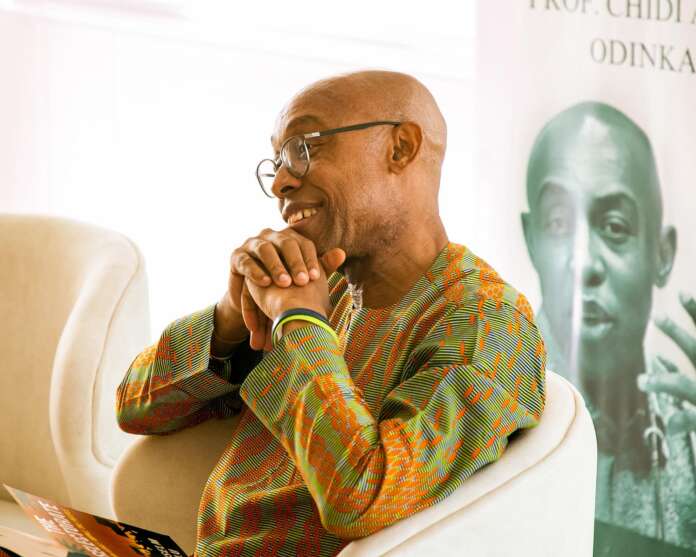
Law teacher, author and a former Chair of the National Human Rights Commission (NHRC), Prof. Chidi Odinkalu, had questioned why BOSAN has not taken any action concerning the matter.

In a post made via his X (formerly Twitter) handle, Odinkalu said: “In the wake of this scandal over that property in the UK involving the SAN, the Body of Senior Advocates, #BOSAN (as the self-regarding coven of SANs is called), once again proves itself unwilling & unable to or uninterested in looking at the mirror.”

In a WhatsApp chat with Law & Society Magazine, however, the BOSAN’s Secretary said: “The matter was referred to BOSAN’s Ethics Committee over a week ago.”

House 79 Randall Avenue, London NW2, the property at the centre of a legal dispute, was purchased in 1993 by Useni under the name “Tali Shani”.

However, delivering judgment in the suit filed by one “Ms Tali Shani”, a London property tribunal last week concluded that neither Ozekhome nor the plaintiff, Ms Tali Shani, was entitled to claim ownership of the property, due to irreconcilable testimonies of witnesses called by both parties, according to TheCable online.

Mr Ewan Paton of the First-tier Tribunal (Property Chamber), ruling in the suit filed in 2021, held that neither the applicant, “Ms Tali Shani”, nor the respondent, Ozekhome, could prove ownership of 79 Randall Avenue, London NW2.

Recall that Useni, who died earlier this year in France after a protracted illness, was a star witness for the senior lawyer, according to reports.

It was believed that the funds used by the staunch ally of the former Head of State, late General Sani Abacha, were connected to public funds laundered during his time in office.

Besides being a former FCT minister, Useni was also a one-time military administrator of former Bendel State, from where the present Edo and Delta states were carved out.

The problem, however, started when Ozekhome sought to register the transfer of the property executed in his favour in August 2021 by “Mr Tali Shani”.

According to the documents, the transfer of the property to the senior lawyer was “not for money or anything that has a monetary value” but a “gift”, and “out of gratitude”, for the “many legal services” Ozekhome had rendered to him in the past.

However, that position was countered by solicitors representing “Ms Tali Shani”, another claimant to the property, who also expressed outrage at the purported transfer of the said property to Ozekhome.

The trial unveiled a high level of mutual accusations of forgery, conspiracy, corruption, and impersonation.

Central to the case was the identity of “Ms Tali Shani”, who never showed up before the tribunal, despite multiple adjournments on her instance.

Her lawyers, who had in 2024 told the tribunal that she was hospitalised, later produced documents claiming she had died in Nigeria.

In support of her case, her lawyers had tendered some documents, which included medical reports, a Nigerian national identity slip, a mobile phone bill, a death certificate, and even an obituary notice, as well as the testimony of a witness, Anakwe Marcel Obasi, who claimed to be a cousin of the applicant.

According to Obasi, the late Ms Tali Shani and the late General Jeremiah Useni “had a very long affair; an affair that I believe lasted a decade” and “remained cordial and friendly” afterwards.

The witness further claimed that his cousin had told him that she once wanted to move to the UK but changed her mind, but then “gave money to the late General Useni to assist her in the purchase of a property in London where she was going to reside” in the “early 1990s”.

The witness admitted that he had not produced a single photograph of himself with his supposed cousin, Useni, the respondent, or even his purported nephew, Damola, because he was “not a photogenic person” and that he “never found it necessary” to take such pictures.

Regarding the alleged funeral rites and burial of his cousin (Ms Tali Shani), Obasi, who claimed that there had been an official photographer at the event, however, told the tribunal that the photographer was “killed by a bandit two days after the funeral”.

Another plaintiff witness, Ayodele Damola, alleged biological son of Ms Tali Shani, claimed that his mother had purchased the property in 1993, and added that she was in a relationship with the late Useni during that period.

“My mother, through General Useni, agreed to rent out the property rather than leaving the same fallow,” Damola stated.

Damola also alleged that the transfer of the property to Ozekhome was an attempt by Useni to repay “N54 million Naira” which he had borrowed from the senior lawyer for an election campaign.

He told the tribunal that the general had first asked his mother to transfer the property to the respondent, but when she refused, they then persuaded a “poor innocent man” (presumably Mr. Tali Shani) to apply for a passport and pose as the owner.

While Obasi had claimed Ms Tali Shani was terminally ill, resided in Lagos, and barely had any mobility, Damola, in an affidavit, said his mother died in a road accident along Jos-Abuja road.

The purported death certificate stated that she died in a “hospital,” while an affidavit sworn in Abuja on October 7, 2024 by her supposed son claimed that she had died “on October 3, 2023 by accident along Jos Plateau State and Abuja way”, TheCable said.

Further contradictions were also found on the obituary, where a “thanksgiving service” was listed for Sunday, November 30, 2024, but that date did not match the calendar as November 30, 2024 was actually a Saturday, with the Sunday falling on December 1. This mismatch was one of the factors that led the tribunal to dismiss the obituary as forgery.

Besides, there were also discrepancies in Ms Tali Shani’s date of death presented by the witnesses.

Head, Legal, Regulatory and Compliance Services at the National Identity Management Commission (NIMC), Festus Esangbedo, said the National Identification Number (NIN) slip presented by “Tali Shani” was “fake, fraudulent and not authorised by the commission”.

Esangbedo’s inquiry revealed that although a NIN had been issued on June 23, 2024, “the picture attached to the NIN has some distinct irregularities and does not comply with ICAO standards.” As a result, the NIN was suspended.

He disclosed further that the NIN slip was forged and obtained “by irregular means,” leading to its complete removal from the system.

Among the irregularities he highlighted were that the registration was done remotely in Monaco rather than in person, no fingerprints were captured because “the unknown agents who created this NIN had fraudulently made use of the ‘amputee’ provisions of the NIMC,” and the photograph used was non-compliant with international standards.

Another witness, Ibrahim Sini, a Superintendent with the Force Intelligence Department, Nigeria Police, traced the mobile bill, supposedly in the name of Ms Tali Shani, back to its real source.

Enquiries with the telecommunications company revealed that the account was actually registered to Mohammed Edewor, the Lagos solicitor connected with the applicant’s legal team.

According to Sini, state intelligence operatives in Jos, who were dispatched to verify the address physically, confirmed “this address simply did not exist”.

The judge concluded that all the evidence to prove Ms Tali Shani’s identity were fraudulent.

The tribunal held, “I do not accept that ‘she’ was ever a real living person. I do not accept that ‘she’ therefore died, whether in hospital or in a mysterious car accident on the road to Abuja. I certainly do not accept that ‘she’ purchased this property in London in 1993 in her ‘hey days’. Nor do I accept that Mr. Ayodele Damola is ‘her’ son, or that Mr. Anukwe Obasi is ‘her’ cousin.”

The judge added that the evidence showed “forgery and deception” and struck out the case as an abuse of process.

“The case has been pursued by others in the name of a person who never existed,” the judgement declared.

On the side of the respondent, the court said the narrative advanced by Ozekhome and supported by Tali Shani’s son amounted to “a contrived story… invented in an attempt to provide a plausible reason” for the transfer.

Ozekhome, who represented himself in the latter stages of the proceedings, argued that the property was transferred to him in 2021 by “Mr Tali Shani”, who he claimed was the true registered owner — although Useni registered it in the name of “Ms” Tali Shani.

He admitted that he had never known “Mr. Tali Shani” before January 2019, and that he had no personal knowledge of the original 1993 purchase of the London property or of its management in the years that followed.

Instead, he relied on his relationship with the Useni, whom he had known for over two decades as both a client and a friend.

According to Ozekhome, his acquaintance with “Mr Shani” developed after their introduction in 2019.

He described Shani as a man from a wealthy family, involved in farming cattle, groundnuts, and mangoes, and as a “big property guy” engaged in commercial dealings. Ozekhome stated that he undertook a number of legal matters for him, winning several cases. These services, he said, ranged from advisory work to court appearances.

He insisted that the transfer was a gift from “Mr Shani,” given in gratitude for the extensive legal services he had rendered in the two years since their introduction.

Ozekhome testified that Shani felt “beholden” to him, even describing him as a father figure. He denied ever paying the £500,000 mentioned in Shani’s statement or any other sum in cash.

Instead, he argued that the property was transferred to him as recognition that the value of his legal services exceeded that amount

But the tribunal, in its findings held, “Mr. Tali Shani… did not purchase this property himself in 1993, and so had no title of his own to pass to the respondent.”

The tribunal accepted that a man named Mr Tali Shani existed and held a genuine Nigerian passport, but found his claim of buying a London property in 1993 at age 20 to be “implausible and unproven”.

Shani, who testified as Ozekhome’s witness, had claimed in his evidence that he bought the property with his own money as an investment and appointed Useni to manage it from the start.

However, the tribunal held that his account lacked detail, supporting documents, and credibility, and that his explanations —claiming wealth from cattle and mango sales — were unconvincing.

Mr Shani’s testimony also contradicted with Useni’s that they only met years later, when Shani approached him in 2010 to manage the property.

The tribunal concluded that Shani had nothing to do with the 1993 purchase.

In his own evidence in June 2024, Useni had confirmed that he — not anyone called Tali Shani — bought the property in 1993.

“I owned it… I bought the property… before I gave it to someone to run… I paid the deposit… then bit by bit…. I bought it… it is my property,” he said.

The tribunal stated that Useni’s evidence was consistent with documents showing the 1993 purchaser as “Philips Bincan”, another alias.

The tribunal concluded that the London property was purchased by Useni, who was also a Minister of Transport under President Ibrahim Babangida, and not the man claiming to be “Mr Tali Shani”.

Although, the property was registered under the name “Tali Shani”, the tribunal held that evidence from a Jersey court case showed that Useni had a practice of using false or “coded” names, such as “Tim Shani,” for bank accounts and companies.

The court had held that the similarity of names and timing strongly supported the finding that Useni deliberately used the false name “Tali Shani”, to register the property.

The tribunal ruled that since “Mr Tali Shani” had no legal title to transfer the London property to Ozekhome, the chief land registrar must cancel Ozekhome’s application to be registered as proprietor.

The evidence showed Useni, who was the real owner of the property, had directed the transfer to Ozekhome.

The tribunal rejected “shifting claims” by Ozekhome and Shani about consideration for the transfer — ranging from cash payments, to legal services worth over £500,000, to gifts of property, to a gesture of gratitude — finding them contradictory, implausible, and fabricated.

The court concluded that Shani was merely a conduit used by Useni, who had registered the property in the false name “Tali Shani” in 1993, and therefore Shani could not pass ownership to Ozekhome.

“As to precisely why General Useni chose to direct this transfer to the respondent, I do not need to (and indeed cannot) make detailed findings. I consider that it is highly possible that it was in satisfaction of some debt or favour owed,” the judge held

He added, “The final outcome of this case, therefore, is that both parties have failed. Neither ‘Tali Shani’ was who they said they were… The real owner, via a false name, was General Jeremiah Useni.”

Finally, the court held that since Useni was deceased, ownership now rested with whoever obtained probate of his English assets.

The decision will be published, leaving it to the relevant authorities to decide what further action to take.

Click here to download the full judgment.

Tragedy as retired Air Vice Marshal Osita Obierika dies on Abuja-bound British Airways flight

A British Airways (BA) flight from London to Abuja was diverted to Barcelona, Spain, in the early hours of Monday, after Osita Obierika, a retired Nigerian Air Vice Marshal from Anambra State, died on board.

The aircraft, which departed London’s Heathrow Airport at 11:00 p.m. on Sunday, October 5, was scheduled to land at the Nnamdi Azikiwe International Airport, Abuja, by 5:00 a.m. Monday.

However, at about 1:30 a.m., the pilot declared a medical emergency and diverted to El Prat Airport in Barcelona.

SPONSOR AD

Sources told Daily Trust that the deceased, believed to be in his early 80s, had been ill and was being flown back to Nigeria for further treatment when he passed away mid-flight.

He was one of only a few surviving retired air vice marshals from Anambra State.

The incident caused distress among passengers, with confusion onboard reportedly triggering a second medical emergency involving a pregnant woman.

Her condition could not be immediately confirmed at press time.

British Airways, in a message to passengers, apologised for the disruption and assured them of support. “Passengers are advised to expect an email with more information and can reach out to the airline’s Live Chat feature for support. British Airways acknowledges the inconvenience and thanks passengers for their patience and understanding,” the airline stated.

The airline also confirmed that a replacement aircraft would continue the journey to Abuja. Initially scheduled to depart Barcelona at 2:00 p.m. local time and arrive in Abuja at 7:00 p.m., the departure was later adjusted to 2:50 p.m., with arrival expected around 5:45 p.m. Nigerian time.

British Airways apologised for the disruption and provided a replacement aircraft.

The new flight is scheduled to depart Barcelona at 2:50 pm local time, with an expected arrival time in Abuja of 5:45 pm local time.

TIPS