Home Blog Page 193

Children Behind Bars: Nigeria’s justice system fails juveniles

Keeping children in the same facilities as adults violates international human rights standards and exposes the children to immediate dangers, physical and sexual abuse, and other dangers.

By Abdulqudus Ogundapo

On a sunny afternoon in August 2020, 13-year-old Omar Farouq stood before a Sharia court in Kano State, accused of blasphemy. Too young to understand the gravity of the charges, he listened in disbelief as the judge sentenced him to 10 years in prison.

Omar’s ordeal began after a heated argument with a friend, during which they exchanged insults. Soon after, police officers summoned him, and he was charged with blasphemy. When the case became public, an angry mob attacked his home, forcing his mother to flee to a neighbouring village.

Click here to continue reading.

Contempt proceedings commence against hospital director over missing records of Journalist who died in police custody during 2020 #EndSARS protests

A Lagos State District Coroner has ordered contempt proceedings against the Medical Director of Ikorodu General Hospital for allegedly disobeying a court order to produce records related to the death of Pelumi Onifade, a journalist who died in police custody during the #EndSARS protests in 2020.

This is contained in a statement signed by the MRA’s Communications Officer, Idowu Adewale, and sent to WikkiTimes on Wednesday.

According to the statement, presiding Coroner Mrs. Temitope Oladele issued the order during Tuesday’s hearing of the inquest into Onifade’s death. She directed that Form 48, known as a “Notice of Consequences of Disobedience of Court Order,” be served on the Medical Director or any authorized representative of the hospital.

The order followed an application by Media Rights Agenda (MRA), represented by Monday Arunsi, who told the court that the hospital had failed to comply with a previous directive issued on August 8, 2025, requiring it to produce records on the deposit, release, or status of Onifade’s remains.

MRA said its legal team visited the hospital on October 2 to meet with the Medical Director but waited over five hours without being attended to. Counsel Samuel Adebola, who appeared alongside Arunsi, told the court that the hospital had ignored the order for over a month.

Granting the application, the Coroner ruled that contempt proceedings be initiated against the hospital for non-compliance and adjourned further hearing to October 22, 2025.

Onifade, a reporter with Gboah TV, was arrested by police officers attached to a Lagos State task force while covering the #EndSARS protests and was later found dead at the Ikorodu General Hospital mortuary.

Senior Advocates of No-Consequence (SANs)

By Chidi Anselm Odinkalu

The ritual of the “Call to Bar” is the formal ceremony for the admission of new entrants into Nigeria’s legal profession. The responsibility for administering it resides in the Body of Benchers (BoB), a statutory entity described by law as “a body of legal practitioners of the highest distinction in the legal profession in Nigeria.”

The solemnity of the Call to Bar is guaranteed by the presence of members of the BoB who administer the ceremony resplendent in ceremonial gowns supposed to testify to their high distinction in matters legal. The criteria for the determination of this threshold requirement of “highest distinction” antecedent to membership of the BoB are, however, opaque.

The ceremony itself is usually an occasion for members of the Body of Benchers to remind the new entrants of the obligations that come with their new status. It should go without saying that the members of the BoB should themselves embody those values through their own records and example. It should be no surprise that, in Nigeria, this is not usually the case.

There are three categories of membership of the BoB. Membership can exceptionally be honorific, a mostly vacuous conferment reserved for political or diplomatic occasions. Separately, there is ordinary membership attained through high office in public service as judges or Attorneys-General or as leaders or nominees of the Nigerian Bar Association (NBA). Such membership these days also extends to the chairpersons of the judiciary committees of the two chambers of the National Assembly as well as to principal officers of the National Assembly who are lawyers. Members who are conscientious in attending meetings and official dinners of the BoB over a period of four years may be conferred the status of Life Benchers. That is the stuff of high distinction.

The most recent Call to Bar ceremony occurred in Abuja, the Federal Capital Territory, over three days from 23 to 25 September 2025. Away from the cameras, on 24 September, something happened which speaks to the existential – even terminal – crisis of values, leadership and responsibility that currently afflicts the governance of Nigeria’s legal profession. At the insistence of certain members of the BoB, one of the members elevated to the status of Life Bencher only in January 2025, Chief Mike Ozekhome, was prevailed upon to quietly withdraw from participating in the process of admitting the new entrants into the profession.

The reason given by the objecting members of the BoB was a judgment delivered a mere six weeks earlier on 11 September 2025 in his ultimately unsuccessful application for registration of title in real estate before a property registration tribunal in England, in which the presiding judge shredded Ozekhome’s testimony as “an invention and contrivance.” According to Gideon Christian, a law professor at the University of Calgary in Alberta, Canada, “this case illustrates how corruption operates [in Nigeria]: politicians hide wealth abroad under false identities, while lawyers – sworn to uphold the law – serve as enablers of fraud.” 

The most significant thing about the enforced withdrawal of Chief Ozekhome from the Call to Bar ceremonies last month is not that it occurred. It is that the BoB went out of its way to ensure that it was a well-guarded secret. It is relevant here that in addition to its role in admitting new entrants into the vocation of the law in Nigeria, the BoB also hosts the Legal Practitioners Disciplinary Committee (LPDC), the statutory body charged with enforcing consequences for ethical lapses in Nigeria’s legal profession. When it encounters cases affecting senior lawyers, however, the BoB seems to lapse into a habit of no consequence.

On 10 December 2021, the Supreme Court of Nigeria determined that Michael Aondoakaa, a Senior Advocate of Nigeria, (SAN), and former Attorney-General of the Federation (HAGF), “had, by his conduct, undermined and subverted the administration of justice and the independence, authority and integrity of the judiciary” and “ought not to be entrusted with any other public office at all.” In effect, the Supreme Court barred Mr. Aondoakaa from public office again in Nigeria. The antecedents of this decision were staggering.

Ahead of Nigeria’s 2007 general elections, political parties organized processes in 2006 to select their candidates for various offices to be contested across the country. In Uyo Federal Constituency of Akwa Ibom State, the then ruling party, the Peoples’ Democratic Party, PDP, in primaries conducted in December 2006, selected Bassey Obot as their candidate to fly their flag in the contest for a seat in the House of Representatives. In a country where the most consequential things are accomplished by the unknown, some unknown persons contrived to remove Mr. Obot’s name from the records of the Independent National Electoral Commission, INEC, substituting him with one Mr. Bassey Etim as the PDP candidate.

In December 2007, the Court of Appeal ordered the President of the Court of Appeal to constitute a new tribunal in Uyo to hear Mr. Obot’s case. Mr. Aondoakaa, then newly installed as the HAGF, wrote to the President of the Court of Appeal (PCA) claiming powers to instruct him not to comply with the order of the Court of Appeal. He cited as his reason the fact that he was considering a petition from Mr. Etim. Unable to contrive a sensible reason to disobey the order of a court over which he presided, however, the PCA disregarded Mr. Aondoakaa’s importuning and obeyed the Court of Appeal.

In April 2008, the Tribunal decided in favour of Mr. Obot, ordering INEC to certify him as the winner, so he could be sworn in as such. The Court of Appeal, the final arbiter then in disputes over elections to parliament, affirmed the judgment of the tribunal. In separate letters thereafter to the INEC Chairman and to the Speaker of the House of Representatives, Mr. Aondoakaa again required them to disobey and disregard the final orders of the Court of Appeal. They complied. Allegations that Mr. Aondoakaa issued those letters in exchange for value were unverified but not implausible.

On 15 May 2009, Mr. Obot, whose judicial victory had been frustrated by the HAGF, returned to the Federal High Court, asking it to declare that Mr. Aondoakaa had abused his office and desecrated the independence and authority of the judiciary. On 1 June 2010, the Federal High Court obliged him, lamenting that “the hallowed office of the HAGF has been gradually desecrated and put into disrepute with the likes of [Mr. Aondoakaa] being appointed and occupying it. It is meant for learned eminent members of the Bar and not for political charlatans, jobbers or latter-day praise singers/converts….”

On 3 September 2015, the Court of Appeal affirmed that judgment of the High Court with the hope that “that office [of HAGF] should never again be occupied by individuals of such poor quality as [Mr. Aondoakaa].” The Court of Appeal went further and invited the Nigerian Bar Association, NBA, “to subject [Mr. Aondoakaa] to its appropriate disciplinary processes.”

In his appeal to the Supreme Court, Mr. Aondoakaa did not deny what he did but claimed that he only acted as an adviser in the letters he wrote and that the recipients were at liberty to disregard his opinion. The Supreme Court made short shrift of Aondoakaa’s chicanery. Describing his conduct as “reprehensible”, “reckless” and “unbecoming of the occupant of such an exalted office,” the Court accused him of violating Rule 30 of the Rules of Professional Conduct (RPC) in the Legal Profession which require every lawyer to refrain from doing “any act or conduct….in any manner that may obstruct, delay or adversely affect the administration of justice.”

There were no consequences.

Before Mr. Aondoakaa, there was the case of Kunle Kalejaiye, SAN, involved in corrupting a judge, Thomas Naron, in an election petition. In 2013, Thomas Naron lost his job but the Supreme Court decided in 2019 on a disreputable technicality that Mr. Kalejaiye could keep his. Two years later, the same court similarly decided that there should be no consequences in the case of Dr. Joseph Nwobike, another SAN whose speciality was “inducing court registrars to ensure that his cases were assigned to his preferred judges so he could obtain favourable judgments.”

Chief Mike Ozekhome is rightly described as “one of Nigeria’s most high-profile lawyers.” Few will quibble with his claim to be serenaded in those terms. In addition to being a Life Bencher, Chief Ozekhome is also a SAN. The combination of these two attainments makes him one of the most senior lawyers in Nigeria. His is only the latest in a long line of senior lawyers whose relationship with the rules of professional conduct appears to be governed by a Teflon rule of no consequence.

A lawyer and a teacher, Odinkalu can be reached at [email protected]

The views expressed by contributors are strictly personal and not of Law & Society Magazine.

Happy International Day of the Girl Child, By Audrey Chinelo Ofoegbunam, Esq

Today, we celebrate the strength, courage, and brilliance of every girl child. Let’s work together to create a world where girls have equal opportunities, access to education, and protection from harm.

Let’s empower girls to be leaders, innovators, and changemakers. Let’s listen to their voices, amplify their stories, and support their dreams. Thus, The girl I am, the change I lead: Girls on the frontlines of crisis

Happy International Day of the Girl Child!

Audrey Chinelo Ofoegbunam, Esq, ACIArb(UK), ANICArb, ACIS, AICMC, ACTI.

#InternationalDayOfTheGirlChild

#GirlPower

#EmpowerGirls

#Education

#Change

#Innovate

#Inspire

#BeInspired

#Transform

#EducationForAll #GirlChildMatters

#VisionForTheFuture

#EqualityForGirls

#YourWelfareMyPriority

#ImpactfulWelfare

#NBAWelfare

#LegalTips

#WelfareThatMatters

#NBAWelfare2026

#Leadership

#LegalProfession

#ThinkWelfare

#OurWelfareMatters!!!

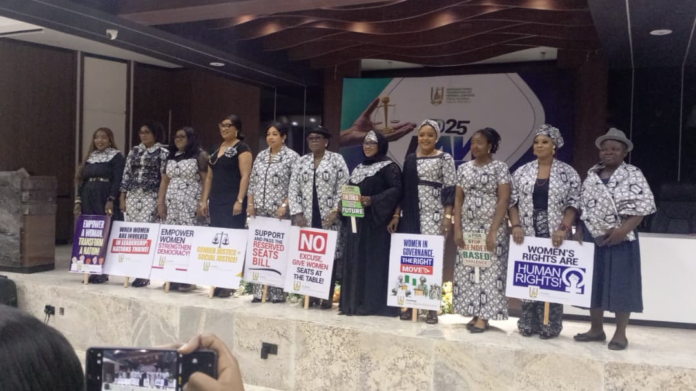
AWLA Nigeria and Surulere Local Govt. mark International Day of the Girl Child 2025

The African Women Lawyers Association, AWLA Nigeria, and officials of the Surulere Local Government Area of Lagos state used the occasion of the International Day of the Girl Child 2025 to draw attention to the daily challenges of the girl child in Nigeria.

To commemorate the day, Surulere Local Government invited AWLA Nigeria to speak at an event organised by the Women Affairs and Poverty Alleviation Department of the Itire-Ikate LCDA of the council.

The International Day of the Girl Child 2025 theme is “The girl I am, the change I lead: Girls on the frontlines of crisis.”

About a hundred girls between the ages of 10 and 20 were at the event.

AWLA Nigeria was represented by its President, Caroline Ibharuneafe, Bibian Aloba, the immediate past National General Secretary of AWLA Nigeria and Chigozie Awunor, Treasurer of AWLA Nigeria Lagos Branch.

Johnson & Johnson to pay $966 million after jury found company liable in talc cancer case

A jury in Los Angeles has directed Johnson & Johnson to pay $966 million to the family of Mae Moore, a California woman who died from mesothelioma, after discovering that the world-famous company’s talc-based baby powder contributed to her health challenge.

Ms. Moore, who died in 2021 at the age of 88, sued J&J the same year, claiming its baby powder contained asbestos fibres that caused her rare and deadly cancer. The jury’s verdict, delivered 7 October 7, 2025, included $16 million in compensatory damages and a staggering $950 million in punitive damages, according to court filings.

The award could, however, be reduced on appeal. The U.S. Supreme Court has previously ruled that punitive damages should generally not exceed nine times the compensatory amount.

In response, Erik Haas, J&J’s worldwide vice president of litigation, called the verdict “egregious and unconstitutional,” insisting that the case was based on “junk science” and confirming that the company plans to immediately appeal.

Johnson & Johnson has repeatedly maintained that its talc products are safe, asbestos-free, and do not cause cancer. The company stopped selling its talc-based baby powder in the U.S. in 2020, replacing it with a cornstarch version. Mesothelioma, a rare and aggressive cancer, has long been linked to asbestos exposure.

Following the verdict, Trey Branham, one of the attorneys for Moore’s family, said they are hopeful J&J will “finally accept responsibility for these senseless deaths.”

J&J currently faces over 67,000 lawsuits from people who claim they developed cancer after using the company’s talc products. While most of these cases involve ovarian cancer, a smaller number — like Moore’s — allege mesothelioma caused by asbestos contamination.

The company has repeatedly tried to resolve the lawsuits through bankruptcy, but its proposals have been rejected three times by federal courts. The mesothelioma cases were not included in J&J’s last bankruptcy plan, leaving many of them to proceed independently in state courts.

In the past year, J&J has faced several multi-million-dollar verdicts in mesothelioma cases — Monday’s being among the largest. The company has, however, also won some recent trials, including one last week in South Carolina, and successfully overturned or reduced several verdicts on appeal, such as a $260 million case in Oregon that was thrown out by a state judge.

In six months, Ogun state recorded over 10,000 mental health patients’ visits — Commissioner

  • But is poverty fuelling mental health breakdowns?

Ogun State government said its four service points in Abeokuta, Ijebu Ode, Ilaro, and Ota documented over 10,000 mental health patient visits during the first half of 2025.

The figure was announced by the State Commissioner for Health, Tomi Coker, during a news conference to commemorate the 2025 World Mental Health Day.

Dr. Coker, who was represented by the Permanent Secretary in the Ministry, Kayode Oladehinde, highlighted the growing and chronic nature of mental health conditions in the state. Of the total patient visits, nearly 1,000 were new patients, with the rest being follow-up cases.

The Commissioner identified the top conditions recorded at the service points as psychosis, neurosis, epilepsy, depression, and substance use disorders.

She noted that various crises—including floods, disease outbreaks, insecurity, and conflicts—leave deep psychological scars.

The Commissioner stated that the administration of Governor Dapo Abiodun is dedicated to building a state where mental health services remain accessible, affordable, and acceptable to all residents.

She emphasized that addressing the issue requires a collective effort, calling on families to create safe spaces for open conversations on mental health, employers to build supportive workplaces, religious and community leaders to use their platforms to preach compassion and access to care, and the media to report responsibly, challenge stigma, and spread hope.

Abiemwense Moru writes that “Poverty is a global menace distressing millions of people, depriving them the essentials of living and increasing the risk of suicidal thoughts.”

Below, the writer delves more into the subject.

It is not merely a lack of income; it is a deep, suffocating force affecting mental health, dignity, and life itself.

For millions, it creates a silent path towards despair.

In Nigeria, the Federal Government, among other measures, recently unveiled a programme to directly support a minimum of 1,000 economically active people in each ward across Nigeria in order to reduce poverty at the grassroots level.

Atiku Bagudu, Minister of Budget and Economic Planning, provided some insights.

“Having stabilised the macro-economy, the next step is to drill development down to the lowest levels so that, in all 8,809 wards, we can stimulate economic activity that will generate employment, reduce poverty, enhance food security, and strengthen social protection,” Bagudu said.

Nonetheless, Andrew Mamedu, Country Director at ActionAid Nigeria, said poverty stretched beyond empty wallets.

“It affects access to health, education, and mental well-being, leaving people emotionally and physically drained in ways that are not always visible.”

As of 2023, the World Bank reported nearly 104 million Nigerians living in poverty—that is almost half of the population, up from 40 per cent in 2018, an alarming 24 million increase.

Urban poverty rose from 13 to 20 million people, while rural poverty surged from 67 million to 84 million.

But income tells only part of the story; UNICEF’s 2023 report revealed that 18 per cent of Nigerians live in severe poverty, while 33 per cent are multidimensionally poor, facing multiple deprivations like housing, healthcare, and education.

“Poverty in Nigeria is thus about more than money, it is about opportunity, dignity, and the mental scars left on those with limited options.

“These are the realities ActionAid sees daily.”

In Aug. 2024, ActionAid Nigeria unveiled a 10-year strategy: “Citizens’ Action to End Poverty and Injustice.”

It targets structural inequality and aims to empower women, youth, and persons with disabilities.

More so, ActionAid leads the End Austerity Campaign, bringing together youth, civil society, and rights groups to resist economic policies that cripple essential public services and deepen mental and financial hardship.

“These efforts are crucial, because behind the numbers is a worsening crisis.

“We are seeing the emotional toll of poverty become a public health issue, especially with rising suicide rates.”

Nigeria faces rising suicide numbers, with the WHO estimating that around 15,000 people die by suicide every year; this is likely an underestimate due to stigma and poor reporting mechanisms.

Conversations about mental health remain taboo in many communities.

As a result, many Nigerians, especially young people, suffer in silence and isolation, unable to find outlets for their distress.

A 2021 study found those aged 25 to 34 were the largest group of reported suicides; their struggles were both financial and emotional, rooted in hopelessness, pressure, and unmet societal expectations.

Common triggers for suicidal thoughts include unemployment, debt, and the inability to meet family needs.

For many, the mental burden of survival in today’s Nigeria is relentless and crushing.

Mental health professionals report that more people now express despair linked to finances; many admit they feel life is not worth living, as economic instability suffocates their ambitions and confidence.

Reports show that only 10 per cent of Nigerians who need mental health care can access it.

Nigeria has one of the lowest levels of mental health coverage globally, leaving millions without the support they urgently need.

Smaller African nations like Lesotho allocate more to mental health; Lesotho dedicates about five per cent of its health budget to mental health services.

Nigeria, in spite of being Africa’s largest economy, spends far less.

“This is not just about money, it is about value; if we continue to sideline mental health, we are telling Nigerians their lives don’t matter; that has to change.”

Experts say for some young people, suicide becomes a tragic response to economic suffering.

Poverty, in this sense, is not just a condition; it becomes a mental and emotional death sentence carried quietly by millions.

Mamedu said that ActionAid worked in marginalised communities where exclusion was greatest.

“We see the human face of poverty, families with no support, youths with no prospects; yet, we also see incredible resilience.

“By working directly with such communities, we make sure that the national conversation on poverty is grounded in real-life struggles, not just in boardroom statistics.”

To tackle this crisis, Mamedu believes Nigeria must adopt a two-pronged approach.

“We need inclusive economic policies and investment in mental health. It’s the only way forward, Mamedu said.”

Ephraim Audu, a development economist, cannot agree more.

“Between 20 to 30 per cent of Nigerians now face mental health challenges linked to economic hardship.

“This is a national emergency.”

According to a 2025 World Bank report, more than 106 million Nigerians now live below the extreme poverty line.

Afrobarometer also found that 79 per cent of Nigerians experienced high levels of lived poverty in 2024.

“Inflation, weak currency, low wages, and joblessness have eroded household stability. Many people can no longer meet basic needs, and that takes a huge psychological toll.

“This is not just financial strain, it is emotional warfare.

“People are being crushed under the weight of unmet needs and mounting obligations they cannot fulfill.’’

Economically, Audu said individuals were rational agents trying to maximise well-being.

“But when income collapses, stress and despair take over; people begin to feel worthless and stuck.

“Poverty erodes more than income, it destroys dignity.

“Business failure, job loss, and mounting debt produce a dual burden, economic stress and mental trauma.”

Audu also highlighted what economists call the frustrated expectations gap.

“Young people are told education and hard work pay off; but the system is broken, so they feel betrayed and lost.

“Many youths seek escape through migration, popularly known as ‘Japa’; however, high visa costs and bureaucratic blocks create new frustration, deepening their sense of helplessness and failure.

“Suicide becomes, for some, a perceived way out; we see this globally, suicide rates tend to rise during economic downturns, and Nigeria is no exception.”

Audu called for integrated policy action.

“We need economic stabilisation, job creation, and robust mental health systems. Piecemeal solutions won’t work in this kind of multidimensional crisis.”

Specific steps Audu recommends include: Macroeconomic Stabilisation: Tackle inflation, stabilise the naira, and create decent jobs to reduce household financial pressure and restore confidence in the economy.

“Social Protection–Expand welfare programmes, including targeted food subsidies and unemployment benefits, to provide a safety net for the most vulnerable.

“Mental Health Integration–we must embed mental health services in primary healthcare and train frontline workers to spot distress early.

“Youth Employment–Public-private partnerships can help create digital and vocational opportunities to keep youths engaged and hopeful,” Audu said.

Dr Adedotun Ajiboye, Chief Clinical Psychologist at Ekiti State University Teaching Hospital, said suicide had become a major public health concern.

“We are seeing the consequences of ignoring mental health.”

According to WHO, Nigeria’s suicide rate stands at 17.3 per 100,000 people.

“That is one of the highest rates in Africa; the numbers are alarming.”

Ajiboye said that studies showed 21.6 per cent of undergraduates in Lagos had suicidal thoughts.

“Among those diagnosed with depression, over half reported contemplating suicide; that is terrifying.”

In another study in Southwest Nigeria, Ajiboye found 20 per cent of youths had suicidal ideation, and about 12 per cent had attempted suicide in the previous year.

“The trends are consistent and very worrying.”

“The more severe the depressive symptoms, the more likely suicidal thoughts become.

“Among those with severe depression, the rate of suicidal ideation jumps to 83.3 per cent.”

Ajiboye cited multiple risk factors: “Low self-esteem, anxiety, trauma, drug abuse, poor academic performance, and of course financial pressure–these are all red flags we see every day.”

He said that hanging and poisoning accounted for more than 80 per cent of suicide methods in Nigeria.

“These deaths are preventable. But only if people have access to help, and feel safe seeking it.”

Ajiboye is also the founder of the Hope Initiative for Mental Wellness and Anti-Drug Society, an NGO focusing on awareness.

He said mental health education must start from schools and communities.

“Awareness is key; we must reduce stigma and normalise conversations about mental illness; people must know it is okay to ask for help,” Ajiboye said.

As Mamedu, Audu, and Ajiboye all stressed, poverty damages both body and mind, often with irreversible consequences.

Experts say only a holistic approach, economic stabilisation, social protection, and mental health investment, can bring meaningful change.

Most of this report was written by Abiemwense Moru from News Agency of Nigeria

Agenyi Attah Ogwu James Onoja, SAN leads delegation to Attah of Igala

Author and distinguished Senior Advocate of Nigeria, Chief Dr. Ogwu James Onoja, recently led a high-powered entourage to the Palace of the Attah of Igala, His Royal Majesty, Matthew Alaji Opaluwa Oguche Akpa II, in Idah, Kogi State.

Idah is the capital of the Igala Nation.

The visit of Onoja SAN, who is also the Agenyi Attah of Igala Kingdom, was to pay homage and reaffirm his deep respect for the Royal Father.

Dr Onoja, SAN, has authored several books on Nigerian law, including practice and procedure guides for the Supreme Court, Court of Appeal, and Federal High Court. Some of his other works include commentaries on justice, collections of dissenting judgments, and compilations of rulings and papers.  

Below are some of his publications:

  • The Supreme Court Rules: Practice and Procedure (2010) 
  • The Court of Appeal Rules: Practice and Procedure (2010) 
  • Federal High Court Rules: Practice and Procedure, volumes 1 and 2 (2012) 
  • Fundamental Rights (Enforcement Procedure) Rules, 2009 (2021) and many others.

On Saturday, October 4th, 2025, his wife, Mrs. Rosemary Onoja, an accomplished chartered accountant, was officially crowned as Onobule Omemele (Noble Woman) by the Catholic Diocese of Idah Women Organisation at St. Boniface Catholic Church, Idah.

Rufai vs Umahi – Where was the rudeness? – By Ayo Lijadu

A close and respected friend had asked this question below, concerning the now viral television interview encounter between Minister of Works, David Umahi, and Arise Television anchor, Rufai Oseni:

“How do you describe someone who invites you to his own space for a dialogue but decided to be rude and disrespectful all in the name of being a fearless journalist?”

My response to him and countless others like him whom I have read their comments, particularly on social media, is this; did you watch the same interview that I watched? If the same interview, then, point of correction; David Umahi requested to be there, not invited, and his request graciously granted.

Secondly, you said he came for a “dialogue”. Wrong again.

From evidence provided of that broadcast, now readily available in the public domain, the Minister didn’t go to Arise TV for a dialogue but a monologue, where he assumed he had the prerogative of monopolizing an interview which is supposed to be a function of give and take; I ask the questions, and you provide the answers.

Thirdly, you said Rufai was rude and disrespectful. How? And in what manner or precise words spoken by him and addressed to Umahi can rudeness and disrespect be implied?

I have read and heard several comments from people who said Rufai was rude and disrespectful because he told the Minister to “Keep quiet”.

They are wrong; both in conclusion and contextualization.

“Keep quiet”, as a two-word, full sentence, delivered as a stand alone and not part of a longer sentence, is a command and an order demanding obedience from the person so addressed by that command. In other words, a strong admonition and warning to stop talking IMMEDIATELY.

Were Rufai Oseni’s words to Minister David Umahi delivered as a two-word, full sentence of stern command? Evidence available says, NO. If he had indeed addressed the Minister in this manner, “Keep quiet”, he would indeed be guilty of rudeness and disrespect.

But what were Rufai Oseni’s exact and precise words to David Umahi, which many have run on to social media with, accusing him of rudeness and disrespect?

Oseni: “If you can just keep quiet and be calm, and just allow me to speak, I’ll be happy”

Was this rudeness? In my dictionary; No. It was a polite and respectful request, directed especially to a man who presumably had come for a dialogue but had actually come combative; aggressively, condescendingly, and rudely monopolizing the conversation for over ten minutes without allowing the one who is charged with posing the questions to put in even sixty seconds of words

What arrant nonsense!

Since when did an interview translate to a one-man, one-directional monopoly of public engagement?

Even after Rufai had asked politely several times to be allowed to speak, and even complained, facing the camera saying, “Minister will not allow me to speak, Minister will not allow me to speak”, that arrogant fellow employed by the public purse still continued ranting, not willing to let the man do his job.

If he wanted a platform all to himself without having any journalists questioning him, all he needed to do was arrange a press conference, read a prepared statement, distribute same to the journalists and media stations paid to cover it, and then depart immediately afterwards without answering any questions.

It is the sad and unfortunate position of people who, rather than condemn the arrogant, haughty, and disrespectful attitudes of public servants who believe they are beyond being questioned, but would instead turn around and lambast journalists who have the courage of asking the hard questions, that give public servants like Umahi who have transformed themselves into the public’s Masters, the arrogance and audacity to continue in their annoying and insulting belligerence towards their employers, the public, as ably represented by one of the finest breeds in journalism today.

Rufai Oseni refuses to be cowed, to be enticed by brown envelopes and brandished opportunities in the corridors of power, but continues to stand stoutly and bravely, asking the hard questions and demanding the answers on behalf of all of us, the voiceless majority.

Anyone accusing him of rudeness and disrespect towards David Umahi in that interview definitely watched it with a biased, preconceived, and jaundiced mind.

The views expressed by contributors are strictly personal and not of Law & Society Magazine.

DG, DSS, Ajayi and the power of attitude, By Martins Oloja

The recent actions of the Director-General of the Department of State Services (DSS) Nigeria, Mr. Oluwatosin Ajayi, in compensating individuals wrongfully arrested and detained by the agency, serve as a powerful reminder of the importance of attitude in leadership. This gesture not only showcases the DG’s commitment to upholding human rights but also highlights the impact of attitude on organisational culture and public perception.

The DG DSS’s decision to compensate the wrongfully arrested individuals and offer apologies to others demonstrates a significant shift towards accountability and transparency. This attitude is reflected in the DG’s directive to investigate and discipline officers involved in the wrongful arrests, ensuring that those responsible are held accountable for their actions. This is quite unusual and doesn’t smack of an offering from a Nigerian leader, especially from security and intelligence sector that the civil society organisations and the media have always derided for overzealousness and willful violations of human rights. In the news media, we say this is newsworthy because it sounds bizarre, unusual and odd.

Here is the thing, by taking responsibility for the agency’s mistakes and providing compensation, the DSS, easily one of the most powerful intelligence agencies in this regard, is working to restore public trust and confidence in the agency. This approach is essential in building a positive relationship between law enforcement agencies and the communities they serve.

The DG’s actions demonstrate a commitment to leading by example. By acknowledging and rectifying mistakes, he sets a positive tone for the agency and encourages others to follow suit. This leadership style promotes a culture of accountability and transparency within the organisation. As I was saying, this should have a bandwagon effect on other national security, intelligence, military and even para-military agencies’ leaders who do not feel that they have a responsibility to dignify people they serve on their beats. Most of the leaders who often trample on the rights of the civil society activists and media operatives should borrow a leaf from the new deal at the Directorate of State Security.

Doubtless, the DG’s attitude towards accountability and transparency will continue to promote a culture of responsibility, where officers are held accountable for their actions, and that will encourage a more nuanced approach to security operations. Besides, this attitude will shift the culture of the secret service as long as Nigeria’s duty bearers and authorities continue too with robust succession plans in the security and intelligence communities. A situation whereby immediate past President recalled retired officers who could not pass promotion examinations to directorate cadres to be directors-general of such sensitive organisations could not have produced anything else other than a culture of mediocrity.

Apology isn’t a sign of weakness, after all
According to the United Nations, in our personal relationships, apologies seem to be easier than in working relationships. We may fear that apologising to even a colleague in a competitive environment might be perceived as a sign of weakness, undermine our authority or even negatively affect office dynamics. However, an honest and sincere apology has the potential to restore dignity and diminish fear of retaliation or even desire for vengeance on the receiving end. On the giving end, it can be a powerful tool to reconcile a working relationship and to initiate the restoration of trust. In this way, an apology can show strength of character, demonstrate emotional competence and reaffirm that both parties share values in their relationship they want to commit to.

I would like to stress here that we should begin to look at some classics that didn’t fail some of our legends before civilisation kicked us in the face. So, as we continue to grope from darkness to darkness, we need to share some values that can shape our character as a nation. I wrote here the other day on the ‘power of character’, which some icons actually say ‘is destiny’. Yes, ‘character is destiny’. That is, attitude, yes attitude is everything!

I have tested some of the classics and I have found them profoundly powerful enough to shape and even fulfill our destiny as the most populous black nation on earth. We should begin to share with our leaders and managers of our enterprises that there are some simple but significant ‘magic words’ they need to embrace to calm frayed nerves in and out of seasons, in good and bad times. It is a time to tell our leaders that at such a time as this, they need to swallow their pride and vanity and imbibe a habit of apologising to the people they lead. And here is why:

Our leaders hardly understand the most important sentence in the constitution: ‘The security and welfare of the people shall be the primary purpose of government…’ Most of our leaders care only about their security votes as ‘slush funds’ to take care of their future including (re-)election. They hurt the people every day. Through their callous acts, they hurt most families, old and young. They hardly pay salaries and pensions in most states and local governments. Our leaders whose recklessness has triggered import-dependent economy hardly reflect on the consequences of high prices of food items and (consumer) essential goods at this time.

As I was saying, our leaders are also using dubious means to extort even poor motorbike riders by collecting multiple taxes from them every day even in Lagos and Abuja. They don’t care about what happens to the poor and vulnerable, Frantz Fanon calls “the wretched of the earth”.

Our leaders violate even our organic laws to the extent that the Supreme Court even claimed in 2020 that our leaders are ‘taking impunity too far’. In Africa’s most populous nation, the Senate can reject a president’s nominee but the president can call the bluff of the upper house and allow the rejected candidate to begin work and complete some tenure of even five years in office. This is an economy where the federal legislators individually earn higher than the president, vice president, and the ministers of even the richest countries in the world and there is no strong institution to ask questions.

That is why I feel that our leaders should seek the face of God by asking for His grace to understand the power of apologising to the people at this time. There is tension in the land. There is hunger they deny with dubious statistics. There is unbearable inflation they claim they have stabilised. There is insufferable level of corruption they promised to eliminate since 2015. What is worse, it seems to the people that rampaging corruption is fuelling rising insecurity nurtured by terrorism they want us to call banditry. Our leaders therefore need to realise the power of apologising to the people at this time. Here again are more reasons:

Saying You’re Sorry is called apologising. When you apologise, you’re telling someone that you’re sorry for the hurt you caused, even if you didn’t do it deliberately. An apology is a statement that has two key elements: it shows your remorse over your actions and an acknowledgement of the hurt that your actions have caused to someone else. Col. Sanjeet Sirohi, an Indian motivational speaker and soft skill trainer says, ‘I am sorry’ is the most powerful sentence in the world. ‘Why should we apologise?’

There are many reasons we should make a sincere apology when we have hurt someone unnecessarily, or have made a mistake. First, an apology opens a dialogue between yourself and the other person you seem to have hurt. Second, when we apologise, we also acknowledge that we engaged in unacceptable behaviour. This helps us rebuild trust and re-establish our relationship with the other person. Third, what’s more, when we admit that the situation was our fault, we restore dignity to the person we hurt.

In the main, a sincere apology shows that we are taking responsibility for our actions.

‘Why apologies can be difficult’
Despite all these positive reasons, why do some people still find it difficult to apologise? In the first place, it takes courage to apologise. When you admit that you were wrong, it puts you in a vulnerable position, which can open you up to attack or blame.  According to Sirobi, you may be so full of shame and embarrassment over your actions that you can’t bring yourself to face the other person. What is more, you may find yourself following some advice that, “never apologise, never explain.” It’s up to you if you want to be arrogant and damn some consequences.

You may ask somehow if apologising can fix everything. This is another feeling but saying ‘I’m sorry’ when you need to is the right thing to do. It does a lot of good. But by itself, it might not be enough to make everything all better again. Sometimes along with an apology, a person needs to fix the mistake or promise to do better. Sirobi agrees with this line of thought.

Gone are the days of keeping everything bottled up inside to suffer alone.
As we move forward in this time of self-knowledge and self-discovery, it’s vital to acquire the ability to recognise our own mistakes.

So, people in authority in Nigeria need to be told to realise that nobody is perfect and so they are not perfect. They need to realise at this juncture that they cause emotional pain to citizens of this country every day. The trouble, however, lies in their refusal or failure to acknowledge that they have done the people some wrong.

This is therefore a time to tell our leaders in Nigeria that they need to apologise to us as they have hurt us a great deal through poor leadership to the citizens and indeed the black race. Our leaders should swallow their pride and vanity for them to realise that even national apologies can be a big deal. When they offer that, they acknowledge the past to help move everyone forward. We may need to explore more about this context: when nations apologise!

In the main, the compensation and apologies offered by the DG DSS Nigeria demonstrate the power of attitude in leadership. Our leaders at all levels should note and reflect on this today: there is no power when leaders and managers display arrogance and recklessness. And so by prioritising accountability, transparency, and human rights, the DG, DSS, Mr. Ajayi has set a positive tone for the agency and promoted a culture of responsibility. As the DSS DG who has boldly restored the DSS as a Secret Service indeed, continues to work towards building trust with the communities the DSS serves, his approach should serve as a valuable lesson for leaders who do not know that attitude is everything, after all!

The views expressed by contributors are strictly personal and not of Law & Society Magazine.
TIPS