Home Blog Page 192

Locus Standi and The Rivers State Emergency Rule Case: A review of Justice Omotosho’s decision in Briggs & Ors. v. President of Nigeria & Ors

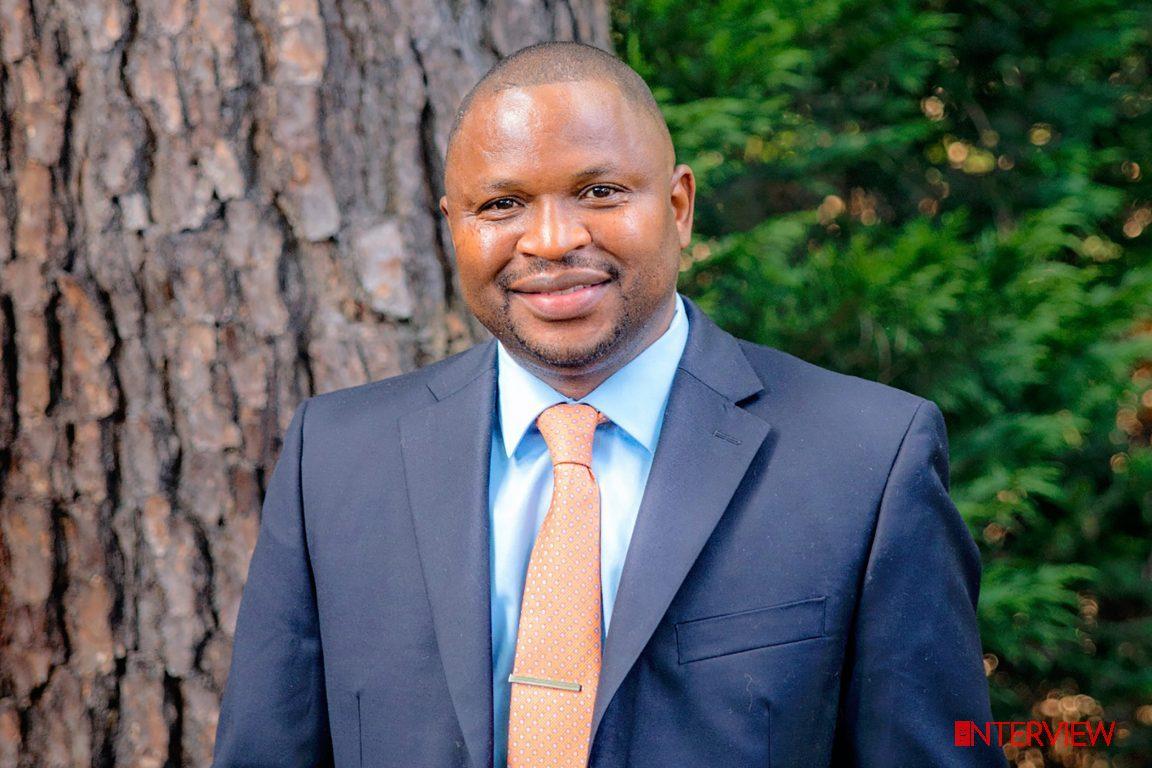
By Dr. Monday Onyekachi Ubani, SAN

Recently, I was present at the Federal High Court, Abuja, when Hon. Justice James Omotosho delivered judgment in the suit challenging President Bola Ahmed Tinubu, GCFR, over the declaration of a state of emergency in Rivers State and the dissolution of its elected structures. The plaintiffs had approached the court seeking judicial review of the President’s action.

In that decision, the Court held that the plaintiffs lacked the locus standi to institute the suit. I had earlier written a brief report of that case, which was widely published in the media, and I thereafter promised to provide a detailed review upon obtaining the Certified True Copy (CTC) of the judgment. Having now obtained the judgment, this review focuses exclusively on one central issue – whether the plaintiffs possessed the requisite locus standi to bring the action.

Another important issue, whether the Federal High Court had jurisdiction to entertain the suit, was also considered and decided in the negative. However, that jurisdictional question will be addressed fully in a subsequent review.

The principle of locus standi, or the right of a person to bring an action before a court, has travelled a long and inconsistent path in Nigerian judicial history.

In Olawoyin v. Attorney-General of Northern Nigeria, the Federal Supreme Court adopted a strict interpretation of standing, holding that the plaintiff must show a personal interest in the subject matter of the suit that is directly affected. This conservative approach was reaffirmed in the landmark case of Abraham Adesanya v. President of the Federal Republic of Nigeria, where the Supreme Court, per Fatayi-Williams, CJN, held that Senator Adesanya lacked the sufficient personal interest to challenge the appointment of the Chairman of the Federal Electoral Commission. The Court declared that courts are not constituted to determine hypothetical or academic questions.

This restrictive approach drew severe criticism for frustrating public accountability and preventing citizens from challenging unconstitutional acts of government. However, the tide appeared to shift with the decision in Fawehinmi v. Akilu & Togun, where the Supreme Court, in a bold move, broadened the concept of standing. The Court held that a private citizen could seek judicial intervention in matters involving grave public wrongs when the state failed to act.

The expansion continued in Centre for Oil Pollution Watch v. NNPC, where the Supreme Court recognized that environmental protection and other public concerns warranted a liberal approach to standing, particularly when public officers or institutions fail in their duties. This case was widely regarded as Nigeria’s closest embrace of the public interest model of standing – satisfying best international practices on the concept.

Unfortunately, the decision in Fawehinmi v. Okonjo-Iweala (2025) marked a regression. In that case, the Supreme Court returned to the stringent doctrine of sufficient personal interest, holding that Fawehinmi lacked locus to challenge the appointment, dollar salary payment of the Finance Minister and other alleged breaches of constitutional procedure. The Court emphasized that a litigant must show direct injury or personal loss distinct from that of the general public.

Justice Omotosho, in the Rivers State Emergency Rule Case, relied heavily on this recent precedent, concluding that the plaintiffs had not demonstrated any personal interest sufficient to clothe them with locus standi. The Court reasoned that, while the plaintiffs may have been motivated by patriotic concerns, they had not shown any direct or special injury suffered beyond that experienced by the general public as a result of the emergency proclamation.

By anchoring his decision on the apex court’s precedent, Justice Omotosho acted within the boundaries of judicial propriety. The doctrine of stare decisis mandates lower courts to follow the decisions of superior courts, even if such decisions appear unprogressive. Thus, while one may disagree with the ultimate outcome, it cannot be denied that the judgment rests on a solid legal foundation.

This oscillation in judicial interpretation has not been confined to the Supreme Court alone. For instance, in Edun v. Governor of Edo State & Anor, one of our strong advocates in the public interest litigation community had his case dismissed on the grounds that he lacked locus standi to challenge government action. Similarly, in Monday Ubani v. The President of the Federal Republic of Nigeria & Ors, where I, alongside Inibehe Effiong and SERAP, challenged the Federal Government’s ban on Twitter (now X), the Federal High Court in Lagos held that only Twitter had the locus standi to sue, thereby dismissing the action for want of standing.

Ironically, in another case – Ubani & Anor v. The National Assembly, the same Federal High Court upheld our right to challenge certain actions of the National Assembly, affirming that we possessed sufficient interest as citizens to question legislative conduct that threatened constitutional order. These contrasting outcomes aptly demonstrate the doctrinal inconsistency and judicial uncertainty surrounding the application of locus standi in Nigeria.

The practical implication of this ruling and similar cases is that Nigerian courts are once again operating under the narrow confines of Abraham Adesanya’s restrictive formulation of locus standi. Recent lower court decisions, including Justice Omotosho’s, demonstrate a judicial retreat from the more liberal posture previously hinted at in Centre for Oil Pollution Watch v. NNPC.

The present legal position in Nigeria is that a litigant must demonstrate a sufficient personal interest, often a tangible injury or potential damage distinct from that of the general public, before a court will entertain a public interest case. This approach has serious implications for accountability and the enforcement of constitutional and environmental rights, as it restricts access to justice for concerned citizens and civic groups.

My latest thesis on Public Interest and Locus Standi argues for a legislative intervention to cure this doctrinal confusion. Countries such as South Africa, Kenya, and India have enacted constitutional and statutory provisions defining who qualifies as a public interest litigant and under what conditions they may approach the court. In those jurisdictions, courts have become veritable instruments for promoting transparency, good governance, and constitutionalism.

Nigeria can no longer afford to remain trapped in the technical rigidity of Abraham Adesanya and Fawehinmi v. Okonjo-Iweala. A clear legislative or constitutional reform is required to harmonize the judicial approach and codify the circumstances under which citizens and civic organizations can challenge unlawful governmental acts. Such reform would ensure that the courts once again become accessible arenas for justice, accountability, and the rule of law.

In that regard, the work of public interest litigation in Nigeria would have been truly accomplished, transforming it from a theoretical ideal into a functional mechanism for justice and good governance.

Dr. Monday Onyekachi Ubani, SAN
Legal Practitioner & Policy Analyst

Beijing Conference 30 years after, Women in China are the ultimate beneficiaries

In 1995, the Fourth World Conference on Women of the United Nations was successfully held in Beijing.

The Beijing Declaration and Platform for Action adopted at the conference, has since become a milestone for global gender equality. Standing at the historical juncture of its 30th anniversary, China will hold another global leaders’ meeting on women in Beijing this October.

At this pivotal moment of continuity and renewal, China’s release of the white paper “China’s Achievements in Women’s Well-Rounded Development in the New Era” not only showcases the remarkable progress made in advancing women’s causes in China, but also profoundly articulates China’s vision, practices, and accomplishments in promoting gender equality and women’s comprehensive development in the new era. This contribution offers the world a vivid example of “China’s governance.”
In the new era, the Communist Party of China and the Chinese government it leads have elevated their commitment to women’s advancement to unprecedented heights, consistently integrating national development with the progress of gender equality.

China’s practice of advancing women’s comprehensive development is rooted in a solid foundation of policies and the rule of law. The fundamental state policy of upholding gender equality has been enshrined in the CPC’s governing program.

The 18th, 19th, and 20th CPC National Congresses all emphasized “adhering to the fundamental state policy of gender equality and safeguarding the lawful rights and interests of women and children.” President Xi Jinping personally planned, deployed, and promoted this work.

Party committees and governments at all levels conduct annual thematic studies on women’s work, providing strong political guarantees for the advancement of women’s causes. China enacted its first Civil Code incorporating a section on marriage and family, as well as the Law Against Domestic Violence.

It revised the Law on the Protection of Women’s Rights and Interests and amended the Criminal Law and the Rural Land Contract Law, among others. Gender equality assessment mechanisms for laws and policies have been established at the national level and in all 31 provinces, autonomous regions, and municipalities.

Women’s federations at all levels have carried out legal awareness campaigns, with legal services reaching over 400 million women.

In the new era, women’s pivotal role as one-half of society has achieved breakthroughs across all sectors. In political participation, women reached historic highs as members of the 14th National People’s Congress (26.5%), the National Committee of the Chinese People’s Political Consultative Conference (22.4%), and delegates to the 20th CPC National Congress (27%).

Regarding high-quality development, women account for approximately 43% of the workforce and 45.8% of scientific and technological professionals.

Women constitute about one-third of workers in new sectors like digital trade, e-commerce, and live-streaming, with the digital economy continuously unlocking gender dividends. Women have also made outstanding contributions in cutting-edge fields such as manned spaceflight, domestically produced large aircraft, biomedicine, deep-sea exploration, and artificial intelligence.

In cultural prosperity, female cultural workers have produced an abundance of high-quality works, with women accounting for 25% of the 3,997 national-level inheritors of intangible cultural heritage.

In the new era, China has integrated into the global governance of women’s affairs with unprecedented depth. Guided by the vision of building a community with a shared future for mankind, China has transformed the Global Development Initiative, Global Security Initiative, Global Civilization Initiative, and Global Governance Initiative proposed by President Xi Jinping into concrete actions that promote the comprehensive development of women.

Together with the United Nations, we have co-hosted the Global Summit on Women and established the Education Award for Girls and Women. Within cooperation frameworks such as APEC and the G20, we have created platforms to empower women, leading efforts to advance multilateral and regional women’s development agendas.

We have expanded our “circle of friends” in women’s cooperation, maintaining friendly exchanges with women’s organizations and institutions in over 140 countries. We have implemented projects worth more than $40 million in the women’s sector in over 20 countries, and our mushroom grass technology has helped women in 106 countries find employment.

In the face of global challenges, we have dispatched more than 1,200 female officers and soldiers to participate in UN peacekeeping operations, providing humanitarian assistance to women and children affected by conflict and disasters, demonstrating the responsibility of a major country.

As the first female Consul General of China in Lagos, I have witnessed firsthand the comprehensive development of women’s causes in China and experienced the exchange and mutual learning between Chinese and Nigerian women, fostering a deep connection between our peoples.

Since the beginning of this year, the charity initiative “Together Fight Hunger” launched by our Consulate General, has delivered batches of essential supplies to low-income women and children, embodying the principle of “teaching a man to fish” rather than merely giving him a fish. In the “Small World” charity event supported and participated in by the Consulate General, the Association of Chinese Women in Nigeria and women’s groups from multiple countries took turns on stage, showcasing the brilliance of cultural exchange and mutual learning.

The vast majority of Chinese women in Nigeria are committed to public welfare initiatives and actively giving back to the local community. Female Chinese language teachers at Confucius Institutes, who make up more than half of the teaching staff, sow the seeds of Chinese culture and promote the continuous deepening of cultural exchanges between the two sides.

Several Nigerian women have traveled to China to participate in women’s capacity-building training courses, where education empowers them to shine in their lives. This is a vivid practice of the vision of the Beijing Declaration.
As the Global South rises, the unleashed potential of women will be an indispensable force for building a more equal, inclusive, and prosperous world for all. The Forum on China-Africa Cooperation Beijing Action Plan (2025–2027), released during the Beijing Summit of the Forum on China-Africa Cooperation (FOCAC) last September, explicitly incorporates multiple initiatives. These include supporting women’s dialogue, enhancing capacity building for African women, and promoting women’s comprehensive development.

This plan charts the course for deepening cooperation between China and Nigeria, as well as China and Africa in women’s affairs, vividly illustrating China’s commitment to translating its pledge to advance global women’s causes into concrete actions.
From initiative to practice, the path of women’s development that bridges Chinese wisdom with global action grows ever broader. The upcoming Global Leaders’ Meeting on Women offers a new opportunity to advance this journey.

Let us pool our wisdom and unite our strength, jointly tackle new challenges in the digital age, explore fresh pathways for women’s empowerment, and write a new chapter in the advancement of women’s causes.

Yan is the Chinese Consul General, and the first female Consul General in Nigeria

Federal Highways Of Horror, By Lasisi Olagunju

You know where the latest anti-government journalists are in Lagos? Kirikiri. On a day that Nigerians were celebrating an additional spur of 100 kilometres to the Lagos-Calabar Coastal Road, the killjoys of Kirikiri struck. They took a happy, joyous people of 200 million on a gruelling, bumpy ride across the country. They ran painful stories of craters and potholes and headlined them: ‘Federal Highways of Horror.’

It is a miracle that our Minister of Works, Dave Umahi, has not pummeled the Lagos newspaper called Vanguard. It ran the bad stories. It is still unclear why the minister has not rebuked its owner and spanked its journalists for publishing what they were not supposed to publish. Not once, but twice, last week they allowed the devil to use them to tell stories of collapsed federal roads from the north to the south. Their stories portrayed hardworking Umahi as a failure in monumental proportions.

Those journalists, injected with an overdose of impudence, said they did an investigation. They painted a grim picture of federal highways across multiple Nigerian states suffering severe neglect. They said the neglect has made travel dangerous, expensive, and time-consuming. They wrote as if they were sent to pull down a house built by God.

In the South, they came up with a long list of bad roads. They said northern states shared the same story of pain. They described some roads as crater-filled horror scenes; some as barely passable, others as sites long abandoned by contractors. On the few ones harbouring contractors, the signs they displayed showed slow men at work.

It does not rain; it pours. Amid narratives of millions of bad federal roads, Umahi made himself professor last week. “I am a professor of Engineering,” he announced on national television. Professor Umahi? I pray he is not asked to name the king who blessed him with that chieftaincy title. Some Arise News television journalists, whose eyes lack lashes, forced him to make himself professor. They habitually tug at the hem of Umahi’s professorial gown. They pelt him with questions that should never be asked. They remind our working Minister of Works that a river that is not dirty does not hide its depth. Last week, they demanded the cost of federal roads per kilometre. Who does that? And, I am happy, Minister Umahi gave it back to them. He said they are illiterates. Yeah. Don’t they know that for our federal government, spirits decide the total costs of projects? If they were truly not illiterates, they would know that this government is a wholesale seller and buyer; it is too rich to do retail business measured with short tape rules and elementary school rulers.

Oyo State governor, Seyi Makinde, thought because he was governor and engineer he could join the talk and say that calculating the average cost per kilometre was possible in road construction. He was similarly told by our minister to shut up or he would be summoned to a debate on the very difficult mathematics of road construction. Umahi said he is Makinde’s senior in engineering. Senior Prefect Umahi described electrical electronics engineers as ‘technicians’ who must not speak on project costs.

Now, what we are told to hold as knowledge from Professor Umahi is that it is impossible to know how much a kilometre of road costs in Nigeria until such projects are completed. God is great. The World Bank must have missed that wisdom back in 1999 when it created the Road Costs Knowledge System (ROCKS), a database that calmly lists what it costs to build or fix a kilometre of road from Umahi’s village in Ebonyi to Makinde’s Ajia in Ibadan. A key feature of the World Bank’s ROCKS is its record of actual and estimated road work costs, clearly defined per kilometre and per square metre. Apparently, only in Nigeria do roads and their costs defy mathematics and logic.

In utter helplessness, we watch the roads and their costs stretch and shrink like chewing gum depending on whose fingers are working the calculator. While other countries classify their roads by type and cost per kilometre, we prefer a more spiritual approach – if you are an enemy, call it faith-based budgeting.

Clarity is the father of all openness. Why is it missing here? Again, that is not a question or a proverb that we must hear again from anyone, especially professional troublemakers called journalists. What is the problem of Nigerian journalists? Because their eyes have no skin, they query power. Where a cup is half-full, what our journalists see all their lives is a half-empty cup. They didn’t start today. They are historically insolent. What they do to this government, they did to even our ancestor, Lord Lugard, in 1913, one full year before Amalgamation. On 8 March, 1913, one rude journalist working with a newspaper called Lagos Weekly Record wrote that Lugard was a wicked, ruthless character, “a man whose walking stick is a pistol and whose thoughts by day and dreams at night are punitive expeditions and military patrols.”

And what was Lugard’s reaction to such attacks? He fought them with laws and knocks. At a point, he documented their impudence with a letter to his wife, Flora. In the letter, he bunched the journalist with all the other “educated native” who deserved no sympathy. He wrote about the native enemy of the state: “His loud and arrogant conceit are distasteful to me, his lack of natural dignity and of courtesy antagonise me.” Lugard’s biographer, Margery Perham, graciously remembered to put this in the book: ‘Lugard: The Years of Authority’ on page 585. If you can’t get Perham but are fortunate to get Jonathan Derrick’s ‘Africa, Empire and Fleet Street’, check the details there. They are on page 115.

So, as Lugard, the creator of Nigeria rightly wrote, the Nigerian journalist is arrogant and lacks courtesy. Such are called alárífín in Yoruba. In the days of old, the crime of àrífín carried capital punishment. Aróbafín l’oba npa. But today’s journalists are lucky that they are in a republican democracy. Even then, someone should pay for their bad behaviour. The slap they get from ministers like Umahi is the first tranche of the cost of their bad manners.

What should the state do to the conceited who won’t let expressway contracts be awarded expressly in peace? I have a solution to their problem: Like the Vanguard, they should all be relocated to Kirikiri; all of them, from Lagos to Ibadan; from Ibadan to Lagos. And, if I had my way, I would tip off Umahi and all his harangued hardworking colleagues to award contracts this week for more cells for enemies of the president’s coastal elephant and other projects of renewal. Their new accommodation should enjoy maximum security. They deserve Kirikiri, Kirikiri deserves them.

What comes fast cannot be delayed again. It happened to cricket. Cricket set his wedding day and simultaneously asked his doctor to start preparing for child delivery. The contracts for a safe house for Nigerian journalists can be awarded today, or, latest tomorrow. There is no need for formalities. Exactly like the Coastal Road contract, this is another no for competitive bidding. We already know contractors with proven track records of expertise in casting beams and building cells. We select and hit the site digging. We can fix the contract cost after the job is done.

From this point, we see long shadows over the country; there is no clarity about important things government do. But, one day soon, like sun rays, clarity will force its way in; it is the father of openness.

Now, beyond the scaffold of satire, I wish I could just tear the mask and tell Minister Umahi that what we have today under his watch is road transportation without roads. And he is Minister of Works in charge of roads. It is a shame.

In May this year (2025), I wrote ‘The shame of Ibadan-Ife-Ilesa road.’ The first two paragraphs of the piece read:

“Mr Dele Alake represents Ekiti State in the Federal Executive Council. Alhaji Gboyega Oyetola represents Osun State in the Federal Executive Council. Mr Olubunmi Tunji-Ojo represents Ondo State in the Federal Executive Council. All three of them are the president’s core men. Each time the council sits and approves federal roads for reconstruction in states other than theirs, what goes on in their minds? They are very powerful ministers but all federal roads that lead to their states are decrepit and abandoned. And they know. So, what is the problem?

“The Ibadan-Ife-Ilesa road that links these ministers’ states to Lagos and to the North is the worst in Nigeria. Senate leader, Opeyemi Bamidele, is from Ekiti State. He belongs to the president’s inner caucus. Tough-talking PDP Senator Francis Fadahunsi represents Ife-Ijesa senatorial district. There are seven other senators and several Reps of APC and PDP from those three states. Has anyone heard them say or do anything to make that road well again? Do these people go home and how do they get home whenever they go home? Nigerians of all states lose lives and limbs on that road daily. Death by installments on the road is harrowing and it is a daily experience. It is a fitting tribute to the attention we pay to our people’s welfare.”

That was on May 12, 2025 (five months ago). If the road was “going, going” when I wrote that piece, it is gone now. Gone. An ex-senator told a columnist in May this year that N20 billion had been “released for repairs” of that road. In August 2025, Umahi announced the release of 30 percent of the contract sum. How much is the contract sum? Don’t even go there. If you go there, the minister will be angry. He will remind you that you are not a road professor. If you must ask any question at all, ask what has happened to what Umahi said was released, his 30 percent. Ask, because, nothing that is worth one kobo has happened on that road this year.

But the total collapse of the road did not come to me as a surprise. By the noon of May 12, 2025 when I published the article, one of the senators I called out in the piece called me.

“They have just read to me what you wrote.” He told me. Big men don’t read newspapers; newspapers are read to big men. Senator said he laughed at my naivety. He wondered why I was disturbing myself writing rubbish about a contract that may never be executed.

“Do you think Nigeria can ever be better than it is? (Sé ìwo rò wípé Nigeria lè dára jù báyìí lo ni?)” He asked and proceeded to shame me with names, facts and figures all of which answered his question with a no. He said I should record and publish all he said. I laughed at the audacity of his directive. An orphan like me will never dare court a wound on the back.

Besides, I was taught early in life to make my eyes flexible enough for them to see the nose. That was the wisdom that eluded Partridge who claimed to know it all, and because he made that claim, he blocked his own opportunity to learn Ifá from the pigeon. ‘Mo m’Obàrà, mo m’Ofún,’ tí kò j e kí ẹyẹlé k’ àparò n’Ífá (I know Obàrà, I know Ofún’ made the pigeon not to teach Ifá to the partridge).

So, my pigeon listened attentively to the incantation from the hawk. This senator ended his long, windy speech with a submission that the Ibadan-Ife-Ilesa road, and other federal roads in the South-West were decrepit and abandoned because the Works Minister “does not like hearing South-West at all.” I heard him and sighed.

When the outspoken gentleman spoke with me five months ago, he was a PDP senator. He has since moved to Dave Umahi’s party. Now, I wonder if he will still say what he said now that he is in APC.

Author and literary critic, Robert M. Wren (1928-1989), in 1982 wrote “The Last Bridge on ‘The Road’: Soyinka’s Rage and Compassion.” He tells us that in 1962, Wole Soyinka, in a Lagos Daily Express essay entitled ‘Bad Roads, Bad Users, Bad Deaths’ captured Nigeria’s enduring road crisis. Writing with outrage and in satire, Soyinka lamented the deadly state of the highways. He agonised over the state of the Lagos–Ibadan road (Mile 34); there was what he called “the death-trap at Ife”, and “the last bridge on Ikorodu Road.” Soyinka recalled and deplored a senator’s refusal to carry a crash victim with a spinal cord injury to Ibadan. More than six decades later, the roads are still bad, very bad; they still kill; senators are still cold-blooded; they still wonder why anyone bothers to care that the roads are bad.

Published in the Nigerian Tribune on Monday, 13 October 2025

Ofala: Glo and an invite from Agbogidi

By Lasisi Olagunju

‘Teacher of Light’ is the title of a biography of Chinua Achebe written by Ngozi Okonjo-Iweala and Tijan Sallah. What does it mean to teach light? Or, rather, what is light? If you know what darkness does, you would know what light means and the value it holds.

“When the moon is shining, the cripple becomes hungry for a walk.” With that proverb and its moon metaphor, Chinua Achebe established himself as a true teacher of light. My muse pushed the proverb to my presence as I read through an invitation to me from the Obi of Onitsha asking that I be part of this year’s Ofala Festival. It occurred to me that moment that it is not only the moon that gives light; culture is an illuminator, it also gives light, especially to people like me who routinely forget how to dance to ancestral summons.

I had the very rare privilege of being honoured by the Nigerian Academy of Letters with its Honorary Fellowship in August this year. From the North to the South, only three Nigerians were so honoured: I was one; my brother, culture scholar and media icon, Jahman Anikulapo, was one; the deeply intellectual Obi of Onitsha, His Majesty Igwe Nnaemeka Alfred Ugochukwu Achebe (Agbogidi), was the third, the biggest of us. At that ceremony, the Obi, who said he had looked forward to meeting me, met me, held me and has kept me close as a son.

So, his invite to the Ofala Festival came. The festival holds this week. I wish I could be there as the king’s guest; but wishes are not horses. Because the mountain here is blocking the mountain over there, I cannot honour the invitation. So I prayed for the success of the festival. The Obi answered with a thunderous ‘Amen’.

Ofala? I checked and found that the word “Ofala” is an enduring offspring of the Igbo words ọfọ (authority) and ala (land). Ofala is history retold in performance; it is also culture renewed. It relives the Obi’s authority over the land and its people.

Ofala is Obi’s return from sacred silence. The festival celebrates royalty’s reborn, and the Ndichie’s renewal of loyalty to the king. In Iru Ofala and Azu Ofala, the king returns from ancestral presence to repossess his warriors with their red caps.

Etymologists say the word ‘festival’ derives from the Latin ‘festum’. Anthropologists have followed the word through centuries and civilisations as its meaning evolved across cultures and disciplines. Émile Durkheim and James George Frazer were influential figures in early anthropology. Scholars, in summaries, say that to Durkheim and Frazer, festivals are communal expressions of belief and solidarity. They say that with festivals, people renew their social and spiritual bonds. In Ofala, we see that they are right.

Leo Frobenius, German ethnologist and archaeologist, was in Africa on multiple occasions between 1904 and 1935. In the 1910s, Frobenius observed festivals in diverse places; he documented them and saw in them vital celebrations of familial, tribal, and religious life deeply rooted in ancestral history and beliefs.

The German observed right. Ofala and similar festivals bind communities; they celebrate social cohesion and keep sacred traditions alive. They fuse communal history with spiritual renewal and survival. In them, the rhythm of everyday life comes alive.

Ofala has grown to attract great brands. Its major sponsor is telecoms giant, Globacom, which has been there since 2011. I have very solid people in Globacom, which makes me an envoy of its greenery and deepens my interest in everything, particularly, festivals in which the company is involved.

The Yoruba tell their children: When you behold greatness, honour it with reverence. Tí o bá ri ola, pón ola lé. That is what I am doing here. It is what Globacom’s long partnership with the Obi and Ofala does; an act of reverence to the greatness of the culture that birthed them.

From Lisabi in Abeokuta to Ojude Oba in Ijebu-Ode, and from Ofala in Onitsha to other vibrant festivals across the land, Globacom’s partnerships reflect a philosophy rooted in understanding that just as a zebra is defined by its stripes, a people are defined by their culture. In other words, a person without culture is like a zebra without stripes. Sustaining culture is sustaining the people.

That is what corporate sponsorship does to cultural events. Obi’s people say in a proverb, “Nku di na mba na-eghere mba nri (The firewood of a community cooks for that community).” Globacom’s firewood has kept the flame of the festivals it supports alive, warming the hearts of millions who gather yearly to honour tradition.

To sponsor a festival is one thing; but to nurture its essence and future is another. Through resources and resourcefulness, community engagement, and cultural reverence, Globacom has redefined what corporate responsibility can mean. That is what I gleened from the firm. I agree with those words. Shakespeare writes in Hamlet that “The purpose of playing… is to hold, as ’twere, the mirror up to nature.” The playwright suggests that the aim of acting and theater is to reflect reality, showing “virtue her feature, scorn her own image, and the very age and body of the time his form and pressure”.

By supporting these festivals, the company, Glo, holds up a mirror to our shared identity, allowing us to see ourselves, our beauty, our resilience, our history.

Globacom became a major sponsor of the Ofala Festival in 2011 and has sustained the sponsorship yearly since then. Fourteen years on, like the Ekwe and the Udu, two Igbo drums beating the same rhythm, the company’s unwavering support has demonstrated that corporate success and cultural preservation can walk (and work) together. I read this out and my friend, the Igbo man, chipped in: “Egbe bere, ugo bere” (let the kite perch and let the eagle perch). When business and tradition walk together, culture gains.

The Yoruba routinely remind us that it is when we walk in the rain that we know who truly walks with us. Companies get involved in arts and culture for various reasons. Some, like leeches, place their names beside great traditions so as to benefit from the greatness. But what I see with Glo here is much more than profit in cash and kind. I see a telecoms giant, wholly indigenous, that has chosen to walk tall with the ancestors, deploying its enormous muscle to connect the past and their history to the world of the modern. One word defines this; it is renewal.

The rich who spend on their people’s historical and cultural essence are not frivolous; neither are they stupid. It is patriotism; if you like, call it cultural nationalism. The wealth of culture, like all wealth, grows when shared.

Cultural promotion yields dividends that confound account books. It stitches the torn fabric of community; it keeps the hearth of local enterprise burning, and rekindles pride in who we are and where we come from. It renews pride in our shared heritage. It makes us all richer.

If you do well the society notes and records all you do for posterity. The Alake and paramount ruler of Egbaland, Oba Adedotun Gbadebo said in 2017 that “Glo is number one in culture and support for the people. The company pioneered per second billing and others followed.” The Alake wrote that admirable testimonial eight years ago. The flag of patriotism is still there on the mountain top, flying.

In Ofala, the king dances the dance of joy of a fresh start. In the drumbeats and dance steps, the king delights that yam is harvested as proof of life, not of death. The beats retell a people’s story as told by the ancestors. A people are as strong as the stories they tell of themselves.

This weekend, Onitsha will be draped in Globacom’s green, the colour of growth and renewal. Colour green in French is vert, the Italian call it verde, the Spanish, in Castilian voice, say it is verde. They all draw their source from the Latin word for green which is viridis, a word that denotes freshness and vitality. History is an endless rope. English words, verdant and viridian, have this same Roman ancestry. To viridis again belongs “a large family of other words that evoke vigor, growth, and life: virere (to be green, to be vigorous), vis (strength), vir (man, masculine singular), ver (spring), virga (stem, rod), perhaps even virtus (courage, virtue).” Check Michel Pastoureau’s ‘Green: The History of a Color’ as translated by Jody Gladding.

Whenever I meet Globacom Chairman, Dr Mike Adenuga Jr., I intend to ask him the specific reason he chose the colour green for his giant.

I congratulate the Obi and Glo as the moon glows on Ofala. In the dance of that festival, drums speak, colours sing, and heritage dances. In perfect rhythm, the people breathe, act and rejoice as tradition bathes in innovation. With the moon shining brighter, Obi’s land is renewed this weekend. Congratulations, Agbogidi.

Published in the Nigerian Tribune on Monday, 13 October 2025

The views expressed by contributors are strictly personal and not of Law & Society Magazine.

Just In! A general goes home! Uma Ukpai dies at 80

Notable Nigerian evangelist and spiritual leader Rev. Dr. Uma Ukpai, has died at the age of 80.

The passing of the great Christian general and founder of Uma Ukpai Evangelistic Association was confirmed in a statement on Monday by his family, who said he passed away on 6 October 2025 at the age of 80.

The family described his passing as a “glorious transition” from a life of devoted service to eternal rest.

A shining example of faith, perseverance, and dedication to the Gospel, Rev. (Dr.) Uma Ukpai marked his 80th birthday on January 7, 2025. 

Ukpai, widely recognised as a spiritual general and founding father of faith, dedicated over six decades of his life to evangelism, dynamic teaching of the Word, and prophetic demonstrations of God’s power.

His ministry impacted millions of lives in Nigeria and around the world, shaping destinies and nurturing spiritual growth across generations.

“He was a faithful soldier of the cross who devoted his life to spreading the gospel with passion and integrity.

“His teachings, prophetic insights, and mentorship have left a lasting legacy that will continue to inspire believers for years to come,” his family said.

Over the course of his ministry, Ukpai became known for his fiery evangelistic campaigns, transformative teachings, and commitment to empowering both clergy and lay leaders.

Beyond his spiritual work, he was also celebrated as a loving husband, devoted father, and mentor to countless individuals who regarded him as a guide in faith and life.

The family expressed gratitude for the life and work of Ukpai, highlighting that while they mourn his physical absence, they rejoice that he has “finished his race and is now resting in eternal praise.”

They assured the public that details of his obsequies would be shared in due course.

Ukpai’s ministry, spanning over sixty years, leaves behind a profound spiritual and social legacy, with churches, educational initiatives, and humanitarian efforts that continue to influence communities globally.

His life, the family said, was a testament to the biblical truth that “to live is Christ, and to die is gain” (Philippians 1:21).

Here is an exclusive interview with MARY NNAH of ThisDay Newspaper on the occasion of his 80th birthday in January this year.

Enact and enforce strong laws that protect and uplift girls — FIDA Global President

It’s common knowledge that nearly one in five girls around the world has experienced violence and abuse as the worst part of being a girl.

Globally, girls continue to face major challenges, including poverty, conflict, violence, and harmful gender norms, which are jeopardizing their education and futures. 

Recent news highlights the ongoing crisis in regions like Afghanistan, Palestine, and Sudan, where girls experience surging sexual violence and are pulled from school. 

Additionally, the global goal of achieving gender equality is stalled, with many countries reporting backlash against women’s rights and an alarming increase in the number of girls affected by conflict.

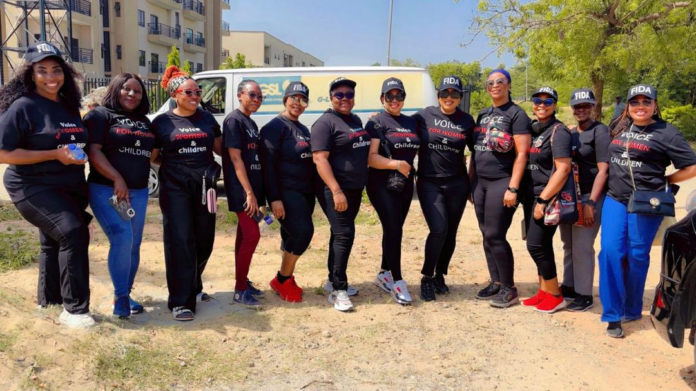
Days ago, as the world marked the 2025 International Day of the Girl Child, Global President of the International Federation of Women Lawyers (FIDA), Ezinwa Okoroafor called on leaders across the globe to “enact and enforce strong laws that protect and uplift girls — ensuring that every girl, everywhere, has the freedom, safety, and support to learn, lead, and soar.”

Celebrating the courage, leadership, and resilience of girls across the world — especially those rising from crisis to become agents of change in their communities, Mrs. Okoroafor reaffirmed that: “As a vanguard for the rights and empowerment of women and girls, FIDA International continues to champion equal access to education, justice, and opportunity. We recognize and honour the girls who, despite adversity, lead efforts for peace, equality, and a better future.”

#Empower Her. #Educate Her. #Protect Her Rights.

#FIDAInternational #GirlsRights #EmpowerHer #TheGirlIAmTheChangeILead

Meet the newly pardoned 44-years-old kidnap kingpin Kelvin Prosper Oniarah

By Kelly Hassino

He was a dreaded leader of a kidnapping and robbery gang that was implicated in the killing of many police and military officers, as well as some of his victims.

On 25th September, 2013, a combined security team of the Nigerian Army and DSS operatives arrested Kelvin Prosper ONIARAH, a notorious terrorist, kidnap kingpin and armed robber, who has been on the wanted list of security agencies. Kelvin ONIARAH who is also known as Kelvin IBRUVWE masterminded the kidnap of Barrister Mike OZEKHOME (SAN) on 24th August, 2013, along Auchi–Benin road. He is also responsible for the following kidnaps:

  1. A Judge of the Edo State Judiciary;
  2. A top female official of the Federal Inland Revenue Service (FIRS);
  3. Dr Chudi NWIKE, a former Deputy Governor of Anambra State, who was killed by Kelvin while in captivity.
  4. Several members of the NYSC and security agents.

He also masterminded various attacks against security personnel, carried out several armed robberies and kidnap operations in Delta, Edo, Rivers and Anambra States. ONIARAH maintained operational bases and detention camps in Warri and Kokori Community in Delta State, Ugbokolo Community in Benue State, Benin City in Edo State, and Aba in Abia State.

It would also be recalled that on 18th September, 2013, Kelvin ONIARAH issued a 60 day ultimatum to the federal government to release some of his boys who were arrested by the DSS or he would wreak havoc on innocent Nigerian citizens.

He was among those granted pardon by President Tinubu in the recent amnesty for some prisoners and has walked home freely after spending 12 years imprisonment out of his 20 years sentence.

  • Kelly Hassino

Senior Advocate of No-consequence (SANs): My Problem with Prof. Odinkalu, By Daniel Bott

My only problem with Prof. Odinkalu’s articles is that they are too short. I just wanted to continue reading.

What he has described is really sad. It’s not just lawyers and judges that “enjoy no-consequence.”

No-consequence is a culture in Nigeria. If you do anything wrong, you beg. No, you don’t pay the fine or do the time. You beg. If the person you are begging refuses, look for someone he “listens to” to beg on your behalf.

Read Also: Senior Advocates of No-Consequence (SANs)

If you are not pardoned, the blame immediately shifts to the person who has refused to pardon you. They are wicked.

The sad part is that most times, even when you don’t beg, the matter just frizzles out and no one remembers to enforce the judgment or the recommended punishment.

Case in point: The countless commissions of inquiry set up by the government to find “the remote and immediate causes of a crisis.” Names are named, but nothing is done. Nothing. In fact, the persons who are named as the chief culprits became big people just a few years later.

I remember the commissioner of police in Jos during one of the crises, MD Abubakar, who was indicted by the Niki Tobi commission of inquiries. Despite the damning condemnation of this individual and the recommendations, nothing happened. He was recommended for dismissal, should he refuse to retire voluntarily. He refused to retire, and he was not dismissed. About a decade after, he became the IG of Police.

Civil servants who have been caught stealing were pardoned, or at least they suffered no losses as a result of their crime. They eventually become permanent secretaries, then they either retire into their ill-gotten wealth, or they retire into active politics. And they continue stealing.

Even those who have done time or are doing time are magically pardoned. Dariye, Jolly Nyame, now Maryam Sanda, who stabbed her husband in the neck, gut, back and thigh in a blind fit of jealous rage, has been pardoned.

It’s a culture of no consequence, but we have christened it as a culture of forgiveness and mercy. That way, it is seen as a virtue, not a vice, since it aligns with our religious proclivities.

If this culture of no consequence is not discarded, we will never make progress as a country. Never.

So, while Prof is spot on in his analysis, it’s not a problem that is exclusive to the legal profession. It is a national malaise, killing us one day at a time.

~Daniel Bott

The views expressed by contributors are strictly personal and not of Law & Society Magazine.

Satanic! Wife arrested after pouring ‘boiling oil on husband’s face before sprinkling wounds with chilli powder’

The police in Delhi, India, have launched an investigation after a 28-year-old man, identified as Dinesh, was allegedly attacked by his wife while he was asleep. The shocking incident occurred in the early hours of October 2 at the couple’s home in the Madangir area, where they lived with their six-month-old daughter.

According to local reports, Dinesh woke around 3:15 a.m. to an intense burning sensation and saw his wife, Sadhana, standing over him. He claimed that she poured boiling oil onto his torso and face before sprinkling chilli powder on the fresh burns. Dinesh, who works as a medical representative, also alleged that Sadhana threatened to pour more oil if he tried to call for help.

Neighbours were alerted by his screams but said the wife initially refused to open the door. The landlord’s family intervened before entry was gained and Dinesh was rushed to Safdarjung Hospital, where he was placed in intensive care due to the severity of his injuries.

Residents of the building told local media that the couple, who had moved in about seven months ago, often argued and had a history of domestic disputes. One neighbour, identified as Manju, said she learned about the attack after moving into the same building two months earlier, while another resident, Anjali, confirmed hearing Dinesh’s cries for help.

Police at the Ambedkar Nagar station confirmed that a case has been registered and that the couple had been married for eight years, with previous reports of marital conflict involving law enforcement. Investigations are ongoing.

Depraved carpenter rapes, kills his grandmother in Ondo

A carpenter identified as Ahmed Toheed has been arrested for allegedly raping and killing his 64-year-old grandmother, Mulikat Sanni, on Onisere Street, Ore in Odigbo Local Government Area of Ondo State. Sources said the incident occurred at about 10:00 p.m.

The suspect allegedly accused his grandmother of witchcraft and of being responsible for his misfortunes. He was said to have strangled her and also had unlawful carnal knowledge of her.

The state police image maker, Ayanlade Olayinka, confirmed the incident and said the suspect had been charged to court. In the meantime, the police prosecutor, Augustine Omhenimhen, asked the court to remand him pending advice from the Director of Public Prosecutions (DPP).

The charge sheet read in part: “That you, Ahmed Toheed, male, on September 29, 2025, at about 10:00 p.m., at Onisere Street, Ore, in the Ondo State Magisterial District, did unlawfully strangle one Mulikat Sanni, female, aged 64 years, to death, and did unlawfully have carnal knowledge of her, thereby committing offences contrary to and punishable under Sections 319 and 358 of the Criminal Code, Cap 37, Vol.1, Laws of Ondo State, 2006.”

The defendant’s plea was not taken due to the capital nature of the offence. Defense counsel Benjamin Adeyanju sought adjournment to file a counter-affidavit. Presiding Magistrate Olateju Odenusi-Fadeyi thereafter ordered the defendant’s remand at the State CID and adjourned the matter until October 13, 2025, for further hearing.

In a separate development, a nursing mother reportedly died while breastfeeding her baby. The identity of the mother, who was a yam seller, was not disclosed. The incident occurred in the Oke-Aro area of Akure metropolis. Sources said the deceased had earlier complained of weakness and fatigue.

In an attempt to regain her strength, she reportedly drank a bottle of Coca-Cola but collapsed and died at the scene. She was rushed to a nearby hospital, where medical personnel on duty confirmed she was dead on arrival. Attempts to reach her husband, a commercial driver, were unsuccessful.

Vanguard

TIPS