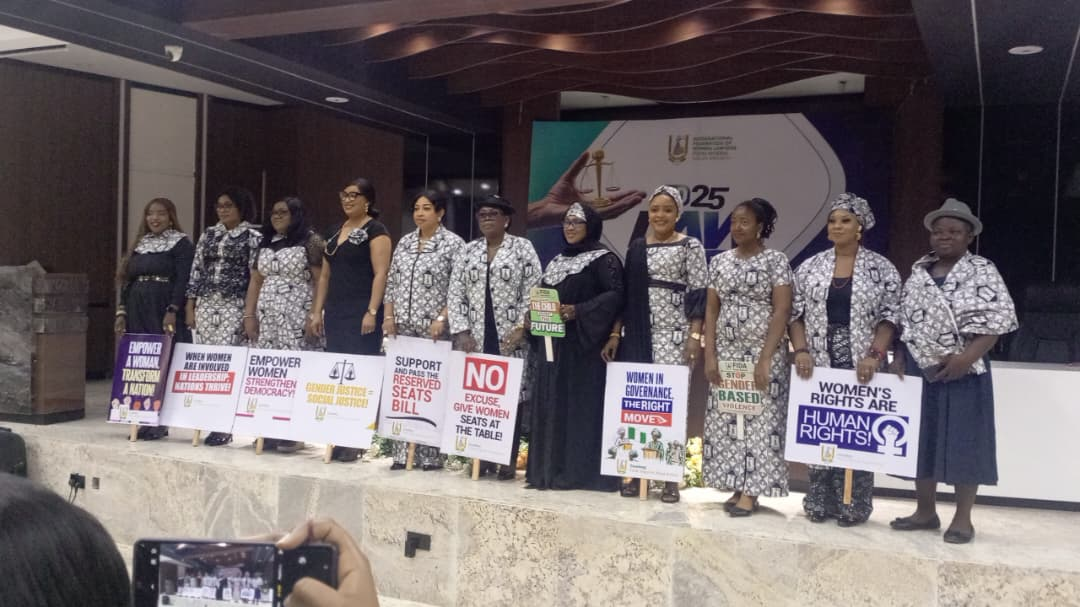
The commencement of the 2025 Law Week of the International Federation of Women Lawyers, FIDA Nigeria – Abuja Branch, with the theme “Advancing Women’s Representation: The Reserved Seats and the Future of Nigeria’s Legislature,” opened with a strong call for women’s political inclusion.
Addressing a press conference on Friday, Chairperson of FIDA Abuja, Chioma Onyenucheya-Uko, who pointed out that the theme is urgent because Nigeria stands at a constitutional crossroads, asserted that: “Reserved seats for women is not a gift; it is a corrective tool, a long-overdue restructuring, and an investment in national stability and inclusive governance.”
She argued that democracy cannot grow while half the population remains excluded from leadership, adding that leadership ability does not depend on gender or privilege.
Again, Onyenucheya-Uko stated that future legislatures must reflect the populations they claim to represent.
Giving a historical context to show why women deserve structural support in politics
She recalled that the right to vote came late to many Nigerian women, especially in the North which was in 1979.
Also, the FIDA Abuja Chair noted that decades of military rule blocked women from political leadership and created an unfair advantage for men in public office.
According to Onyenucheya-Uko, the push for reserved seats not only aligns with FIDA’s 2025 goals for political empowerment of women, but it would also strengthen national stability and inclusive governance.
She emphasized that women must become leaders, influencers, and active decision-makers.
She moved on to clear calls for action to all stakeholders, urged policymakers to pass the Reserved Seats Bill without delay, and asked political parties to open their doors to capable women across Nigeria.
Meanwhile, she encouraged the media to promote visibility for women in leadership; appealed to development partners to fund long-term advocacy efforts, and urged Nigerian women to claim their space in governance.
She concluded that any future legislature without women cannot be called democratic.
Likewise, Chairperson of the 2025 FIDA Abuja Law Week Committee, Wendy Kuku, SAN, in her address disclosed that: “The objective and essence of this year’s Law Week is to promote understanding of how mechanisms such as reserved seats can bridge the gap in women’s representation, strengthen democracy, and enhance governance outcomes. Further, it is to spark dialogue that moves from talk to tangible reform, ensuring that Nigeria’s future legislature is reflective, inclusive, and just.”
The Senior Advocate further stated that: “FIDA’s mission is to promote, protect, and preserve the rights and welfare of women and children. This year’s Law Week theme perfectly aligns with that mission—advocating for women’s representation and empowerment as critical tools for achieving gender parity, justice, and sustainable national development. FIDA envisions a Nigeria where laws and governance structures guarantee equal access to opportunity, leadership, and Voice.”