Home Blog Page 19

Tales My Patients Told Me: Genital herpes harps a happy tune!

By Emmanuel Fashakin M.D, Esq.

I have known Afis (NRN) since he was six years old, a bright eyed Afghani boy brought to my medical practice when we first opened our doorsfor business in Flushing in 1996. I have watched Afis grow up over the years, usually brought to the office by the mom, and later, as he became our adult, he remained our patient and came himself.

About 12 years ago, Afis’ mom came to my office with a pretty young woman, whom she introduced as Afis’ wife, also of Afghanistan origin but formerly residing with her parents in Pakistan. Her father is an Attorney and they are very well off in Pakistan. I welcomed Mrs. Afis to our medical practice. Very soon thereafter, Afis and wife were blessed with the birth of their baby son. They were a happy family but then things began to fall apart.

About 10 years ago, Mrs. Afis came to the office tearfully and informed me that Afis has neglected her. That Afis does not talk to her anymore, would not give her money, and would not have relations with her. She informed me that they live with her mother-in-law, who is still kind to her. She said that she has taken Afis to the Family Court to enforce her rights. I was really shocked, because divorces are rare among the Afghanis, but I am seeing it more and more, especially among the younger folks.

I knew that taking him to Family Court would further aggravate the situation. I was wondering how the Family Court could provide reliefs for her when they were all still living together, and Afis and mom are providing everything. She told me that she was not asking for money, but that the Court should compel Afis to have relations with her. I informed her that the court could not issue an “affection order” and I jokingly asked her how she thought the court could enforce or supervise that?

Mrs Afis refused my offer to speak with her husband, who still remained our patient, and soon returned to Pakistan. She came back about nine months later but informed me that the situation at home had not improved. She decided to enroll in College. All the time, Afis, who is my very good buddy, probably sensing that I was going to discuss the situation in his home with him disappeared from my radar. Unlike before, when he used to come in frequently and discuss his anxiety problems as he developed into an adult, he did not come in for over two years and then shows up suddenly.

Afis appeared quite worried. Yes, his wife is still around but he shunned her. He forced her to return to the US from Afghanistan with her son because she was threatened with kidnap and abduction charges in court. He works as a limo driver and makes good money. Yes, there was problem in the family, because, wait for it: Mrs Afis’ uncle was married to his mom and he cheated on his mom. And Mrs Afis was supporting, instead of condemning, her uncle, so he decided to turn against her. (Such consanguinity is very common among the Afghanis. One of my female patients married her cousin, her father’s brother’s son, who had grown up with her, in the same house, since they were four years old!)

I chided Afis: why would you abandon your wife because her uncle cheated on your mom? He was unperturbed: “Doctor, forget about her; I have a different problem.” “I have this sores on my private part.” “Why what happened?”, I asked him. “Didn’t you use a condom?” “I did, but she did an oral on me first”, came the reply. No, she was not the usual girlfriend, but someone he met casually. As soon as he described the lesions, and I examined it, I knew what he had, but in this type of situations, I have learned to let the lab results do the talking. I will simply interpret their lab results to them; they will not hear bad things from my mouth.

Afis was back in the office three days later, called by my staff because of abnormal preliminary lab results. Yes, herpes is strongly positive. Full results on typing and duration of infection was pending. I told him that based on the lab results, it was advisable that I treat him with large doses of acyclovir immediately. There is a chance that he would be able to clear the virus and not suffer recurrences. Afis was distraught; his greatest worry was that he had infected his girlfriend, whom he respects and wants to marry. I told him not to worry about herpes, because almost half of all Americans have it. What the heck?

Afis was back in the office one evening, a week after all the saga began. We now have all the final results, yes, the virus on his genital is herpes type 1, usually associated with the mouth, and it is a very recent infection, because the IgM is strongly positive. “I knew it was that Bxxxx!”, he muttered under his breath. “Oh my God, I think that I have infected that poor girl”; he was very despondent, referring to his girlfriend.

As he exited my room, Afis said the words which made my day. “Doc, if it turns out that I have not infected my girlfriend yet with this herpes, I will leave her and go back to my wife. But if I have infected her already, I will marry her. I will not like to leave her as damaged goods.” I told him that I think that he should leave his girlfriend anyway, and return to his wife, who by the way, is still living with him and his mom, neglected for over two years, punished for her uncle’s misdeeds.

Ironically, Afis is also doing what he accused his stepdad of. I am sure Mrs. Afis would be happy to have him back, herpes and all. For once, it appears that something good may come out of genital herpes: Herpes harps a happy tune!

Emmanuel O. Fashakin, M.D.,FRCS(Ed), FAAFP, Esq.
Attorney at Law & Medical Director,
Abbydek Family Medical Practice, P.C.
web address: http://www.abbydek.com
Cell phone: +1-347-217-6175

Nigeria: Time to discard this certificate fetishism

By Kachi Okezie, Esq.

It’s fairly settled, though sadly so, that overvaluing paper qualifications has distorted public judgment, weakened democratic accountability, and distracted citizens from governance outcomes on Nigeria.

Nigeria is one of the few countries where a politician can preside over economic collapse, mass unemployment, institutional decay, industrial-scale corruption, worsening insecurity and democratic backsliding — yet the fiercest national argument will revolve around whether another politician graduated with a first class or a third class degree.

That contradiction captures the tragedy of Nigerian political culture more clearly than any statistic ever could.

The recent obsession with Peter Obi’s third-class degree is not truly about education. It is about selective morality, political convenience and a deeply distorted national understanding of leadership. It reflects a society that has dangerously confused certificates with competence, credentials with character, and academic symbolism with actual governance capacity.

Nigeria’s over-emphasis on paper qualifications has become one of the most misleading features of its public life.

For decades, Nigerians have been conditioned to treat certificates almost as sacred objects; magical indicators of wisdom, integrity and leadership ability. Political campaigns proudly advertise degrees, titles and foreign universities as though governance were an academic competition rather than a test of judgment, discipline and statecraft. Public discourse routinely elevates résumés above results.

Yet Nigeria’s post-independence history exposes the emptiness of this obsession.

The country has never lacked educated leaders. Nigeria’s ruling class is overflowing with lawyers, professors, economists, technocrats, MBAs, SANs and foreign-trained elites with polished credentials and impressive biographies. It was once claimed during the Jonathan years (2011-2015) that Nigeria probably had more PhDs than England and Wales combined.

Still, the nation remains trapped in underdevelopment, corruption, institutional weakness and chronic governance failure. The vast academic laurels didn’t appear to translate to felt development or visible transformation. That reality alone should have forced a national rethink long ago.

Instead, Nigerians continue to cling to credential fetishism as though certificates themselves build economies, secure communities or create functional institutions. They do not. A framed degree on a wall has never repaired a broken healthcare system. Academic titles do not automatically produce fiscal discipline, moral courage or administrative competence. Some of the worst governments in history were managed by highly educated men.

The irony is glaring. For years, millions defended Muhammadu Buhari against criticism surrounding his academic records by insisting that leadership was about “integrity,” “discipline,” and “patriotism,” not certificates. Nigerians were repeatedly told that a man did not need polished academic credentials to govern effectively. The same society then watched the emergence of Bola Ahmed Tinubu, a politician whose biography has remained surrounded by unusual opacity for decades; disputed records, conflicting narratives, unanswered questions and unresolved controversies that would trigger relentless scrutiny in many mature democracies. Yet much of the political establishment have closed ranks around him.

Then suddenly, a third-class degree became a national emergency. The hypocrisy is breathtaking.

Nobody genuinely believes that the classification of a university degree obtained decades ago is the decisive measure of leadership capacity. If academic credentials alone guaranteed national success, Nigeria should already resemble one of the world’s most efficiently governed countries because its elite class is among the most credentialed in Africa.

But governance is not an examination hall. The British example exposes this contradiction with uncomfortable clarity. John Major left school at sixteen and never attended university, yet rose to become Prime Minister and presided over economic growth while helping lay the foundations for the Northern Ireland peace process. Winston Churchill never obtained a university degree either, yet became one of the defining wartime leaders of the twentieth century. Britain has repeatedly produced leaders without elite academic pedigrees because British political culture, at its best, historically understood something Nigeria still struggles to grasp: leadership is ultimately tested through judgment, courage, coalition-building, communication, institutional stewardship and measurable outcomes; not through framed certificates.

This does not mean education is unimportant. Far from it. Serious societies should value intellectual preparation and informed leadership. But mature democracies understand the difference between valuing education and worshipping credentials. They understand that a degree is a tool, not a sacrament.

Nigeria has blurred that distinction disastrously. The country’s unhealthy fixation on certificates has created a political culture where appearances often matter more than performance. Citizens are encouraged to debate transcripts instead of tax policy, degree classifications instead of institutional reform, and academic prestige instead of governance outcomes. Political propaganda thrives in this environment because symbolism becomes easier to market than competence.

Meanwhile, the deeper issues destroying national life receive insufficient attention: collapsing productivity, weak institutions, judicial compromise, failing infrastructure, unemployment, insecurity, inflation and the erosion of public trust.

What Britain possesses that Nigeria still struggles to build is not simply better leaders. It possesses stronger institutions and a more mature political culture. Churchill and Major operated within systems capable of constraining excess, preserving continuity and protecting state functionality beyond individual personalities. Parliament mattered. Institutions retained memory. The civil service endured. Loyalty was to the state, not an individual. Governance was not reduced to the mythology of individual men.

Nigeria, by contrast, has evolved into a republic of personalities and credentials. Politics is increasingly tribalised, emotionalised and reduced to propaganda warfare where public perception matters more than administrative substance. Citizens are pushed into shallow binaries: our saviour versus their enemy (hailers versus wailers). In that atmosphere, standards become elastic and facts become partisan weapons.

That is why one politician’s missing records are dismissed as irrelevant while another politician’s decades-old academic classification becomes grounds for ridicule. It is not really about education. It is about power, selective outrage and political convenience. It’s also about rank hypocrisy.

And this is where the Nigerian elite has been especially dishonest. The same class that lectures citizens about meritocracy routinely thrives on patronage, godfatherism, ethnic bargaining and elite protection networks. The same establishment that suddenly invokes academic excellence to attack opponents has repeatedly normalised opacity, mediocrity and impunity whenever politically expedient.

Ordinary Nigerians often understand this contradiction better than the elite itself. A trader who successfully runs a business for twenty years understands management, risk and accountability in practical ways many overcredentialed bureaucrats never will. A governor who improves schools, infrastructure, security and fiscal discipline demonstrates more leadership than a polished intellectual who governs through slogans and media optics. That is because competence reveals itself through outcomes.

The tragedy is that Nigeria rarely sustains political conversations at that level. Instead of asking difficult questions about economic philosophy, productivity, institutional reform, public-sector efficiency or constitutional restructuring, public debate repeatedly collapses into shallow symbolism and personality worship. Meanwhile, the country burns.

Nigeria urgently needs to outgrow its dangerous obsession with certificates and paper qualifications. Education should matter, but it should never become a substitute for accountability, competence or measurable performance. A serious society judges leaders not merely by what they studied decades ago, but by what they have built, how they think, the institutions they strengthen and the lives they improve.

The relevant question is not whether a leader graduated with a first class, second class or third class degree. The relevant question is whether that leader possesses the discipline, vision, competence and moral seriousness required to govern a deeply fractured nation responsibly.

Until Nigerians learn to apply those standards consistently, regardless of tribe, party or political loyalty, the country will remain trapped in cycles of selective outrage, elite manipulation and perpetual disappointment.

And the republic of certificates will continue producing governments that look impressive on paper while failing catastrophically in reality.

AfBA throws weight behind NBA Abuja Law Week as legal heavyweights set for high-stakes electoral justice session

The African Bar Association (AfBA) has intensified its support for the Nigerian Bar Association (NBA), Abuja Branch Law Week 2026, as senior lawyers, electoral reform advocates and governance experts prepare for what is expected to be one of the event’s most consequential conversations on democracy, constitutionalism and the future of Nigeria’s elections.

With concerns over electoral credibility, institutional independence and democratic accountability already dominating national discourse ahead of the 2027 general elections, Day 2 of the conference is set to place the spotlight squarely on the legal and constitutional foundations of Nigeria’s democracy.

Themed “Upholding Constitutionalism: Electoral Justice and the Rule of Law in the 2027 Elections,” the session will hold on Thursday, May 21, 2026, by 1:00 PM at the NBA Headquarters, Central Business District, Abuja.

The high-level engagement forms part of the broader NBA Abuja Law Week 2026 conversations centered on safeguarding Nigeria’s democratic process amid rising tensions over governance, electoral integrity and public trust in state institutions.

The session will be chaired by respected Senior Advocate of Nigeria, J.S. Okutepa, SAN, whose interventions on constitutional democracy and judicial accountability have continued to shape national legal discourse.

Leading the discussion as keynote speaker is prominent democracy and governance advocate, Mr. Clement Nwankwo, alongside a distinguished panel featuring former Attorney-General and Minister, H.E. Mohammed A. Abubakar, SAN; Hon. Obo O. Effanga; former INEC Director, Oluwole Osaze-Uzzi; and civil society and governance expert, Kemi Okenyodo.

The panel is expected to examine the increasingly contentious intersection between electoral justice, constitutional safeguards, institutional independence and the role of the judiciary in preserving democratic legitimacy ahead of the 2027 polls.

Observers say the session comes at a defining moment for Nigeria’s democracy, with mounting debates over election adjudication, judicial consistency, political accountability and the growing pressure on democratic institutions across Africa.

Earlier, the African Bar Association, led by its President, High Chief Ibrahim Eddy Mark, had praised the NBA Abuja Branch, popularly known as the Unity Bar, for choosing “Safeguarding Nigeria’s Democratic Process” as the central theme for its 2026 Law Week.

AfBA described the theme as timely and urgent, warning that lawyers and democratic institutions must remain vigilant in defending constitutional order, electoral integrity and the rule of law.

“The theme reflects the urgent need for all stakeholders, particularly members of the legal profession, to remain steadfast in the defense of democracy, constitutionalism, the rule of law and the protection of democratic institutions in Nigeria,” the association stated.

The continental body also commended the NBA Abuja Branch for creating a platform capable of driving serious national conversations on governance, accountability and democratic resilience at a period many analysts describe as politically delicate for Nigeria.

Legal observers believe the upcoming session on electoral justice could emerge as one of the defining moments of the Law Week, especially as questions continue to grow over the integrity of electoral processes, constitutional interpretation and public confidence in democratic institutions.

As Nigeria inches closer to another election cycle, the discussions in Abuja are expected to test not only legal theories and constitutional principles, but also the country’s broader commitment to democratic survival itself.

Registration for the event remains open, with organisers urging participants to secure attendance and dinner tickets through the official conference portal.

🔗 Register here: NBA Abuja Law Week 2026 Registration

#NBAAbujaLawWeek2026 #ElectoralJustice #RuleOfLaw #Constitutionalism #SafeguardingDemocracy #NBAUnityBar

‘I Wish I Never Sent Them To School’: Oyo farmer laments abduction of four children, daughter-in-law, infant grandchild

A distraught farmer, Mr. Micheal Ojo, whose four children, daughter-in-law and grandchild were abducted during the recent attacks on schools in Oyo State, has narrated to SaharaReporters how heavily armed terrorists invaded two communities, opened fire on residents and marched dozens of pupils into the forest reserve.

Ojo spoke exclusively to SaharaReporters on Tuesday during a visit to the affected community, where fear and tension still hang heavily over residents following the coordinated abductions.

The elderly man, visibly shaken by the incident, said he regretted allowing the children to attend school on the day of the attack after they initially pleaded with him to stay home.

“On Friday morning, my children said they did not want to go to school, but I told them they should go since they would close by 1pm. I wish I never told them to go,” he said sorrowfully.

According to him, six members of his family are currently being held by the kidnappers.

“I have four children in that school. My son’s wife is also among them, and she was carrying a baby on her back when they were kidnapped,” he said.

The woman was seen in a viral video released after the attack, desperately pleading while carrying the infant.

Ojo explained that all four children, his daughter-in-law and the baby were taken away by the gunmen into the forest.

“At exactly 9am, I was inside my house trying to sleep because I’m a farmer and there is not much work on the farm presently,” he recounted.

“There is a nursery school in our community, Yawota, where people from neighbouring communities like Alahusa and Onyaa also attend.

“When I could not sleep again, I opened my window and saw strange men moving around. I did not know they had already attacked Esiele community before coming here.”

He explained that the attackers had first stormed Esiele community, located about four kilometres away, where they targeted both primary and secondary schools before moving into Yawota.

“There is a primary and secondary school in Esiele. The kidnappers divided themselves into two groups and already planned where they would meet after the operation because after Esiele there is no other community except the forest reserve,” he said.

Ojo said security operatives had reportedly traced the kidnappers’ location but were proceeding cautiously to avoid putting the abducted children in danger.

“The soldiers have already located where they are keeping them, but they do not want to harm the children, which is why they are being careful,” he said.

The farmer added that fear has forced many residents to abandon the communities entirely.

“As you can see, almost everybody has fled for their lives. Most houses are locked because people have run away,” he said.

“But where can I run to? I have nowhere else to go. My children were here before they were kidnapped, and after this incident, I am still hoping they will return to me very soon.”

Did you know that Lagos records over 450 domestic violence complaints monthly?

The Lagos State Domestic and Sexual Violence Agency (DSVA) has disclosed that it receives over 450 domestic violence-related complaints every month through its hotlines, social media platforms, and online channels.

The agency’s executive secretary, Titilola Vivour-Adeniyi, made the disclosure during a stakeholders’ engagement and technical training organised by the Lagos State Command and Control Centre in Ikeja.

According to her, the agency records between 400 and 450 fresh cases monthly, noting that domestic and sexual violence remain significantly underreported despite the rising number of complaints being received.

“We know we’ve not scratched the surface because these issues remain some of the most under-reported crimes globally, but we are encouraged that more people now have faith in the system,” she said.

Vivour-Adeniyi stated that more survivors are now seeking help through emergency lines, agency offices, and social media platforms.

She explained that the agency operates a 24-hour gender-based violence virtual referral response service in partnership with emergency responders, ensuring that victims can access immediate assistance and psychosocial support at any time through the 203 emergency line.

Read Also: The Woman Who Gave Thirty Years — And was sent away with nothing

The DSVA boss stressed that domestic violence goes beyond physical abuse, noting that emotional and verbal abuse are also recognised offences under Lagos State law.

“The fact that the abuse is not physical does not make it less harmful. People should not die in silence,” she said.

She also warned parents against concealing sexual abuse cases involving minors, stressing that failure to report such crimes attracts legal consequences.

According to her, parents found guilty of covering up sexual offences risk up to three years imprisonment under the law.

Vivour-Adeniyi urged families and members of the public to promptly report abuse cases and make use of available support services to ensure survivors receive justice, protection, and proper care.

Beheaded teacher Michael was someone’s son

By Funke Egbemode

It is another sad day in Nigeria.

Another dark day.

His only sin was that he woke up and went to work, something he had been doing for years. If he had known what that fateful day had in stock for him, he would have stayed in bed. But he did not. He had no way of knowing that the monster we thought lived only in the forests of the north had finally built a hut in the south west.

Michael Oyedokun a schoolteacher left his house in Oyo State to go to work. He did not carry a gun. He was not a soldier marching to a battlefield. He was not a criminal fleeing justice. He was not a politician with enemies or political detractors.

He was a simple teacher, a man who carried books instead of bullets. His daily assignment was to help shape young minds and help children find a future brighter than the present darkness surrounding Nigeria. He taught mathematics, a major subject needed to birth the next generation of engineers and pilots, doctors and nurses, tech pros and climate change experts.

But before the day ended, terrorists reportedly captured him and hours later, ended his life in the most gruesome manner. The darkness of Nigeria consumed him, leaving all of us bewildered.

Mr Oyedokun’s only offence was going to work.

Read Also: Echoes of Trauma: Two-year-old Christianah, Nigeria’s stolen childhoods and the crisis we refuse to confront

Read Also: “It Has Been Extremely Difficult for His Children” — Family urges public to stop sharing graphic images of murdered Oyo teacher

That single sentence alone should break the heart of every decent human being.

In sane societies, teachers are protected because they build civilization. Nations honour teachers because they prepare the next generation. Didn’t we all grow up in communities that respected them because every doctor, lawyer, engineer, journalist, governor and president once sat before a teacher in a classroom?

But today’s Nigeria is beheading its teachers. Today’s Nigeria is not safe, not for pupils or their teachers. How did we arrive at this cruel, sorry pass, this evil junction of blood where a man can leave his home in the morning to educate children and never return alive? What kind of people does that make us?

As far as this girl is concerned, this is no longer just insecurity. It is organized cruelty. It is the systematic destruction of human dignity. It is evil in human form. Those we call criminals are demons, monsters. Or is it not beyond frightening wickedness that there human beings who can hold another human being down for his head to be severed head as though his life meant absolutely nothing? Doesn’t that level of brutality belong in nightmares, in horror films? Why then has it become a recurring reality in Nigeria?

It is easy to call out President Tinubu.

It is convenient to blame this on Governor Seyi Makinde. But let us ask ourselves, who are the people providing cover, funding and guns for these demons? Somewhere, as you read this, someone is leaking, selling sensitive information to kidnappers. Someone is selling them daily supplies. Someone is making tons of money from this evil enterprise. They know people will die, blood will be shed, yet they don’t care.

What kind of darkness possesses man that makes him comfortable spilling innocent blood? What happened to mercy? What happened to conscience? What happened to humanity?

Teacher Michael was someone’s son, a husband, a father, a breadwinner, a family’s hope until his head was taken to prove a point.

This is the kind of tragedy Nigeria now produces with such frightening regularity and we are gradually becoming emotionally numb, exhausted. Every week comes with fresh horror.

A farmer goes to his farm and never returns.

A trader’s blood is splattered on her wares in the market.

A nursing mother is abducted.

Students disappear on highways.

Youth Corp members are kidnapped in busloads.

Worshippers are shipped off in the middle of church service.

Villages are invaded in the middle of the night.

Children watch helplessly as their parents are slaughtered before them.

Entire communities sleep with fear wrapped around their throats.

And now, a teacher has been beheaded simply because he went to work.

The dead are almost never the powerful.

They are ordinary Nigerians struggling honestly to survive.

The victims are the people who still believe in hard work. People who wake up every morning hoping to feed their families legitimately. People who still believe dignity can come from labour instead of crime.

But in today’s Nigeria, honesty itself seems endangered. What are we going to do?

The tragedy of this latest killing becomes even heavier when one remembers how poorly teachers are already treated in the country. Many work under terrible conditions. Poor salaries. Broken classrooms. Leaking roofs. Inadequate teaching materials. Yet they continue showing up every morning because they have to, someone has to .

Society hands children over to teachers daily with one request: help shape the future.

And this is how Nigeria rewards one of them.

By allowing him to become another corpse in the growing cemetery of national sorrow.

Somewhere sadly as you read this, Teacher Michael’s wife is staring blankly into darkness, unable to understand how life changed so brutally, so quickly. The children are waiting for a father who will never walk through the door again. Somewhere, his relatives are crying and asking questions nobody can answer.

How does one explain this kind of death to a child? How does the Oyedokun family recover from this horror?

How do communities heal after repeated exposure to terror? The emotional destruction caused by terrorism goes far beyond the bodies left behind. Violence destroys the invisible structures holding us together. It destroys confidence. It destroys trust. It destroys peace of mind. It destroys hope.

Some weeks ago, I alerted us about the steady movement of these demons towards the South through Kwara state. I wrote about the less than two-hour drives and 90-minute journey between horror and once-upon-a-time safe places. The Kwara abductions frightened me sh-tless, I must confess. I told a friend the name of the town these monsters may be headed. He laughed. Well, he is not laughing now, trust me. This thing has finally gotten out of hand. Don’t bother telling me anything different. The monster is ready to go shopping in the open. It is daring us, all of us, from President Tinubu to my youngest grandchild. We must wake up and kill it, this monster. There is no second option.

The fear we live with is too much, devastating, debilitating fear. Enough is enough. Fear has now become one of Nigeria’s most dominant national emotions.

We fear highways.

We fear lonely roads.

We fear strange motorcycles.

We fear unknown phone numbers.

We fear traveling at night.

We fear forests.

We fear sleeping deeply.

Parents panic until children return home safely.

Families pray before ordinary road journeys as though loved ones are heading into battlefields.

Before you put everything at the doorstep of the current administration, think deeply about how decades of decay got us here. Let’s not be shallow. Think of the years of selfish leaders, years of no planning, no focus on tangible development. Think of those who hid behind religion to impoverish those who trusted. Where we are today was long in coming but anybody with the sense God gave a goose knew we would eventually harvest what we sowed.

We did not start looking over our shoulders overnight. It was a gradual descent into the valley of darkness and despair. We simply left undone what we should have done. We refused to learn the simple lessons; like terrorism does not only kill individuals. It attacks the spirit of a nation itself.

That farmers abandoning their farms out of fear will have ripple effects.

Businesses collapse in unsafe communities.

Schools become dangerous places. Investors are staying away. Entire villages are becoming ghost towns.

Perhaps the saddest part is how Nigerians are gradually becoming used to tragedy.

Outrage now has a short lifespan.

A massacre happens.

People cry online.

Officials condemn it.

Burials take place.

Then another tragedy arrives and pushes the previous one aside.

The dead disappear into statistics.

“Ten killed.”

“Twenty abducted.”

“Thirty villagers massacred.”

Simple numbers.

But every number was a human being with dreams, plans and loved ones. Every victim had people who depended on them emotionally and financially. Some hoped to build houses, planned to marry and have three, four children . Some wanted to send their children to school abroad, give them the great starts they didn’t get. Some simply wished to grow old peacefully.

Then evil arrived with guns, machetes and hatred and everything ended abruptly. Hopes, dreams, plan went up in smokes of pain and indescribable pain.

The danger of repeated violence is not only physical destruction. It is emotional numbness. A society constantly exposed to bloodshed risks losing its capacity for empathy. People become tired of mourning. Shock begins to fade. Death becomes ordinary.

That may be the greatest tragedy of all.

One cannot even begin to imagine the final moments of that teacher’s life.

Perhaps his wife reminded him not to be late returning home.

Perhaps his child asked him to bring biscuits after work.

Perhaps he left home believing it would be another normal day.

Perhaps he even smiled before stepping outside.

Then somewhere along the journey, terror found him.

Students will resume lessons someday, but there will always be an invisible absence hanging in the air. A chair in the staff room will carry silence.

A life once well laid out, a future once looked forward to has been snuffed out, candles of a family’s hope blown out, just like that, only to be remembered with one-minute silence moments at milestones.

Will we catch these monsters or is it already too late for us?

Dear Lord, please don’t let the remaining victims return to us headless.

Mimiko seeks prayers for new NUPENG President Oladiti as Akinlaja crowns him ‘Jagunmolu’ of oil and gas industry

  • …Akporeha reaffirms need for members’ loyalty and support for Oladiti

Former Governor of Ondo State, Dr. Olusegun Rahman Mimiko, has called for continuous prayers for the administration of the new President of NUPENG, Comrade (Dr.) Salimon Akanni Oladiti (JP), urging divine guidance for his leadership of the union.

Mimiko made the appeal during a thanksgiving service held at Christ Apostolic Church, Oke Isegun Igbalalolu, Ibadan, on Sunday, May 17, 2026. The event drew a mammoth crowd from diverse backgrounds, Veracity Desk (veracitydesk.com) reports.

Addressing the congregation, Mimiko, fondly called Iroko, described the outcome of NUPENG’s recent delegates’ conference as a testament to the union’s unity under strong and legitimate leadership.

“I am happy that today NUPENG is celebrating unity in the house of God. This is significant, and I call for continuous prayers for Comrade Oladiti so that he can succeed and finish well,” Mimiko said.

He commended Pastor Falowo’s sermon, which emphasized wisdom, humility, and putting God first, noting that Oladiti’s character reflects divine grace.

“I thank God for your life and for the message that came from the man of God, Pastor Falowo. He aptly emphasised on applying wisdom, knowledge and understanding and putting God first always and eschew self adoration or putting one’s own ego above all else. Moreover, when I see the character in this church, I can understand the grace of God in your life and I wish you success as you continue to lead the Union.

Former NUPENG General Secretary, Comrade Joseph Iranola Akinlaja, also spoke, recalling his long-standing relationship with Oladiti since 1975 during their days at British Petroleum.

“I know Comrade Oladiti as a man of integrity, courage, and hard work. Today, I declare him the Jagunmolu of Nigeria’s Oil and Gas industry,” Akinlaja said, expressing confidence in Oladiti’s ability to leave enduring legacies.

“I am sincerely convinced absolutely that he will go higher in life, because I’ve always known him to be a goal getter. Today, he is the President of NUPENG, it is my prayer that he will succeed in his tenures in office and leave enduring legacies behind that will strengthen and unite the union more.”

The immediate past President of NUPENG, Comrade Prince Williams Akporeha who came in company of his wife, Mrs. Nora Akporeha on his part, prayed for and publicly backed his successor, Comrade Salimon Akanni Oladiti.

Akporeha also urged union members across the four Zones of the country to extend the same loyalty, love and support they showed him to Oladiti.

Akporeha specifically prayed for divine guidance, wisdom, and strength for his successor to build upon the union’s legacy of industrial harmony and welfare advocacy.

The chief celebrant, Comrade Oladiti could not hold back his joy in the presence of God, he extolled the virtues of former Governor of Ondo State, Dr. Mimiko, Comrade Akinlaja and his predecessor, Comrade Akporeha. He also used the occasion to thank all other well-wishers including IPMAN chieftains and all members from across the four Zones of the NUPENG in Nigeria who came despite the fact that the service held in Ibadan. He also appealed to everyone to continue praying for him so that God’s wisdom, knowledge and understanding will take total preeminence while he holds sway in office.

Consequently, Chairman of Lagos Zone of Petroleum Tanker Drivers (PTD) and National Security Coordinator of NUPENG, Comrade Gbolahan Saheed Adigun in his votes of thanks, specially expressed gratitude to everyone who attended the special thanksgiving service organized to celebrate God in the life of NUPENG President and his family.

He however advised the congregrants to embrace the attitude of thanking God all the time irrespective of their conditions, noting that it is more rewarding doing so. He also used himself as a living proof of thanksgiving, saying that is why God has been merciful to him.

It was a long roll call of dignitaries drawn from all labour centres, religious and political divides in attendance at the special thanksgiving service with the theme ‘Give Thanks In All Circumstances’. “Who made you differ?” (“Ta leni to mu o yatọ?) Under the anointing of

Pastor Michael Adekunle Falowo.

Some of the notable figures in attendance were Comrade Otite Onohwohwo, Acting General Secretary of NUPENG, Comrade Mathias O. Ote, National Branch Chairman, Comrade Vincent Ukhuakhua, Comrade Anthony Chukwu, PTD Branch of NUPENG, NUPENG Zonal Chairmen from Kaduna, Lagos, Port-Harcourt, and Warri, NUPENG National Executive Council (NEC) members, PTD Branch Executive Council members.

Also in attendance were Comrade Samuel Olayemi (Chairman Lagos Zone of NUPENG), Comrade Olayemi Oluleye, Comrade Olayemi Tinuade Omotayo, Comrade Adejoke Oyeleke, Olayem Chairmen and Secretaries of other Branches of NUPENG, NUPENG Women Committee, NUPENG Staff, friends, protégés, family members, mentees, business associates, publisher of Veracity Desk, Emmanuel Ajibulu, etc.

Attendees irrespective of their faith were feasibly seen giving profound appreciations, thanks and praises to God for His faithfulness and more importantly for the peaceful and successful conduct of the 6th quadrennial delegates conference held in Lagos few weeks back.

Also at the service, President Oladiti and his wife, Evangelist Olanike Oladiti stepped unto the altar for the presentation of an award for outstanding humility by the leadership of CAC Oke Isegun Igbalaloju.

The service was one of the activities lined-up for the commemoration and consolidation of Comrade Oladiti’s electorial victory. The congregation prayed that NUPENG under Oladiti’s leadership would experience success and total bliss from God with abiding testimonies.

Echoes of Trauma: Two-year-old Christianah, Nigeria’s stolen childhoods and the crisis we refuse to confront

By Lillian Okenwa

There is something especially haunting about children being taken away shortly after morning assembly. One moment, they are reciting the national anthem, laughing with classmates, adjusting oversized school uniforms and clutching lunch packs hurriedly prepared by anxious mothers before dawn. The next moment, terror storms the classroom and childhood itself is violently interrupted.

The violent abduction of pupils and teachers across three schools in Ahoro-Esinle, Oriire Local Government Area of Oyo State, happened in the quiet innocence of the morning between 8:00 a.m. and 9:30 a.m., according to reports from the Oyo State Police Command and accounts from victims.

The children had only just finished their morning assembly.

Some were probably still reciting the national anthem and pledge minutes earlier. Some would have been clutching tiny lunch packs packed in a hurry by anxious mothers before dawn. Teachers had barely settled into classrooms when armed men stormed the schools and tore through that ordinary school morning with terror.

And then came the chaos.

Tiny children, some barely old enough to properly explain their home address, were dragged into uncertainty by men carrying guns. 18-month-old, Christianah Akanbi, was among those taken. Her mother Mary Akanbi is a teacher in the school. Sikiru Salami is only three years old.

Read Also: Echoes of Trauma: When Love Turns Lethal: The trauma domestic violence leaves behind

At that age, a child still reaches for comfort with trembling hands. Still cries for home at the slightest fear. Still believes adults can stop monsters.

But in that moment, there were no adults powerful enough to stop the horror unfolding.

The attack on Community High School, Ahoro-Esinle, and Yawota Baptist Nursery and Primary School reportedly left no fewer than 46 persons abducted, including teachers, toddlers, primary school pupils and teenagers.

The list reads like something no nation should ever grow used to.

Four-year-olds.

Five-year-olds.

Seven-year-olds.

Eight-year-olds and more.

Children who should be worrying about homework, cartoons and playground games instead found themselves swallowed by fear most adults may never recover from.

And perhaps that is the most painful part of terrorism in Nigeria today. It is no longer only about attacks. It is about the slow destruction of emotional safety.

Children understand fear even when they cannot explain it.

The trembling.
The screaming.
The confusion.
The desperate crying for parents.
The sight of armed strangers shouting orders.
The terror of being pushed into unfamiliar places away from home.

These moments do not simply disappear after rescue. Trauma rarely leaves quietly.

Long after freedom comes, many children continue reliving frightening moments in their minds. Some become withdrawn. Some stop speaking freely. Some begin waking up terrified at night. Others develop deep anxiety around schools, strangers, uniforms or loud sounds.

Sometimes the body escapes captivity while the mind remains trapped there for years.

Even the teachers who were abducted are victims in another painful way. Teachers are custodians of safety. They stand daily before children entrusted to their care by parents. One can only imagine the anguish and helplessness of watching terrified pupils being marched away at gunpoint while having no power to protect them.

That helplessness leaves scars, too.

Then there are the parents.

No language fully captures the agony of not knowing where your child is. Every passing minute becomes torture. Every phone call triggers panic. Every rumour becomes another wound. Mothers cannot sleep. Fathers pace endlessly. Families cling desperately to hope while imagining unspeakable possibilities.

Some parents probably still hear their children’s voices in their heads.

“Mummy, don’t let them take me.”
“Daddy, I’m scared.”

Nigeria has witnessed several mass abductions over the years, but somehow the horror never truly settles in national consciousness for long before another tragedy arrives.

When the mass abduction at St. Mary’s Catholic School in Papiri village, Niger State, occurred on November 21, 2025, and gunmen reportedly seized over 300 pupils and teachers, the youngest victims were said to be only six years old. Yet even that horrifying incident was only one among many attacks happening across villages and communities that rarely make national headlines.

The bleeding continues quietly across the country.

And increasingly, Nigerians are beginning to feel abandoned inside their own homeland.

The insecurity in Nigeria has reached a frightening point where schools are no longer seen merely as places of learning, but potential crime scenes. Parents now fear sending children to school. Young graduates heading for the National Youth Service Corps worry whether they will return home safely. Families travelling on highways pray not only against accidents anymore, but against kidnappers and terrorists.

A country slowly teaching its children to grow up afraid is damaging its own future.

Perhaps this is why many Nigerians are asking difficult questions as political campaigns and alignments ahead of the 2027 elections quietly intensify.

Who exactly are politicians hoping to govern if citizens continue living under siege?

What nation will remain if terrorists and bandits continue overrunning communities while the state responds mostly with condolences, promises and rehabilitation programmes for so-called repentant terrorists?

People are tired of reassurances. They want protection.

They want intelligence-driven security. They want safer roads. They want stronger local policing. They want proactive action before attacks happen, not sympathy visits after lives have already been shattered.

Counterterrorism experts often warn that terrorism succeeds not only through violence but through fear. Once people begin to feel permanently unsafe, terrorists have already achieved psychological dominance over society.

And this is exactly what many Nigerians now feel.

The tragedy is even deeper because Nigeria once consciously tried to heal national trauma and build unity after the Civil War through the establishment of the National Youth Service Corps in 1973. Young graduates were deployed across regions to foster understanding, integration and national identity. Friendships were formed. Inter-ethnic marriages happened. Hope slowly returned.

But insecurity is steadily eroding that vision.

Parents are increasingly reluctant to allow their children travel across regions for national service. Young Nigerians now move around the country with suspicion and dread instead of excitement and patriotism.

Fear is replacing trust. Survival is replacing unity.

And perhaps one of the saddest realities is that trauma spreads quietly through generations. Children who grow up constantly exposed to violence, fear, instability, and uncertainty often carry emotional wounds into adulthood. Trauma shapes confidence, relationships, emotional stability, parenting and even national identity.

This is why insecurity must never be reduced to statistics.

Behind every number is a child waking up screaming from nightmares. Behind every headline is a traumatised teacher replaying moments of helplessness. Behind every abduction is a mother whose heart may never fully rest again.

Somewhere at this very moment, perhaps, frightened and exhausted, little Christianah may still be crying, her mother cradling her close, longing for home.

And that thought alone should trouble every conscience.

Editor’s Note: This report has been revised to reflect fresh information and context.

A lawyer and equity advocate, Lillian can be reached at [email protected]

Shock in Lagos judiciary as Justice Josephine Oyefeso dies suddenly, NBA mourns ‘Pillar of Justice’

The Nigerian legal community has been thrown into mourning following the sudden death of Honourable Justice Josephine Efunkunbi Oyefeso of the Lagos State High Court, Eti-Osa Judicial Division, whose passing on May 15, 2026 has triggered an outpouring of grief across the Bench, Bar and wider judicial circles.

In an emotional condolence message, the Nigerian Bar Association (NBA), Eti-Osa Branch, described her death as a devastating blow not only to the Lagos judiciary but to the entire legal profession, portraying the late jurist as a rare figure whose influence extended far beyond the courtroom.

“To the members of the NBA Eti-Osa Branch, Her Lordship was more than a Judge; she was a guardian, mentor, motherly figure and pillar of support,” the branch said in a statement signed by its Chairman, Olanrewaju Obadina.

The branch said Justice Oyefeso embodied integrity, diligence, compassion and an unshaken commitment to justice, noting that she remained deeply invested in strengthening the justice system until her final days.

Her death has reignited conversations within legal circles about the immense institutional memory and mentorship often lost when senior jurists pass away unexpectedly.

Widely respected for her calm disposition and intellectual depth, Justice Oyefeso built a reputation as one of Lagos State Judiciary’s most versatile and reform-minded judges. During her decades on the bench, she handled matters across Commercial, Criminal, Civil, Family and Lands divisions, while also serving as an Alternative Dispute Resolution Judge and immediate past Chairman of the Lagos Multi-Door Courthouse Governing Council.

Her judicial career began in 2001 after years in legal practice and the corporate sector. Following her call to the Nigerian Bar in 1986, she worked with Babalakin & Co. before moving into banking, where she rose to become Company Secretary and Legal Adviser.

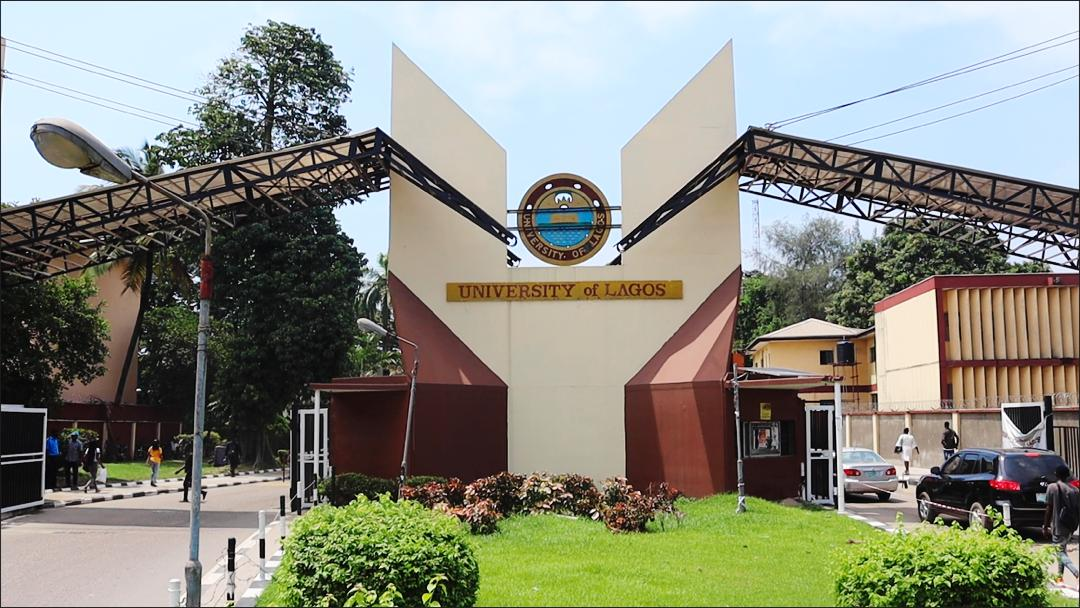
Justice Oyefeso’s educational journey reflected the international pedigree that later shaped her legal philosophy. She earned a Bachelor of Arts degree in History from the University of Lagos, obtained an LLB from the University of Warwick in the United Kingdom, and later completed an LLM at the University of Lagos.

Beyond adjudication, she became a visible advocate for inclusion, mediation and women’s advancement within the legal profession.

Only months before her passing, Justice Oyefeso participated in an international webinar organised by the National Association of Women Judges of Nigeria in collaboration with the International Association of Women Judges. The event focused on work-life balance, accessibility in court systems and the structural barriers confronting women in law.

At the conference, she led discussions on maternity leave, caregiving responsibilities, career interruptions and institutional reforms needed to support female legal professionals. Colleagues say her interventions reflected the same empathy and reformist thinking that defined her years on the bench.

A CEDR Accredited Mediator and Fellow of the Institute of Chartered Mediators and Conciliators, she was widely regarded as a bridge-builder who consistently pushed for fairness, dialogue and accessible justice.

Within the Eti-Osa Judicial Division, lawyers recalled a judge whose courtroom combined firmness with humanity and whose relationship with the Bar helped foster mutual respect rather than hostility.

“She carried herself with grace and humility while continuously fostering cordiality between the Bench and the Bar,” the NBA Eti-Osa Branch stated.

As condolence visits continue, tributes from judges, lawyers, colleagues and former associates have continued to pour in, many describing her passing as the end of an era.

For many within Nigeria’s legal establishment, Justice Oyefeso represented a generation of jurists who saw law not merely as procedure, but as service.

Her death leaves behind not just grieving colleagues and loved ones, but also unresolved questions about succession, mentorship and the growing emotional strain within Nigeria’s overburdened justice system.

Though the courtroom seat she occupied now stands empty, her imprint on Lagos’ legal history appears certain to endure.

FIDA International raises alarm over xenophobic attacks and vigilante crackdown on foreign nationals in South Africa

The International Federation of Women Lawyers (FIDA) has raised alarm over what it described as “disturbing patterns suggestive of xenophobia” in South Africa, warning that foreign nationals, particularly women and children, are increasingly becoming targets of harassment, violence and forced displacement amid growing tensions around immigration enforcement.

In a strongly worded statement signed by Ezinwa Okoroafor, the global president of the organisation, FIDA said reports emerging from South Africa indicate that actions initially framed as efforts to tackle illegal immigration have escalated into attacks by vigilante groups allegedly targeting foreign nationals, including those legally residing or operating businesses in the country.

The global association of women lawyers said it had received complaints and enquiries concerning the situation and expressed “deep concern” over allegations that foreign nationals are being terrorised, denied access to healthcare and pressured to leave their communities.

“Such actions have extended beyond this purpose,” the organisation said, referring to immigration enforcement efforts. “They now reflect disturbing patterns suggestive of xenophobia, with groups of citizens reportedly acting as vigilantes.”

FIDA warned that women and children often bear the brunt of social unrest and instability, making them especially vulnerable to violence, exploitation and marginalisation during anti-immigrant crackdowns.

The organisation also cited reports that mixed-nationality families have been affected, with some spouses of foreign nationals allegedly being instructed to leave South Africa alongside their children and relocate to their partners’ countries of origin.

The statement comes amid mounting concern across parts of Africa over rising anti-foreigner sentiment in South Africa, where tensions linked to unemployment, crime and migration have periodically triggered outbreaks of violence against migrants from other African countries.

FIDA noted that several African governments had already issued advisories aimed at protecting their citizens in response to the developments. It also referenced statements from both the African Union and the United Nations condemning xenophobic attacks and vigilante conduct.

While acknowledging South Africa’s sovereign right to regulate immigration within its borders, FIDA argued that such powers must be exercised within the framework of human rights protections guaranteed under both domestic and international law.

The organisation pointed specifically to the Universal Declaration of Human Rights, the African Charter on Human and Peoples’ Rights, the Maputo Protocol and South Africa’s Constitution, all of which protect rights relating to human dignity, equality, security and freedom from discrimination.

FIDA urged the South African government to take “immediate and decisive action” to halt attacks against foreign nationals and prosecute perpetrators in accordance with the rule of law.

The organisation further called on authorities to provide safe shelters and emergency protection measures for women and children fleeing violence, while ensuring immigration enforcement measures are carried out humanely, including in cases involving undocumented migrants.

“FIDA trusts that the Government of South Africa will demonstrate its commitment to the protection and promotion of human rights,” the statement said.

TIPS