Why Nigeria’s Long War Will Be Won by Intelligence, Institutions and Public Confidence—Not Firepower Alone
LAW & SOCIETY MAGAZINE SPECIAL REPORT
Somewhere in Nigeria’s vast North-East, a military patrol prepares to move before dawn. Maps are folded, radios checked, vehicles fuelled and weapons inspected. Commanders review the route one last time before giving the signal to advance.
Several hundred kilometres away, another convoy assembles in the forests of the North-West, where armed bandits have turned once-quiet farming communities into frontlines. Elsewhere, intelligence officers monitor intercepted communications, analysts examine satellite imagery and field operatives wait for information that may determine whether an operation succeeds—or ends in another ambush.
Long before the first shot is fired, another battle has already begun. It is fought not with rifles or armoured vehicles but with information, judgement and timing.
Who knows what.
Who knows it first.
And who acts before the other side does.
That contest—largely invisible to the public—has become one of the defining features of modern warfare. It also provides the context within which recent developments have unsettled many within Nigeria’s security establishment.
Read Also: Inside Nigeria’s Security Paradox (PART II): The enemy who knows too much
Reports that about forty rehabilitated former Boko Haram members were screened as part of the Nigerian Army’s ongoing recruitment exercise have generated debate extending well beyond the applicants themselves. Around the same time, a notorious bandit commander publicly claimed that he routinely receives advance notice of military operations and possesses informants within the security system.
Military authorities have yet to publicly respond to the allegations surrounding the recruitment exercise, while security experts caution that criminal leaders often exaggerate their reach to project strength, intimidate communities and undermine confidence in state institutions.
Whether those claims prove accurate, exaggerated or entirely false, they have reignited an awkward national conversation. Not simply about recruitment. Or rehabilitation. Or even intelligence leaks. But about something much larger.
Has the nature of Nigeria’s security challenge changed faster than the institutions fighting it?
That question may ultimately prove more consequential than the controversy itself. Modern insurgencies are seldom decided by the number of fighters killed or camps overrun. Increasingly, they are won by the side that learns, adapts and anticipates faster than its adversary. Increasingly, they are decided by which side learns faster.
The War Has Changed
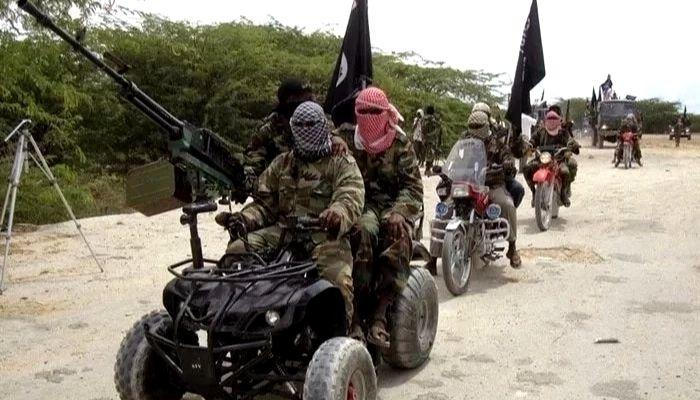
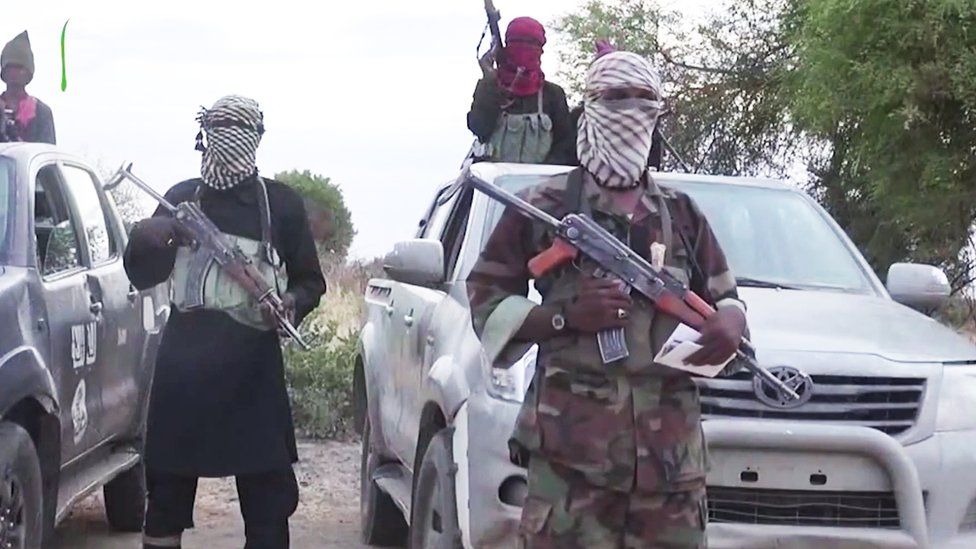
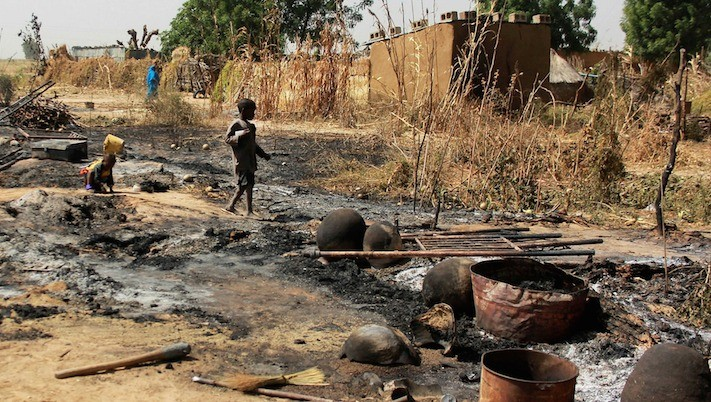
When Boko Haram launched its violent insurgency more than sixteen years ago, Nigeria confronted an organisation that largely relied on direct assaults, improvised explosives, raids on villages and attacks against security formations.
Today, the landscape is considerably more complex.
The original insurgency has fragmented into multiple armed formations with differing structures, tactics and objectives. Alongside Boko Haram, the Islamic State West Africa Province (ISWAP) has refined its operational capabilities, while heavily armed criminal groups across the North-West have transformed from loosely organised cattle-rustling gangs into sophisticated networks involved in kidnapping, extortion, illegal taxation, arms trafficking and cross-border criminal commerce.
These groups increasingly exploit difficult terrain stretching from the forests of Zamfara and Katsina to the islands of Lake Chad, using mobility rather than territorial control as their principal advantage.
Unlike conventional armies, they are not required to defend fixed positions. They dissolve into forests. Blend into rural communities. Cross international borders. Recruit locally. Fragment when under pressure. And regroup elsewhere.
Their greatest strength lies not necessarily in superior firepower but in their ability to adapt. Military campaigns that successfully degrade one network often see another emerge with altered tactics, different financing structures or new alliances.
It is a pattern observed not only in Nigeria but across conflict zones from the Sahel to the Middle East. Security analysts increasingly describe such organisations as learning networks—violent groups that continuously modify their methods in response to government operations.
When aerial bombardments intensify, they disperse into smaller cells. When communications are intercepted, they migrate to different platforms or rely more heavily on couriers. When highways become dangerous, they establish alternative routes through forests and ungoverned spaces.
Each military success forces adaptation. Each adaptation requires another response. The contest therefore becomes less about strength than about speed. Not speed of movement. Speed of learning.
The New Measure of Military Power
For much of the twentieth century, military strength was often measured by visible assets. The number of troops. The quantity of tanks. Combat aircraft. Artillery. Warships. Today, those indicators remain important, but they no longer tell the whole story. Increasingly, military professionals speak of something less visible but far more decisive. Decision superiority.
It is a concept widely discussed within contemporary strategic studies and military planning. Simply put, it refers to the ability of one side to understand a situation more quickly, make better decisions and act before its adversary can respond.
The side that consistently cycles through observation, analysis and action faster than its opponent gains an advantage that cannot always be measured in numbers. One credible intelligence report may prevent an attack that would otherwise claim dozens of lives. One intercepted communication may expose an insurgent logistics network built over months. One community willing to report suspicious movement may enable security forces to dismantle a criminal camp before an operation is launched.
Conversely, one compromised operational plan can erase weeks of planning. One leaked troop movement may transform an offensive into an ambush. One missed warning can alter the course of an entire operation.
This explains why experienced military officers often describe intelligence as the most valuable weapon in modern conflict. Weapons destroy targets. Information determines which targets should be engaged in the first place. That distinction is key.
It also explains why allegations of intelligence compromise—whether eventually substantiated or not—generate profound concern inside professional armed forces. Their significance extends far beyond public relations. They strike at the confidence upon which operational effectiveness depends.
Winning Before the Shooting Starts
One of the least understood aspects of modern warfare is that successful operations are often decided long before soldiers leave their bases. Every deployment begins with countless invisible decisions. Analysts review surveillance. Intelligence officers compare reports from multiple sources.
Logistics teams calculate fuel requirements, medical support and evacuation plans. Engineers assess routes for possible improvised explosive devices. Weather conditions are studied. Communication channels are tested. Alternative plans are prepared. The public rarely sees this phase because, when it works, nothing dramatic happens. The operation succeeds. Troops return. Life moves on. But failures during this invisible stage can prove devastating.
Military history repeatedly demonstrates that courageous soldiers cannot compensate indefinitely for flawed intelligence, compromised planning or incomplete situational awareness.
No army, however well trained, can consistently remain ahead of an adversary that already knows where it is going. That reality gives particular significance to the concerns quietly expressed by some serving personnel over recent developments.
For many officers, the issue is not merely whether rehabilitated former insurgents should eventually reintegrate into society. It is whether every institution responsible for protecting operational information possesses safeguards robust enough to inspire confidence among those expected to carry out dangerous missions. That distinction is often lost in public debate.
Yet it lies at the centre of military professionalism.
A Different Kind of Battlefield
Perhaps the greatest misconception about Nigeria’s security crisis is that it is fought primarily on battlefields visible from drone footage or television screens. Those battlefields matter. But they are rarely where wars of this nature are ultimately decided.
The decisive contest increasingly unfolds in places the public never sees. Inside intelligence fusion centres. Across encrypted communication networks. Within financial trails that sustain armed groups. Along forgotten footpaths linking remote villages to forests. Inside the minds of frightened villagers deciding whether to report suspicious movements. And within institutions constantly racing to understand an adversary that refuses to remain static.
That is the invisible battlefield. It is where today’s conflicts are increasingly won. Or quietly lost.
END OF PART III A
Part III-B will take the discussion even deeper. It moves beyond intelligence into “The Adaptability Gap,” “The Republic of Rumours,” and “When Institutions Learn Too Slowly,” examining why insurgent groups often innovate faster than governments, how psychological warfare shapes public perception, and why the most dangerous victories are sometimes achieved without firing a single shot.