Home Blog Page 138

$5m for children’s schooling in Switzerland by oil regulator reflects ‘economic sabotage’ in oil sector — Dangote

    Africa’s richest man, Aliko Dangote, has accused the head of Nigeria’s downstream petroleum regulator of spending about $5 million on the foreign secondary education of his four children and called for a full public investigation, escalating a simmering controversy over alleged elite excess and regulatory capture.

      Speaking Sunday at the Dangote Petroleum Refinery in Lekki, Lagos, Dangote alleged that Farouk Ahmed, Chief Executive of the Nigerian Midstream and Downstream Petroleum Regulatory Authority (NMDPRA), paid the sum to schools in Switzerland—an amount he said was impossible to reconcile with earnings from public service.

      Dangote said Ahmed should appear before the Code of Conduct Tribunal to explain the source of the funds, warning that failure to address the allegation would further erode public trust and investor confidence in Nigeria’s oil and gas sector.

      “I’ve had people making complaints about a regulator who has put his children in secondary school,” Dangote said. “Four of them, six years, costing Nigeria $5 million. You cannot imagine somebody paying $5 million for educating four children.”

      The businessman stressed that the issue was not personal but systemic, describing the allegation as emblematic of deeper governance failures. He said such spending would ordinarily trigger scrutiny from tax authorities anywhere in the world.

      “When you look at his income, it does not match paying this kind of fee,” Dangote said. “Even if it were me paying $5 million, the taxman would ask questions.”

      Dangote contrasted the alleged expenditure with the hardship faced by ordinary Nigerians, particularly in northern communities.

      “From Sokoto, where he comes from, people are struggling to pay ₦100,000 in school fees. Children are sitting at home because of ₦100,000,” he said. “Yet someone who has worked all his life in government allegedly pays $5 million for secondary school.”

      Dangote said his own children attended secondary school in Nigeria, adding that he was not calling for Ahmed’s removal but demanding transparency.

      “If he denies it, I will publish what was paid as tuition, and I will take legal steps to compel the schools to disclose the payments,” he said. “This is about accountability. What is happening amounts to economic sabotage.”

      The NMDPRA has previously rejected similar allegations. In July, the agency dismissed claims by protesters that Ahmed spent more than $5.5 million on his children’s education, describing them as a coordinated smear campaign based on falsehoods.

      Contacted again on Sunday, NMDPRA spokesman George Ene-Ita said: “For now, no comment.”

      Dangote used the briefing to widen his criticism to what he described as regulatory failure and entrenched interests in the downstream petroleum sector, arguing that fuel importers continue to profit at Nigeria’s expense.

      “There are powerful interests in the oil sector,” he said. “Allowing massive imports while discouraging domestic refining is unethical and does a disservice to Nigeria.”

      He warned against conflicts of interest, saying regulators must be clearly separated from traders.

      “A trader should never be a regulator,” Dangote said. “Forty-seven licences have been issued, yet no new refineries are being built because the environment is not conducive.”

      The allegations echo long-standing concerns about unexplained wealth among Nigeria’s political elite. A 2021 report by the Carnegie Endowment for International Peace found that many senior Nigerian politicians sent their children to expensive British schools and universities despite modest official salaries, raising red flags about illicit financial flows.

      The report cited convicted former governors James Ibori and Joshua Dariye among politically exposed persons who spent hundreds of thousands of pounds on UK education for their children while Nigeria’s public schools deteriorated.

      Carnegie estimated that the average annual fee for a UK boarding school in 2020 exceeded the annual earnings of a Nigerian governor or cabinet minister, highlighting a stark gap between declared income and spending.

      While elite families spend billions educating their children abroad, Nigeria’s education sector remains plagued by underfunding, repeated strikes and collapsing infrastructure. Since 1999, university lecturers have embarked on at least 15 strikes, costing the system more than four years of academic time.

      As Nigeria grapples with inflation, unemployment and declining public services, Dangote’s allegations have reignited a sensitive national debate: whether anti-corruption enforcement applies equally to powerful regulators—and whether public office has become a pathway to unexplained wealth.

      Time for the Abachas to rejoice

      By Lasisi Olagunju

      General Sani Abacha was a great teacher. He pioneered the doctrine of consensus candidacy in Nigeria. He founded a country of five political parties and when it was time for the parties to pick their candidates for the presidency, all the five reached a consensus that the man fit for the job was Abacha himself. Today, from party primaries to consensus candidacy; from setting the opposition on fire, to everything and everything, Abacha’s students are showing exceptionally remarkable brilliance.

      Anti-Abacha democrats of 28 years ago are orchestrating and celebrating the collapse of opposition parties today. They are rejoicing at the prospect of a one-party, one-candidate presidential election in 2027. Abacha did the same. So, what are we saying? Children who set out to resemble their parents almost always exceed their mark; they recreate the parents in perfect form and format. Abacha was a democrat; his pupils inherited his political estate and have, today, turned it into an academy. Its classes are bursting at the seams with students and scholars. Aristotle and his Lyceum will be green with envy, and very jealous of this busy academy.

      Like it was under Abacha, the opposition suffers from a blaze ignited by the palace. But, and this is where I am going: fires, once started, rarely obey and respect their makers.

      My friend, the storyteller, gave me an old folktale of a man who thought the world must revolve around him, alone. One cold night, the man set his neighbours’ huts on fire so he alone would stand as the ‘big man’ of the village. The man watched with satisfaction as the flames rose, dancing dangerously close to the skies. But the wind had a scheme of its own. It hijacked the fire, lifted it, and dropped it squarely on the arsonist’s own thatched roof. By dawn, all huts in the village had become small heaps of ash.

      Fire, in all cultures, is a communal danger; whoever releases it cannot control its path. The Fulani warn that he who lights a fire in the savannah must not sleep among dry grass, a wisdom another African people echo by saying that the man who sets a field ablaze should not lie beside raffia in the same field.

      Yet our rulers strike anti-opposition matches with reckless confidence, believing fire is a loyal servant that burns only the huts of opponents. They forget that power is a strong wind, and wind has no party card and respects none.

      When it is state policy to weaken institutions, criminalise dissent and have rivals crushed with the excuse of order, the blaze spreads quietly, patiently, until it reaches the bed of its maker. Fire does not negotiate; it does not remember or know who started it (iná ò mo eni ó dáa). In politics, as in the grassland, those who weaponise flames rarely die with unburnt roofs over their heads.

      The folktale above is the story of today’s ruling party. People in power think it is wisdom to weaken, scatter, or destroy opposition platforms outright. They have forgotten the ancient lesson of the village: when you burn every hut around you, you leave nothing to break the wind when it blows back.

      A democratic system that cannibalises opposition always ends up consuming itself. Our First Republic is a golden example to cite here. History is full of parties that dug graves for their rivals and ended up falling inside.

      Literature is rich with warnings about the danger of lighting fires; they more often than not get out of control. In Duro Ladipo’s Oba Koso, Sango is the lord of fire and ultimately victim of his fire. In Shakespeare’s Macbeth, we see how a single spark of regicide grows into a blaze of paranoia and bloodshed that ultimately consumes Macbeth himself. In D. O. Fagunwa’s Adiitu Olodumare, we see how Èsù léhin ibejì is consumed by the fire of his intrigues; Chinua Achebe’s Things Fall Apart shows a similar pattern with Macbeth: Okonkwo’s role in Ikemefuna’s death ignites a chain of misfortunes that destroys his honour and his life. In The Crucible, Arthur Miller’s characters take turns to unleash hysteria through lies, only to be trapped by the inferno they created. Ola Rotimi’s The Gods Are Not to Blame and even Mary Shelley’s Frankenstein echo the same lesson. Again and again, literature insists that those who start dangerous fires, whether of ambition, deceit, violence, or pride, should never expect to sleep safely. Always, the tongue of the flames turns and returns home.

      Abacha must be very proud that the democrats who fought and hounded him to death have turned out his faithful students. From NADECO to labour unions and to the media, every snail that smeared Abacha with its slime is today rubbing its mouth on the hallowed hallways of his palace.

      Under Abacha, to be in opposition was to toy with trouble. Under this democracy, all opposition parties suffer pains of fracture. Parallel excos here; factional groups there.

      Opposition figures are in greater trouble. It does not take much discernment before anyone knows that Tiger it is that is behind Oloruntowo’s troubles; Oloruntowo is not at all a bad dog. But how long in comfort can the troubler be?

      In 1996, Professor Jeffrey Herbst of the Woodrow Wilson School, Princeton University, United States, asked: “Is Nigeria a Viable State?” He went on to assert — and predict — that “Nigeria does not work and probably cannot work.” He said the country was failing not from any other cause but “from a particular pattern of politics … that threatens to even further impoverish the population and to cause a catastrophic collapse…”

      That was Nigeria under Abacha. We struggled to avert that “catastrophic collapse”; with death’s help, we got Abacha off the cockpit, and birthed for ourselves this democracy. Now, we are not even sure of the definitions of ‘state’, ‘viable’ and ‘viability’. What is sure is that the “particular pattern of politics” that caught the attention of the American in 1996 is here in 2025. As it was under Sani Abacha, everyone today sings one song, the same song.

      Abacha died in 1998; Abacha is alive in 2025. It is strange that his family members are not celebrating. How can you win a race and shut yourself up? My people say happiness is too sweet to be endured. The default response to joy is celebration, but we are not seeing it in the family of the victorious Abacha.

      Because the man in dark goggles professed this democracy, this democracy and its democrats have apotheosised Abacha; he is their prophet. They take their lessons from his sacred texts; his shrine is their preferred place of worship.

      “As surely as I live, says the Lord, every knee will bow before Me; every tongue will confess to God.” — Romans 14:11. Our political lords copied those words and, in profaned arrogance, read it to Nigeria and its terrorised people. Now, everyone, from governors to the governed, bows; their tongue confesses that the president is king, unqueriable and unquestionable.

      When a man is truly blessed, all the world, big and small, will line up to bless him and the work of his hand. Governors of all parties are singing “Bola on Your Mandate We Shall Stand.” In the whole of southern Nigeria, only one or two governors are not singing his anthem. Northern governors sing “Asiwaju” better and with greater gusto than the owners of the word. In their obsessive love for the big man’s power and the largesse it dispenses, they assume that “Asiwaju” is the president’s first name. They say “President Asiwaju.” The last time a leader was this blessed was 1998 — twenty-seven years ago.

      Our thirst for disaster is unslaked. All that the man wanted was to be president; he became president and our progressive democrats are making a king out of him. And we watch them and what they do either in sheepish horror, complicit acquiescence or in criminal collusion. We should not blame the leader for seeing in himself Kabiyesi. That is the status we conferred on him. Even the humblest person begins to gallop once put on a horse. True. Humility or simplicity disappears the moment power unlimited is offered.

      The chant of the president’s personal anthem is what Pawley and Müllensiefen call “Singing along.” It is never a stringless act. Worse than Abacha’s Two-Million-Man March, we see two hundred million people, crowds of crowds, move together in one voice, bound by an invisible script and spell.

      We feel a ‘terrorised’ democracy where citizens learn, through bowing, concurring and context rather than conviction, to sing the song of the kingly emperor. People who are not sure of anything again discover that synchronised voices create safety and belonging. They proceed to stage it as a ritual for economic and political survival.

      The popular Abacha badge decorated the left and right breasts of many fallen angels. Collective chanting signalled loyalty and reduced individual risk. Under this regime of democrats, the badge will soon come, but the chant is louder and wider cast. Unitarised voices have become instruments through which power is normalised, and by which dissent is dissolved.

      Two years into this democracy in 2001, Nigerian-American professor of African history and global studies, Raphael Chijioke Njoku, warned that “new democracies often revert to dictatorships.” He was a prophet and his scholarship prescient.

      We are there.

      There are sorries to say and apologies to drop. On September 8, 1971, Nigeria killed Ishola Oyenusi and his armed robbery gang members because they stole a few thousands of Nigerian pounds. Why did the past have to shoot them when it knew it would stage greater heists in the future? It is the same with Sani Abacha and his politics. Why did we fight him so viciously if this grim harbour was our destination? I do not have to say it before you know that the spirit of the dead is out celebrating its vindication.

      American political scientist, Samuel Huntington, in his The Third Wave, lists four typologies of authoritarian regimes: one-party, personal, military and racial oligarchy. The last on this list (racial) we may never experience in Nigeria, but we’ve seen military rule and its unseemly possibilities. The emergence of the first two (one-party and personal dictatorship) was what we fought and quenched in the struggle with Abacha.

      Unfortunately, the evil we ran out of town has now walked in to assert its invincibility. What did Abacha’s sons do that today’s children of Eli are not doing ten-fold? Democracy is a scam, or, at best, an ambush.

      Politicians have borrowed God’s language without His temperament. They have restructured the Presidential Villa into Nigeria’s Mount Sinai where commandments descend on tablets of gold bars. The whole country has become an endless Sunday service; the president sits on the altar, ministers and party chieftains swing incense burners, emitting smokes of deceit and self-righteousness; the masses kneel in reverence and awe of power. They look up to their Lord Bishop, the president, as he dispenses sweet holy communion to the converted — and dips the bottom of the stubborn into baptismal hot waters. We were not fair to Sani Abacha.

      We cannot eat banana and have swollen cheek. But we can eat banana and have swollen cheeks. What will account for the difference is the sacrifice we offer to the mouth of the world.

      The words of the world rebuke absolute power. By choking the space for alternative voices, my Fulani friend said the ruling party is setting the whole political village ablaze, including the patch of ground on which its own structure stands. No parties or leaders survive the inferno they unleash on others. The flame of the fire the ruling party ignites and fans today will, inevitably, find its way home tomorrow.

      The views expressed by contributors are strictly personal and not of Law & Society Magazine.

      Bandits storm Kogi church, kill one, abduct worshippers despite president’s declaration of security emergency

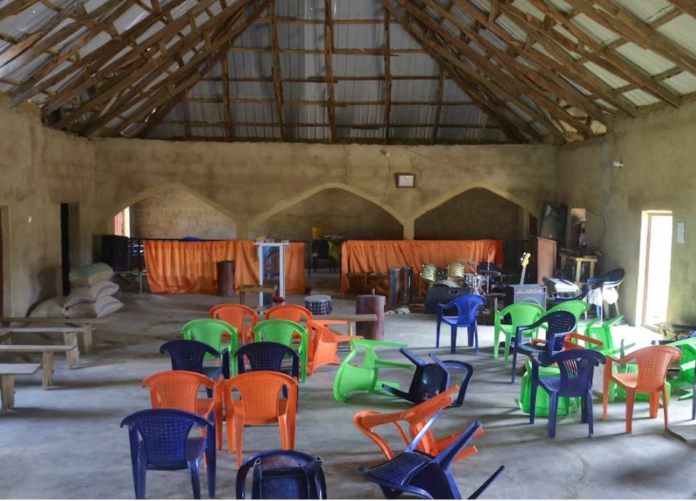
      Gunmen abducted at least 20 worshippers on Sunday after storming a service at the First Evangelical Church Winning All (ECWA) in Ayetoro Kiri, Kabba/Bunu Local Government Area of Kogi State, in the latest attack targeting places of worship in Nigeria’s Middle Belt.

      Eyewitnesses said the attackers invaded the church mid-service, firing sporadically to trigger panic. Congregants fled in different directions as the gunmen seized an undisclosed number of worshippers and escaped through nearby bush paths.

      The assault threw the normally quiet community into chaos, with residents scrambling for safety amid sustained gunfire. One person, identified only as Jay-Jay, was reportedly killed during the attack.

      Sunday’s abduction has intensified fears over worsening insecurity in rural Kogi communities, where repeated attacks on civilians and religious institutions have heightened anxiety.

      It marked the second reported church attack in Okun land within weeks. On November 30, armed men stormed a Cherubim and Seraphim Church in Ejiba, Yagba West Local Government Area, abducting a cleric identified as Orlando and about 13 worshippers during a service. The attackers initially demanded a ransom of ₦500 million, later reduced to ₦200 million, and reportedly issued a two-day ultimatum to the victims’ families.

      Reacting to the latest incident, the Chairman of Kabba/Bunu Local Government Council, Zaccheus Dare Michael, blamed the church for holding a service in what he described as a tense area. He also ordered the immediate closure of all markets in the locality, a move that drew quiet criticism from residents who questioned the absence of preventive security measures.

      As of the time of filing this report, the Kogi State Police Command had not responded to repeated requests for official comment.

      The Kogi attack follows a series of similar incidents across neighbouring states. On November 19, gunmen attacked the Christ Apostolic Church in Eruku, Kwara State, killing two people and kidnapping several others during an evening service. Less than a week later, on November 25, more than 20 armed men struck the nearby Isapa community, abducting at least 11 residents.

      The spate of violence persists despite President Bola Ahmed Tinubu’s declaration of a nationwide security emergency on November 26. In a statement personally signed by the president, Tinubu announced plans to recruit 20,000 additional police officers and 50,000 personnel into the armed forces to counter rising insecurity.

      Yet attacks and mass abductions have continued unabated.

      Adding to public concern, Minister of Communications, Innovation and Digital Economy Bosun Tijani revealed last week that bandits and terrorist groups operating in Nigeria are using advanced communication technologies specifically designed to evade state surveillance.

      Speaking on Channels Television’s Politics Today on December 12, Tijani said criminal networks employ call-hopping systems that bounce signals across multiple cell towers, making tracking extremely difficult. He added that the groups often operate from areas with little or no telecom coverage, ensuring their communication signals disappear once they relocate.

      The convergence of rising attacks, technological sophistication among armed groups and mounting civilian casualties has renewed a troubling national debate: whether Nigeria is confronting terrorism with sufficient resolve — or quietly adapting to its entrenchment

      Supreme Court backs president’s power to impose emergency rule, suspend elected officials

      Nigeria’s Supreme Court has confirmed the President’s constitutional power to declare a state of emergency in any state facing a potential breakdown of law and order or descent into anarchy.

      The decision, delivered in a 6-1 split judgment, arose from a legal challenge brought by Adamawa State and 10 other states governed by the Peoples Democratic Party (PDP). The plaintiffs contested President Bola Tinubu’s declaration of emergency rule in Rivers State, which included the six-month suspension of elected state officials.

      The court dismissed the suit after upholding preliminary objections on jurisdictional grounds but proceeded to address the merits, ultimately ruling in favor of the executive’s actions.

      Below are highlights from the majority opinion, led by Justice Mohammed Idris.

      • Section 305 of the 1999 Constitution grants the President broad discretion to take “extraordinary measures” to restore normalcy during an emergency.
      • While the section does not explicitly detail these measures, it allows for actions such as temporarily suspending elected officials, provided they are limited in duration.

      In the lone dissenting voice however, Justice Obande Ogbuinya argued that although the President may declare an emergency, this power cannot extend to suspending democratically elected officials, including governors, deputy governors, and lawmakers.

      Thoughts on returning safety to Nigeria’s schools

      By Adaobi Obiabunmuo

      Insecurity in Nigeria remains one of the country’s most persistent and troubling challenges, one that successive governments have failed to decisively address. It is easy to conclude that the crisis is an outcome of entrenched bad governance and corruption, or a political tool wielded by desperate political actors. It could also be both. Whatever interpretation one adopts, one fact is undeniable: insecurity affects every Nigerian, regardless of age, sex, origin, political affiliation, religion, ethnicity, or social status.

      The gravity of the situation was once again highlighted in the wake of President Trump’s re-designation of Nigeria as a Country of Particular Concern. In response, President Bola Tinubu, on 6 November 2025, reassured citizens that his administration would defeat terrorism and secure every part of the country. Yet, barely a week after this assurance, Nigerians awoke to the tragic news of another mass abduction of about 25 schoolgirls from Maga Comprehensive Girls’ Secondary School in Danko Wasagu Local Government Area of Kebbi State. While citizens were calling on the government to ensure the safe return of the school girls, there was another abduction of over 300 pupils, students, and teachers at St. Mary’s Catholic School, Papiri, Niger state on 21 November, 2025. This incident adds to the growing list of assaults that continue to undermine public confidence in government promises.

      Yet, in a democracy, power should originate from and belong to the people. Through elections, citizens confer legitimacy on the government. That mandate comes with clear responsibilities for the protection of lives and property. The 1999 Constitution captures this succinctly when it describes the safety and security of the people as the “primary” responsibility of government. Whenever anyone in Nigeria is killed, abducted, disappeared or endangered – especially vulnerable groups like schoolchildren – it raises fundamental questions about governance, accountability, and the state’s commitment to its obligations.

      Nightfall in many Nigeria’s communities living with or on the frontiers of this insecurity is redolent of Oswald M. Mtshali’s “Nightfall in Soweto, where he depicts night as “a dreaded disease seeping through the pores of a healthy body, and ravaging it beyond repair.” Students in both secondary and tertiary institutions have suffered severe trauma as a result of encounters with terrorists euphemistically branded bandits by government. Tragically, some lost their lives. It is important to recall some of these horrific yet avoidable incidents as a reminder that insecurity remains pervasive, robbing us of the peace we desire. 

      In 2003, Nigeria adopted the Child Rights Act (CRA), which enacted into domestic law the United Nations Convention on the Rights of the Child (UNCRC) previously ratified by the country in 1991. Article 28 of the UNCRC guarantees the Right to Education – free and compulsory primary education, and accessible secondary and higher education. The Universal Basic Education Commission (UBEC) Act, enacted the following year in 2004 established the UBEC to ensure that every Nigerian child enjoys free, universal, compulsory, and basic education. Basic education under the UBEC Act is a minimum of nine years schooling, that is; six years of primary school and at least three years in junior secondary school.

      Yet, in today’s Nigeria, students who simply yearn for knowledge are increasingly becoming victims of abduction. How do we explain this tragic reality to young minds?

      From the attack on Government Secondary School, Mamudo, Yobe State, on July 6, 2013 where 42 people, including students and staff, were killed to the abduction of over 270 schoolgirls on April 14, 2014 at Government Girls Secondary School, Chibok, Borno St ate, the pattern remains deeply disturbing. The Chibok abduction inspired the #BringBackOurGirls campaign, a movement for school safety led by prominent activists and amplified globally by politicians and diplomats demanding the safe return of the schoolgirls.

      On February 19, 2018, bandits stormed Government Girls Science and Technical College, Dapchi, in Bursari Local Government Area of Yobe State, abducting 110 schoolgirls. In February 2021, another 279 students were abducted from Government Girls Secondary School, Jangebe, Zamfara State.

      The data and trend clearly show that there is an overwhelming feminization of the phenomenon of mass school abduction in northern Nigeria but boys are sometimes not spared too. Two years after the Dapchi schoolgirls abduction, over 300 schoolboys were kidnapped on December 11, 2020, from Government Science Secondary School, Kankara, Katsina State.

      In response to this rising incidents of school insecurity, the Federal Government has shut down 47 Federal Government (Girls) Colleges. The governors of Katsina, Plateau, Kebbi, and Niger have similarly ordered the immediate shutdown of primary, secondary, and tertiary institutions in vulnerable communities. In Taraba State, the Governor adopted a different approach, directing the immediate de-boarding of all students in both private and public secondary schools and enhanced security measures across all school premises reinforced by community monitoring assets.

      According to the United Nations Children’s Fund (UNICEF), an estimated 18.3 million Nigerian children between the ages of five and fourteen were out of school in 2024. With the alarming rise in school attacks, how can we keep students safe and ensure they remain in school long enough to transition to higher levels of learning? Has the pursuit of formal education become a crime? If not, why are students repeatedly targeted?

      In response to the destruction of school facilities and the killings and abductions of teachers and students, the Nigerian government, in partnership with the United Nations Envoy for Global Education, launched the Safe Schools Initiative (SSI) in 2014 to improve the protection and safety of students, teachers, and family members. In 2019, former President Muhammadu Buhari signed the Safe Schools Declaration (SSD) ratification document, signalling Nigeria’s commitment to uphold its principles. The record of implementation has been non-existent or abysmal. In a recent report, The Punch newspaper reports that 30 states have yet to implement the SSI. Writing more recently, former British Prime Minister, Gordon Brown, advised that the best practices of the SSI must be reintroduced, reinvigorated, and supercharged at the federal, state, and local levels in Nigeria.

      Nigeria’s insecurity crisis is not just a threat to national stability; it is a test of leadership, political will, and the government’s ability to uphold its constitutional obligations. Every Nigerian – except those perpetrating or benefitting from – should be concerned about the crisis of insecurity that has emptied schools and threatening enlightenment in the country. Nigeria’s political elites should not play politics with the lives of Nigerians and the vulnerable groups. The response of government appears to have focused on recovering the abducted without the perpetrators being accounted for. This has fuelled credible speculation that the government has rewarded them with ransom payments, guaranteeing that there will be more abductions not less.

      I am a product of a boarding school in North-West Nigeria and this issue is deeply personal to me. How is it possible for over 300 students to be abducted and no one is held accountable? An effective response must begin with a policy of zero-tolerance for school abductions around three issues.

      First, security institutions must be required to perform better. The abduction and transportation of hundreds of school children from one place to another without minimal resistance or interference by Nigeria’s security agencies is an awful blot on the security management system in the country. Officers or sector commanders in areas where these abductions occur have to be held accountable.

      Second, government must stop encouraging the impression that it can buy its way out of this crisis of school abductions. The money spent on ransom payments can be used instead on smart digital surveillance and reporting which can help with proactive and preventive action to identify and rout the perpetrators before they are able to strike.

      Finally, state governors and local government must take their roles a lot more seriously in complementing the capabilities of the Federal Government by mobilizing local assets in their respective areas to identity and disable the perpetrators of the abductions. When these occur, Nigeria’s international partners will have the confidence to believe that they have a credible partner to work with in returning safety to learning in Nigeria and making the right to education a meaningful entitlement for every Nigerian child.

      Dr. Adaobi Obiabunmuo is Programmes Manager at PRIMORG

      Right of Reply: Why state police is Nigeria’s imperative lifeline

      By Dr Olukayode Ajulo, SAN

      My brother, Professor Chidi Odinkalu, offers a critique of President Bola Ahmed Tinubu’s nationwide security emergency announcement on November 26, 2025. He expresses significant concerns regarding the proposal for state police, suggesting that it could potentially lead to challenges that resemble a form of ‘decentralised despotism’. Odinkalu invokes ghosts of colonial-era Native Authority abuses, Sharia-era missteps in Zamfara, and vigilante fiascos in Benue and Anambra to argue that state-level security is a Pandora’s box of impunity and ethnic strife. This criticism is not just path-dependent nostalgia; it is a dangerously narrow refusal to confront the undeniable limitations of Nigeria’s current centralised policing structure, an overburdened institution struggling to meet the demands of a rapidly evolving security landscape.

      Despite the dedication of countless officers, the Nigeria Police Force (NPF) is patently constrained by a structure that no longer aligns with the size, diversity, and complexity of the federation. The result has been persistent security gaps that have allowed abductions and violent crimes to escalate. From July 2023 to June 2024 alone, Nigeria recorded 7,568 abductions, a grim reminder that reforms cannot remain theoretical.

      In the face of this reality, state police is not a fad or sleight of hand; it is an existential necessity for a federation suffocating under a one-size-fits-all approach. And nowhere does this truth shine brighter than in the quiet but powerful example of the South-West Security Network, Operation Amotekun, South-West Nigeria’s home-grown innovation that demonstrates how decentralised policing can function; equally, transparently, and effectively.

      Let us dispense with the historical red herrings Odinkalu trots out. The Native Authority Police of the 1940s-1960s were not federalism’s progeny but colonial relics, weaponised by local potentates in an era bereft of democratic guardrails or judicial oversight. Zamfara’s Sharia experiment in 1999 was no policing innovation but a theocratic gamble that conflated religious zeal with security, breeding chaos not through decentralisation but through ideological overreach. 

      Benue’s vigilantes and Anambra’s Bakassi Boys? These were ad-hoc unregulated militias improvised in the early Fourth Republic security vacuum, products of political desperation, not structured police forces with constitutional legitimacy. To extrapolate from those anomalies to a modern state-police framework is intellectual overreach. It overlooks Nigeria’s 2025 democratic ecosystem, which includes independent judiciaries, civil society oversight, human rights commissions, and legal guardrails that did not exist two decades ago.

      The NPF’s structural challenge is not rooted in a lack of effort or patriotism; it stems from a centralisation model that restricts responsiveness to local threats. With an overstretched command system, underfunding, and the diversion of officers to duties far removed from core policing, the Force’s capacity is routinely tested. This is why multiple reform committees, including the Parry Osayande Committee in 2012, have consistently recommended decentralisation to improve efficiency and local intelligence gathering.

      Enter Operation Amotekun: Established in January 2020 and codified into our laws, the South-West Security Network stands as a distinguished example of how decentralised policing can function effectively within a framework of constitutional and democratic oversight. As the Attorney-General of Ondo State, I can affirm that Amotekun operates in full compliance with state law. My office has provided effective supervision of the Agency in Ondo State as prescribed.

      In contrast to Professor Odinkalu’s concerns, Amotekun has successfully enhanced community-centred security while upholding principles of fairness and inclusivity. In 2025 alone, its border surge operations created a security “firewall” across the South-west, disrupting infiltration by criminal cells through community-based intelligence that the centralised structure struggles to access at the same speed. These results are rooted not in brute force but in cultural fluency, localised intelligence, and accountability.

      The United Nations’ September 2025 romance of Amotekun as a “clear signal” of innovative subnational security architecture for insecurity’s defeat underscores its global acclaim: in five years, it has curtailed daredevil attacks, rescued hostages, and restored night-time normalcy in forests once bandit havens, all while operating under strict gubernatorial oversight tempered by inter-state coordination and civil society audits.

      Amotekun‘s playbook is emphatic. The data is undeniable: by mid-2025, reported kidnappings in Ondo and Osun dropped by nearly 70%, despite Amotekun operating without the full access to arms and resources available to conventional federal agencies. No ethnic pogroms. No governor-driven repression. Just measurable wins.

      The December 1, 2025, commissioning of Ondo Amotekun’s state-of-the-art Command Centre by Governor Lucky Orimisan Aiyedatiwa, featuring drones, surveillance systems, intelligent mapping, and real-time citizen security reporting, demonstrates both scalability and modernisation. But this milestone is only one strand in a broader system of deliberate reforms and investments that have repositioned Ondo State as the pacesetter of subnational security governance in Nigeria.

      Governor Aiyedatiwa has provided what critics like Odinkalu conveniently ignore: a living demonstration of how state-level security can thrive under constitutional discipline, democratic oversight, and responsible leadership. His recent approval of 500 new Amotekun recruits, the largest single expansion since the corps was created, reflects not just manpower strengthening but strategic foresight, ensuring that intelligence gathering, border patrols, forest surveillance, and rural rapid-response capabilities are scaled proportionately to modern threats. This recruitment drive sits alongside continuous training programmes, expanded operatives’ welfare, new patrol vehicles, digital communication systems, and the restructuring of operational zones across senatorial districts.

      Indeed, Governor Aiyedatiwa’s approach embodies the very model of “decentralised accountability” that scholars insist is needed for state police to flourish: clear operational mandates, legislative transparency, inter-agency intelligence fusion, and unwavering gubernatorial backing untainted by political interference. His firm public defence of Amotekun’s leadership, refusing to bow to unfounded media pressures or politicised agitation, demonstrates the maturity and continuity required to stabilise security institutions. Far from Odinkalu’s phantom of “local despots,” Governor Aiyedatiwa has shown that decentralised security powers can be exercised as instruments of protection, not tools of oppression.

      Under his stewardship, Ondo has become the South-west’s most consistent case study in measurable security returns: reduced kidnapping hotspots, fortified forest corridors, proactive anti-banditry operations, and operational synergy with traditional rulers, hunters, farmers, and community networks. What emerges is not repression, but participatory security built on trust and shared intelligence the very ethic that centralised policing cannot replicate with equal speed or cultural fluency.

      Aiyedatiwa’s interventions expose the hollowness of the anti–state police argument. If Amotekun can achieve these outcomes with limited arms and without constitutional police powers, then imagine what can be accomplished when legal authority, resources, and federal oversight converge in a fully domesticated state-police system. Ondo State today stands as empirical evidence, not theory, that responsible subnational leadership can enhance national security, deepen public confidence, and strengthen the federation.

      In every sense, Governor Aiyedatiwa has shown that when a state chief executive embraces decentralised security not as a political ornament but as a governance obligation, safety becomes a demonstrable reality, not a rhetorical promise. His administration’s commitment proves that Nigeria’s future security architecture must be bottom-up, not top-down; community-driven, not command-chain congested. And that is precisely why Amotekun, under leaders like Aiyedatiwa, is the brightest beam pointing Nigeria toward the inevitability of state police.

      Critics like Odinkalu argue that 37 subnational police units would fragment the country. But the Amotekun model proves the opposite: with federal oversight standards (training, vetting by the National Police Service Commission, uniform guidelines, and transparent budgeting through state assemblies), decentralised security becomes a force multiplier, not a threat. These sub-national police units will immensely amplify, not erode, national cohesion. This is true of federalism, not the “variable geometry” Odinkalu sneers at, but a pragmatic mosaic that decentralises risk while centralising accountability.

      Nigeria’s challenges differ across regions: herder–farmer conflicts in the North, cultism in the South, kidnapping in the Middle Belt and oil theft in the Niger Delta. A centralised force cannot effectively tailor solutions to all. State police can.

      President Tinubu’s “innocuous insertion” inviting National Assembly review of state police laws is no artifice, it’s an overdue gauntlet thrown to lawmakers to codify Amotekun’s virtues nationwide. It is pragmatic. It is constitutional. And it is a call to respond to a nation in distress.

      Dr Ajulo is the Attorney-General and Commissioner for Justice, Ondo State.

      Judicial power to quash presidential pardon

      Femi Falana (SAN)

      By Femi Falana SAN

      In all class societies, pardon is usually granted by the President and Governors in favour of members of the ruling class who are standing trial or who have been convicted by courts. Hence, indigent convicted persons are made to complete their prison terms. If sentenced to death, they are kept on death row for decades. While over 3,833 are on death wow in accross correctional centres in Nigeria, Presidential Bola Tinubu granted absolute pardon to Mrs Maryam Sanda even though her trial was based on overwelming evidence that she killed her husband.

      And following public protests against the prerogative of mercy exercized by the President in October 2025, Mrs Sanda’s death sentence was commutted to 5 years imprisonment. Last Friday, the Supreme rejected her appeal and confirmed the concurrent judgments of the High Court of the Federal Capital Territory and the Court of Appeal. While affirming her death sentence, the Supreme Court (per Adumein JSC) ruled that “It was wrong for the executive to seek to exercise its power of pardon over a case of culpable homicide, in respect of which an appeal was pending.”

      In his article entitled “MARYAM SANDA: THE SUPREME COURT DID NOT, AND CANNOT, “OVERRIDE” PRESIDENT TINUBU: A CONSTITUTIONAL CLARIFICATION ON THE PREROGATIVE OF MERCY“,Sylvester Udemezue Esq. criticised the judgment of the Supreme Court in the case of Mariam Sanda v The State. In his highly erroneous view, Mr. Udemezue stated that “The Prerogative of Mercy is not limited by the judicial calendar. It is not suspended by the pendency of an appeal. It is not held in abeyance until the courts have finished their work. The President’s power exists independently, co-equally, and at all times, subject only to the Constitution.”

      Not a few lawyers have pitched their tent with Mr. Udemezue, without taking cognisance of the settled position of the law on the illegality of pardon granted in favour of a convict whose appeal is pending before an appellate court. The attention of such lawyers ought to be drawn to the case of Monsuru Solola & Anor. v The State(2005) LPELR-310 (SC) the pardon granted to one of the convicted individuals (Monsuru Solola) while an appeal was still pending before the Supreme Court was deemed premature and legally ineffective.

      Speaking for the apex court, Edozie JSC) held that “A person convicted for murder and sentenced to death by a High Court and whose appeal is dismissed by the Court of Appeal is deemed to have lodged a further Appeal to this Court and until that Appeal is finally determined the Head of State or the Governor of a State cannot putsuant to Sections 185 or 212 of the 1999 Constitution, as the case may be, exercise his power of perogative of mercy on favour of that person.”

      The abuse of the power of prerogative of mercy may be challenged even before a trial court. In FRN v. DINGYADI (2018) LPELR-46061(CA) the Governor of Sokoto State, Mr. Aminu Tambuwal granted pardon to Mr. Muhammad Maigari Dingyadi (former Secretary to the Government of Sokoto State) and a former governor of Sokoto State, Attahiru Dalhatu Bafarawa who were standing trial for alleged N15bn fraud proffered against them. The prosecution agency, the Economic and Financial Crimes Commission, objected to the pardon but was overruled by the trial court.

      But the Court of Appeal voided the pardon granted in favour of the defendants and ordered their fresh trial in the alleged N15bn fraud proffered against them. Delivering the lead judgments in the two appeals filed by the EFCC against , both Justices Hannatu Sankey and Ndukwe-Anyawu, held that the governor’s pardon was invalid since the accused persons were still standing trial before a competent court.

      Indeed, a pardonee may reject the prerogative of mercy exercised in his favour and insists that the law be allowed to take its course. In THE REPUBLIC v. TSATSU TSIKATA (2016) JELR 91912 (CA), the appellant, a leading lawyer and politician, was on June 18, 2008, convicted and sentenced to 5-year imprisonment by the Fast-Track High Court in Accra, Ghana on three counts of willfully causing financial loss to the State and one count of intentionally misapplying public property. Former President John Kufuor gave the respondent a presidential pardon.

      However, the respondentl rejected the pardon with a handwritten letter saying, “I have never sought, and I do not need your pretence of mercy. Justice is my quest, and I will pursue that quest in accordance with the Constitution and the laws of Ghana”. Thereafter, the appellant pursued the quest for justice. In bringing an end to the 15-year legal orderal of the respondent, the Court of Appeal quashed the conviction on the ground that he was not given fair hearing by the trial court.

      It is indisputable that it is the constitutionally right of a convict whose appeal is pending before the Court of Appeal or Supreme Court to have the appeal determined. The appeal cannot be truncated or frustrated by any executive act in any manner whatsoever. Therefore, until the pending appeal is finally determined, the President or Governor of a state cannot, pursuant to sections 175 and 212 of the Constitution, as the case may be, exercise his or her power of prerogative of mercy in favour of the appellant person. See the case of Obidike v. State (2001) 17 NWLR (Part 743) 601.

      In the same vein, a convict sentenced to death cannot be executed before his appeal is disposed of. In Aliu Bello & Ors v. Attorney-General Of Oyo State (1986) 5 NWLR (Part 45) 820, the Supreme Court berated the Oyo State Government for executing the father of the appellants while his appeal was pending at the Court of Appeal. In his admirable forensic jurisprudence,
      Anthony Aniagolu JSC said recalled that :”This is the first case in this country, of which I am aware, in which a legitimate Government of this country past or present; colonial or indigenous hastily and illegally snuffed off the life of an Appellant whose appeal had vested and was in being, with no order of Court upon the appeal, and with a reckless disregard for the life and liberty of the subject and the principles of the Rule of Law. The brutal incident has bespattered the face of the Oyo State Government with the paintbrush of shame.”

      It is not in dispute that a presidential pardon cannot be questioned once it is properly granted by the President. But it does not automatically terminate ongoing trials or appeals as it cannot override judicial process. All the judicial authorities have confirmed that pardons are to be granted to generally for persons already convicted persons and not for those whose trials or appeals have not been determined. In view of the foregoing, Adumein JSC was on a good legal wicket when he said that “It was wrong for the executive to seek to exercise its power of pardon over a case of culpable homicide, in respect of which an appeal was pending.”

      Henceforth, in order not to run foul of the law, the Prerogative of Mercy Committees headed by the Attorneys-General of the Federation and States should always ensure that the appeals of convicted persons recommended for pardon have been finally determined. In other words, convicts whose trials or appeals are pending in courts are not entitled to be granted pardon by either the President or State Governors.

      Maryam Sanda: The Supreme Court Did Not, and Cannot, “Override” President Tinubu: A constitutional clarification on the prerogative of mercy

      By Sylvester Udemezue

      The headline published by The Nation reads: “BREAKING NEWS: Supreme Court overrides FG’s pardon for Maryam Sanda, affirms death sentence.” With due respect, this headline is misleading, legally inaccurate, and constitutionally unsustainable. It mischaracterises both the Supreme Court’s role and the scope of the President’s Prerogative of Mercy under section 175 of the Constitution of the Federal Republic of Nigeria, 1999.

      THE SUPREME COURT DID NOT, COULD NOT OVERRIDE THE PRESIDENT IN THE CIRCUMSTANCES

      The Supreme Court merely performed its judicial duty: it determined the appeal before it and affirmed the conviction and sentence passed by the lower courts. Nothing in the judgment revoked, voided, negated or restricted the powers of the President under section 175 of the Constitution. A court cannot (and did not) strip the President of the Prerogative of Mercy. That prerogative remains plenary, exclusive, and constitutionally entrenched. To suggest that the court “overrode” the President is therefore a misunderstanding of law and a distortion of constitutional boundaries.

      WHAT THE SUPREME COURT ACTUALLY SAID, DID

      While affirming the death sentence, the Supreme Court (per Adumein JSC) observed that “It was wrong for the executive to seek to exercise its power of pardon over a case of culpable homicide, in respect of which an appeal was pending.” However, with profound respect to my learned Lord, this statement does not accurately capture the extensive scope of presidential mercy under section 175. The Prerogative of Mercy is not limited by the judicial calendar. It is not suspended by the pendency of an appeal. It is not held in abeyance until the courts have finished their work. The President’s power exists independently, co-equally, and at all times, subject only to the Constitution.

      SECTION 175 CFRN: A POWER THE SUPREME COURT CANNOT CURTAIL

      Section 175(1) of the Constitution enables the President to:

      1. Grant any person concerned with or convicted of an offence a pardon,
      2. Substitute a less severe form of punishment, or
      3. Remit the whole or part of a sentence.

      These powers may be exercised (a). Before conviction; (b). After conviction; (c). During appeal; (d). After appeal; (e). Even after affirmation by the Supreme Court. Unlike section 174 (Nolle Prosequi), which cannot be invoked after judgment, section 175 is not time-bound. The Prerogative of Mercy is a sovereign executive power, not subject to judicial veto. Courts interpret laws; the President dispenses mercy. The two spheres do not collide: they complement each other within constitutional design.

      EVEN TODAY, PRESIDENT TINUBU MAY STILL NEUTRALISE THE DEATH SENTENCE

      Despite the Supreme Court’s judgment affirming the death sentence, President Tinubu still retains unrestricted authority by virtue of Section 175 of the Constitution to (a) grant absolute pardon to Maryam Sanda, setting her entirely free; (b). commute her death sentence to life imprisonment; or (c). reduce the sentence to any lesser term he considers appropriate. This would not “invalidate” the Supreme Court judgment: it would merely neutralise its penal consequences, exactly as the Constitution permits. Mercy does not erase guilt; it only extinguishes punishment. The judiciary pronounces judgment. The executive may temper its effect. That balance is foundational to constitutional democracy.

      THIS DEBATE IS NOT ABOUT WHETHER MARYAM SANDA SHOULD BE PARDONED

      The moral or policy question of whether she deserves clemency is not my concern here. The present discourse is strictly about constitutional competency. And on that question, the answer is clear: Yes: President Bola Ahmed Tinubu has the constitutional power to “override” the effect of the Supreme Court’s judgment through the Prerogative of Mercy. To say otherwise is to misunderstand the Constitution and mislead the public.

      CONCLUSION

      The Supreme Court did not override the President. It could not, and it did not attempt to. It simply affirmed a judicial decision. The President’s Prerogative of Mercy stands untouched, fully operative, and constitutionally supreme within its domain. Therefore, the headline proclaiming that the Supreme Court has “overridden” the President is inaccurate and should be corrected for the sake of public enlightenment.

      Respectfully,
      Sylvester Udemezue (Udems),
      Lawyer, Law Teacher and Public-interest Advocate.
      08021365545.
      [email protected], [email protected].
      (12 December 2025)

      The views expressed by contributors are strictly personal and not of Law & Society Magazine.

      Woman stabs 11-year-old daughter to death, attempts suicide

      A 42-year-old mum has been accused of murder after allegedly stabbing her 11-year-old daughter to death before attempting to take her own life.

      Shannen Grimes faces charges of murder, felony murder, cruelty to children, tampering with evidence, and possession of a firearm or knife during the commission of a felony in relation to the death of her daughter, Genesis, who tragically died on November 14 in Sandy Springs, Georgia.

      “It’s a tough situation for everyone. It’s tough for the family. Our thoughts go out to the family; it’s tough for the community. It’s tough for the police officers who had to deal with this,” Sandy Springs Police Sgt. Leon Millholland said.

      Emergency services were called to conduct a welfare check by Grimes’ sister, who reported that the mother had tried to k!ll herself. Upon arrival at the Laurel Grove Condominiums residence, they discovered Grimes on the sofa. She had “a cut to at least one of her wrists and was bleeding,” according to the arrest warrant.

      However, the most horrifying scene was discovered as they searched the property. They found Genesis’ body “positioned and cleaned” in a recliner, with a blanket or towel covering her legs, reports the Mirror US.

      When officers asked her what happened to her daughter, Grimes allegedly replied, “something to the effect of, ‘I happened.’”

      A subsequent investigation would reveal that the daughter had been stabbed at least four times in her “shoulder and neck area,” with “wounds on the right and left sides of the neck.”

      Blood stains were reportedly discovered in Grimes’ bedroom and bathroom, and a box in her bedroom wardrobe contained blood-drenched clothes and bedding. Officers also reported finding “multiple knives in the vicinity of the sink that had reddish stains consistent with blood.”

      There were also “blood-soaked paper towels and other items that appeared to have been used to clean or capture some of the blood in multiple areas of the residence, including a bathroom, the kitchen, in rubbish bins, and in a black bucket in the living room,” according to the warrants.

      As officers searched through the scene, paramedics rushed Grimes, who was still bleeding from her wounds, to the hospital.

      En route, authorities say she confessed to the crime, admitting that she had stabbed her daughter to death.

      Grimes also allegedly confessed to the stabbings in a chilling text to her sister.

      She wrote, “If they are harming girls, they cannot have Gen,” and “My beautiful, talented angel can sing her whistle tone in heaven.”

      According to ABC affiliate WSB, in another text, she wrote, “nothing you can do now. Sorry guys, I tried to clean up some.”

      The messages were allegedly referencing a chat Grimes had the previous day with her father at his residence. The precise details of their conversation remain unclear. Nevertheless, Grimes reportedly departed the house worried that both she and her daughter were at risk, and that somebody was planning to hurt them both to “get to his money or resources.”

      Grimes’ mum said the discussion left her daughter feeling “fearful and paranoid,” Law and Crime reports.

      Local officers questioned Grimes after she was discharged from the hospital. According to Sandy Springs Police Detective Isaiah Tomlin, Grimes “believed that if she killed herself, that she and Genesis would both wake up, basically, like a bad dream.”

      He added that Grimes told officers, “I never intended to k!ll my daughter.”

      According to police, nobody else was present at the property during the incident, and there were no signs of a break-in. The warrants also disclose that one of the doors had a chair wedged beneath the handle.

      The mum was taken into custody at Fulton County Jail. Her case will now go before a grand jury.

      Rare Medical Shock: Surgeons discover full-term baby hidden behind ovarian tumour

      A mom-of-one, who thought having another child would be impossible, due to the 22-lb. tumour growing in her uterus, was shocked to find she was pregnant with a full-term baby.

      Suze Lopez, 41, went for routine testing before undergoing surgery to remove the tumour and was shocked to learn that her pregnancy test was positive.

      “Because of the large ovarian cyst that had been growing for years, it could have been a false positive, even ovarian cancer,” the nurse from Bakersfield, California, said in a statement from Cedars-Sinai. “And I was used to very irregular periods and some abdominal discomfort. I could not believe that after 17 years of praying, and trying, for a second child, that I was actually pregnant.”

      Just days after discovering she was pregnant, Lopez began to experience severe abdominal pain. Scans at Cedars-Sinai discovered the full extent of her unusual pregnancy.

      “Suze was pregnant, but her uterus was empty, and a giant benign ovarian cyst weighing over 20 pounds was taking up so much space,” John Ozimek, DO, medical director of Labour and Delivery, said. “We then discovered a nearly full-term baby boy in a small space in the abdomen, near the liver, with his butt resting on the uterus. A pregnancy this far outside the uterus that continues to develop is almost unheard of.”

      As the baby grew, he pushed the tumour forward.

      “It makes sense that she just thought the tumour was getting bigger again, not that she could be pregnant,” Ozimek said.

      Lopez was diagnosed with an abdominal ectopic pregnancy — which is when a baby grows outside of the uterus — and has a “high morbidity and mortality” rate, the National Library of Medicine says.

      For a baby to make it this far into such a risky pregnancy was “profound,” gynaecological oncologist Michael Manuel, MD, of Providence Cedars-Sinai Tarzana Medical Centre, said. “In my entire career, I’ve never even heard of one making it this far into the pregnancy.”

      It took a team of 30 doctors to safely deliver the baby, remove the cyst, and ensure that both mom and baby were safe.

      “As soon as the baby was delivered, Lopez started haemorrhaging badly. We were a specially trained team of obstetric anesthesiologists and well prepared, but it was still intense,” said anesthesiologist Michael Sanchez, MD. “I had already powered up a special machine that delivers blood products fast because every second matters. We used 11 units of blood.”

      Ryu Lopez weighed 8 lbs. and had very few health problems.

      “Almost unheard of” Woman preparing for surgery to remove ovarian tumour only for doctor to find full term baby hiding behind tumour

      Although doctors were concerned about his lungs, he was “feisty,” neonatalist Sara Dayanim, MD, said, and within two weeks, Ryu quickly reached all of the important benchmarks for surviving well. He defied all the odds.”

      Suze’s husband, Andrew, said in the statement, “He is our gift. And Ryu and Suze are my miracles … many prayers have been answered.”

      And as Suze shared: “I appreciate every little thing. Everything. Every day is a gift, and I’m never going to waste it. God gave me this baby so that he could be an example to the world that God exists — that miracles, modern-day miracles, do happen.”

      TIPS